



 +33 4 78 55 45 69
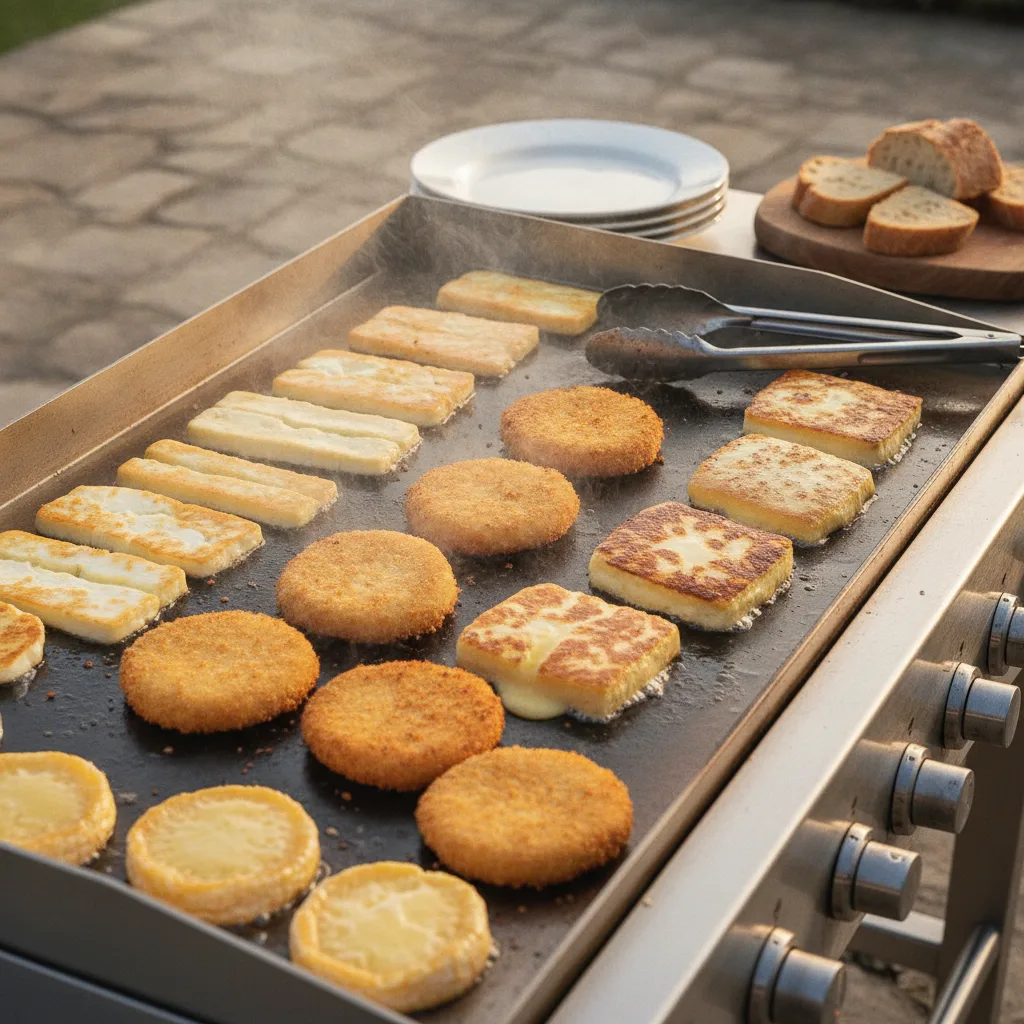
Grilled cheese on the plancha is one of the nicest surprises in cooking: a hot stainless steel plate, a few thick slices, and you get a golden crust with a melting centre in less than three minutes.
You still need to know which cheeses can handle high-temperature searing, which need a foil parcel, and how to avoid sticking. On a plancha, grilled cheese relies on three parameters: temperature, slice thickness and preparing the cheese. Here are eight cheeses that are perfect for the job, with temperatures, times and the accompaniments that go with them.
Grilled Cheese on the Plancha: 8 Cheeses to Try
Reading time: ~11 min
- Grilled cheese on the plancha: the three basic rules
- Which cheese for the plancha? Eight safe bets
- Melted cheese on the plancha: cooking in a foil parcel
- Grilled cheese sandwiches on the plancha: the most generous version
- How do you grill cheese without it sticking to the plancha?
- Which plancha and which accessories for success?
- Hot cheese selection: pairings that work
- Going further with grilled cheese on the plancha
- Frequently asked questions
Grilled cheese on the plancha: the three basic rules
Rule no. 1: temper and dry the cheese
The first rule concerns tempering. A cheese taken out of the fridge and placed directly on a plate at 250°C suffers a thermal shock that makes it burst or crack. Plancha cooking specialists recommend leaving the cheese out for 30 minutes before searing it, and patting it dry well in the case of a brined cheese such as halloumi or a very moist mozzarella. A dry cheese browns; a wet cheese boils and falls apart.
Rule no. 2: get the slice thickness right
The second rule concerns slice thickness. Below one centimetre, the cheese melts before it has time to colour. Above two centimetres, the crust browns while the centre stays cold. The range of 1 to 2 centimetres gives the best contrast of textures: a caramelised crust outside and creaminess inside.
Rule no. 3: control the plancha temperature
The third rule is temperature. For high-temperature searing, the range of 220°C to 260°C is the reference on a solid plate. The heat must already be stable before placing the cheese, otherwise it sticks. Our stainless steel electric planchas heat up gradually and hold the set temperature thanks to the thermostat, which avoids the heat surges typical of flames. If you want to go into this in more depth, our cooking temperature guide details each level.
Good to know
A drizzle of grapeseed oil applied with a brush handles high heat better than olive oil and limits smoke. A thin film is enough; too much oil fries the cheese instead of searing it.
Which cheese for the plancha? Eight safe bets
Halloumi remains the ideal starting point. This brined Cypriot cheese does not melt, it grills. Slices 1.5 centimetres thick, two passes of 1 to 2 minutes per side on a very hot plate, and you get golden grill marks and a supple interior. Pat it dry carefully and serve it with lemon juice, mint and a pinch of Espelette pepper AOP.
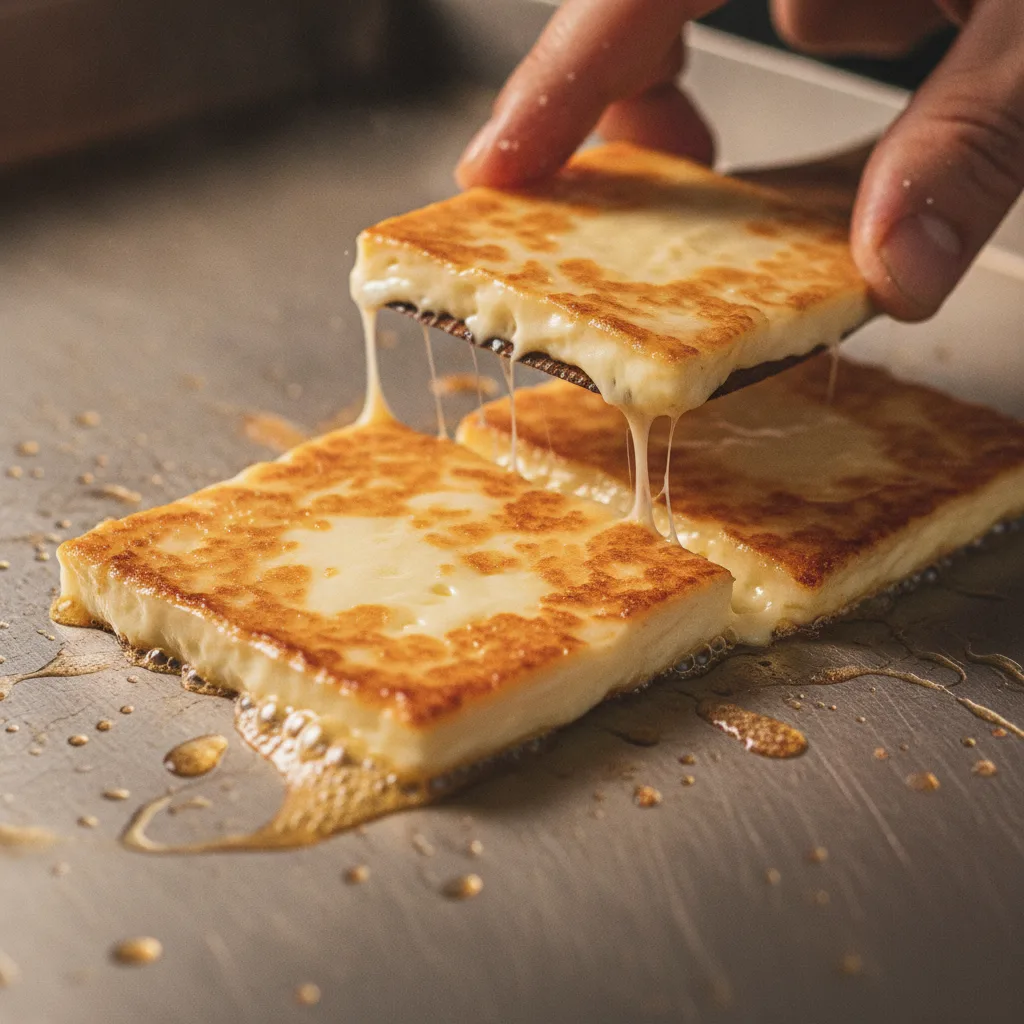
Scamorza, an aged and lightly smoked mozzarella, brings a natural smoky note that goes very well with the plancha. Cut into thick rounds, it forms a crust in one minute per side, then becomes stringy as soon as you cut into it. The affumicata version goes with confit tomatoes and basil.
Provolone, in its piccante version, is the great Argentinian classic of provoleta. A two-centimetre slice, a little dried oregano, a grind of pepper, then brief cooking on each side. It melts but holds together, forming a caramelised lace around the edges. It is probably the most spectacular plancha cheese recipe to share as an aperitif.
Ossau-Iraty AOP, a sheep's milk cheese from the Basque Country, is an uncooked pressed cheese that handles searing very well. Cut into thick sticks, it develops aromas of toasted hazelnut. Serve it with a spoonful of black cherry jam, as they do locally.
Comté AOP, a cooked pressed cheese, behaves differently. It does not collapse; it starts to ooze slightly and then turns crispy. Grated into small piles directly on the plate, it makes cheese crisps that perfectly accompany a salad or an aperitif. Allow one to two minutes depending on maturity, young cheeses melting more than aged ones.
A goat's cheese log is the easiest soft cheese to master. Two-centimetre rounds, one minute on each side over a moderate heat zone, a drizzle of honey and flaked almonds.
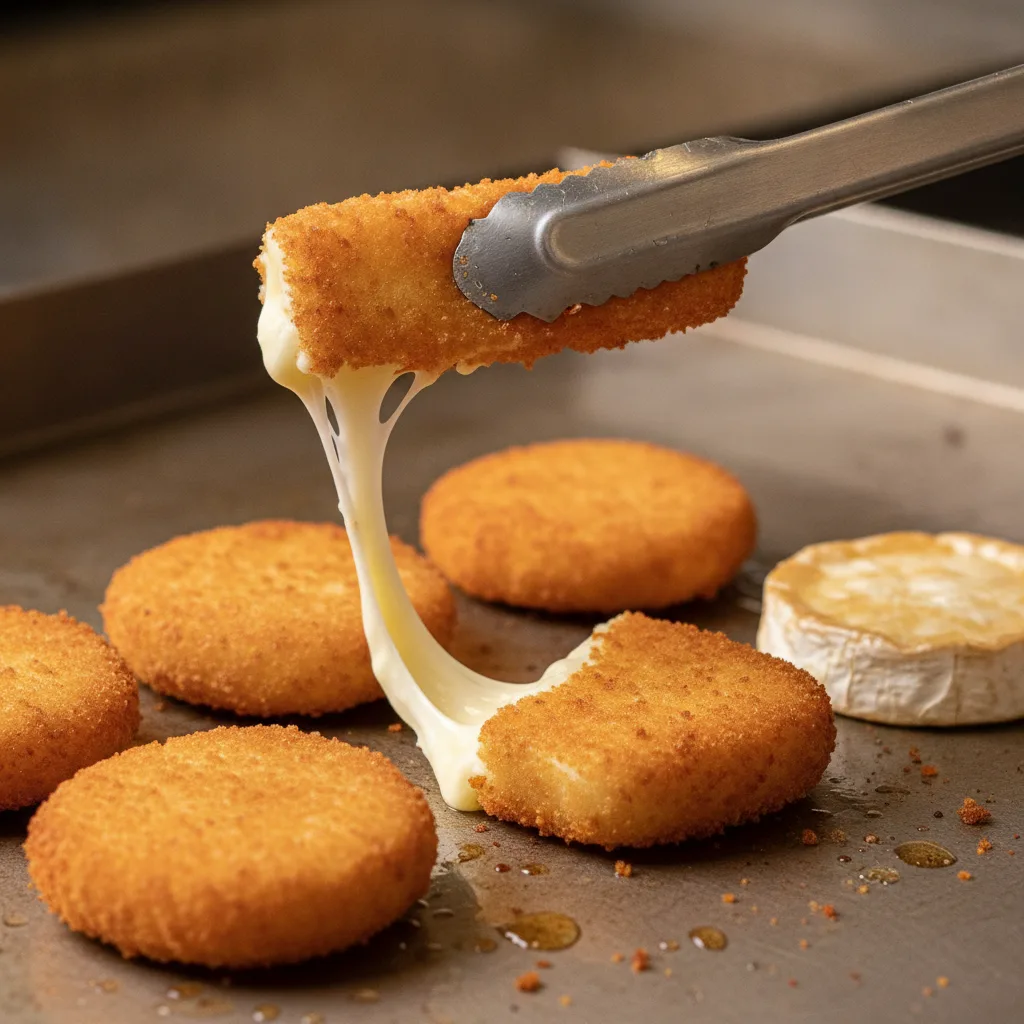
Mozzarella on the plancha needs protection. Plain, it releases too much water. Breaded with flour, egg and breadcrumbs, it browns in one minute per side and keeps its stringy centre. It is the best way to grill a fresh cheese without losing it on the plate.
Camembert de Normandie AOP completes the list, in two versions. Breaded and briefly seared, it becomes a melted cheese fritter. Whole and cooked in a foil parcel, it turns into a fondue to share, a method detailed in the next section.
| Cheese | Type of cheese | Plancha temperature | Time | Accompaniment |
|---|---|---|---|---|
| Halloumi | Brined cheese | 240 to 260°C | 1 to 2 min per side | Lemon, mint, Espelette pepper AOP |
| Scamorza | Aged stretched-curd cheese | 230 to 250°C | 1 min per side | Confit tomatoes, basil |
| Provolone | Aged stretched-curd cheese | 230 to 250°C | 1 to 2 min per side | Oregano, toasted country bread |
| Ossau-Iraty AOP | Uncooked pressed cheese | 220 to 240°C | 1 to 2 min per side | Black cherry jam |
| Comté AOP | Cooked pressed cheese | 220 to 240°C | 1 to 2 min | Rocket salad, walnuts |
| Goat's cheese log | Soft cheese | 200 to 220°C | 1 min per side | Honey, flaked almonds |
| Breaded mozzarella | Fresh cheese | 220 to 240°C | 1 min per side | Tomato coulis, rocket |
| Camembert de Normandie AOP | Soft bloomy-rind cheese | Warm zone, medium heat | 8 to 18 min in a parcel | Toast, charcuterie |
Melted cheese on the plancha: cooking in a foil parcel
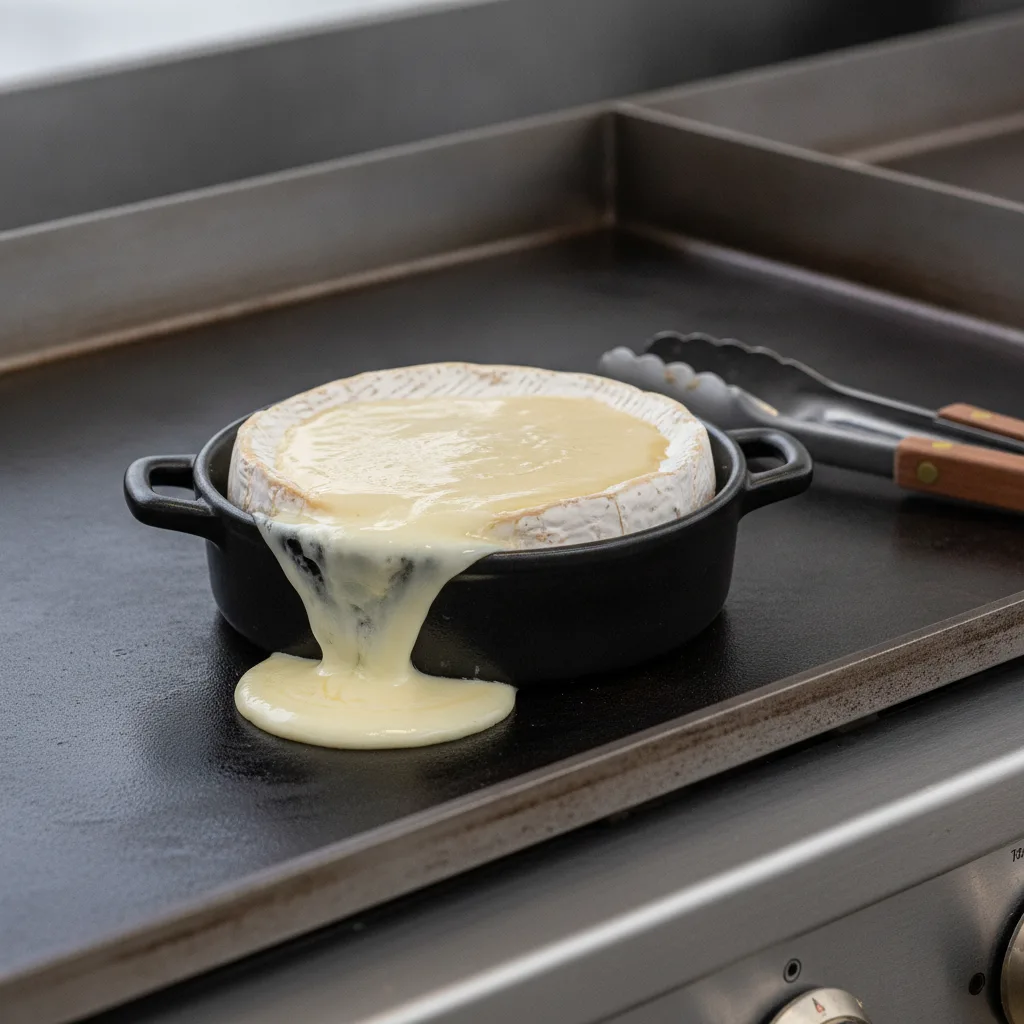
Whole soft cheeses are never placed bare on the plate. Camembert on the plancha is prepared in a foil parcel, with the rind scored in a criss-cross pattern, a sprig of thyme, a few fennel seeds and a spoonful of honey. The parcel is left open at the top to let the steam escape. Placed on a warm zone of the plancha, it needs 8 to 18 minutes depending on the size of the cheese and the power chosen. The cue is visual and tactile: the surface browns, the cheese swells slightly, and the centre moves under your finger. Leave to rest for a minute before serving, so the runny centre can settle.
Reblochon de Savoie AOP and Saint-Nectaire AOP lend themselves to the same treatment, cut in half horizontally and placed rind side down in a parcel or a small dish. Roquefort AOP, too salty and crumbly to be grilled bare, is better used in a filo pastry turnover browned for three minutes on each side, with pear and walnuts. Using a cooking lid speeds up melting and retains heat; our models are presented in our plancha lids section.
Grilled cheese sandwiches on the plancha: the most generous version
A grilled cheese sandwich on the plancha benefits from an advantage a frying pan does not have: a flat, wide, even surface. Butter the outer sides of the bread and fill with two or three complementary cheeses: a pressed cheese for flavour, a stretched-curd cheese for stringiness and a creamy cheese for richness. Place the sandwich on the hot plate and press it down with a smash burger press; one to two minutes per side are enough to get crispy bread and completely melted cheese. Caramelised onions, grilled bacon or pulled meat turn the sandwich into a complete meal. Our dedicated smash burger guide gives the same pressing and searing guidelines.
In the same spirit, cheese naans are cooked on a plate turned up to maximum, about 300°C, for five minutes per side, with a knob of clarified butter for colour.
How do you grill cheese without it sticking to the plancha?
The main causes of sticking
Sticking almost always comes from one of these four factors: a plate that is not hot enough, a poorly cleaned plate, a cheese that is too cold or a cheese that is too wet. Here are the reflexes that solve most problems.
- Preheat fully before placing the cheese, then oil with a brush just before, never when cold.
- Use a non-stick cooking sheet for soft and fresh cheeses.
- Do not overload the plate: cheese that runs onto its neighbours no longer browns.
- Lift with a wide spatula in a single, decisive movement, not with small movements.
The right actions for a plate that is always clean
A thick stainless steel plate is a real asset here: it deglazes easily with a little water at the end of cooking and does not retain sugary residue from honey or jam. Our complete care method details each cleaning step.
Key takeaway
Cheese that burns outside and stays cold inside signals a slice that is too thick or a plate that is too hot. Reduce the thickness to 1.5 centimetres or move the cheese to a gentler heat zone.
Which plancha and which accessories for success?
Choosing a plancha suited to cheese
Cheese needs stable heat and a surface that does not warp. A solid stainless steel plate heated by an integrated element offers a steady rise in temperature and an even cooking zone, whereas an enamelled cast iron plate stores more heat but reacts more slowly to adjustments. For an aperitif for two or four, the Néo 420 plancha is enough. To entertain six to ten people while managing cheeses, vegetables and bread at the same time, the 600 and 830 sizes in the Lux range, as well as the Anthéa and Néo models, leave enough room to separate the zones. Our plancha ranges can be viewed online, along with our buying guide to compare sizes.
Essential accessories for grilled cheese
In terms of tools, three accessories really change the result: the scraper spatula to release without damage, the wide serving spatula to turn a whole slice without breaking it, and serving tongs for halloumi sticks. They are all grouped in our plancha utensils section.
Hot cheese selection: pairings that work
A selection of hot cheeses benefits from playing on contrasts. Sweet tempers salty, acidity cuts through richness and crunch answers creaminess. Chestnut honey goes with goat's cheese, fig jam pairs with Ossau-Iraty, and a pear roasted on the same plate balances Roquefort. Vegetables seared before the cheeses, such as courgettes, peppers and cherry tomatoes, form the base of a complete plate. Bread, thickly sliced and toasted at the end of service on the still-hot plate, soaks up the caramelised juices and avoids any waste.
Going further with grilled cheese on the plancha
Finally, remember that cheese is cooked last. It cooks quickly, cools quickly and is eaten within a minute of leaving the plate. Organise the cooking of meat and vegetables beforehand, then devote the last five minutes to cheese, with your guests around the plancha. That is where this kind of cooking really comes into its own: fast, visual and convivial.
FAQ – Frequently asked questions
Can you grill brie on the plancha like camembert?
Yes, but brie generally has more fat at the surface and collapses more quickly. Choose a thick piece from a whole wheel rather than a thin wedge, and cook it in a foil parcel or a small heat-resistant dish.
Should you salt cheese before grilling it?
No, most cheeses are already salted, and halloumi and feta are heavily salted. It is better to season after cooking, with freshly ground pepper, herbs or a mild chilli.
Can you grill cheese on an indoor plancha without filling the room with smoke?
Yes, provided you stay below the smoke point of the fat used and clean the plate between batches. Burnt residue is the main source of smoke, far more than the cheese itself.
How much cheese should you plan per person for a plancha aperitif?
Alongside other dishes, 60 to 80 grams of cheese per person is a reasonable base. If hot cheeses are the main course, increase to about 150 grams and add bread and vegetables.
Does leftover grilled cheese keep?
Halloumi and pressed cheeses can be reheated once, for a few seconds per side on a hot plate. Soft and breaded cheeses, on the other hand, lose their texture and are best eaten immediately.