



 +33 4 78 55 45 69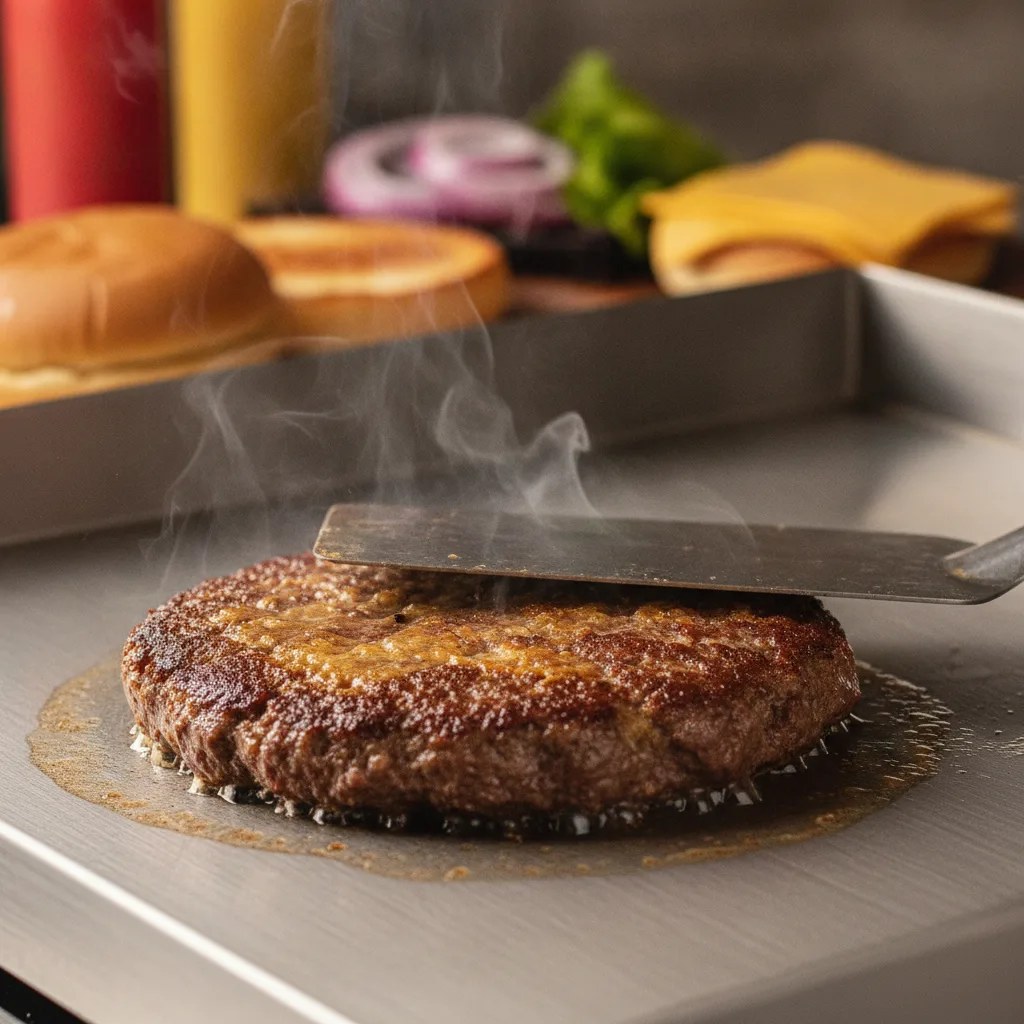
Smash burger on the plancha: how-to guide
Introduction to the smash burger on the plancha
The smash burger is undoubtedly one of the most indulgent food trends of recent years, and the electric plancha is the ideal tool to nail it at home. Unlike a pan or barbecue, the large, evenly heated surface of a stainless steel plancha offers perfect contact between the meat and the plate, triggering an intense Maillard reaction and producing that characteristic crispy crust. If you've already tried a plancha burger without getting the result you wanted, this article gives you the exact technique, the right moves and the mistakes to avoid to turn your next meal with friends into a truly convivial cooking experience.
The secret to perfect smash burgers on the plancha.
Reading time: ~6 min
- Why the plancha is made for burgers
- Essential equipment for a great plancha burger
- Choosing the right meat for a successful smash burger
- The smash burger technique step by step
- Assembly and toppings
- Do's and Don'ts
- FAQ
- The smash burger on the plancha: it all happens in the first seconds
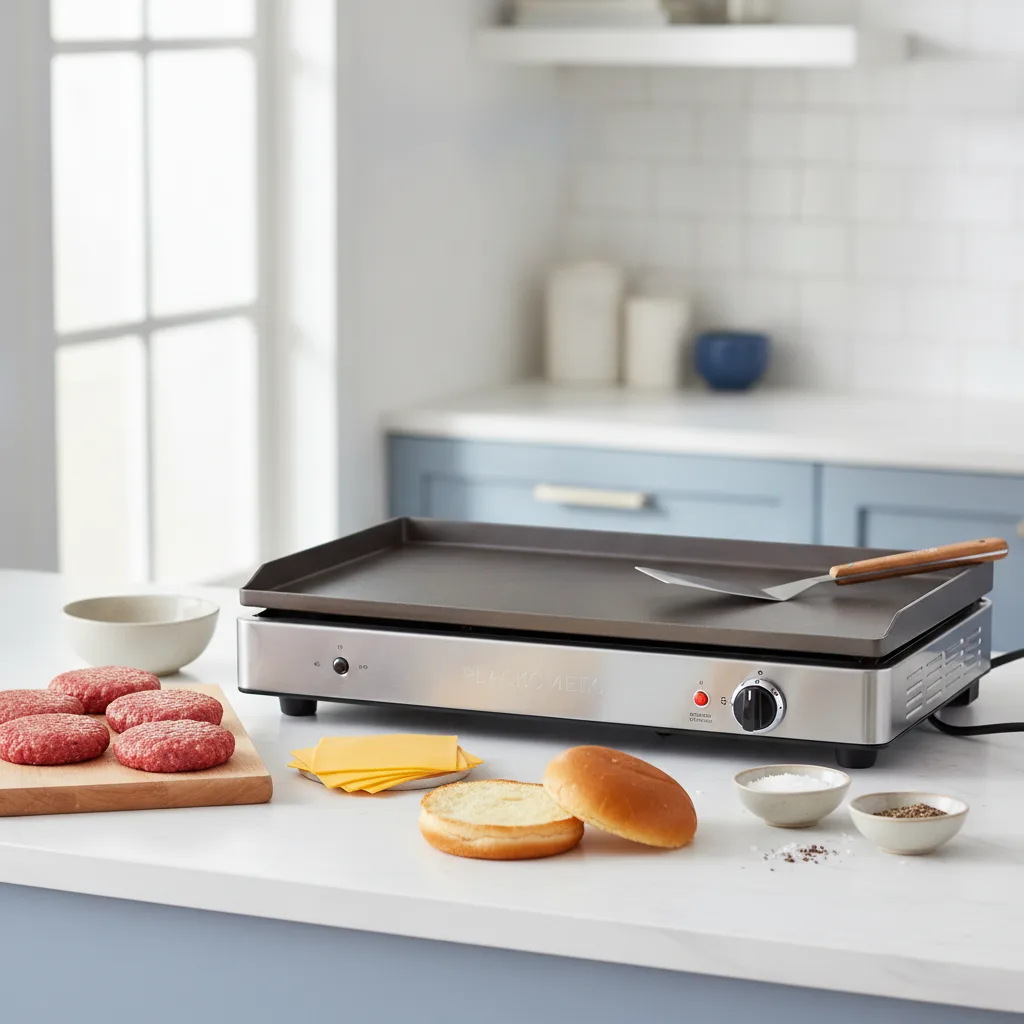
Why the plancha is made for burgers
The advantages of cooking burgers on the plancha
Cooking a burger on the plancha relies on a simple principle: a very hot surface, total contact and immediate searing. Unlike a bar grill that only touches the meat at a few points, the stainless steel plate transfers heat across the entire surface of the patty. The result: an even crust, controlled cooking and no direct flame that could char the outside before the inside is cooked.
The electric plancha has an additional advantage over the gas plancha in this specific context: temperature regulation is more precise, allowing a stable heat to be maintained throughout cooking, even when cooking several patties at the same time. For the smash burger, this stability is essential.
Essential equipment for a great plancha burger
Essential accessories for the electric plancha
Before even talking about meat, you need to make sure you have the right equipment. Three elements really make the difference.
The scraper spatula is the number one tool. It must be rigid, with a thin, sharp edge, to be able to crush the ball of meat with a firm gesture and then lift the patty without tearing it. A flexible or too-thick spatula will not give the expected result. The Planchaelec scraper spatula is precisely designed for this type of use on stainless steel.
The cooking dome is the second key accessory. Placed over the patty just after flipping, it traps the heat and melts the cheese in a few seconds without needing to add water or cover with aluminium foil. The Planchaelec cooking dome fits perfectly on the range's planchas and works just as well for burgers as for other preparations.
The serving tongs, finally, allow you to handle the buns and toppings without damaging the plate or burning yourself.
Choosing the right meat for a successful smash burger
Selecting the right meat for a smash burger
The choice of meat is just as important as the technique. For a smash burger, you absolutely need mince with a sufficient fat content, around 20%, commonly known as 80/20 (80% lean, 20% fat). Too-lean mince will produce a dry, flavourless patty, as it is the fat that caramelises on contact with the hot plate and creates the crust.
The meat must be cold at the time of cooking, taken out of the fridge just before forming the balls. Meat that is too warm will stick to the plate and tear during the smash. Form balls of around 80 to 100 grams, without working them too long with your hands to avoid warming the fat.
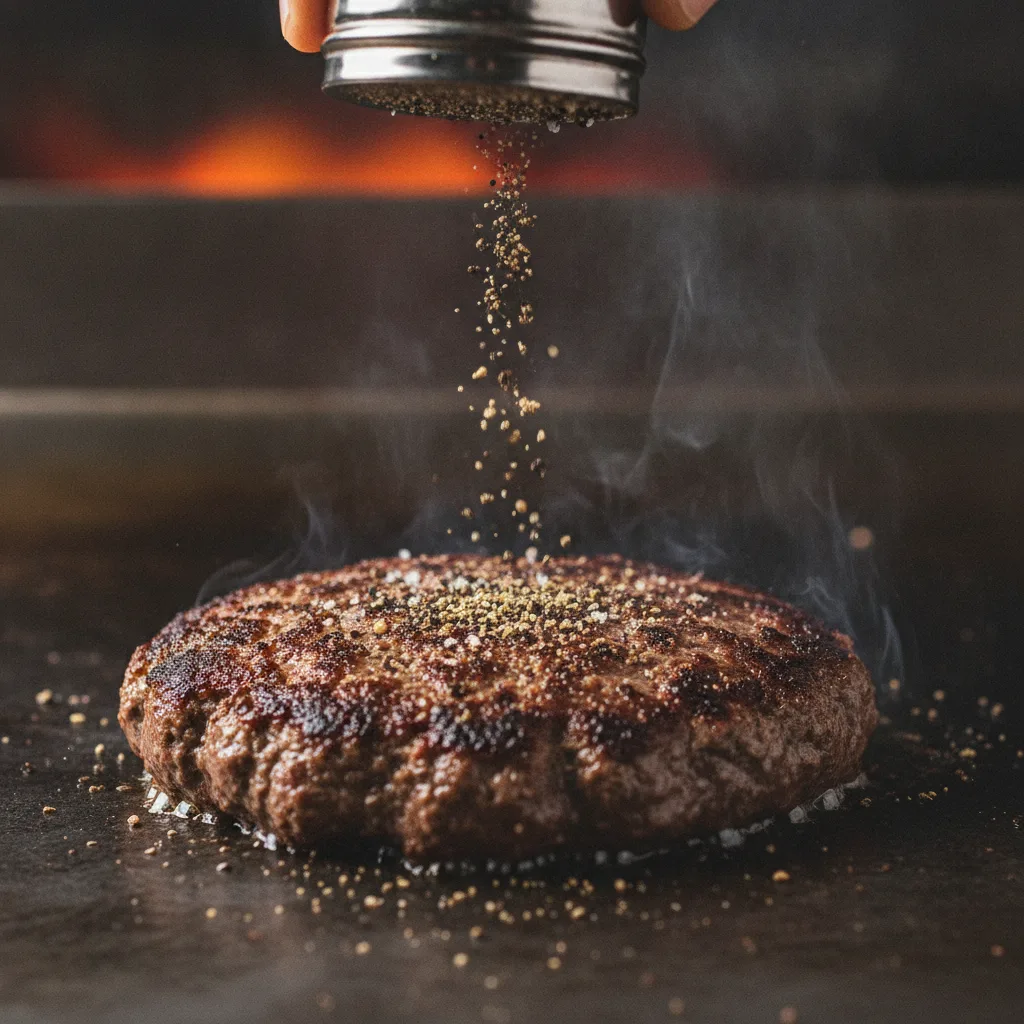
Seasoning is done at the time of cooking, not before. Salt and pepper directly on the patty once it has been smashed onto the plate.
The smash burger technique step by step
Preheating the plancha to the right temperature
Temperature is the most determining factor. The plate must be very hot before placing the meat, at a temperature of at least 180°C, ideally more. To check without a thermometer, pour a few drops of water onto the plate: if they "dance" in beads and evaporate quickly, the temperature is good. If they evaporate instantly on contact, it's perfect.
Lightly oil the surface with a drizzle of neutral oil (sunflower or grapeseed) using an absorbent paper or heat-resistant brush.
Smashing at the right moment
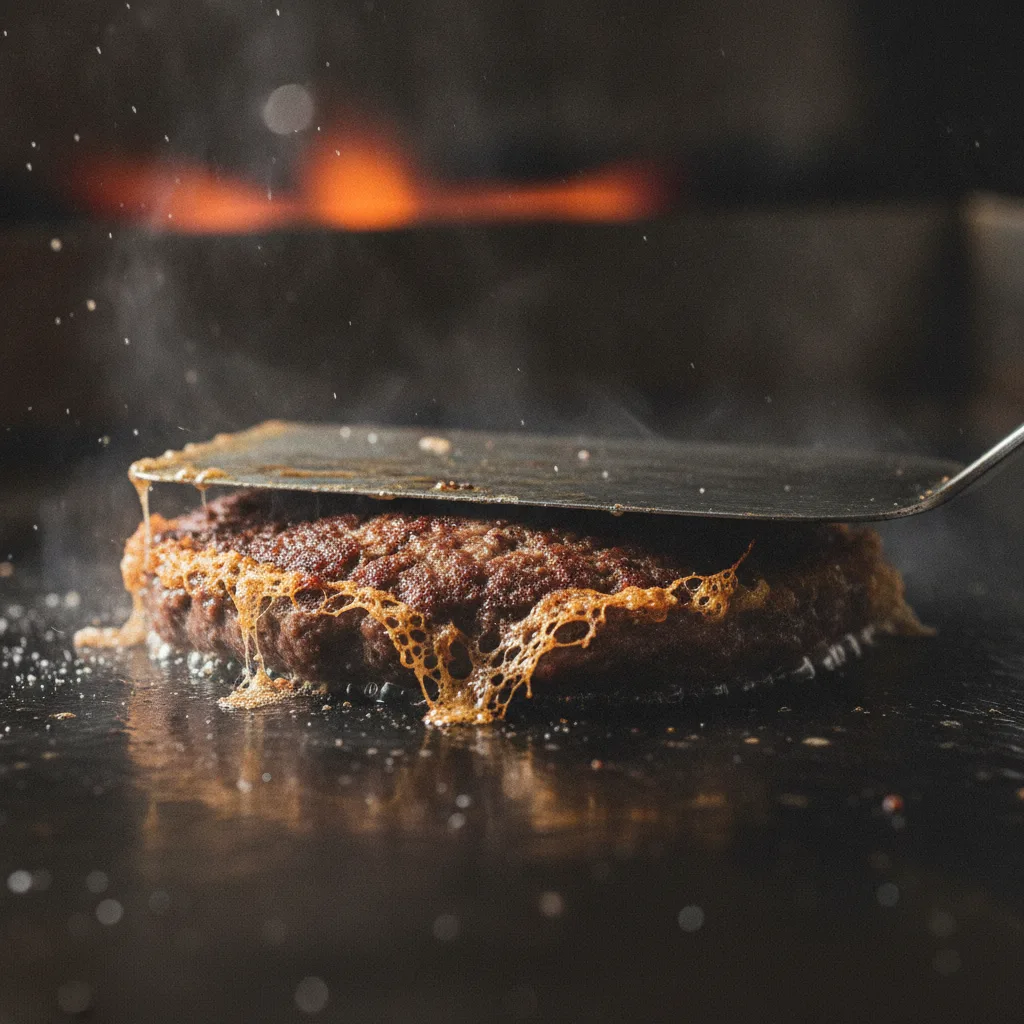
Place the cold ball of meat on the very hot plate. Wait one to two seconds, then crush it firmly and quickly with your scraper spatula. The most common mistake is waiting too long before smashing: after a few seconds, the meat starts to cook and contract, and the smash will no longer work correctly.
The pressure must be firm and even to obtain a patty about 1 cm thick. Season immediately with salt and pepper on top.
Flipping at the right moment
Don't touch the patty for two to three minutes. You will see the edges become crispy and golden, and the surface of the meat gradually change colour. This is the sign that the Maillard reaction is doing its job. Slide the spatula under the patty with a decisive movement and flip it in one go.
Immediately place a slice of cheddar on the hot patty and cover with the cooking dome. In thirty seconds, the cheese is perfectly melted.
Toasting the bun at the right moment
The brioche bun should be toasted on a cooler area of the plancha, or at the end of cooking when the plate has slightly cooled at the edges. Place the bun halves cut-side down for about a minute. An over-toasted or burnt bun will ruin the whole burger, so keep an eye on it and don't leave it unattended.
Assembly and toppings
Assembly is done quickly once all the elements are ready. Spread the base of the bun with a burger sauce (mix of mayonnaise, ketchup, mustard and chopped gherkins), add a lettuce leaf, the patty with its melted cheese, a few slices of tomato and onion, then close with the top of the bun, pressing lightly.
If you want a double smash burger, repeat the operation with a second patty and stack the two before closing.
Do's and Don'ts
| Do | Don't |
|---|---|
| Preheat the plancha sufficiently before starting | Smash the patty after cooking has started |
| Use cold meat with 20% fat content | Use a flexible or too-thick spatula |
| Smash the ball as soon as it touches the hot plate | Overload the plancha with too many patties at once |
| Add cheese immediately after flipping | Season the meat before cooking |
| Toast the bun on a cooler area | Toast the bun in the same area as the meat |
FAQ
What temperature is needed to cook a burger on the plancha?
The plate must reach at least 180°C before placing the meat. The higher the temperature, the more intense the Maillard reaction and the crispier the crust. The water drop test is a reliable method for checking the heat without a thermometer.
Should you smash the burger before or after cooking?
You need to smash the ball of meat in the first seconds after it has been placed on the hot plate, not after. Once the meat starts to cook and contract, it's too late to get a proper smash burger. The movement must be firm and immediate.
How to prevent the burger from sticking to the stainless steel plancha?
Two conditions prevent the patty from sticking: a sufficiently hot plate and a light coat of neutral oil before cooking. A well-heated stainless steel plate is naturally non-stick. If the patty resists lifting, wait a few more seconds: it will detach itself once the crust has formed.
Can you make smash burgers indoors on an electric plancha?
Yes, the electric plancha is particularly suited to indoor cooking. It produces no flame and generates less smoke than a gas plancha or cast iron grill. Make sure to ventilate the room well and use little fat to limit splashing.
The smash burger on the plancha: it all happens in the first seconds
Mastering the smash burger on the plancha is first and foremost about understanding that everything happens in the first seconds of cooking. A well-heated plate, cold fatty meat, a rigid spatula and a decisive gesture: these are the four pillars of a patty that is both crispy and juicy. With a quality stainless steel electric plancha and the right accessories, you can reproduce this result at every meal, whether on the terrace or in your kitchen.
To go further in your equipment choices and find the right model for your needs, consult our guide to choosing your electric plancha.