



 +33 4 78 55 45 69
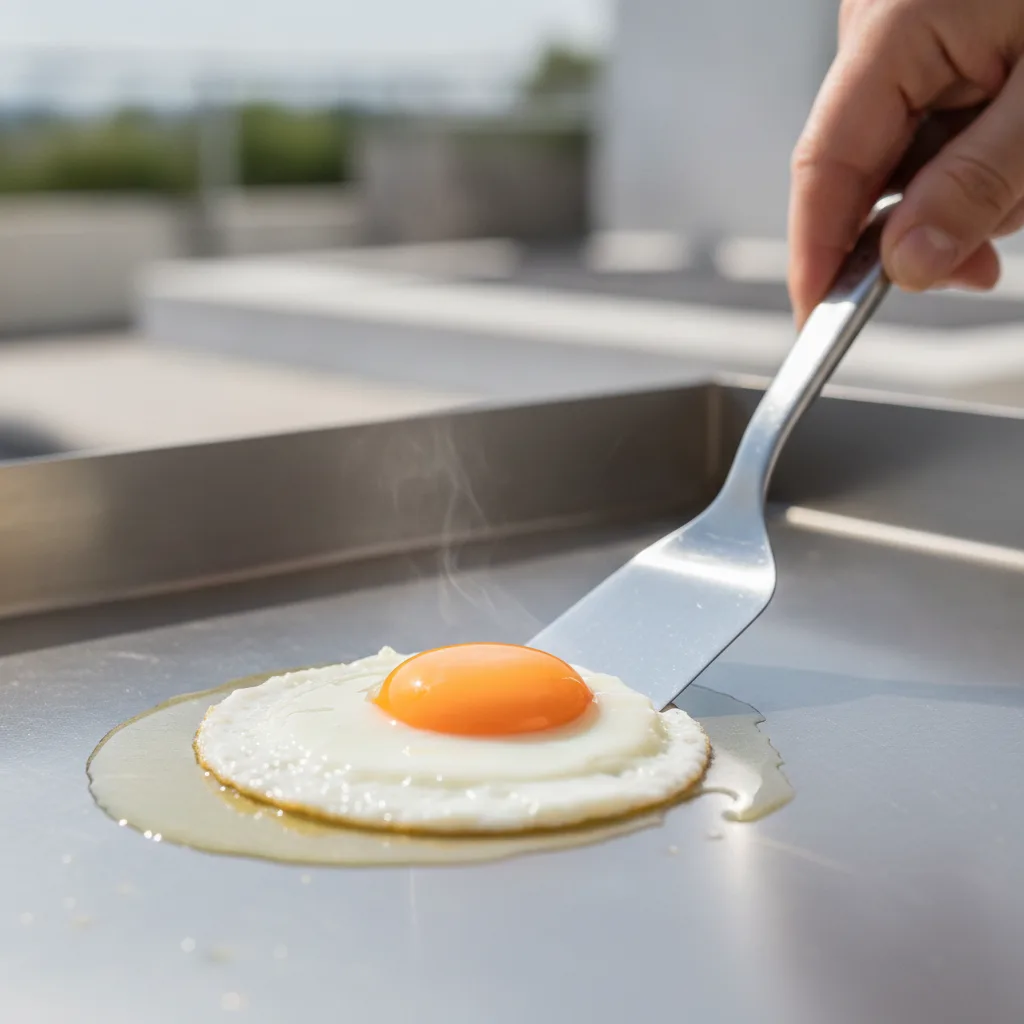
Cooking eggs on the plancha is one of those things that seem simple on paper but often end in torn whites, broken yolks or a charred underside. Yet cooking an egg on a stainless steel plancha only requires three well-controlled settings: temperature, fat and the moment you bring in the spatula.
It is a question that comes up often, and the answer depends more on method than on equipment. Here is a complete guide to perfect fried eggs, scrambled eggs, omelettes and eggs cooked in a ring, with nothing sticking.
Cooking Eggs on the Plancha: Temperature, Timing and Tips
Reading time: ~9 min
- What plancha temperature should you aim for with eggs?
- Which oil should you use to cook an egg on the plancha?
- Fried eggs on the plancha: the step-by-step method
- Scrambled eggs and omelettes on the plancha
- Cooking an egg in a ring on the plancha
- Eggs sticking to the plancha: causes and solutions
- Runny yolks and food safety
- Cleaning the plancha after cooking eggs
- Electric vs gas plancha for eggs
- Going further with cooking eggs on the plancha
- FAQ: cooking eggs on the plancha
What plancha temperature should you aim for with eggs?
The most common mistake is cooking the egg on a scorching surface, as you would a piece of meat. Gentle to medium heat is the most versatile setting. Any hotter and the white browns and shrinks before it has finished setting on top, while the yolk stays cold.
On an electric plancha, we recommend setting the thermostat in the first third of the power range, then adjusting after the first egg.
There is no single temperature valid for all appliances. A cast iron plancha stores a lot of heat and takes time to cool down, while a stainless steel plate reacts faster to thermostat changes. The most reliable guide remains visual: the fat should shimmer slightly without ever smoking. If smoke appears, you have exceeded the oil's smoke point and the surface is too hot for an egg. Lower the power, wait a minute, then start again.
Preheating the plancha is still essential. A cold surface absorbs the egg and encourages sticking, while a surface that is too hot burns it. Allow a few minutes for the temperature to rise, check that the plate is clean, and only then grease it.
Which oil should you use to cook an egg on the plancha?
We prefer an oil that handles heat well, such as grapeseed oil or a cooking olive oil. The aim is not to fry the egg but to create a very thin film that reduces the surface's stickiness. A teaspoon spread with kitchen paper is more than enough for two eggs.
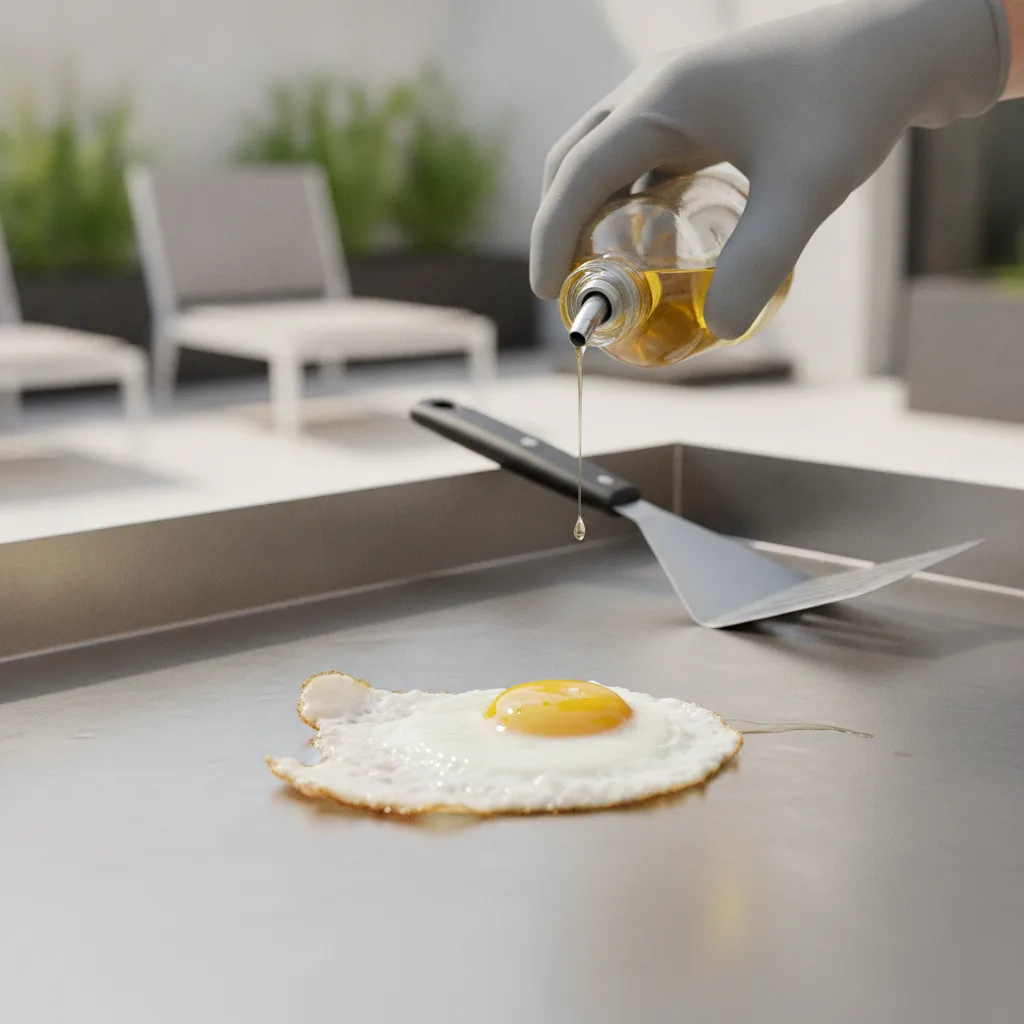
Cooking with butter gives a rounder flavour, popular for brunch, but it darkens quickly and has a lower smoke point. If you insist, add it just before cracking the egg, on a plancha set to low, and watch the colour constantly. An alternative is to start with oil and add a knob of butter at the end of cooking for flavour.
Good to know
Too much fat does not protect the egg better; on the contrary, it causes splashes and an uneven white that spreads like lace across the whole plate.
Fried eggs on the plancha: the step-by-step method
Preparing the egg before cooking on the plancha
For a successful fried egg on the plancha, preparation counts as much as cooking. Always crack the egg into a small bowl before pouring it, which lets you check its freshness, remove any piece of shell and lower it close to the plate without breaking the yolk.
An egg at room temperature, taken out of the fridge shortly before cooking, limits thermal shock and gives more even cooking. However, it should not be left out of the fridge for hours, especially in summer.
Here is the sequence we recommend, from preheating to serving. It applies equally to a Néo 420 plancha and a Lux 830, simply adapting the cooking zone used.
| Step | Setting | Indicative time | Visual cue |
|---|---|---|---|
| Preheating | Gentle to medium power | 3 to 5 min | A drop of water evaporates without sizzling violently |
| Greasing | Thin film of oil | 10 s | Shiny surface, no smoke |
| Adding the egg | Without moving it | 30 to 45 s | The white turns from translucent to opaque |
| Runny yolk | Gentle heat | 3 to 4 min in total | White set, yolk shiny and wobbly |
| Firm yolk | Gentle heat, lid | about 5 min | Matt yolk, white fully set |
Cooking time therefore depends on the result you want. A fried egg with a runny yolk generally takes around 3 to 4 minutes, and up to about 5 minutes for a firmer white on a plate set to low. These times are indicative: a large egg straight from the fridge will need an extra minute.
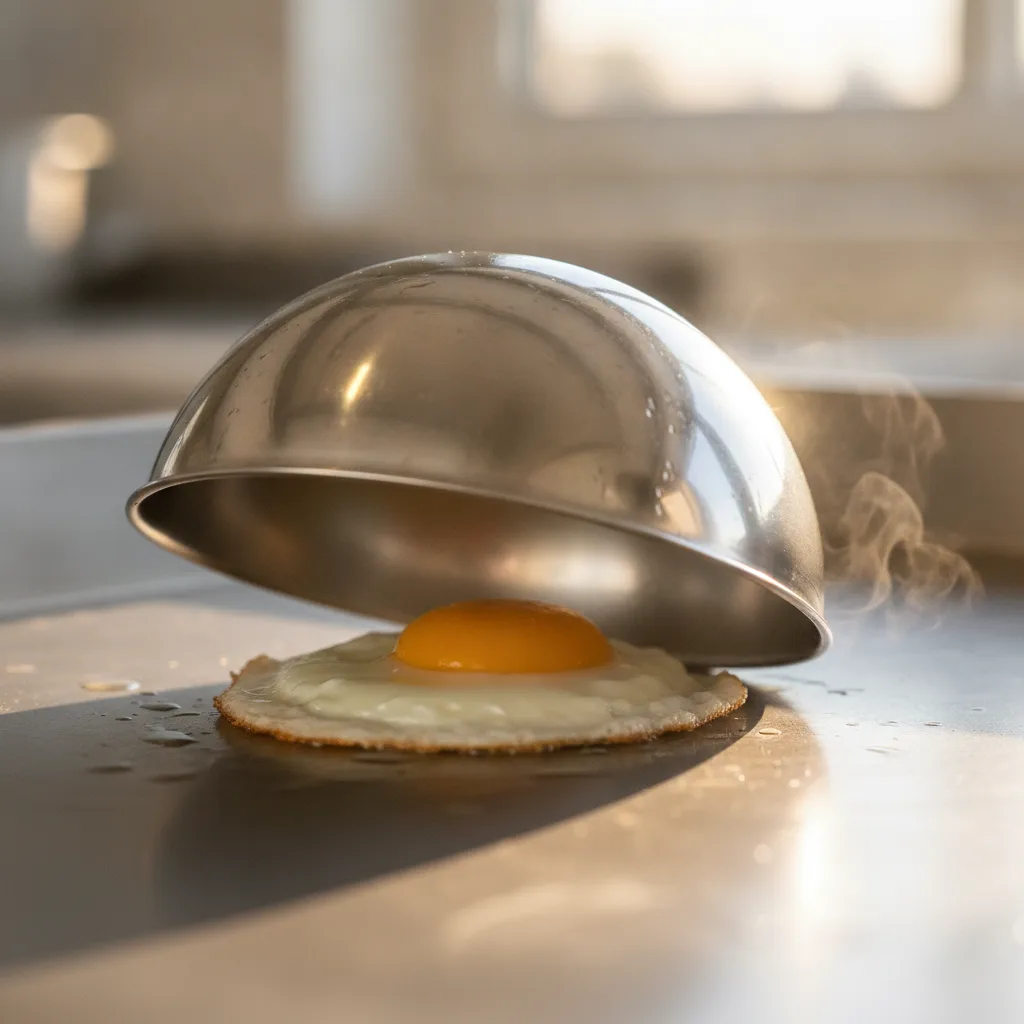
If the top of the white is still translucent while the underside is already cooked, briefly place a cooking lid over the egg. The steam finishes the job without turning the egg or breaking the yolk. Our stainless steel lids are designed for exactly this and avoid raising the temperature unnecessarily.
Scrambled eggs and omelettes on the plancha
Scrambled eggs on the plancha
Scrambled eggs on the plancha call for the same gentle heat logic, but a different technique. Beat the eggs in a bowl, salt lightly, add a spoonful of cream if you like, then pour onto a greased zone. Let them set for a few seconds without touching them, then bring the mixture towards the centre with a thin spatula, repeating the movement about every ten seconds. Remove the mixture while it is still slightly soft, as it continues to cook on the plate. A creamy texture always comes from stopping too early rather than too late.
Omelette on the plancha
An omelette on the plancha also works, provided you use a wide surface and do not try to achieve the thickness of a pan omelette. Pour the beaten eggs onto a defined area, let the underside set, then fold the edges towards the centre with two spatulas. The large surface of a plancha lets you add mushrooms, peppers or ham on a neighbouring zone, then fold them in at the last moment. This is one of the advantages of a plancha egg recipe: everything cooks at the same time without multiplying pans.
Cooking an egg in a ring on the plancha
Cooking an egg in a ring on the plancha gives a neat, thick result, ideal for a homemade burger or a slice of toast. Oil the inside of the cooking ring and the matching area of the plate, place the metal ring, crack the egg into it and cook over gentle heat until the white is fully set. Then remove the ring with tongs, twisting it slightly to loosen the edges. The ring stops the white from spreading and makes serving several identical eggs much easier.
Eggs sticking to the plancha: causes and solutions
An egg sticking to the plancha almost always signals one of three problems: a poorly preheated plate, insufficient greasing or an egg moved too early.
| Cause | Solution |
|---|---|
| Residue from previous cooking on the plate | Clean the plate before cooking |
| Plancha poorly preheated or insufficiently greased | Preheat, grease lightly, then add the egg without touching it for at least thirty seconds |
| Egg moved too early | Slide a thin spatula flat under the white once it is firm, never before |
| Overloaded plancha | Space the eggs out to keep the surface temperature stable |
A well-maintained stainless steel plate becomes seasoned over time and naturally easier to use. This is one of the points we develop in our stainless steel plancha care guide.
Runny yolks and food safety
Runny yolks: what does food safety say?
Cooking eggs with a runny yolk raises a real health question. A technical analysis sheet from French hotel and catering education points out that fried, poached or soft-boiled eggs do not necessarily destroy all the germs present, unlike full cooking such as a hard-boiled egg.
Good hygiene practice documents state for their part that heat destroys salmonella above certain temperatures and provided the exposure time is sufficient. The European Food Safety Authority, for its part, recommends thoroughly cooking sensitive foods, including eggs.
In practice, a runny yolk remains common and accepted for a healthy adult eating fresh, properly stored eggs. However, we recommend cooking through, with firm white and yolk, for:
- pregnant women
- young children
- elderly people
- immunocompromised people
No temperature displayed on a thermostat is a guarantee on its own: food safety also depends on cooking time and the freshness of the product.
Important
Keep eggs in the fridge until you cook them and wash your hands after handling the shells, which are the main source of cross-contamination.
Cleaning the plancha after cooking eggs
Cleaning steps after cooking eggs
Cleaning the plancha after cooking eggs is simpler than it seems if you act while the plate is still warm. Scrape the residue with a scraper spatula towards the grease collector, pour a little water if your model allows it to loosen the proteins, then use the plancha squeegee. Wipe, dry carefully, and if you wish apply a thin layer of oil on a stainless steel surface or a cast iron plancha. For stubborn marks, our scouring pads and degreasing cleaner remove deposits without scratching stainless steel.
Electric vs gas plancha for eggs
The electric vs gas plancha debate takes on a particular meaning with eggs. Electric models regulate temperature with a thermostat, which makes it much easier to maintain gentle, constant heat, exactly what an egg needs. Gas heats up faster but is controlled by eye, with hotter zones near the burners. For delicate cooking, the stability of electric is a clear advantage. We detail these differences in our electric or gas plancha comparison.
Going further with cooking eggs on the plancha
A successful egg on the plancha relies on gentle to medium heat, a minimal film of fat, an egg cracked into a bowl and added without haste, then thirty seconds of patience before any contact with the spatula. The rest is a matter of personal taste: runny or firm yolk, scrambled or in a ring. If you want an appliance designed for this kind of precise cooking, our stainless steel planchas made in France are presented in our catalogue.
FAQ
Can you cook eggs at the same time as meat on the plancha?
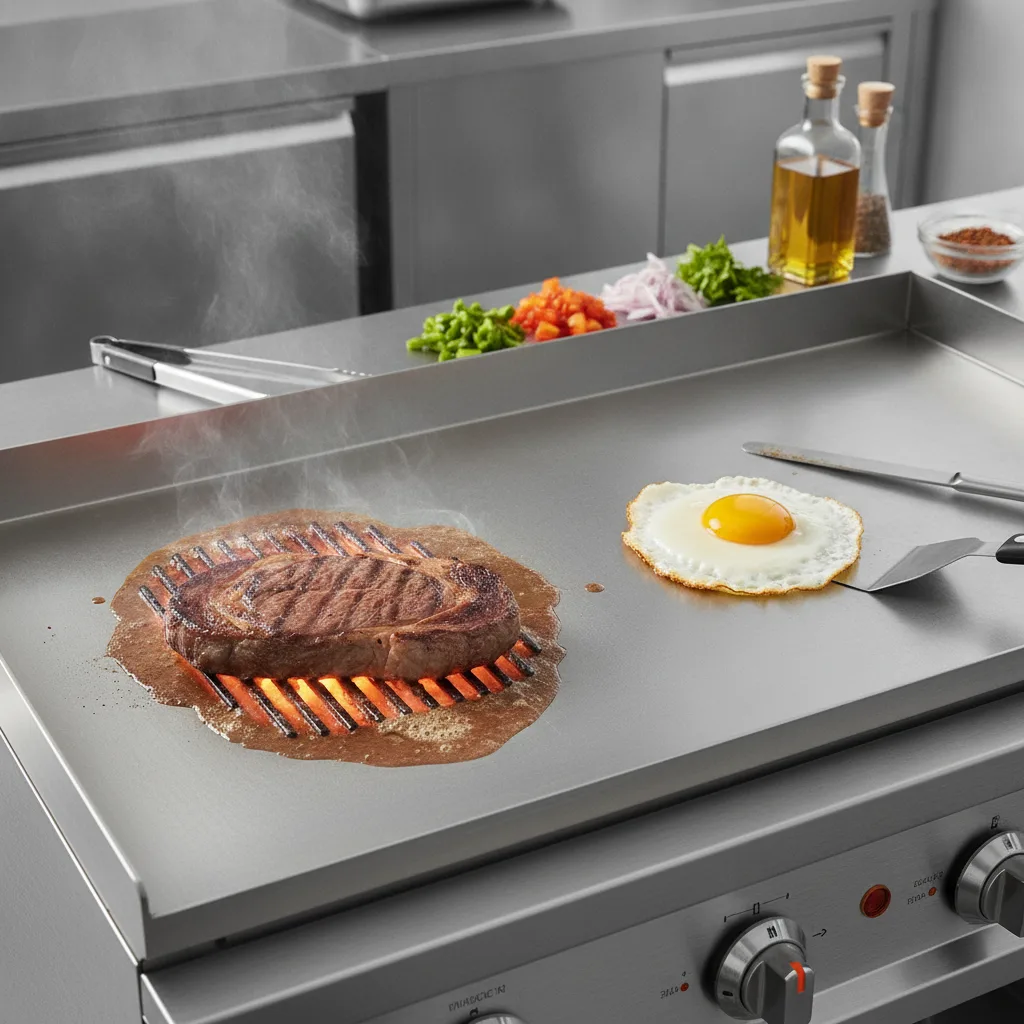
Yes, provided you use separate zones and separate utensils. Meat needs a hot zone and eggs a moderate one, which a large surface like the Lux 830 allows. Avoid placing the egg in the meat juices, which alter the taste and speed up browning of the white.
Should you salt the egg before or after cooking?
Preferably salt at the end of cooking. Salt added early to the yolk can create small white spots, and salt on the liquid white encourages it to spread across the plate.
Does an organic or free-range egg cook differently?
The method is the same, but freshness changes the result. A very fresh egg has a denser white that holds together better and spreads less, giving a thicker, more even fried egg.
Can you use baking paper on a plancha to stop things sticking?
We advise against it. The paper degrades on direct contact with a hot plate and prevents the conduction that is the whole point of the plancha. Proper greasing is enough.
How many eggs can you cook at the same time?
It all depends on the surface. Leave at least the width of an egg between each one to stop the whites merging and to keep the plate temperature stable.