



 +33 4 78 55 45 69
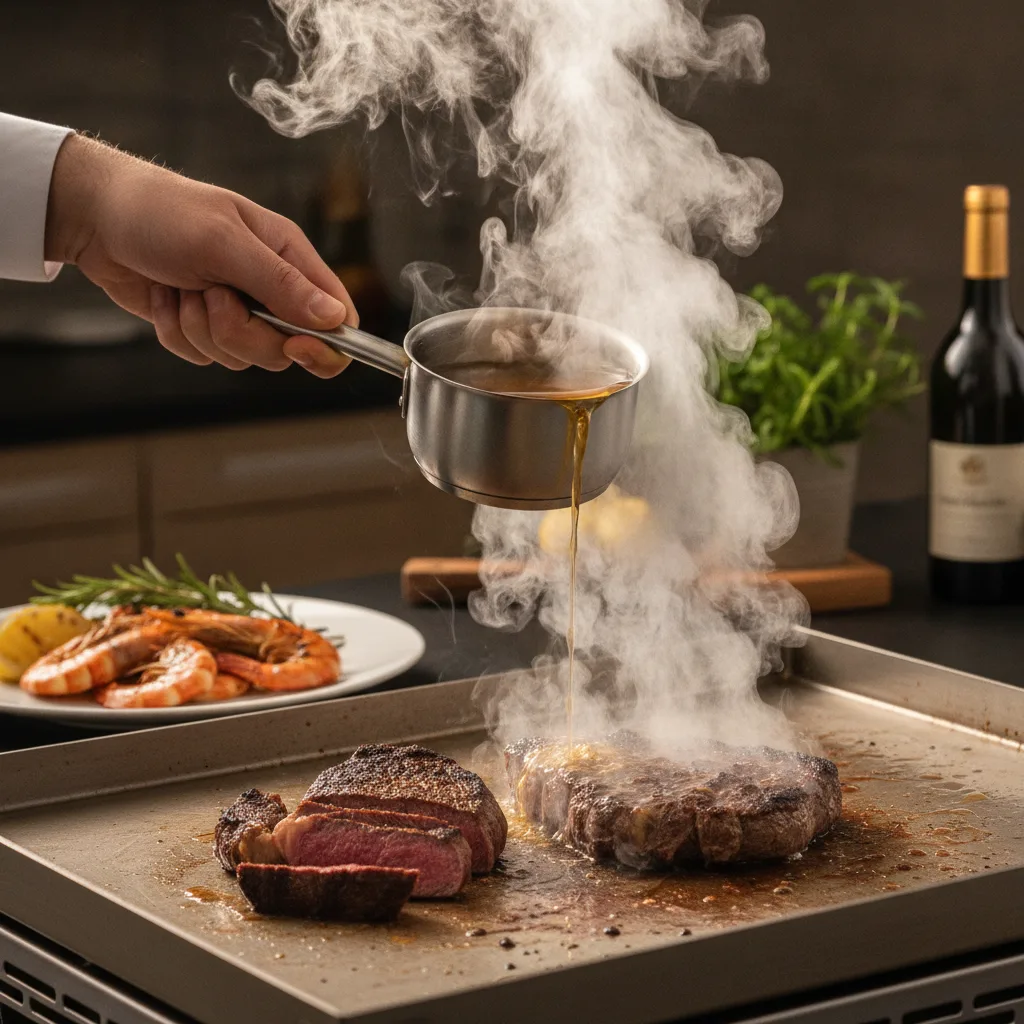
You have just seared a rib steak or king prawns on your plate, the food is resting on the dish, and the surface is still covered with small golden caramelised juices. This cooking residue holds most of the flavour, and letting it go down the drain when cleaning means throwing away the best part of the meal. That is exactly what a plancha deglazing sauce, made in a few minutes on the still-hot plate, lets you avoid.
A plancha deglazing sauce consists precisely of recovering these cooking juices with a well-chosen liquid, then reducing it in a few minutes. Here is the complete technique and five quick sauces you can make directly on the plate.
Plancha Deglazing Sauce: 5 Quick Recipes 2027
Reading time: ~9 min
- Plancha deglazing sauce: what exactly are we talking about?
- Culinary deglazing or cleaning deglazing: the distinction to know
- Which liquid should you use to deglaze a plancha?
- The method, step by step
- Five quick sauces made directly on the plate
- Can you deglaze with a marinade?
- Mistakes that ruin a deglazing sauce
- How do you thicken a sauce that is too thin?
- A simple technique to make a habit
- FAQ
Plancha deglazing sauce: what exactly are we talking about?
The principle of deglazing on the plancha
Culinary deglazing consists of pouring a small amount of liquid onto a still-hot plate to dissolve the caramelised juices left by the food. The heat loosens this cooking residue, the liquid takes on its aromas, then reduces to form a sauce base. It is exactly the technique a cook uses with a frying pan, transferred to the large surface of a plancha.
The plancha's advantage is twofold. The cooking surface is wide, so the juices are spread over a large area and dry quickly, which speeds up deglazing. Heat is also easier to adjust on a stainless steel electric plancha, since you simply lower the thermostat to move from searing to reducing, without handling a burner or a gas bottle.
The quality of the sauce depends directly on the state of the plate. A plate that is too clean, where nothing has stuck, will give a bland jus. Charred residue, on the other hand, will produce a bitterness that is hard to correct. The ideal lies in between, with light brown cooking juices from the Maillard reaction, the one that gives meat its golden crust and roasted aromas.
Culinary deglazing or cleaning deglazing: the distinction to know
Two different uses of deglazing
The same word covers two very different techniques, and they are often confused. Cleaning deglazing is used solely to loosen grease and residue before cleaning, by pouring water onto the still-hot plate and then pushing everything towards the gutter with a plancha spatula. This liquid goes into the grease collector and is not eaten.
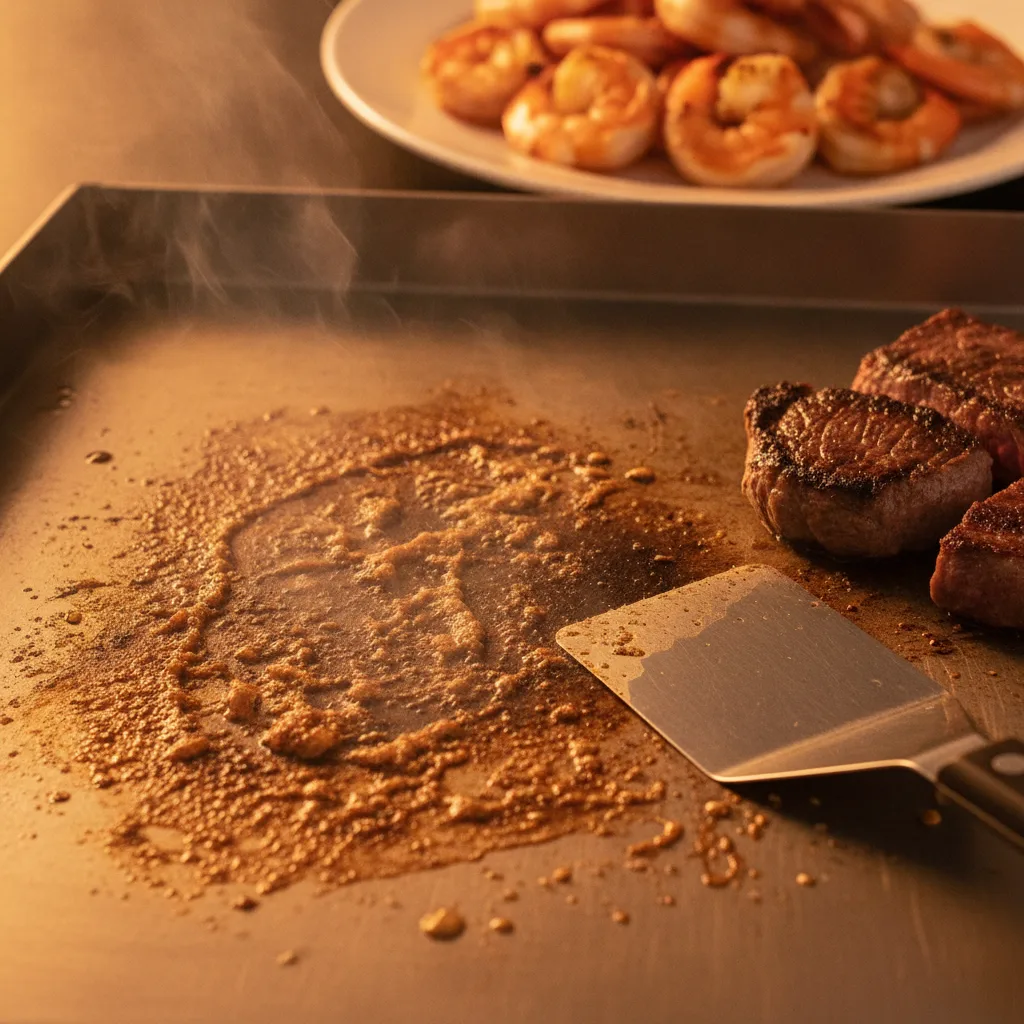
Culinary deglazing, on the other hand, produces a liquid intended to be eaten. It is done immediately after cooking, on a plate that is clean in the food sense of the term, with food-grade liquid only. Cleaning vinegar, degreasing cleaner and scouring pads therefore have no place in this step. The logical order is simple: you cook, deglaze for the sauce, serve, then carry out cleaning deglazing with water before putting the plancha away.
As for temperature, manufacturers generally place cleaning deglazing on a plate that is still hot but not scorching, with some brands such as Forge Adour mentioning a range of around 80 to 120 °C. For a sauce, the reasoning is the same: an overheated plate makes the liquid evaporate before it has time to dissolve the juices.
Which liquid should you use to deglaze a plancha?
Choosing the right deglazing liquid
The choice of liquid determines the character of the sauce. Water remains the most neutral base, stock adds depth, wine and cider give more complex reductions, and vinegars and citrus balance fatty dishes. The following table summarises the most reliable pairings.
| Liquid | Recommended foods | Result on the palate |
|---|---|---|
| Water or lukewarm water | All meats, vegetables | Light jus, neutral base |
| Chicken or beef stock | Chicken, pork, vegetables | Rounder, tastier sauce |
| Dry white wine, Muscadet or Sauvignon | Fish, seafood, poultry | Fresh, tangy notes |
| Red wine, Bordeaux or Côtes du Rhône | Beef, duck, duck breast | Full-bodied, tannic sauce |
| Dry Normandy cider | Pork, poultry, apples | Fruity sweetness |
| Lager or amber beer | Beef, pork, sausages | Malty aromas, slight bitterness |
| Balsamic vinegar | Red meat, grilled vegetables | Sweet and tangy reduction |
| Lemon juice | Fish, prawns, vegetables | Lively, fresh sauce |
PDO cider vinegar also works very well with pork and poultry, replacing part of the cider. In all cases, a few tablespoons are enough: on a 40 to 60 centimetre plate, 10 to 15 centilitres of liquid easily makes a sauce for two to four people.
The method, step by step
Deglazing on the plate
Everything happens in five minutes, just after removing the food. Here is the sequence to follow for successful deglazing.
- Set the meat or fish aside under foil; this resting time also improves tenderness.
- Push the excess fat towards the gutter with the scraper spatula, keeping the brown juices stuck to the plate.
- Lower the thermostat to return to gentle heat: the plate should still whisper, not sizzle violently.
- Pour in the liquid gradually, two to three tablespoons first, then the rest.
- Scrape immediately to loosen the juices, let it simmer until reduced by half, then finish with fat, cream or mustard.
Seasoning is always done at the end of cooking. A reduction concentrates the salt already present in the stock, the marinade or the meat: salting at the start of deglazing almost always leads to a sauce that is too salty.
Good to know
On a wide stainless steel plancha, you can cook on one half of the plate and keep the other, cooler half to make the sauce calmly while guests help themselves.
Five quick sauces made directly on the plate
All these recipes are made on the cooking juices, with a serving spatula and a small whisk or wooden spoon. Quantities are for two to three people.
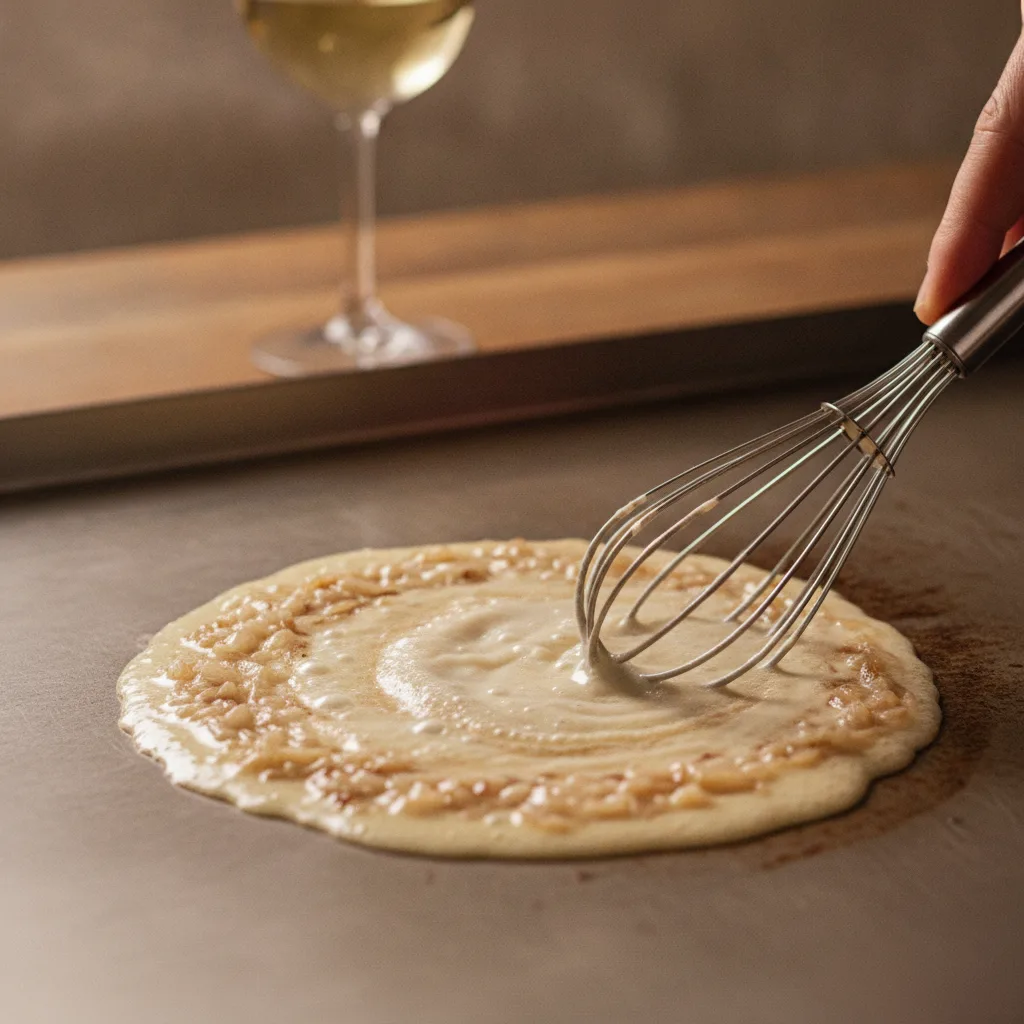
White wine and cream sauce
It goes with chicken, pork, fish and prawns. Sweat a finely chopped shallot in the juices, deglaze with 10 centilitres of dry white wine, reduce by half, then add 10 centilitres of crème fraîche and a teaspoon of mustard. Two minutes to thicken, a grind of pepper, parsley or chives, and it is ready.
Red wine and pepper sauce
It is made for rib steak, duck breast and duck. Deglaze with 10 centilitres of red wine, add 5 centilitres of beef stock and a teaspoon of crushed pepper, reduce gently to a coating consistency, then whisk in a knob of cold butter off the heat. This gives the shine and roundness of a restaurant pepper sauce.
Cider and wholegrain mustard sauce
It goes well with pork, poultry and sausages. Allow 15 centilitres of dry cider, a shallot, a tablespoon of wholegrain mustard and 10 centilitres of cream. The moderate acidity of the cider lightens the cream and highlights the richness of the pork.
Balsamic and honey reduction
It suits beef, duck breast, grilled vegetables and halloumi. Three tablespoons of balsamic vinegar, a teaspoon of honey, 5 centilitres of water or stock, a little thyme. Reduce over gentle heat to a syrupy consistency, watching closely, as the sugar in balsamic caramelises very quickly.
Lemon butter sauce
It is the ideal finish for fish and seafood. The juice of half a lemon, 5 centilitres of stock, a knob of butter, parsley and pepper. It takes less than two minutes to make and should be served immediately to keep the freshness of the citrus.
Can you deglaze with a marinade?
Yes, provided you follow a simple rule based on HACCP-type hygiene principles. A marinade that has been in contact with raw meat, poultry or fish contains micro-organisms. It must never be poured at the end of cooking like a cold seasoning.
There are two solutions: either take a portion of the marinade before putting the raw food in it and keep it for deglazing, or use the used marinade brought to a full boil on the plate for several minutes.
Important
A raw marinade poured onto a lukewarm plate at the very end of service does not always reach a sufficient temperature. If in doubt, always set aside a clean portion before marinating.
Mistakes that ruin a deglazing sauce
The first is flooding the plate. Half a litre of liquid at once makes the temperature drop, prevents reduction and gives a diluted jus. The second is using black, charred juices, which release a persistent bitterness: remove these burnt areas with the spatula before pouring in the liquid, even if it means sacrificing a little flavour. The third is confusing an ingredient with a cleaning product: a degreasing cleaner never goes into a sauce.
One last point: thermal shock to the plate. Brands' recommendations differ regarding very cold water or ice cubes to loosen grease while hot. To protect a stainless steel plancha or an enamelled cast iron plate, it is better to use a small amount of liquid at room temperature and refer to the manufacturer's instructions. A room-temperature liquid deglazes just as well as an ice-cold one, with no risk of warping.
How do you thicken a sauce that is too thin?
Solutions to rescue a deglazing sauce
There are three levers. The first is reduction: simply let the liquid evaporate longer over gentle heat to concentrate the flavours. The second is adding fat, crème fraîche or cold butter added in pieces off the heat. The third, for when you are in a hurry, is a pinch of cornflour diluted in a spoonful of cold water, sprinkled in and then brought to a simmer for a few seconds. This thickening should remain discreet, or it will mask the taste of the cooking juices.
The plate material also makes a difference. On a steel or stainless steel plancha, scraping with a metal spatula is no problem and the juices come away easily. On enamelled cast iron or a non-stick coating, use gentle utensils so as not to scratch the surface. Our Néo, Lux and Anthéa electric planchas are made of stainless steel in France, which allows regular deglazing with no worries for the plate, and our serving spatulas and scraper spatulas are designed for this kind of technique.
A simple technique to make a habit
Mastering deglazing completely changes the result of a plancha meal. You go from simple grilling to a dish with its own sauce, made without an extra pan, in five minutes, with the aromas the food has just left on the plate.
Start with the simplest version, a few centilitres of stock and a knob of butter, then explore white wine, cider or balsamic depending on the day's produce. Once you have mastered the technique, the cleaning deglazing that follows also becomes quicker, since the plate is already largely free of residue. To go further, our guide to choosing your plancha details the criteria to know before buying.
FAQ
Should you oil the plate before cooking to get good juices?
A drizzle of oil on the food rather than on the plate is enough in most cases. Too much fat on the plate produces greasy cooking juices that will give a heavy sauce that is hard to reduce.
Can you make a deglazing sauce with vegetables alone?
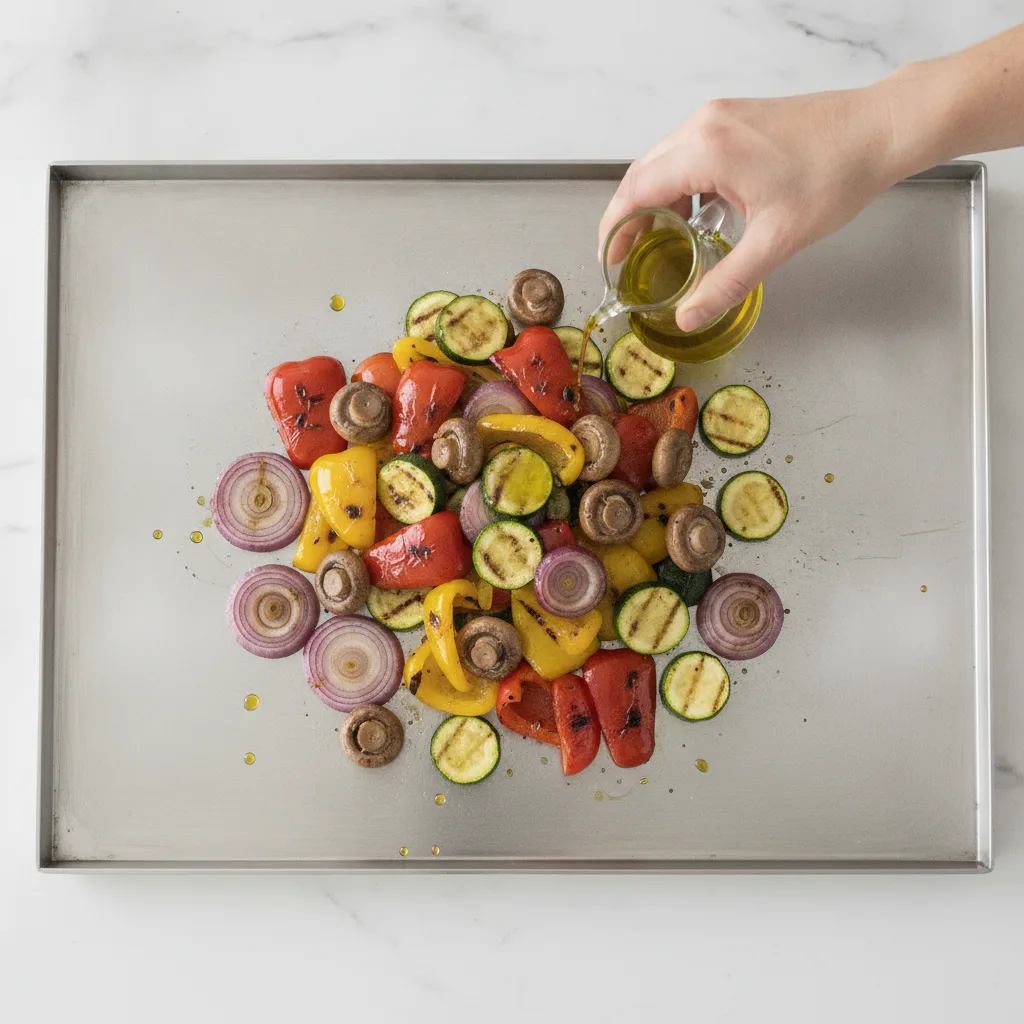
Yes. Onions, peppers, courgettes and mushrooms leave caramelised vegetable juices. Deglazing with vegetable stock and a little balsamic vinegar gives a complete vegetarian sauce.
How long does a deglazing sauce keep?
Like any cooking juices containing cream or butter, it should be eaten immediately. If you make extra, transfer it straight away into a closed container, place it in the fridge and eat it within twenty-four hours after bringing it back to the boil.
Can you deglaze a plancha that is switched off?
The residual heat of a thick stainless steel plate can still dissolve the juices for a few minutes after switching off. However, reduction will be much slower, so it is better to keep gentle heat on.
Is a cooking lid useful for sauces?
It is mainly used to finish cooking gently or to keep meat warm while the sauce reduces alongside. For the reduction itself, leave the plate uncovered so that evaporation can take place.