



 +33 4 78 55 45 69
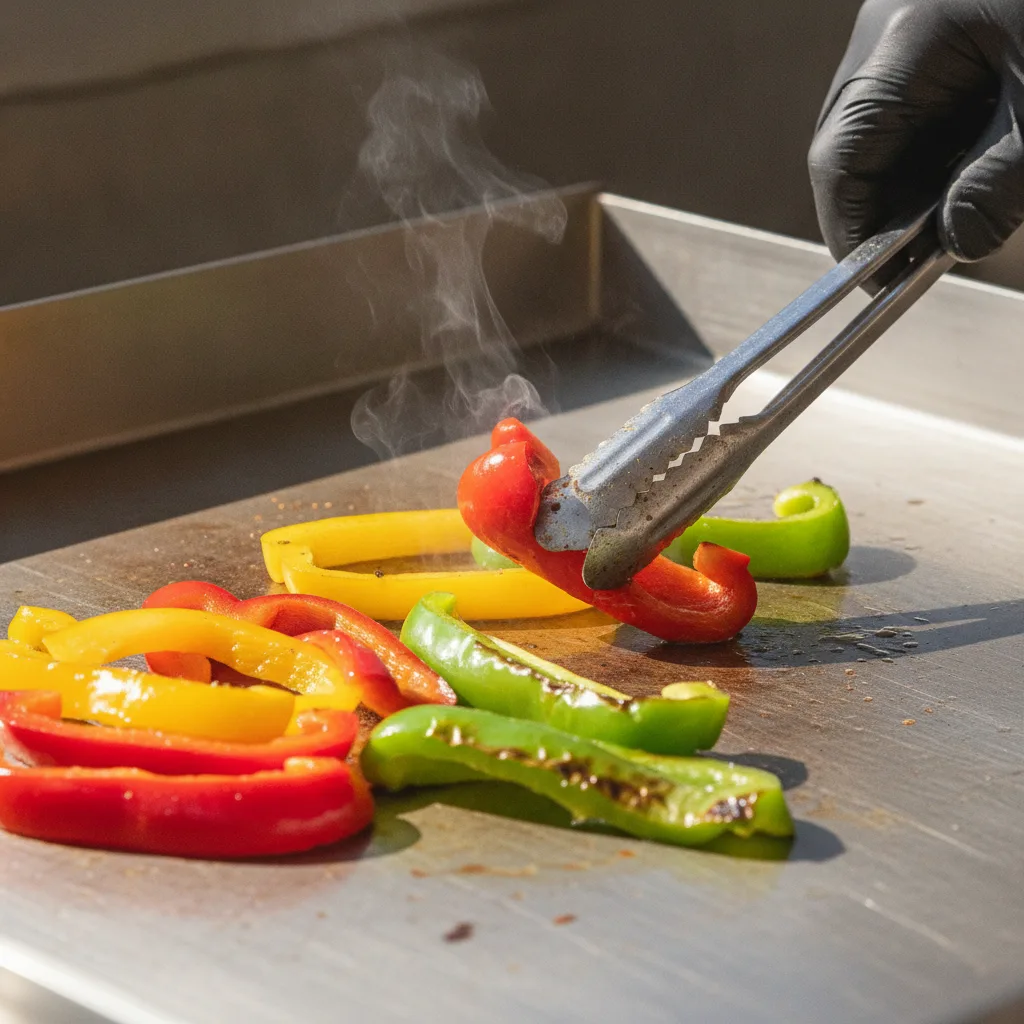
Grilled peppers are one of those simple preparations that divide opinion: tough skin, flesh that is too firm, pieces that stick. Yet with a well-preheated stainless steel plate and a precise method, a recipe for grilled peppers on the plancha gives consistent results and the skin comes off almost by itself.
In this guide, we detail the recipe for grilled peppers on the plancha step by step, cooking times depending on the size of the pieces, the cloche technique for creating condensation, and three easy variations to serve all summer.
Grilled Peppers on the Plancha: Recipe and Easy Peeling
Reading time: ~8 min
- Why peppers turn out better on the plancha than in the oven
- The basic recipe for grilled peppers on the plancha
- How long should you cook peppers on the plancha?
- The cloche technique for skin that comes off by itself
- Three variations from the same cooking
- Mistakes that spoil cooked peppers
- What to serve with grilled peppers from the plancha?
- Going further with grilled peppers on the plancha
- Frequently asked questions
Why peppers turn out better on the plancha than in the oven
The pepper, Capsicum annuum, is a fleshy and very watery vegetable. On a hot cooking plate, direct contact with the stainless steel causes an immediate surface reaction: the skin blisters, the flesh caramelises slightly and the vegetable's natural sugar becomes concentrated.
In the oven, hot air dries more and colour takes longer to develop. The plancha therefore gives you grilled peppers without an oven, with cooking that is light on fat, since a simple drizzle of olive oil is enough to coat the pieces.
This also matters nutritionally. Peppers are known for their richness in vitamin C, a heat-sensitive nutrient that breaks down during long or very intense cooking. Controlled cooking, fairly quick for strips, preserves more of it while achieving the grilled texture you want. This is one of the advantages of plancha cooking on stainless steel plates designed to heat up quickly and hold a stable heat across the whole surface.
The basic recipe for grilled peppers on the plancha
For 4 people, allow 10 minutes of preparation and 15 to 20 minutes of cooking.
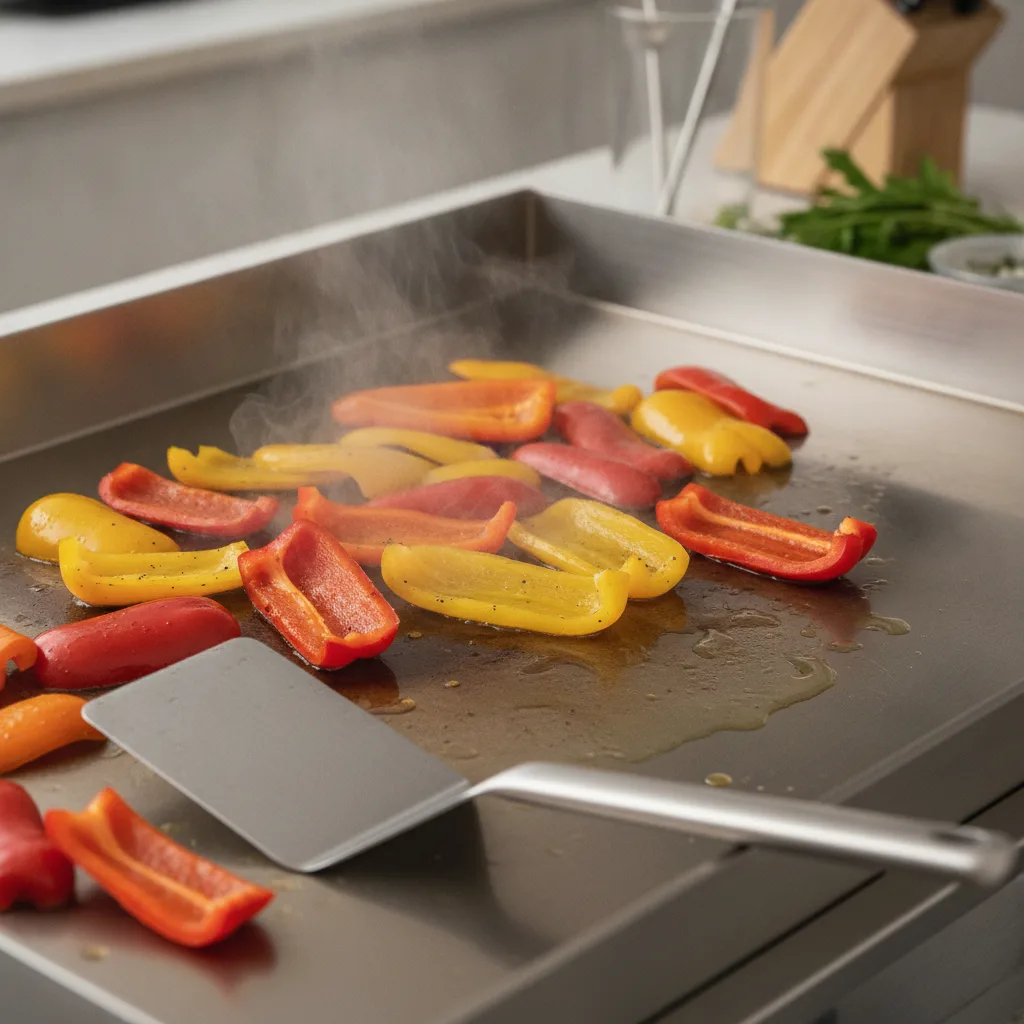
Ingredients for grilled peppers on the plancha
- 4 red, yellow or green peppers
- 2 tablespoons of olive oil
- 1 garlic clove (optional)
- A few sprigs of thyme or basil
- Salt, pepper and possibly a squeeze of lemon juice
Wash and dry the peppers, remove the stalk, carefully deseed them and remove the white membranes, which add a slight bitterness. Then cut into even strips of similar width for uniform cooking.
- Toss the peppers in a bowl with the olive oil, salt, pepper and sliced garlic.
- Preheat the plancha.
- Place the peppers in a single layer on the plate.
- Sear for about 5 minutes over high heat to start the browning.
- Continue for 10 to 15 minutes over medium heat, turning regularly.
- Add the fresh herbs and lemon only when serving.
Direct heat would burn the basil if it were added too early.
Key takeaway
Use oil sparingly. The peppers should be coated, never drowned, otherwise they fry instead of grilling and cause unnecessary splashes.
How long should you cook peppers on the plancha?
Cooking time guidelines on the plancha
The cooking time for pepper strips is generally between 10 and 20 minutes, depending on the cut, the power of the appliance and the texture you want. Here are the guidelines from the most commonly published methods.
| Size | Heat | Indicative time | Result |
|---|---|---|---|
| Thin strips | High heat then medium heat | 10 to 15 min | Crunchy to soft texture |
| Thick strips | Medium heat | 15 to 20 min | Melting flesh |
| Pepper halves | Medium heat, turn halfway through | about 20 min | Ideal for salads and toppings |
| Whole peppers | Medium heat, turn regularly | 20 to 25 min | Blistered skin, easy peeling |
| Halved mini peppers | High heat, flesh side down | 5 to 8 min | Aperitif or stuffed |
Remember the general principle: sear first, then moderate. Heat that is too strong for too long blackens the skin before the flesh is tender. Conversely, a lukewarm plancha makes the vegetable ooze water and leads to stewing with no colour. If you are unsure about your appliance's setting, the guide to plancha power ratings details how surface, watts and type of cooking correspond.
The cloche technique for skin that comes off by itself
Using the cloche to peel peppers easily
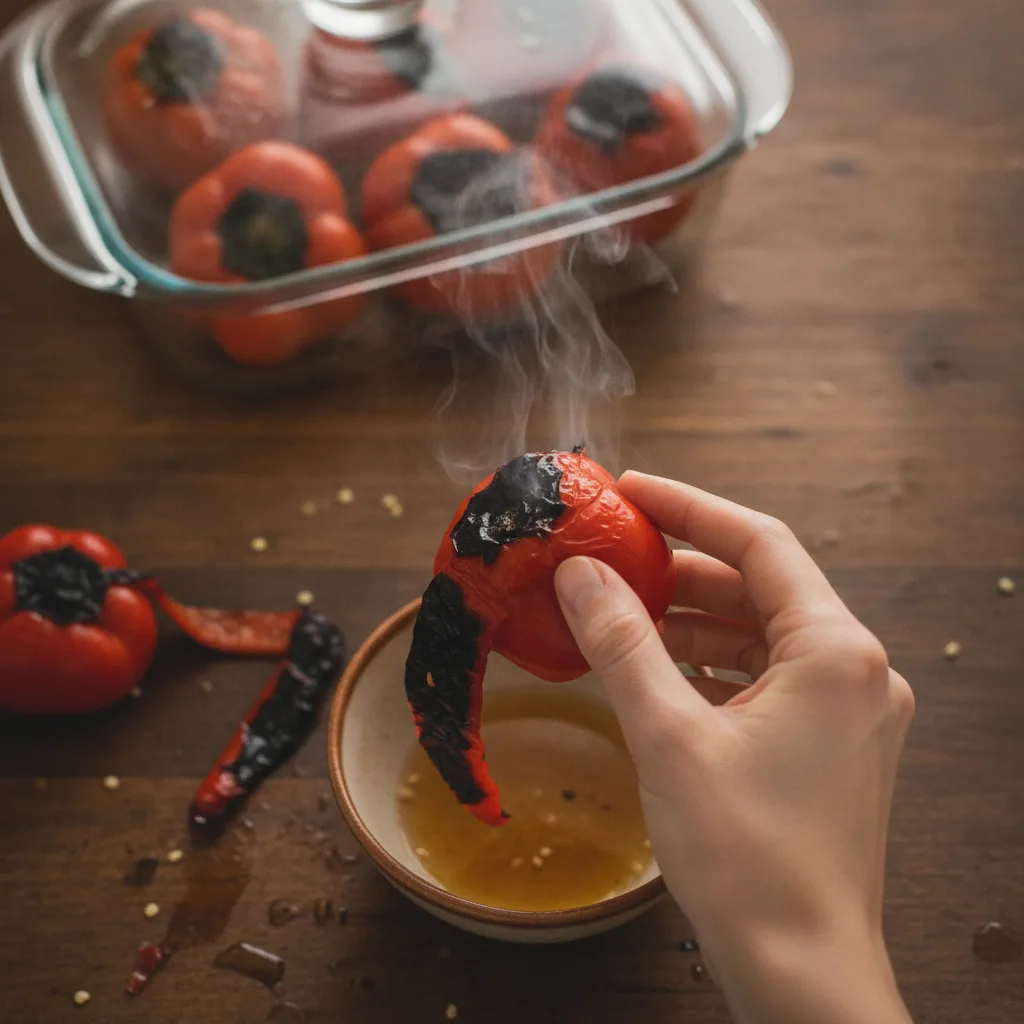
This is the part that interests most people: how to peel grilled peppers without spending a quarter of an hour on it. The answer comes down to one word: condensation. The pepper's skin comes away when a layer of steam forms between the skin and the flesh. So you first need to make it blister, then trap the steam.
Place the whole peppers on the very hot plate. Let them colour side by side for 20 to 25 minutes, until the skin is heavily marked, blistered and blackened in places. You can speed up softening by placing a cooking cloche over them for a few minutes; the enveloping heat softens the thick flesh. Use it sparingly, though: left too long, it increases humidity and erases the grill marks. The stainless steel cloches and lids are designed for this occasional use, alongside direct contact with the plate.
As soon as they come off the plancha, transfer the peppers to a covered container, a bowl covered with film or an airtight box, and leave them to rest for about 10 minutes. The trapped steam loosens the skin. All that remains is to catch it with your fingertips or the tip of a knife: it comes away in one piece without tearing the flesh. Then deseed over a bowl to collect the cooking juices, a concentrate of flavour that will be used in the marinade.
Good to know
Never run the peppers under cold water after resting. You would remove the skin faster, but also a large part of the grilled aromas and caramelised sugars.
Three variations from the same cooking
A single batch of grilled peppers can be used for three different preparations, making it a very time-efficient summer side dish.
As a warm salad, combine peeled grilled red peppers cut into strips with mozzarella or feta, chopped basil, a few capers and a grind of pepper. This version works just as well with pepper halves cooked for about 20 minutes as with thick strips cooled before plating. It is a classic of Mediterranean cooking, best served at room temperature rather than straight from the fridge.
As antipasti, prepare marinated plancha peppers. After peeling, arrange the strips in a deep dish, then pour over a cold marinade of olive oil, sliced garlic, lemon juice, a touch of honey, salt and pepper. Leave for at least two hours in the fridge in an airtight container. The melting flesh absorbs the Mediterranean seasoning and the result is even better the next day. Serve on toast, on its own or with burrata.
As a coulis, blend the peeled peppers with their cooking juices, a drizzle of olive oil, a garlic clove confited on the plate and a pinch of salt. You get a smooth, glossy sauce, perfect with a piece of beef, a duck breast or white fish. Reheat the coulis gently without boiling to keep its colour.
Mistakes that spoil cooked peppers
Common mistakes when cooking peppers on the plancha
The first is still overloading the plate. When the pieces overlap, contact with the stainless steel decreases, the vegetables release their water and steam. Work in a single layer, even if it means two servings. This is also a good argument for choosing a cooking surface suited to the number of guests, such as the Lux 600 for a family table or the Lux 830 for large gatherings.
Then come two opposite reflexes. Stirring constantly prevents grill marks from forming, while never touching the peppers makes them stick and burn on hot spots. The right rhythm is to turn them every two to three minutes with a scraper spatula or serving tongs. Finally, do not salt thin strips too early: salt draws out water before browning has had time to form.
What to serve with grilled peppers from the plancha?
These peppers naturally go with everything that comes off the same plate. They pair with grilled fish, skewers, chicken, lamb chops and seasonal vegetables cooked together: courgettes, aubergines, onions and tomatoes. In that case, always put the vegetables that take longest first, peppers and aubergines, then add the more tender ones.
In a vegetarian version, they complement rice, quinoa, a mixed salad or pepper halves seared for 5 minutes flesh side down before being stuffed and returned for 10 to 12 minutes over medium heat.
For storage, let them cool quickly, place them in an airtight container in the fridge and eat them promptly. Marinated peppers improve over one or two days, provided they are fully covered with olive oil.
Going further with grilled peppers on the plancha
Successful grilled peppers on the plancha come down to three decisions: serious preheating, even cutting and moving from high to medium heat. Add the technique of resting in a covered container and peeling is no longer a chore.
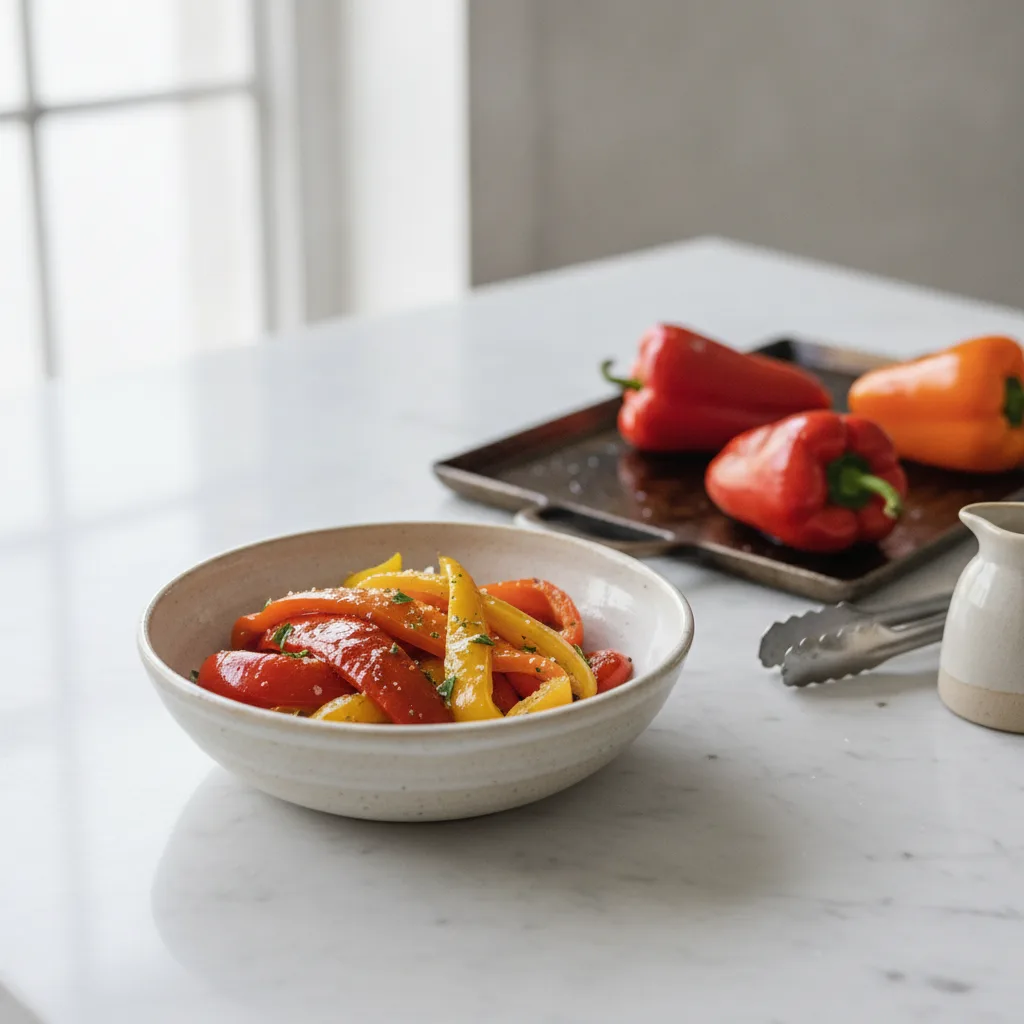
On a quality stainless steel plate made in France, the heat stays even from start to finish, which makes all the difference with a vegetable as thick as the pepper. All that remains is to turn the same batch into a salad, antipasti or coulis.
In summary: grilled peppers on the plancha
To succeed with grilled peppers on the plancha, remember a well-preheated plate, even cutting, starting on high heat then cooking over medium heat, without overloading. With resting in a covered container and, if needed, the cloche technique, the skin comes off easily and you can turn the same preparation into a salad, antipasti or coulis.
FAQ
Should you peel peppers before putting them on the plancha?
No. The skin keeps very well when cooking strips; it protects the flesh and adds flavour. Peeling is done after cooking, only for whole or halved peppers intended for a melting texture.
Can you grill frozen peppers on the plancha?
It is not recommended as they are. Frozen peppers release a lot of water on contact with the plate and stew. If that is all you have, thaw them completely, dry them carefully, then sear over high heat on a very hot plate.
Which pepper variety should you choose for the plancha?
Red and yellow peppers, being riper, are sweeter and soften quickly. Green peppers, harvested earlier, stay firmer and slightly bitter; they are better suited to mixed grilled vegetables than to being eaten on their own.
How do you stop peppers sticking to the stainless steel plate?
Sticking almost always comes from a plate that is not hot enough. Wait until preheating is complete, oil the vegetables rather than the plate and do not try to lift a piece too early: it releases by itself once the crust has formed.
Can you prepare grilled peppers the day before?
Yes, it is even recommended for marinated versions. Cook, peel, season, then keep in the fridge in an airtight container. Take them out 30 minutes before serving so that the olive oil becomes fluid again and the flavours come through.
Is an electric plancha as good as a gas plancha for vegetables?
Yes, and often better. The thermostat lets you control the move from high to medium heat precisely, which is crucial for thick vegetables like peppers, with no cold zones on the plate.