



 +33 4 78 55 45 69
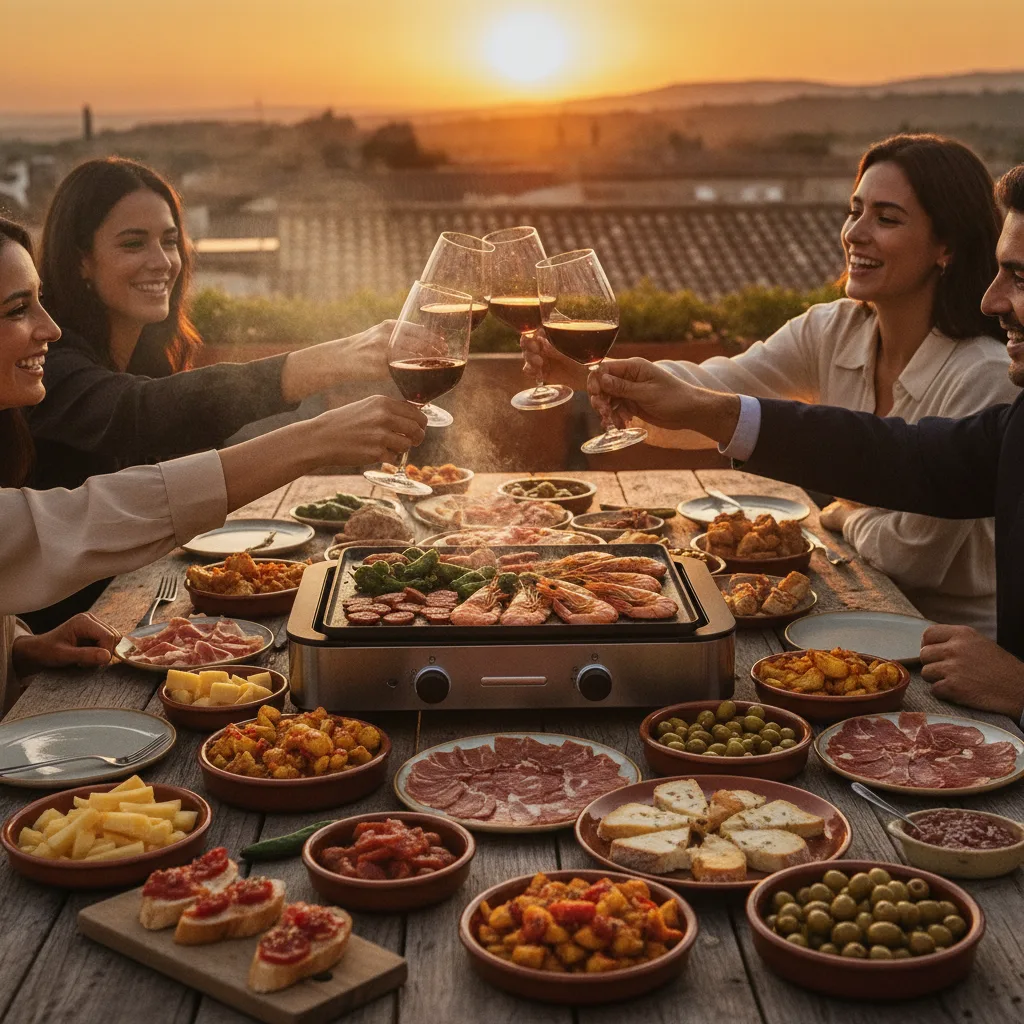
A successful tapas evening comes down to a few things: simple produce, a scorching plate and a service rhythm that never stops. That is exactly what the plancha offers. Born in northern Spain and now the reference tool for convivial aperitifs, it is ideal for simple Spanish tapas and continuous service.
In this guide, we bring together 12 Spanish tapas recipes for the plancha, from gambas al ajillo to pimientos de padrón, with temperatures, cooking times and the planning required. The goal is simple: to have you dining standing up, glass in hand, as in a bar in San Sebastián.
Spanish Tapas on the Plancha: 12 Easy Recipes 2027
Reading time: ~10 min
- Why the plancha is the best ally for tapas
- Seafood tapas on the plancha
- Grilled vegetable tapas on the plancha
- Meat and Iberian charcuterie on the plate
- Temperatures and cooking times: the reference table
- Putting together a Spanish tapas board
- How to organise a tapas evening: quantities and timing
- What equipment for easy plancha tapas?
- Going further with the plancha for your Spanish tapas
- FAQ on the plancha and Spanish tapas
Why the plancha is the best ally for tapas
Plancha cooking comes directly from the Spanish Basque Country, where chipirones and prawns are seared on a bare plate, without excess fat and without flames. This quick searing creates a golden crust on the surface while ensuring the preservation of juices and nutrients inside the food, as most cooking guides on Spanish tapas point out. Unlike a barbecue, the solid surface holds the juices, so you can collect them and pour them over the tapas when serving.
The other advantage is practical. A stainless steel electric plancha is controlled by thermostat, can be set up on a terrace or in a kitchen, and lets you cook in small batches while your guests eat. That is the whole point of a convivial aperitif where bites arrive throughout the evening. Our Néo, Lux and Anthéa models, made in France, heat up quickly and keep an even heat, essential for cooking short batches one after another without losing power.
Seafood tapas on the plancha
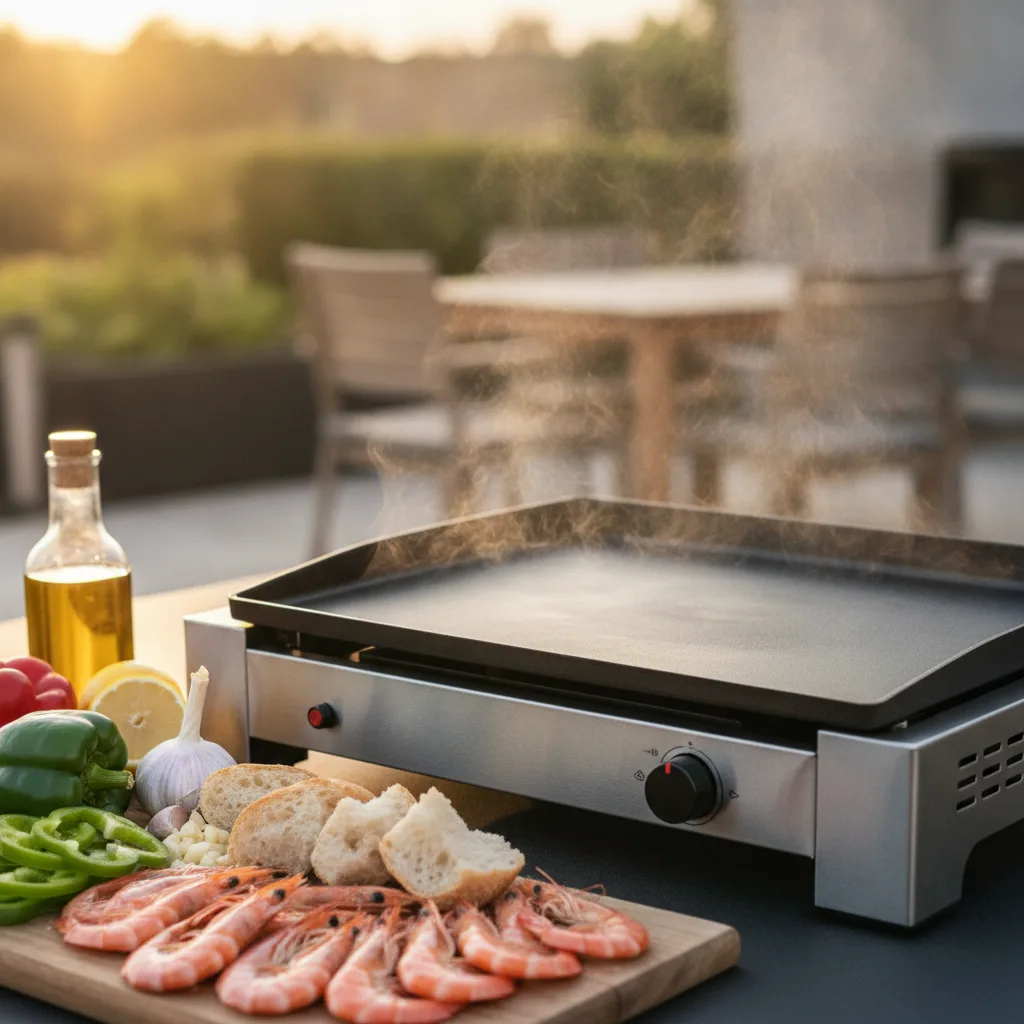
Seafood tapas on the plancha are the most spectacular and the quickest. As a general rule, allow 2 to 4 minutes per side at most, never more, or the texture becomes rubbery.
Seafood tapas ideas on the plancha
Gambas al ajillo are cooked whole, simply sprinkled with coarse salt, for about 2 minutes per side until the shell turns orange. At the end of cooking, add a spoonful of chopped garlic and parsley to the plate with a drizzle of extra virgin olive oil, then stir for just 20 seconds so the garlic does not burn.
Chipirones on the plancha, those small squid emblematic of the Spanish Basque Country, need a very hot plate and careful preparation. Thaw them slowly in the fridge, dry them perfectly with kitchen paper, then sear them on the oiled surface until the edges curl and colour slightly. Serve them with a majado, the pounded mixture of garlic, parsley and olive oil that traditionally accompanies grilled seafood.
Squid on the plancha as tapas gains a lot of depth when paired with chorizo. A reference Basque recipe suggests a garlic, parsley and olive oil marinade during preparation, cooking the rings for about 10 minutes, then adding slices of Iberian chorizo for a further 5 minutes so that the fragrant fat coats the squid.
Pulpo a la plancha requires octopus that is already cooked and tender. Simply slice the tentacles, sear them for 2 minutes per side for crispy edges, then dust them with pimentón de la Vera, the Spanish PDO smoked paprika, with a dash of olive oil and fleur de sel.
Good to know
Always salt seafood and meat at the end of cooking. Salt applied too early draws water out of the food and dries the flesh, a reflex mentioned in every plancha cooking guide.
Grilled vegetable tapas on the plancha
Grilled vegetable tapas are the most economical and often the most requested. Pimientos de padrón, small green peppers with a Spanish designation of origin, are cooked whole, with no oil on the peppers but on a lightly oiled plate, until the skin blisters and blackens in places. Allow 4 to 5 minutes, stirring, then sprinkle with coarse salt. The game is to discover which one will be hot, a classic of the Spanish aperitif on the plancha.
Grilled vegetable tapas ideas on the plancha
Spanish-style grilled peppers, red and yellow in strips, need moderate heat and a little more time, around 8 to 10 minutes, so the flesh softens without burning. Season them while warm with garlic, parsley and extra virgin olive oil; they are as good hot as cold the next day.
The setas a la plancha recipe is disarmingly simple. Oyster mushrooms or button mushrooms in large pieces, a hot plate, no fat at the start so the water can evaporate, then a drizzle of oil, garlic and parsley at the very end. Asparagus on the plancha follows the same logic: 5 to 6 minutes, rolling them regularly, with minimal seasoning, olive oil and salt, as recommended in the tapas selections published for International Tapas Day.
Add slices of country bread toasted on the plancha, the ideal base for pan con tomate, and thick slices of aubergine or courgette seared and then drizzled with sherry vinegar.
Meat and Iberian charcuterie on the plate
Grilled Iberian chorizo is the quickest tapa of all: two minutes per side are enough to make it melting and release its red fat, which you collect on bread. Pork tenderloin with chorizo on the plancha, a recipe widely shared on French-language cooking sites such as Chef Simon, consists of alternating pork medallions and chorizo slices on small skewers, seared over high heat and then finished at a gentler temperature.
Meat and charcuterie ideas on the plancha
Add chicken skewers marinated in smoked paprika, pinchos de lomo and, for the cold part, thinly sliced Serrano ham and cubes of Manchego cheese drizzled with olive oil. These last two tapas do not go on the plate; they balance the board.
Temperatures and cooking times: the reference table
Here are the guidelines we use with our stainless steel electric planchas, to be adjusted according to the thickness of the produce.
| Tapa | Cooking temperature | Indicative time |
|---|---|---|
| Whole prawns | 240 to 260 °C | 2 min per side |
| Chipirones and squid | 240 to 260 °C | 2 to 4 min per side |
| Sliced octopus | 240 °C | 2 min per side |
| Pimientos de padrón | 200 to 220 °C | 4 to 5 min |
| Pepper strips | 180 to 200 °C | 8 to 10 min |
| Setas and asparagus | 200 °C | 5 to 6 min |
| Chorizo and pork tenderloin | 220 to 240 °C | 2 to 3 min per side |
Should you oil the plancha before cooking tapas? Yes, but very lightly. Oiling the cooking surface with a brush or cloth, using an oil that withstands heat, is enough to prevent sticking without creating smoke. For mushrooms and very watery vegetables, start dry and oil at the end of cooking. Our plancha user guide explains these settings in detail.
Putting together a Spanish tapas board
A Spanish tapas board for an aperitif is built on a balance between cold and hot tapas. The cold ones are prepared in advance and stay on the table throughout, while the hot ones arrive in waves from the plancha. Allow a third Iberian charcuterie and cheese, a third vegetables and a third seafood.
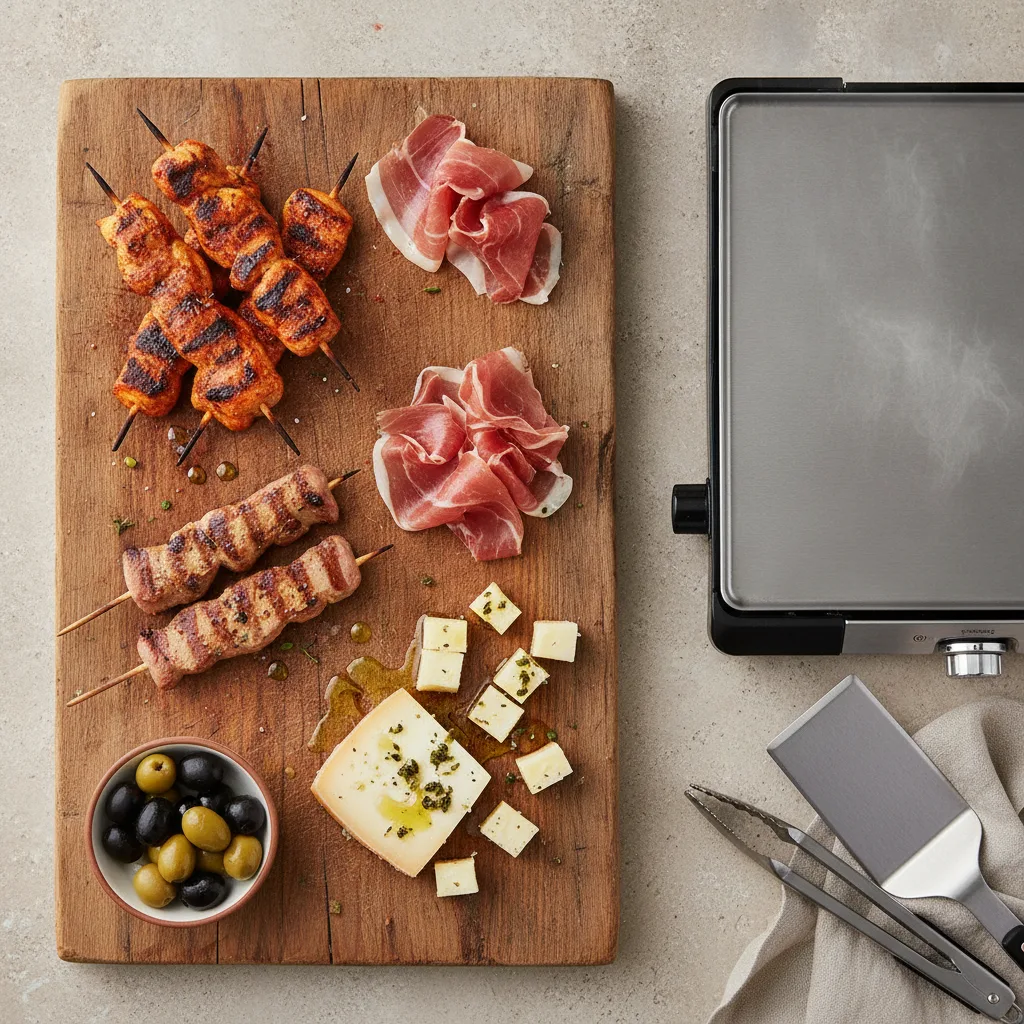
For a successful homemade Spanish tapas evening, the basic assortment includes a few essentials of the Spanish pantry.
- Serrano ham, Iberian chorizo, lomo and PDO Manchego
- Extra virgin olive oil, pimentón de la Vera, garlic, flat-leaf parsley, sherry vinegar
- Country bread, olives, piquillos, tortilla española and patatas bravas for the hot part in the oven
Arrange the tapas in small containers and on a large wooden board, with wooden picks for eating standing up. A stainless steel splashback behind the plancha and a trolley with side shelves make serving much easier.
How to organise a tapas evening: quantities and timing
How many tapas should you plan per person? Specialist guides recommend about 50 g of charcuterie per person when it is served as a simple tasting, and 80 to 100 g if it is the centrepiece of the meal. In practice, plan 6 to 8 bites per guest for an aperitif dinner, varying the textures.
Quantities and timing for a tapas evening on the plancha
Organisation comes down to three stages. The day before, prepare the cold tapas, the sauces, the majado and the marinades. On the day, cut the vegetables, thaw the squid in the fridge and take the charcuterie out an hour beforehand. When the guests arrive, preheat the plancha for 10 minutes, then cook in small batches of two or three tapas at a time. Can you prepare plancha tapas in advance? Vegetables yes, they are excellent warm or cold. Seafood no, it should be served within a minute of cooking.
Key takeaway
A cooking surface of 600 mm comfortably serves tapas for 6 to 8 people, cooking two different preparations at the same time on separate zones.
What equipment for easy plancha tapas?
For this type of evening, three things really matter. A solid stainless steel plate that handles thermal shocks and can be cleaned without damaging a coating, enough power to heat up quickly between batches, and suitable utensils. A scraper spatula, a serving spatula and tongs let you manage several cooking processes at once; our accessory packs are grouped on our website.
In terms of formats, the Néo 420 Plancha (up to 5 guests) suits a couple or a small table, the Lux 600 (up to 10 guests) is the versatile format for evenings with friends, and the Lux 830 and Anthéa 870 (up to 15 and 16 guests) let you entertain on a large scale. A cooking lid is a real plus for finishing skewers or keeping tapas warm. To choose your format, our dedicated guide is available.
At the end of the evening, cleaning is done while the plate is still warm, with a scouring pad and a degreaser suitable for stainless steel, followed by rinsing and careful drying. Our detailed recommendations are in our stainless steel plancha cleaning guide.
Going further with the plancha for your Spanish tapas
Tapas are probably the best demonstration of what a plancha can do: short cooking, raw produce and continuous service that keeps everyone around the plate. With a dozen recipes mastered, known temperatures and planning ahead, you can entertain without leaving the conversation.
Our stainless steel electric planchas made in France are designed precisely for this use, with the heat-up speed and even heat needed for a Spanish-style aperitif.
In summary: the plancha and Spanish tapas
With a properly sized stainless steel electric plancha, a few Spanish tapas recipes mastered and good organisation, you can serve prawns, chipirones, grilled vegetables and chorizo continuously without leaving your guests.
All that remains is to adapt the quantities to your table and choose the most practical plancha size to turn every aperitif into a real tapas evening.
FAQ on the plancha and Spanish tapas
Which wine or drink should you serve with plancha tapas?
A crisp, dry white such as a txakoli from the Spanish Basque Country or an albariño goes well with seafood, while a light red from Rioja pairs with chorizo and meat. For alcohol-free versions, a lime and smoked paprika lemonade works very well.
Can you make tapas on the plancha indoors?
Yes, with an electric plancha, provided you cook at a controlled temperature, collect the fat and ventilate the room. Vegetables and marinated seafood produce little smoke, unlike very fatty meats.
Should you use a smooth or ribbed plancha for tapas?
A smooth surface is preferable: it holds the juices, lets you work the garlic and oil directly on the plate and stops small pieces such as chipirones or pimientos from falling through.
How do you stop prawns sticking to the plate?
Dry them carefully before cooking, wait until the plancha is really up to temperature and oil the surface rather than the produce. Do not move them during the first minute; they release by themselves once the crust has formed.
How much plate surface should you plan if you are cooking for twelve?
Beyond ten guests, a size of 800 mm or more avoids overcrowding the surface. Cooking on an overloaded plate makes the temperature drop and the food boils instead of searing.