



 +33 4 78 55 45 69
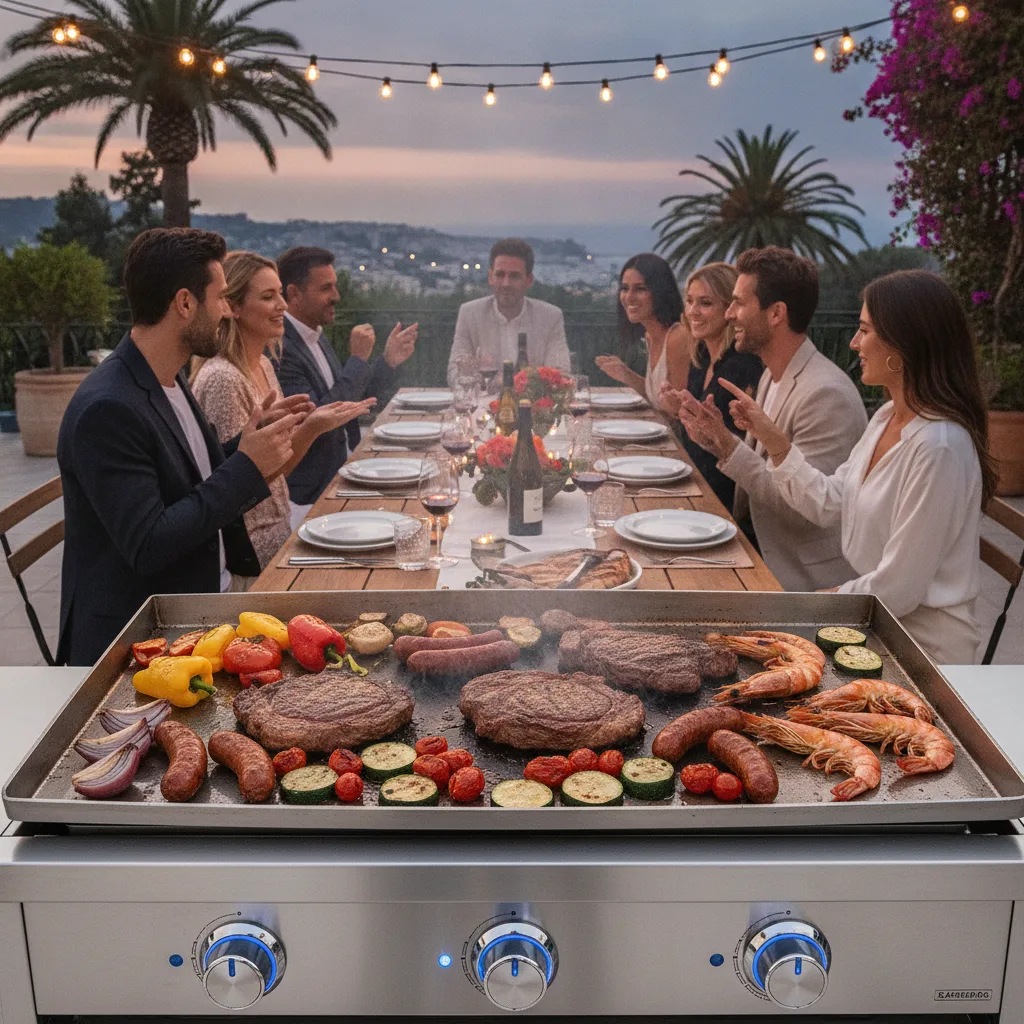
Entertaining eight, ten or twelve guests completely changes how you approach buying a cooking appliance. An electric plancha with a large cooking surface is not just a wider plancha; it is a balance between usable surface, rated power and heat control. If poorly sized, a large plate cooks slowly, cools as soon as food is placed on it and becomes difficult to clean.
Well chosen, on the other hand, it lets you serve the whole table at the same time, without juggling several batches. Here are concrete guidelines for deciding in 2027, based on the number of people you actually entertain.
Electric Plancha with a Large Cooking Surface: 2027 Guide
Reading time: ~9 min
- Large electric plancha: what exactly are we talking about?
- What cooking surface for the number of guests?
- What power for a large electric plancha?
- Independent heating zones: from when?
- Stainless steel, enamelled cast iron or aluminium: which material for a large plate?
- Comparison of large electric planchas: what the market shows
- Size, safety and indoor or outdoor use
- Cleaning a large plate after a big gathering
- Our summary for choosing well
- FAQ
Large electric plancha: what exactly are we talking about?
Usable surface vs overall dimensions
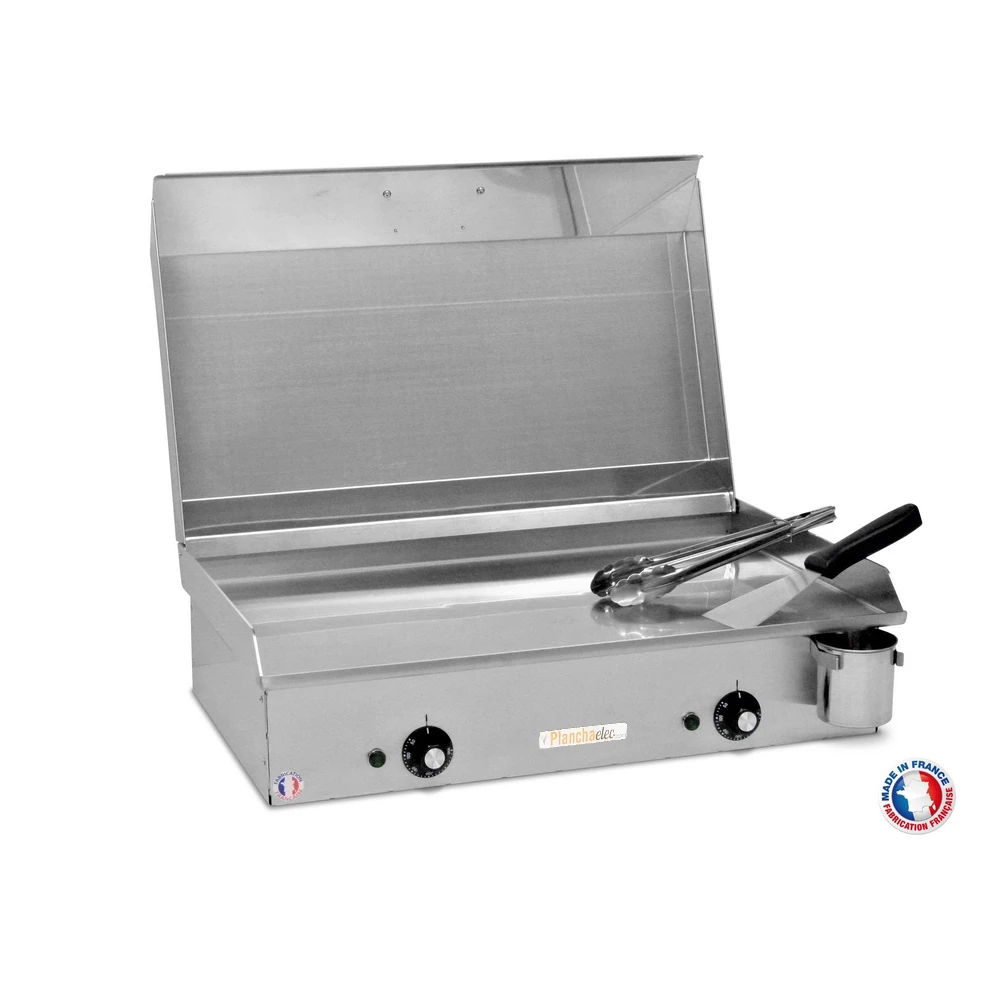
The first point to clarify is the difference between the usable surface and the overall dimensions of the appliance. Product sheets often state the full footprint, including handles, control panel and edges, whereas only the area actually heated by the element matters to you. A plancha advertised as 70 cm wide may offer only about sixty centimetres of usable plate, with the outer zone always a little cooler, which is actually useful for keeping food warm.
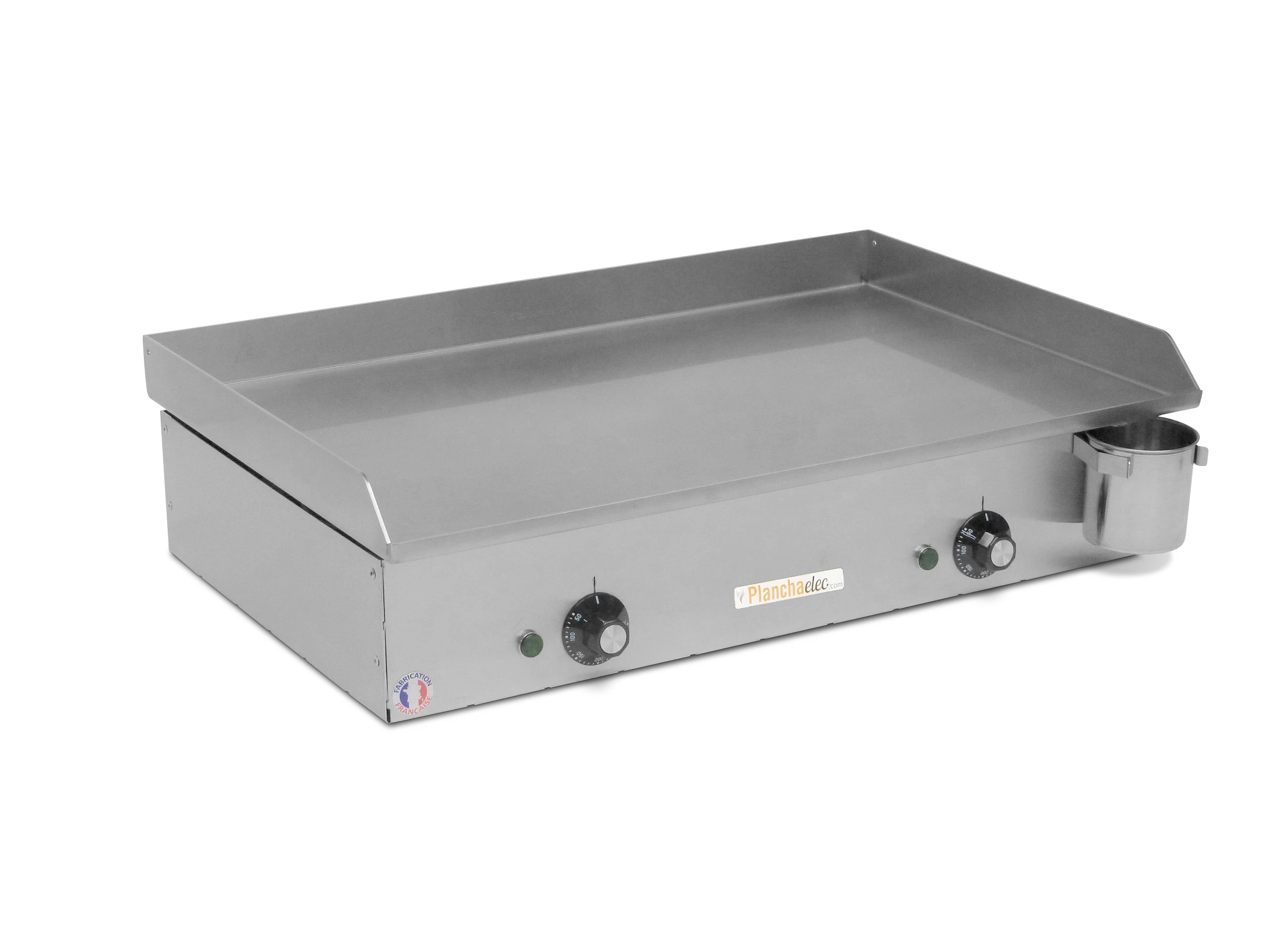
When comparing two models, bring everything back to the same unit: the usable cooking surface in square centimetres, obtained by multiplying the length by the width of the plate.
When do we talk about a large surface?
Second point: the idea of a large surface is relative. Consumer buying guides generally place the switch to a large format at six regular guests. Below that, an intermediate size is more than enough. Beyond eight people, a truly wide model becomes comfortable, not for the sake of the figure, but because it allows meat, fish and vegetables to be cooked at the same time without getting in each other's way.
What cooking surface for the number of guests?
Surface guidelines by number of guests
The clearest and most widely cited guideline comes from Que Choisir, which recommends allowing at least 250 cm² per guest. This figure seems abstract, but it becomes very meaningful once translated into sizes. A 60 x 40 cm plate represents about 2,400 cm², which corresponds to six to eight people, provided you do not want to cook everything at once. Sizes over 2,500 cm² fall into the category of tables of eight to ten people.
A complementary reading by plate width gives other practical guidelines: 30 to 40 cm for four to five people, 50 to 60 cm for a family or about ten guests, and 70 to 80 cm for a dozen people.
Here is how these guidelines combine in practice, bearing in mind that it is always better to go one size up if you entertain often.
| Plate size | Approximate usable surface | Number of guests | Recommended power |
|---|---|---|---|
| 30 to 40 cm wide | Less than 1,200 cm² | 4 to 5 people | 1,800 to 2,000 W |
| 50 to 60 cm wide | About 1,500 to 2,400 cm² | 6 to 8 people | 2,000 to 2,300 W |
| 60 x 40 cm | About 2,400 cm² | 6 to 8 people | 2,300 W and above |
| 70 to 80 cm wide | Over 2,500 cm² | 10 to 12 people | 2,500 W and above, ideally multi-zone |
These power values follow the threshold used by most French guides, namely a minimum of 2,000 W for family use, with a marked preference for 2,300 to 2,500 W on large sizes. If you are still unsure about sizing, our dedicated guide to choosing the right size for a large table explains the reasoning in detail.
What power for a large electric plancha?
The right power-to-surface ratio
The question is not absolute power, but the ratio between watts and square centimetres. A 2,400 cm² plate powered by 1,800 W will heat properly when empty, then collapse thermally as soon as you place eight cold steaks on it. This is exactly what large gatherings dread: a plate that boils instead of searing. Conversely, generous rated power combined with a thick plate provides an energy reserve that absorbs successive loads.
Thermal inertia and regulation
Two parameters complement power. First, thermal inertia, linked to the thickness and material of the plate, which determines its ability to cope with a large amount of food being placed on it. Second, thermostatic regulation, which must bring the heat back quickly and smoothly. A good large family electric plancha is therefore judged by its stability under full load, not by how quickly it heats up when empty. Our full explanations on power ratings cover this subject in detail.
Good to know
An XXL electric plancha does not necessarily heat up more slowly than a small model. Manufacturers size the heating element according to the surface, and it is the watts-per-square-centimetre ratio that determines heat-up time, not size alone.
Independent heating zones: from when?
Why independent heating zones?
As soon as you cook for six to eight people, the question of heating zones becomes central. Several buying guides highlight the benefit of two or three separately adjustable zones, to cook at different temperatures at the same time. In practice:
- A very hot zone is used to sear meat and king prawns.
- A moderate zone lets you finish a fish or soften vegetables without burning them.
- The edge of the plate keeps portions that are already ready warm.
Below six guests, a single well-regulated zone is enough. Beyond that, a multi-zone electric plancha saves considerable time and avoids the classic group-meal problem of starters served cold because the plate was busy. On an electric plancha for 8 people, two zones are in our view the right compromise between cooking comfort and ease of use.
Stainless steel, enamelled cast iron or aluminium: which material for a large plate?
Market comparisons cite three families of plates. Non-stick aluminium is light, heats up quickly and is easy to clean, but its coating wears and does not cope well with repeated high temperatures or metal utensils. Enamelled cast iron plates are often praised for their thermal inertia, which makes them a consistent option for an XXL enamelled cast iron electric plancha, at the cost of weight and an enamel that is sensitive to knocks. Finally, brushed stainless steel plates combine robustness, no coating to look after and even heating when the thickness is sufficient.
This last choice is the one we have always championed at Planchaelec, with large-surface stainless steel electric planchas made in France. Stainless steel is not damaged by scraping, can be deglazed with water at the end of cooking and keeps its appearance for years. Our detailed comparison between stainless steel and enamelled cast iron looks at this choice again.
Comparison of large electric planchas: what the market shows
A comparison of large electric planchas quickly reveals a gap between the sales pitch and the real figures. The Tefal Maxi Plancha XXL, reference CB690D12, is measured by some comparisons at 47 x 33 cm, or about 1,550 cm², a surface that remains in the four-to-six-person category according to the 250 cm² per guest guideline. The Riviera & Bar QP350A is credited with 1,900 cm² by a specialist comparison, placing it rather on the side of seven to eight guests. A reference such as the Essentielb EPL4 is advertised at 2,400 cm², and therefore in the zone of six to eight people comfortably.
| Model | Advertised surface | Estimated capacity (250 cm²/guest guideline) |
|---|---|---|
| Tefal Maxi Plancha XXL (CB690D12) | 47 x 33 cm, or about 1,550 cm² | 4 to 6 people |
| Riviera & Bar QP350A | About 1,900 cm² | 7 to 8 people |
| Essentielb EPL4 | About 2,400 cm² | 6 to 8 people |
In other words, an XXL label on a box does not guarantee capacity for ten. The most reliable method remains to divide the advertised usable surface by 250 to get a realistic number of guests, then check the power and the number of zones. This is also why we favour wide sizes in our Lux and Anthéa ranges rather than compact plates sold as family models.
Size, safety and indoor or outdoor use
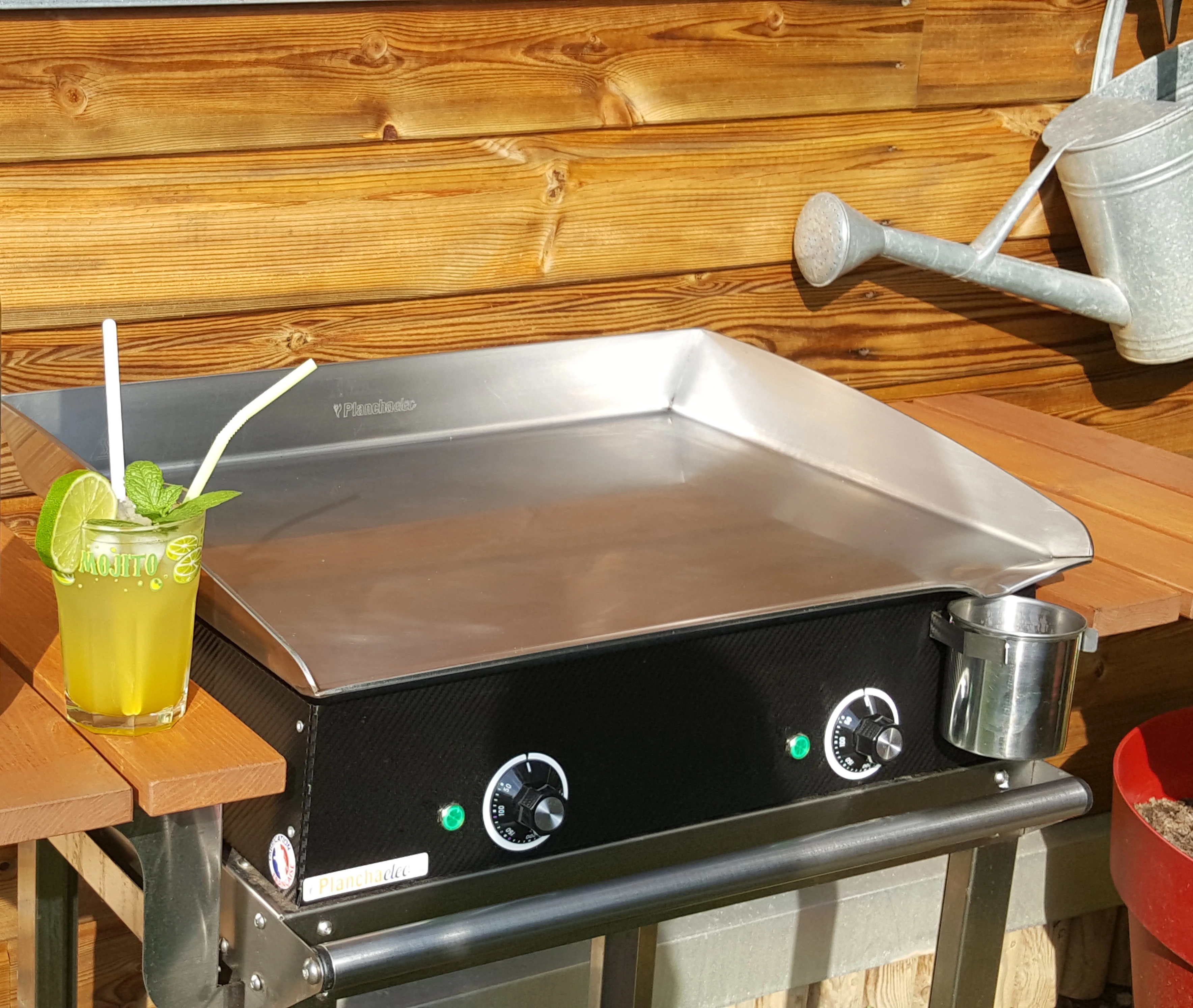
A large plate involves an often underestimated constraint: the space available. Before buying, measure the worktop or table that will hold the appliance, adding a free area on each side to put down dishes and handle the spatula. A 70 cm plancha placed on an 80 cm garden table leaves nothing around it. To avoid this trap, a dedicated trolley or suitable unit solves the problem and frees up the meal, with storage for utensils and sauces as a bonus.
In terms of safety, check several points before buying:
- The CE marking, which certifies the electrical conformity of the cooking appliance.
- Stability ensured by non-slip feet.
- A detachable power cord, which makes storage easier.
- The IP rating if the appliance stays on the terrace or by the pool, to know its protection against water splashes.
A protective cover significantly extends the life of the whole set-up. The advantage of electric is precisely that it moves easily from indoors to outdoors, with no gas bottle to handle and no open flame, a subject we cover in our tips for smoke-free indoor plancha cooking.
Key takeaway
Two medium appliances do not replace a single large plate, as they take up two sockets, double the cleaning and prevent you from managing simultaneous cooking at a glance.
Cleaning a large plate after a big gathering
The larger the surface, the more the cleaning method matters. On a stainless steel plate, the most effective action is to act while the plancha is still hot, scraping residue towards the grease tray with a scraper spatula, then deglazing with a little water or ice cubes to loosen the caramelised juices. A pass with a suitable scouring pad and a specific degreaser is then enough to restore a clean plate, with no coating to protect.
This is where stainless steel has the edge over non-stick plates, which do not allow vigorous scraping and age with repeated cooking under heavy loads. The complete cleaning procedure, including for a heavily soiled plate, details each step.
Our summary for choosing well
For a large table, the buying logic comes down to three decisions. First, size the usable surface using the 250 cm² per guest guideline, aiming for over 2,400 to 2,500 cm² if you regularly entertain eight to ten people. Next, insist on consistent power, 2,300 to 2,500 W or more on wide sizes, with reliable thermostatic regulation and two heating zones as soon as the table exceeds six. Finally, choose a durable material; brushed stainless steel remains in our view the best compromise between inertia, robustness and ease of maintenance.
To refine your selection according to your actual use, our buying guide details each criterion, and our advisers are available to answer your questions.
FAQ
Can a 2,500 W plancha be plugged into a standard outdoor socket?
Yes, provided the socket is connected to a 16 A circuit in good condition and protected by a residual current device. Avoid coiled or thin extension cables, which cause losses and abnormal heating of the cable.
Do you need a lid on a large plancha?
A lid is not essential for searing, but it becomes very useful on large surfaces for finishing cooking gently, reheating portions or cooking thicker vegetables. It also protects the plate between services.
How long should you allow for preheating before guests arrive?
It depends on the power-to-surface ratio and the thickness of the plate. The right reflex is to start heating before taking the food out of the fridge, and to check the temperature with a few drops of water, which should bead rather than evaporate instantly.
Does a large plancha use much more electricity?
Consumption depends on power and duration of use, not on surface alone. A wide plate often lets you serve everyone in a single session, which limits total heating time compared with cooking in several batches.
Can you use a large electric plancha indoors?
Yes, that is one of the advantages of electric. You just need a ventilated room, a cooker hood if possible, and to avoid heating fats too high to limit smoke.