



 +33 4 78 55 45 69
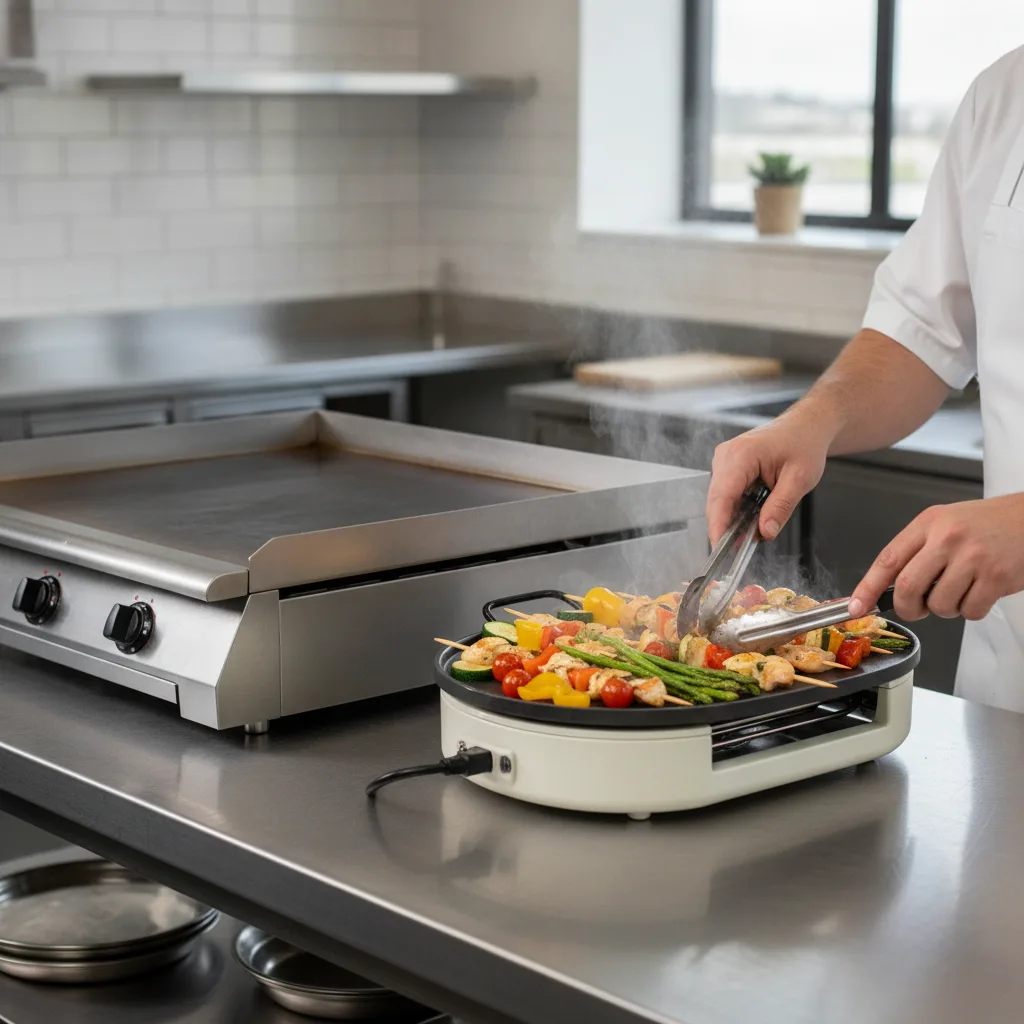
Have you ever seen a professional plancha in a restaurant kitchen and wondered what really sets it apart from your model at home? It is a fair question, because the difference between a professional plancha and a home plancha lies less in the cooking principle itself than in how the appliance is designed: a heated plate, a direct contact surface, healthy and tasty cooking.
Yet this difference goes far beyond the format alone. Power, materials, installation standards, service pace, temperature control: so many criteria separate two distinct worlds. This article gives you the keys to understand these technical gaps and choose the appliance that really meets your needs.
Professional or Home Plancha: The 7 Key Differences
Reading time: ~9 min
- Definition: professional plancha vs consumer plancha
- 1. Rated power: the first gap between the two worlds
- 2. The thickness and type of the cooking plate
- 3. Even heat distribution and independent zones
- 4. The precision thermostat and temperature control
- 5. Structural robustness and thermal load capacity
- 6. Standards and installation constraints
- 7. Maintenance: very different protocols
- Comparison table: professional plancha vs consumer plancha
- Should you buy a professional plancha for intensive use at home?
- Going further: professional plancha or home plancha
- FAQ
Definition: professional plancha vs consumer plancha
Intended use of each type of plancha
A professional plancha is designed for intensive use in restaurants, snack bars, catering or institutional kitchens. It must run service after service for several hours, keep a stable temperature when faced with large quantities of cold food, and withstand aggressive daily cleaning cycles.
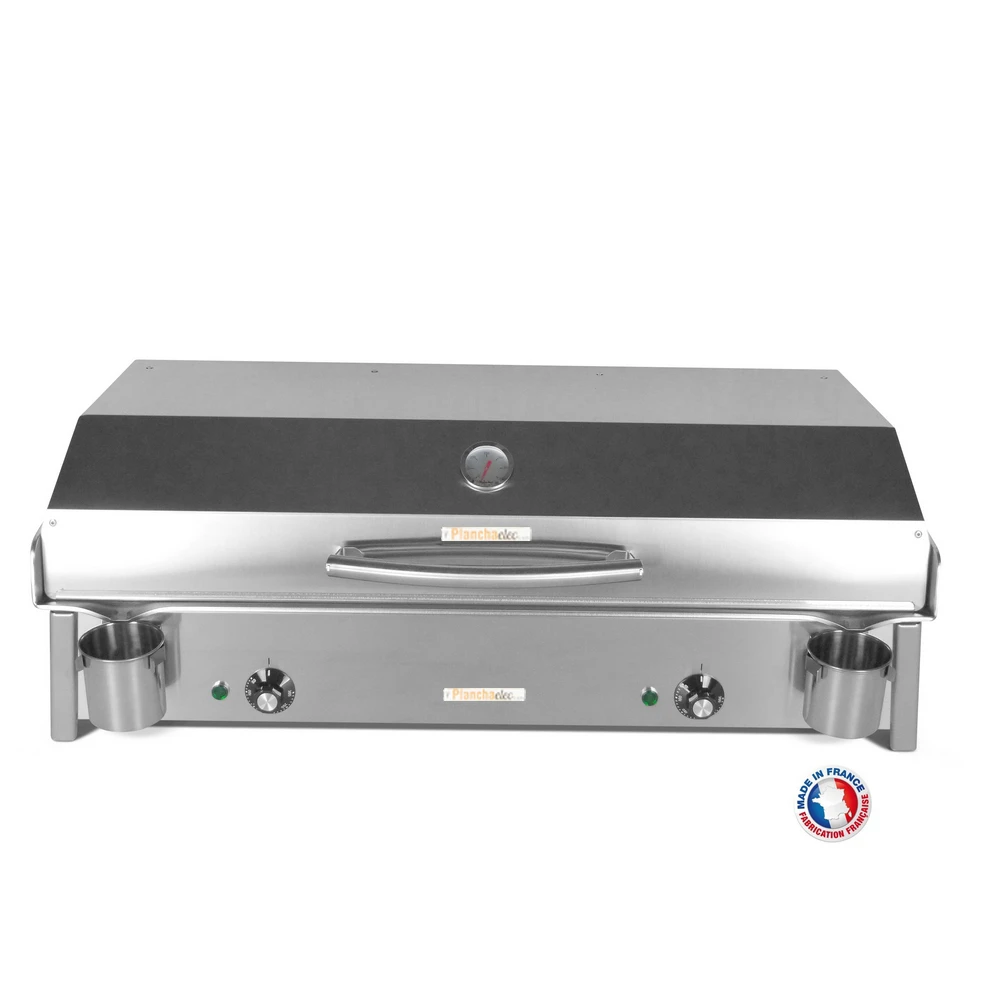
A consumer plancha, on the other hand, is designed for meals with family or friends, with moderate frequency of use, generally a few times a week or a month. This basic distinction leads to others, far more technical, which we will go through one by one.
1. Rated power: the first gap between the two worlds
Power differences between professional and home planchas
This is often the most visible criterion. A professional gas plancha can display between 6 and 10 kW, or even more for models intended for fast food. This power allows a very fast rise in temperature, often under 10 minutes to reach 250 °C, and above all keeps the heat even when the plate is loaded with cold food.
A consumer electric plancha, limited by 230 V household sockets and 16 A circuit breakers, generally peaks at between 2 and 3.6 kW. Preheating takes longer, 10 to 20 minutes, and the plate's thermal capacity is lower when faced with large quantities. It is a real constraint if you want to cook twenty pieces at once, but it is more than enough for 4 to 10 guests in a home setting.
Professional electric planchas also exist, but they often require a three-phase 400 V supply, incompatible with a standard home installation. They therefore remain reserved for professional kitchens equipped accordingly.
2. The thickness and type of the cooking plate
Plate materials and thickness
The plate is the heart of the appliance. In restaurants, it is generally made of thick rolled steel, hard chrome or thick food-grade stainless steel. These materials offer high thermal inertia: the plate stores heat and releases it evenly, even under heavy load. Hard chrome in particular is appreciated for its hardness, its resistance to corrosion and how easily it can be degreased.
Consumer planchas offer plates in enamelled cast iron, enamelled steel or thinner stainless steel, sometimes with non-stick coatings. These surfaces are easier to maintain day to day, but less suited to intensive use: non-stick coatings are more sensitive to scratches than a hard chrome plate, and a coating scratched by a poorly used spatula quickly loses its properties.
At Planchaelec, the plates are made of food-grade stainless steel, a choice that puts our models above the entry-level consumer ranges while remaining accessible to demanding home cooks. Stainless steel is neutral in taste, resistant to corrosion and compatible with regular maintenance with no risk of damaging a coating. You can consult our guide to plancha materials to learn more.
3. Even heat distribution and independent zones
A large professional plancha is often equipped with several independent tubular burners or several separate electric heating elements. Each zone can be set to a different temperature: a hot zone for searing, a warm zone for keeping food hot and a cool zone for preparing. This multi-zone management is essential in restaurants to handle several types of preparation simultaneously.
Consumer planchas generally have one or two heating zones with a single thermostat or two simple controls. For home use, this is often enough. Some high-end home models nevertheless include two independent zones, which brings their performance closer to professional standards for large gatherings.
4. The precision thermostat and temperature control
In restaurants, thermostat precision is crucial. A difference of 20 °C can be the difference between perfectly cooked fish and dried-out food. Professional planchas are equipped with precision thermostats able to maintain a stable temperature to within a few degrees, even with large variations in load.
Consumer models offer less precise thermostats, often graduated by positions rather than degrees. This is an acceptable compromise for leisure use, but it can become limiting for anyone seeking very controlled cooking. Planchaelec has chosen to fit adjustable thermostats on its stainless steel electric planchas, which allows fine temperature control and comes close to professional standards. To learn more about power and regulation, our guide to plancha power ratings will give you concrete benchmarks.
5. Structural robustness and thermal load capacity
A professional plancha is designed to run for several hours a day, five to seven days a week, for years. Its frame is made of thick stainless steel, its feet are adjustable and non-slip, and its grease tray is sized for large quantities. Every component is designed to withstand a high pace of service.
A consumer plancha is sized for a few hours of use per week. Its robustness is real, but its components are not calibrated for intensive daily use. Using a home plancha like a professional one risks significantly shortening its lifespan. Conversely, buying a professional plancha for home use often means oversizing the appliance and paying for capacity you will never use.
Good to know
A professional gas plancha can weigh between 30 and 80 kg depending on its size, and often requires a fixed gas connection or a large-capacity bottle. Installing it in a flat or on a balcony is generally impossible, or even prohibited by co-ownership rules in France.
6. Standards and installation constraints
Differences in standards between professional and home use
This difference is often ignored but fundamental. A plancha used in a restaurant or an establishment open to the public must comply with strict standards. For gas appliances, the NF EN 203 standard governs the safety of professional cooking equipment. CE marking is mandatory. Professional kitchens must be fitted with suitable ventilation systems to extract smoke and grease, in line with HACCP food hygiene requirements.
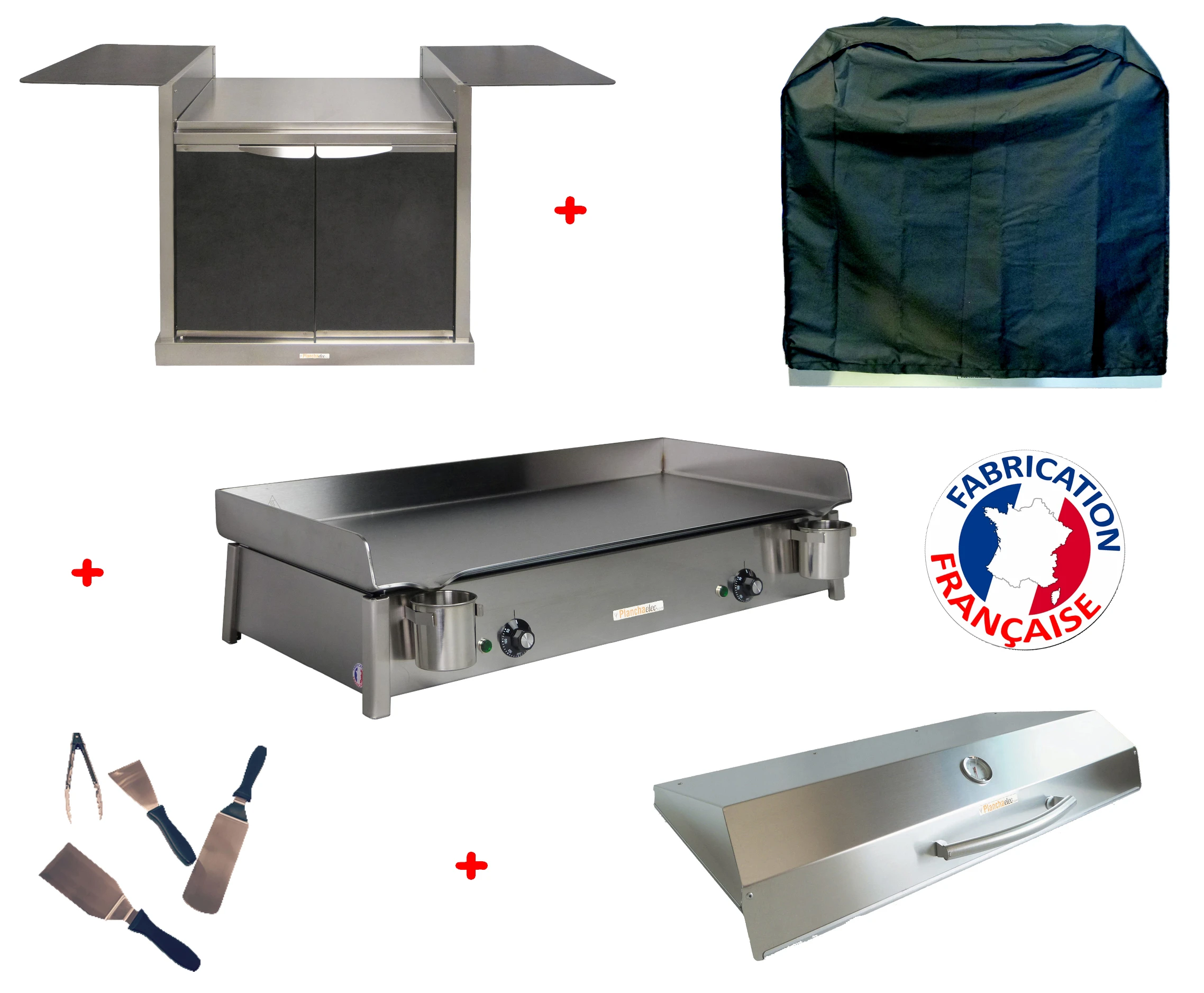
For a private individual, the constraints are different. In a flat or a co-owned building, the use of gas on balconies is often prohibited or strictly regulated. An electric plancha then becomes the only viable option. It plugs into a standard household socket, produces no flame and generates less smoke, making it suitable for use indoors or on a balcony.
Planchaelec offers only stainless steel electric planchas, precisely because this choice meets the real constraints of French households while offering high performance. Find out how to use an electric plancha indoors and outdoors depending on your situation.
7. Maintenance: very different protocols
In restaurants, the plancha is cleaned daily, often several times per service. Professional degreasing cleaners and scouring pads are used, and the plate must be restored in a few minutes between services. The design of professional planchas makes this intensive cleaning easier: the grease trays are removable and large, and hard chrome or rolled steel surfaces withstand stripping products without deteriorating.
For a private individual, maintenance is less demanding but just as important for the lifespan of the appliance. A stainless steel plate is cleaned after each use with a scraper, a scouring pad and a suitable degreasing cleaner. Planchaelec offers a complete cleaning guide for your stainless steel plancha, as well as a range of accessories specifically designed to maintain stainless steel plates without scratching them.
Comparison table: professional plancha vs consumer plancha
| Criterion | Professional plancha | Consumer plancha |
|---|---|---|
| Power and preheating | 6 to 10 kW and above (gas) or three-phase 400 V (electric); preheating in 5 to 10 minutes | 2 to 3.6 kW (electric 230 V); preheating in 10 to 20 minutes |
| Plate material | Rolled steel, hard chrome, thick stainless steel | Stainless steel, enamelled cast iron, non-stick coating |
| Cooking zones | Several independent zones | 1 to 2 zones |
| Thermostat | High precision, multiple controls | Adjustable thermostat or graduated positions |
| Intensive use | Several hours a day, 7 days a week | A few hours a week |
| Standards and installation | NF EN 203, CE professional equipment, HACCP; fixed gas connection or three-phase, professional ventilation | CE domestic, standard electrical norms; 230 V socket, balcony or terrace |
| Maintenance | Daily, professional products | After each use, suitable products |
| Indicative price | Several hundred to several thousand euros | A few hundred euros for high-end home models |
Should you buy a professional plancha for intensive use at home?
Choosing according to your real needs
This question often comes up among enthusiasts who regularly entertain large numbers of guests. The answer is nuanced. A professional gas plancha offers greater power and thermal inertia, but it involves significant installation constraints: gas connection, weight, size and often incompatibility with balconies in co-owned buildings. Its purchase cost is also much higher.
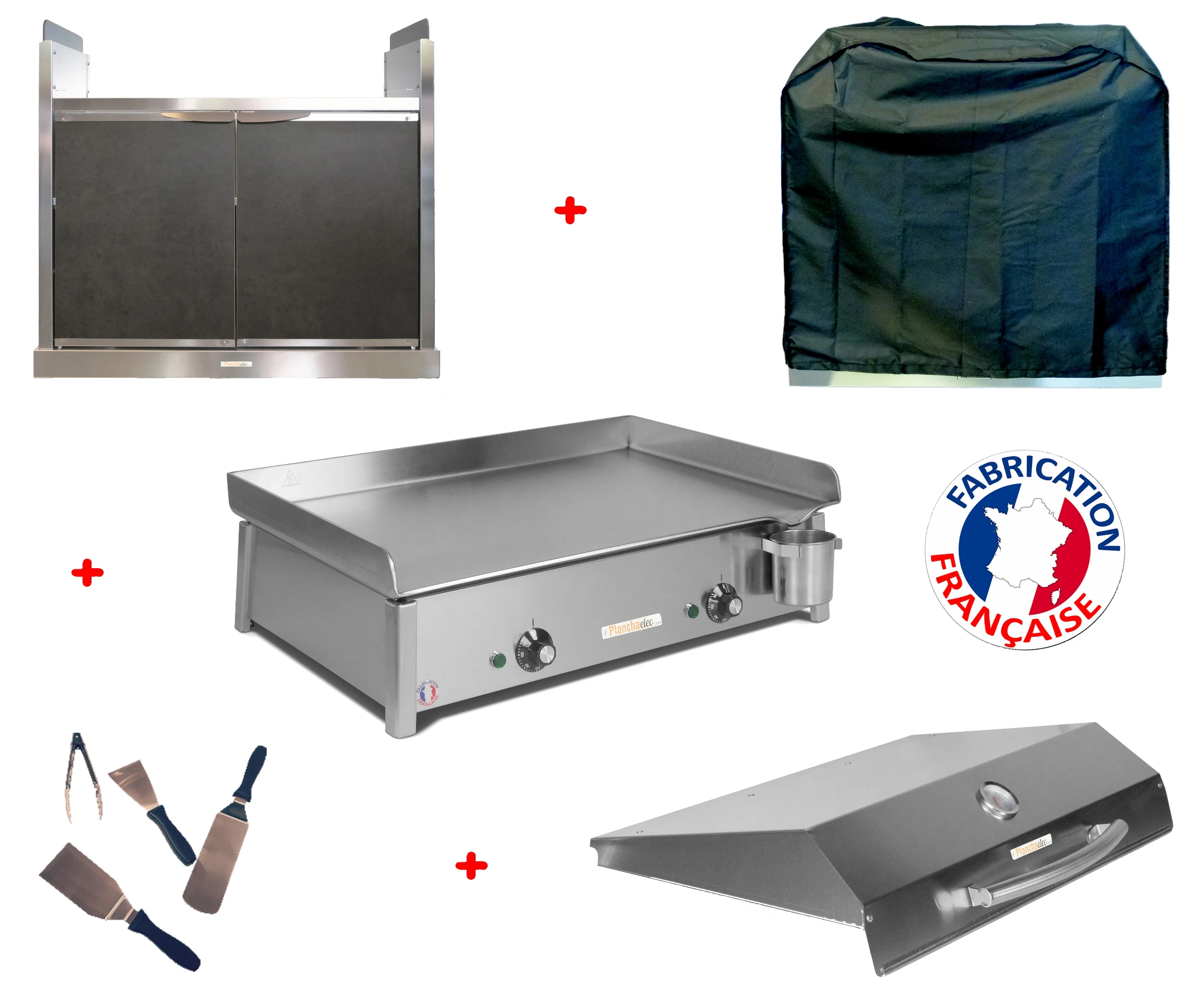
For the vast majority of private individuals, even those who regularly entertain 10 to 15 people, a high-end stainless steel electric plancha offers an unbeatable balance of performance and practicality. It plugs in with no special installation, heats up quickly, is easy to clean and lasts for years with proper maintenance.
Planchaelec planchas incorporate manufacturing standards close to professional requirements, particularly in terms of stainless steel quality, thermostat precision and structural robustness, while remaining perfectly suited to home use. You can compare our models on the page dedicated to our stainless steel electric planchas or consult our guide to choosing your plancha.
Key takeaway
For regular large gatherings, a high-end stainless steel electric plancha such as those offered by Planchaelec delivers performance close to professional level, without the installation constraints of gas or three-phase power. It is often the best compromise for intensive home use.
Going further: professional plancha or home plancha
The difference between a professional plancha and a home plancha is not just a question of size or price. It concerns rated power, the type of materials, the precision of temperature control, structural robustness, installation standards and maintenance protocols.
Understanding these gaps lets you make an informed choice, without paying for unnecessary capacity or ending up with an appliance that is undersized for your real needs. For the vast majority of demanding home cooks, a quality stainless steel electric plancha is the best balance between performance and everyday ease of use.
FAQ
Can you use a professional gas plancha on an apartment balcony?
In most cases, no. French regulations and co-ownership rules prohibit or strictly limit the use of gas appliances on apartment building balconies. An electric plancha is the right solution for this type of setting.
What is the minimum recommended power for a professional plancha?
In restaurants, it is generally considered that a professional gas plancha should have at least 6 kW to ensure a fast rise in temperature and keep the heat under heavy load. Below that, the pace of service may be compromised.
What is the difference between a hard chrome plate and an enamelled cast iron plate?
Hard chrome is a very hard coating, resistant to corrosion and intensive cleaning, favoured in restaurants for its durability. Enamelled cast iron offers good thermal inertia and a naturally non-stick surface, but it is more sensitive to knocks and sudden temperature changes.
Can an electric plancha compete with a gas plancha in restaurants?
For intensive restaurant use, gas remains dominant because of its power and fast heat-up. A professional three-phase 400 V electric plancha can come close, but its installation is more demanding and it remains less common in traditional restaurants.
How does maintaining a professional plancha differ from a home plancha?
In restaurants, cleaning is done several times per service with professional degreasing products and suitable scouring pads. For home use, cleaning after each use with a scraper and a specific degreaser is enough to keep the plate in good condition for many years.
Is it better to buy a professional plancha or a high-end consumer plancha for large gatherings?
For home use, even intensive, a high-end consumer stainless steel plancha is generally more suitable. It offers high performance without the installation constraints of professional equipment, and its value for money is much better in this context.