



 +33 4 78 55 45 69
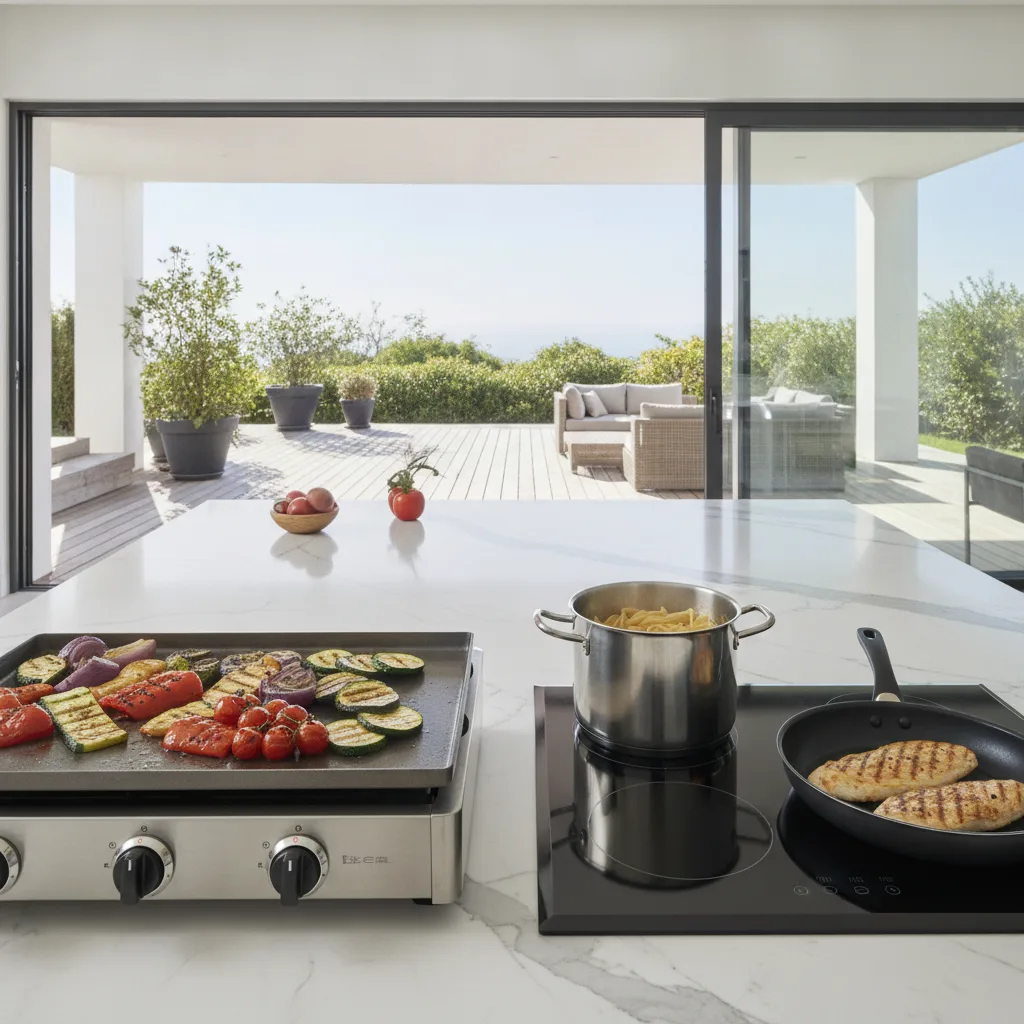
Are you hesitating between an electric plancha and a ceramic hob to equip your kitchen or terrace? The question comes up often and deserves a precise answer. Both appliances run on electricity, heat a surface and cook food, but their technical principles, uses and performance are fundamentally different.
This article helps you understand these differences so you can make an informed choice based on your lifestyle, budget and cooking habits.
Electric plancha or ceramic hob: what's the difference?
Reading time: ~8 min
- What exactly is a stainless steel electric plancha?
- How does a ceramic hob work?
- Electric plancha or ceramic hob: technical comparison
- What is the real difference in terms of cooking?
- Power consumption: which uses less?
- Maintenance: which is easier to clean?
- Can an electric plancha be used safely indoors?
- How to choose according to your situation?
- Electric plancha and ceramic hob: two complementary appliances
- Frequently asked questions
What exactly is a stainless steel electric plancha?
Principle and features of the stainless steel electric plancha
An electric plancha is a freestanding cooking appliance with an electric heating element built in beneath a thick cooking plate, usually made of stainless steel or chrome-plated steel. The plate heats evenly over its entire surface, with no localised cooking zone, which is precisely what sets it apart from a standard hob.
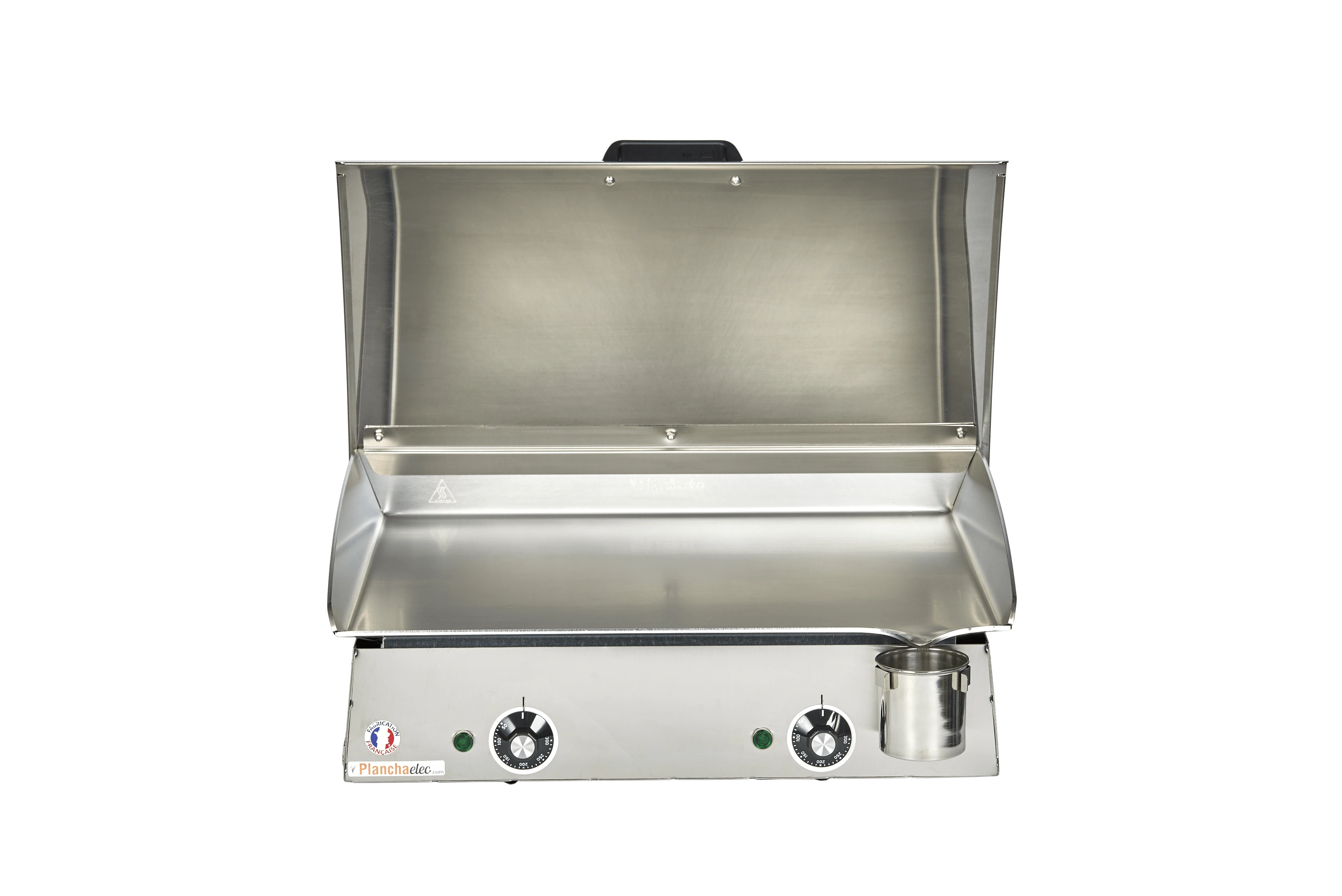
A quality electric plancha usually has a power output of between 2,000 and 3,000 W. At Planchaelec, power is matched to the size of the plate, from 1,800 W for the Néo 420 to 3,600 W for the Lux 830 and Anthéa 870, with an adjustable thermostat for fine control of the heat-up.
The thick stainless steel cooking surface has remarkable thermal inertia: once up to temperature, the plate holds its heat steadily, even when you place cold food on it. It is this inertia that ensures effective searing of meat and fish, without a sudden drop in temperature.
The electric plancha is designed for direct-contact cooking on a large flat surface, with little or no fat. It is perfectly suited to both indoor and outdoor use, provided there is a power socket nearby. Unlike a gas plancha, it produces no flame and little smoke, making it suitable for use in a well-ventilated kitchen or on a balcony.
Good to know: Planchaelec electric planchas are made in France, with a thick food-grade stainless steel plate that lasts over time and is easy to clean. Discover the whole range on the planchas page of the website.
How does a ceramic hob work?
How a ceramic hob works
A ceramic hob is a built-in electric cooktop made of special toughened glass with radiant heating zones underneath. Each zone heats the corresponding area, and the heat is transferred by conduction to the cookware placed on top. The smooth, uniform surface gives the impression of a large cooking area, but in reality only the areas above the heating zones actively heat.
The combined power of a four-zone ceramic hob commonly reaches between 6,000 and 8,700 W, making it possible to manage several dishes at different temperatures simultaneously. Some models offer a boost function to speed up heating, as well as extendable zones to match the zone size to the pan. Compatibility with all types of cookware, whether stainless steel, aluminium or copper pans, is a notable advantage over induction.
On the other hand, a ceramic hob has significant thermal inertia in the opposite direction: it stays hot long after being switched off, which can pose a burn risk and leads to residual energy consumption. Installing one requires a suitable worktop and, in most cases, an electrician for the connection.
Electric plancha or ceramic hob: technical comparison
Main technical differences
To help you visualise the key differences between these two appliances, here is a comparison table based on the most decisive criteria for a well-considered purchase.
| Criterion | Stainless steel electric plancha | Ceramic hob |
|---|---|---|
| Type of appliance | Freestanding, portable | Built-in, fixed |
| Power | 2,000 to 3,000 W | 6,000 to 8,700 W (combined, 4 zones) |
| Fat-free cooking | Yes, healthy contact cooking | No (requires cookware) |
| Outdoor use | Yes (balcony, terrace) | No |
| Maintenance | Scraper, deglazing, stainless steel cleaner | Scraper and specific ceramic hob cleaner |
| Entry price | €100 to €250 for a good model | €200 to €350 for a decent 4-zone model |
| Installation | None, plug and play | Built-in, electrical connection |
| Cookware compatibility | Spatulas and tongs suited to the plate | All types of pans and frying pans |
What is the real difference in terms of cooking?
Impact on cooking quality
This is where confusion is most common. A ceramic hob heats cookware; it does not cook food directly. You place a frying pan or saucepan on the zone, and it is this cookware that transfers the heat to the food. The electric plancha, on the other hand, cooks food directly on its stainless steel surface. This fundamental difference changes everything about the quality of the sear, the texture of the food and the final result on the plate.
The thick stainless steel plate of an electric plancha stores heat and releases it steadily. When you place a salmon fillet or a pork chop on the surface, the temperature does not collapse: the sear is immediate, the juices are preserved and the cooking remains even throughout. A ceramic hob, even with a quality frying pan, cannot reproduce this result in the same way, because heat transfer goes through an intermediary.
In addition, the electric plancha allows convivial cooking right at the table or on the terrace, with several people cooking at the same time on a large surface. This is something a ceramic hob simply does not offer.
Power consumption: which uses less?
Comparison of power consumption
The question of consumption in kWh is a legitimate one. A four-zone ceramic hob has a much higher combined power than a plancha, but that does not mean it always uses more. It all depends on actual use: if you only use one or two zones at a time, actual consumption is much lower than the total installed power. Annual consumption data put a typical ceramic hob at around 159 kWh per year for standard household use.
For a 2,000 to 3,000 W electric plancha used for one hour, consumption is between 2 and 3 kWh per session. Over a year, with weekly use, that comes to around 100 to 150 kWh, which remains reasonable. The relevant angle is therefore not so much the rated power as the frequency and duration of use. For convivial weekend use, the electric plancha is very cost-competitive.
Key takeaway: an electric plancha does not replace a ceramic hob for everyday tasks such as making sauces, boiling water or cooking pasta. These two appliances meet different needs and complement each other more than they compete.
Maintenance: which is easier to clean?
Maintenance is often a deciding factor. A ceramic hob is known for its smooth surface that is easy to wipe, provided you act quickly after cooking and use a specific cleaner and a suitable scraper. Sugary spills or grease splashes that cool down can leave marks that are hard to remove if not dealt with immediately.
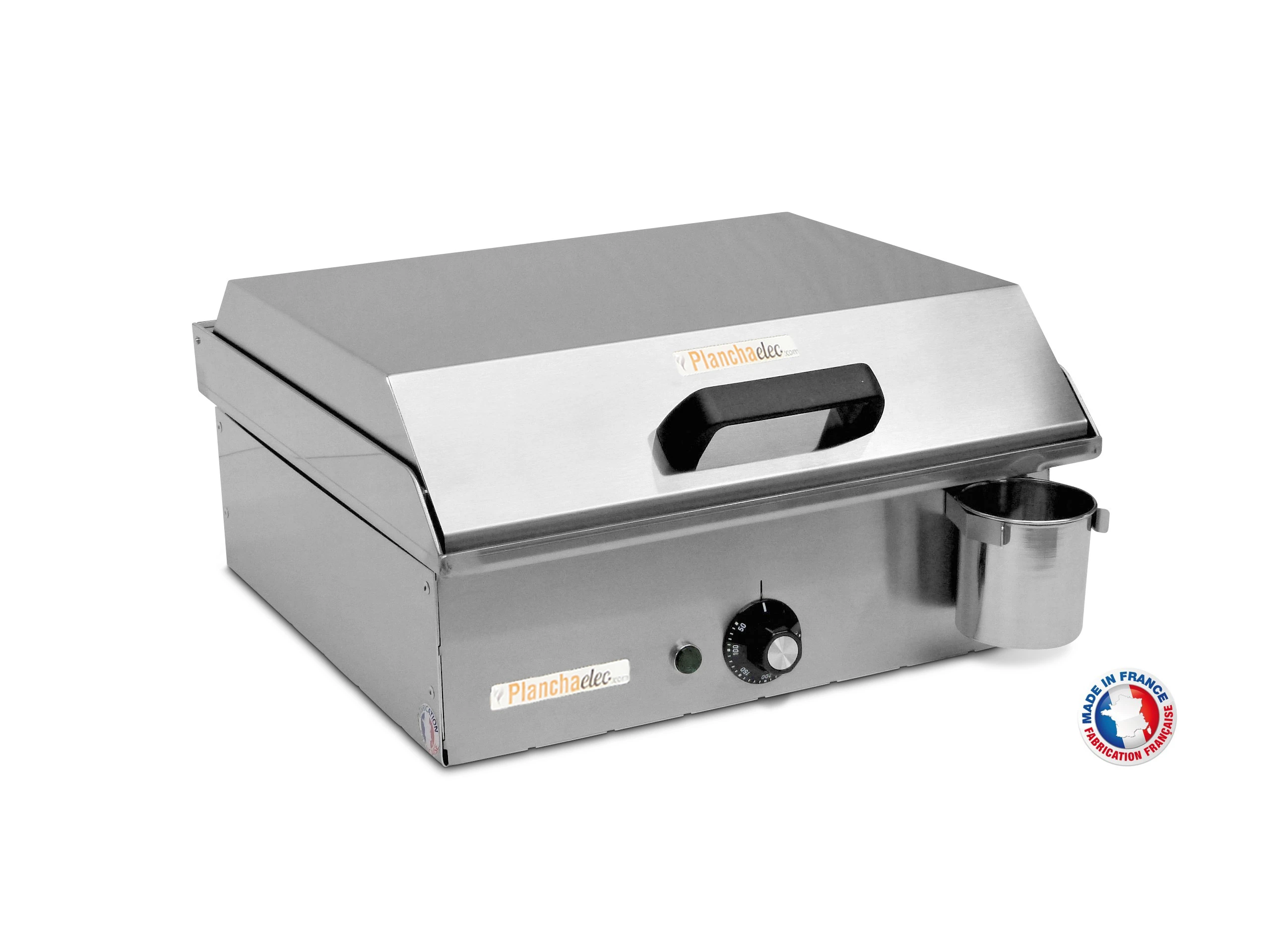
A stainless steel electric plancha is maintained differently but effectively. After cooking, deglazing with cold water on the still-hot plate loosens residue. A pass with a scraper, followed by a degreasing cleaner suitable for stainless steel, is enough to restore a clean surface. At Planchaelec, cleaning products and accessories are specially designed for stainless steel planchas, including scouring pads and plancha degreasing cleaner. To go further, the stainless steel plancha cleaning guide details each step.
Can an electric plancha be used safely indoors?
Yes, an electric plancha can be used indoors, provided you follow a few simple precautions. Unlike a gas plancha, it produces no carbon monoxide and needs no gas bottle. Grease splashes remain limited when the plate is at the right temperature and the food is not too wet. A working extractor hood or an open window is enough in the vast majority of cases. Planchaelec has also devoted a full article to this subject: smoke-free indoor plancha.
How to choose according to your situation?
If your kitchen already has a ceramic hob or another cooktop and you want to enrich your meals with convivial, healthy cooking, a stainless steel electric plancha is the ideal complement. It sets up in seconds, stores easily and opens up a culinary field your hob does not cover.
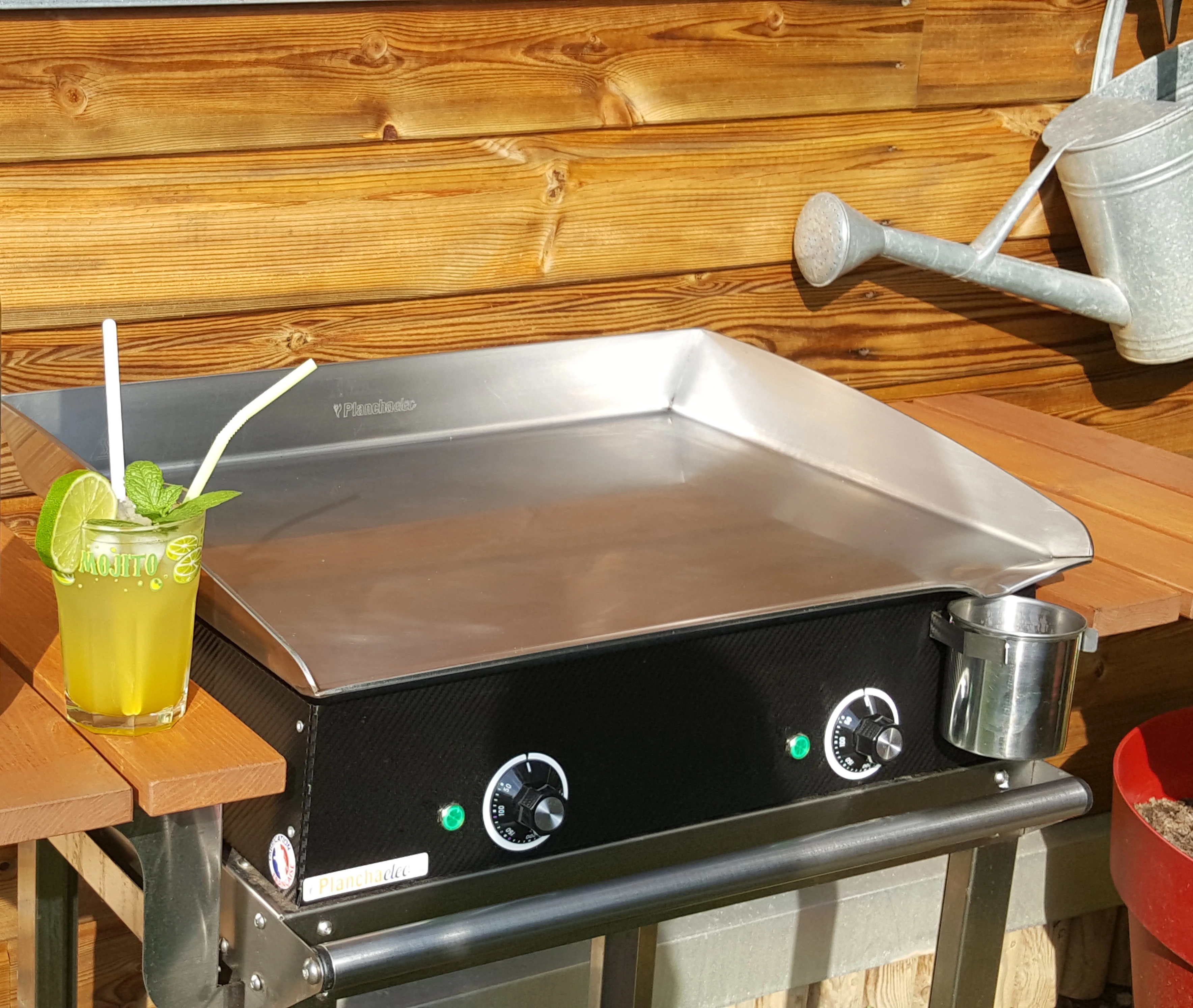
If you are equipping a kitchen from scratch, the ceramic hob remains the essential basic appliance for everyday cooking. You can add an electric plancha for weekend grilling, family meals or evenings with friends. These two appliances are complementary, not interchangeable.
To choose the right electric plancha for your use, your space and the number of guests, see the guide to choosing your plancha and the Planchaelec FAQ.
Electric plancha and ceramic hob: two complementary appliances
The stainless steel electric plancha and the ceramic hob are not direct competitors. One is a convivial, portable appliance for healthy, direct cooking on a thick stainless steel surface. The other is a central, versatile kitchen appliance designed for everyday cooking with cookware. Confusing the two means missing out on what each really offers.
If you are looking for tasty cooking, perfect searing and moments shared around the table, the stainless steel electric plancha has no equivalent. Planchaelec offers models made in France, designed to last and to cook with pleasure, week after week.
FAQ
Can an electric plancha replace a ceramic hob for everyday cooking?
No, these two appliances have different functions. The electric plancha is designed to cook food directly on a flat stainless steel surface, without any intermediate cookware. It cannot boil water, make sauces or cook pasta. It complements a hob rather than replacing it.
What power does an efficient electric plancha need?
A household electric plancha typically ranges from 1,800 to 3,600 W. What matters is that the power matches the size of the plate: too little power for the surface slows heating, and the plate can lose efficiency when cooking cold food or large quantities. Planchaelec models are sized to deliver optimal searing as soon as they have preheated.
Is an electric plancha suitable for cooking every day?
Yes, a quality stainless steel electric plancha is perfectly suited to frequent, even daily, use. Its sturdy plate lasts over time, and its quick cleaning after each use makes it a practical everyday appliance for grilling meat, vegetables and fish.
Can an electric plancha be placed on a ceramic hob?
No, you should never place an electric plancha on a ceramic hob that is switched on. The combined heat of the two appliances could damage the toughened glass of the hob. The plancha must always be placed on a stable, heat-resistant surface that is not a cooking appliance.
What budget should you plan for a quality electric plancha?
For a stainless steel electric plancha, expect to pay from around €100 for an entry-level model to several hundred euros for a thick stainless steel plancha made in France. Very cheap models under €80 often have a thin plate that heats unevenly. At Planchaelec, the Néo, Lux and Anthéa ranges offer planchas made in France with thick stainless steel plates, in formats suited to every household.
Does a ceramic hob use more electricity than an electric plancha?
Not necessarily. Actual consumption depends on use. A four-zone ceramic hob uses on average around 159 kWh per year for standard household use. A 2,000 to 3,000 W electric plancha used for one hour a week represents around 100 to 150 kWh per year. Both appliances are comparable in terms of energy cost for sensible use.