



 +33 4 78 55 45 69
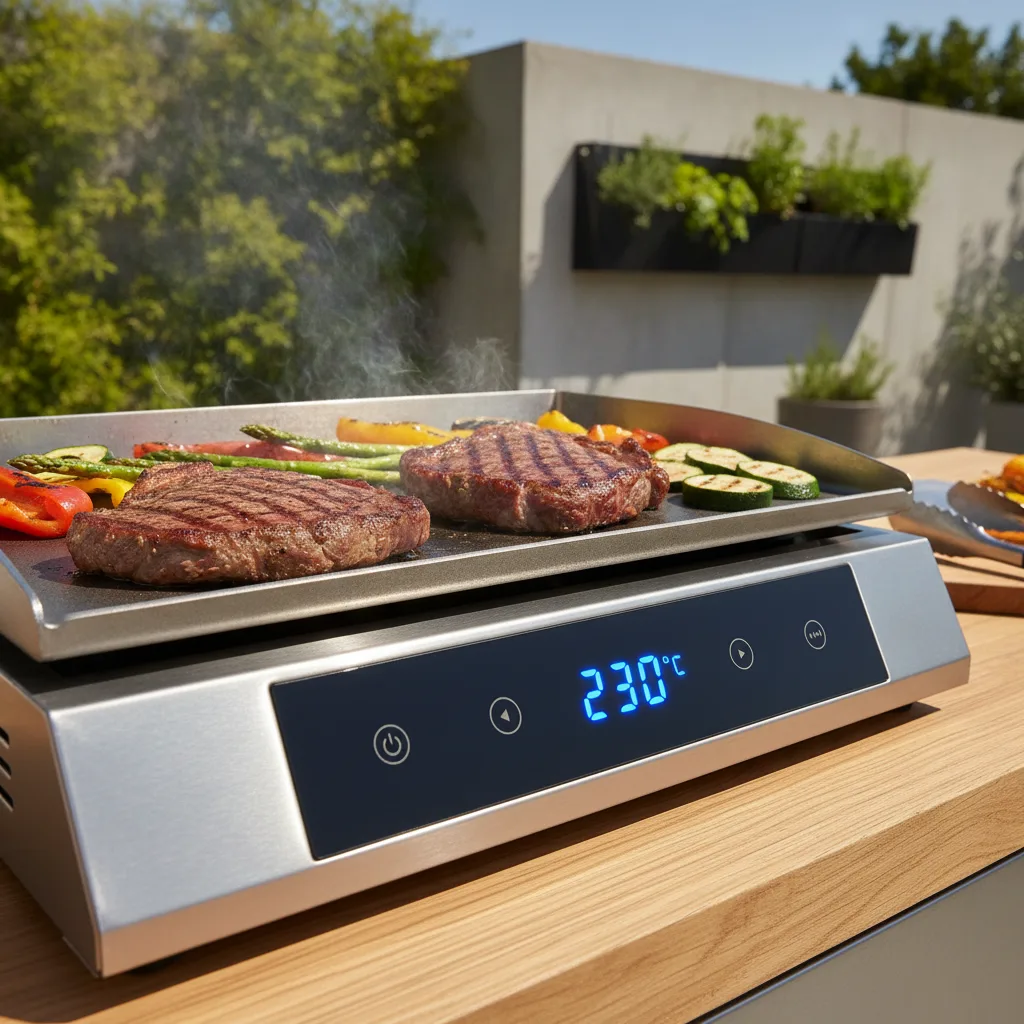
Temperature is the most decisive factor in successful plancha cooking. Too low, and the meat releases its water and stews; too high, and vegetables burn before they are cooked through. This is where the thermostat comes in: not as a simple control knob, but as the true conductor of your cooking surface.
Choosing a plancha with a precise adjustable thermostat means choosing total control over what ends up on the plate. This article explains why this criterion matters so much, how to compare models and which temperatures to use for different foods.
Plancha with a precise adjustable thermostat: 2027 guide
Reading time: ~7 min
- Position thermostat or degree-adjustable thermostat: what is the practical difference?
- What temperature range should a family electric plancha cover?
- Should you choose a plancha with one or two independent heating zones?
- Why does your plancha lose heat when you put food on it?
- How to choose a plancha based on thermostat precision: the criteria to compare
- Maintaining the thermostat and plate to preserve precision over time
- Why it pays to choose a precise thermostat
- FAQ
Summary
- Position thermostat vs degree thermostat: two very different control approaches, with a direct impact on cooking precision.
- Temperature range: a good family electric plancha covers at least 80 to 250 °C, and advanced models reach 300 °C.
- Independent heating zones: a real asset for cooking several foods at different temperatures at the same time.
- Temperature drop: understanding thermal inertia lets you anticipate and adjust the setting at the right moment.
- Temperatures by food: a practical guide so you never miss a plancha cook again.
- Maintenance: the plate and thermostat need simple but regular care to ensure the appliance lasts.
Position thermostat or degree-adjustable thermostat: what is the practical difference?
How does a position thermostat work?
Most entry-level planchas have a position thermostat, often numbered from 1 to 5 or shown as heat levels. This system is easy to use, but it does not tell you the exact temperature you are cooking at. You know that position 3 is “medium” and position 5 is “maximum”, but you do not know whether that means 180 °C or 230 °C. This lack of precision may be enough for basic cooking, but it becomes a problem as soon as you want to master more delicate dishes.
The advantages of a degree-adjustable thermostat
A thermostat adjustable in degrees Celsius gives you direct, usable information. You set it to 200 °C, the plancha reaches 200 °C and holds that temperature. Some models offer a range of 80 to 250 °C, others go up to 300 °C. According to tests published by Les Numériques on the Krampouz Plancha Saveur Double, a thermostat adjustable between 50 and 300 °C offers far greater flexibility than a simple level selector. This precision to the degree is particularly useful for delicate cooking: melting chocolate at 50 °C without burning it, keeping fish at 160 °C for gentle cooking, or triggering the Maillard reaction on a steak at 280 °C.
Good to know
The Maillard reaction, responsible for the golden crust and grilled meat aromas, starts at around 140 °C and intensifies above 180 °C. Without a precise thermostat, it is hard to guarantee that the plate reaches and holds this temperature zone when searing.
What temperature range should a family electric plancha cover?
A temperature range suited to every use
For everyday family use, a range of 80 to 250 °C covers the vast majority of situations. This is the range found on many models sold in France, highlighted as a precision criterion suited to every type of food. Below 80 °C, you enter the zone of simply keeping food warm, useful but rarely needed for active cooking. Above 250 °C, you get high-temperature searing, ideal for thick cuts of red meat.
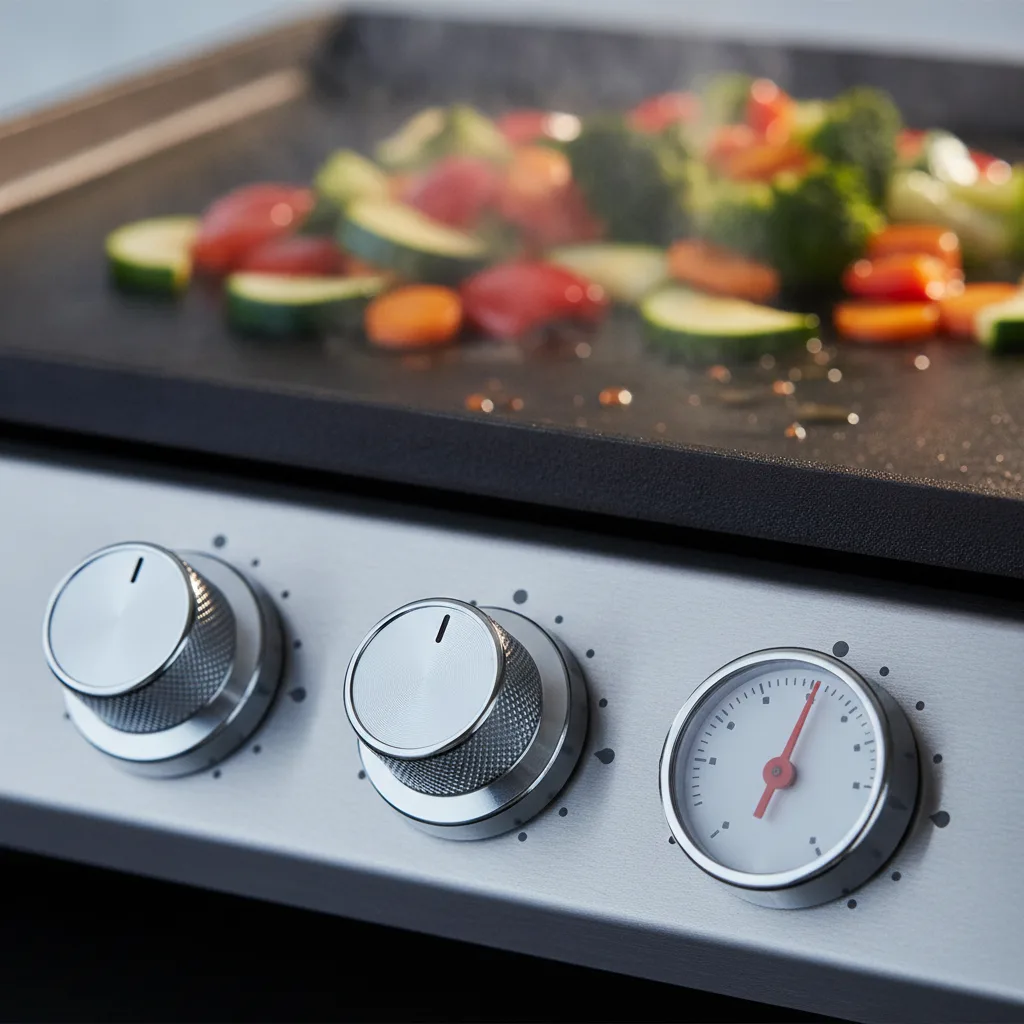
Models that reach 300 °C are geared more towards intensive or semi-professional use. They heat up very quickly and are better at compensating for the temperature drop caused by adding cold food to the plate. This phenomenon, linked to thermal inertia, is one of the most common causes of failed cooking: you place four chicken escalopes on a plate at 220 °C, and within seconds the temperature drops to 170 °C. A powerful plancha with a good thermostat reacts faster and returns to the target temperature more quickly.
Here is a summary table of temperature ranges by use:
| Food | Recommended temperature | Notes |
|---|---|---|
| Melted chocolate, keeping warm | 50 to 80 °C | Gentle cooking, prevents burning |
| Vegetables (courgettes, peppers) | 160 to 180 °C | Even cooking without drying out |
| Fish (fillets, prawns) | 160 to 200 °C | Delicate flesh, avoid overcooking |
| Poultry (breast, leg) | 200 to 230 °C | Cooked through without burning the surface |
| Red meat, steak | 250 to 280 °C | High-temperature searing, Maillard reaction |
| Intense searing, pronounced crust | 280 to 300 °C | High-power models only |
Should you choose a plancha with one or two independent heating zones?
A plancha with two independent cooking zones has two separate thermostats, allowing you to set different temperatures on each half of the plate. In practice, you can sear beef skewers at 270 °C on one side while gently warming grilled vegetables at 140 °C on the other. This is a real advantage for family meals or gatherings with friends, where guests do not all have the same preferences or dietary requirements.
This type of configuration is particularly valued by specialist testers. Les Numériques highlighted this asset in their review of the Krampouz Plancha Saveur Double, noting that independent zones avoid temperature compromises that harm cooking quality. For an electric plancha intended for regular use with six or more people, this criterion deserves priority. For two to four people with similar cooking habits, a single zone with a good, precise adjustable thermostat is more than enough.
UFC-Que Choisir also points out that the number of thermostats should be considered in relation to the cooking surface and the total power of the appliance. A large plate with a single low-power thermostat may have cold spots at the edges, indicating uneven heating. To check this before buying, see whether the manufacturer states the power in watts per zone and whether the heating element covers the entire plate.
Key takeaway
An electric plancha with two independent zones is particularly suited to tables of six or more. Below that, a precise adjustable thermostat on a single zone already offers an excellent level of control for the vast majority of family uses.
Why does your plancha lose heat when you put food on it?
This phenomenon is perfectly normal and has a name: temperature drop due to thermal inertia. When you place cold or room-temperature food on a hot plate, the food absorbs some of the heat stored in the cooking surface. The plate cools locally, and if the heating power is insufficient or the thermostat reacts slowly, the temperature can take several tens of seconds to recover.
To limit this effect, a few good practices are essential. Always preheat the plancha for five to ten minutes before you start cooking. Avoid putting too much food on at once if your model is low-powered. And if you are cooking meat straight from the fridge, let it rest at room temperature for twenty minutes before putting it on the plate. These simple habits help maintain enough thermal stability for a good sear and perfect cooking through.
At Planchaelec, the stainless steel electric planchas are designed to heat evenly across the entire surface thanks to heating elements sized to match the plate. You can read our guide to plancha power ratings to understand how power in watts directly affects the ability to maintain temperature under load.
How to choose a plancha based on thermostat precision: the criteria to compare
The technical criteria to examine
Before buying, it is useful to compare models on several technical points that determine the quality of thermostatic control. Here are the main criteria to look at:
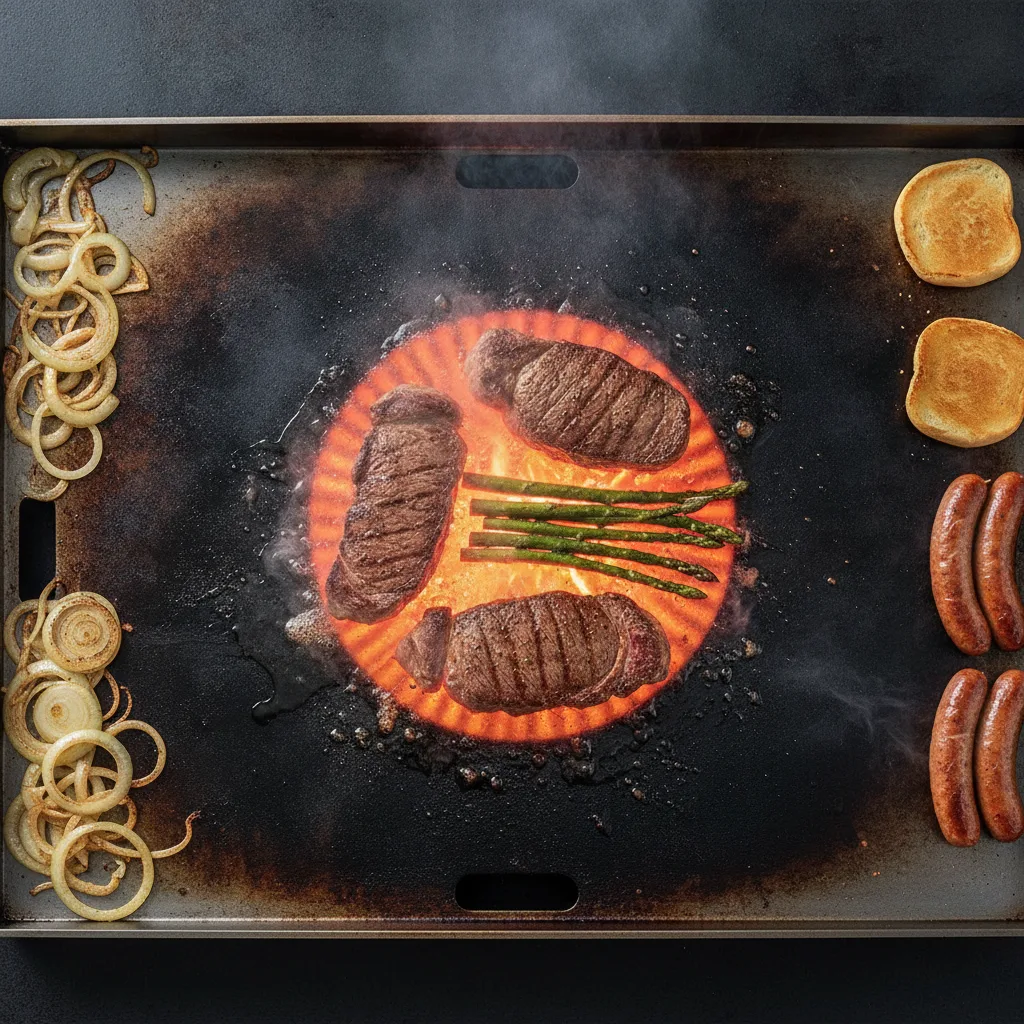
- The stated temperature range: choose a model that shows a range in degrees Celsius rather than abstract levels. A range of at least 80 to 250 °C is recommended for full family use.
- Total power in watts: high power allows fast heat-up and better recovery after a temperature drop. For a 60 cm surface, allow at least 2,000 to 2,500 W.
- The type of plate: stainless steel offers excellent thermal inertia and great durability. It is easier to maintain than enamelled cast iron in the long term.
- The number of zones: one zone is enough for four people; two independent zones become useful from six guests or for very varied cooking.
To go further in your choice, our guide to choosing your plancha details all these criteria with recommendations for each type of user. You can also compare plate materials in our dedicated article on stainless steel or enamelled cast iron planchas.
Maintaining the thermostat and plate to preserve precision over time
A poorly maintained thermostat can lose precision over time. Grease residue that builds up around the probe or control unit can distort the temperature reading and cause unexpected variations. Good practice is to clean the plate after each use, while still warm but unplugged, with a scraper to remove residue, then with a degreasing cleaner suitable for stainless steel surfaces.
It is also advisable never to immerse the electrical unit in water, even if the plate is removable. For Planchaelec stainless steel electric planchas, our complete stainless steel plancha cleaning guide walks you through each step to preserve the cooking surface and thermostat precision over the long term. In our cleaning products shop you will also find the scouring pads, degreasing cleaners and accessories recommended for optimal maintenance.
Why it pays to choose a precise thermostat
Thermostat precision is not a technical detail reserved for professional chefs. It is a concrete criterion that directly affects the quality of every meal cooked on the plancha, food safety and the pleasure of cooking. Choosing a plancha with a precise adjustable thermostat means investing in control, consistency and convivial moments around the table.
In short
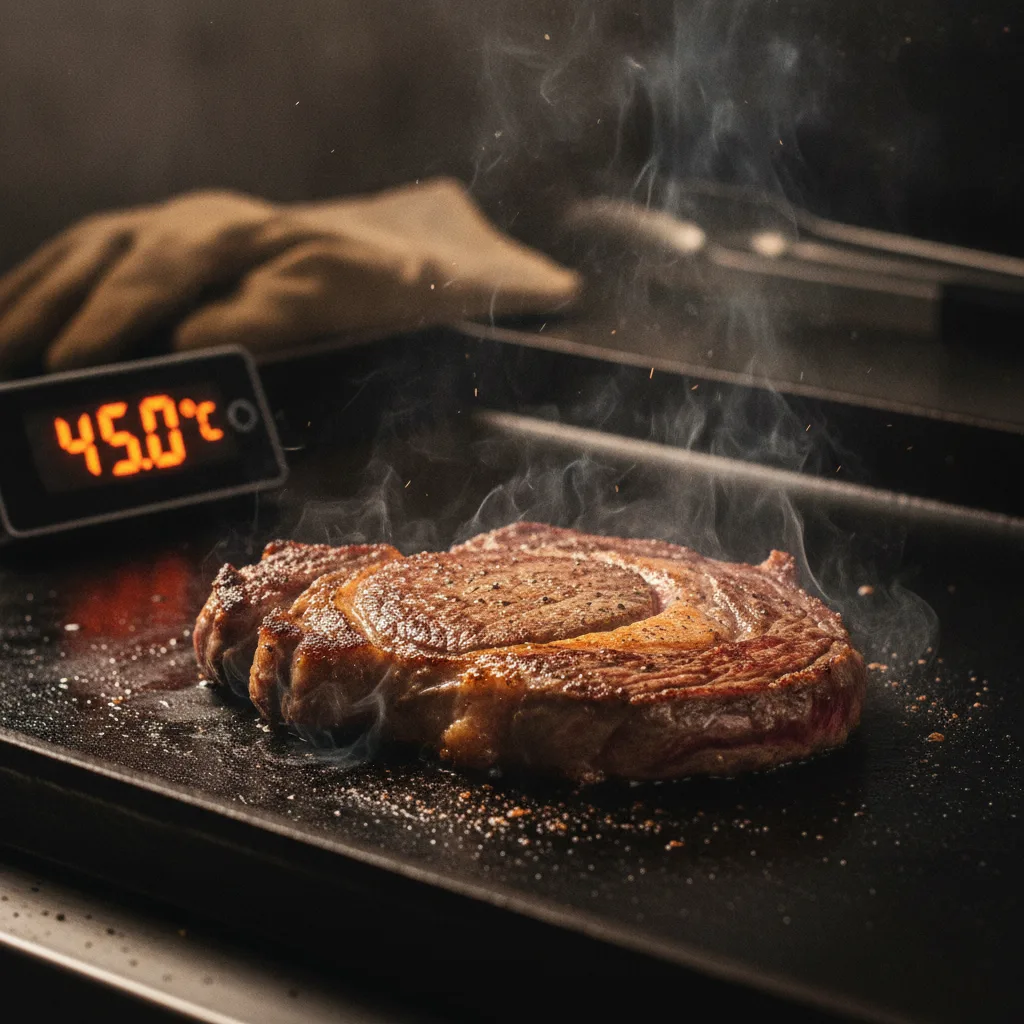
By choosing a plancha with a precise adjustable thermostat, able to cover the right temperature ranges and backed by suitable power, you maximise your chances of getting all your plancha cooking right over the long term.
FAQ
What temperature should you use to sear red meat on a plancha?
To get a nice crust and trigger the Maillard reaction, the plate needs to reach between 250 and 280 °C. This range ensures quick searing of the surface while keeping the juices inside the meat.
Is a digital thermostat more precise than an analogue one?
Not necessarily. What matters is the precision of the temperature probe and the responsiveness of the control system. A good analogue thermostat graduated in degrees can be as reliable as a digital display if the probe is well positioned and calibrated.
Can you use an electric plancha with an adjustable thermostat indoors?
Yes, provided the plancha is designed for it. Stainless steel electric models produce less smoke than gas planchas, especially at low and medium temperatures. Our article onusing a plancha indoors without smoke gives you practical tips for cooking with peace of mind at home.
How can you check that your plancha heats evenly across the whole surface?
The simplest method is to sprinkle a thin layer of flour or sugar on the cold plate, then heat it gradually. The areas that brown first are the hottest. A good model should show even colouring across the entire active surface.
How long does an electric plancha thermostat last?
With regular maintenance and use in line with the manufacturer's recommendations, an electric plancha thermostat can work without failure for ten years or more. Breakdowns most often occur when water gets in or grease builds up around the control unit.
Do Planchaelec planchas comply with current electrical standards?
Yes, all Planchaelec stainless steel electric planchas carry the CE marking (compliance with European requirements) and are made in France to strict quality standards.