



 +33 4 78 55 45 69
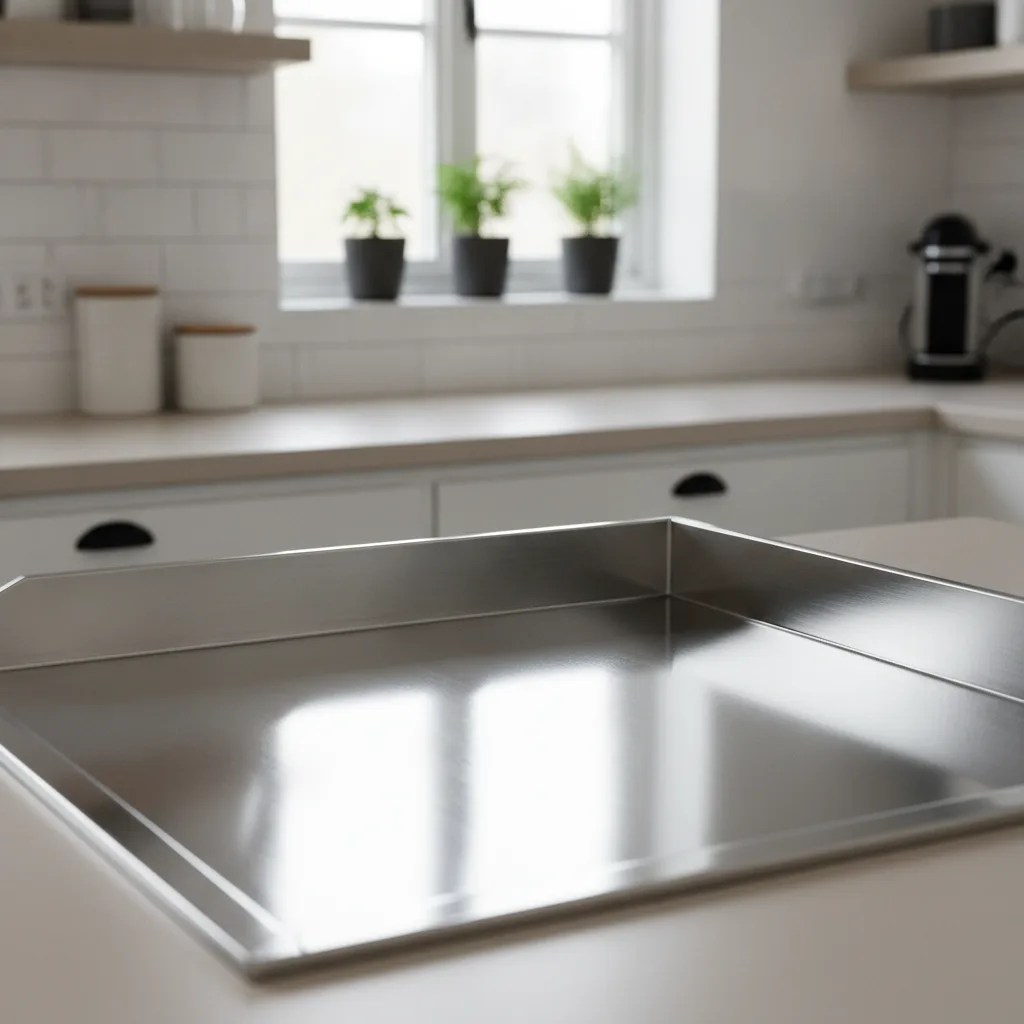
When you look for a stainless steel electric plancha, you often come across the term “food-grade stainless steel”. But what exactly does it mean? It covers very specific requirements, governed by French and European regulations. Not all stainless steel is automatically suitable for contact with food: the alloy composition, chromium content, limits on certain alloying elements and material traceability are all criteria that distinguish ordinary stainless steel from genuinely food-grade stainless steel.
Understanding these differences helps you make an informed choice and check that the plancha you are considering meets food safety requirements. At Planchaelec, material selection is at the heart of the French manufacturing of our stainless steel electric planchas.
Food-grade stainless steel plancha: definition, standards and tips
Reading time: ~8 min
- Summary
- What is a food-grade stainless steel plancha?
- The French and European regulatory framework
- 304, 316L or 430 stainless steel: which grade should you choose for a plancha?
- How can you check that a plancha is really made of certified food-grade stainless steel?
- The advantages of a food-grade stainless steel plancha compared with other materials
- Maintaining a food-grade stainless steel plancha to preserve its hygienic properties
- Food-grade stainless steel: a real quality criterion
- FAQ
Summary
- Definition: food-grade stainless steel is a stainless steel whose composition meets strict criteria for direct contact with food, unlike ordinary stainless steel.
- Regulatory framework: in France, the decree of 13 January 1976 and the NF A 36-711 standard set the requirements for composition and metal migration for stainless steel in contact with food.
- 304, 316L and 430 grades: these are the most common grades for plancha plates; 430, which we use at Planchaelec, resists heat distortion better.
- Advantages and limitations: food-grade stainless steel offers hygiene, durability and taste neutrality, but it is more expensive and heavier than other materials.
- How to check: a food-contact certificate, reference to the NF A 36-711 standard and material traceability are the reliable indicators to look for before buying.
- Maintenance: proper cleaning after each use preserves the hygienic properties of the stainless steel plate over the long term.
What is a food-grade stainless steel plancha?
Definition of a food-grade stainless steel plancha
A food-grade stainless steel plancha has a cooking plate made of stainless steel whose composition has been approved for direct, repeated and prolonged contact with food. This approval is not based on a simple claim by the manufacturer: it results from compliance with precise regulatory criteria, in particular a chromium content of at least 13% in the alloy, which gives the steel its corrosion resistance and chemical stability against the fats, acids and moisture produced during cooking.
Differences from standard stainless steel
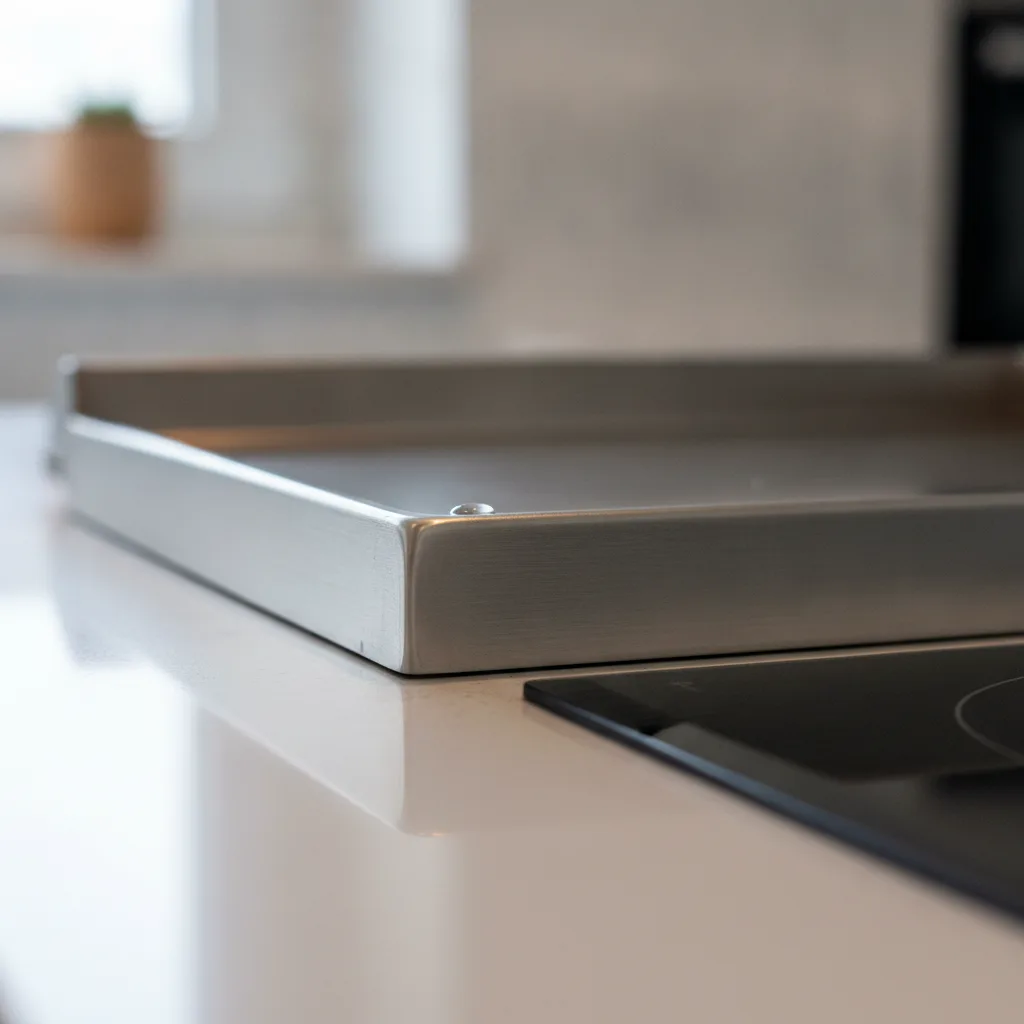
The difference from “standard” stainless steel is real. Stainless steel can be used for structures, industrial equipment or furniture without its composition being checked for food contact. In that case, certain alloying elements such as molybdenum, titanium, aluminium or copper may be present in proportions that are not compatible with food safety. Food-grade stainless steel strictly limits these elements to prevent any migration of metals into the food being cooked.
The most widely used stainless steel grades for planchas
In practice, plancha cooking plates are most often made of 304/304L or 430 stainless steel. 304 is known for its corrosion resistance and ease of forming; 430, a nickel-free ferritic stainless steel, stands out for its dimensional stability under heat. Both are suitable for food contact when they comply with the regulations.
The French and European regulatory framework
The French regulatory framework
In France, the use of stainless steel in contact with food is governed by thedecree of 13 January 1976. This text requires a minimum chromium content of 13% and sets limits for alloying elements likely to migrate into food: molybdenum, titanium, aluminium and copper must not exceed 4%, while tantalum, niobium and zirconium are limited to 1%. These thresholds were set to ensure there is no health risk during normal use of the equipment.
The NF A 36-711 standard supplements this framework by defining the technical specifications of stainless steels intended for contact with food. It is the reference for the food suitability of stainless steels used in cooking equipment, including plancha plates. Reputable manufacturers rely on this standard to justify their choice of materials and to provide full material traceability to their professional and private customers.
Standards and requirements at European level
At European level, Regulation (EC) No 1935/2004 sets the general framework for all materials intended to come into contact with food. It requires that these materials do not transfer their constituents to food in quantities that could endanger human health, bring about an unacceptable change in the composition of the food or deteriorate its organoleptic characteristics. The DGCCRF (the French Directorate General for Competition, Consumer Affairs and Fraud Control) monitors compliance with these requirements on the French market and publishes specific recommendations on metals and alloys in contact with food.
Good to know: the contactalimentaire.fr platform, the reference portal in France, brings together all the decrees, standards and technical sheets relating to materials in contact with food. It is a useful resource for checking the compliance of equipment before buying.
304, 316L or 430 stainless steel: which grade should you choose for a plancha?
Comparison of 304/304L and 316L grades
The choice of stainless steel grade is a central question when comparing food-grade planchas. The table below shows the main differences between the two most common grades in this field.
| Criterion | 304 / 304L stainless steel | 316L stainless steel |
|---|---|---|
| Main composition | 18% chromium, 8% nickel | 16–18% chromium, 10–14% nickel, 2–3% molybdenum |
| Corrosion resistance | Very good (everyday use) | Excellent (chlorinated environments, strong acids) |
| Typical plancha use | Home cooking, standard catering | Marine environments, intensive use in humid conditions |
| Food compliance | Yes, if compliant with NF A 36-711 | Yes, if compliant with NF A 36-711 |
| Relative cost | Moderate | Higher |
| Availability | Very common | Less common on the plancha market |
Which grade should you choose for a food-grade stainless steel plancha?
For an electric plancha, the grade must first withstand heat without distorting. That is why we chose 430 stainless steel at Planchaelec: more resistant to distortion when hot, it lets you heat just one zone when the plancha has several thermostats, whereas a 304L plate heated on one side only tends to warp. 304 remains a very good grade for surfaces heated evenly, and 316L, which contains molybdenum, is mainly justified by the sea or in professional kitchens subject to very aggressive cleaning.
At Planchaelec, electric planchas such as the Lux 600 plancha or the Lux 830 plancha are made in France with plates in 430 stainless steel, selected for its suitability for food contact. This demanding choice of materials is one of the reasons our planchas are part of a rigorous French manufacturing approach.
How can you check that a plancha is really made of certified food-grade stainless steel?
With so many offers on the market, it is legitimate to wonder how to make sure the plancha you want is really made of genuinely food-grade stainless steel. Several elements allow you to check this concretely.
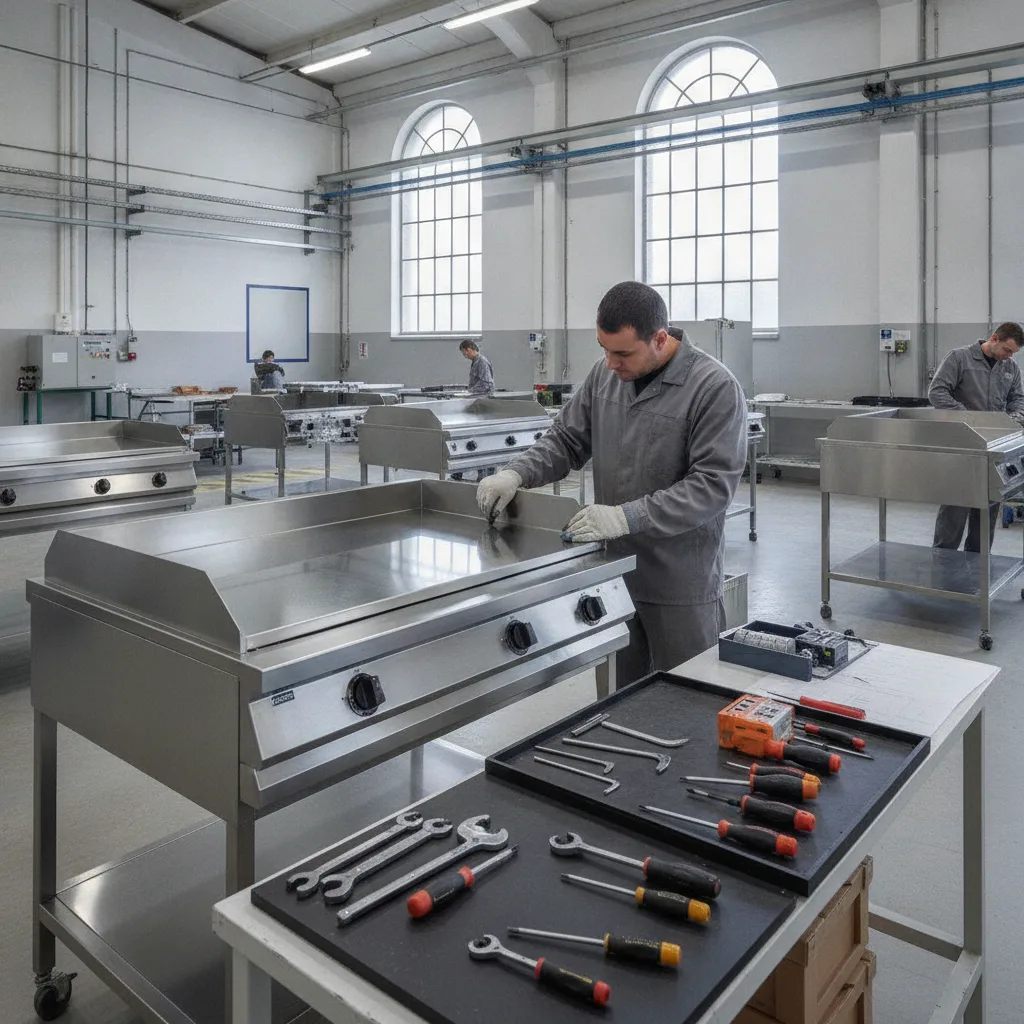
The reliable indicators to look for before buying are:
- A food-contact certificate provided by the steel producer, such as those issued by Ugitech, confirming compliance with the NF A 36-711 standard.
- Explicit mention of the stainless steel grade used (304, 304L, 316L or 430) in the product's technical sheet.
- Material traceability, i.e. the manufacturer's ability to state the origin and certification of the steel used for the cooking plate.
A reputable manufacturer does not simply write “food-grade stainless steel” on its product sheet: it can provide supporting documents on request. If this information is missing or vague, it is wise to question the real quality of the material. To take your choice further, you can read our guide to choosing your plancha, which details the technical criteria to take into account.
Key takeaway: the “18/10 stainless steel” label sometimes found on cookware corresponds to a composition of 18% chromium and 10% nickel, which generally corresponds to grade 304. This label does not replace a food-contact certificate, but it is a first positive indicator of the quality of the alloy.
The advantages of a food-grade stainless steel plancha compared with other materials
A food-grade stainless steel plancha has concrete advantages over enamelled cast iron or carbon steel, particularly in terms of hygiene and durability. Its smooth, low-porosity surface does not retain food residue between cooks, which makes cleaning considerably easier and reduces the risk of cross-contamination. This is one of the reasons why food-grade stainless steel has been the standard in professional catering for decades.
Taste neutrality is another frequently cited advantage. Unlike cast iron, which can transfer slight metallic notes to food, or non-stick coatings, which can deteriorate at high temperatures, food-grade stainless steel does not alter the flavour of cooked food. This chemical stability is precisely what compliance with the migration criteria set by the decree of 13 January 1976 and European Regulation (EC) No 1935/2004 guarantees.
Durability is another strong point. A well-maintained food-grade stainless steel plate withstands repeated cleaning, fats, food acids and temperature changes without significant deterioration. It is a long-term investment, even if the initial purchase price is higher than for an enamelled steel or cast iron plancha. To compare the different materials available, our page on stainless steel or enamelled cast iron planchas gives you detailed points of comparison.
Maintaining a food-grade stainless steel plancha to preserve its hygienic properties
The quality of food-grade stainless steel does not remove the need for regular, appropriate maintenance. To preserve the hygienic properties of the cooking plate over time, a few simple practices make a significant difference.
Before first use, it is recommended to clean the plate with hot soapy water and rinse it thoroughly. Some users then lightly season it with oil, heating the plate at a moderate temperature with a thin layer of neutral oil with a high smoke point, to create a light natural protective layer. This step is not mandatory on food-grade stainless steel as it is on cast iron, but it can make the first cooks easier.
After each use, the recommended routine is simple: let the plate cool slightly, then use a suitable stainless steel scraper to remove food residue, degrease with an appropriate product, rinse with clean water and dry. Avoiding leaving the plate wet or exposed to prolonged moisture helps prevent surface corrosion marks. To find out more on this subject, our stainless steel plancha cleaning guide details the right steps for each situation.
Food-grade stainless steel: a real quality criterion
The term “food-grade stainless steel” is not an empty marketing claim: it refers to precise regulatory requirements, governed in France by the decree of 13 January 1976, the NF A 36-711 standard and European Regulation (EC) No 1935/2004. Choosing a plancha whose cooking plate is made of genuinely certified food-grade stainless steel means making sure that the material in contact with your food has been selected and approved for this use, with a controlled composition and limited metal migration.
It also means investing in durable, hygienic, taste-neutral equipment that keeps its qualities over time, provided it is properly maintained. At Planchaelec, this demand for material quality is built into the design of our electric planchas made in France. To discover our full range, visit our catalogue of stainless steel electric planchas.
FAQ
Does food-grade stainless steel guarantee that no metals at all migrate into food?
No, no material can guarantee zero migration in absolute terms. What food-grade stainless steel compliant with the NF A 36-711 standard and Regulation (EC) No 1935/2004 guarantees is that any migration remains below the thresholds considered safe for human health under normal conditions of use.
Can a food-grade stainless steel plancha be used indoors?
Yes, a food-grade stainless steel electric plancha can be used indoors, provided there is sufficient ventilation. Planchaelec electric planchas produce less smoke than gas models, which makes them better suited to indoor use. Our dedicated article onusing a plancha indoors and outdoors will give you all the practical details.
Is the “18/10 stainless steel” label enough to guarantee that a plancha plate is food-safe?
This label indicates a composition of 18% chromium and 10% nickel, characteristic of grade 304, which is a positive indicator. But it does not replace a formal food-contact certificate issued by the steel producer, confirming compliance with the NF A 36-711 standard and regulatory migration limits.
What is the difference between a food-grade stainless steel plancha and an enamelled cast iron plancha?
Food-grade stainless steel offers a smooth, non-porous surface that is very easy to clean and corrosion-resistant, with no coating that could chip. Enamelled cast iron retains heat better but is heavier, more sensitive to thermal shock, and its enamel can crack over time.
Does a food-grade stainless steel plancha need different maintenance from a standard plancha?
Maintaining a food-grade stainless steel plancha is broadly similar to maintaining any stainless steel plancha, but it requires products and tools compatible with stainless steel, such as suitable scouring pads and a degreaser without harsh chlorinated agents, to preserve the surface and avoid altering the properties of the alloy over the long term.