



 +33 4 78 55 45 69
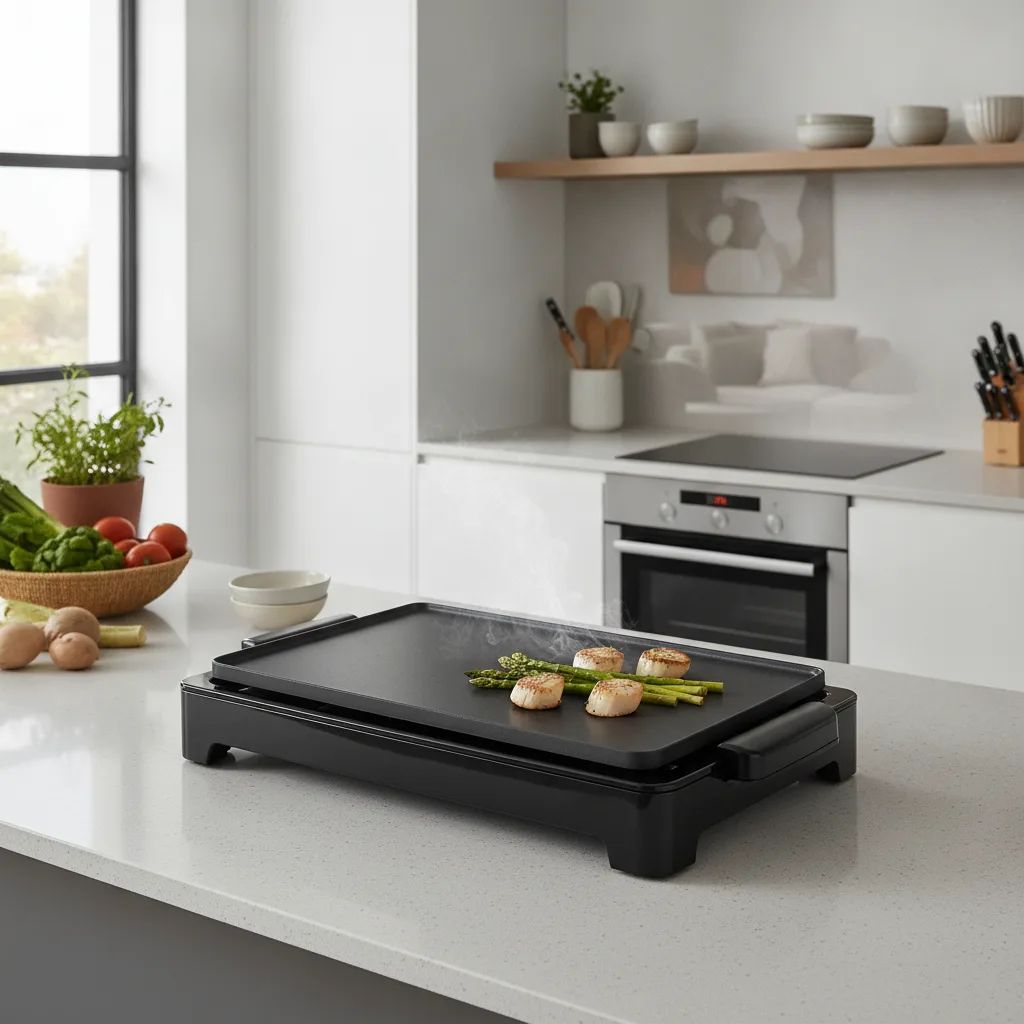
Cooking on a plancha in a flat is perfectly possible, provided you choose the right equipment and follow a few simple rules. Unlike a gas plancha, an electric plancha for a flat produces no flame, needs no gas bottle and generates less smoke. It runs on a simple 230 V socket, making it compatible with almost all household electrical installations.
Whether you have an open-plan kitchen, a balcony or a small living space, this guide helps you make the right choice, use your plancha safely and get the most out of it every day.
Electric plancha for a flat: 2027 guide
Reading time: ~13 min
- Summary
- Why the electric plancha is the only viable option in a flat
- How to choose an electric plancha for a flat: the four essential criteria
- Managing smoke and ventilation when using an electric plancha indoors
- Electrical safety and positioning: precautions not to overlook
- Maintaining an electric plancha in a flat: the right habits
- Electric plancha on a flat's balcony: what you need to know before you start
- The electric plancha, the ideal companion for flat living
- In short
- FAQ: electric plancha in a flat
Summary
- Why electric is the way to go in a flat: the electric plancha is the most suitable option, and often the only one permitted, indoors and on apartment block balconies, thanks to the absence of flame and reduced smoke emissions.
- Choosing the right plancha: power, cooking surface, plate material and budget are the four decisive criteria for use in a flat.
- Managing smoke and ventilation: an extractor hood or an open window is enough to cook comfortably indoors.
- Electrical safety and positioning: an earthed socket, a stable surface and distance from walls are non-negotiable precautions.
- Regular maintenance: cleaning after each use extends the life of the plancha and ensures healthy cooking.
Why the electric plancha is the only viable option in a flat
The question often comes up: can you use a plancha in a flat? The answer is yes, but only with an electric model. Gas planchas, whether running on a bottle or connected to the mains, are strongly discouraged, or even prohibited, indoors and on most apartment block balconies.
The reasons are simple: they produce combustion gases, require enhanced ventilation and represent a fire risk that co-ownership rules generally do not allow. UFC-Que Choisir points out that only electric planchas can legally be used indoors or on a balcony.
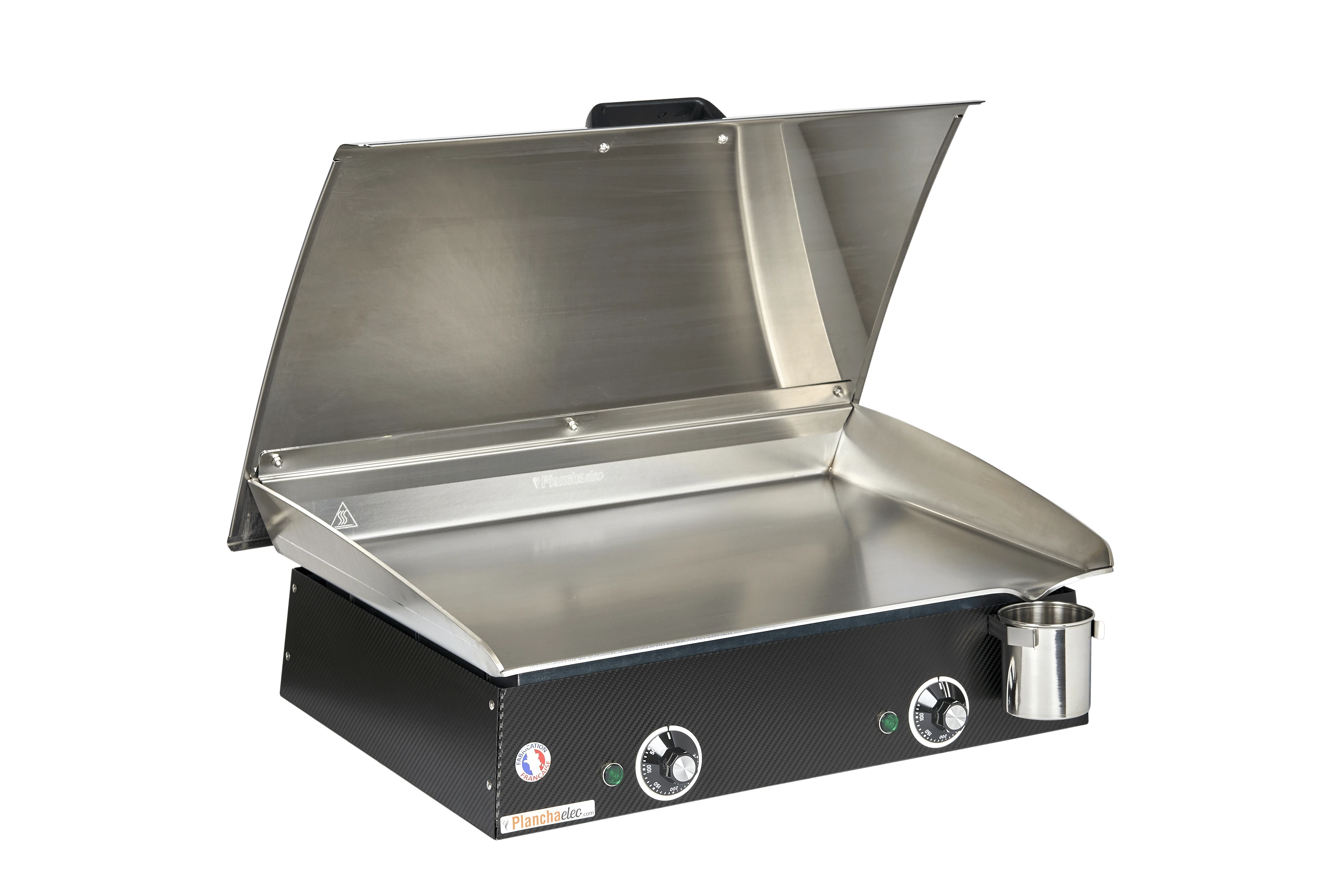
The electric plancha, on the other hand, works without a flame. Its heating element heats the cooking plate directly, without combustion, eliminating dangerous gas emissions. It plugs into a standard earthed socket and requires no special installation. At Planchaelec, our stainless steel electric planchas are designed for both indoor and outdoor use, making them versatile appliances perfectly suited to life in a flat.
Another decisive advantage: an electric plancha produces less smoke than a gas plancha. Cooking takes place by direct contact with the plate, with no flame licking the food and no combustion residue. For a flat, this is a criterion that really makes a difference every day.
Good to know: before using an electric plancha on your balcony, check your building's co-ownership rules. Some rules restrict the use of outdoor cooking appliances, even electric ones. If in doubt, ask your managing agent.
How to choose an electric plancha for a flat: the four essential criteria
Not all electric models are equal, and some are much better suited to the constraints of a flat than others. Here are the criteria to examine carefully before buying.
Power in watts
Power determines how quickly the plancha heats up and its ability to maintain even heat even when you add several foods at once. For a flat, a power output of between 1,800 and 2,500 watts is generally sufficient.
Below that, the plancha struggles to reach the 180 to 250 °C needed for proper searing. Above that, you risk overloading a household circuit not designed for high power. Always check that your electrical installation can handle the appliance's power before plugging it in.
The cooking surface
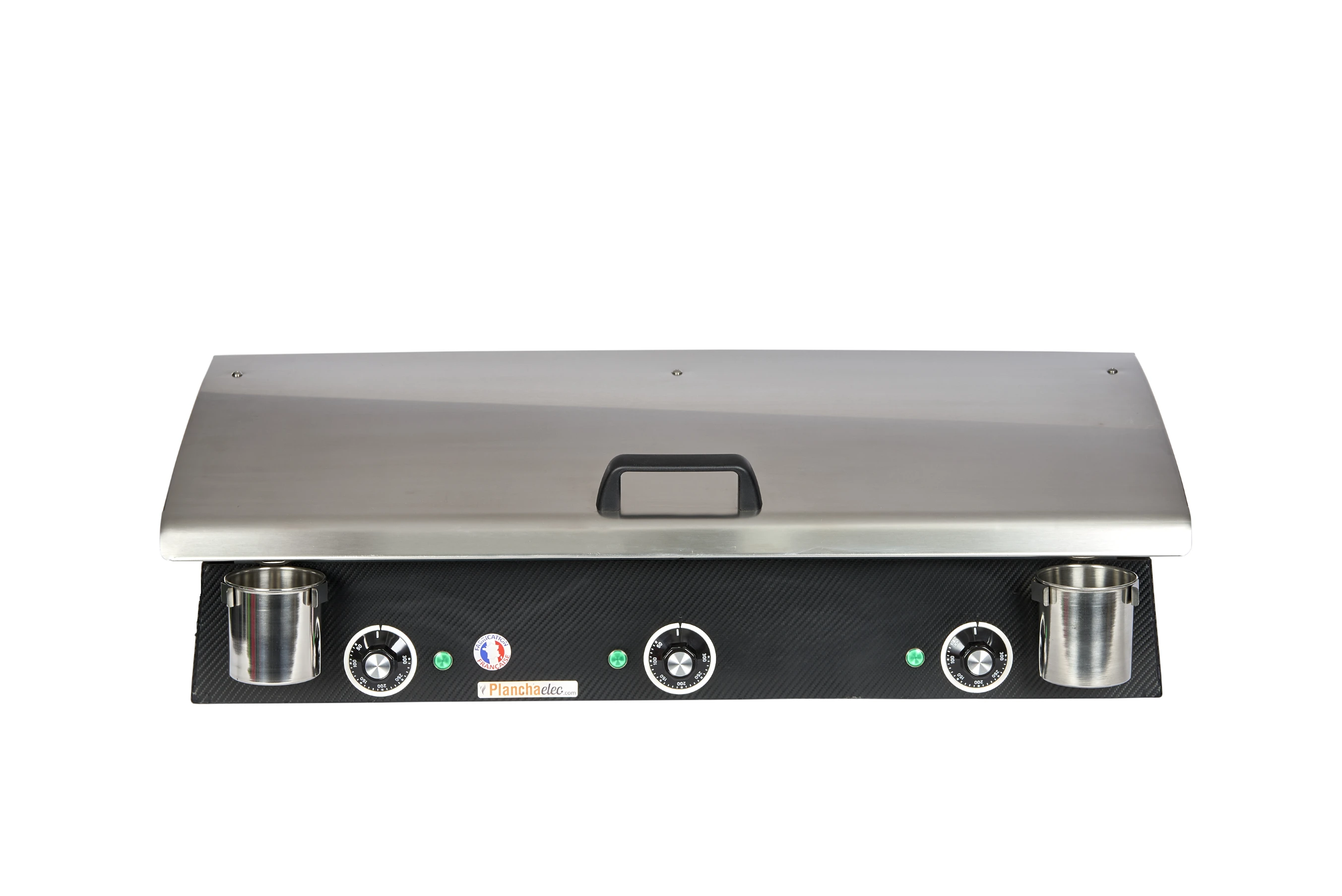
For a flat kitchen or a small balcony, a compact cooking surface is often preferable. A model 400 to 600 mm long is perfect for two to four people. If you regularly entertain friends or family, a larger model (up to 830 mm) offers more comfort, provided your work space allows it.
At Planchaelec, the Néo 420 plancha is an ideal compact option for small spaces, while the Lux 600 plancha offers a good compromise between cooking surface and footprint.
The plate material
Two materials dominate the market: enamelled cast iron and food-grade stainless steel. Enamelled cast iron ensures even heat distribution and is suitable for regular use. It is heavier but offers good thermal inertia.
Food-grade stainless steel, which we favour at Planchaelec, has significant advantages for use in a flat: it is more hygienic, easier to clean and better withstands the ambient humidity of a kitchen. It also heats up quickly, reducing preheating time to just 5 to 10 minutes. To find out more about the differences between these two materials, our guide stainless steel or enamelled cast iron plancha details the pros and cons of each option.
The budget to plan for
The electric plancha market covers a wide price range. According to Le Parisien, entry-level models start at around €40 to €80, but these appliances generally offer limited plate quality and durability.
For regular use in a flat with quality materials, it is better to invest in a mid-range or premium model. High-end models from specialist brands can cost €450 to €960. At Planchaelec, our stainless steel electric planchas offer value for money consistent with intensive home use, with packs including accessories and a protective cover to make the most of your investment.
| Criterion | Entry level | Mid-range | Premium |
|---|---|---|---|
| Indicative price | €40 to €80 | €150 to €400 | €450 and over |
| Plate material | Non-stick coating | Enamelled cast iron or stainless steel | Thick food-grade stainless steel |
| Power | 1,200 to 1,800 W | 1,800 to 2,200 W | 2,200 to 3,000 W |
| Durability | Limited | Good | Excellent |
| Suitability for a flat | Occasional use | Regular use | Intensive, frequent use |
Managing smoke and ventilation when using an electric plancha indoors
Why an electric plancha produces less smoke
Managing cooking smoke is the main concern of electric plancha users in flats. The good news: with a quality electric model, smoke is significantly lower than with a gas plancha or a barbecue. This is due to the absence of combustion and to direct-contact cooking on the plate, which limits grease spatter into the air.
Ventilation and positioning of the plancha indoors
To cook without bothering your neighbours or filling your flat with smoke, a few precautions are enough. The first is to position your plancha under your kitchen extractor hood or, failing that, right next to an open window. The extractor hood remains the most effective solution for capturing steam and odours in real time. If you cook on your apartment balcony, the open air is generally enough, provided the wind does not blow the smoke back inside.
Adjusting the temperature to limit smoke
Cooking temperature also plays an important role. The hotter the plate, the more likely fats in food are to smoke. By keeping the temperature between 180 and 220 °C for most everyday cooking, you significantly reduce smoke without compromising the quality of your dishes. Your plancha's adjustable thermostat is your best ally in finding the right balance. Our dedicated guide to smoke-free indoor plancha cooking gives you expert advice for cooking with peace of mind at home.
Electrical safety and positioning: precautions not to overlook
Basic electrical safety
An electric plancha for a flat is a safe appliance, provided you follow the basic instructions given by manufacturers. The first point concerns the electrical installation: always plug your plancha into an earthed socket. Check that the appliance's voltage matches the French household mains, i.e. 220 to 240 V. Regularly inspect the power cable: if it is damaged, do not use the appliance.
Positioning and supervising the appliance
Where you place the plancha is just as important. Put it on a stable, flat, heat-resistant and non-flammable surface. Keep it away from walls, curtains and any combustible material. Never place it in a corner or against a wall, as this encourages overheating. Some models have an automatic overheating cut-off that stops heating if the temperature exceeds a critical threshold. This is a useful feature for use in a flat, especially if you leave the kitchen briefly.
Never move the plancha while it is still hot, and do not leave it plugged in unattended. If you have children, make sure they cannot reach the appliance while it is on. These precautions, set out in the instructions of all reputable manufacturers, are common sense but worth repeating.
Important: never immerse the body of the plancha or its cable in water to clean it. Always clean it once it has cooled down completely, with a damp cloth or products suited to your type of plate.
Maintaining an electric plancha in a flat: the right habits
Routine care after each use
Regular maintenance is the key to extending the life of your electric plancha and keeping your cooking healthy. In a flat, where storage space is often limited, quick cleaning after each use is better than less frequent deep cleaning.
Always let the plate cool completely before cleaning it. For a stainless steel plate, use a scraper to loosen food residue, then wipe with a slightly damp cloth. Our stainless steel plancha cleaning guide details the steps to follow depending on the type of dirt. For enamelled cast iron plates, avoid overly abrasive pads that could scratch the enamel. A suitable degreaser makes cleaning easier without damaging the surface.
Grease tray and storage
Also remember to empty the grease tray regularly. In a flat, a full tray can overflow and dirty your worktop or floor. After cleaning, store your plancha in its protective cover to protect it from dust and knocks.
Electric plancha on a flat's balcony: what you need to know before you start
Using an electric plancha on an apartment balcony is a great way to enjoy plancha cooking without cluttering the kitchen. However, a few points deserve attention. First check that your balcony has an earthed outdoor socket, or use an extension cord suitable for outdoor use. Never use an indoor extension cord outdoors, as it is not designed to withstand moisture.
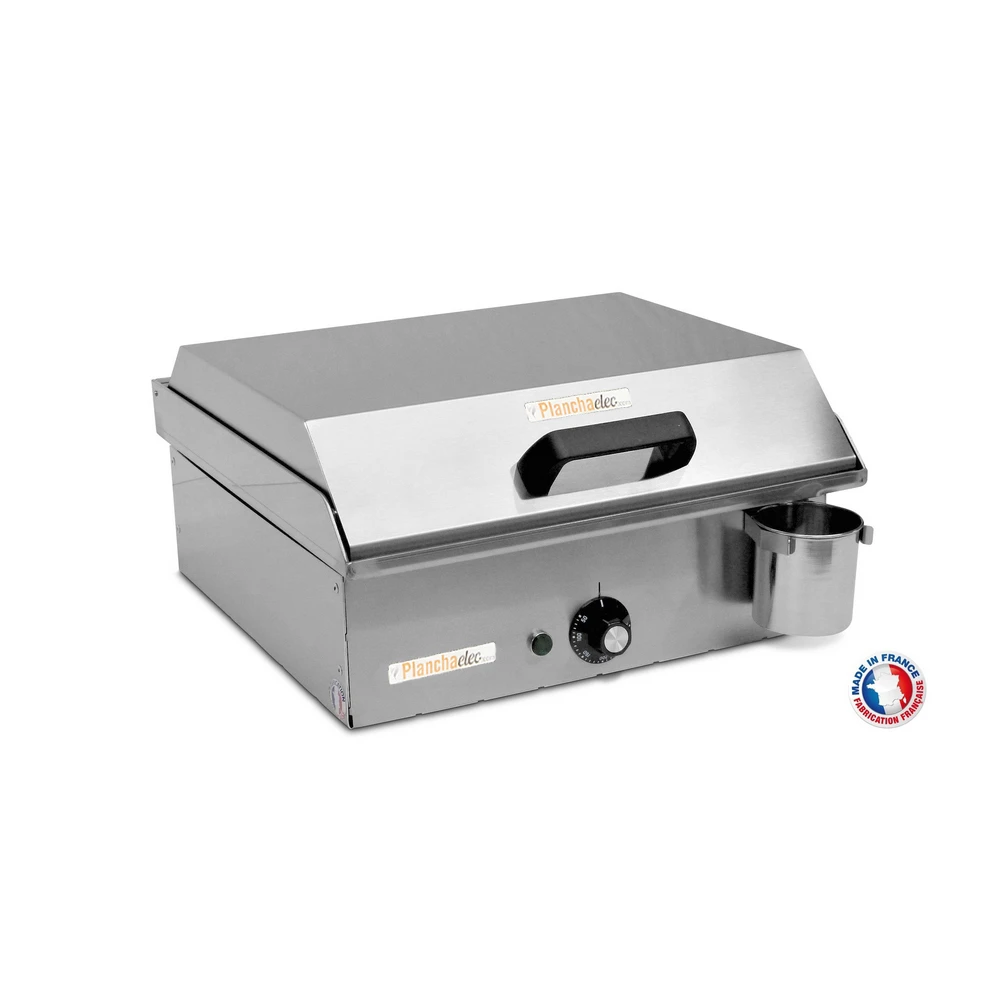
Also make sure your balcony surface can support the weight of the plancha and any trolley. If you choose a compact model, a simple stand or a heat-resistant table is enough. For larger balconies, a plancha trolley offers optimal comfort and makes storage easier. Finally, always cover your plancha with its cover when not in use to protect it from the weather and urban pollution.
To take your choice further, our complete guide to using a plancha on a balcony covers in detail the safety, size and regulatory questions specific to apartment balconies.
The electric plancha, the ideal companion for flat living
The electric plancha for a flat is not a compromise: it is the solution best suited to indoor and balcony living. It combines the advantages of safety (no flame, automatic cut-off), practicality (standard plug, easy cleaning) and cooking quality (fast heat-up, even heat distribution).
By choosing a food-grade stainless steel model with power suited to your installation and a cooking surface in line with your habits, you make a lasting investment that turns everyday meals into convivial moments. At Planchaelec, we design our stainless steel electric planchas in France to meet exactly these needs, with a full range of accessories for every type of user. Discover all our models on our electric planchas page.
In short
An electric plancha for a flat lets you enjoy convivial, controlled cooking, even without a garden, provided you choose a model suited to your space, your electrical installation and your eating habits.
By following the ventilation, safety and maintenance rules in this guide, you get a durable appliance that is easy to use every day, both in the kitchen and on an apartment balcony.
FAQ: electric plancha in a flat
Can an electric plancha be used in a kitchen without an extractor hood?
Yes, provided you open a window to ensure sufficient ventilation. An electric plancha produces less smoke than a gas plancha, but good air circulation is still recommended to remove cooking steam and odours, especially when cooking fatty meats.
What is the maximum power a household socket can handle for a plancha?
A standard household socket in France can handle up to 16 amps, i.e. around 3,600 watts at 230 V. Most electric planchas use between 1,800 and 2,500 watts, which is perfectly compatible. However, check that your circuit is not already loaded by other powerful appliances running at the same time.
Can an electric plancha be used on a balcony when it rains?
No. Electric planchas are electrical appliances and must never be used in the rain or in a very humid environment. Always store your plancha sheltered from the weather and cover it with a suitable cover when not in use.
Is a stainless steel electric plancha better suited to a flat than enamelled cast iron?
Both materials are suitable for use in a flat, but food-grade stainless steel has practical advantages: it is lighter, easier to clean and better withstands kitchen humidity. Enamelled cast iron offers better thermal inertia, which is useful if you cook large quantities at once.
Should you season a stainless steel electric plancha before first use?
Yes, it is recommended to season it before the first cook. This involves heating the plate to a moderate temperature, adding a drizzle of oil and spreading it evenly with kitchen paper. This forms a light protective layer that makes subsequent cooking easier and protects the plate.
Which accessory is essential for using an electric plancha in a flat?
A grease tray in good condition is essential to prevent overflow onto your worktop. A scraper makes it easier to clean the plate between cooks. For a flat, a protective cover completes the essential kit for storing the plancha neatly between uses.