



 +33 4 78 55 45 69
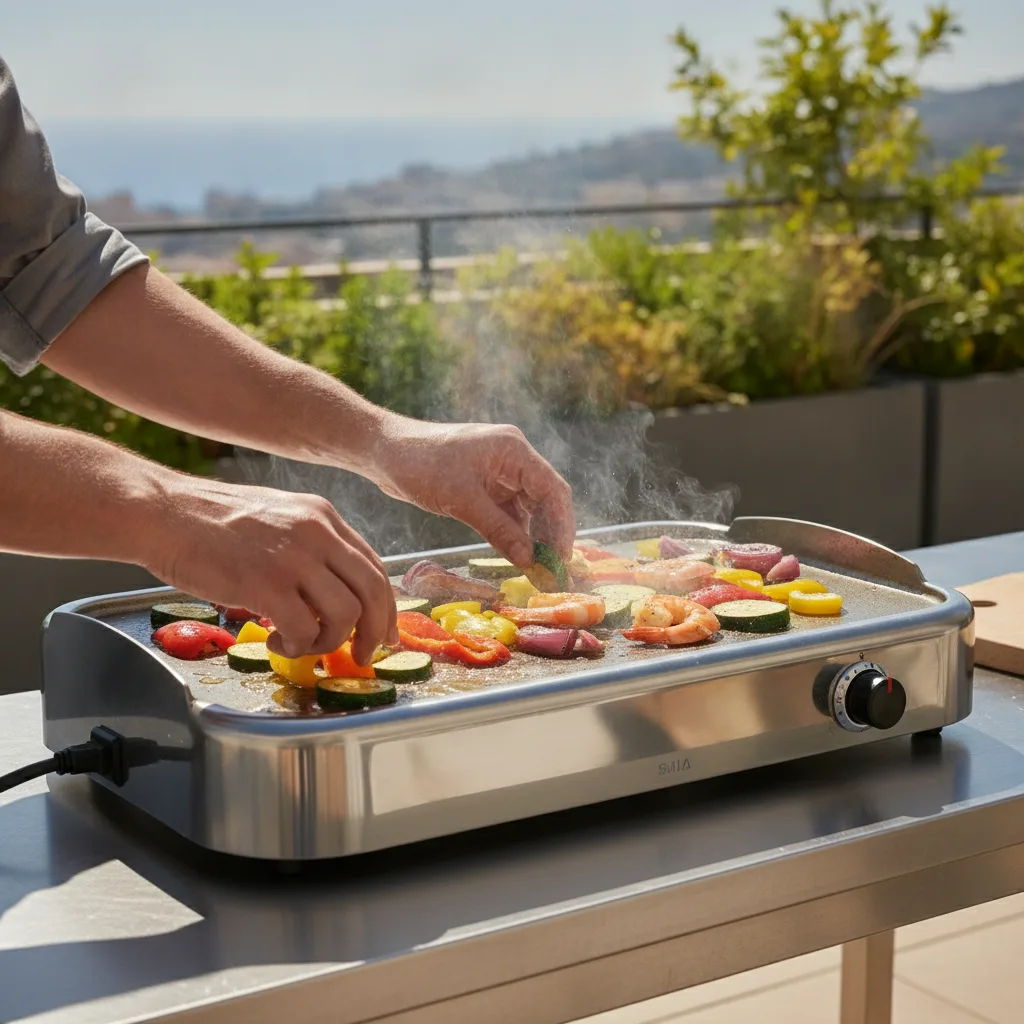
Choosing the power of your electric plancha is not just a matter of comparing two figures on a spec sheet. It is a decision that directly determines how fast it heats up, how well it sears food and how well the appliance holds its temperature when you put a large quantity of cold food on it.
Between a 1800 W and a 2400 W electric plancha, the practical differences are much more significant than they seem. This article helps you understand what these watts really mean in your kitchen or on your terrace, depending on the number of guests and your cooking style.
1800 W or 2400 W electric plancha: which should you choose?
Reading time: ~8 min
- Summary
- Why is the power of an electric plancha so important?
- 1800 W electric plancha: for which type of user?
- 2400 W electric plancha: the practical everyday advantages
- 1800 W or 2400 W comparison: the decisive criteria
- Which power should you choose for your use and number of guests?
- Choosing the right power for your plancha
- In short: which electric plancha power should you choose?
- FAQ
Summary
- Rated power determines heat-up speed and searing ability: 1800 W is the acceptable minimum, 2400 W offers much greater comfort.
- A 1800 W plancha is suitable for occasional indoor use and small quantities, up to 4 or 5 guests in ideal conditions.
- A 2400 W plancha (or more) is recommended for regular family use, outdoors or for searing thick cuts of meat.
- The power consumption of a 2400 W plancha remains reasonable and compatible with a standard 16 A socket on the French 230 V mains.
- A comparison table and an FAQ complete the guide to help you make the right choice for your profile.
Why is the power of an electric plancha so important?
The rated power of an electric plancha, expressed in watts, directly determines the amount of energy delivered to the cooking plate per unit of time. The higher this value, the faster the heating element produces heat, and the sooner the plate reaches its optimal searing temperature, generally between 250 °C and 300 °C for grilling meat properly.
But power does not only affect the initial heat-up. It also determines how the temperature recovers after cold food is added. When you put a batch of skewers or fish fillets straight from the fridge on the plate, it suddenly loses several tens of degrees. A low-powered plancha will take several minutes to return to its set temperature, with the risk of stewing the food rather than searing it. This is precisely where the difference between 1800 W and 2400 W becomes tangible.
Power density, i.e. the ratio between the available watts and the cooking surface in cm², is an even more precise indicator. A large plate with insufficient power will heat unevenly, with cold spots at the edges. For even cooking across the whole surface, the power must therefore match the size of the plate.
1800 W electric plancha: for which type of user?
Recommended uses for a 1800 W electric plancha
An 1800 W electric plancha sits above the 1500 W minimum recommended by specialist guides, including Cuisine Actuelle and UFC-Que Choisir, to reach temperatures high enough for searing food. It remains perfectly viable in certain specific contexts.
For occasional indoor use, for 2 to 4 people, with a compact plate (around 40 cm wide), 1800 W can be enough if the plate is made of thick stainless steel, which has good thermal inertia. Stainless steel retains heat better than a thin plate, which partly compensates for the more modest power. Vegetables, fish and thin cuts of meat (escalopes, chipolatas) are well suited to this power level.
The limitations of a 1800 W electric plancha
However, the limitations become clear in two situations. First, when searing thick cuts such as duck breast, rib-eye steak or large quantities of king prawns: temperature recovery is too slow and the food steams rather than grills. Second, outdoors: wind and low ambient temperatures cause heat losses that 1800 W struggles to compensate for. One specialist guide states that below 1800 W, heat-up is too slow and food is likely to stew rather than sear.
Good to know
UFC-Que Choisir sets a benchmark of 1500 W per cooking zone as the minimum for grilling meat, but recommends 2000 W for greater comfort. Below this threshold, results become unpredictable as soon as the quantity of food increases.
2400 W electric plancha: the practical everyday advantages
Heat-up and thermal recovery
A 2400 W electric plancha really changes the cooking experience. Heat-up is noticeably faster: where a 1800 W plancha may need 8 to 12 minutes to reach 250 °C, a 2400 W plancha gets there in 5 to 8 minutes depending on the model and plate thickness.
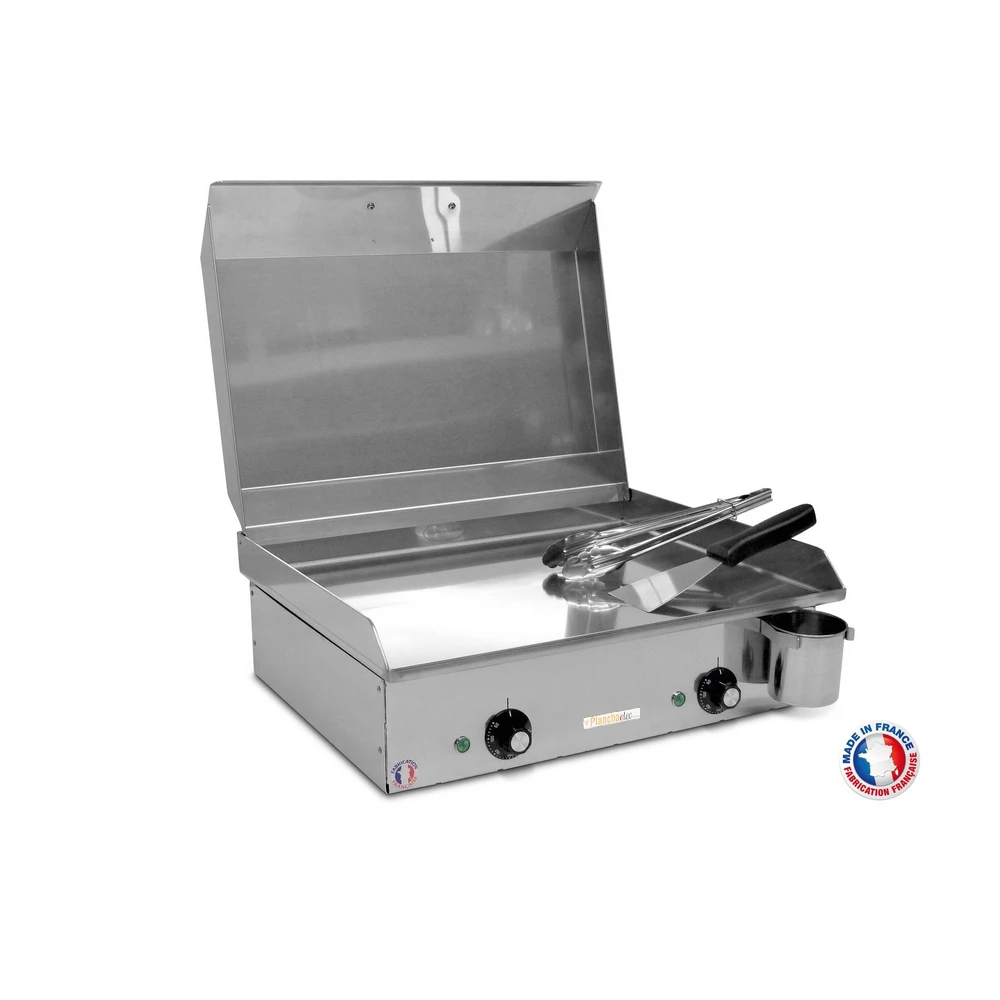
Thermal recovery after adding food is much more effective. The heating element has enough reserve power to quickly compensate for the drop in temperature, which ensures the Maillard reaction (the chemical reaction responsible for the golden crust and grilled aromas) even when you load the plate all at once for 6 or 8 guests.
Outdoor performance
For outdoor use, specialists recommend a minimum power of 2400 W to reach 250 to 300 °C steadily, even in cool or windy weather. This is the threshold at which an outdoor electric plancha can rival a gas plancha in terms of thermal performance.
Examples of powerful electric planchas
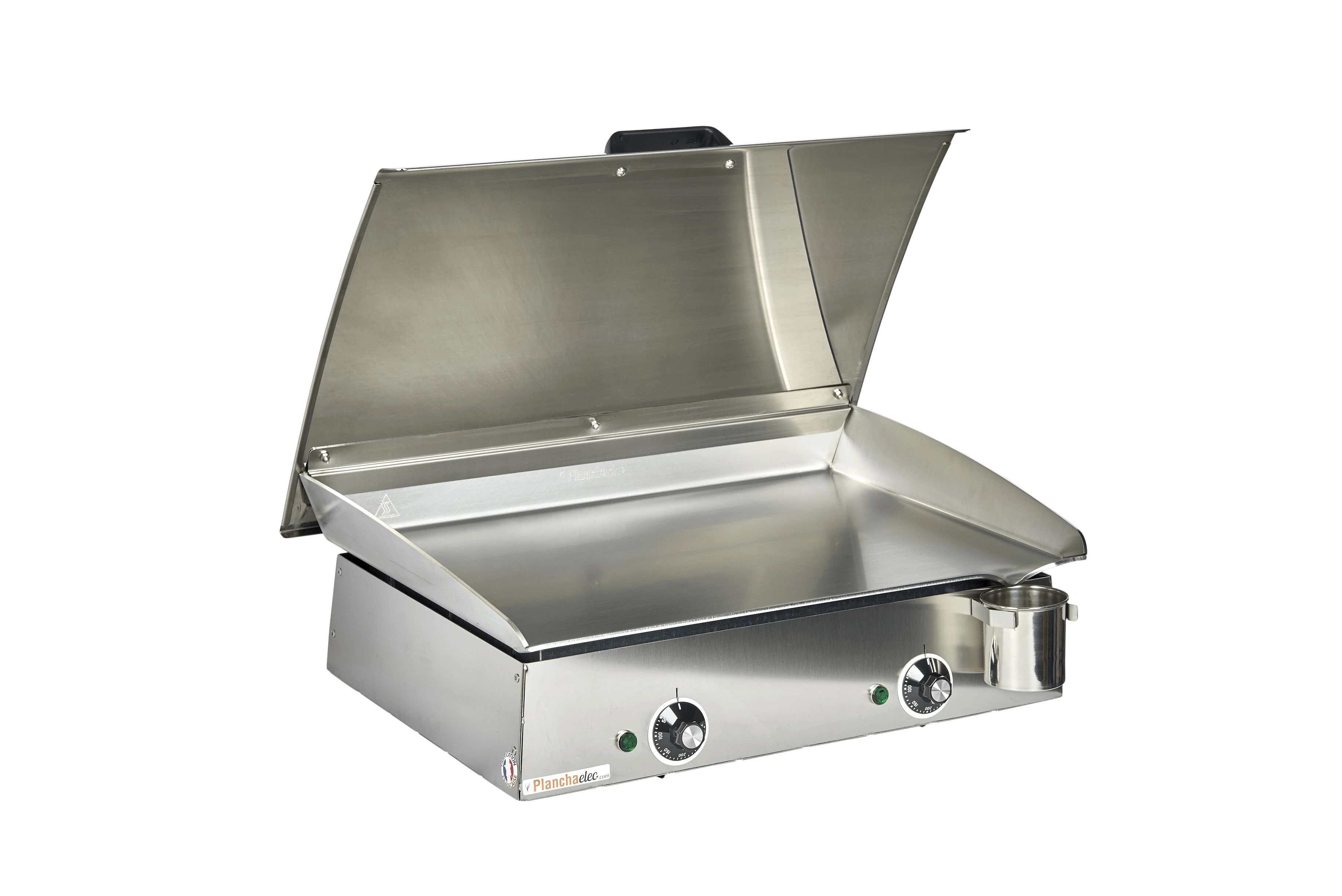
The family planchas offered by Planchaelec, such as the Lux 830 plancha or the Lux 600 plancha, are designed to offer power suited to regular, demanding use, with a thick stainless steel plate that combines high power and good thermal inertia. To find out more about the technical criteria to consider, see our complete guide to electric plancha power.
1800 W or 2400 W comparison: the decisive criteria
1800 W vs 2400 W comparison table
Here is a comparison table showing the practical differences between these two power levels according to the most common usage criteria.
| Criterion | 1800 W plancha | 2400 W plancha |
|---|---|---|
| Heat-up time (250 °C) | 8 to 12 minutes | 5 to 8 minutes |
| Recovery after adding cold food | Slow, risk of steaming | Fast, searing maintained |
| Recommended number of guests | 2 to 5 people (indoor use) | 4 to 10 people |
| Outdoor use | Limited (significant heat loss) | Suitable, even in cool weather |
| Searing thick cuts of meat | Difficult in large quantities | Effective, Maillard reaction guaranteed |
| Power consumption (1 hour of use) | About 1.8 kWh | About 2.4 kWh |
| Compatibility with a 16 A / 230 V household socket | Yes, no constraints | Yes, compatible with a standard 16 A socket |
The power consumption of a 2400 W plancha therefore remains perfectly reasonable. For a one-hour cooking session, the difference compared with a 1800 W model is about 0.6 kWh extra, or around fifteen euro cents at the French regulated tariff. Electric resistance cooking appliances are among the most efficient in terms of energy conversion, as almost all the electricity consumed is converted into useful heat.
Which power should you choose for your use and number of guests?
Matching power to the number of guests
The recommendations of specialist guides converge on a simple logic: the larger the cooking surface and the more guests there are, the higher the power must be to ensure even heating across the whole plate.
Here are the practical benchmarks drawn from the specialist sources consulted. For 1 to 4 people in occasional indoor use, 1500 to 1800 W can be enough if the plate is compact. For 4 to 6 people in regular or outdoor use, 2000 to 2400 W is clearly preferable. For 6 to 10 people or for a large plate over 60 cm wide, several specialist comparisons strongly advise aiming for 2400 W or more.
Finding the right power compromise
Some comparisons highlight models around 2200 W as the ideal compromise between performance, cooking surface and cost. This power range offers satisfactory heat-up, good thermal recovery and controlled energy consumption.
If you are still unsure which model suits your use, our guide to choosing your plancha takes you through it step by step, and the Planchaelec FAQ answers the most common questions about our models.
Key takeaway
A 2400 W electric plancha is compatible with a standard 16 A household socket on the French 230 V mains. No special electrical installation is required, provided you do not run several high-power appliances on the same circuit.
Choosing the right power for your plancha
The question of an electric plancha's power deserves serious consideration before any purchase. A 1800 W and a 2400 W electric plancha are not aimed at the same type of user: the first suits occasional indoor use with few guests, the second becomes essential as soon as you cook regularly, outdoors or for a table of 4 or more.
The difference in power consumption is minimal compared with the cooking comfort gained. At Planchaelec, our thick stainless steel planchas are designed to make the most of their rated power, with even heating and thermal inertia that make a difference at every meal. Discover our range of electric planchas to find the model that suits your needs.
In short: which electric plancha power should you choose?
Between a 1800 W and a 2400 W electric plancha, the choice therefore depends above all on the number of guests, the size of the plate and how often you use it, indoors or outdoors.
Remember that a 1800 W plancha remains suitable for occasional use on a small surface for 2 to 4 people, while a 2400 W plancha (or more) provides the comfort needed to cook regularly, sear meat and fish effectively and maintain a stable temperature, including outdoors.
FAQ
Can a 1800 W electric plancha be used outdoors?
Technically yes, but with limited results. Outdoors, heat losses due to wind and low ambient temperatures significantly reduce the performance of a 1800 W plancha. Specialists recommend a minimum power of 2400 W for stable, effective outdoor use.
Do you need a special socket to plug in a 2400 W plancha?
No. A 2400 W plancha runs on a standard 16 A household socket supplied at 230 V, which is the standard on the French grid. Just make sure the circuit is not simultaneously powering other very energy-hungry appliances such as an oven or a hob.
What is the difference between rated power and actual power consumption?
Rated power is the maximum power the plancha can reach. In practice, the adjustable thermostat modulates heating according to the target temperature: the plancha does not draw its maximum power all the time. Actual consumption over a cooking session is therefore lower than the rated power multiplied by the total duration.
Does power affect how easy the plate is to clean?
Indirectly, yes. A plate that reaches high temperatures burns off food residue more easily, which makes cleaning easier. A low-powered plancha that does not reach high enough temperatures leaves more sticky residue. To complete your maintenance routine, see our stainless steel plancha cleaning guide.
Can a 2400 W electric plancha be used indoors without smoke problems?
Yes, provided you do not exceed the temperatures needed for searing and you degrease the plate regularly. An electric plancha naturally produces less smoke than a barbecue, because fat drains into a collector and does not drip onto a direct heat source. For detailed advice, see our dedicated article on using a plancha indoors without smoke.