



 +33 4 78 55 45 69
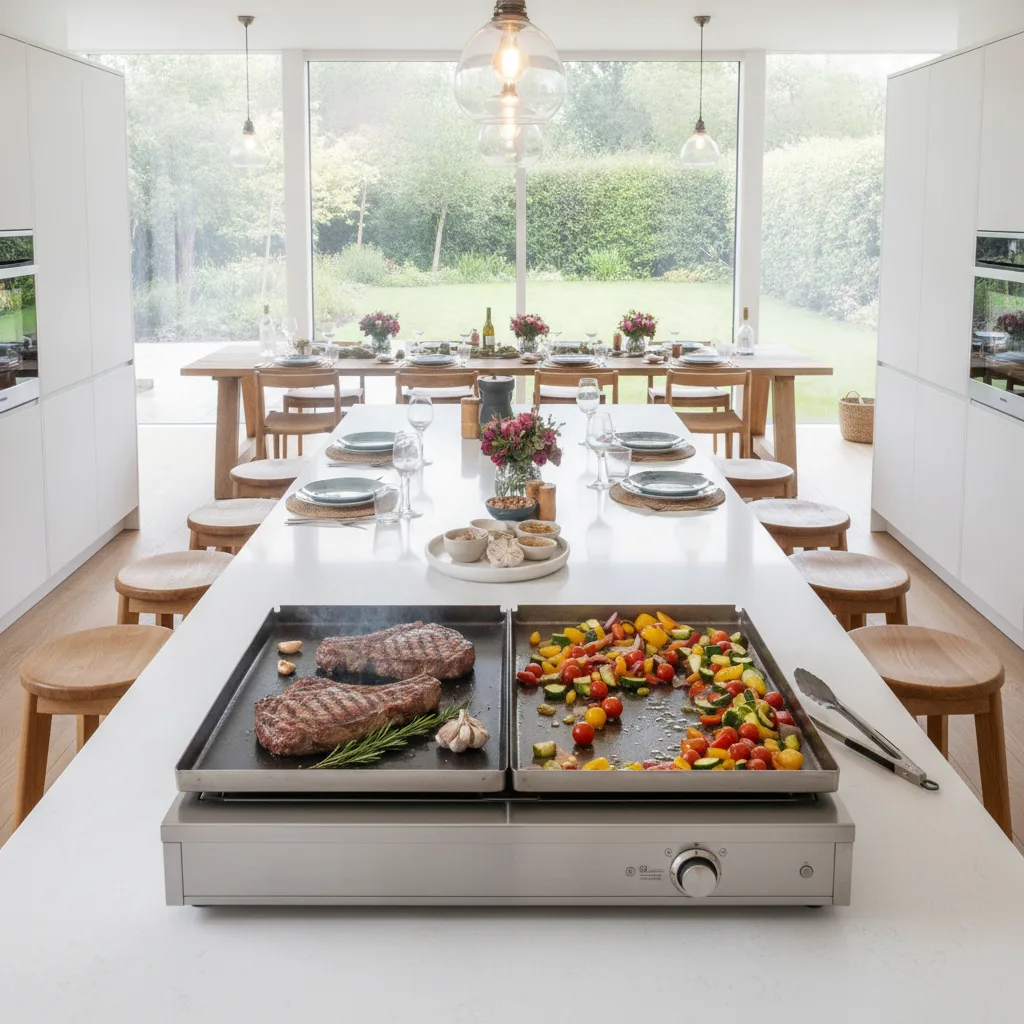
Are you cooking for eight to ten people and want to serve meat seared at high temperature and gently cooked vegetables at the same time? A dual-zone electric plancha meets exactly this need. Unlike a single-zone model, it has two independent thermostats that let you maintain different temperature ranges on the same plate simultaneously.
It is a feature that sounds technical but genuinely changes how you organise a convivial meal. This article helps you understand when this option is really useful, which technical features to look for and how to choose the right model.
Dual-zone electric plancha: 2027 guide
Reading time: ~8 min
- Summary
- Single-zone plancha or dual-zone electric plancha: what is the practical difference?
- In which scenarios do two independent zones really make a difference?
- Power, size and materials: the technical criteria to check
- Dual-zone electric plancha or two-burner gas plancha: which should you choose?
- How do you clean a dual-zone electric plancha without damaging it?
- Planchaelec planchas suited to large gatherings
- The dual-zone plancha, a real asset for entertaining
- FAQ
Summary
Here are the key points covered in this article:
- Difference between single-zone and dual-zone planchas: two independent thermostats allow simultaneous cooking at different temperatures.
- Power and size: a dual-zone electric plancha needs at least 2,200 W and a plate of around 60 cm to cater for 8 to 10 guests.
- Practical scenarios: the cases where two zones really change the result on the plate.
- Electric or gas plancha: the criteria for choosing according to how you will use it.
- Maintenance: the right routine to preserve a food-grade stainless steel plate over time.
Single-zone plancha or dual-zone electric plancha: what is the practical difference?
A single-zone plancha heats the whole plate to the same temperature. That is enough for simple, uniform cooking, such as fish fillets or summer vegetables. But as soon as the menu becomes more varied, the limitation quickly shows: it is impossible to sear a rib-eye steak at 280 °C while keeping already-cooked king prawns warm at 60 °C on the same surface.
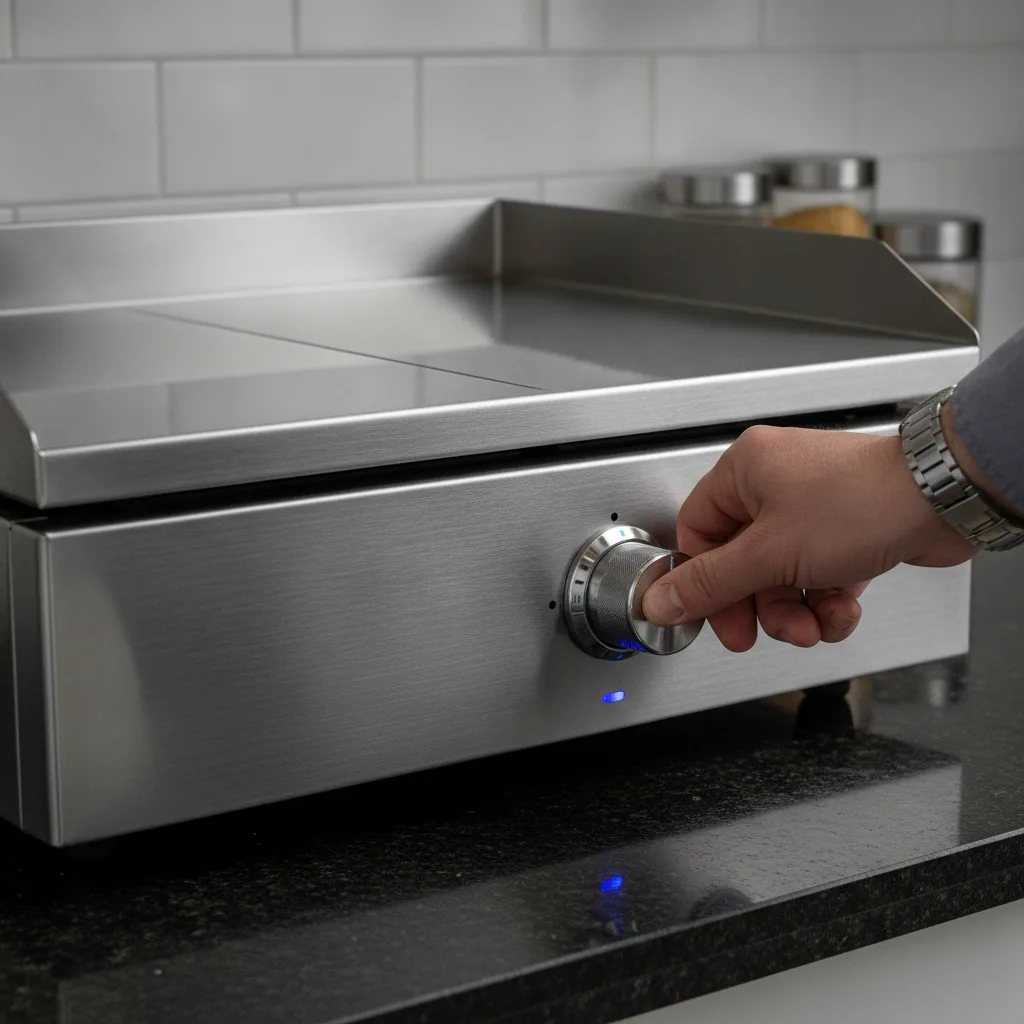
A dual-zone electric plancha solves this problem by dividing the plate into two separate thermal areas. Each zone is powered by its own heating elements and controlled by its own independent thermostat. You set the left zone to a high temperature for searing and the right zone to a low temperature for keeping food warm. Both work in parallel, without interfering with each other.
This design, found on mid-range and high-end models, is the principle used on the Lux plancha range: two independent zones on the Lux 600 and three on the Lux 830.
In which scenarios do two independent zones really make a difference?
The question is not whether two zones are better than one, but in which contexts they become truly necessary. Here are the most common situations.
Mixed meals: meat, fish and vegetables at the same time
The first case is the mixed meal. You are hosting guests with different diets: some eat meat, others prefer vegetables or fish. With two independent zones, you can cook each type of food at the temperature that suits it, with no compromise. Red meat needs searing at high temperature to form a nice crust, while scallops or asparagus do not cope well with excessive heat.
Managing the flow during a buffet-style aperitif
The second case is managing the flow during a buffet-style aperitif. You prepare the first pieces; they are ready but not all the guests are at the table yet. With one zone kept at 60 to 80 °C, you keep food warm without overcooking it. The other zone carries on producing new dishes at searing temperature.
Synchronised cooking of proteins and vegetables
The third case is cooking proteins and vegetables simultaneously for synchronised serving. In restaurants as at home, getting every element of a plate ready at the same time is a real challenge. Two zones let you orchestrate this timing without sacrificing the cooking quality of any ingredient.
Good to know
The water drop test is a simple way to check your plancha's temperature: if a drop of water placed on the plate evaporates instantly, forming small beads that roll around, the surface is at around 200 to 250 °C and ready for searing.
Power, size and materials: the technical criteria to check
A high-performance dual-zone electric plancha relies on several technical features that are worth understanding before buying.
| Feature | Single-zone plancha | Dual-zone electric plancha |
|---|---|---|
| Rated power | 1,500 to 2,200 W | 2,200 to 3,600 W |
| Plate length | 30 to 50 cm | 50 to 65 cm |
| Number of guests | 4 to 6 people | 6 to 10 people |
| Thermostats | 1 single thermostat | 2 independent thermostats |
| Temperature range | 50 to 250 °C | 50 to 300 °C |
| Recommended material | Food-grade stainless steel | Thick food-grade stainless steel (3 to 5 mm) |
Recommended power for a dual-zone electric plancha
Power is the first parameter to check. To reach the searing temperatures required on a plancha (around 250 to 300 °C), a rated power of at least 1,500 W is required. For a multi-zone electric plancha, the range is between 2,200 W and 3,600 W. A 3,600 W model such as the Lux 830 heats up quickly and holds its heat even when the plate is loaded with cold food.
Plate size and number of guests
The size of the plate directly determines the number of guests you can serve. A surface of around 60 cm is the reference format for a large dual-zone electric plancha, suitable for 8 to 10 people. Below 50 cm, it is difficult to create two truly distinct thermal zones that can be used simultaneously.
Plate material and thickness
The plate material plays a decisive role in even heat distribution. Food-grade stainless steel is recommended for its durability, ease of maintenance and taste neutrality, but its grade also matters on a multi-zone plancha. At Planchaelec we use 430 stainless steel, which resists heat distortion better: it lets you heat a single zone safely, whereas a 304L plate heated on one side only tends to warp. A thick plate, 3 to 5 mm depending on the model, provides good thermal inertia and limits cold spots at the ends of the plate. The heating elements must cover the entire surface evenly to avoid these cold spots, which impair cooking quality.
Controls and indicator lights
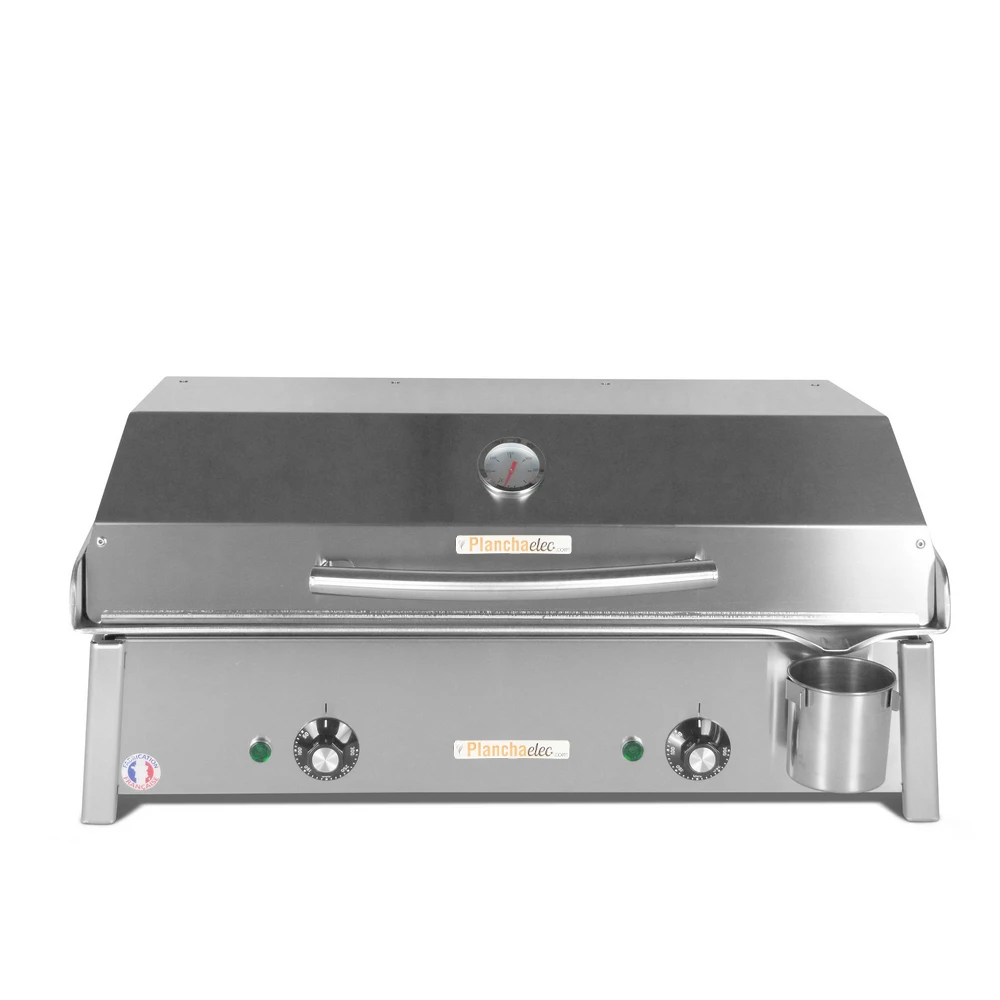
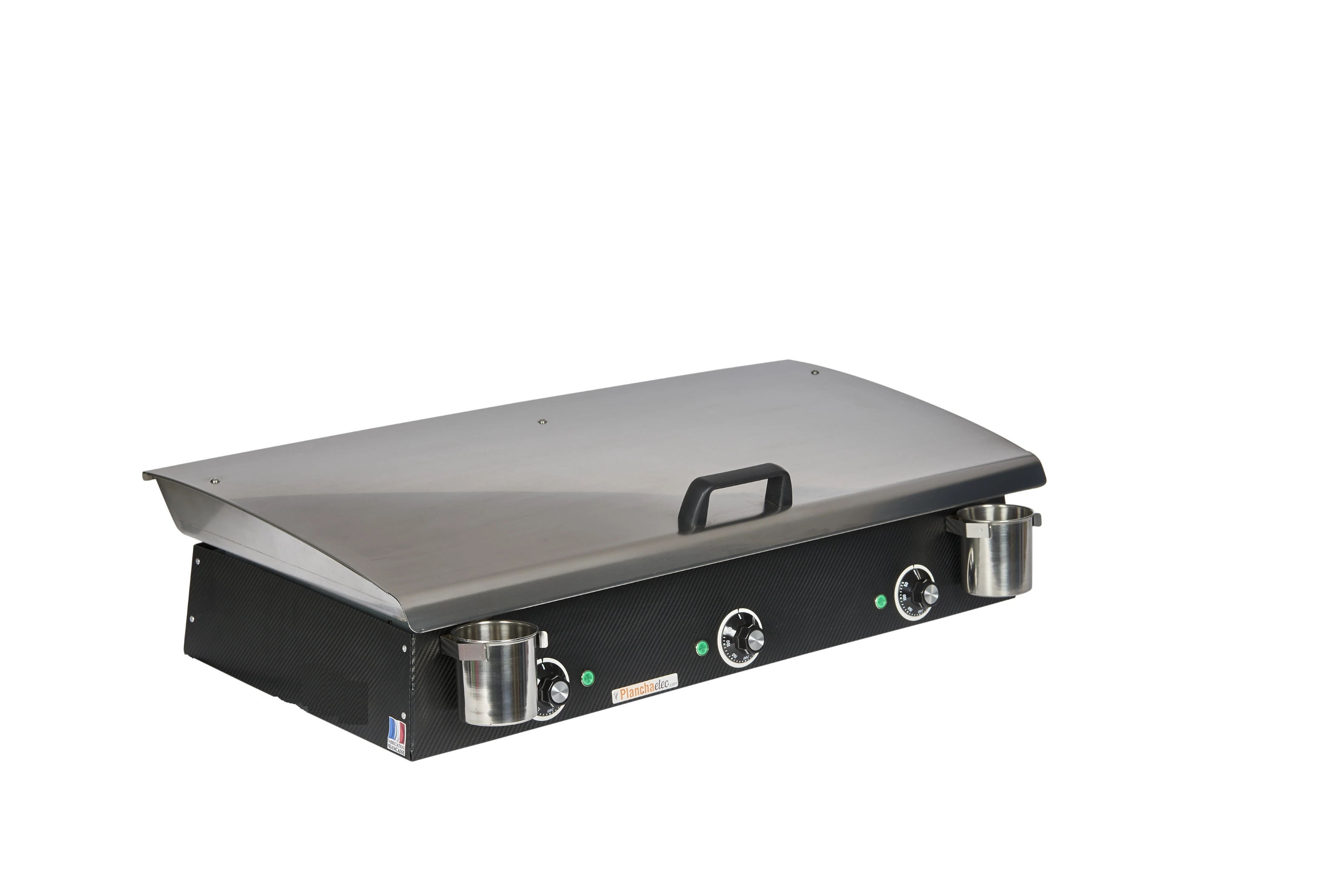
LED indicator lights and separate controls for each thermostat are quality indicators to look for on the product sheet. They let you monitor the heating status of each zone without having to test the plate by hand. To explore these criteria further, the Planchaelec buying guide details every parameter to compare.
Dual-zone electric plancha or two-burner gas plancha: which should you choose?
This question comes up often in comparisons. Both technologies offer two independent cooking zones, but they do not meet the same needs.
Advantages of the dual-zone electric plancha
The stainless steel dual-zone electric plancha has several advantages for both indoor and outdoor use. It needs no gas bottle, it is easier to set up and temperature control via the thermostat is more precise. It is perfectly suited to a terrace, a balcony or even a kitchen with good ventilation. At Planchaelec, the electric models are designed to work in both contexts, with CE marking attesting their compliance with electrical safety requirements.
Advantages of the two-burner gas plancha
The two-burner gas plancha, for its part, heats up faster and has a high heat output, which can be an advantage for very intense cooking outdoors. However, it is less suited to indoor use because of combustion fumes and the need for a gas supply.
Which model should you favour depending on use?
For versatile use, particularly indoors as well as outdoors, the electric model remains the most practical and safest choice. See the details of these differences between electric and gas planchas to refine your choice.
Key takeaway
A quality multi-zone electric plancha, with a food-grade stainless steel plate 3 to 5 mm thick and independent thermostats, is a lasting investment. The quality of the materials directly determines lifespan and cooking performance in the long term.
How do you clean a dual-zone electric plancha without damaging it?
Cleaning a stainless steel dual-zone electric plancha follows a simple but rigorous routine. The food-grade stainless steel plate is tough, but it needs the right care to keep its cooking properties and appearance over time.
Cleaning after each use
After each use, start by scraping off food residue with a scraper while the plate is still warm. This step is more effective warm than cold, because the juices have not yet stuck firmly to the surface. Then unplug the appliance and let the plate cool slightly before cleaning it fully.
Recommended products and accessories
Use a soft sponge with a little washing-up liquid or white vinegar diluted in lukewarm water. Strictly avoid metal scouring pads and harsh chemicals, which scratch stainless steel and weaken the cooking surface. Some manufacturers offer scouring pads suitable for stainless steel, such as those in Planchaelec's range of cleaning accessories, which remove stubborn deposits without damaging the plate.
Caring for the grease tray
Also remember to empty and clean the grease tray regularly. A full tray overflows and can cause splashes the next time you use it. To find out more about best practices, see the stainless steel plancha cleaning guide.
Planchaelec planchas suited to large gatherings
Planchaelec offers a range of stainless steel electric planchas made in France, designed for convivial meals with family or friends. Large-surface models such as the Lux 830 plancha, offer a generous cooking surface suited to gatherings of up to 15 guests, with a 4 mm food-grade stainless steel plate ensuring even heat distribution across the whole surface.
To complete your equipment, Planchaelec also offers cooking lids to speed up heating and keep food moist, trolleys for convenient outdoor set-up, and a selection of accessories and cleaning products specifically for stainless steel.
If you are still unsure which model to choose for your use and usual number of guests, the buying guide on the Planchaelec website helps you refine your choice based on concrete criteria.
The dual-zone plancha, a real asset for entertaining
A dual-zone electric plancha is not a gadget reserved for professional chefs. It is a practical solution for anyone who regularly entertains more than six people and wants to serve a variety of dishes without compromising on cooking quality.
Independent thermostats, a sufficiently thick food-grade stainless steel plate (3 to 5 mm) and suitable power between 2,200 and 3,600 W are the three essential criteria to check before buying. The rest – accessories, lid, trolley – depends on how you use it and how you store it. The Planchaelec plancha packs bring together the plancha, lid and accessories in one coherent offer.
In short
By combining two independent heating zones, a thick food-grade stainless steel plate and power suited to the number of guests, a dual-zone electric plancha lets you organise varied, convivial meals with controlled cooking for each food.
FAQ
Can a dual-zone electric plancha be used in a flat?
Yes, provided your home has a socket suited to the appliance's power and sufficient ventilation. Unlike a gas plancha, it involves no combustion and produces little smoke if the plate is properly maintained and you do not use too much fat.
What is the difference between a dual-zone electric plancha and an electric plancha with two independent plates?
A dual-zone electric plancha has a single plate divided into two distinct thermal zones, ensuring a continuous, even cooking surface. A plancha with two independent plates consists of two separate elements that can be used independently, but which create a gap in the middle of the cooking surface.
Should you oil a stainless steel plate before each use?
Yes, lightly oiling the food-grade stainless steel plate before each cook is recommended. Simply apply a few drops of high-temperature oil with kitchen paper or a brush during preheating. This prevents food from sticking and makes cleaning easier afterwards.
How long does a 3,600 W dual-zone electric plancha take to preheat?
With 3,600 W of power, a 60 cm plate generally reaches searing temperature in 8 to 12 minutes depending on the model. It is advisable to wait until the LED indicator shows the desired temperature before adding food.
Can you put a lid on a dual-zone electric plancha?
Yes, and it is even recommended for certain dishes. A plancha lid creates an oven effect that speeds up cooking of thick pieces, keeps food moist and reduces grease splashes. Just check that the lid fits the dimensions of your model.
Is CE marking mandatory for an electric plancha sold in France?
Yes, every electric plancha sold in France and in the European Union must carry the CE marking. This marking certifies that the appliance meets the electrical safety and electromagnetic compatibility requirements in force on the European market.