



 +33 4 78 55 45 69
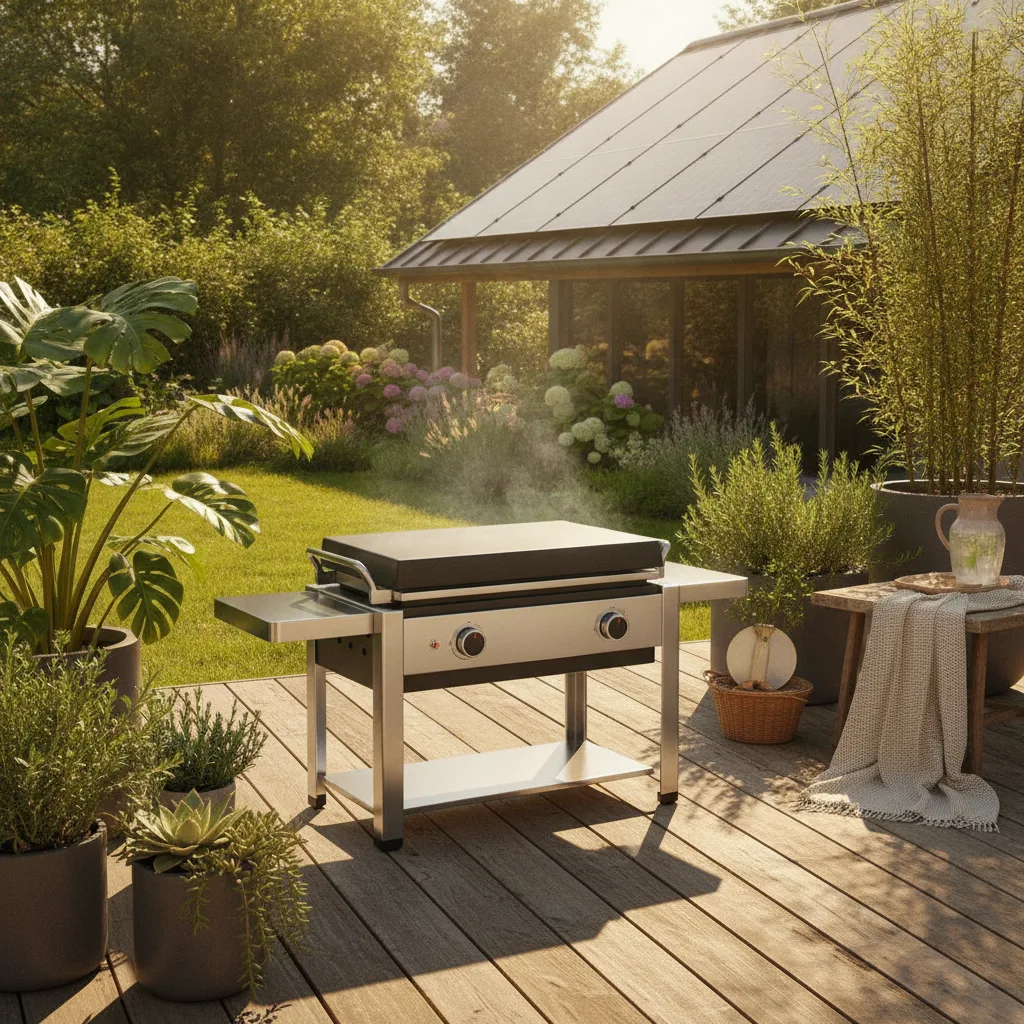
The electric plancha has become established in many French households as the convivial cooking appliance par excellence. But when it comes to energy self-sufficiency, one question is being asked more and more often, driven by growing interest in renewable energy and energy independence: is it really possible to power an electric plancha with solar panels and a battery?
The answer is not as simple as it seems, because the plancha is one of the most power-hungry household appliances in terms of instantaneous power. This article offers a concrete calculation, a comparison of gas versus electricity from the angle of self-sufficiency, and practical advice for sizing a solar installation suited to this use.
Electric plancha and energy self-sufficiency: the solar calculation
Reading time: ~7 min
- Summary
- What is the actual consumption of an electric plancha?
- Electric plancha versus gas plancha: which energy for self-sufficiency?
- Can you really power an electric plancha with solar panels?
- Plancha for camping and off-grid use: what practical solutions?
- How can you reduce an electric plancha's consumption off-grid?
- Plancha and energy self-sufficiency: key takeaways
- FAQ
Summary
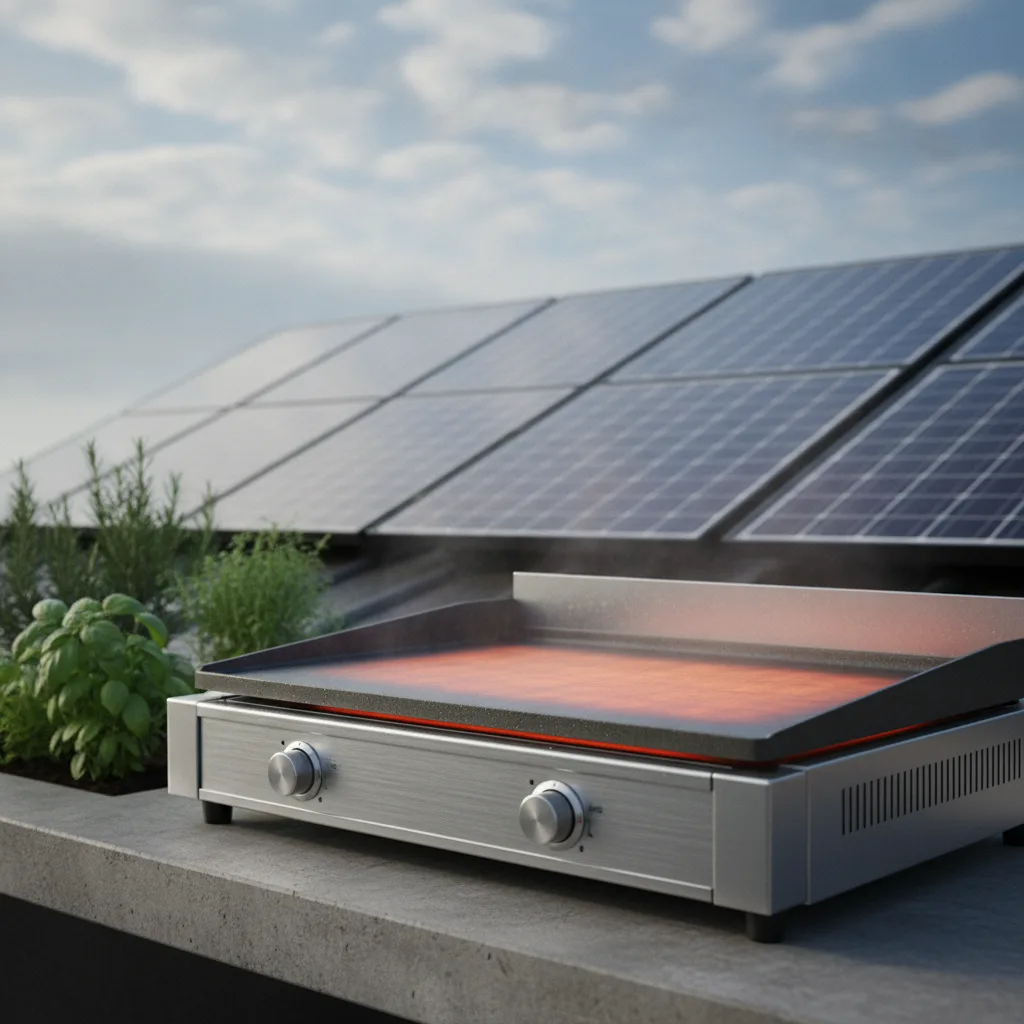
- Electric plancha consumption: a 3,000 W plancha uses about 3 kWh per hour, making it a very demanding appliance in terms of instantaneous power.
- Calculating the solar kit required: for a one-hour session, you need an inverter of at least 3,500 W and a lithium battery with a nominal capacity of at least 5 kWh (around 4 kWh usable).
- Gas or electric off-grid: a gas plancha is often simpler to use off-grid, but an electric plancha is feasible with a properly sized solar installation.
- Cost of an electric plancha in France: one hour of cooking costs around €0.50 to €0.70 at the EDF regulated tariff.
- Tips for reducing consumption: limiting preheating time, using a cooking lid and matching power to the number of guests can significantly reduce energy demand.
What is the actual consumption of an electric plancha?
Typical power and hourly consumption
Before talking about energy self-sufficiency, you need to put the figures on the table. A household electric plancha generally has a rated power of between 2,000 and 3,500 watts. The most common models are around 2,800 to 3,000 watts.
The basic formula is simple: consumption in kilowatt-hours equals power in watts multiplied by the duration of use in hours, all divided by 1,000.
In practice, a 3,000 W plancha used for one hour consumes 3 kWh. A 45-minute session with a 2,300 W appliance represents about 1.7 kWh. These figures may seem abstract, but they have a very concrete meaning when it comes to solar or battery power.
In France, at the regulated tariff (EDF Tarif Bleu), a kilowatt-hour costs around €0.20. One hour of a 3 kW electric plancha therefore costs about €0.60. Over a summer season with two sessions a week for four months, that comes to around twenty euros, which remains reasonable. But off-grid, the question is no longer the monetary cost: it is the physical capacity of the system to supply this energy.
Good to know: the instantaneous power of an electric plancha (often 2,500 to 3,500 W) is far higher than that of a fridge (150 W) or a television (100 W). This gap is what makes integrating it into a stand-alone solar kit particularly demanding in terms of sizing.
Electric plancha versus gas plancha: which energy for self-sufficiency?
Differences in energy supply
The question of a plancha's energy self-sufficiency cannot ignore the comparison between the two main families of appliances. A gas plancha runs on a propane or butane bottle, with no dependence on the electricity grid. An electric plancha requires a stable AC power supply with high instantaneous power.
Here is a comparison table of the two options from the angle of energy self-sufficiency:
| Criterion | Stainless steel electric plancha | Gas plancha |
|---|---|---|
| Average power | 2,500 to 3,500 W | 4,000 to 6,000 W thermal |
| Consumption per hour | 2.5 to 3.5 kWh of electricity | 350 to 400 g of gas |
| Estimated cost per hour (France) | €0.50 to €0.70 | €1.00 to €1.40 |
| Compatibility with isolated sites / off-grid | Possible with a properly sized solar kit | Yes, directly with a bottle |
| Temperature control | Very precise (thermostat) | Less precise |
| Direct emissions | None during cooking | CO₂ and water vapour |
| Logistics | 16 A socket or solar kit | Managing gas bottles |
The gas plancha therefore has an obvious advantage in terms of simplicity for off-grid use: all you need is a bottle. On the other hand, the stainless steel electric plancha offers greater cooking precision, no direct emissions and the possibility of integrating it into a solar self-consumption approach.
At Planchaelec, we offer only stainless steel electric planchas, designed for healthy, controlled cooking. To find out more about this comparison, our electric or gas plancha guide 2027 details the selection criteria for your situation.
Can you really power an electric plancha with solar panels?
Demanding solar sizing
The answer is yes, but only if the installation is sized correctly. This is where a back-of-the-envelope calculation becomes essential. Let's go back to the basics of energy sizing for a one-hour cooking session with a 3,000 W plancha.
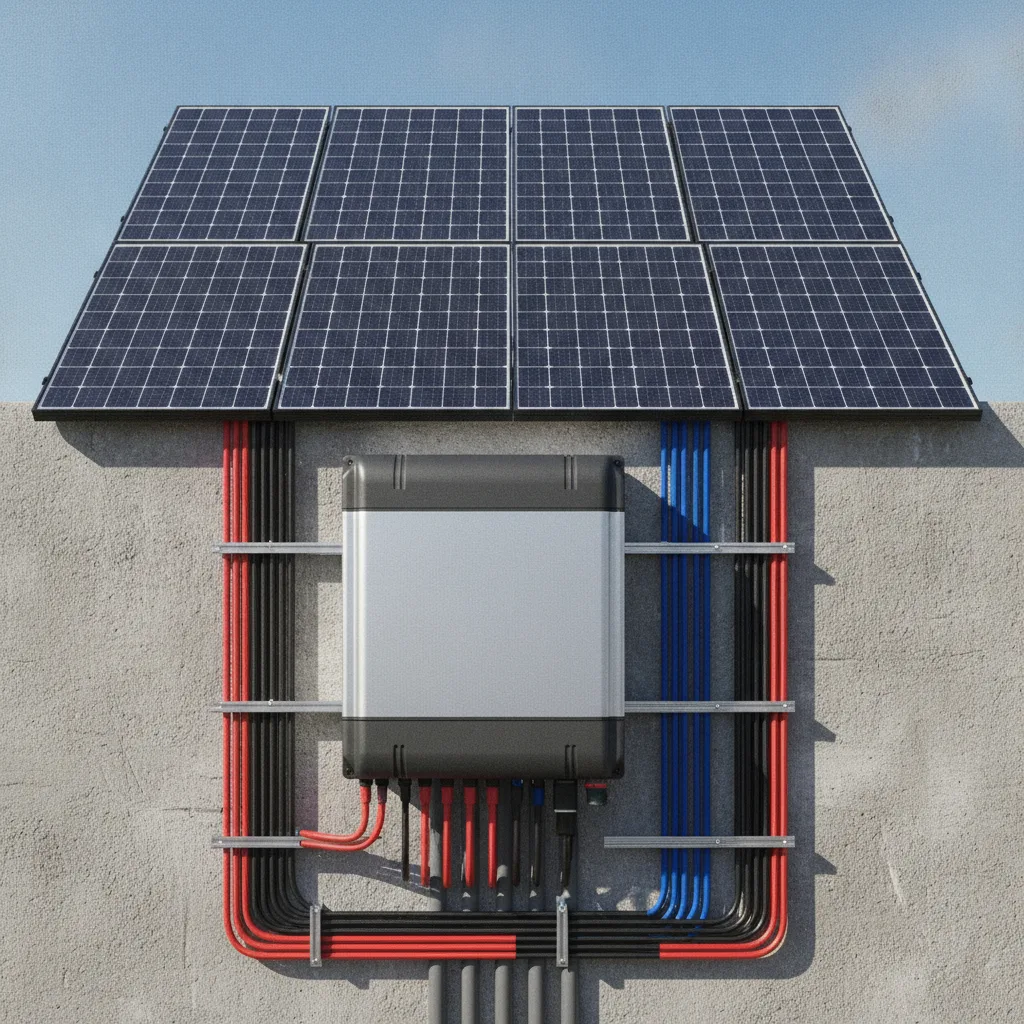
First, the inverter. A solar inverter must be able to supply the peak power of the appliance it powers. For a 3,000 W plancha, you need an inverter of at least 3,500 W, or even 4,000 W for a safety margin. Most small solar kits sold for camping or light uses (lighting, phone charging, portable fridge) have inverters of 1,000 to 2,000 W maximum. They are therefore incompatible with a standard electric plancha.
Second, the lithium-ion battery. A one-hour session consumes 3 kWh. But a battery is never discharged to 100% without risk of degradation: 80% of the nominal capacity is generally taken as usable capacity. A 4 kWh nominal battery (about 3.2 kWh usable) therefore only just covers one session; to keep a margin, allow at least 5 kWh nominal, i.e. about 4 kWh usable, for a single session, without taking into account the other uses of the household or motorhome. In practice, to include the plancha in an overall daily energy balance (lighting, fridge, device charging), a battery of 5 to 10 kWh is recommended.
Third, the photovoltaic panels. The peak power (Wp) of the panels must allow the battery to be recharged between sessions. In France, a 400 Wp panel produces on average 1.2 to 1.6 kWh per day depending on the season and sunshine (ADEME data). To recharge the 3 kWh consumed by the plancha, you would therefore need 3 to 4 panels of 400 Wp in the best summer conditions, and more in autumn or cloudy periods. A 6 kWp stand-alone solar kit with a 10 kWh battery makes it possible to plan one or two plancha sessions a week without compromising the household's overall self-sufficiency, according to the recommendations of EDF Solutions Solaires for this type of sizing.
Key takeaway: to power a 3,000 W electric plancha off-grid, you need at least a 3,500 W inverter, a 5 kWh nominal lithium battery (around 4 kWh usable) and a solar array of at least 4 panels of 400 Wp. These values are indicative and should be refined by a professional based on your complete daily energy balance.
Plancha for camping and off-grid use: what practical solutions?
For use when camping or in a garden without an electricity connection, the constraints are even greater. A motorhome with a 2 to 3 kWh battery can hardly support a full electric plancha session without completely draining its reserves. In this context, the gas plancha remains the most pragmatic solution for cooking on a plancha while camping with full autonomy.
On the other hand, for a holiday home equipped with a medium-sized stand-alone solar kit, or for a main residence practising solar self-consumption, the electric plancha becomes perfectly feasible. The key lies in managing energy demand: scheduling cooking sessions in the middle of the day, when solar production is at its peak, allows you to directly consume the energy produced without drawing on the battery. This is what specialists call direct self-consumption, and it is the most effective strategy for integrating an energy-hungry appliance into a solar installation.
For outdoor cooking enthusiasts who want to explore all the possibilities of their plancha, our page on using a plancha indoors and outdoors gives practical guidance on the best conditions of use.
How can you reduce an electric plancha's consumption off-grid?
Reducing an electric plancha's consumption when you are energy self-sufficient involves several concrete levers. Managing preheating is the first: a well-insulated plancha reaches its working temperature in 5 to 10 minutes, and there is no point leaving it to heat empty for longer. Every minute of unnecessary heating represents about 50 Wh wasted for a 3,000 W plancha.
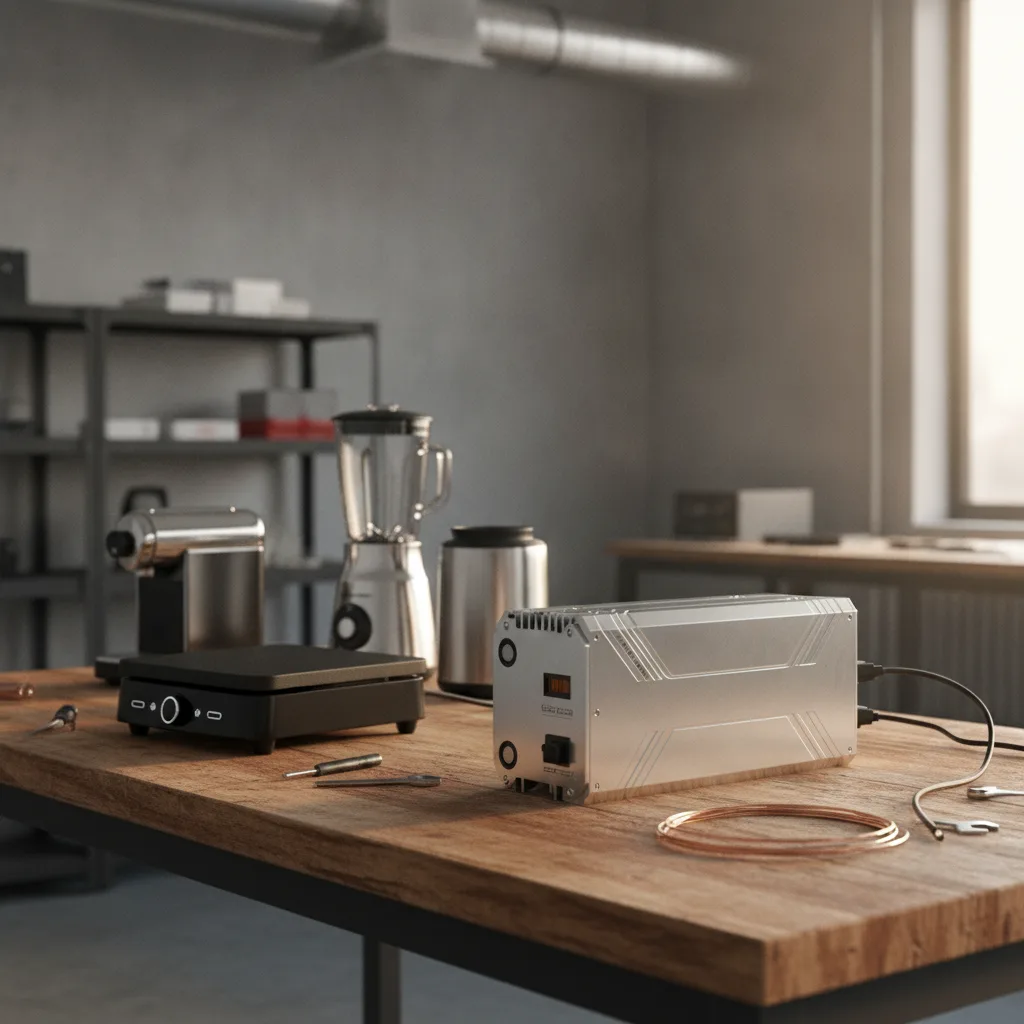
Here are the main actions for controlling consumption off-grid:
- Use a cooking lid to retain heat and reduce the cooking time of thick foods. Planchaelec offers lids suited to each plancha model that significantly improve thermal efficiency.
- Choose a plancha with adjustable power rather than an appliance that always runs at full power, so you can match instantaneous power to the number of guests and type of food.
- Schedule sessions in the middle of the day to benefit from direct solar self-consumption, without drawing on the battery.
- Limit sessions to 45 minutes maximum for a standard meal, which brings consumption down to about 2 kWh for a 2,800 W plancha.
These practices are part of an overall approach to energy demand management, a concept promoted by ADEME to encourage households to adapt their consumption to their local production capacity. Looking after your plancha also helps maintain its thermal performance over time: a dirty surface heats less evenly and consumes more to compensate. Our complete guide to cleaning a stainless steel plancha takes you through it step by step.
Plancha and energy self-sufficiency: key takeaways
Powering an electric plancha with solar panels is technically possible, but it requires a seriously sized installation: an inverter of at least 3,500 W, a lithium battery of at least 5 kWh nominal and a solar array large enough to recharge this storage between sessions.
For occasional use in a home equipped with a household-sized solar kit, it is feasible provided you schedule cooking during the day and adopt good consumption management practices. For nomadic use when camping or in a van, the gas plancha remains the best-suited solution for true energy self-sufficiency.
Electric planchas and energy self-sufficiency are not incompatible, but combining them requires serious thought about sizing before you start. To choose the stainless steel electric plancha best suited to your project, see our plancha selection guide or discover our full range of electric planchas.
FAQ
What battery do you need to run an electric plancha off-grid?
For a 3,000 W plancha used for one hour, you need a lithium-ion battery with a nominal capacity of at least 5 kWh, giving around 4 kWh of usable capacity after allowing for the maximum recommended depth of discharge. If other appliances are powered at the same time, the capacity should be increased accordingly.
How many solar panels do you need to power an electric plancha?
In France, a 400 Wp panel produces on average 1.2 to 1.6 kWh per day in summer. To recharge the energy consumed by a one-hour plancha session (3 kWh), you need at least 3 to 4 panels of 400 Wp in favourable sunshine conditions. This rises to 6 or 8 panels if you take the household's other needs into account.
Can you use an electric plancha in a motorhome with solar panels?
It is very difficult with standard motorhome solar installations, whose battery rarely exceeds 2 to 3 kWh and whose inverter rarely exceeds 2,000 W. A 3,000 W plancha would drain the battery in less than an hour and could damage the inverter. For a motorhome, the gas plancha remains the most suitable solution.
Does an electric plancha use more electricity than an oven?
Yes, in terms of instantaneous power. A standard electric oven draws between 2,000 and 2,500 W, but it is better insulated and regulates its temperature in cycles. A 3,500 W plancha keeps a heating element running almost continuously during cooking, which often results in higher consumption per hour than an oven in normal use.
Which type of plancha should you choose for a home with solar production?
A model with adjustable power, ideally between 2,000 and 2,500 W, will be easier to integrate into a solar energy balance. Planchaelec stainless steel electric planchas heat up quickly and have good thermal inertia, which limits prolonged heating phases and reduces overall consumption per session.
Does maintaining the plancha affect its energy consumption?
Yes, indirectly. A dirty or oxidised cooking surface conducts heat less well and forces the heating element to work longer to maintain the target temperature. Regular cleaning with suitable scouring pads and a specific degreaser preserves the original thermal performance and limits consumption over time.