



 +33 4 78 55 45 69
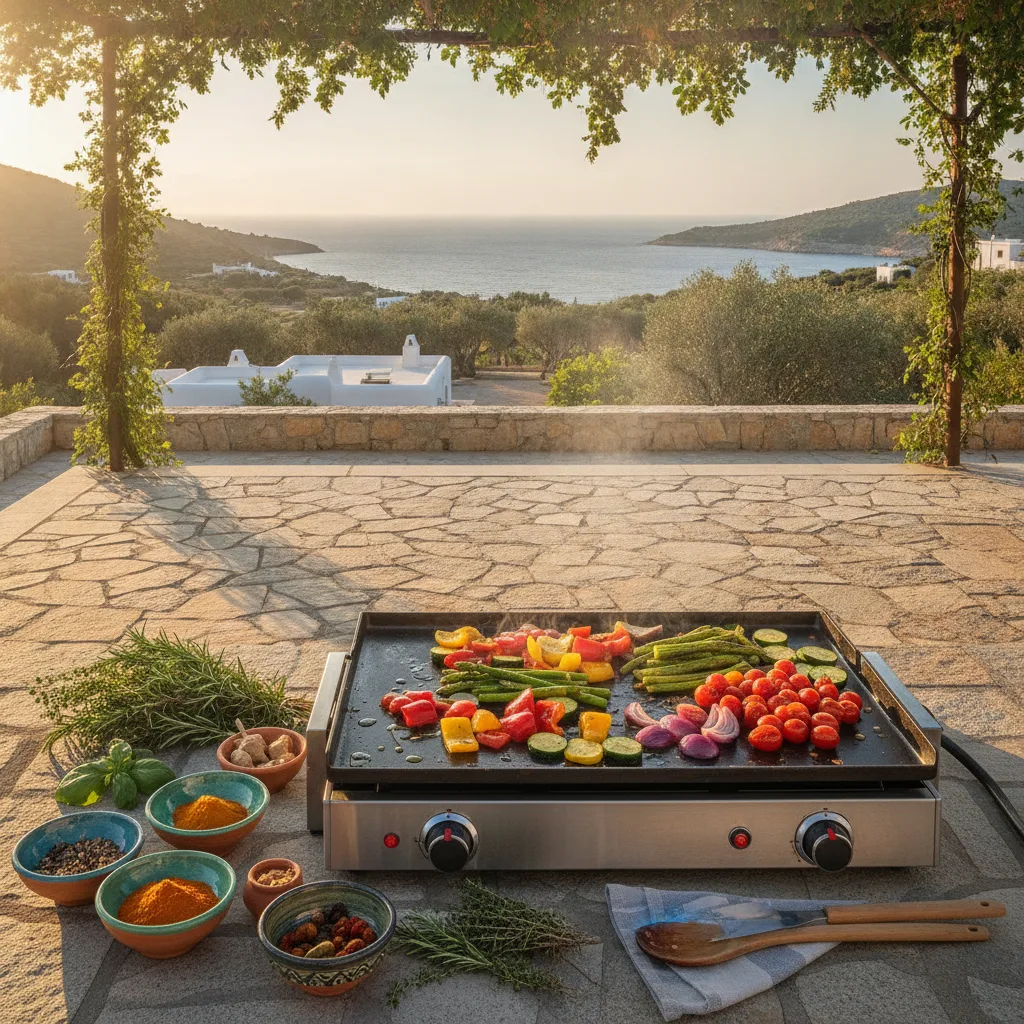
At first glance, the plancha and Ayurvedic cooking seem to belong to two very different worlds. On one side, a lively, convivial cooking method rooted in Mediterranean tradition. On the other, an ancient food system based on balancing individual constitutions and preserving the digestive fire.
Yet on closer inspection, both share the same fundamental requirement: respecting the food, controlling the heat and promoting digestibility. This article explains how to get the most out of the plancha from an Ayurvedic perspective, by adapting temperatures, ingredients and spices to your constitution.
Plancha and Ayurvedic cooking: a practical guide
Reading time: ~9 min
- Summary
- Is the plancha compatible with Ayurveda?
- Ayurvedic principles to follow when cooking
- Plancha temperatures and their impact on food
- Which foods to cook on the plancha according to the doshas?
- Which spices and fats should you choose?
- Mistakes to avoid when combining the plancha and Ayurvedic eating
- Plancha and Ayurveda: a shared philosophy
- FAQ
Summary
- The plancha is compatible with Ayurveda provided you avoid charring and control cooking temperatures.
- Ayurvedic principles favour warm, digestible food adapted to the individual constitution (dosha).
- Plancha cooking temperature plays a key role in preserving the vitality of food and supporting agni.
- Each dosha (Vata, Pitta, Kapha) calls for different vegetables, spices and fats on the plancha.
- Ghee and olive oil can both be used, depending on the season and constitution.
- Some common plancha mistakes go against Ayurvedic principles and are easy to avoid.
Is the plancha compatible with Ayurveda?
Compatibility of the plancha with Ayurvedic principles
The question deserves serious consideration. Ayurveda, the traditional Indian medical system codified notably in the Charaka Samhita, places food at the heart of health. It is not just about what you eat, but how you prepare it, when, and for which constitution.
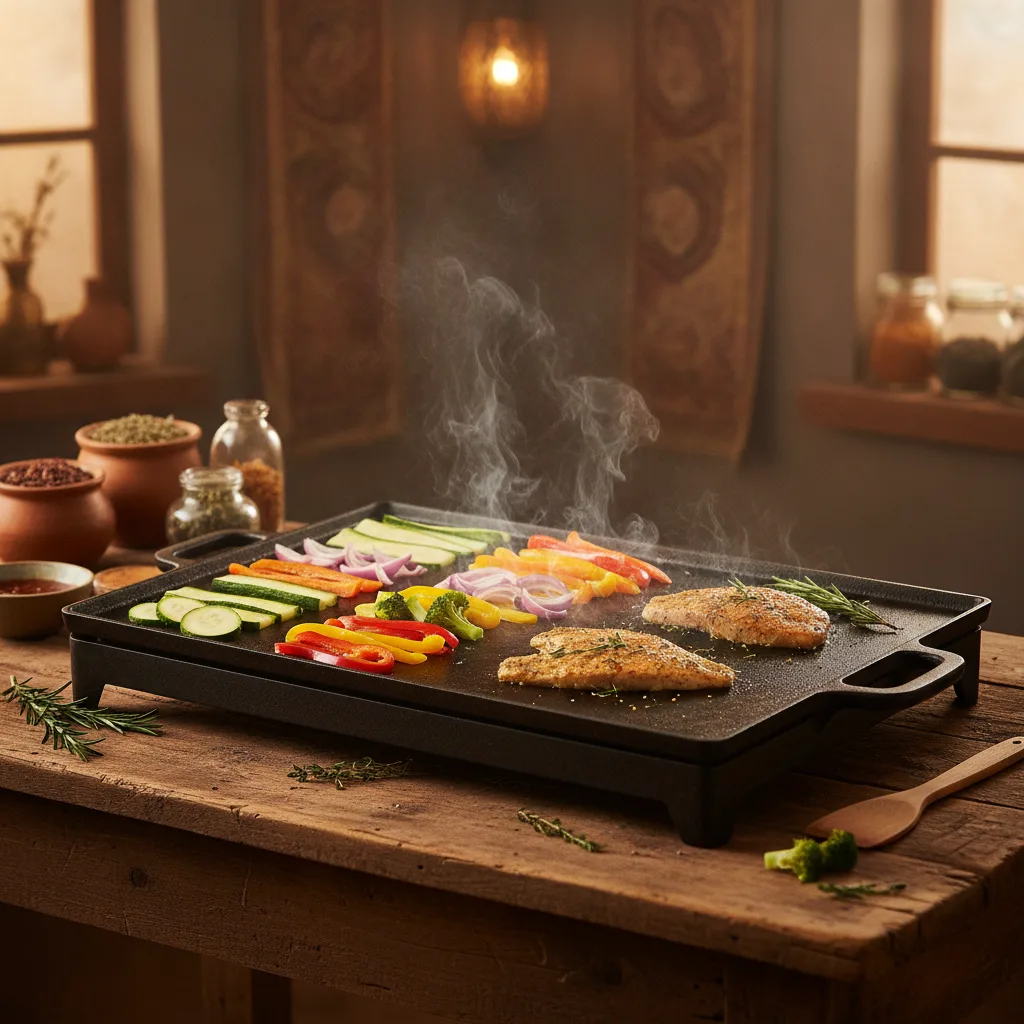
Cooking methods that preserve digestibility and avoid excessive heat are generally favoured, as the CCRAS recommendations on Ayurvedic diet point out.
The plancha, for its part, is a direct-contact cooking method on a hot plate: fast, low in fat and easy to control. It does not immerse food in oil or drown it in water, nor does it subject it to prolonged indirect heat. Used wisely, it lets you quickly sear vegetables, fish or plant proteins while preserving their texture and some of their nutritional qualities. It is precisely this control of heat that makes the plancha and Ayurvedic cooking compatible, provided a few essential rules are followed.
Ayurvedic principles to follow when cooking
Moderate heat and support for agni in the kitchen
Ayurveda distinguishes six basic tastes (sweet, sour, salty, pungent, bitter, astringent) and recommends balancing them at every meal to nourish the different doshas. It also values the moderate warmth of dishes, which supports agni, the digestive fire, without overwhelming it. Food that is too raw, too cold or, conversely, too burnt is considered difficult to digest.
From this perspective, the plancha has a real advantage: it allows hot, quick cooking that makes food more digestible than a raw meal while avoiding the overcooking of long grilling over embers or in an oven. Research published byAmrita University on traditional Ayurvedic cooking methods confirms that techniques which avoid excessive heat and preserve the freshness of ingredients are generally preferred. The plancha ticks this box, provided cooking remains short and the plate is not used at full power without supervision.
Good to know: in Ayurveda, the idea of prana, or the vital force of food, is at the heart of the culinary approach. Cooking that is too long or too aggressive is said to reduce this vitality. With its short cooking times, the plancha fits naturally into this philosophy when used well.
Plancha temperatures and their impact on food
Adapting the plancha temperature to the type of food
Temperature control is the central point that determines whether plancha cooking is compatible with an Ayurvedic approach. A plate that is too hot chars food, produces undesirable compounds and destroys some of the aromas and nutrients. A plate that is not hot enough lets food stick and needlessly prolongs cooking.
Here are the temperature ranges generally recommended for different foods, which reconcile culinary efficiency with respect for Ayurvedic principles:
| Type of food | Indicative temperature | Ayurvedic logic |
|---|---|---|
| Vegetables (courgette, fennel, aubergine) | 180 to 220 °C | Short cooking, texture preserved, improved digestibility |
| Fish and thin fillets | 220 to 250 °C | Quick searing, light and digestible proteins |
| White meat and tofu | 220 to 240 °C | Controlled cooking, without prolonged excessive heat |
| Whole spices (cumin, coriander) | 150 to 180 °C | Aromas released without burning, properties preserved |
A stainless steel electric plancha, like those offered by Planchaelec, has a valuable advantage here: precise temperature control lets you adjust the heat to the food and maintain steady heat throughout cooking. You can browse the range of electric planchas to find the model that suits your use.
Which foods to cook on the plancha according to the doshas?
One of Ayurveda's most practical contributions to plancha cooking is the notion of dosha. Each individual has a combination of Vata (air and space), Pitta (fire and water) and Kapha (earth and water), and their diet should ideally support this balance. Here is how to adapt your plancha sessions to your dominant constitution.
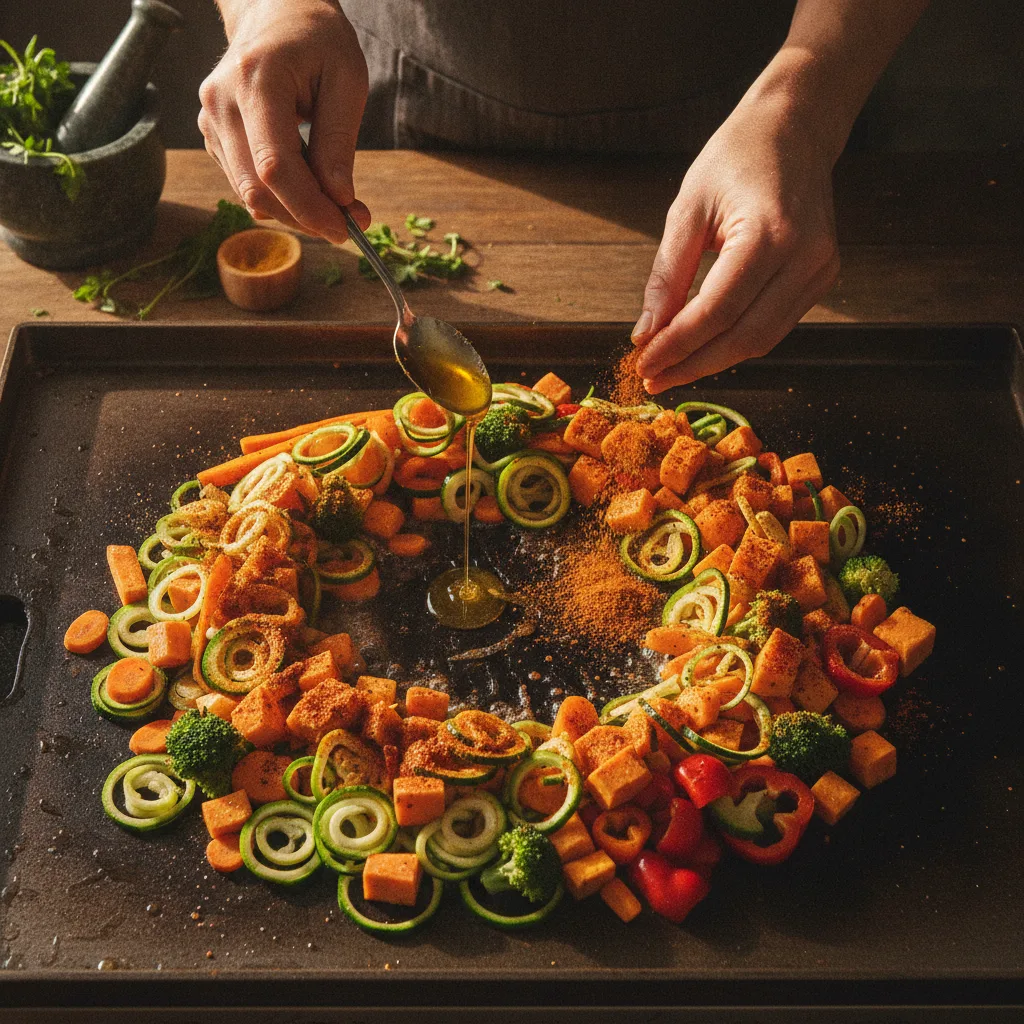
For a Vata profile, characterised by lightness and mobility, warm, nourishing and slightly fatty foods are recommended. On the plancha, this means well-cooked vegetables such as carrot, courgette or sweet potato, seasoned with ghee and mild spices such as ginger or cumin. Cooking should be long enough to soften the fibres, without charring.
For a Pitta profile, dominated by fire, cooling and moderately spiced foods are preferable. Fennel, courgette, cauliflower or asparagus briefly grilled on the plancha work well, accompanied by fresh coriander, mint or a squeeze of lemon to finish. It is best to avoid very spicy marinades and prolonged high-temperature cooking.
For a Kapha profile, heavier and more stable, light and stimulating dishes are recommended. Vegetables grilled without too much fat, with livelier spices such as black pepper, turmeric or mild chilli, suit this profile well. The plancha is particularly suitable here as it allows dry or very lightly oiled cooking.
Key takeaway: adapting your plancha cooking to your dosha is not an exact science, but a tool for adjustment. The key is to choose foods and spices that are consistent with your constitution at the time, also taking into account the season and your general state of health.
Which spices and fats should you choose?
Spices are at the heart of Ayurvedic cooking, and they work very well with plancha cooking. Turmeric, cumin, coriander, ginger, cardamom and fennel are among the most used in modern Ayurvedic recipes listed by portals such as Ayurveda France or Joyful Belly. On the plancha, they can be added to a light marinade before cooking, or at the end of cooking to preserve their volatile aromas.
As for fats, ghee is the reference in Ayurvedic cooking. It handles heat well and is considered beneficial for digestion and the balance of all doshas, according to traditional texts and the recommendations of the Indian AYUSH ministry. On the plancha, it can be used in very small quantities to brush food before cooking. Olive oil is a relevant alternative in modern Ayurveda-inspired recipes, particularly for Pitta profiles because of its slightly cooling nature. In both cases, it is recommended to oil the food rather than the plate itself, to avoid splashes and control the quantity used.
Mistakes to avoid when combining the plancha and Ayurvedic eating
Combining the plancha and Ayurvedic cooking requires a few adjustments compared with conventional use. Here are the most common mistakes to avoid in order to stay consistent with Ayurvedic principles.
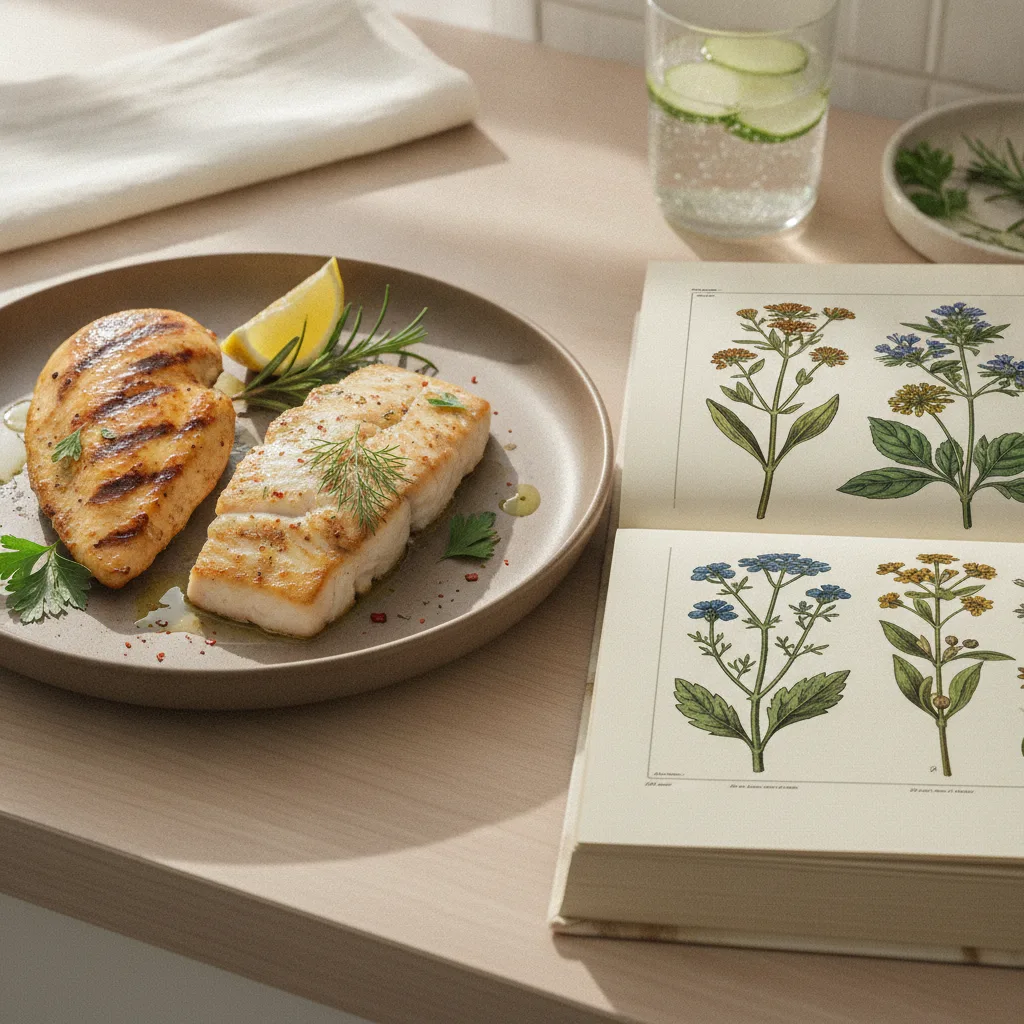
The first mistake is letting food blacken or char. In Ayurveda, burnt food is considered difficult to digest and contrary to doshic balance. From a nutritional point of view, several sources point out that charring produces undesirable compounds. You therefore need to watch the temperature and remove food in time.
The second mistake is using marinades that are too heavy, too acidic or too sweet. Ayurveda values subtle, balanced flavours. A simple marinade of olive oil, lemon juice, grated ginger and a pinch of cumin will be far more consistent than an industrial sauce full of additives.
The third mistake is neglecting preheating. A plate that is not hot enough prolongs cooking, which goes against the idea of quick, controlled cooking. Preheating the plancha, generally for 5 to 15 minutes depending on the model, is an essential step for short, even cooking. You will find practical advice in the guide to choosing your plancha offered by Planchaelec.
Finally, it is not advisable to combine foods with opposing energies on the same plate at the same time, such as very cold food straight from the fridge and very heating spices. Ayurveda insists on consistent food combinations so as not to disturb agni.
Plancha and Ayurveda: a shared philosophy
Ultimately, the plancha and Ayurvedic cooking share the same philosophy: respect for the food and for the person eating it. The plancha is not an Ayurvedic tool in itself, but it becomes a valuable ally when used wisely, by controlling temperatures, choosing ingredients suited to your dosha and avoiding charring.
For those who want to take this approach further, Planchaelec's stainless steel electric planchas, made in France and equipped with precise temperature control, offer ideal conditions for healthy, controlled cooking that respects Ayurvedic principles. Discover the models available on planchaelec.com.
FAQ
Can you cook meat on the plancha as part of an Ayurvedic diet?
Ayurveda does not forbid meat but recommends eating it in moderation and adapting it to your dosha. Light white meats such as chicken, as well as fish, are generally better tolerated. On the plancha, quick cooking at the right temperature, without charring, is most consistent with an Ayurvedic approach.
What is the difference between an electric plancha and a gas plancha for Ayurvedic cooking?
An electric plancha offers more precise temperature control, making it easier to maintain a steady temperature suited to each food. This is a real advantage for controlled cooking, which is central to the Ayurvedic approach. You can read the comparison between electric and gas planchas published by Planchaelec.
Can tofu be cooked on the plancha from an Ayurvedic perspective?
Yes, tofu is a light plant protein well suited to Pitta and Kapha profiles. On the plancha, it cooks quickly at around 220 °C with a light brushing of ghee or olive oil, and goes well with turmeric, ginger and fresh coriander to finish.
Should you avoid acidic foods on the plancha in Ayurveda?
Not necessarily. Sour is one of the six tastes recognised by Ayurveda and has its place in a balanced diet. Lemon as a finishing touch, for example, is often recommended for Pitta and Kapha profiles. Excess acidity, however, is not advised for Pitta, which is already dominated by fire.
How do you clean a stainless steel plancha after Ayurvedic cooking with ghee?
Ghee leaves little residue if cooking is well controlled. Cleaning while warm with water and a suitable scraper is usually enough. Planchaelec offers a complete guide to cleaning a stainless steel plancha as well as specific cleaning products to look after your plate over time.