



 +33 4 78 55 45 69
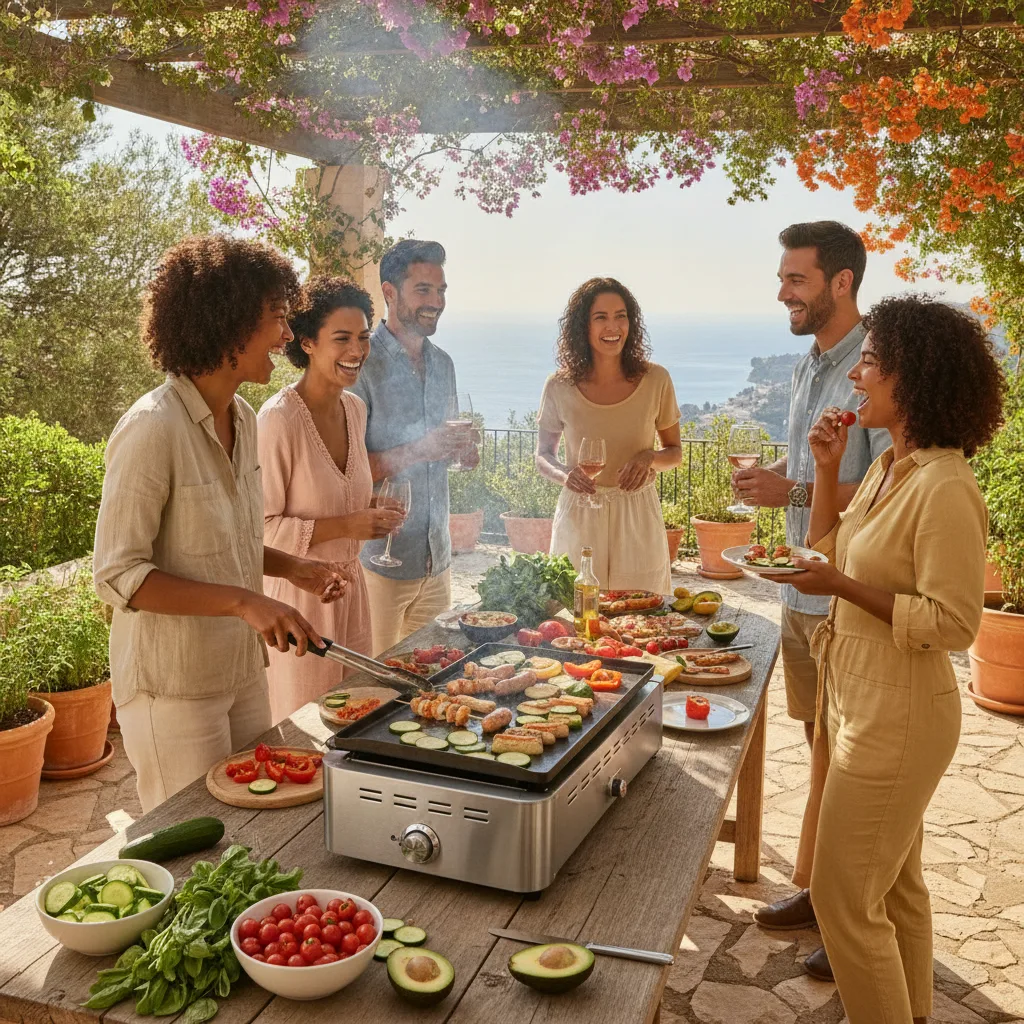
The electric plancha invites conviviality and spontaneity, but it also raises practical questions that are not always anticipated: how should food be stored before cooking, how long can leftovers be kept in the fridge, and what internal temperature must a chicken fillet reach to be eaten safely? Plancha cooking and food storage go hand in hand whenever you want to cook healthily and safely.
This guide is based on the official recommendations of ANSES, the French Ministry of Agriculture and MAPAQ to answer all these questions clearly and in a structured way.
Plancha and food storage: 2027 guide
Reading time: ~7 min
- Summary
- Before the plancha: storing raw food properly
- During plancha cooking: internal temperatures and hygiene
- Managing leftovers after plancha cooking
- Freezing plancha leftovers: how to do it
- Choosing an easy-to-clean plancha for better food hygiene
- Practical checklist for safe plancha meals
- Storing food properly to enjoy your plancha with peace of mind
- FAQ
Summary
- Before the plancha: raw food should be stored in the coldest part of the fridge, between 0 and 4 °C, keeping the cold chain intact from the time of purchase.
- During cooking: each type of meat or fish must reach a specific internal temperature to ensure food safety, measured with a cooking thermometer.
- After cooking: leftovers should not stay at room temperature for more than two hours before being put in the fridge in an airtight container.
- Storage times: cooked meat, grilled fish and grilled vegetables each have different storage times in the fridge and freezer.
- Freezing: plancha leftovers can be frozen at −18 °C and kept for up to two or three months depending on the food.
- General hygiene: separating utensils for raw and cooked food, cleaning surfaces and washing hands are fundamental steps at every stage.
Before the plancha: storing raw food properly
It all starts well before the cooking surface is hot. The quality and safety of a plancha meal depend largely on how the food has been stored since it was bought.ANSES recommends keeping perishable food between 0 and 4 °C, in the coldest part of the fridge. This area is for raw meat and fish intended for the plancha, cold meats, fresh deli products and opened ready meals.
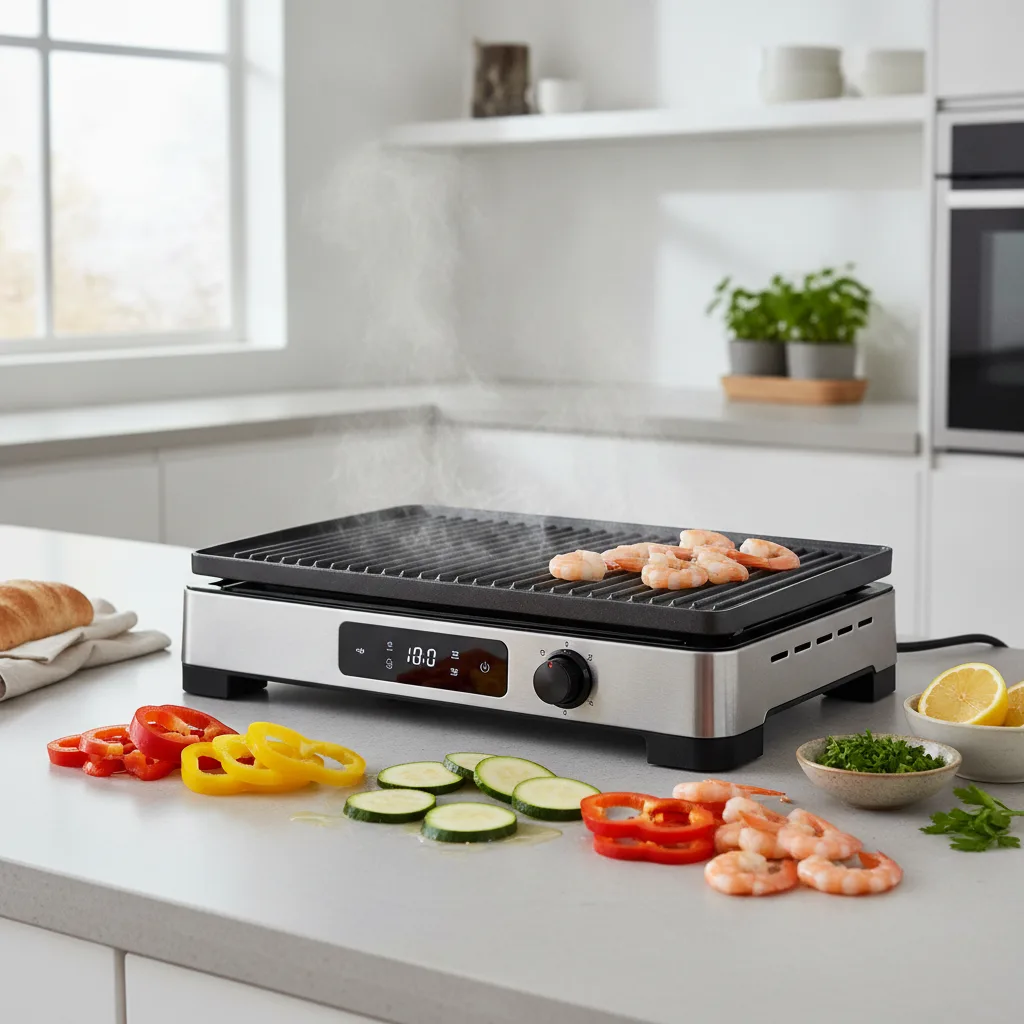
Organising the fridge for raw food
The French Ministry of Agriculture specifies that the zone between 4 and 6 °C is better suited to homemade dishes, cooked vegetables and fruit, and homemade cooked meat and fish. In practice, this means that meat marinades or skewers prepared the day before must be kept in the coldest part of the fridge, not on the middle shelf.
The cold chain must be maintained from purchase until cooking: limit the exposure of perishable food to room temperature, use an insulated bag when shopping, and put your purchases in the fridge as soon as you get home. A break in the cold chain, even a short one, can encourage bacterial growth in food that nevertheless looks fine.
Good to know: check your fridge temperature regularly with a thermometer placed in the coldest part. An overloaded fridge sees its internal temperature rise, which speeds up the growth of bacteria on perishable food.
During plancha cooking: internal temperatures and hygiene
Plancha cooking reaches very high surface temperatures, allowing food to be seared quickly. But a hot surface does not guarantee that the centre of a piece of meat has reached the temperature needed to kill pathogenic bacteria. MAPAQ and the Government of Québec publish safe internal temperature guidelines that can be applied directly to plancha cooking.
Internal cooking temperatures on the plancha
| Type of food | Recommended minimum internal temperature |
|---|---|
| Poultry (pieces) | 74 °C |
| Whole poultry | 82 °C |
| Pork (chops, steaks) | 71 °C |
| Minced beef, veal, lamb | 71 °C |
| Beef, veal, lamb (whole steaks), medium | 71 °C |
| Beef, veal, lamb (medium-rare) | 63 °C |
| Fish | 70 °C (opaque flesh that flakes easily) |
To measure the core temperature, simply insert a cooking thermometer into the centre of the piece, without touching bone or fat. This simple habit avoids the microbiological risks of undercooking, particularly for poultry and pork, which are the most sensitive meats.
Hygiene and handling food during cooking
Hygiene during cooking is just as important as temperature. The fundamental principle is strict separation of raw and cooked food. Never use the same tongs, spatulas or plates to handle raw meat and food that is already cooked. This simple step prevents cross-contamination, which can introduce bacteria onto food that has just been cooked properly. At Planchaelec, our cooking utensils are designed to make this kind of handling safe and easy.
Washing your hands with soap before handling food, between handling raw and cooked food, and after any contact with potentially soiled surfaces remains one of the most effective ways to prevent food risks.
Managing leftovers after plancha cooking
The most common mistakes are often made after the meal. A dish left out too long, poorly wrapped leftovers or leftovers stored in the wrong part of the fridge can turn an excellent meal into a food safety risk. The two-hour rule is key here: according to Health Canada, cooked food should not be left at room temperature for more than two hours before being refrigerated. Beyond that, the danger zone between 4 °C and 60 °C encourages rapid bacterial growth.
Cooling and refrigeration
Rapid cooling is the first step. It is advisable to let food cool for a few minutes, then place it in airtight containers before putting it in the fridge. Avoid putting very hot food straight into the fridge, as this causes condensation and raises the appliance's internal temperature, which affects the storage of all the food inside.
Storage times for plancha leftovers in the fridge vary depending on the type of food. The following guidelines apply provided the food has been properly cooked, cooled quickly and placed in airtight containers as soon as possible after the meal.
| Type of leftover | Fridge storage (4 °C) | Freezer storage (−18 °C) |
|---|---|---|
| Cooked meat (beef, pork, lamb) | 2 to 3 days | 2 to 3 months |
| Cooked poultry | 2 to 3 days | 2 to 3 months |
| Grilled fish | 2 days | 1 to 2 months |
| Grilled vegetables | 3 to 4 days | 2 to 3 months |
| Mixed dishes (skewers, mixed preparations) | 3 to 4 days | 2 to 3 months |
Key takeaway: always label your leftovers with the preparation date before putting them in the fridge or freezer. This simple habit helps you respect use-by times without relying on your memory.
Freezing plancha leftovers: how to do it
Freezing is a practical way to extend the life of plancha leftovers beyond a few days. It must be done at −18 °C to be effective. Cooked meat, grilled vegetables and mixed dishes freeze well, provided they are placed in airtight containers or properly sealed freezer bags to avoid freezer burn and absorbing odours.
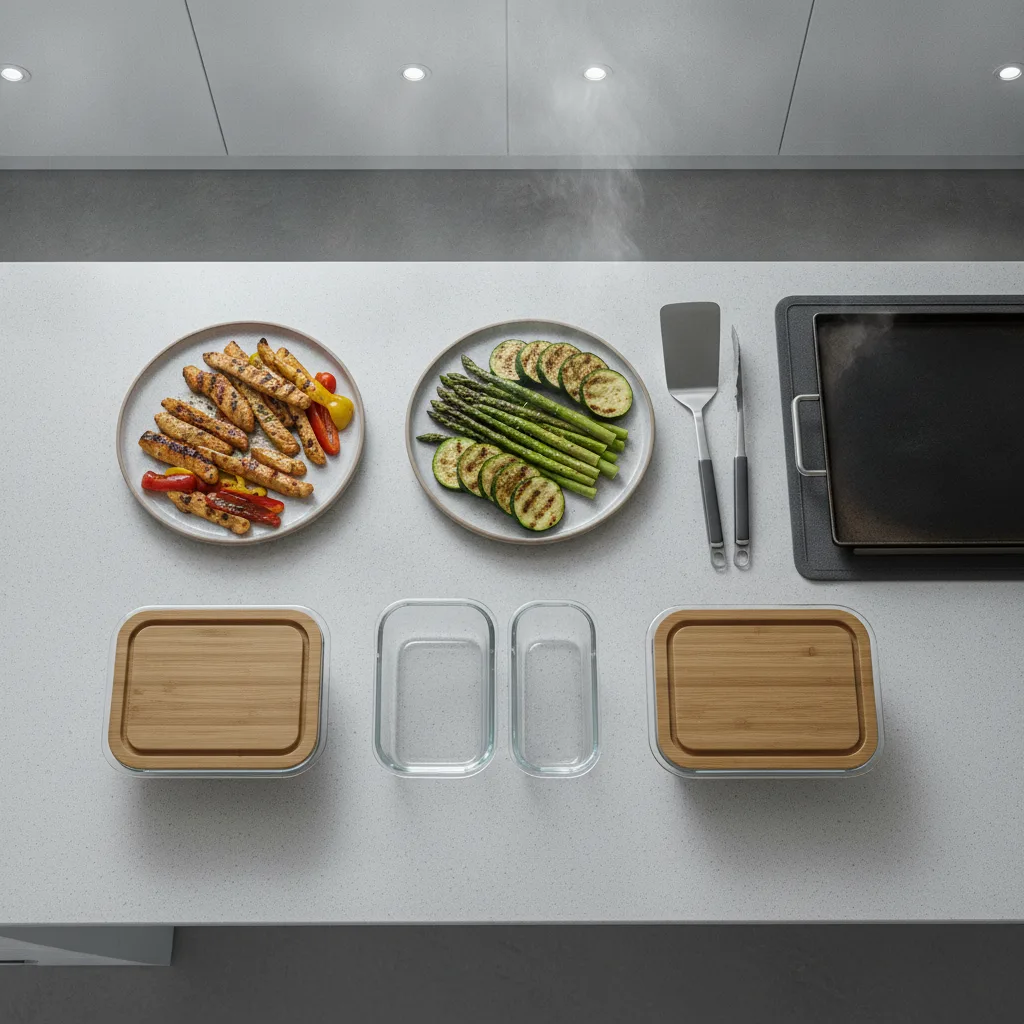
Grilled fish can also be frozen, but its texture may change slightly after thawing. It is better to eat it within two days of cooking if you are not sure of the quality you want after freezing. Grilled vegetables freeze very well and can be reused in soups, sauces or quick stir-fries.
Once thawed, leftovers must never be refrozen. They must be reheated right through, making sure the food reaches at least 74 °C for poultry and 63 to 71 °C for other meats, following the same guidelines as for the initial cooking. A frying pan, an oven or a plancha can be used for reheating, provided the food is not just warmed on the surface.
Choosing an easy-to-clean plancha for better food hygiene
Food safety is not just about storing food: it also starts with a clean cooking surface. A food-grade stainless steel plancha is particularly well suited to this, because stainless steel does not retain grease and residue in the same way as an enamelled cast iron or non-stick surface. Thorough cleaning after each use prevents cross-contamination between two cooking sessions, particularly if you switch from cooking fish to cooking meat during the same meal.
At Planchaelec, our stainless steel electric planchas are designed to make daily maintenance easy. The food-grade stainless steel surface cleans effectively with specialist cleaning products, including the plancha degreasing cleaner suitable for stainless steel.
Cleaning while warm, right after cooking, is always more effective and limits the risk of encrusted deposits that could affect the hygiene of the surface. To find out more on this subject, see our complete guide to cleaning a stainless steel plancha.
Practical checklist for safe plancha meals
So you don't forget anything at your next plancha meal, here are the key points to check at each stage:
- Before: store raw meat and fish in the coldest part of the fridge (0 to 4 °C), keep the cold chain intact from purchase, use separate airtight containers for raw food and marinated preparations, take food out of the fridge at the last moment.
- During: use a cooking thermometer to check the core temperature, keep utensils for raw and cooked food strictly separate, wash your hands regularly, clean the cooking surface between two types of food if necessary.
- After: refrigerate leftovers within two hours of cooking, place them in airtight containers labelled with the date, store them in the right part of the fridge, do not overload the fridge so that air can circulate, eat cooked meat within two to three days, fish within two days and grilled vegetables within three to four days.
Storing food properly to enjoy your plancha with peace of mind
The plancha is a convivial, quick and healthy way to cook, but like any cooking method, it is part of a food chain that starts well before the first stroke of the spatula and ends long after the meal. Mastering food storage rules before, during and after plancha cooking means fully enjoying your meals with peace of mind. The recommendations of ANSES, the French Ministry of Agriculture and MAPAQ offer a clear, accessible framework for adopting the right habits every day.
To take your plancha cooking further, you can read our guide to choosing your plancha or discover our tips for cooking well on the plancha.
FAQ
Can you refreeze food that was cooked on the plancha and then thawed?
No. Once thawed, cooked food must never be refrozen. Thawing encourages bacterial growth, and freezing again does not kill these bacteria. Eat thawed leftovers within 24 hours and reheat them right through before eating.
How can I tell whether my plancha leftovers are still safe to eat?
Beyond the recommended times (two to three days for meat, two days for fish, three to four days for grilled vegetables), look at the appearance, smell and texture of the food. If in doubt, it is better not to eat it. Labelling with the preparation date remains the most reliable way to stay within the time limits.
Can you prepare a marinade the day before and leave it in the fridge?
Yes, it is even recommended to develop the flavours. The marinade should be made in an airtight container placed in the coldest part of the fridge. Never reuse marinade that has been in contact with raw meat to baste food during cooking, unless you bring it to the boil first.
How long can plancha-cooked food stay on the table at an outdoor meal?
The general rule is two hours maximum at room temperature. In hot weather, above 30 °C, this window is reduced to one hour. It is recommended to serve food gradually and not leave dishes in the sun for the whole meal.
Should you clean the plancha between cooking fish and meat during the same meal?
It is strongly recommended to scrape and wipe the cooking surface between two types of food, particularly for allergen reasons and to avoid transferring flavours. A quick pass with a scraper followed by a wipe with kitchen paper is usually enough between batches.