



 +33 4 78 55 45 69
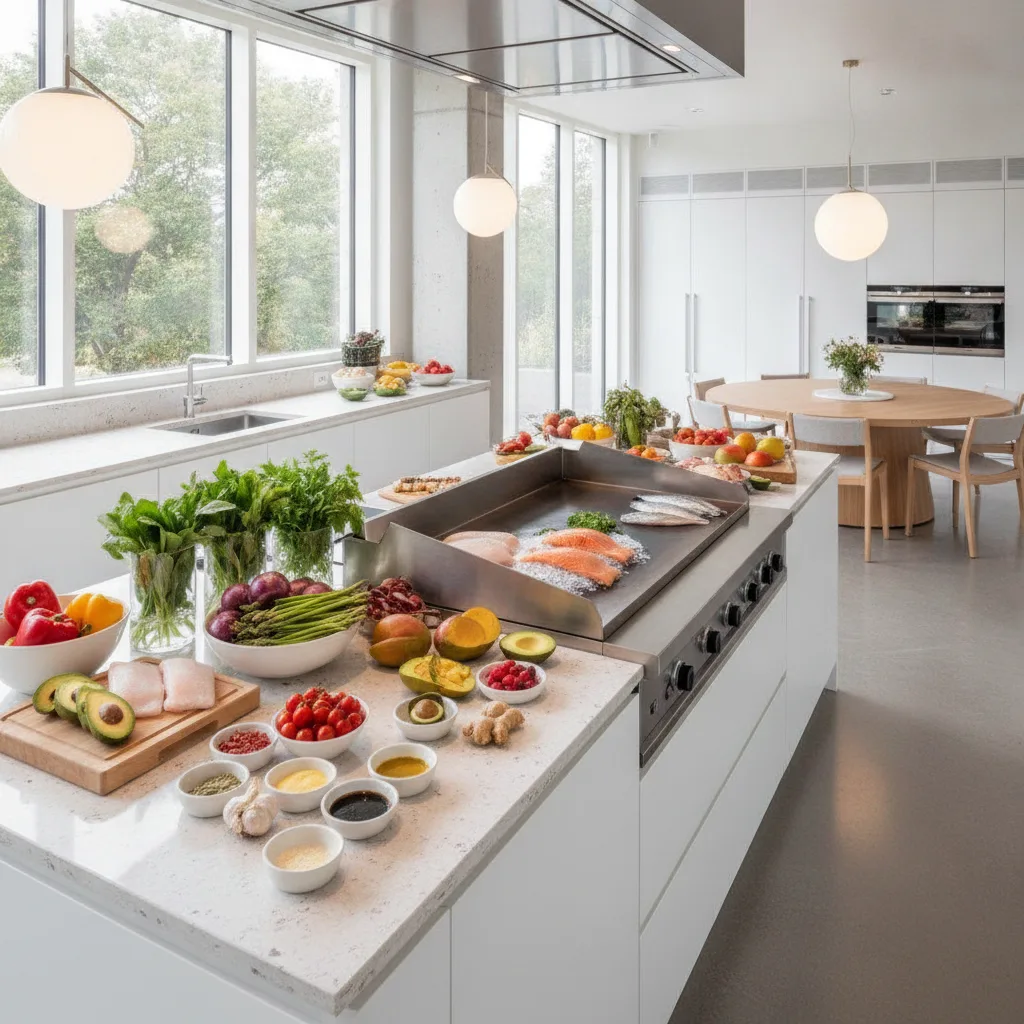
In France, food allergies and intolerances affect several million people. Cooking for guests with different dietary restrictions may seem complicated, but the plancha offers a practical, adaptable solution.
Thanks to its smooth cooking surface, its fast heat-up and how easy stainless steel is to clean, it is an excellent tool for preparing allergen-free meals. You still need to know the right habits to avoid cross-contamination and keep every guest safe.
Plancha and allergen-free cooking: a practical guide
Reading time: ~9 min
- Summary
- Understanding food allergies and elimination diets
- Why the plancha is ideal for allergen-free cooking
- Choosing the right equipment for allergen-free cooking
- Gluten-free, lactose-free and major-allergen-free plancha recipes
- Instructions and checklist for allergen-free plancha cooking
- The plancha, an ally for allergen-free cooking
- FAQ
Summary
French and European regulations require clear information about allergens, and the same principles of caution are recommended for home cooking too. The smooth surface and high temperature of the plancha make for healthy cooking, but cross-contamination remains a risk that must be managed methodically. Stainless steel is the easiest material to clean and the best suited to limiting allergen residues. Vegetables, meat, fish and even gluten-free breads are easy to cook on the plancha, and a simple step-by-step routine lets you cook with peace of mind for guests with different restrictions.
Understanding food allergies and elimination diets
A food allergy differs from an intolerance in the nature of the immune reaction it causes. In both cases, management relies on a strict elimination diet: the food responsible must be completely excluded from the diet. According to the French national health insurance (Assurance Maladie), this diet is currently the only effective way to prevent allergic reactions.
Coeliac disease is a good illustration of this constraint. People who have it cannot tolerate any trace of gluten, a protein found in wheat, rye and barley. Even the slightest cross-contamination can trigger a severe intestinal reaction. Vigilance is therefore needed at every stage of preparation, from choosing the ingredients to cleaning the cooking equipment.
The 14 major allergens and the legal framework in France
The European INCO Regulation (EU) 1169/2011, supplemented in France by the decree of 17 April 2015, requires food service professionals to inform their customers of the presence of 14 regulated allergens in the dishes served. These allergens include gluten, crustaceans, eggs, fish, peanuts, soya, milk, tree nuts, celery, mustard, sesame, sulphites, lupin and molluscs.
For non-prepacked food, such as food served at a convivial meal, the allergen declaration must be accessible and legible. The “gluten-free” label is only permitted if the gluten content is below 20 mg/kg. At home, these legal obligations do not formally apply, but the same principles of ingredient traceability and label checking are wise as a precaution.
Good to know: ANSES (the French Agency for Food, Environmental and Occupational Health & Safety) recommends that people with food allergies or intolerances systematically check the composition of the products they use, including condiments, oils and marinades, which may contain traces of allergens that are not obvious at first glance.
Why the plancha is ideal for allergen-free cooking
The plancha has several natural advantages for people on an elimination diet. Cooking at high temperatures, often between 200 and 300 degrees Celsius, sears food quickly without added fat. Vegetables, meat and fish thus keep their nutritional qualities, without complex preparations that might contain hidden allergens. Simple cooking, without breadcrumbs, elaborate sauces or processed products, automatically reduces the risk of exposure.
The flat, smooth surface of the plancha also makes it easy to clean between two preparations, which is essential to avoid cross-contamination. Unlike a pan with an uneven surface or a barbecue with grills that are hard to degrease, a plancha plate can be cleaned quickly and effectively between two types of cooking.
Risks of cross-contamination on the plate
Cross-contamination occurs when residues of an allergenic food are transferred to a food that is normally free of it. On a plancha, this risk exists if you cook foods containing gluten, milk or tree nuts one after another without cleaning in between, and then cook dishes intended for people with allergies. Cooking residue stuck to the plate or utensils can be enough to trigger a reaction in a sensitive person.
The Allergo-AFDN professional guide (French Association of Dietitians and Nutritionists) recommends strict separation of production areas and the use of dedicated utensils for allergen-free preparations. These recommendations, designed for institutional catering, are just as relevant for home use at a meal with friends who have various intolerances.
Choosing the right equipment for allergen-free cooking
Which material for an allergen-free plancha?
The choice of cooking plate material has a direct impact on how easy it is to clean, and therefore on allergen control. Here is a comparison of the main materials available on the market.
| Material | Ease of cleaning | Thermal inertia | Suitable for people with allergies | Notes |
|---|---|---|---|---|
| Stainless steel | Very good | Good | Yes, smooth surface | Resists degreasing products, no porosity |
| Enamelled cast iron | Good | Excellent | Yes, if the enamel is intact | Effective cleaning if the enamel is not cracked |
| Raw rolled steel | Average | Good | With precautions | May retain residue in micro-scratches |
| Raw cast iron | Difficult | Excellent | Not recommended | Porous surface, residue hard to remove completely |
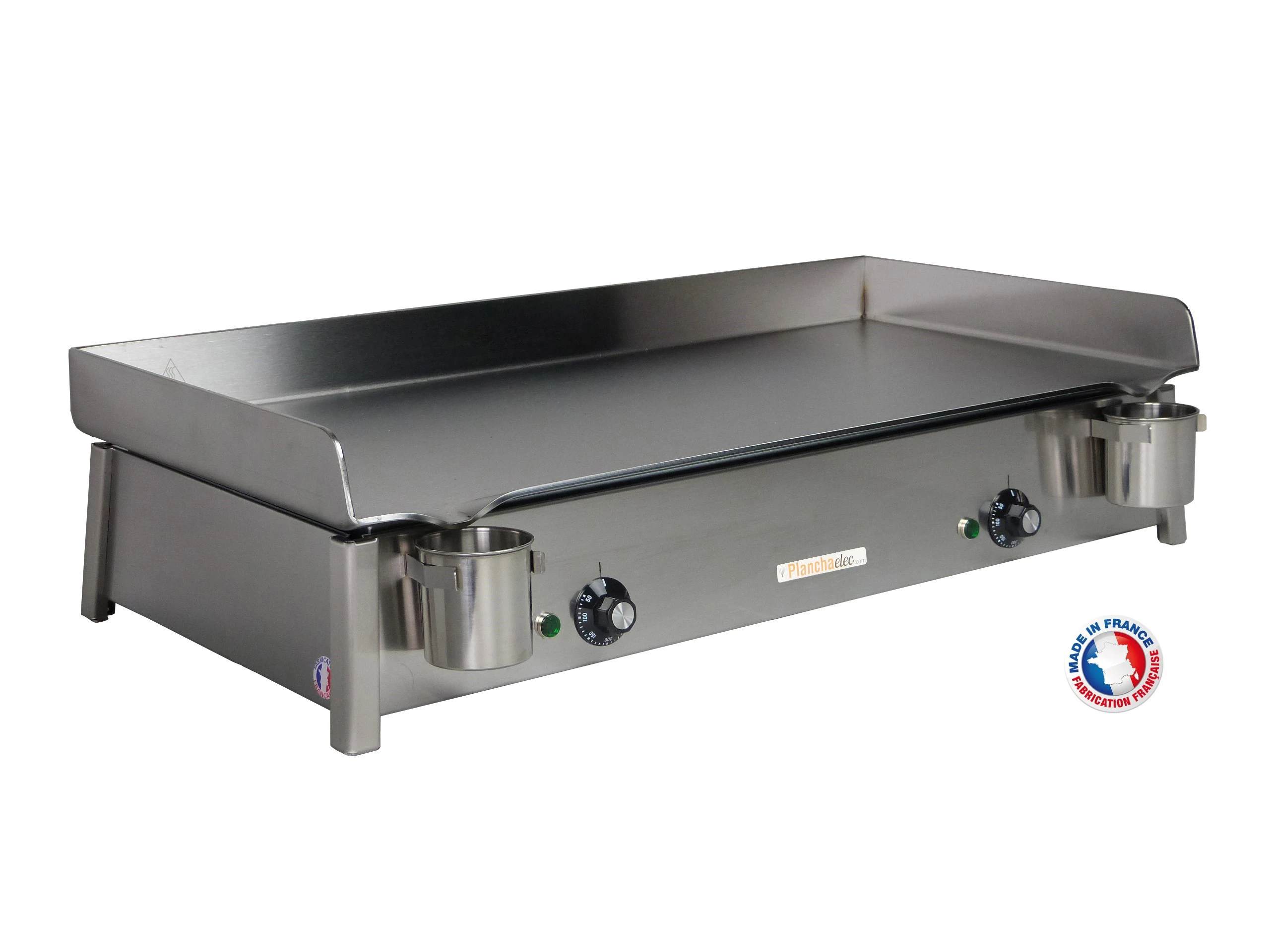
For cooking focused on food safety and allergen control, stainless steel is the benchmark material. Its non-porous surface does not retain cooking residue and withstands cleaning and degreasing products without deteriorating. At Planchaelec, all our planchas are made with quality stainless steel plates, making them particularly well suited to allergen-free cooking. You can read our stainless steel plancha cleaning guide to adopt the right everyday habits, and browse our range of cleaning products suitable for stainless steel.
A grease channel also drains away cooking juices that may contain traces of allergens. A well-designed edge makes it easier to clean the whole surface, with no hard-to-reach areas where residue could build up.
Key takeaway: for people with coeliac disease, it is recommended to have a plancha used exclusively for gluten-free preparations, or to clean the plate and all utensils completely and thoroughly before any allergen-free cooking.
Gluten-free, lactose-free and major-allergen-free plancha recipes
The plancha naturally lends itself to many recipes suited to elimination diets. Raw, unprocessed foods are the simplest to cook safely: seasonal vegetables, fish fillets, poultry escalopes, plain prawns. None of these ingredients contains major allergens as such, provided you check the marinades and seasonings used.
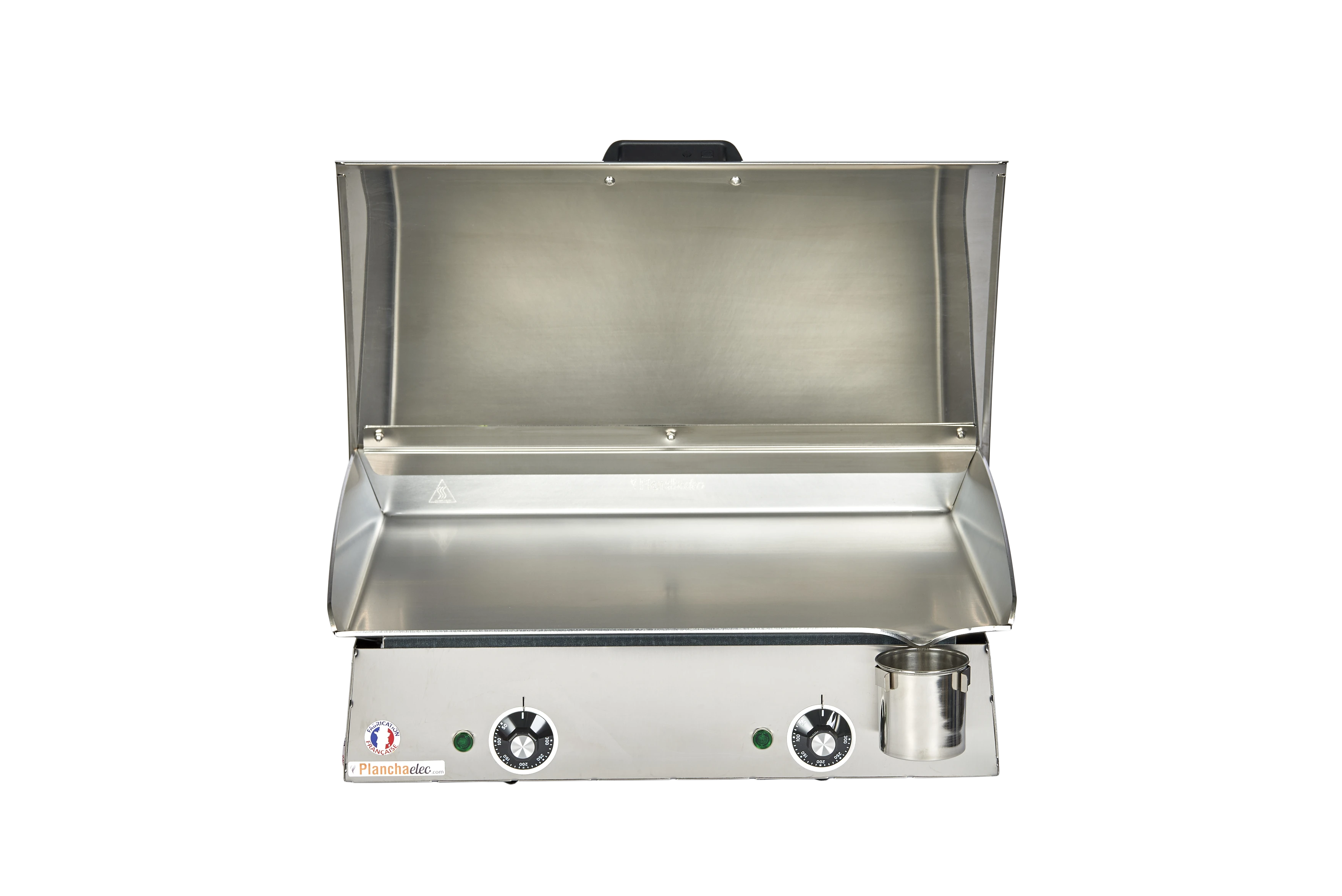
For a convivial meal with guests who have different intolerances, here are a few easily adaptable ideas:
- Vegetables marinated in olive oil, garlic and fresh herbs, with no soy or gluten in the marinade, cooked directly on the plate.
- Cod or salmon fillets without breadcrumbs, seasoned with olive oil and lemon, cooked over medium heat.
- Plain turkey or chicken escalopes, without sauce or coating, with aromatic herbs.
- Small gluten-free breads made with alternative flours (rice, buckwheat, maize), cooked directly on the hot plate.
For gluten-free breads and flatbreads, the plancha offers even cooking thanks to its thermal inertia. The stainless steel plate heats steadily and gives a nice colour without burning delicate preparations. Small gluten-free breads made with rice flour and water can be cooked directly on the plate, without fat, for a crisp and tasty result.
Instructions and checklist for allergen-free plancha cooking
Organising plancha cooking when guests have different intolerances requires a little method. Sequencing the cooking order is key: always start with the allergen-free dishes before cooking the standard ones. This organisation greatly limits the risk of cross-contamination, provided you clean the plate between two batches.
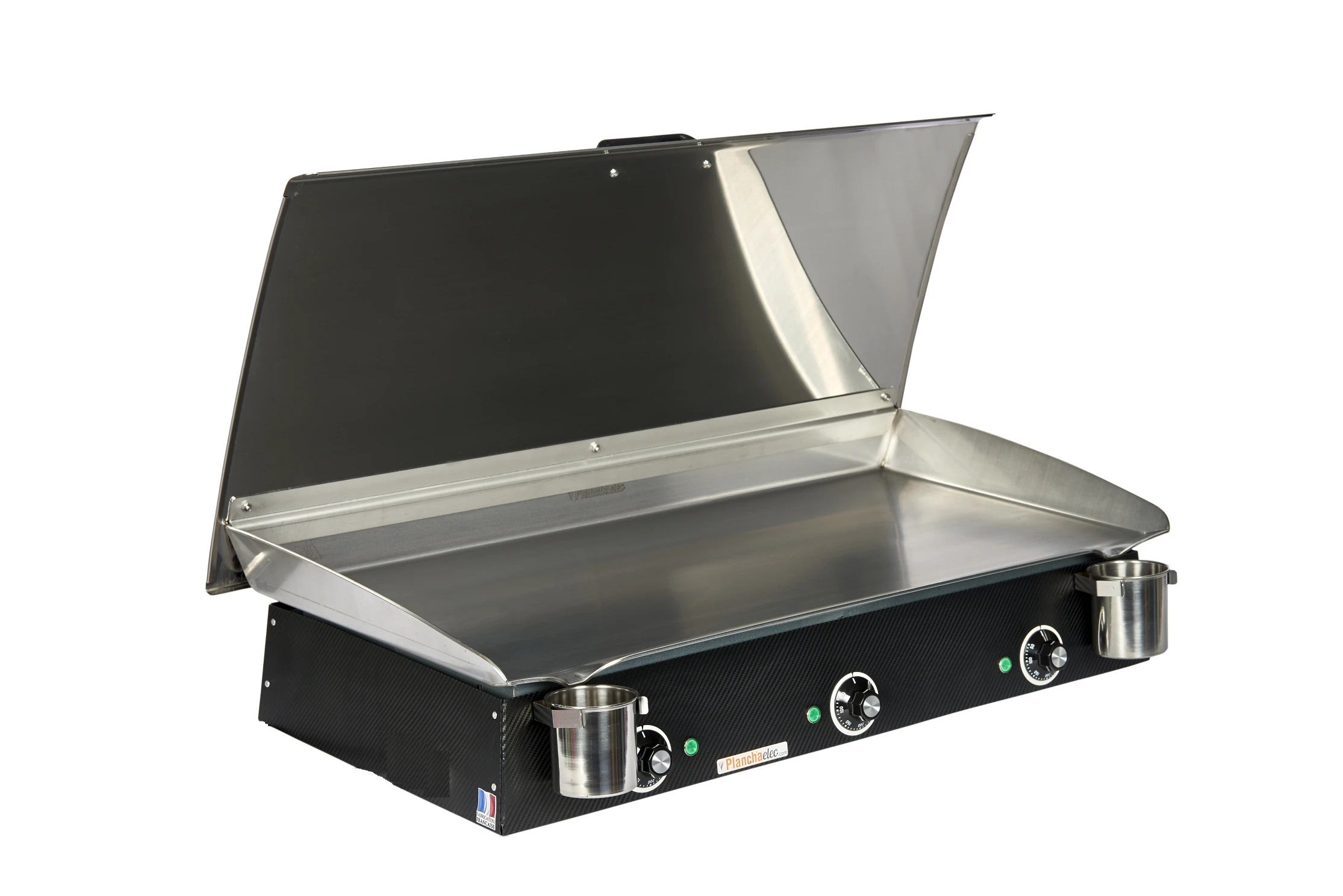
Here are the essential steps for allergen-free plancha cooking:
- Check the labels and technical sheets of all ingredients before you start preparing.
- Thoroughly clean the plancha and all utensils before the first cook with a suitable degreasing cleaner.
- Use spatulas and tongs dedicated to allergen-free dishes, clearly identified or in a different colour.
- Cook the dishes for people with allergies first, then clean the plate before moving on to the other preparations.
- Clearly inform each guest of the composition of the dishes served.
The Allergo-AFDN professional guide emphasises integrating these practices into a genuine food safety management plan in catering. At home, the approach is the same in spirit: anticipation, organisation and communication with guests. If you regularly host people with coeliac disease or severe allergies, considering a dedicated plancha is the safest solution. Our compact models such as the Néo 420 plancha are perfectly suited to this specific use.
To go further in choosing your equipment, our guide to choosing your plancha helps you according to your use and usual number of guests.
The plancha, an ally for allergen-free cooking
The plancha is a tool particularly well suited to allergen-free cooking, provided a few simple organisation and cleaning rules are followed. Its stainless steel surface, easy to degrease and non-porous, limits the risk of cross-contamination. By adopting a sequenced cooking order, dedicated utensils and thorough cleaning, it is entirely possible to cook for guests with various intolerances at the same convivial meal. At Planchaelec, our stainless steel planchas made in France are designed to last and to make everyday maintenance easy, making them a natural choice for families who care about food safety.
FAQ
Can the plancha be used indoors for allergen-free meals?
Yes, an electric plancha can be used indoors, provided there is sufficient ventilation. The absence of a flame reduces fumes, which is an advantage for use in the kitchen. Our article on smoke-free indoor planchas gives you all the tips for worry-free use.
What size of plancha should you choose to cook for guests with different intolerances?
A wider plancha lets you create separate cooking zones, which makes managing allergens easier. For 6 to 10 people with different restrictions, a model with a cooking surface of 600 to 830 mm is recommended. See our guide on how to choose the right plancha size to refine your choice.
Are ordinary cleaning products enough to remove traces of allergens?
A degreaser suitable for stainless steel surfaces, applied with a gentle scouring pad, effectively removes cooking residue that may contain traces of allergens. It is advisable to rinse thoroughly after cleaning so as not to leave any product residue on the plate.
Are there specific accessories for organising allergen-free cooking on a plancha?
Cooking domes let you confine heat to a specific area of the plate and prevent splashes between different preparations. Spatulas and tongs in different colours can also be used to clearly identify the utensils dedicated to allergen-free dishes.
Does cooking at high temperatures destroy allergens?
No. Cooking at high temperatures may alter the structure of some allergenic proteins, but it does not systematically destroy them. For people with severe allergies or coeliac disease, the only guarantee is the total absence of the allergen from the ingredients used and the cooking surfaces.
How can I inform my guests about the allergens in the dishes served from the plancha?
In France, regulations require food service professionals to display the 14 major allergens. At home, it is advisable to tell guests verbally or in writing what each dish contains, specifying the ingredients used. Keeping the labels of the products you bought ensures ingredient traceability.