



 +33 4 78 55 45 69
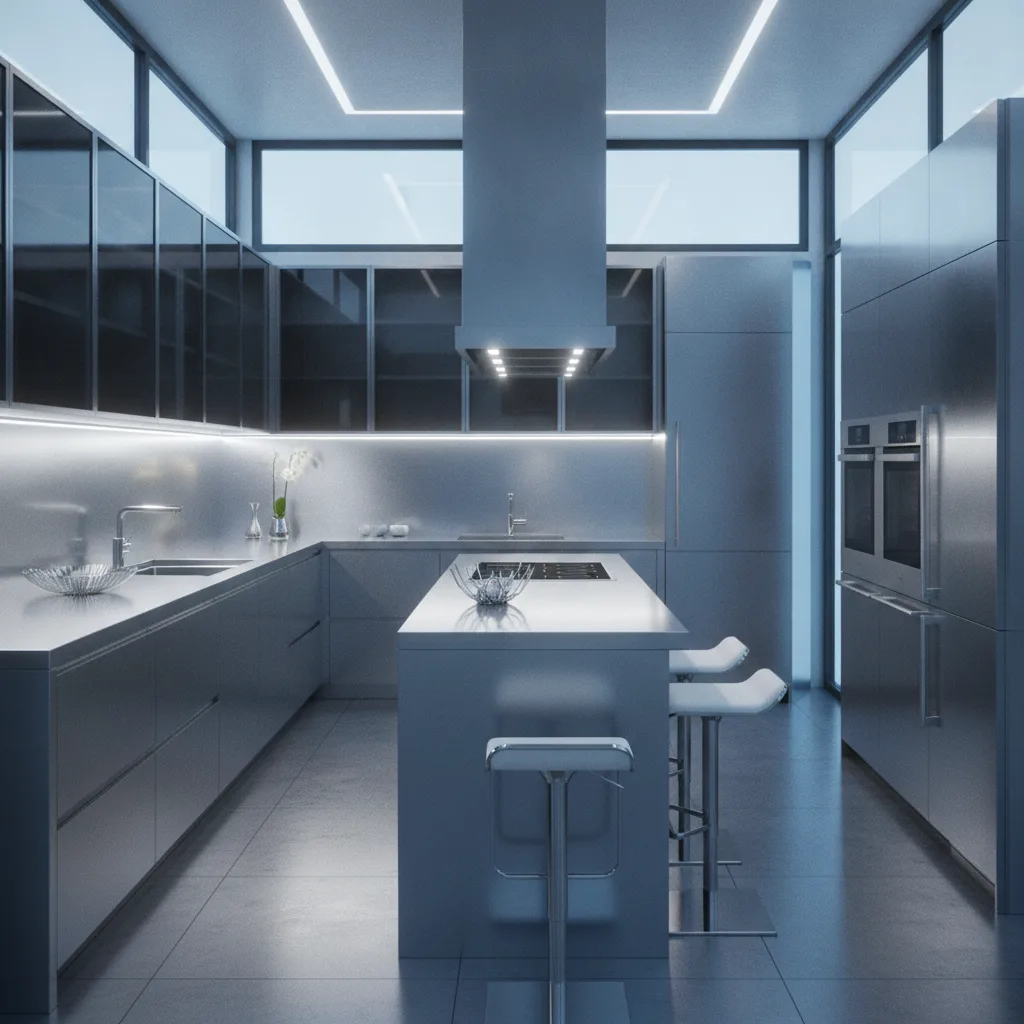
Stainless steel is now found in kitchens all over the world, from professional worktops to everyday utensils and quality cooking surfaces. Yet this material we take for granted is a relatively recent invention, born of a series of scientific discoveries made at the beginning of the 20th century. Here is the story of a material that has become indispensable.
The history of stainless steel is that of a metal alloy that transformed food hygiene, gastronomy and industry in just a few decades. Understanding its origins, composition and properties helps you appreciate why it has become the essential standard in professional kitchens and high-end cooking equipment.
History of stainless steel: origins, grades and gastronomy
Reading time: ~9 min
- The origins of stainless steel before 1913: a gradual discovery
- Harry Brearley and the birth of modern stainless steel in 1913
- Why doesn't stainless steel rust? The role of chromium and the passive layer
- Understanding 18/8, 18/10, 304, 316 and 430 grades
- Stainless steel in gastronomy: a standard that gradually took hold
- Caring for a stainless steel surface: preserving the passive layer
- Stainless steel, a sustainable choice for cooking and gastronomy
- FAQ
The origins of stainless steel before 1913: a gradual discovery
Early research on chromium steels
The history of stainless steel does not begin with a single person or a single moment. As early as 1821, European metallurgists took an interest in combining iron and chromium, noting that this alloy had particular properties. But a precise understanding of chromium's anti-corrosion role in alloy steel only really emerged at the beginning of the 20th century.
In 1904, the French metallurgist Léon Guillet carried out decisive work on low-carbon steels highly alloyed with chromium. He produced steels that resisted chemical corrosion, without clearly identifying the mechanism involved or drawing an immediate industrial application from it. His research nevertheless laid the scientific foundations on which others would build.
In 1912, the German company Krupp and the metallurgist Eduard Maurer filed a patent for a steel containing 18% chromium and 8% nickel, a formulation now referred to as 18/8. This patent was a major step in the history of austenitic stainless steel, the family most widely used in the food industry and professional kitchens.
Good to know
The term “austenitic” refers to the crystalline structure of the stainless steel most widely used in kitchens. It is this structure, stabilised by nickel, that gives 18/8 and 18/10 stainless steel its excellent corrosion resistance and ease of forming.
Harry Brearley and the birth of modern stainless steel in 1913
It was in Sheffield, the British city historically renowned as the cradle of cutlery and precision metallurgy, that modern stainless steel truly took shape. In 1913, Harry Brearley, a metallurgist at the Brown-Firth laboratories, was looking for an erosion-resistant steel for gun barrels. While testing various alloys with a high chromium content, he noticed that a sample left in the open air did not corrode, whereas other steels rusted quickly.
Brearley realised he had found something exceptional. He first called the material “rustless”, before a colleague suggested the term “stainless”, which would become established in the English-speaking world. The origin of the French word “inox” is more direct: it is a contraction of “inoxydable” (stainless), which faithfully reflects the material's central property.
Brearley's discovery was quickly applied to cutlery, particularly table knives, whose blades could now withstand food acids and repeated washing. This practical application marked the beginning of the spread of stainless steel in the food sector, a movement that has never stopped.
Why doesn't stainless steel rust? The role of chromium and the passive layer
The passivation mechanism of stainless steel
The corrosion resistance of stainless steel relies on a precise chemical mechanism called passivation. When the chromium content of an alloy steel exceeds 10.5%, the chromium reacts spontaneously with oxygen in the air to form a thin layer of chromium oxide on the surface. This passive layer, invisible to the naked eye and only a few nanometres thick, acts as a shield against chemical corrosion and moisture.
What makes this mechanism particularly remarkable is its ability toself-repair. If the surface is scratched or slightly damaged, the oxide layer re-forms by itself in the presence of oxygen, without any human intervention. It is this property that fundamentally distinguishes stainless steel from other alloy steels and justifies its use in demanding environments such as professional kitchens, medical equipment and the chemical industry.
The European standard EN 10088, which governs stainless steels, precisely defines the minimum compositions required for a steel to qualify as stainless. Nickel, for its part, strengthens the stability of the passive layer and improves resistance to the organic acids found in food.
Key takeaway
A steel is considered stainless from 10.5% chromium in its composition. Below this threshold, the passive layer does not form stably and the material remains susceptible to corrosion.
Understanding 18/8, 18/10, 304, 316 and 430 grades
The main stainless steel designations in the kitchen
The notations used to designate stainless steel grades may seem complex, but they follow a simple logic. The figures 18/8 or 18/10 indicate the chromium and nickel content respectively, expressed as a percentage. An 18/8 stainless steel therefore contains 18% chromium and 8% nickel, while an 18/10 stainless steel contains 18% chromium and 10% nickel. The latter offers slightly better resistance to acids and is often preferred for professional cookware and equipment in direct contact with food.
AISI (American Iron and Steel Institute) grades complete this nomenclature with numerical designations that refer to the precise composition of the alloy. Here are the main differences to know to choose a stainless steel suited to food contact or cooking:
| Grade | Common notation | Chromium content | Nickel content | Typical use |
|---|---|---|---|---|
| AISI 304 | 18/8 | 17.5 to 19.5% | 8 to 10.5% | Utensils, worktops, standard food equipment |
| AISI 316 | 18/10 with molybdenum | 16 to 18% | 10 to 14% | Acidic environments, marine settings, medical, high-performance cooking |
| Ferritic stainless steel | 400 series | 10.5 to 18% | Very low or none | Household appliances, decorative parts, where magnetism is required |
| Martensitic stainless steel | 400 series (high hardness) | 12 to 18% | Low | Cutlery, cutting tools, mechanical parts subject to wear |
The difference between 304 and 316 stainless steel lies mainly in the presence of molybdenum in grade 316. This additional element strengthens resistance to chlorides and strong acids, making 316 particularly suited to marine environments or acidic food preparations. For home or semi-professional cookware and work surfaces, grade 304 already offers an excellent balance between performance and cost.
Stainless steel in gastronomy: a standard that gradually took hold
From the 1920s onwards, stainless steel left the laboratories and factories to enter kitchens. Its non-porous surface prevents bacteria from multiplying, meeting increasingly demanding food hygiene requirements. Modern food standards, which require materials that are easy to clean and chemically inert in contact with food, naturally made stainless steel the reference material.
In the 1930s, large restaurant and hotel kitchens adopted stainless steel equipment: worktops, containers, sinks, professional pans. The thermal properties of stainless steel, particularly its good conductivity when combined with an aluminium or copper core, made it a material of choice for professional cookware. Its resistance to thermal shock and its exceptional durability justify the long-term investment.
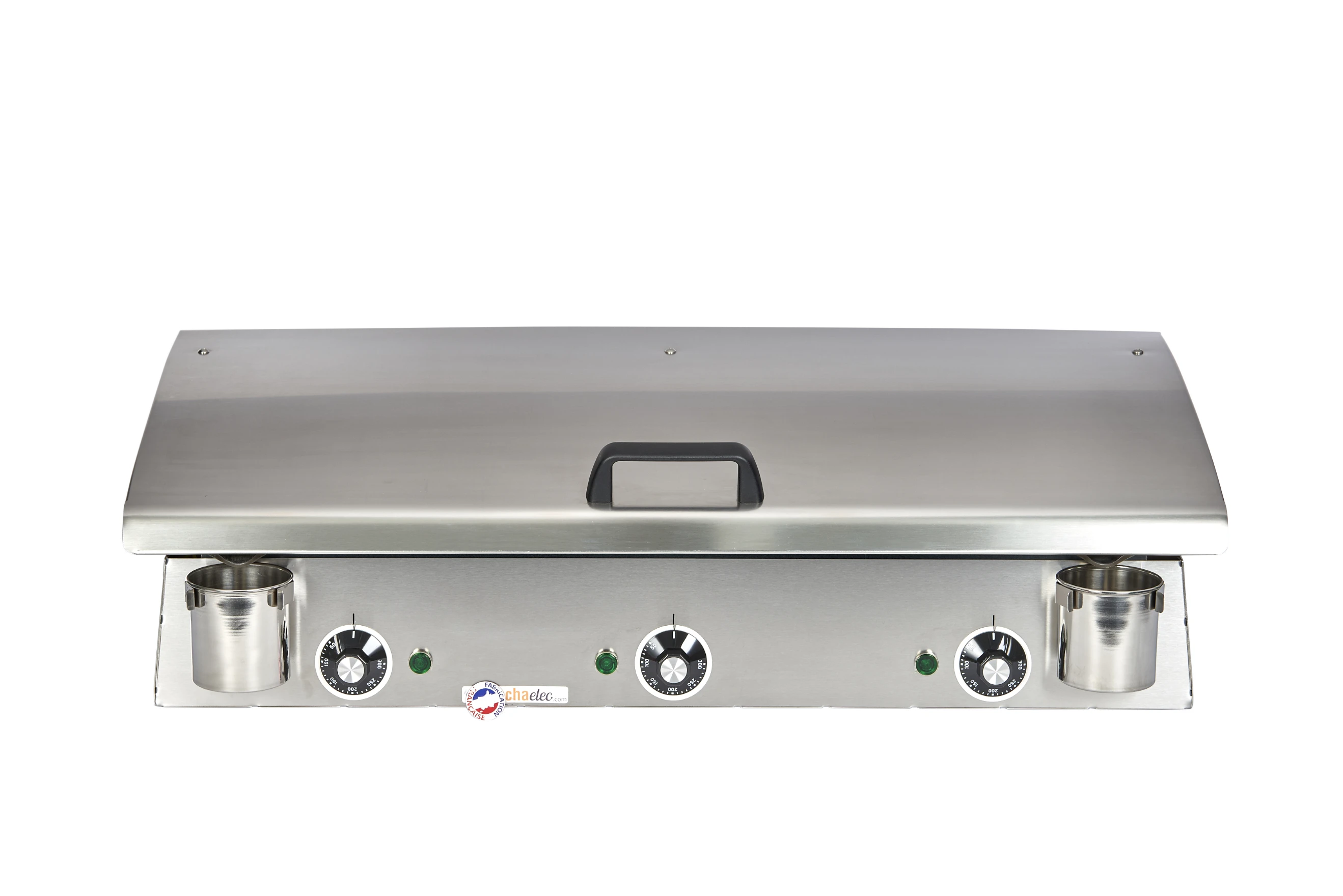
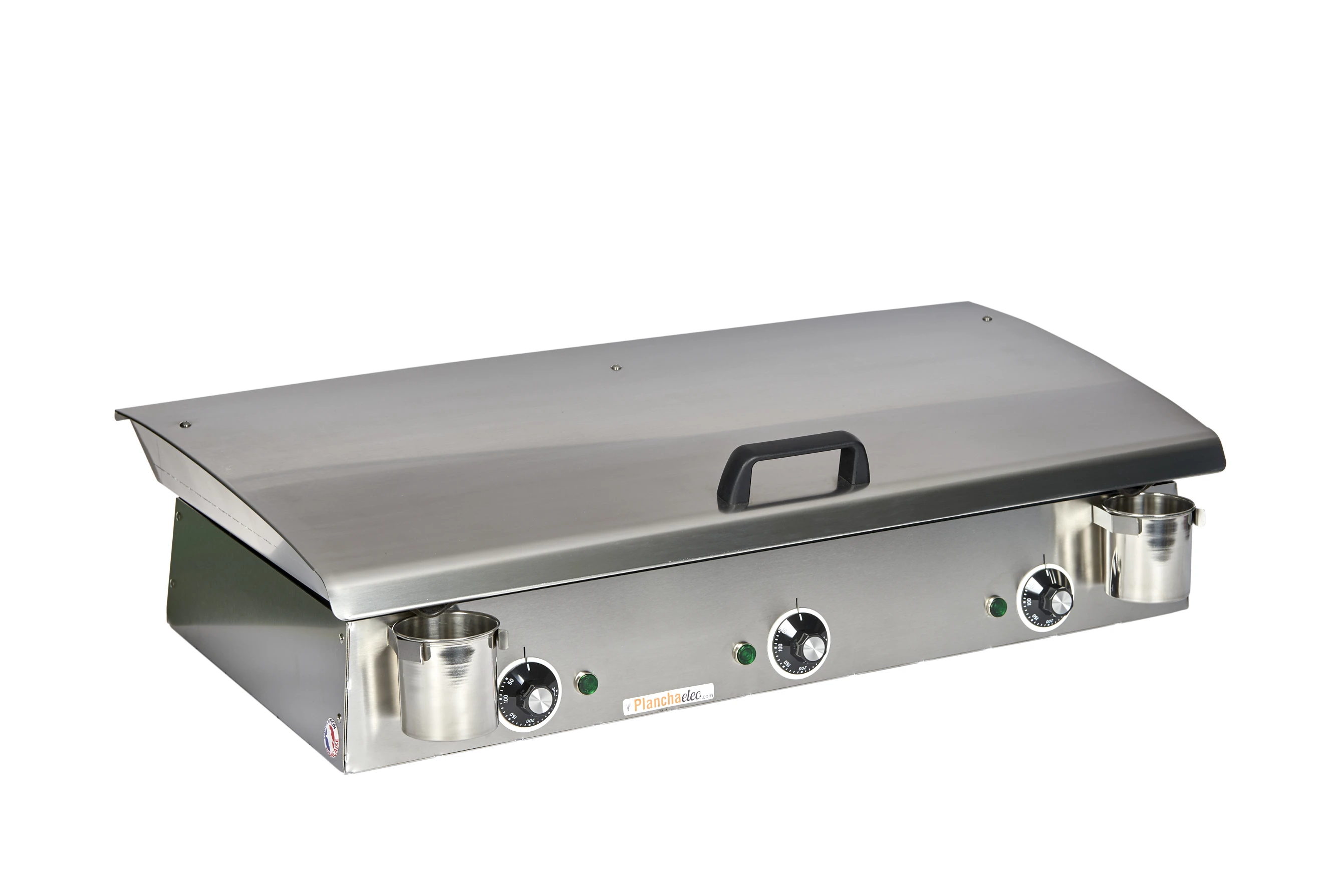
Today, stainless steel is present in every area of gastronomy, from cooking equipment to work surfaces and high-quality electric planchas. At Planchaelec, the cooking surfaces are made of food-grade 430 stainless steel, which ensures healthy cooking without a coating that could deteriorate with heat, and easy maintenance appreciated by amateur and professional cooks alike. You can discover the different models available on the Planchaelec planchas page or read the guide to choosing your plancha according to your needs.
Caring for a stainless steel surface: preserving the passive layer
Caring for stainless steel is often easier than you might think, provided you respect a few fundamental principles linked to the very nature of the material. The passive layer that protects stainless steel can be weakened by certain harsh chemicals, particularly hydrochloric acids or concentrated chlorine-based products. You should also avoid scouring pads made of ordinary steel, which can leave iron particles that may rust on the surface and give the impression that the stainless steel itself is rusting.
For a stainless steel cooking surface, such as that of an electric plancha, here are the good practices to adopt:
- Clean the surface while still warm after each use with a scraper to remove food residue, then with a degreasing cleaner suitable for food-grade stainless steel.
- Rinse with clean water and dry carefully to avoid limescale deposits, which can spoil the appearance of the surface without affecting its properties.
- Use scouring pads designed for stainless steel for stubborn residue, always rubbing in the direction of the steel's grain to avoid creating cross micro-scratches.
Planchaelec offers a complete range of products for caring for stainless steel surfaces, including specific degreasing cleaners and suitable scouring pads. You will also find detailed advice on the page dedicated to cleaning a stainless steel plancha.
Stainless steel, a sustainable choice for cooking and gastronomy
The history of stainless steel is that of a material born of scientific curiosity that became, in less than a century, the pillar of food hygiene and modern gastronomy. From Léon Guillet's first observations in 1904 to Harry Brearley's discovery in Sheffield in 1913, via the Krupp patents and the industrialisation of the 1920s, stainless steel has established itself through its intrinsic qualities: corrosion resistance, a non-porous surface, durability and ease of maintenance.
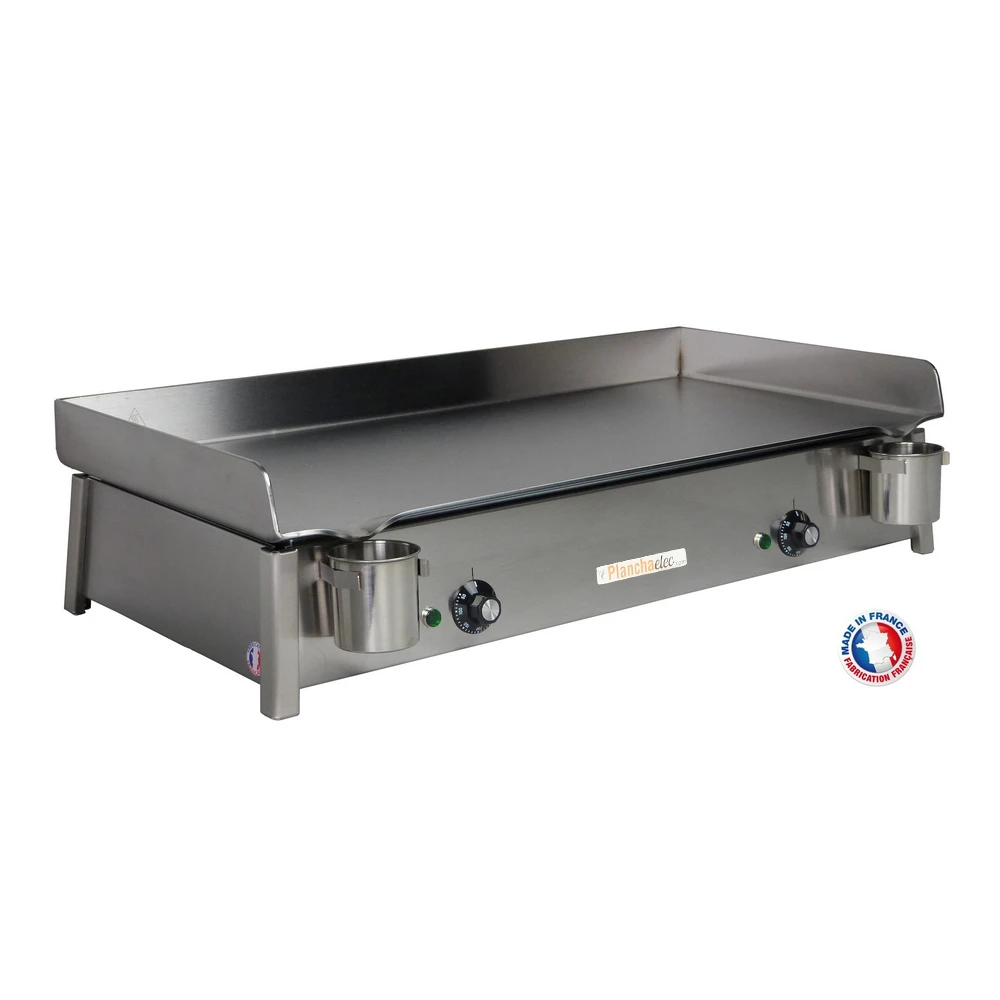
Understanding its composition and different grades helps you make informed choices, whether for cookware, a worktop or a cooking surface. It is precisely this demand for quality that guides Planchaelec in designing its food-grade stainless steel electric planchas, made in France to last.
FAQ
Who invented stainless steel and when?
Harry Brearley, a British metallurgist based in Sheffield, is generally credited with discovering modern stainless steel in 1913. He observed that a steel highly alloyed with chromium resisted corrosion, and it came to be known as “stainless”. Earlier work, notably by Léon Guillet in 1904 and the Krupp-Maurer patent in 1912, had nevertheless paved the way for this discovery.
What is the origin of the word “inox”?
The word “inox” is a French abbreviation of “inoxydable”, which describes the material's main property: its resistance to oxidation and corrosion. In English, the term “stainless steel” is commonly used, while other languages use translations close to the word “inoxydable”.
Is stainless steel completely rust-free?
Stainless steel resists corrosion very well under normal conditions of use, but it is not completely immune. Prolonged contact with concentrated chlorides, strong acids or ordinary steel tools can cause surface corrosion known as contact rust. These situations remain rare with proper care and suitable cleaning products.
Why are quality electric planchas made of stainless steel?
Food-grade stainless steel (generally grade 304, 316 or 430) is the ideal material for a cooking surface because it does not react chemically with food, does not release harmful substances when heated, withstands large temperature variations and is easy to clean. These properties make it a better choice than non-stick coatings, which can deteriorate over time and with heat.
What is the difference between 304 and 316 stainless steel for cooking?
Grade 304 (18/8) is the most common in kitchens and offers excellent corrosion resistance for standard food use. Grade 316 also contains molybdenum, making it more resistant to strong acids and saline environments. For cookware, grade 304 is perfectly suitable; for a plancha plate heated by zones, 430 is more stable and distorts less.
Can you use any cleaning product on a stainless steel surface?
No. Products containing concentrated chlorine, bleach or strong acids can attack the passive layer of stainless steel and cause localised corrosion. It is recommended to use degreasing cleaners specifically formulated for food-grade stainless steel, such as those offered by Planchaelec, which respect the surface and preserve its properties over the long term.