



 +33 4 78 55 45 69
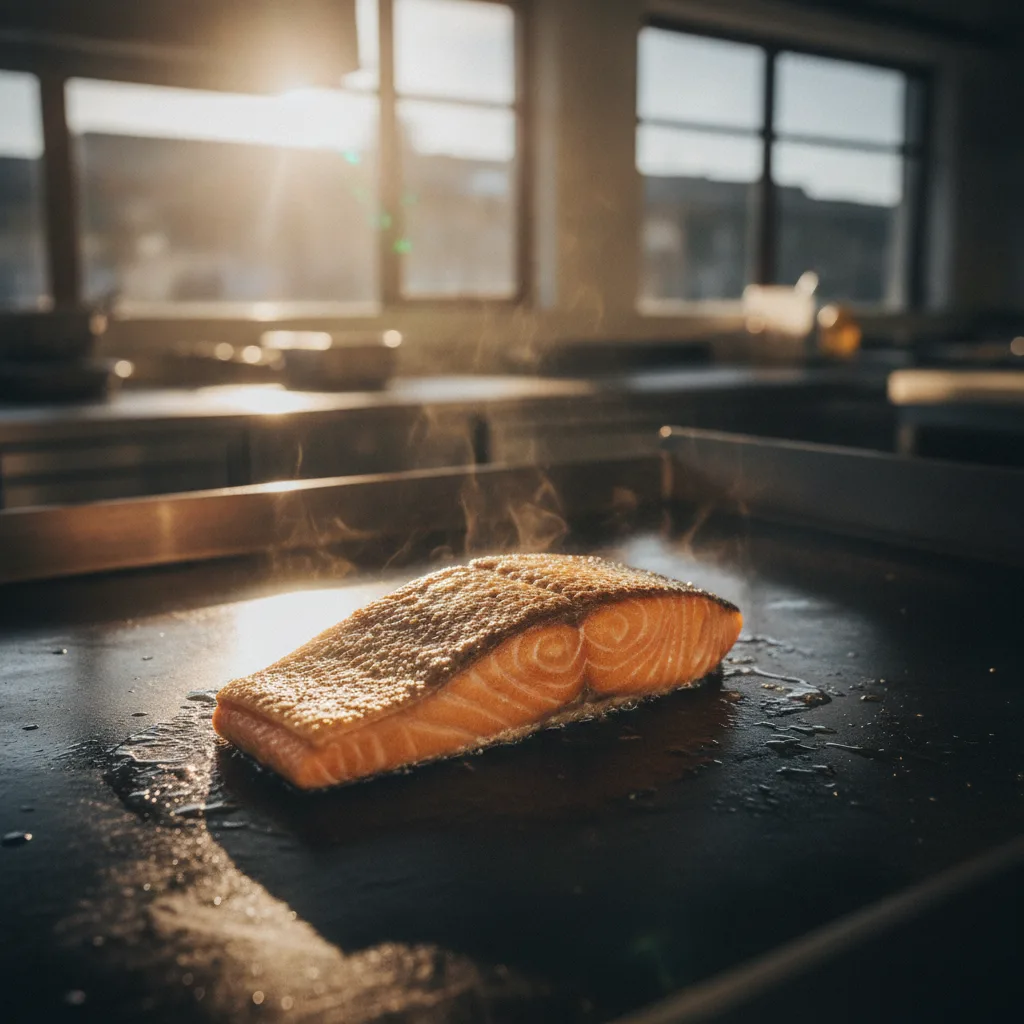
Salmon cooked on the plancha often goes wrong for one simple reason: the fillet is turned too early or too often. One-sided cooking on the plancha changes everything. By keeping the fish skin-side down on the hot plate without ever turning it, you get golden, crispy skin, pearly flesh cooked through and perfectly preserved juices.
This technique, used by professional chefs, is perfectly achievable at home once you master a few essential settings.
One-sided plancha cooking: salmon with crispy skin
Reading time: ~8 min
- Summary
- What is one-sided cooking on the plancha?
- What temperature should the plancha be for crispy skin?
- How long should you cook a salmon fillet skin-side down on the plancha?
- The role of the cooking dome in one-sided cooking
- Why does salmon skin stick to the plancha, and how can you avoid it?
- Which fish are suitable for one-sided cooking on the plancha?
- Which plancha should you choose for one-sided cooking of fish?
- Cleaning the plate after cooking fish
- Mastering one-sided cooking on the plancha
- FAQ
Summary
- The principle of one-sided cooking: cook the salmon skin-side only to get a crispy texture without drying out the flesh.
- Temperature and preheating: a plate at 220–240 °C is essential to trigger the Maillard reaction and stop the skin sticking.
- Cooking time: between 4 and 7 minutes depending on the thickness of the fillet, without turning.
- The role of the cooking dome: it finishes cooking the fish through by gentle convection without turning it.
- Choosing a plancha: a food-grade stainless steel plate with good thermal inertia is ideal for this type of cooking.
- Other suitable fish: sea bass, sea bream, mackerel and trout also lend themselves very well to one-sided searing.
What is one-sided cooking on the plancha?
Definition of one-sided cooking on the plancha
One-sided cooking means cooking food on one side only, without turning it, or turning it only at the very end for a quick sear. Applied to salmon on the plancha, the technique involves placing the fillet skin-side down directly on the very hot plate and letting the heat rise gradually through the flesh.
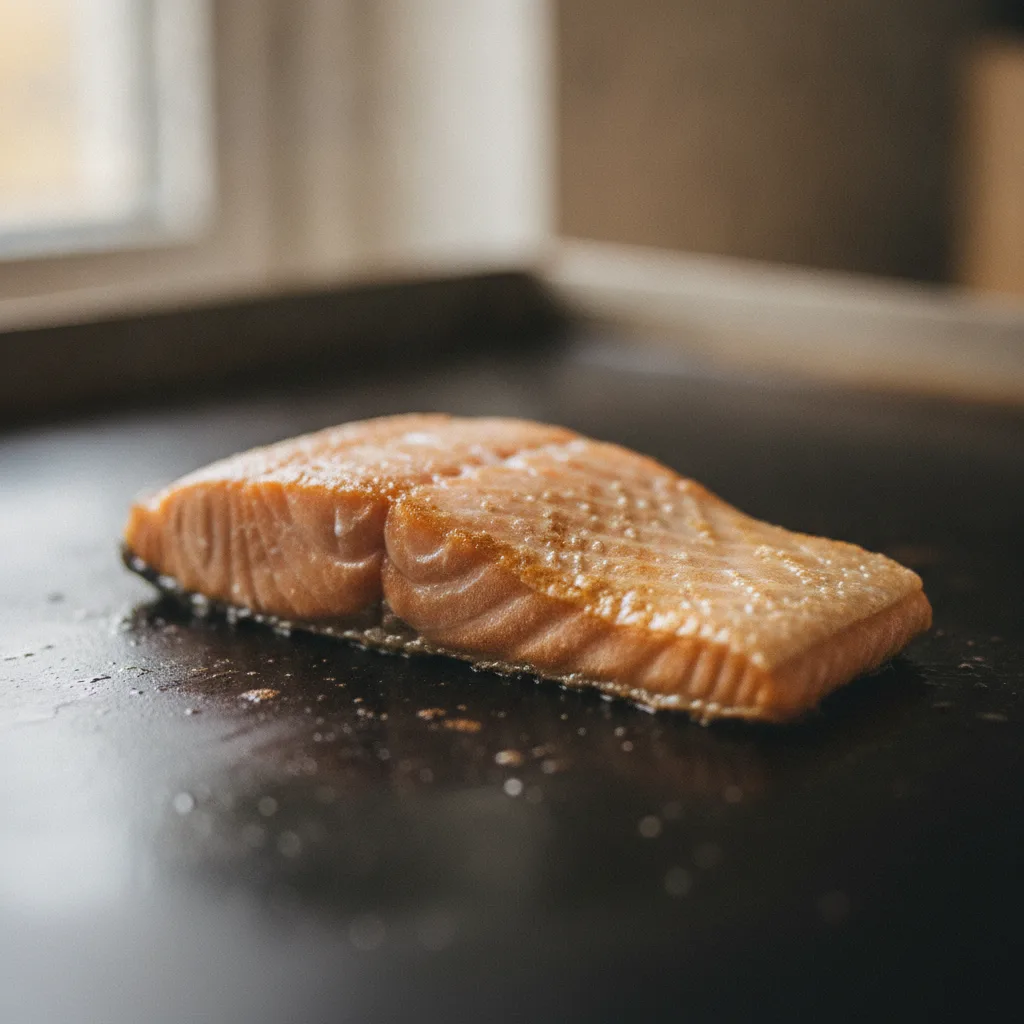
The aim is twofold: to create a golden, crispy crust thanks to the Maillard reaction, and to preserve the delicate flesh of Atlantic salmon (Salmo salar), which does not cope well with prolonged direct heat on both sides.
The Maillard reaction is the chemical process that gives food its brown colour and grilled aromas when seared. It starts at around 140 °C and needs a sufficiently hot cooking surface to act quickly. This is exactly what a well-preheated electric plancha provides, with its food-grade stainless steel plate distributing heat evenly across the entire usable surface.
Good to know: one-sided cooking is not just for salmon. It suits all fish with delicate flesh whose skin is thick enough to withstand direct contact with the hot plate without tearing.
What temperature should the plancha be for crispy skin?
The ideal temperature for crispy skin
Preheating is the most important step in one-sided cooking. A plate that is not hot enough causes two problems: the skin sticks to the cooking surface, and the Maillard reaction does not start properly, giving soft rather than crispy skin. For salmon, the ideal plate temperature is between 220 and 240 °C. At this heat, the thermal shock when the fillet is placed down instantly sears the skin and creates a thin barrier that prevents sticking.
Preheating should last at least 10 minutes on an electric plancha. The specialist comparisons by Les Numériques stress the importance of thermal inertia: a thick stainless steel plate maintains its temperature even when you put a cold fillet on it, unlike a thin plate that cools suddenly on contact with the food. This sudden drop in temperature is one of the most common causes of skin that sticks.
A precise thermostat is therefore a decisive selection criterion. Planchaelec electric planchas, designed and made in France, feature a temperature control system that keeps the heat stable throughout cooking, which is particularly useful for one-sided searing where constant heat is essential.
How long should you cook a salmon fillet skin-side down on the plancha?
Cooking time for salmon skin-side down
Cooking time depends mainly on the thickness of the fillet. The table below guides you for a plate preheated to around 230 °C.
| Fillet thickness | Time skin-side down (without turning) | Use of the cooking dome | Expected result |
|---|---|---|---|
| Less than 2 cm | 3 to 4 minutes | Optional | Crispy skin, pink in the centre |
| 2 to 3 cm | 4 to 6 minutes | Recommended (2 min) | Very crispy skin, pearly flesh |
| More than 3 cm | 5 to 7 minutes | Essential (3 min) | Controlled cooking through, golden skin |
These times are indicative and may vary depending on the power of your appliance and the starting temperature of the fish. A fillet straight from the fridge will need one to two minutes more than a fillet at room temperature. It is advisable to take the salmon out of the fridge about 15 minutes before cooking to avoid too great a temperature difference when it touches the plate.
The role of the cooking dome in one-sided cooking
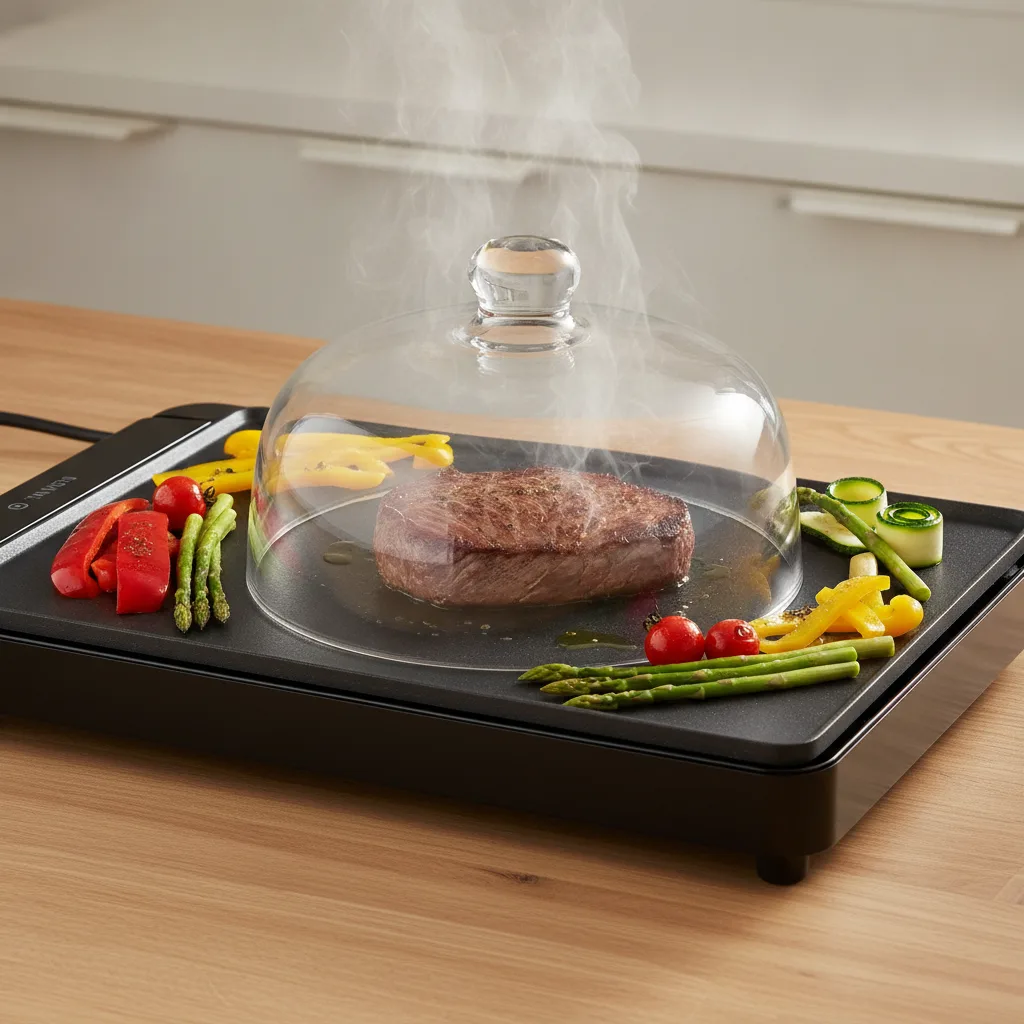
For thick fillets, cooking on the skin side alone is not always enough to cook the centre just right. This is where the cooking dome comes in. Placed over the fillet after two to three minutes of searing, it creates a hot micro-environment around the fish. Radiant heat and the steam released by the cooking juices cook the flesh from above without direct contact with the plate. The result is evenly cooked, pearly, moist flesh, without having to turn the fillet.
This technique is particularly effective on an electric plancha whose plate holds a stable heat. The Planchaelec cooking dome is designed to fit the different plate sizes in the range and can be used for fish as well as thick cuts of meat or vegetables you want to cook covered. You can find all our lids and cooking domes in the dedicated section of the Planchaelec website.
Key takeaway: the cooking dome is not just for professionals. It lets any plancha enthusiast achieve perfect cooking through without turning the food, which is the very essence of one-sided cooking.
Why does salmon skin stick to the plancha, and how can you avoid it?
Why skin sticks to the plancha
Sticking skin is the most common problem when cooking salmon on the plancha. It generally has three causes: a plate that is not hot enough, too little oil or damp skin. To remedy this, start by carefully drying the fillet with kitchen paper before placing it on the plate. Surface moisture creates a steam effect that prevents immediate searing and encourages sticking.
Next, lightly oil the plate or the fillet itself with a light fat that withstands high temperatures, such as sunflower or grapeseed oil. The oil on the plate should be very thin: a few drops spread with kitchen paper are enough. Too much oil causes smoke and can affect the taste of the fish.
Finally, do not move the fillet just after putting it down. Let the skin sear for at least two minutes before checking whether it releases naturally from the plate. A properly seared fillet comes away on its own.
Which fish are suitable for one-sided cooking on the plancha?
Salmon is the ideal candidate for one-sided cooking because of its thick skin and oily flesh, which handles intense heat from one side well. Other fish also lend themselves very well to this technique, provided their skin is tough enough:
- Sea bass: thin but strong skin, delicate white flesh, ideal for quick skin-side searing at 220 °C.
- Gilthead sea bream: silvery skin that becomes very crispy on the plancha, firm flesh that handles one-sided cooking well.
- Mackerel: an oily fish with thick skin, very well suited to one-sided searing, with results similar to salmon.
- Trout: more fragile flesh than salmon but skin strong enough for 3 to 4 minutes of skin-side cooking.
On the other hand, fish with very fragile flesh or sold without skin, such as sole or skinless cod fillets, are less suited to strict one-sided cooking. They need either a quick turn or low-temperature cooking under a dome from the start.
Which plancha should you choose for one-sided cooking of fish?
The specialist buying guides such as Que Choisir recommend looking first at power, plate quality and the ability to maintain temperature when cold food is added. For one-sided cooking of fish, these criteria are even more important than for other types of cooking, because heat-up must be quick and the heat must remain stable throughout searing.
A food-grade stainless steel plate is the best choice for this type of cooking. It offers good thermal inertia, even heat distribution and greater durability than enamelled cast iron for frequent use. Unlike non-stick coatings that scratch over time, stainless steel is easy to clean and its cooking properties do not deteriorate over the years. You can read our guide to choosing your plancha to explore these criteria further.
The usable surface is another criterion not to overlook. To cook several fillets at once without them touching — which is essential for good one-sided searing — you need enough space between the pieces. Spacing the food lets steam escape and stops the fillets stewing instead of searing. Discover the whole range on the electric planchas page of the website.
Cleaning the plate after cooking fish
Cleaning after cooking fish should be done quickly, ideally while the plate is still warm. Bits of skin and cooking juices are much easier to remove while warm than once they have cooled and become encrusted. Use a scraper to loosen residue, then a scouring pad suitable for stainless steel with a specific degreasing cleaner. Avoid ordinary metal scourers, which scratch the surface and damage the plate over time.
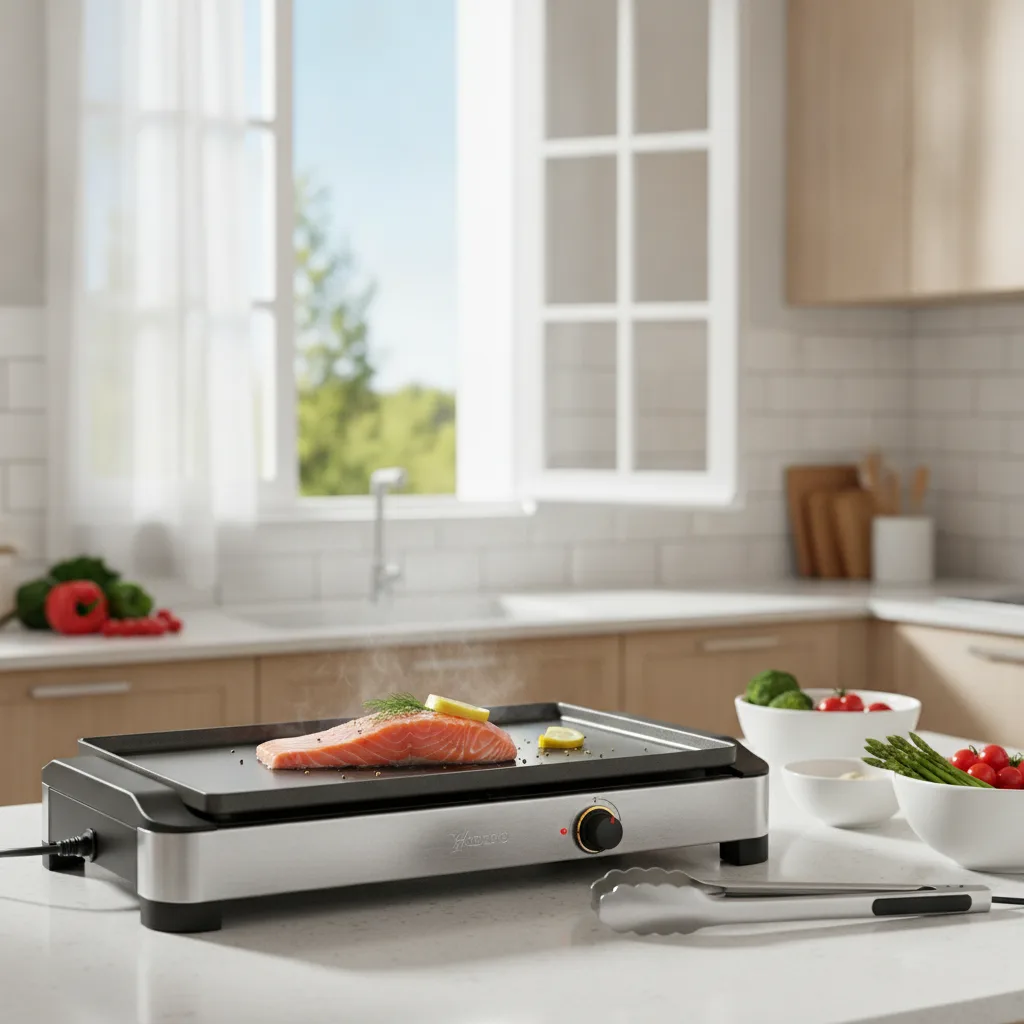
Planchaelec offers a full range ofcleaning accessories designed specifically for stainless steel plates, including scouring pads, ergonomic holders and a suitable degreasing cleaner. Regular maintenance preserves the plate's cooking properties and ensures consistent results over time. To find out more, our stainless steel plancha cleaning guide details all the steps to follow.
Mastering one-sided cooking on the plancha
One-sided cooking on the plancha is an accessible technique that transforms the way you cook salmon at home. By mastering preheating, plate temperature, drying the fillet and using a dome for thick pieces, you will consistently get crispy skin and pearly flesh that is perfectly cooked through.
Choosing an electric plancha with a stainless steel plate and good thermal inertia is the basis of this success. Consistent heat makes all the difference between an amateur result and a restaurant-quality one.
FAQ
Can you use an electric plancha indoors to cook salmon?
Yes, an electric plancha can be used indoors provided the room is well ventilated. Cooking salmon produces little smoke if the plate is properly oiled and the temperature does not exceed 240 °C. See our guide to smoke-free indoor plancha cooking for all the practical tips.
Should you marinate salmon before cooking it on the plancha?
A marinade is possible but should be light and contain no added sugar. Sugar burns quickly at high temperature and can char the skin before it becomes crispy. A squeeze of lemon, olive oil and fresh herbs added after cooking give better results than most marinades.
What is the difference between a lid and a cooking dome on the plancha?
A lid covers the whole surface of the plancha: depending on the model, it protects the appliance when not in use or allows covered cooking over the whole plate. A cooking dome is a smaller accessory placed directly over the food during cooking to create an oven effect and finish cooking it through by convection. Both are available in the Planchaelec lids and domes range.
Is one-sided cooking also suitable for prawns and seafood?
Prawns and scallops are better seared quickly on both sides, as they have no protective skin. One-sided cooking is mainly suited to whole fish or fillets with skin. For seafood, searing for 1 to 2 minutes on each side on a very hot plate gives the best results.
How can you tell if salmon is cooked through without cutting it?
The colour of the flesh on the sides of the fillet is the best indicator. When the flesh turns from translucent red to pearly pink over two-thirds of the fillet's height, it is ideally cooked for salmon that is still slightly pink in the centre. If you prefer it fully cooked, wait until the pearly colour reaches the top of the fillet.