



 +33 4 78 55 45 69
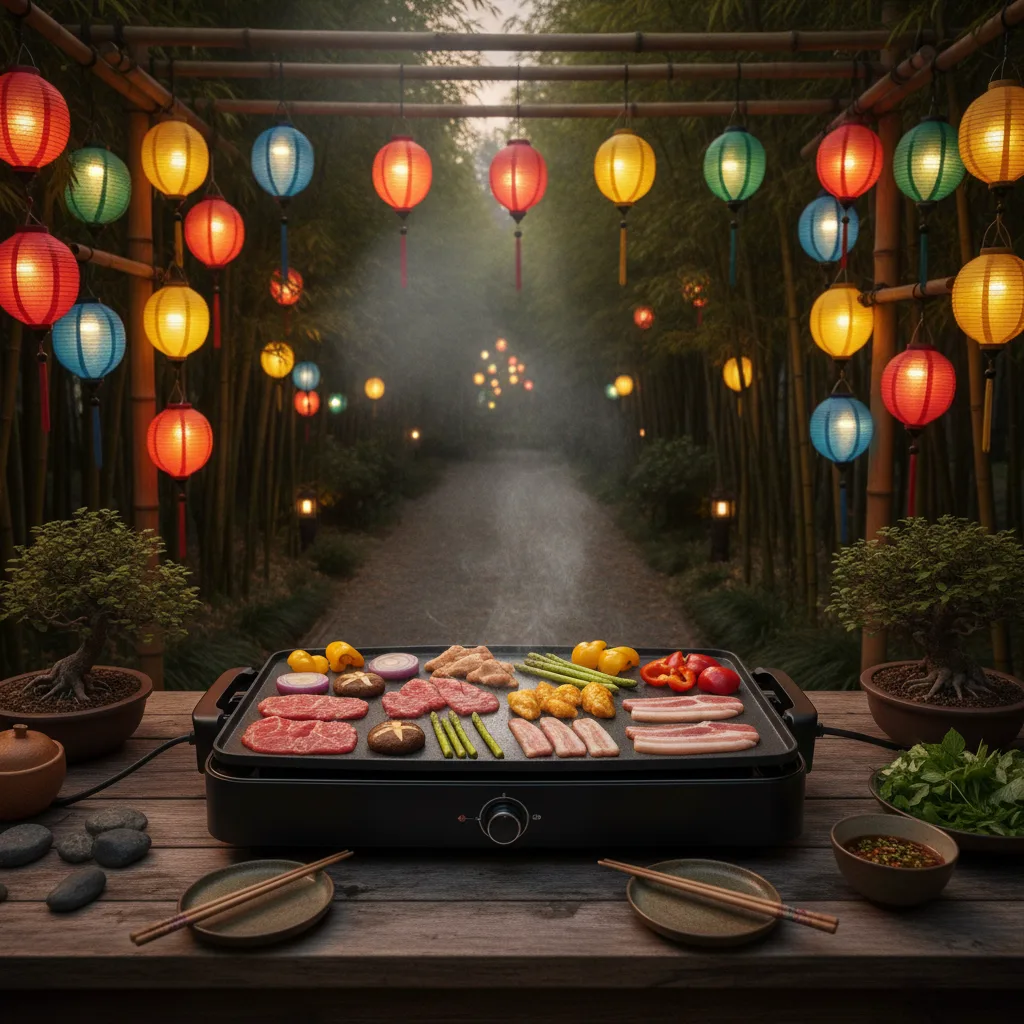
The plancha and Asian cooking share far more than a surface-level affinity. Both rest on the same fundamentals: fast cooking at high temperature, fresh ingredients prepared at the last moment and vibrant flavours carried by generous marinades.
Whether you want to recreate the atmosphere of a Japanese teppanyaki restaurant in your garden, treat your guests to soy-glazed stir-fried beef or cook prawns fragrant with sesame oil, your stainless steel electric plancha is the ideal tool. This guide explains everything, from the technical basics to practical recipes, so you can cook Asian dishes on a plancha like a professional.
Plancha and Asian cooking: the practical guide
Reading time: ~9 min
- Plancha and Asian cooking: the same cooking DNA
- Golden rules for a successful Asian recipe on the plancha
- Temperatures and cooking times: reference table
- Four Asian recipes to make on a plancha
- Asian-style sides and presentation
- Going further with the plancha and world cuisine
- FAQ
Plancha and Asian cooking: the same cooking DNA
The word teppanyaki comes from the Japanese “teppan” (iron plate) and “yaki” (grilled). It therefore literally means cooking on a heated metal plate, exactly like the plancha. Both techniques rely on the same fundamental mechanism: heat passes directly through contact between the plate and the food, triggering the Maillard reaction, the tasty browning that caramelises the juices on the surface while keeping the inside tender.
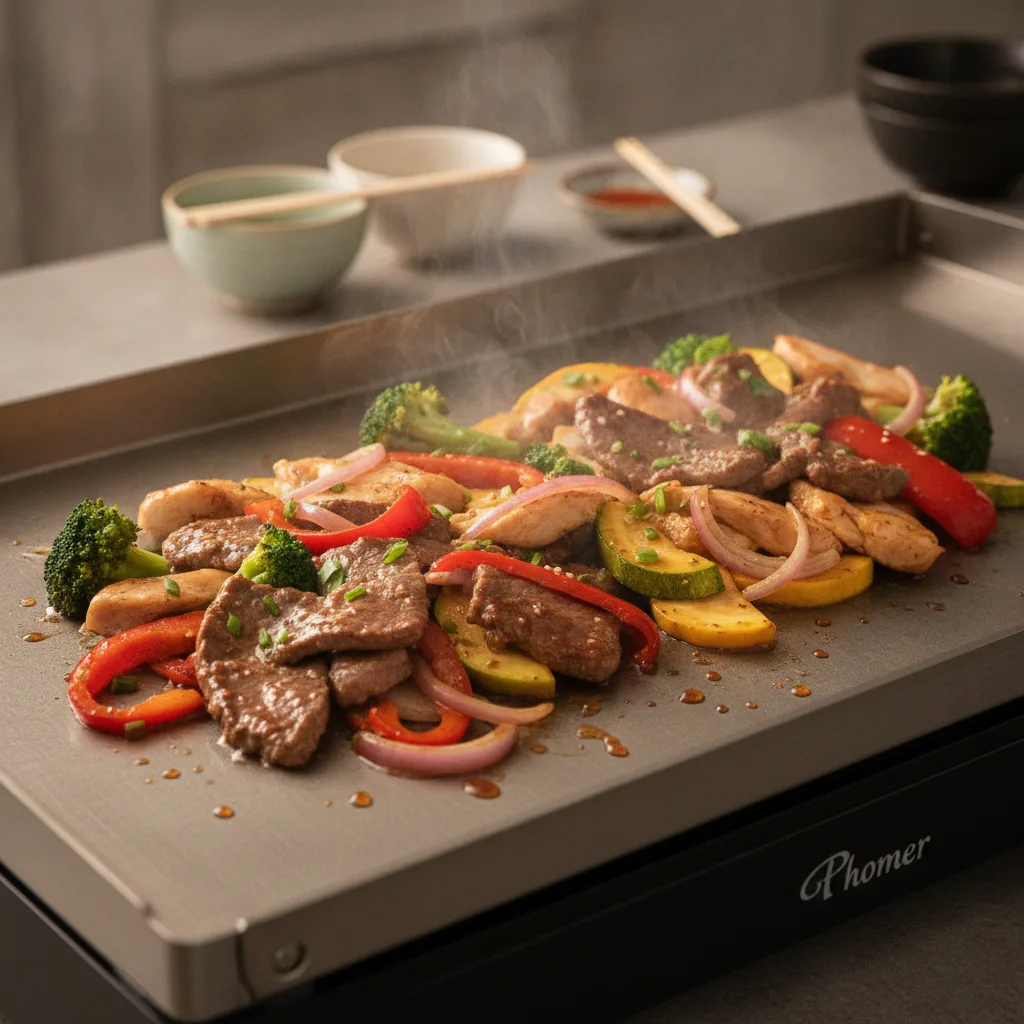
The difference between the two lies mainly in use and cultural context. Teppanyaki is designed for Japanese restaurants and show cooking in front of guests, with a large plate built into a table. The plancha is a more versatile tool, designed for home or semi-professional use, indoors as well as outdoors. Technically, a stainless steel electric plancha heats up quickly, distributes heat evenly and has an easy-to-clean surface, three qualities perfectly suited to the demands of Asian cooking.
Asian cooking, whether Japanese, Chinese, Thai or Vietnamese, relies on short cooking over high heat, fresh produce and powerful aromatic seasonings. These characteristics match exactly what a well-preheated plancha offers. Where a wok requires a fierce flame and a constant tossing technique, the plancha provides a stable, controlled surface, ideal for searing without burning and for handling several ingredients at once thanks to the heat difference between the centre and the edges of the plate.
Good to know — A stainless steel electric plancha like those offered by Planchaelec heats up quickly to high temperatures, in the region of 180 °C to 250 °C, a temperature range perfectly suited to Asian cooking, which generally calls for quick searing over high heat.
Golden rules for a successful Asian recipe on the plancha
Before placing the first ingredient on the plate, a few simple principles make all the difference between a bland result and a dish that impresses.
Umami marinade: the key to Asian flavours
Asian cooking draws much of its depth of flavour from marinades built around umami, the savoury fifth taste provided by soy sauce, miso or fish sauce (nuoc mam). An effective plancha marinade generally combines soy sauce (for salt and umami), mirin or honey (for caramelisation), sesame oil (for fragrance), freshly grated ginger and crushed garlic. You can add rice vinegar for acidity, chilli or hoisin sauce depending on the flavour profile you want.
Marinating time depends on the type of food. For white meat such as chicken, allow at least two hours and ideally six hours in the fridge so the flavours penetrate deeply. For thinly sliced beef, thirty minutes is enough. For fish and prawns, fifteen to twenty minutes at most is recommended, because the acidity of marinades can start to break down the flesh beyond that.
Preheating and managing heat zones
Preheating the plancha is non-negotiable. Let your plancha heat up for eight to ten minutes before you start cooking. A plate that is not hot enough creates a steaming effect that softens food instead of searing it. For Asian cooking, aim for 220 °C to 250 °C for searing meat and seafood, and a slightly gentler zone of around 180 °C to 200 °C for vegetables and finishing.
On a stainless steel electric plancha of sufficient size, such as the Lux 830 electric plancha, you have plenty of space to work on several zones at once. Place the meat in the centre, where the heat is highest, and push the vegetables towards the edges to keep them warm without overcooking. This heat-zone management mirrors the logic of the wok exactly, where the scorching centre sears and the gentler sides finish the cooking.
Keeping vegetables crunchy
Crunchy vegetables are a signature of Asian cooking. To keep them that way on the plancha, add the vegetables last, after searing the protein. Cut them into thin, even pieces for quick, uniform cooking. Bean sprouts, for example, need only thirty seconds to a minute on a very hot plate. Peppers, courgettes and shiitake mushrooms need two to three minutes. Drizzle with a little soy sauce at the end and remove from the heat immediately to stop the cooking.
Temperatures and cooking times: reference table
Here is a practical guide to adapting the cooking to each ingredient when preparing Asian dishes on the plancha.
| Ingredient | Plancha temperature | Cooking time | Key tip |
|---|---|---|---|
| Chicken (thin slices) | 220 to 240 °C | 4 to 5 min per side | Drain off the marinade well before placing on the plate |
| Beef (thin strips) | 240 to 250 °C | 1 to 2 min per side | Sear without moving to get a golden crust |
| Peeled prawns | 220 to 230 °C | 2 to 3 min per side | Turn only once to avoid overcooking |
| Salmon (fillets) | 200 to 220 °C | 3 to 4 min per side | Start skin-side down for crispy skin |
| Vegetables (peppers, courgettes) | 180 to 200 °C | 2 to 3 min | Cut into thin strips, stir regularly |
| Bean sprouts | 220 to 230 °C | 30 to 60 seconds | Add at the very end, season off the heat |
| Yakitori skewers | 220 to 240 °C | 8 to 10 min (turning) | Brush with tare sauce halfway through |
Four Asian recipes to make on a plancha
Plancha chicken yakitori
Yakitori are Japanese grilled skewers, traditionally cooked over glowing charcoal but perfectly achievable on a plancha. Cut chicken breasts into three-centimetre cubes and marinate them for two hours in a mixture of soy sauce, mirin, honey and a little freshly grated ginger. Thread the pieces onto wooden skewers soaked in water beforehand. Place on a plancha preheated to 230 °C, turn regularly and brush with some extra reduced marinade halfway through. Serve with sliced spring onions and sesame seeds.
Stir-fried beef with soy sauce and bean sprouts
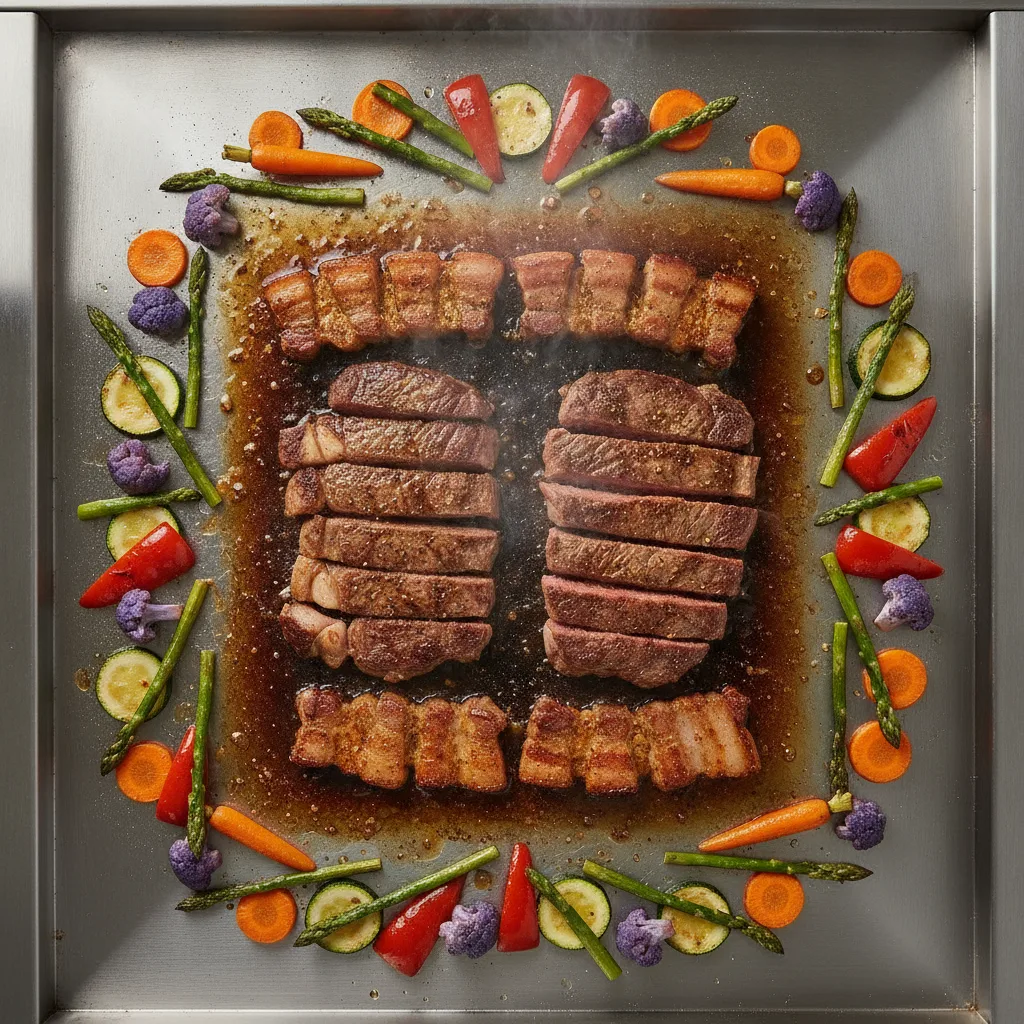
This dish is directly inspired by the beef stir-fries of Sino-Vietnamese cooking. Cut a rump steak into thin strips and marinate for thirty minutes in soy sauce, sesame oil, crushed garlic, ginger and a pinch of Chinese five-spice. Sear the strips in small batches on a very hot plancha (250 °C) to avoid steaming. Add the bean sprouts at the very end, season with a dash of soy sauce and sprinkle with Thai basil, fresh coriander and a touch of Sriracha for those who like it spicy.
Teriyaki-style salmon
Teriyaki sauce is one of the most iconic marinades in Japanese cooking. Mix soy sauce, mirin, honey and a little rice vinegar. Marinate salmon fillets for fifteen minutes at most. Place skin-side down on a plancha at 210 °C, cook for three to four minutes without touching, then turn and coat with the rest of the marinade. The sauce caramelises in a few seconds on the hot plate and forms a glossy, tasty glaze. Serve with white rice and vegetables stir-fried with sesame.
Lemongrass and fish sauce prawns
This Vietnamese-inspired dish is ready in under ten minutes. Marinate peeled prawns for fifteen minutes in fish sauce, lime juice, garlic, finely sliced lemongrass and a little sugar. Sear for two to three minutes per side on a plancha at 225 °C. Serve on a bed of rice noodles, sprinkled with fresh coriander, mint and crushed cashew nuts. This kind of dish perfectly illustrates the convivial dining the plancha makes possible, with everyone putting together their own plate as they like.
Key takeaway — To stop sweet marinades from burning on the plate, always drain the food slightly before placing it on the plancha. You can then coat it with the rest of the marinade at the end of cooking for a lacquered finish without any risk of charring.
Asian-style sides and presentation
The plancha and Asian cooking also go together in the way food is served. Several side dishes let you put together complete, convivial meals right around the plancha. Steamed white rice is the most versatile base: it soaks up the cooking juices and sauces. Rice noodles or yakisoba (Japanese fried noodles) can be reheated directly on the plancha at the end of cooking with a drizzle of sesame oil. For a lighter, festive version, offer crisp lettuce leaves in which everyone wraps their grilled meat with fresh herbs and a spring roll dipping sauce, in the spirit of a reinvented bo bun.
Accessories also play an important role in getting the most out of your plancha in this style of cooking. A scraper spatula lets you scrape up the caramelised juices and work them into the vegetables for extra flavour. A cooking dome speeds up the cooking of thick pieces by trapping the heat. Discover the full range of Planchaelec accessories to equip your plancha for your cooking needs.
To explore even more of what your plancha can do, read our complete guide on how to cook on a plancha and our page dedicated to using an electric plancha indoors and outdoors. If you want to choose the model best suited to your cooking ambitions, our plancha buying guide takes you through it step by step.
Going further with the plancha and world cuisine
Opening your plancha up to other world cuisines
The plancha and Asian cooking form a natural, coherent pairing, based on identical cooking principles: intense heat, speed, respect for the ingredients and generous flavours. With a good marinade, careful preheating and a few simple techniques borrowed from Japanese teppanyaki, your stainless steel electric plancha becomes a true world-cuisine tool. From yakitori skewers to fish sauce prawns and soy-glazed stir-fried beef, the possibilities are as numerous as they are delicious. All that remains is to switch on the plate and let the aromas do their work.
FAQ
Can you cook okonomiyaki on an electric plancha?
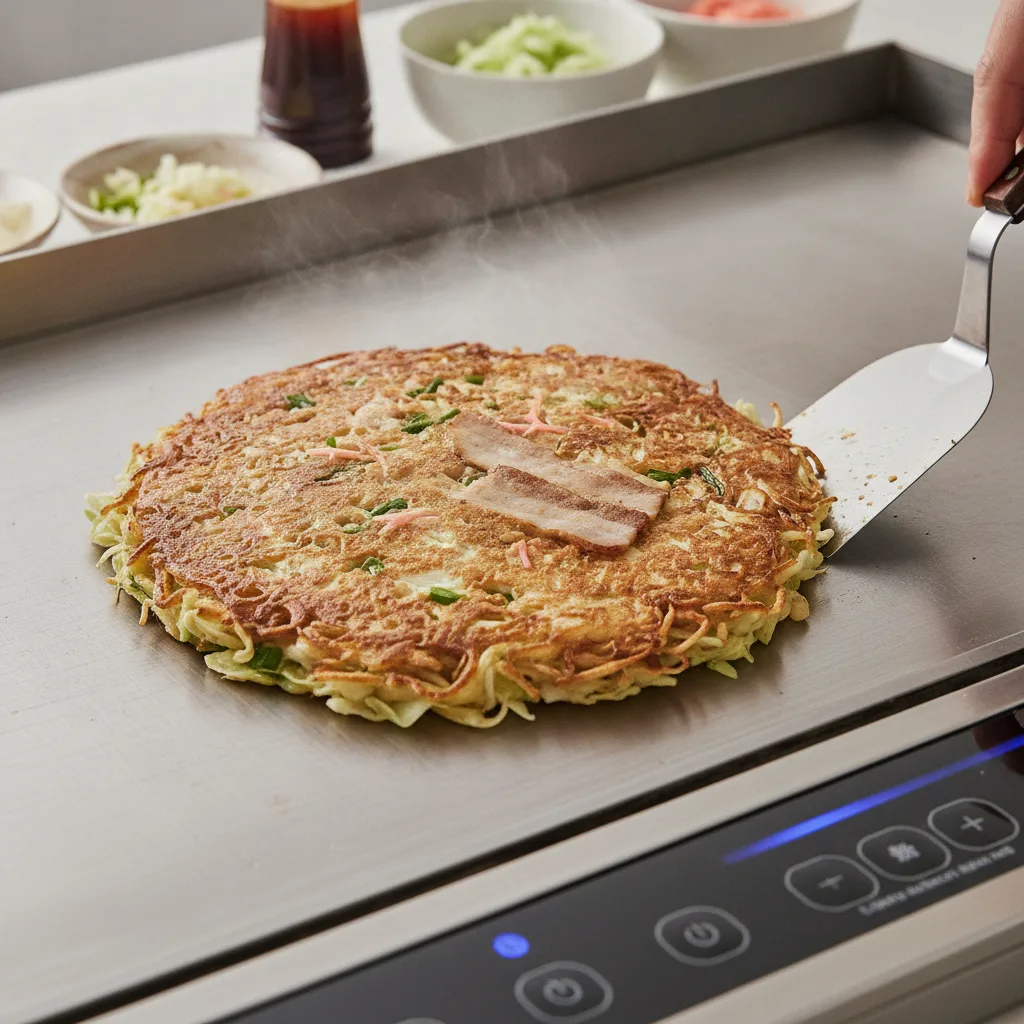
Yes, absolutely. Okonomiyaki is a kind of Japanese savoury pancake made with cabbage, eggs and flour, cooked on a hot plate. A stainless steel electric plancha is perfectly suited to this type of dish: the flat surface and even heat allow both sides to cook evenly. Preheat to around 180 °C and lightly oil the plate before pouring in the batter.
Which oil should you use for Asian cooking on the plancha?
Choose oils with a high smoke point for cooking on a hot plancha: groundnut oil, sunflower oil or grapeseed oil are the most suitable. Sesame oil, which is very fragrant, should be used sparingly at the end of cooking or in marinades, as it does not withstand very high temperatures well without breaking down.
Can you make fried rice directly on a plancha?
Yes, using rice cooked the day before and well chilled. Spread it on the plancha preheated to 220 °C with a drizzle of oil, let it toast without stirring for two minutes so it forms a light crust, then mix with a spatula. Add vegetables, beaten eggs and soy sauce for a quick Cantonese-style fried rice.
Is the plancha suitable for cooking gyoza?
Gyoza (Japanese pan-fried dumplings) are ideally cooked on a plancha. Place them flat on the oiled plate at 200 °C, let the bottoms brown for two minutes, then pour in a little water and cover with a cooking dome to finish cooking in the steam. The result: a crispy base and soft dough, just like in a Japanese restaurant.
How do you clean your plancha after cooking with sweet Asian sauces?
Marinades made with honey or mirin caramelise on the plate and can leave sticky residue. Scrape immediately with a scraper spatula while the plate is still hot, then pour on a little water to loosen the cooking juices. Then use an abrasive pad suitable for stainless steel. Find all the detailed advice in our stainless steel plancha cleaning guide.