



 +33 4 78 55 45 69
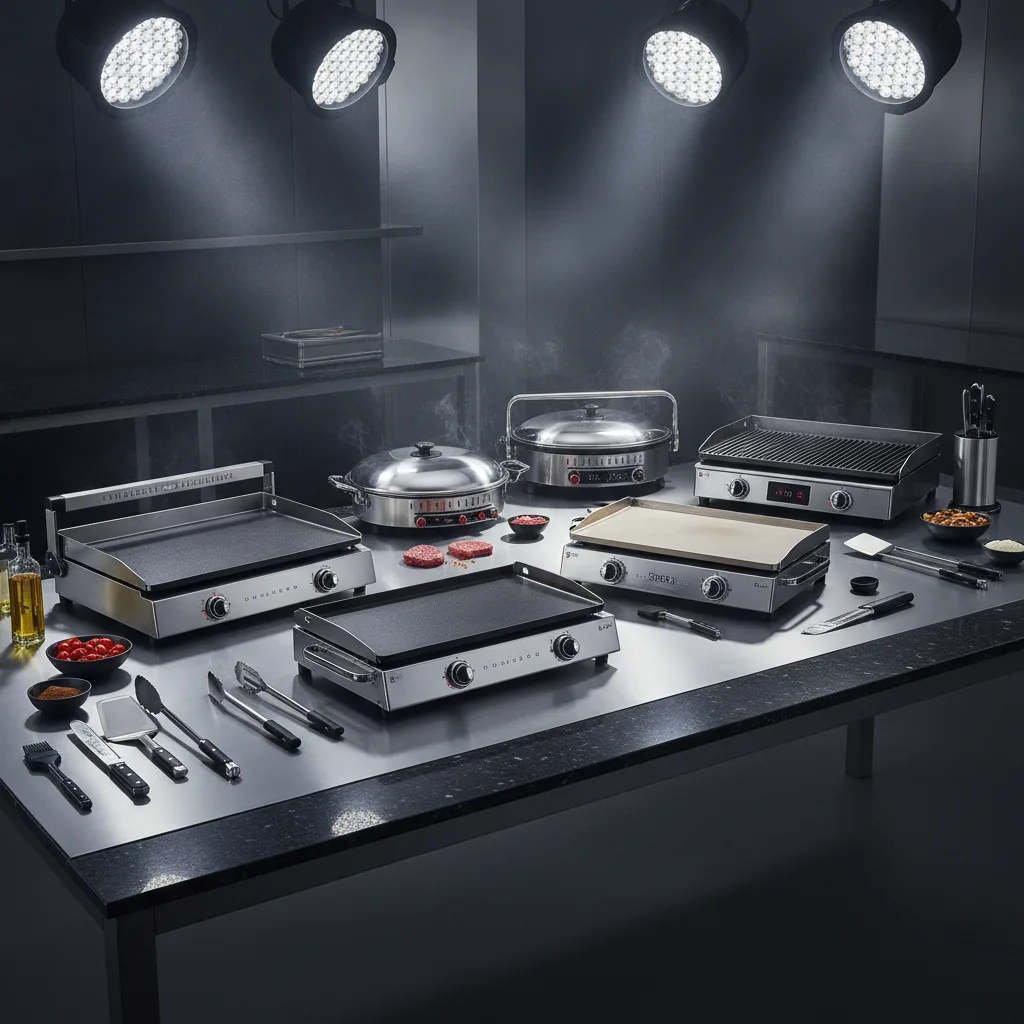
The electric plancha market has grown considerably in recent years, and it is not always easy to find your way around. Between entry-level appliances and high-end models, there are more and more offers, with claims that are sometimes hard to check.
Rather than comparing brands, this guide gives you the objective, verifiable criteria for judging any electric plancha: power, plate material, evenness of heat, maintenance, accessories and after-sales service. Whether you cook for the family on a large terrace or for two on a balcony, you will know what to look for before you buy.
How to compare electric planchas: the right criteria
Reading time: ~7 min
- Summary
- Method: how to compare electric planchas objectively?
- Planchaelec: what we actually offer
- Plate types compared criterion by criterion
- Durability and maintenance: what matters in the long run
- Which electric plancha for which profile?
- Our advice
- FAQ
Summary
- Method: the criteria to use when comparing planchas are power, cooking surface, plate material, heat-up time, evenness of heat, maintenance and guarantee.
- Planchaelec in detail: our planchas have food-grade stainless steel plates, with a modular range and dedicated accessories.
- Plate comparison: stainless steel, enamelled cast iron, enamelled steel and non-stick coating are analysed against the same criteria.
- Durability: how well the plate lasts and the availability of spare parts matter as much as the purchase price.
- Which plancha for which profile: depending on your set-up (large family, terrace, intensive use), certain formats are the obvious choice.
- Our advice: a clear summary of which criteria to prioritise according to your use and budget.
Method: how to compare electric planchas objectively?
Performance criteria to use
For a comparison to be useful, it has to be based on precise technical criteria rather than general impressions. The first step is to note the power in watts and relate it to the cooking surface (watts per cm²), which gives a much more reliable idea of how quickly the plancha can sear food. A model rated at 2,200 W over 1,200 cm² does not perform the same as a model with the same power over 2,000 cm².
Heat-up time can be checked with an infrared thermometer, by timing how long it takes to reach 250 °C in the centre of the plate. Evenness of heat can then be assessed with a simple test: lay slices of bread or rounds of vegetables over the whole surface and look at the differences in colour. A plate with cold zones around the edge reveals poorly distributed heating.
Finally, ease of cleaning is judged after a greasy cook: how long residues take to come off, how effective the grease collection tray is and how well the surface stands up to a scraper or abrasive pads.
Planchaelec: what we actually offer
Planchaelec's positioning
Planchaelec is a French brand specialising in electric planchas, with food-grade stainless steel cooking plates. Stainless steel has no coating that can wear or flake, stands up well to scrapers and repeated cleaning, and resists thermal shock. We offer several ranges, including the Néo Plancha and the Lux Plancha, available in different widths to suit the number of guests.
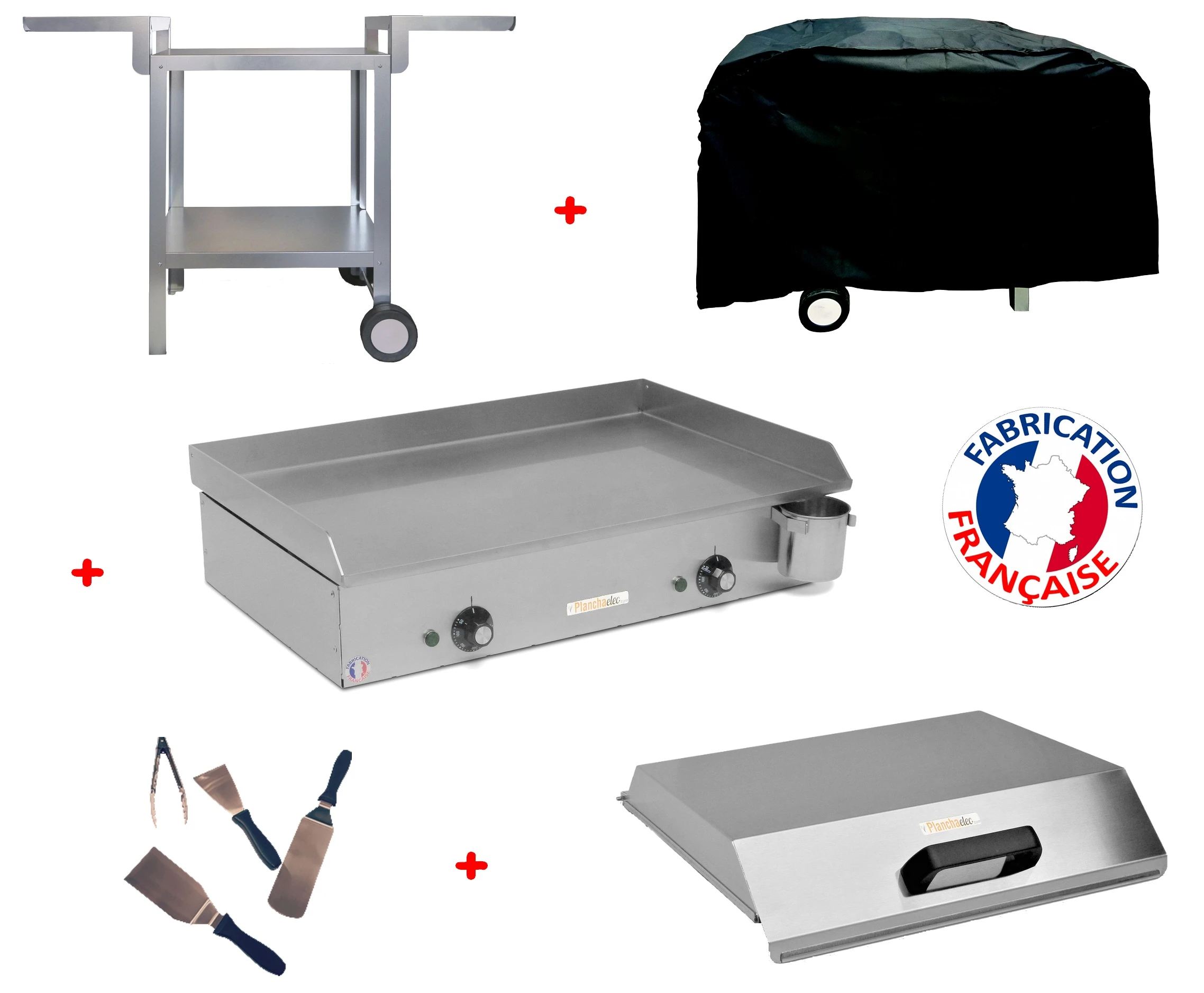
Our models have an adjustable thermostat that lets you reach high temperatures to sear meat, while also allowing gentler cooking for delicate fish or vegetables. For outdoor use, we offer trolleys and protective covers. Spare parts and accessories are available directly on our website, making it easier to look after your equipment for years.
Good to know
We also offer complete packs including the plancha, utensils and cleaning products suitable for stainless steel, so you can get started without having to look for compatible accessories. The two-year legal guarantee of conformity applies, as for any household appliance sold in France.
Plate types compared criterion by criterion
The plate material is the criterion that most affects the lifespan and maintenance of a plancha. Here is a comparison table of the main materials found on the market, for guidance only: actual performance also depends on the thickness of the plate and the build quality.
| Criterion | Stainless steel | Enamelled cast iron | Enamelled steel | Non-stick coating |
|---|---|---|---|---|
| Metal utensils | Yes | With care (enamel sensitive to knocks) | With care | Not recommended |
| Scratch resistance | Good | Good | Average | Poor |
| Evenness of heat | Good (depending on thickness) | Very good | Average | Variable |
| Heat-up time | Fast | Slower | Fast | Fast |
| Cleaning | Scraper, abrasive pad, degreaser | Sponge, avoid knocks | Soft sponge | Soft sponge, no abrasives |
| Cleaning while warm | Yes | Yes, with care | Yes, with care | With care |
| Durability | Very long | Long if the enamel stays intact | Average | Limited by coating wear |
| Weight | Medium | High | Light to medium | Light |
Stainless steel or non-stick coating?
Planchas with a non-stick coating are easy to find and appealing for their affordable price and ease of use at first. However, the coating wears over time, especially if you use metal utensils or clean intensively.
A stainless steel plate does not have this problem: it can take a scraper, suitable abrasive pads and dedicated degreasing cleaners without losing its properties. You simply need to oil it lightly and preheat it properly to stop food sticking. For a family that cooks often and wants equipment that lasts, stainless steel is generally the most cost-effective choice.
Stainless steel or an enamelled plate?
Enamelled cast iron offers excellent thermal inertia and very even heat, but it is heavy, slower to heat up and its enamel can chip if knocked. Enamelled steel is lighter and heats quickly, but it is less durable over time.
Stainless steel offers a good compromise: fast heat-up, maintenance without any particular constraints and great longevity. The quality of heating then depends mainly on the thickness of the plate and the layout of the heating elements, two points to check on the technical data sheet.
Electric plancha or gas plancha?
Gas planchas are often chosen for exclusively outdoor use and high power. The electric plancha can be used both indoors and outdoors (sheltered from rain), with no gas bottle to manage, and a thermostat that makes it easy to set the temperature precisely.
For use on a terrace, a stable trolley and a protective cover let you enjoy an electric plancha in excellent conditions. Just make sure your electrical installation is suitable (outdoor socket protected by a 30 mA RCD).
Durability and maintenance: what matters in the long run
Points to check before buying
A plancha's durability depends as much on the plate as on the maintenance it allows. A stainless steel plate that is well looked after with the right products cleans effectively and keeps its qualities for years. To help you, see our stainless steel plancha cleaning guide and our dedicated cleaning accessories.
Also check the availability of spare parts and accessories, how easy it is to reach after-sales service and the length of the guarantee. A plancha that costs more to buy can turn out to be cheaper in the long run if it does not need replacing after a few seasons.
Key point
To test how evenly an electric plancha heats at home, simply lay slices of sandwich bread over the whole surface after preheating and check how evenly they brown after two minutes. A quality plate will give uniform browning from the centre to the edges.
Which electric plancha for which profile?
Choosing an electric plancha depends above all on how you will use it. For a family of six or more, you need a large enough cooking surface, such as the Lux 830 Plancha which offers a large surface suited to convivial meals. For a couple or use on a balcony, the Néo 420 Plancha is more compact while keeping all the qualities of the stainless steel plate. For those who love cooking on the terrace, trolleys turn the plancha into a real outdoor cooking station, stable and practical.
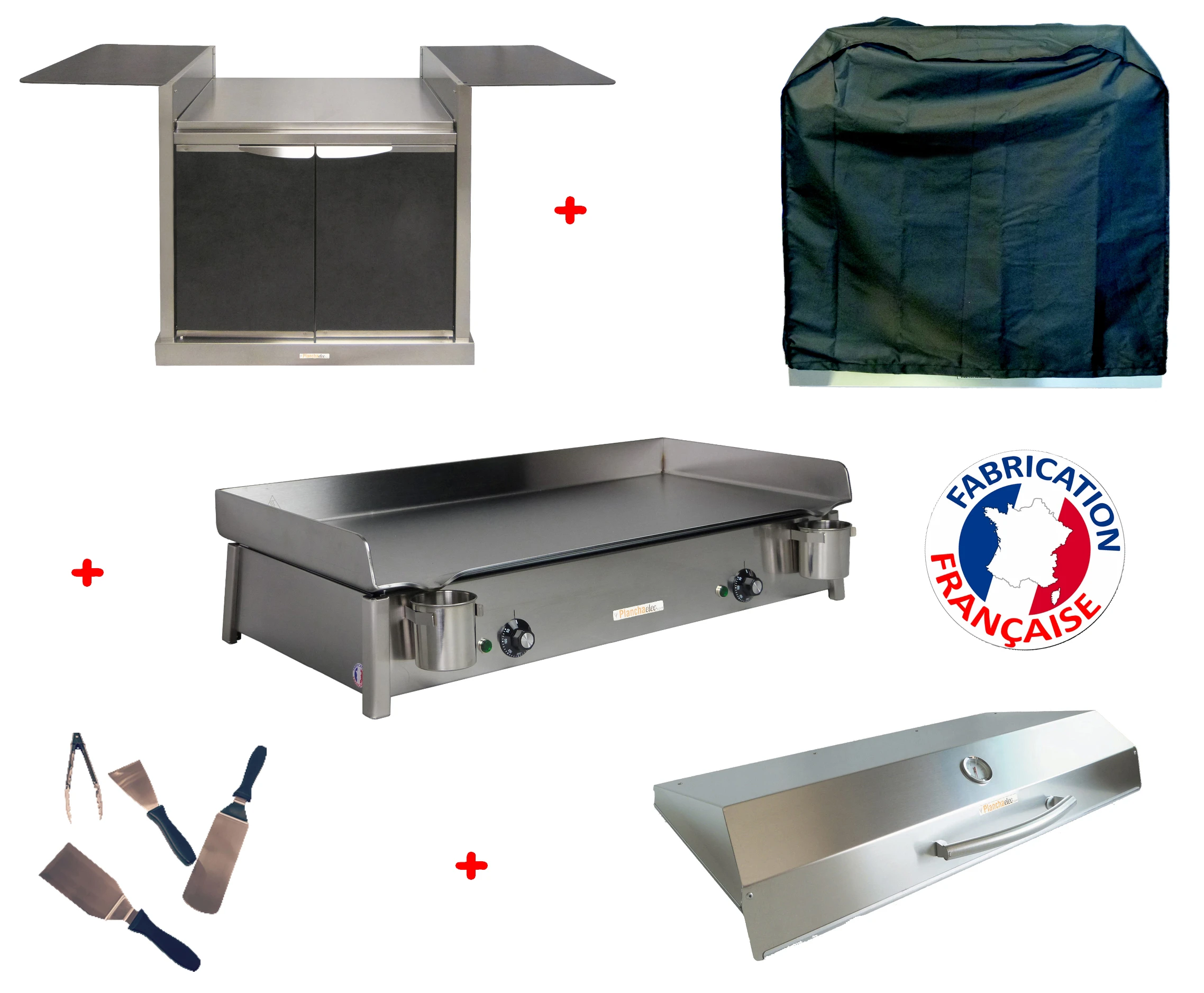
Intensive use, meaning several times a week, naturally points towards a stainless steel plate rather than a non-stick or enamelled coating that will wear more quickly. Conversely, for very occasional use and a tight budget, an entry-level model may be enough. The key question is therefore less the purchase price than the cost over time, taking into account the durability of the materials and the availability of after-sales service.
Our advice
To compare electric planchas properly, focus on a few verifiable criteria: power relative to surface area, plate material and thickness, evenness of heat, ease of maintenance, availability of spare parts and guarantee. These, far more than the brand or the price tag, will determine your satisfaction in the long term.
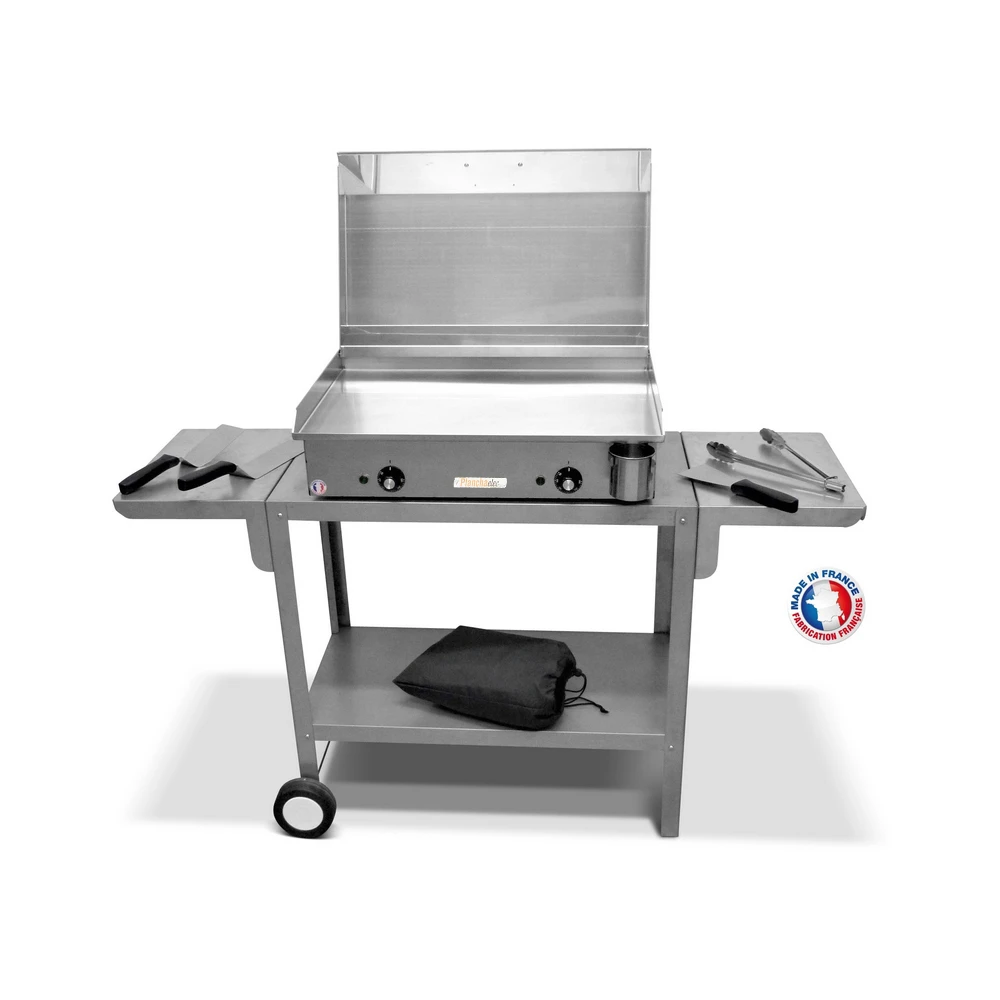
If you are looking for durable equipment with a stainless steel plate, accessible after-sales service and available accessories, our planchas are designed to meet these criteria. To explore the models and compare configurations for your situation, go directly to our full range of electric planchas or our guide to choosing a plancha.
FAQ
Do Planchaelec planchas have a guarantee in addition to the legal guarantee?
Yes. In addition to the legal guarantee of conformity, our general terms and conditions provide a 2-year guarantee on electrical products for domestic use and a special 5-year guarantee on plancha cooking plates. Full details are given in our terms and conditions.
Can a Planchaelec electric plancha be used indoors?
Yes, Planchaelec electric planchas can be used indoors, provided there is good ventilation. Plancha cooking produces less smoke than a traditional barbecue, especially if you avoid overheating the plate with too much fat. See our specific tips on using the plancha indoors without smoke.
What power does an electric plancha need for fast, even cooking?
For fast, even cooking, choose a power rating suited to the size of the plate: what matters is the ratio of watts to surface area, not the figure alone. Beyond total power, the ratio of watts per cm² of surface is the most relevant criterion: the higher it is, the faster the plancha heats up and the better it holds its heat when cooking several pieces at once.
How do you look after a stainless steel plate without damaging it?
A stainless steel plate is cleaned with hot water, a suitable scraper and, if necessary, a dedicated degreasing cleaner. Unlike non-stick plates, it can take suitable abrasive pads. Avoid steel wool and chlorine-based products, which can attack stainless steel. See our dedicated stainless steel plancha cleaning page and our compatible cleaning products.
Can an electric plancha stay on the terrace all year round?
It is best to protect it between uses with a suitable cover, store it away from prolonged damp and never use it in the rain. The stainless steel plate stands up well to temperature changes, and trolleys allow stable outdoor use. We offer several models of protective covers to extend the life of your equipment.
Electric plancha or gas plancha: which to choose?
It all depends on how you use it. A gas plancha is suited to outdoor use only, with a bottle to manage. An electric plancha can be used indoors and outdoors (sheltered from rain), plugs into an ordinary socket and offers precise temperature control thanks to its thermostat. For versatile use all year round, the electric plancha is often the most practical.