



 +33 4 78 55 45 69

When you think of plancha and wine, you immediately picture a big table, food sizzling on stainless steel and glasses clinking. Yet when it comes to choosing the bottle, doubt soon creeps in: red, white, rosé, sparkling… which colour should you go for with your plancha recipes? The good news: a few simple rules help you find the pairing that will show off your king prawns, grilled beef or crunchy vegetables. Drawing on the principles of wine pairing, this guide offers practical combinations for successful plancha & wine evenings, with a convivial made-in-France touch.
Plancha and wine pairing: our tips for choosing well
Reading time: ~12 min
- The golden rules for pairing plancha food and wine
- Which wine with a red meat plancha?
- Which wine with a poultry and white meat plancha?
- Which wine with a fish and seafood plancha?
- Vegetable plancha: vegetarian and vegan pairings
- Marinades, spices and sauces: how to adapt your wine
- Bonus: don't confuse an aperitif board with a plancha
- A few ideas to enhance the plancha experience
- FAQ
The golden rules for pairing plancha food and wine
Before talking about grape varieties and appellations, three principles remain essential: balance between the intensity of the dish and the wine, the decisive role of the marinade or sauce, and a serving temperature suited to the summer setting.
Respect the intensity of the dish
The wine should neither overpower the dish nor seem too timid: a strongly flavoured plancha of beef or lamb can take structured, tannic reds, while fish, seafood, poultry and grilled vegetables appreciate fresh, fruity wines with low tannins. The grilled aromas produced by the Maillard reaction pair well with intense fruit or a touch of richness, like that of some Chardonnays or food-friendly rosés.
Take the marinade and sauce into account
Chicken simply seasoned with lemon doesn't call for the same bottle as chicken in a spicy soy-honey sauce: simple marinades (olive oil, herbs, lemon) suit crisp, fresh wines, while exotic or spicy marinades are better with more expressive wines that still have good freshness.
Adapt the serving temperature
A wine that is too warm quickly feels heavy in summer; whites and rosés are best served well chilled and reds benefit from being slightly cooled (15–17 °C) to make them easier to drink. Suitable glasses – narrow for fresh wines, wider for reds – optimise the perception of aromas.
Which wine with a red meat plancha?
Grilled beef and full-bodied reds
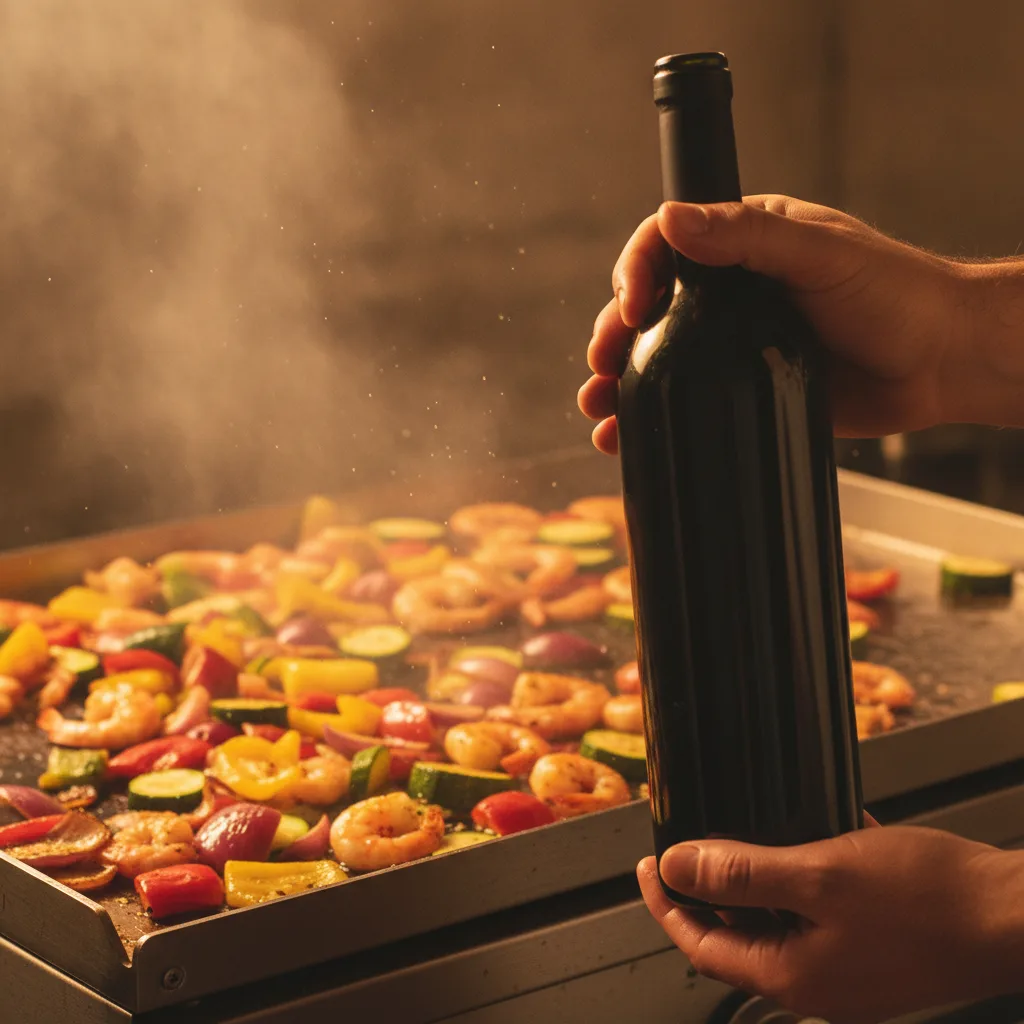
On a rare rib-eye, sirloin or thick steak, the meat develops intense smoky notes; choose a well-structured red Bordeaux or a Northern Rhône Syrah whose tannins match the texture and highlight the grilled flavours.
Skewers and thin cuts of beef
For marinated strips of beef or quickly cooked skewers, the intensity is lower; a juicy Pinot Noir or a Beaujolais-style Gamay, fresher and fruitier, goes well with the meat without making the meal heavy.
Which wine with a poultry and white meat plancha?
Simply grilled chicken and pork
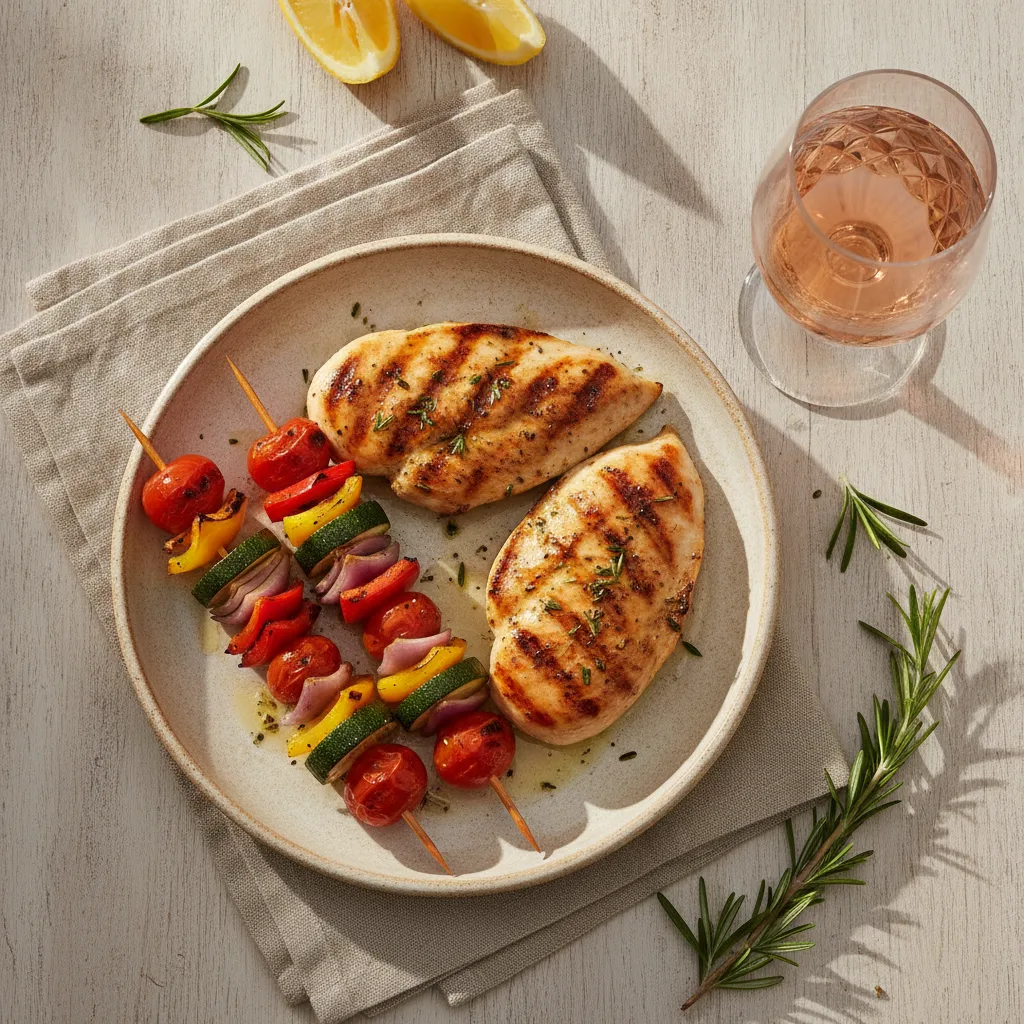
Chicken breasts, turkey skewers or herb pork chops remain delicate; go for light reds (Gamay, supple Pinot Noir) or dry rosés with a little body: fruit and freshness highlight their golden side without harshness.
Bold and spicy marinades
With a paprika, curry or honey-mustard marinade, the dish becomes more complex; choose full-bodied, slightly spicy rosés (Côtes du Rhône, Languedoc) or fruity reds with a hint of spice that remain easy to drink, so as to follow the aromatic intensity without too much tannin.
Which wine with a fish and seafood plancha?
White fish on the plancha
Sea bream, sea bass, cod or pollock with crispy skin call for a dry, fresh white: a lively, crisp unoaked Chardonnay or a Sauvignon Blanc with good tension, echoing the lemony, herbal notes often used.
Salmon, tuna and oily fish
With the richer texture of salmon or tuna, serve a slightly rounder Chardonnay or an aromatic but balanced white that can stand up to a rich marinade (olive oil, soy, honey, mild spices).
King prawns, prawns and shellfish
Grilled king prawns, briny and slightly sweet, go well with a Chardonnay with ripe fruit and a little richness; for a festive pairing, Champagne or a sparkling rosé goes wonderfully with the crunch and the grilled aromas while remaining light.
Vegetable plancha: vegetarian and vegan pairings
Peppers, courgettes, tomatoes, aubergines, mushrooms or spring onions are perfect for the plancha. Balanced Burgundy whites offering freshness and roundness, very dry Provence-style rosés or sparkling wines (crémant, brut Champagne) respect the crunch and delicacy of vegetables while enhancing the roasted aromas.
Marinades, spices and sauces: how to adapt your wine
Before opening a bottle, ask yourself: is the marinade fresh or sweet and spicy? Is there a sauce on the side? Is the dish light or closer to a richer world cuisine? The table below gives a few quick pointers.
| Type of marinade | Recommended wine style |
|---|---|
| Lemon, herbs, garlic | Fresh, taut whites; lively rosés; very light reds |
| Honey, soy, barbecue | Fuller whites or structured rosés; fruity but round reds |
| Pronounced spices | Aromatic whites with good acidity; food-friendly rosés (avoid very tannic reds) |
For a large table, opening two different bottles lets everyone find something they like.
Bonus: don't confuse an aperitif board with a plancha
Charcuterie and cheese sometimes appear before or alongside the plancha. With a charcuterie board, a light, fruity red (Beaujolais, supple Côtes du Rhône, Pinot Noir) or a characterful rosé stands up to the fat and salt. Creamy cheeses prefer a lively, aromatic white (unoaked Chardonnay, Sauvignon, dry Riesling). A white Mâcon or a full-bodied Provence rosé remains versatile when the aperitif board and the plancha share the evening.
A few ideas to enhance the plancha experience
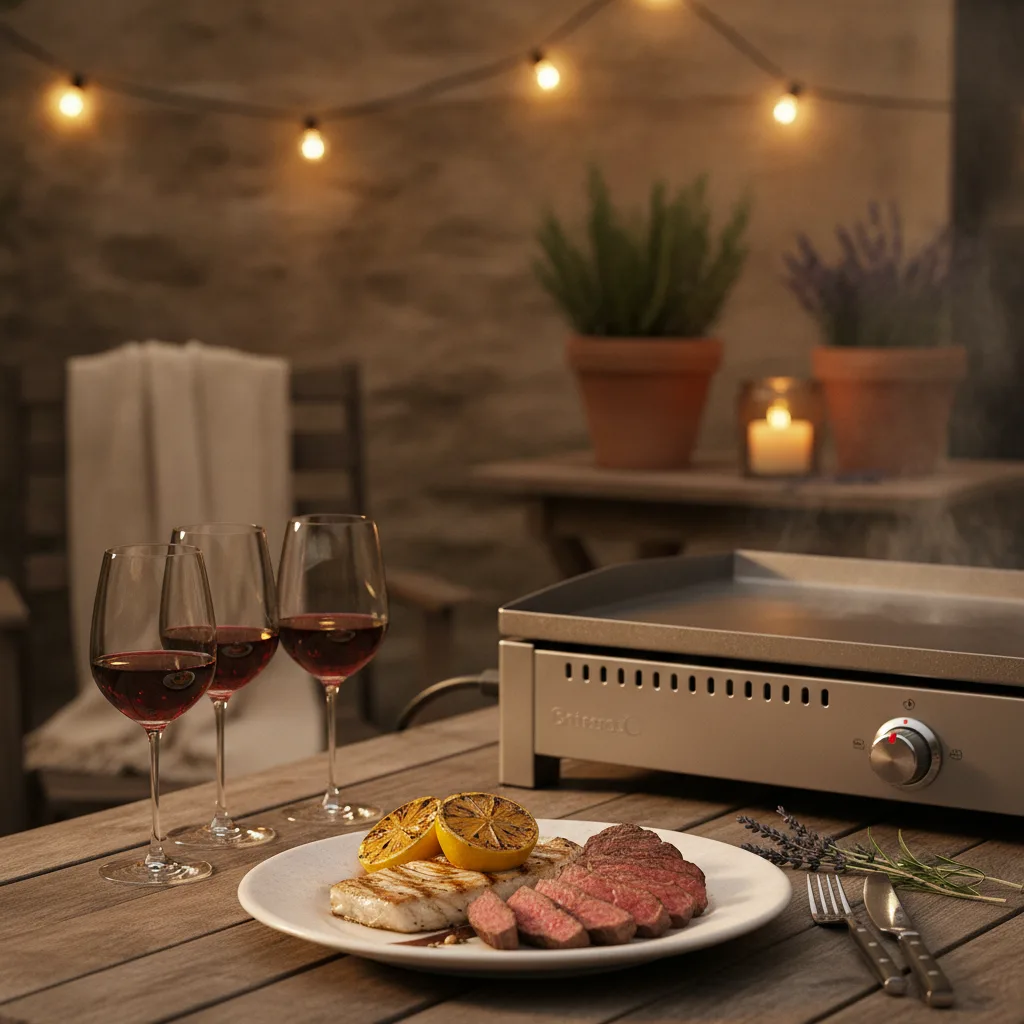
Cooking precision has a direct effect on food and wine pairing. With a quality stainless steel electric plancha like those from Planchaelec, you control the temperature over the whole surface, achieve fine caramelisation without burning and can cook fish, meat and vegetables at the same time. This control avoids the bitter burnt taste that would spoil the wine. User guides and comparisons are available on planchaelec.com.
FAQ
Can you serve red wine with a fish plancha?
Yes, as long as you choose very light reds with low tannins, served slightly chilled. A Gamay or a supple Pinot Noir goes well with oily fish (salmon, tuna), especially if the marinade is a little sweet or spicy. Powerful, tannic reds are best avoided.
Which wine for a mixed meat and fish plancha?
On a plancha combining beef skewers, chicken, king prawns and vegetables, the most versatile choice remains a structured rosé or a full but fresh white (for example a balanced Chardonnay). You can also offer a light red for red meat lovers.
At what temperature should you serve wine in summer for a plancha evening?
| Wine colour | Ideal temperature |
|---|---|
| White | 8–10 °C |
| Rosé | 9–11 °C |
| Light red | 15–17 °C |
Be careful not to over-chill reds: take them out of the fridge a few minutes before serving to let the aromas open up. Pairing plancha food with wine extends the pleasure of convivial cooking through simple pairings suited to each food and marinade. By mastering the cooking with a high-performance stainless steel plancha made in France, you get the most out of the flavours and the pairings around the table. Excessive drinking is harmful to your health: please drink responsibly.