



 +33 4 78 55 45 69
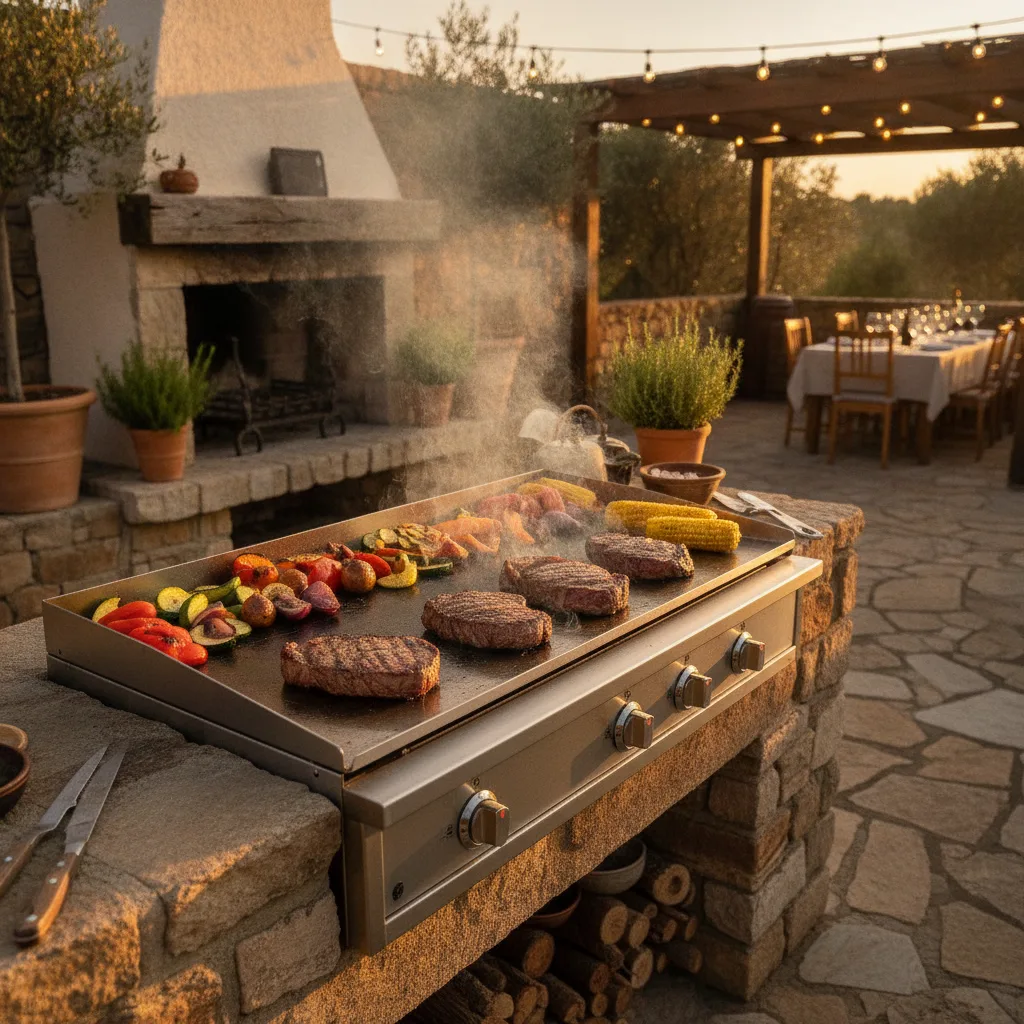
Do you love grilled meat that smells irresistible and vegetables that taste more intense and indulgent when they come off the plancha? What you're looking for is umami, the fifth taste that makes a dish deep and moreish.
The good news: cooking on a hot plate is one of the best ways to bring it out. Thanks to the Maillard reaction, the plancha concentrates and transforms the flavours of food.
In this article, we'll look at how to link the plancha and umami in a scientific and practical way: which foods to choose, which temperatures to aim for and which techniques to adopt to enhance your cooking.
The aim: to give you a real chef's eye on your plancha, for dishes that are precise, healthy and spectacularly tasty.
Plancha and umami: how to bring out the flavour of your dishes
Reading time: ~12 min
- Umami and the plancha: understanding the basics
- The Maillard reaction and umami: what really happens on the plate
- Setting up your plancha to maximise umami
- Which foods should you choose for ultra-umami cooking?
- Advanced techniques to boost umami without overloading the dish
- FAQ
Umami and the plancha: understanding the basics
What exactly is umami?
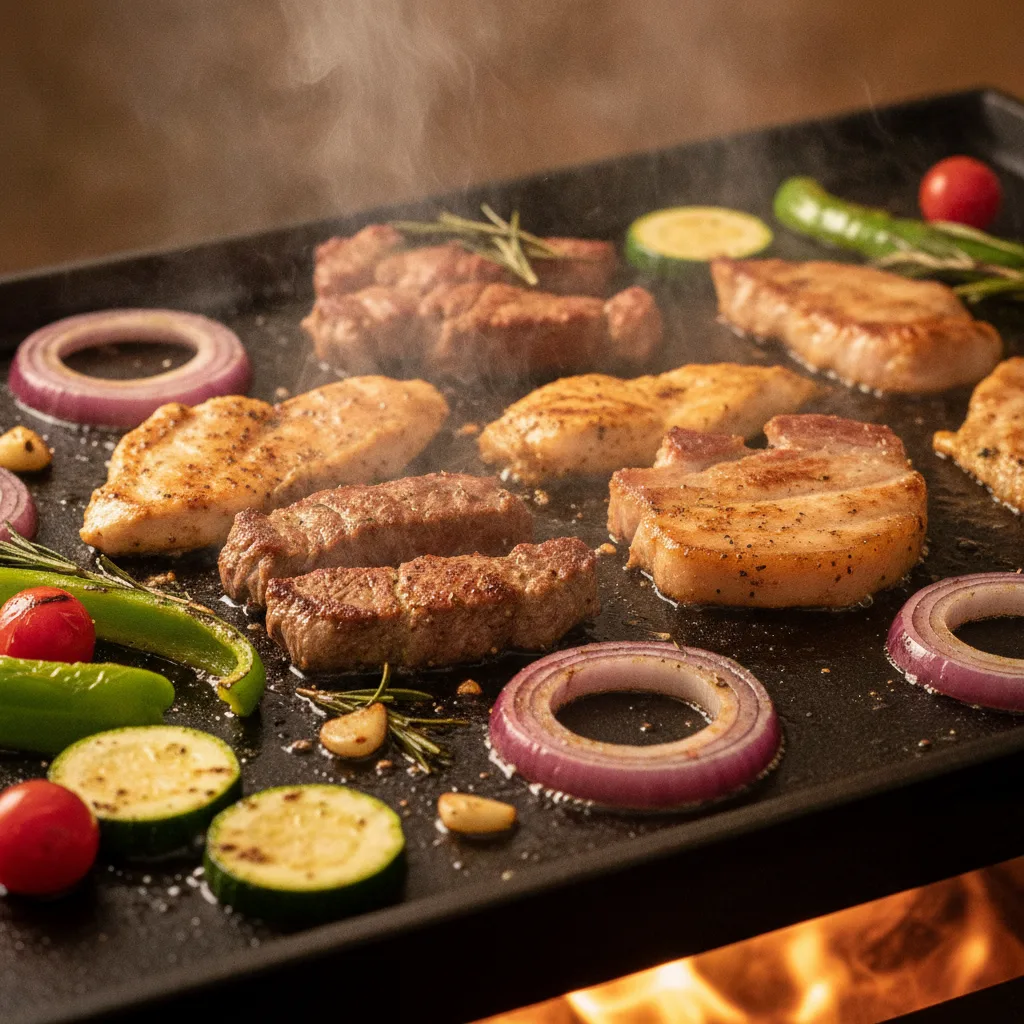
Umami is recognised as the fifth basic taste, alongside sweet, salty, bitter and sour. It is mainly triggered by three compounds: glutamate (found in many protein-rich and plant foods), inosinate (mainly in meat and fish) and guanylate (common in mushrooms and dried or fermented products). It gives an impression of full, round and long-lasting flavour, while enhancing the perception of the other tastes.
| Category | Examples rich in umami |
|---|---|
| Meat | beef, veal, pork, poultry |
| Fish / seafood | anchovies, sardines, prawns, shellfish |
| Vegetables / fruit | very ripe tomatoes, tomato purée |
| Mushrooms | shiitake, ceps, chestnut mushrooms |
| Cheese | parmesan, Comté, aged Mimolette |
| Sauces / stocks | soy, miso, fish sauce, concentrated stocks |
The plancha: an ideal plate for surface reactions
The plancha is a smooth cooking plate (often stainless steel) that can quickly reach a high temperature and hold it evenly. This contact cooking sears the surface extremely quickly, limits drying out inside and develops grilled aromas without combustion. A stainless steel electric plancha, like those designed by Planchaelec, offers fine temperature control: a crucial point for making the most of the Maillard reaction and boosting umami.
The Maillard reaction and umami: what really happens on the plate
The Maillard reaction in cooking
When food rich in proteins and sugars hits the hot surface of the plancha (≈180–250 °C), amino acids and reducing sugars interact: this is the Maillard reaction. It browns the surface, generates hundreds of aromatic compounds and brings out notes of hazelnut, toast and roast meat. These aromas combine with the umami compounds already present for a deeper taste impression.
Why the plancha is perfect for Maillard and umami
Controlled temperature: the plancha reaches the temperatures that favour the Maillard reaction without burning the surface.
Maximum contact: the juices stay on the surface, concentrate and enrich the caramelised cooking residue.
Control of the juices: turning rarely and letting the food rest preserves the umami-rich liquids.
Setting up your plancha to maximise umami
Temperature management: the right benchmarks
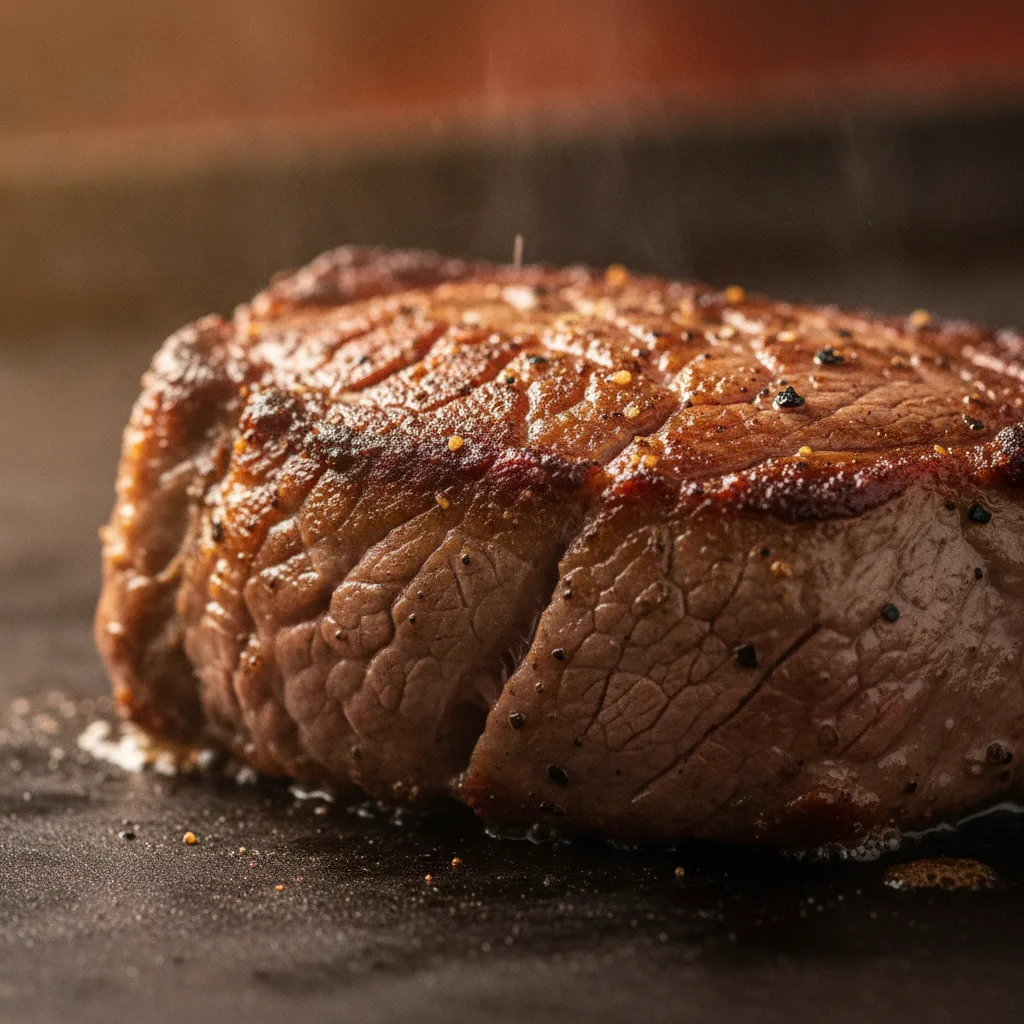
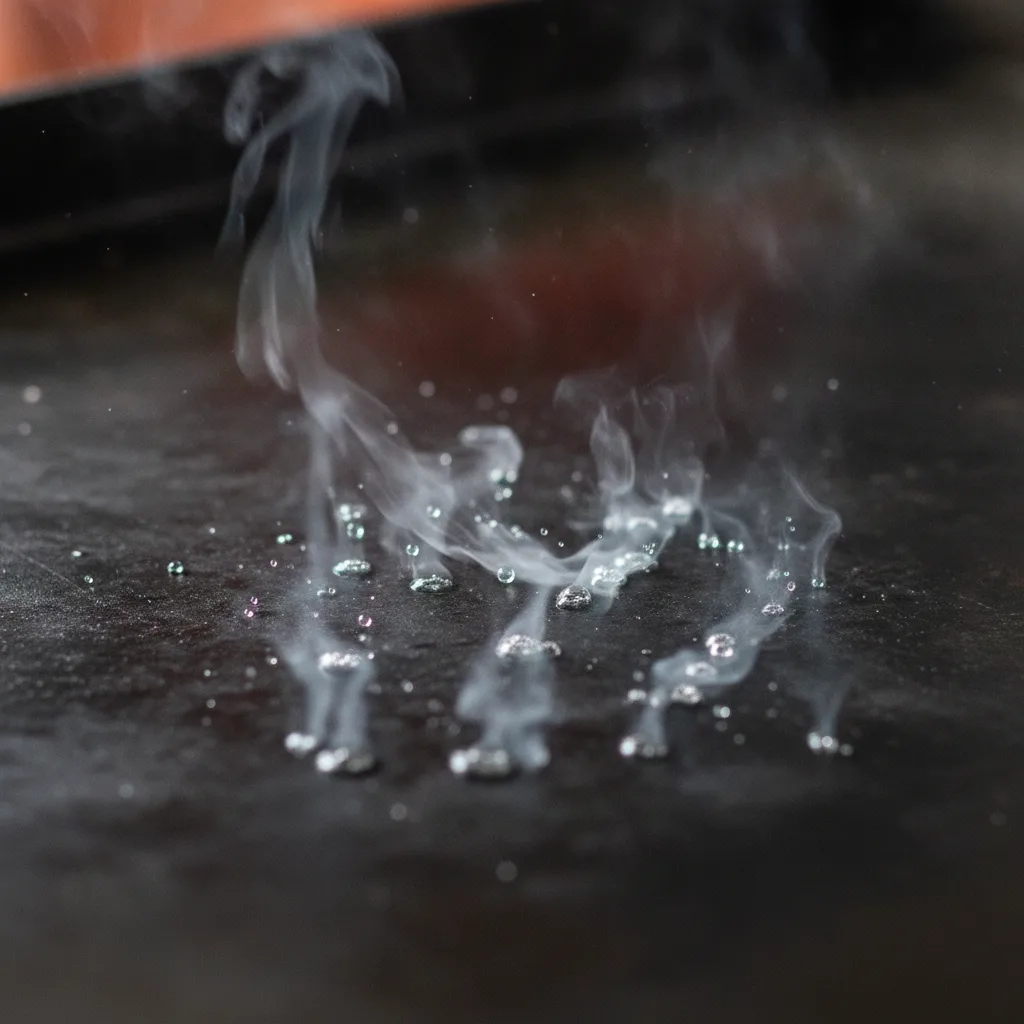
Start by preheating the plancha for 10–15 minutes. The water drop test should produce an instant sizzle.
| Type of food | Temperature | Approximate time |
|---|---|---|
| Red meat / thick cuts | ≈250 °C | 3–5 min/side |
| Fish fillets | ≈190 °C | 2–3 min/side |
| Fish steak (skin on) | ≈200 °C | 4–7 min skin-side down |
| Vegetables (courgette, pepper, aubergine) | 200–220 °C | 7–8 min (turned once) |
Techniques that preserve umami
- Don't overload the plate: leave space to avoid the temperature dropping.
- Pat meat, fish and vegetables dry before cooking for clean browning.
- Turn rarely: one turn is enough most of the time.
- Let the meat rest for a few minutes off the plate to redistribute the juices.
- Deglaze at the end of cooking (white wine, stock, soy sauce) to recover the caramelised juices.
Which foods should you choose for ultra-umami cooking?
Meat and poultry
Beef (rib-eye, hanger steak, flank, sirloin) gains umami from fierce searing, a single turn and a systematic rest. Poultry legs or thighs marinated in soy sauce, garlic and citrus reveal a deep flavour. Pork (rack, shoulder, pluma) marinated in miso or fish sauce becomes particularly delicious. Planchaelec's stable stainless steel planchas make this precision easier.
Fish and seafood
Salmon or tuna steaks seared skin-side down offer a crispy contrast and tender, umami-rich flesh. Whole grilled sardines, mackerel and anchovies need nothing more than a squeeze of lemon and a dash of soy sauce. Prawns only need 2–3 minutes of cooking with garlic, butter and an XO sauce or fish sauce to reach their full potential.
Vegetables, mushrooms and cheese
Quickly grilled cherry tomatoes drizzled with reduced balsamic vinegar, shiitake or oyster mushrooms caramelised with butter and soy, or asparagus topped with parmesan shavings show that umami isn't reserved for animal proteins.
Advanced techniques to boost umami without overloading the dish
Using umami marinades
A soy, garlic, ginger and honey marinade enhances white meat; miso, lemon and neutral oil suit fish and vegetables; fish sauce, lime and coriander show off prawns and squid. Allow 30 minutes to a few hours in the fridge before cooking.
Adding umami at the end of cooking
A drizzle of soy sauce or fish sauce just before serving, a few parmesan shavings on hot vegetables or a knob of miso butter placed on the meat while it rests combine “cooked” and “fresh” umami for greater complexity.
Controlling salt so it doesn't overpower the flavour
Soy sauce, aged cheeses and cured meats are already salty: season at the end of cooking instead, reduce the salt if you use these ingredients and always taste before adjusting.
FAQ
How do I know if my plancha is hot enough to develop umami?
Sprinkle a few drops of water on the plate: if they sizzle and evaporate immediately, the temperature (200–250 °C) is ideal for the Maillard reaction.
What are the best foods for tasting umami on the plancha?
Red meat, juicy poultry, oily fish (salmon, mackerel, sardines), shellfish (prawns, king prawns), very ripe tomatoes, mushrooms and aged cheeses are excellent candidates.
Does a stainless steel electric plancha give as much flavour as a gas plancha?
A modern stainless steel electric plancha easily reaches the temperatures needed for the Maillard reaction and holds them steadily. Heat stability and plate quality matter more than the type of energy.
Combining the plancha and umami means entering a world of precision cooking where science serves pleasure. By understanding what happens on the surface of your plate — the Maillard reaction, managing the juices, choosing ingredients — you turn a simple meal into a real taste experience. With a well-adjusted, made-in-France stainless steel electric plancha, like those offered by Planchaelec, you have the ideal tool for exploring this high-intensity cooking. To find out more, our dedicated guide will help you choose the most suitable plancha.