



 +33 4 78 55 45 69
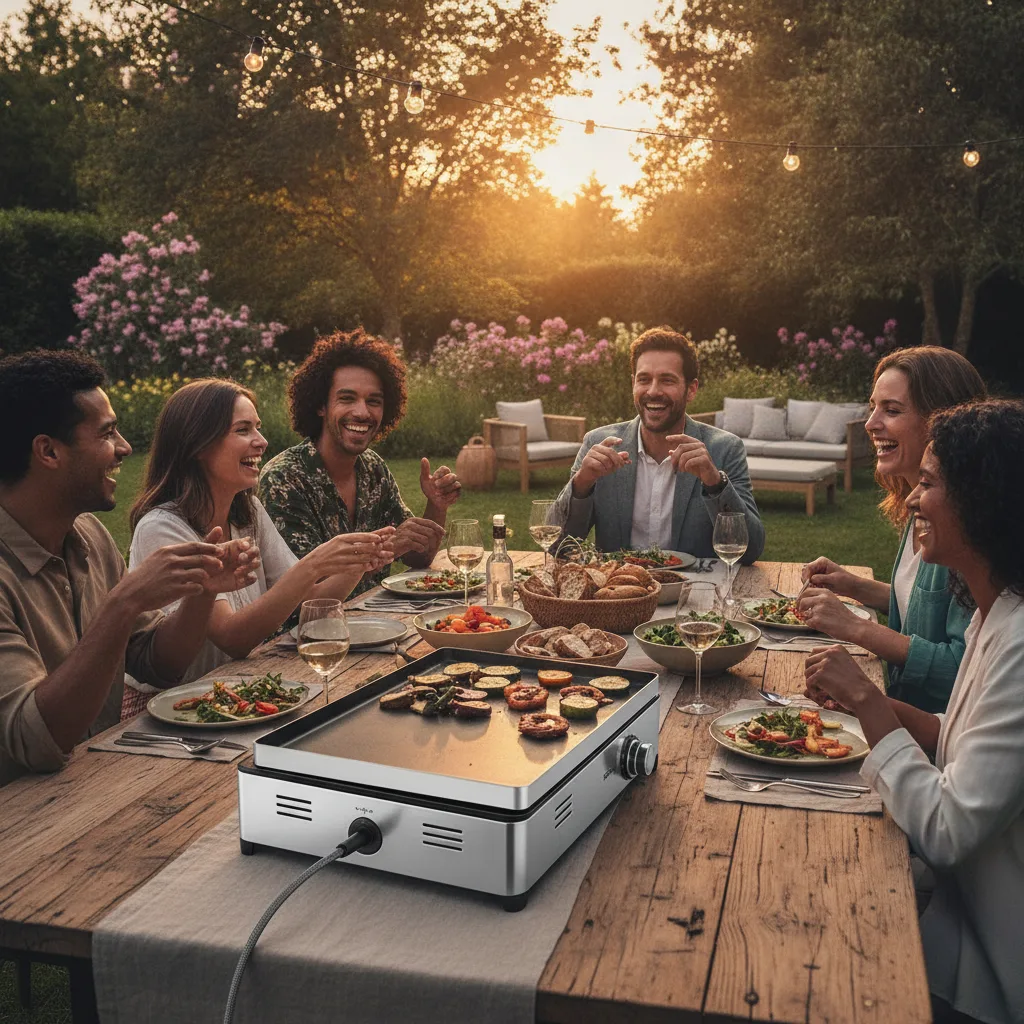
Setting up a plancha on the table in the middle of your guests is tempting for truly convivial meals. But with heat, spatter and electrical cables, the question of safety arises immediately: can you really put an electric plancha directly on a wooden or plastic table without damaging it or taking any risks? In this article, we take a practical look at how hot the frame gets, which table materials are compatible, safety distances and the benefits of raised feet. The aim: to let you use your plancha on a table with complete peace of mind, indoors as well as outdoors.
Plancha on a table: our tips for safe placement
Reading time: ~10 min
- Contents
- Plancha on a table: how hot does it really get?
- Which tables can you put an electric plancha on?
- Raised feet and trays
- Safety distances and good practice
- Dos and don'ts
- Specific tips for indoors and outdoors
- Caring for the plancha and protecting the table
- FAQ
Plancha on a table: how hot does it really get?
A stainless steel electric plancha gets very hot: depending on the model, the plate easily reaches 250 °C, or even more, to sear food properly. On quality electric planchas (such as those from Planchaelec), the heat is concentrated on the cooking plate and the frame is designed to limit heat transfer downwards. Nevertheless, the underside eventually heats up during cooking; the table must therefore not be sensitive to prolonged heat, and an air gap must be left under and around the appliance. Finally, you need to consider the stability of the whole set-up and whether protective accessories such as raised feet, a tray or a dedicated stand are available.
Which tables can you put an electric plancha on?
Wooden table
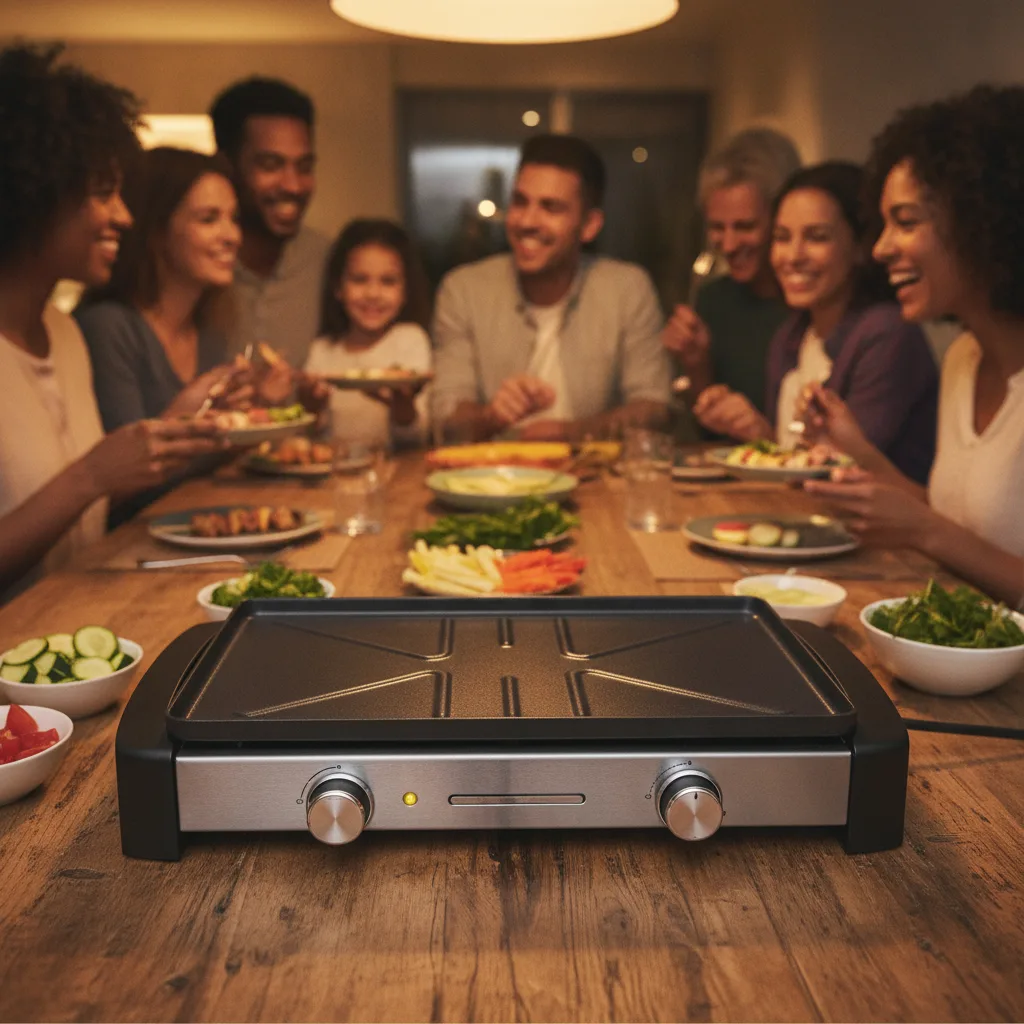
An electric plancha can be placed on a solid wood table (oak, teak, acacia, etc.): the material copes fairly well with indirect heat as long as there is no flame. The main risks are yellowing, hot grease stains and slight warping if the heat is very concentrated. A stainless steel protective tray, a few centimetres of clearance for air circulation and regular stability checks are therefore recommended. Composite or melamine boards are more sensitive; you must place an inert, heat-resistant stand in between.
Plastic or woven resin table
Polypropylene or moulded resin easily deforms under prolonged heat; shiny marks, softening or even local melting can appear. Without suitable protection, placing the plancha directly on it is not recommended. Only a rigid, insulating stand extending well beyond the appliance's outline limits the risk, but the safest option remains a dedicated trolley.
Metal or stone table
Steel, aluminium, granite, tiled or concrete tops are the safest: they withstand heat very well and are easy to clean. Two points remain: metal can get hot around the edges during a long cooking session, and some porous stones mark with grease. A plancha mat or stainless steel tray protects these surfaces effectively.
| Table top material | Compatibility | Main precautions |
|---|---|---|
| Solid wood | Good | Stainless steel tray, stable table, air clearance |
| Composite / melamine | Limited | Inert stand required (stainless steel or thick stone) |
| Plastic / woven resin | Not recommended | Very wide insulating stand or dedicated trolley |
| Metal / stone | Ideal | Air clearance; grease protection for porous stone |
Raised feet and trays
The role of raised feet
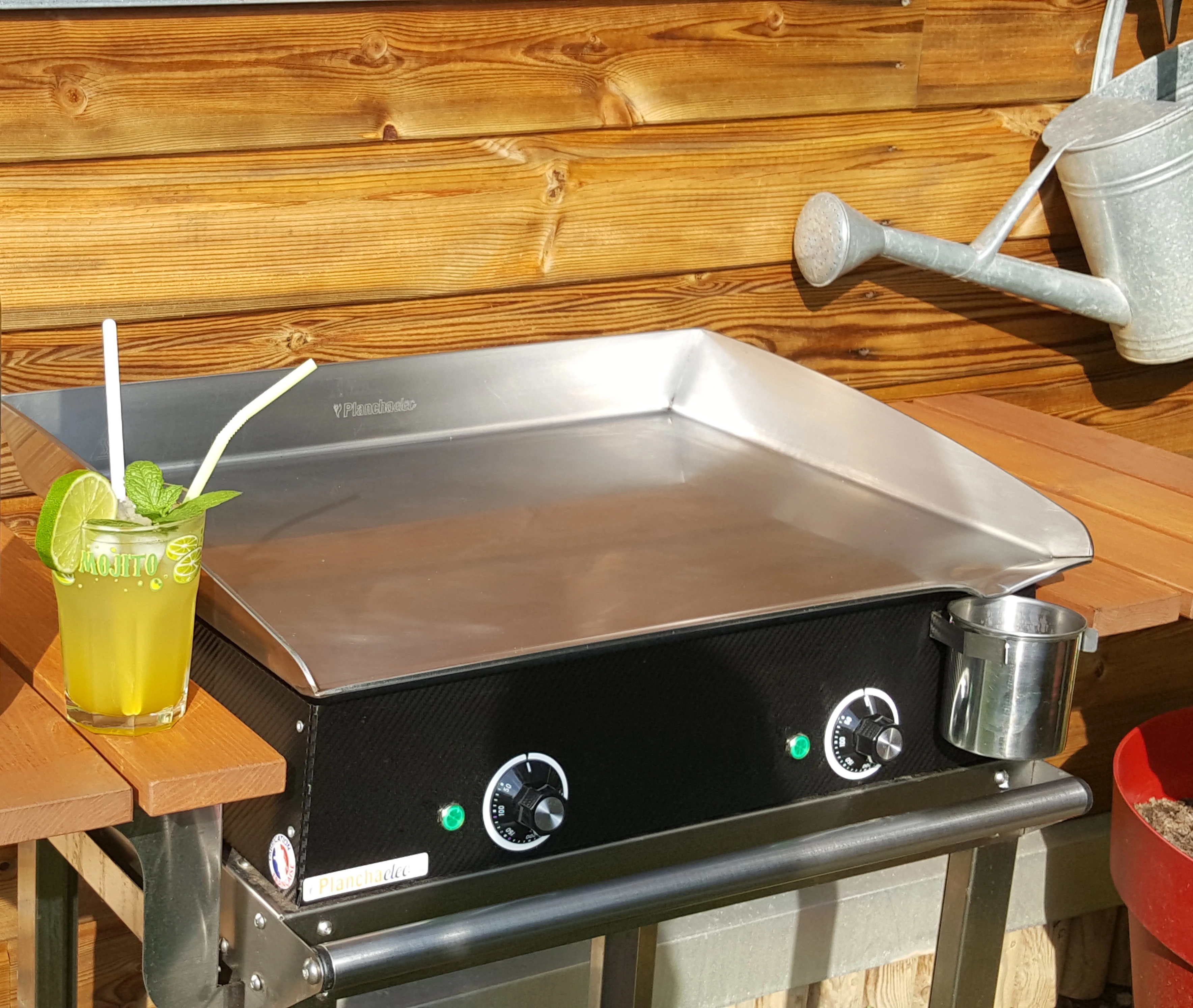
Raising the plancha a few centimetres creates an air gap that limits heat transfer to the table, improves stability on an uneven surface and protects delicate materials. Planchaelec planchas already stand on feet, and replacement feet are available in the After-sales section of the website if yours are worn.
Dedicated tray or unit
A plancha tray or unit spreads the weight over a larger area, protects the table from grease and provides a real work surface. You can opt for a plancha/barbecue tray if you already cook on your garden table, or choose a plancha trolley that will become the main stand.
Safety distances and good practice
Stability and location
The surface must be flat, without any play, and able to support the weight of the appliance plus the food. Avoid flimsy table extensions or fragile folding tables; place the plancha slightly back from the edge to prevent accidental knocks.
Clearance around the plancha
At least 10 cm must be left free at the back and sides so that air can circulate. No fabric or object should touch the frame, and the plancha should not be directly under anything sensitive such as an awning or a low shelf.
Managing the power cable
Plug the plancha into a wall socket or a good-quality extension lead that is fully unwound. The cable must not cross a walkway and must never be trapped under a table or chair leg.
Dos and don'ts
| Do | Don't |
|---|---|
| Use a quality stainless steel electric plancha with stable feet | Place the appliance on a thin plastic table or a melamine top without protection |
| Choose a heat-resistant surface and, ideally, a protective tray | Use the plancha right next to fabrics that could touch the frame |
| Keep a constant eye on the appliance while it is heating | Cover the vents, block the feet or wedge the plancha into a tight space |
| Let the plancha cool completely before moving or storing it | Pour large amounts of water next to the plancha, risking splashes on the socket |
Specific tips for indoors and outdoors
Plancha on a table indoors
A stainless steel electric plancha is easy to use indoors as long as you ensure ventilation (open window or an effective extractor hood), choose a resistant surface such as a stone or stainless steel worktop and protect the nearby wall with a stainless steel splashback. Planchaelec offers a complete guide to smoke-free indoor use.
Plancha on a table outdoors
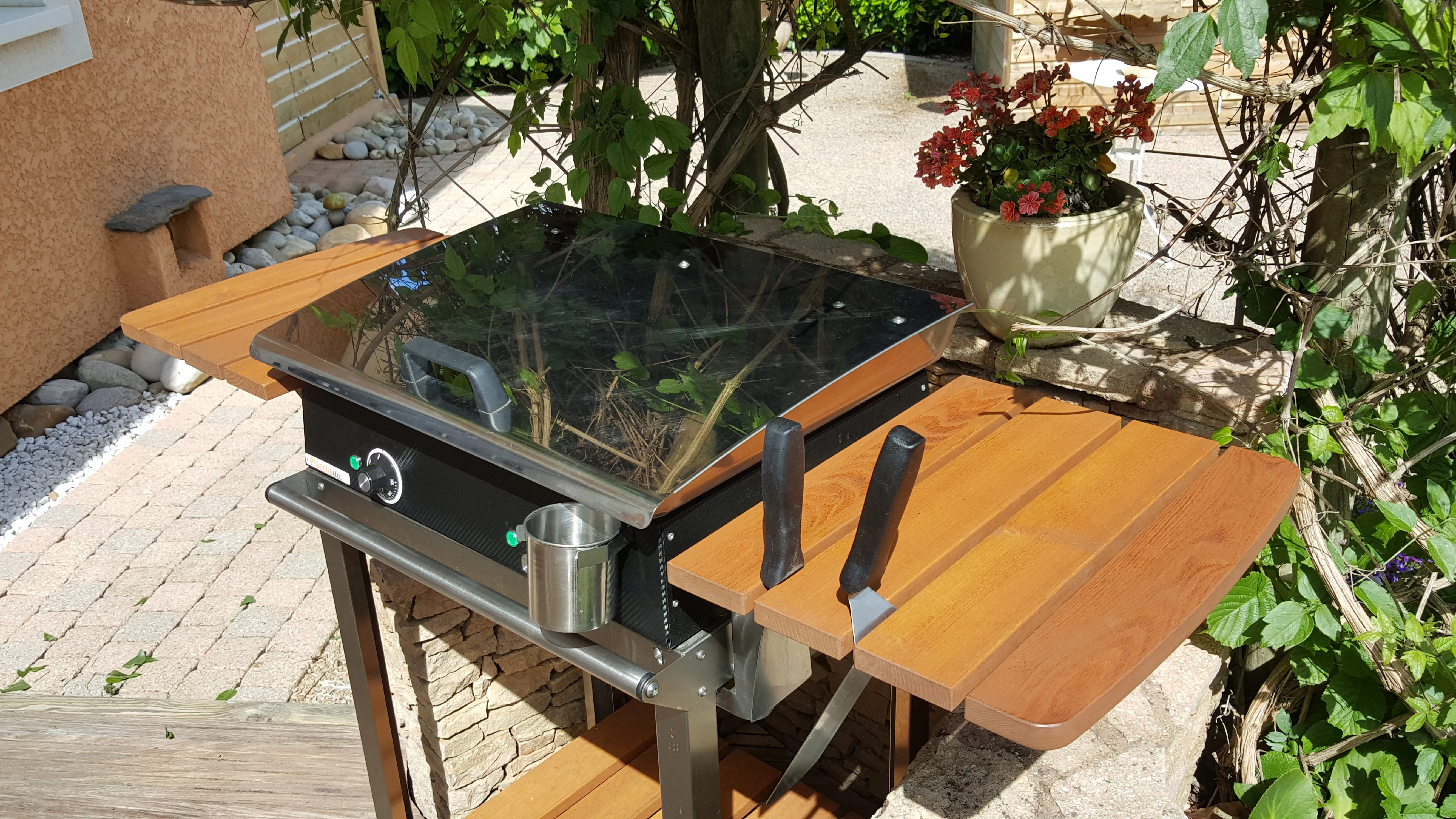
Outdoors, avoid draughts that cool the plate and blow smoke towards guests; don't leave the socket in full sun behind a window; finally, once the plancha has cooled and been cleaned, cover it with a suitable cover and, if possible, store it under shelter.
Caring for the plancha and protecting the table
Regular cleaning prevents persistent spatter and burnt residue. After each use, clean the plate (water, stainless steel scraper, specific degreaser); a detailed cleaning guide is available. Protect the table with a heat-resistant tray or mat and provide a container for greasy utensils. Practical accessory packs, such as the cleaning accessories pack, make it easier to keep everything clean.
FAQ
Can you put an electric plancha on a glass table?
This is strongly discouraged. Glass, even toughened, remains very sensitive to thermal shock; localised, prolonged heat can create stresses and, in extreme cases, cause cracking or breakage. If there's no other option, at the very least place a thick insulating material in between, but ideally choose another type of table or a dedicated trolley.
Do you need a tablecloth under a table-top plancha?
No. A fabric or plastic tablecloth can touch the hot frame, deform or catch fire if it gets trapped. If you like the look of a tablecloth, stop it short of the cooking area and leave a bare section of the table for the plancha.
Can a plancha damage a wooden table in the long run?
Yes. Placed directly on wood, a plancha can leave heat marks, blackening or grease stains. A stable protective tray (stainless steel, stone or a thick board) and raised feet greatly reduce this wear, even with frequent use.
Conclusion and summary
Setting up a plancha on a table is therefore entirely possible and even very enjoyable, as long as you follow a few simple principles: a heat-resistant surface, good ventilation, a raised plancha and a clear cooking area. With a well-designed stainless steel electric plancha and the right accessories (plancha feet, tray, cover), you'll enjoy convivial cooking in complete safety. To find out more, read the Planchaelec guide to choosing your plancha or discover all the made-in-France models in the online shop.