



 +33 4 78 55 45 69
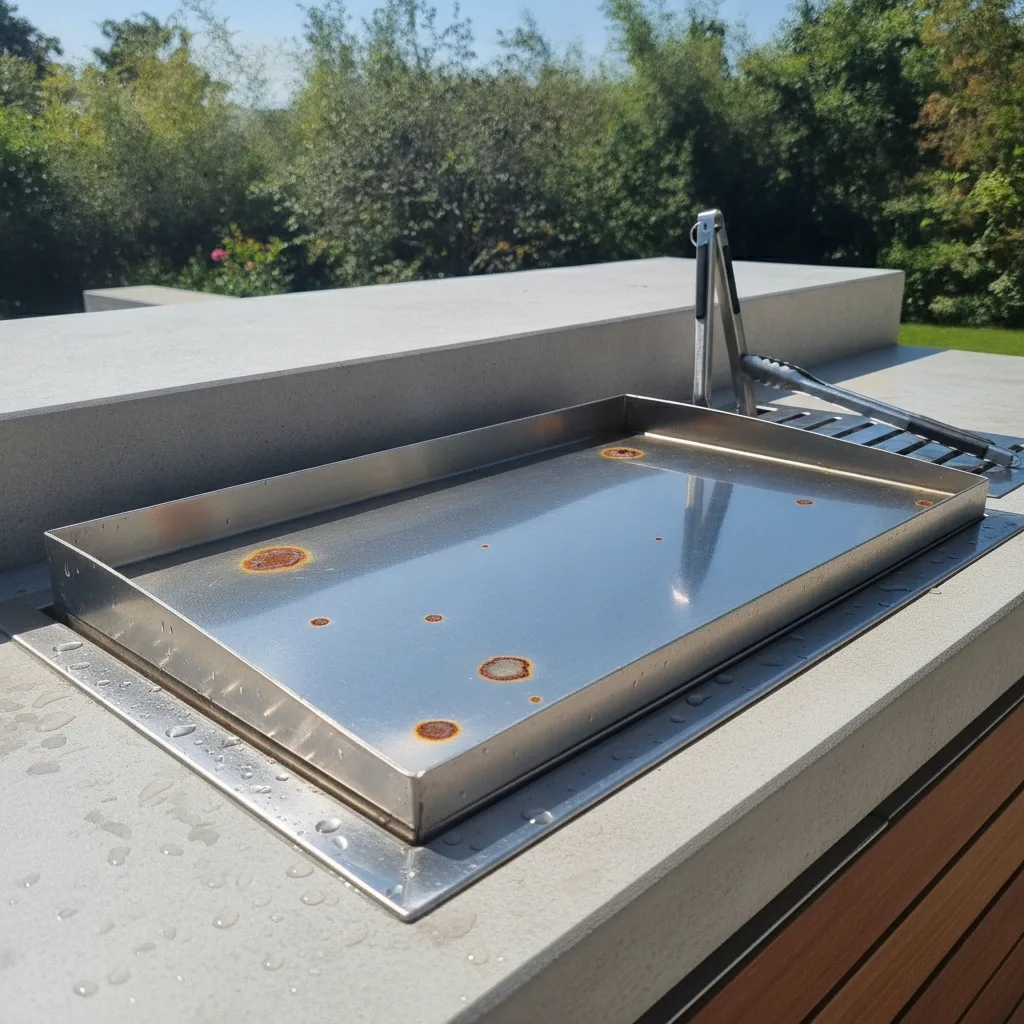
You chose a stainless steel plancha precisely to avoid rust… and yet small brown spots are appearing. Don't worry, you're not alone and your appliance isn't ruined. A stainless steel plancha can show traces of corrosion without the material being of poor quality: most of the time, it's simply surface contamination. In this article, you'll understand why a stainless steel plancha sometimes rusts, how to remove these marks effectively and, above all, how to protect it so they don't come back. The end goal: restore your plate to like-new condition and get back to healthy, enjoyable cooking.
Stainless steel plancha rusting: causes and solutions
Reading time: ~8 min
- Why can a stainless steel plancha rust?
- How do you rescue a rusty stainless steel plancha?
- Care routine to stop your stainless steel plancha rusting
- Dos and don'ts for a rust-free stainless steel plancha
- FAQ
Why can a stainless steel plancha rust?
Does stainless steel really rust?
The name “stainless steel” is misleading: stainless doesn't mean it never rusts, but that it resists corrosion much better than ordinary steel. This resistance comes from a thin passive layer that is very rich in chromium. When this layer is attacked or contaminated, superficial rust spots can appear; they can be treated well as long as you act early and correctly.
Stainless steel contamination explained simply
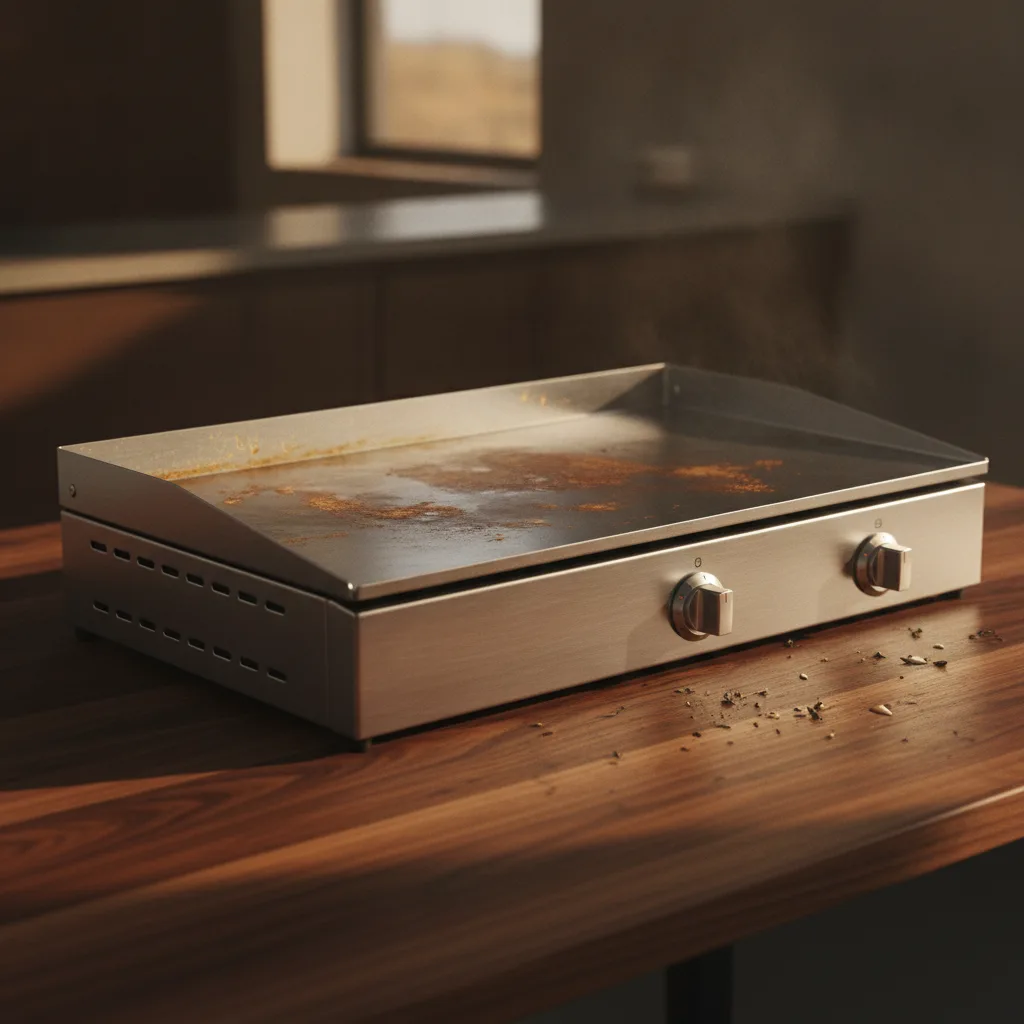
In most cases, rust marks come from the environment rather than from the stainless steel itself. Tiny particles of iron or carbon steel from poor-quality utensils, metal dust in the air or a sponge previously used on non-stainless steel can settle on the plate. These particles rust on contact with moisture and give the illusion that the plancha is rusting; you simply need to remove them and let the surface re-passivate.
Other common causes of rust on a stainless steel plancha
- Moisture left standing on the plate (plancha put away while still wet or stored outdoors in damp conditions).
- Heavy use of salt; salt retains water and encourages oxidation.
- Storage without protection (rain, overnight condensation, sea spray by the coast).
- Cleaning products containing chlorine or that are too harsh and damage the passive layer.
- No protective film of oil when the plate has already shown signs of rust.
How do you rescue a rusty stainless steel plancha?
Step 1: make the plate safe and prepare it
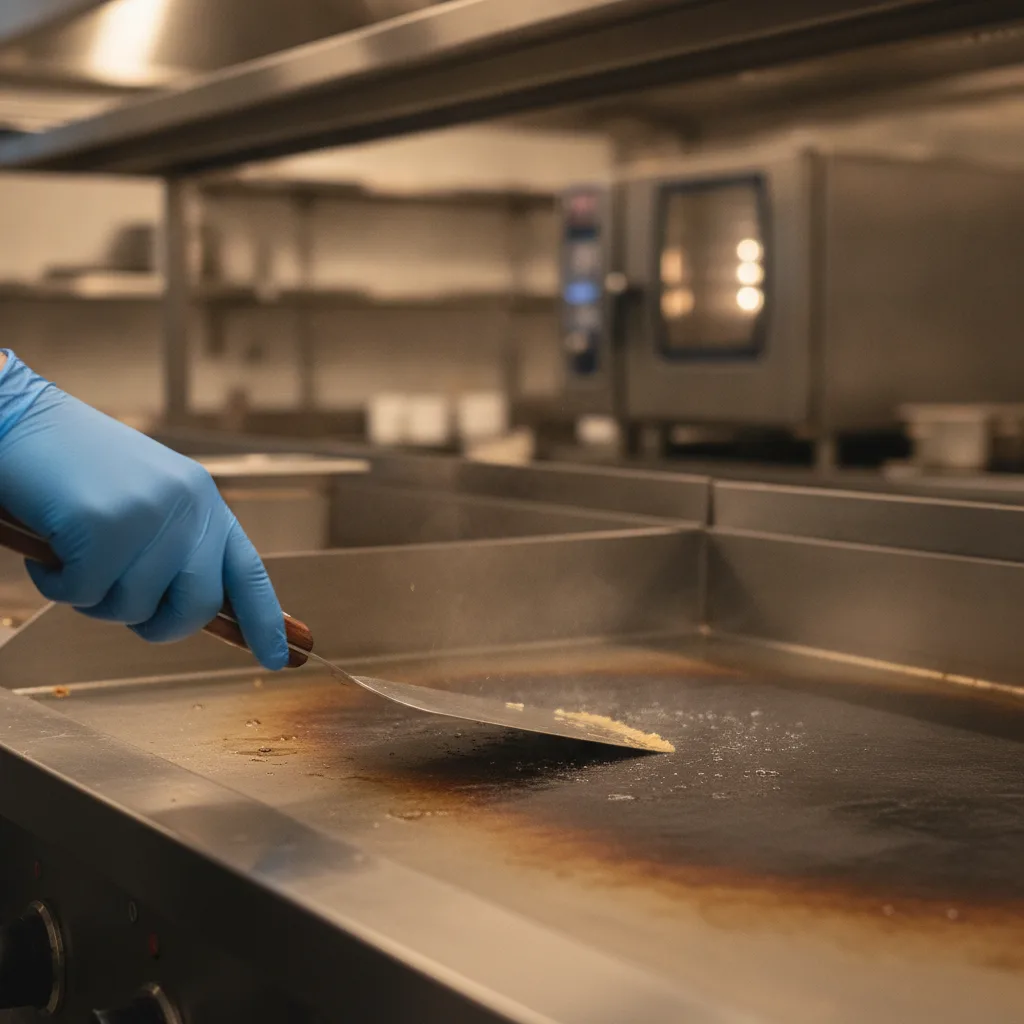
1. Unplug the plancha and let it cool to lukewarm (slightly warm, not hot). 2. Remove large residue with a suitable stainless steel spatula, pushing it towards the drip tray. 3. If there are encrusted juices, pour a little water on the lukewarm plate to loosen them, if your appliance allows it.
Step 2: gently remove the rust spots
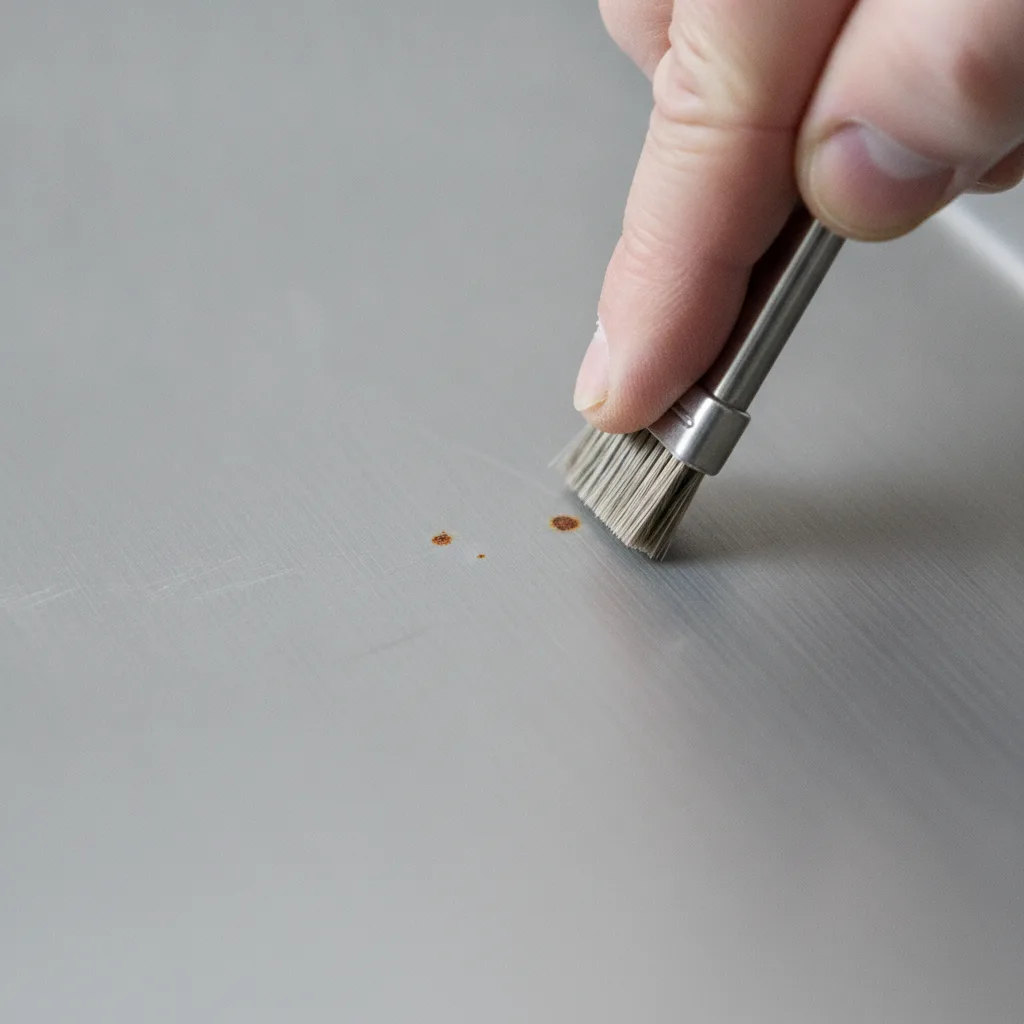
Gentle bicarbonate of soda / white vinegar method: sprinkle the area with bicarbonate of soda, add a dash of white vinegar, let it fizz for a few minutes, then rub with a non-abrasive sponge before rinsing. If the rust persists, use a special stainless steel abrasive pad (never steel wool, which leaves iron particles behind and brings the rust back), rub gently in the direction of the grain, rinse thoroughly, then neutralise with a little vinegar.
Step 3: re-passivate and protect the stainless steel plancha
Dry the plate carefully, apply a thin film of neutral vegetable oil, heat the plancha for a few minutes, switch off, let it cool, then wipe off the excess. This light hot oiling protects the surface while the passive layer of the stainless steel naturally re-forms on contact with the air.
Care routine to stop your stainless steel plancha rusting
Cleaning after each use
1. Switch off and unplug the plancha. 2. Scrape off the residue with a suitable spatula. 3. Pour a little water or white vinegar on the lukewarm plate to loosen the cooking juices. 4. Rub with a sponge or a gentle pad designed for stainless steel. 5. Rinse with clean water until all the grease has gone. 6. Wipe with a cloth soaked in vinegar to neutralise odours. 7. Dry the surface, the edges and the drip tray thoroughly.
Storing and protecting your plancha
Avoid leaving your plancha outside all year round, especially in a damp climate or by the sea. If it stays outdoors, at the very least use a suitable breathable cover; ideally, store it in a dry, sheltered place. Before a long period without use, clean and dry it, then apply a film of oil to the plate before covering it.
Dos and don'ts for a rust-free stainless steel plancha
| Do | Don't |
|---|---|
| Clean it every time after use | Leave the plancha out in the rain |
| Dry it thoroughly before putting it away | Use harsh chlorine-based products |
| Use abrasive pads suitable for stainless steel | Scrub with a hard wire brush |
| Apply a thin layer of protective oil | Salt heavily and then leave to dry |
| Protect it with a cover and, if possible, shelter | Store the appliance with a full grease tray |
FAQ
Is my stainless steel rusting because it's poor quality?
Not necessarily. Even high-end stainless steel can show corrosion spots if the plate has been contaminated or exposed to moisture and salt for a long time. Small superficial marks don't affect the durability of the appliance if they are dealt with quickly.
Can I use a metal sponge such as steel wool?
It's best avoided: steel wool and ordinary steel sponges leave iron particles on the plate, which then rust. Use an abrasive pad designed for stainless steel instead, rub locally without forcing and always in the direction of the grain. Also avoid power tools, which can scratch the plate permanently.
Should I oil the stainless steel plate before each cooking session?
It isn't compulsory but it is recommended. Light oiling improves cooking, reduces sticking and helps protect the surface. After an episode of rust or before long-term storage, more generous oiling followed by heating is advisable.
Can I use salt on a rusty stainless steel plancha?
You can salt your food, but never leave salt directly on the plate after cooking. Rinse or wipe it while it's lukewarm: salt attracts moisture and speeds up corrosion, especially if the plancha stays outdoors.
Seeing rust spots appear on a stainless steel plancha can be worrying, but it's usually superficial contamination linked to moisture, salt or imperfect cleaning. By cleaning properly, removing the rust gradually and then protecting the stainless steel with light hot oiling, you'll have a healthy, high-performing plate for a long time.