



 +33 4 78 55 45 69

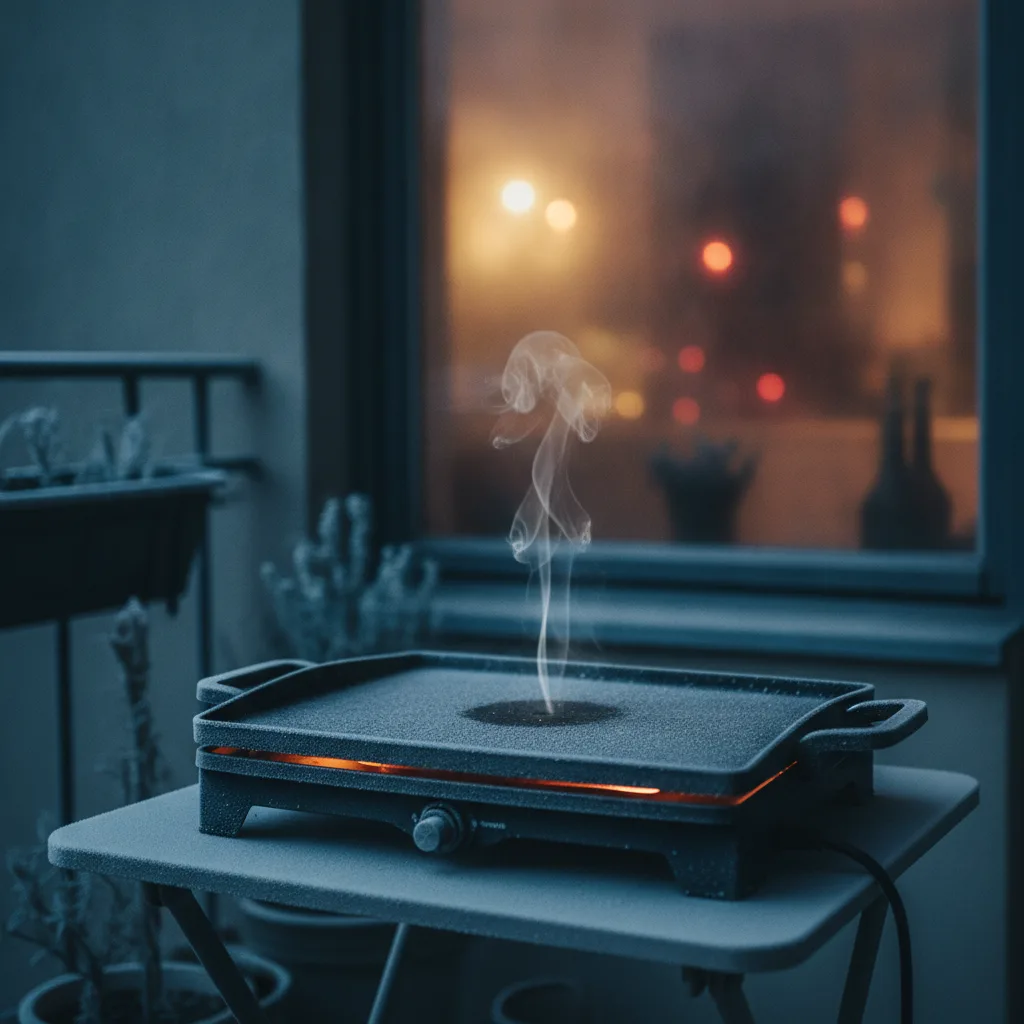
When temperatures drop, many people put their plancha away and forget all its potential until spring. That's a shame: the plancha is a great ally in winter for convivial, comforting meals, outdoors as well as indoors.
With a few precautions and good recipe ideas, you can enjoy it all year round. Whether you cook on the balcony, under a pergola or in the kitchen with a stainless steel electric plancha, you simply need to adapt how you use it to the cold and damp. Here are five practical tips for carrying on enjoying good food in winter while protecting your appliance.
Plancha in winter: 5 tips for successful grilling
Reading time: ~11 min
Contents
- Plancha in winter: can you really use it all year round?
- Setting up your plancha in winter: outdoors or indoors?
- Five key tips for cooking on the plancha in winter
- Protecting your plancha from frost if you're not using it
- Choosing the right plancha to enjoy it in winter too
- FAQ
1. Plancha in winter: can you really use it all year round?
The answer is yes, as long as you follow a few simple rules of safety and common sense. Manufacturers point out that the plancha is designed for year-round use, including in the depths of winter. The key is above all choosing the right type of appliance and the right location.
For comfortable winter use, the stainless steel electric plancha has several advantages: it can be used indoors as well as outdoors (following the manufacturer's instructions), it doesn't depend on gas, which is sensitive to cold, and it heats up steadily. Planchaelec models, for example, are designed to plug into a 16 A socket, with power designed to sear food properly even when the air is cool.
Outdoors, keep three points in mind: the cold lengthens preheating, the wind cools the cooking surface and safety comes first (stability, distance from flammable materials, protected cable). With these precautions, you can cook outside even in cold weather, sheltered from the elements.
2. Setting up your plancha in winter: outdoors or indoors?
2.1 Setting up your plancha outdoors in cold weather
• Choose a spot sheltered from the wind (covered terrace, wall, glass screen) while keeping adequate natural ventilation.
• Avoid areas exposed to standing water (rainwater, puddles) to protect the electrical components and the trolley feet.
• Preheat the plate for longer: allow 5 to 10 minutes more than in summer to reach searing temperature.
• Think about your guests' comfort (throws, patio heaters, hot drinks) to make the most of the time around the plancha.
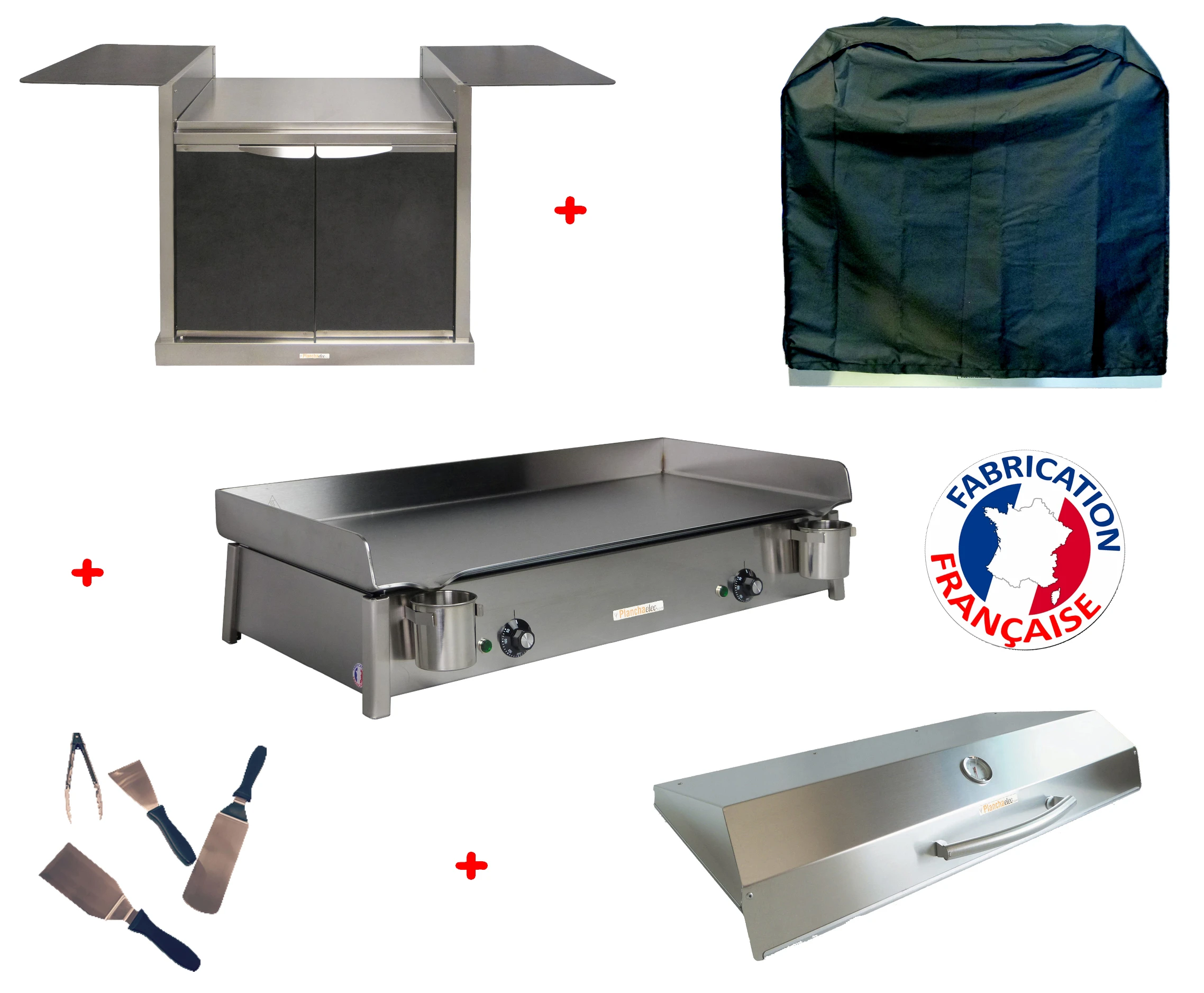
A sturdy trolley lets you position the appliance at the right height and easily move it to a sheltered corner. Discover, for example, the range of trolleys designed for planchas.
2.2 Using your plancha indoors safely
• Check that the appliance is designed for indoor use. A quality stainless steel electric plancha, like those offered by Planchaelec, meets this criterion.
• Plug the plancha directly into a dedicated 16 A socket, without an extension lead, to ensure a stable power supply.
• Ensure good ventilation (extractor hood running, window ajar) to remove cooking steam.
• Place the plancha on a flat, heat-resistant surface, leaving space at the back and sides.
Indoors, the room temperature stays stable: the plancha therefore heats up quickly and cooking is fully under control, whether for a dinner for two or for 8 to 10 guests.
3. Five key tips for cooking on the plancha in winter
3.1 Preheat slightly longer
The cold slows down heating; food may then stew in its own juices instead of searing. So lengthen the preheating by 5 to 10 minutes. How do you know if the plate is hot enough?
• A drop of water should sizzle instantly.
• A piece of meat should brown quickly without sticking.
Well-sized stainless steel electric plates then retain the heat evenly, even outdoors.
3.2 Adapt your recipes to the season
Winter calls for generous, comforting dishes, which the plancha lets you reinvent as healthy cooking (with very little fat).
Raclette, reinvented: grill slices of cooked potato, sliced onions, mushrooms and diced ham. Add slices of raclette cheese, then cover with a dome to melt them.
Roasted root vegetables: carrots, parsnips, sweet potatoes and beetroot seasoned with olive oil, salt, pepper and herbs: sear briskly, then finish in a gentler zone.
Winter meat and fish: duck breast with caramelised apples, salmon or cod fillets with sautéed leeks, or sausages, white pudding and honey-mustard marinated pork chops.
Hot desserts: sliced bananas or pears seared in butter and brown sugar, or caramelised pineapple slices served with a scoop of vanilla ice cream.
3.3 Manage the heat zones better
In cold weather, heat distribution becomes even more strategic. Sear in the centre, then push food to the edges to keep it warm, group long-cooking vegetables around the edge and create a zone for serving at the same time. Planchaelec stainless steel plates have good thermal inertia and make up for the effect of the cold outside.
3.4 Protect the appliance from cold and damp
After each cooking session, clean the lukewarm plate, dry it carefully, then protect it with a suitable cover. If you have a trolley, cover it too to stop moisture attacking the screws and shelves.
3.5 Clean and care for it more carefully in winter
The cold doesn't forgive carelessness. After each use:
1. Pour a little water or plancha degreaser onto the hot plate and scrape with a stainless steel spatula.
2. Slide the residue into the drip tray, then empty it.
3. Rinse if necessary, then dry with a soft cloth.
4. For a long break, apply a thin protective film of cooking oil.
A complete cleaning accessories pack makes these steps easier; a detailed guide is available on the website (cleaning a stainless steel plancha).
4. Protecting your plancha from frost if you're not using it
If you're taking a break until spring, prepare your plancha for its “winter rest”:
• Deep-clean the plate, the grease tray and the frame.
• Dry meticulously to remove every trace of water.
• Apply a thin layer of cooking oil to the stainless steel plate.
• Unplug the appliance and check the cable.
• Store it in a dry, sheltered place, preferably under a cover.
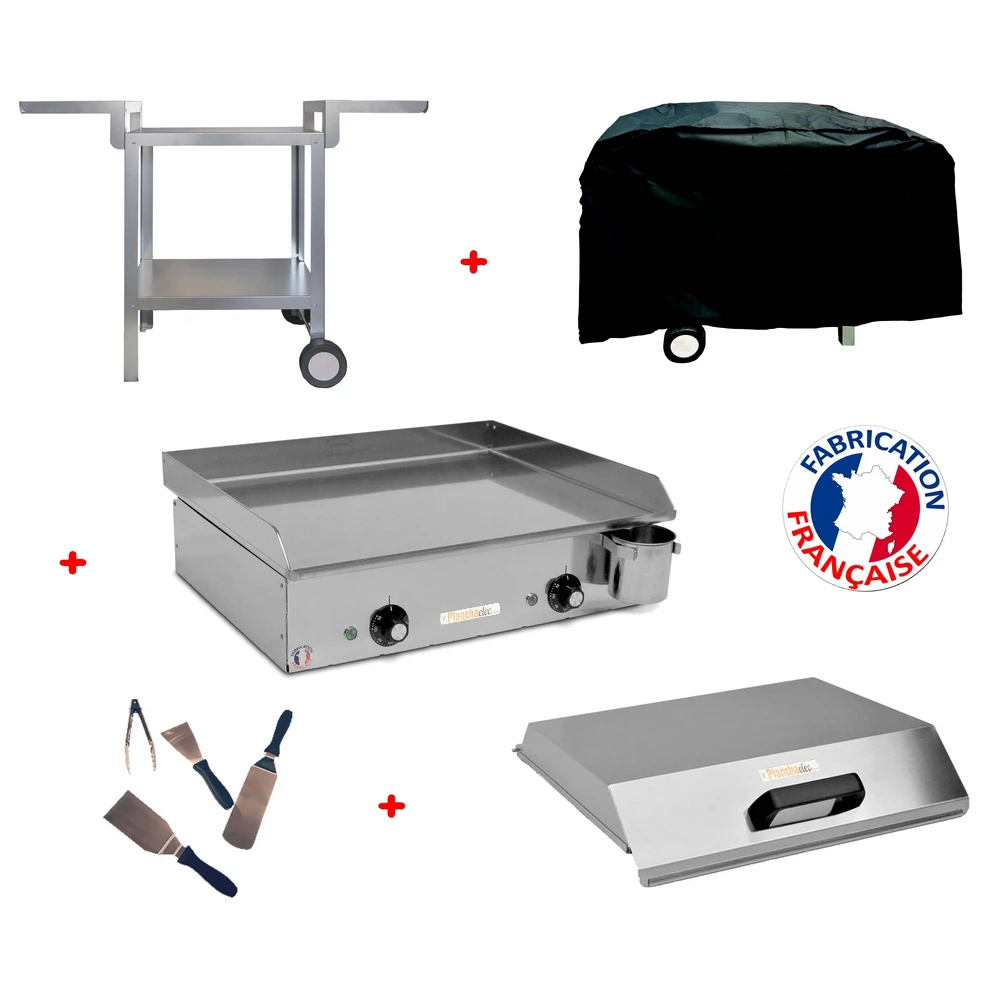
Planchaelec's complete packs (plancha, trolley, lid, utensils) make setting up and storing easier all year round.
5. Choosing the right plancha to enjoy it in winter too
For a truly all-season appliance, choose:
• A solid stainless steel plate, durable and easy to clean.
• Enough power to reach searing temperature despite the cold.
• A design suited to indoor and outdoor use for electric models.
• Accessories (lid, cover, stable trolley) designed for year-round use.
| Criterion | Benefit in winter |
|---|---|
| Solid stainless steel plate | Retains heat well, withstands the cold and is easy to clean after richer dishes. |
| Sufficient power | Lets you sear food quickly despite the lower outdoor temperature. |
| Indoor / outdoor use | Gives you the flexibility to cook outside whenever possible or indoors in very cold weather. |
| Suitable accessories | A lid, a cover and a stable trolley make it easier to use and protect the appliance all year round. |
Planchaelec's Néo and Lux ranges, made in France, meet these criteria. A complete “Choosing your plancha” guide is also available on the website.
FAQ
Can you really use a stainless steel electric plancha outside when it's freezing?
Yes, if the appliance is designed for outdoor use and properly protected. The cold only lengthens preheating and may require a slightly higher temperature. Place the plancha out of the wind, make sure the stand is stable and cover it once it has cooled. Never use an electric plancha in rain or snow. Planchaelec planchas are rated IPX4: they resist splashes, but not rain.
Does plancha cooking in winter produce more smoke indoors?
Smoke depends mainly on fats and marinades, not on the season. In winter, we often use richer ingredients (cheese, cured meats), which can increase fumes. Limit fat, avoid very sweet marinades and ventilate well (extractor hood, window ajar).
How do I stop my stainless steel plancha being damaged by frost?
Frost doesn't damage stainless steel, but moisture can cause marks and deposits. Always clean the plate, dry it carefully, protect it with a suitable cover and, for a long break, apply a thin layer of cooking oil to the surface.
Far from being reserved for summer evenings, the plancha in winter becomes the real centrepiece of convivial cooking. By adapting your set-up a little, preheating for longer and choosing seasonal recipes, you'll enjoy healthy, delicious cooking all winter, indoors as well as outdoors. To discover a made-in-France stainless steel electric plancha and the accessories that will let you use it all year round, visit Planchaelec.