



 +33 4 78 55 45 69
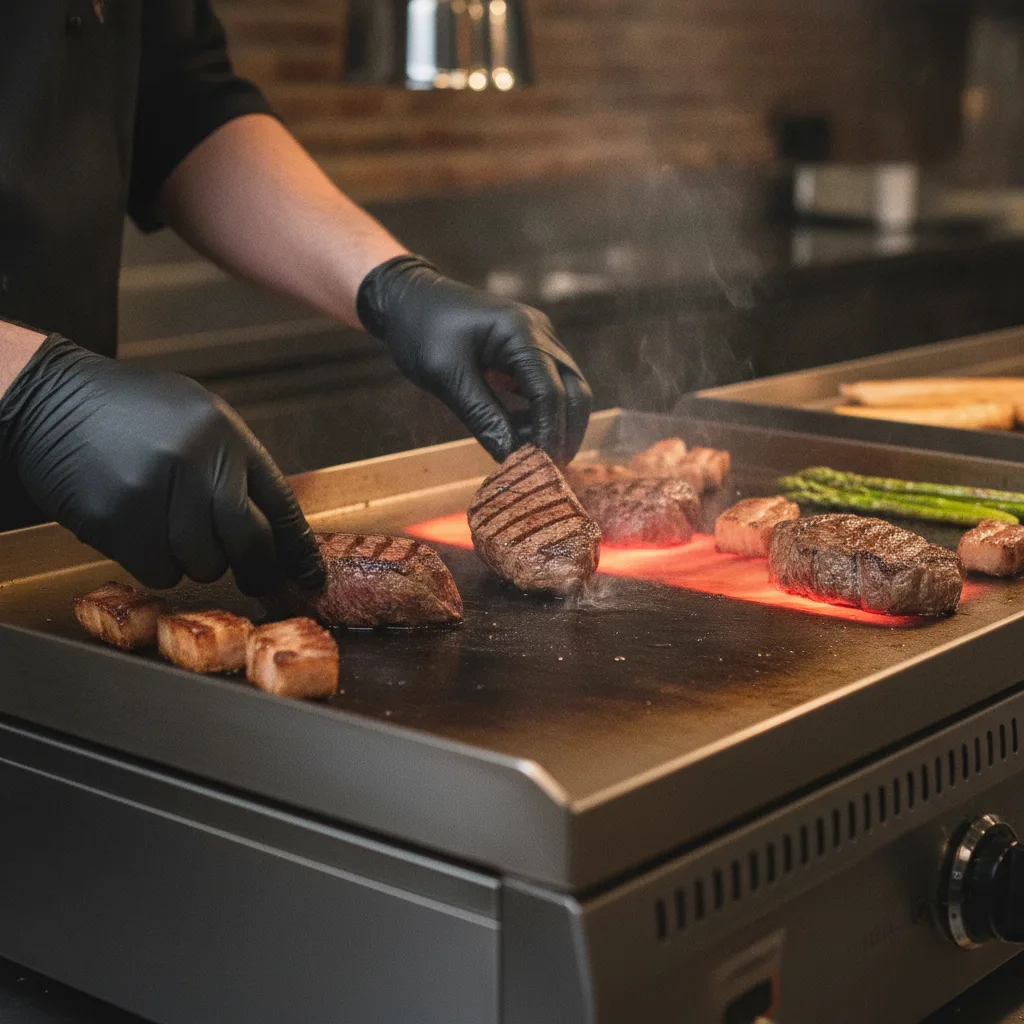
Low-temperature cooking on the plancha is attracting more and more fans of melt-in-the-mouth meat and precise cooking. Can you really get ultra-tender meat on a plate that heats to over 250 °C? The answer lies less in the absolute temperature than in how you manage the heat: searing zones, gentle zones and resting time. With a good stainless steel electric plancha and a few technical pointers, you can turn your plancha into a real precision tool. In this guide, you'll see how to adapt the principles of low-temperature cooking to the plancha, then apply them to practical recipes such as rib of beef and duck breast.
Low-temperature cooking on the plancha: the guide
Reading time: ~12 min
- Understanding low-temperature cooking and the plancha
- Setting your plancha for gentle, precise cooking
- Ultra-tender rib of beef on the plancha
- Tender duck breast on the plancha
- Choosing the right plancha
- Advantages and limitations
- FAQ
Understanding low-temperature cooking and the plancha
Low-temperature cooking in the culinary sense
In cooking, true low-temperature cooking means gentle heating between about 55 and 85 °C. The time & temperature combination is adjusted to achieve maximum tenderness, preserve nutrients and keep the natural colour of food. This approach is typical of sous-vide cooking, gentle oven cooking or gentle steaming below 100 °C – a far cry from the 200 to 260 °C of a standard plancha.
What a plancha really does
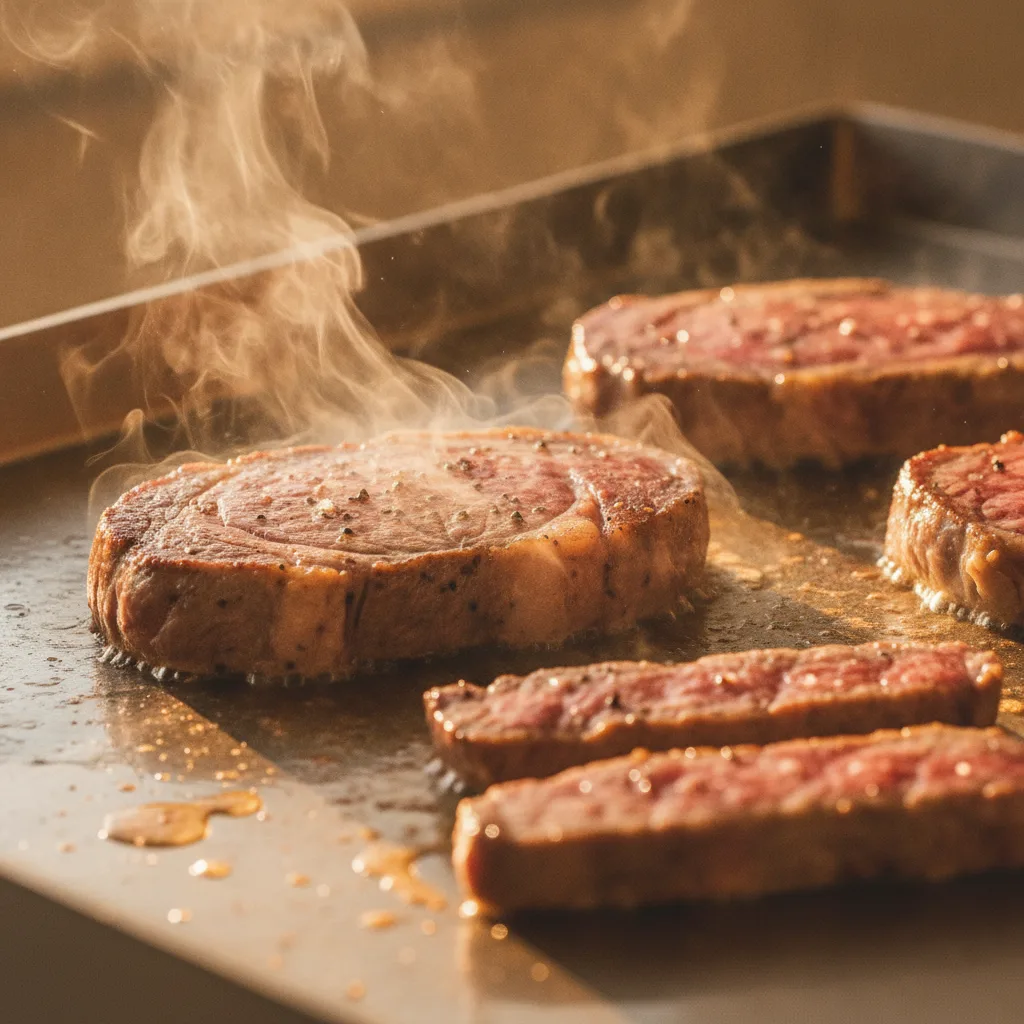
A plancha is a plate heated to a high temperature on which food is seared without a direct flame, often with little fat. On a quality plate, there is a very hot centre – ideal for searing – and a gentler outer area to finish cooking. By using these zones, and then the thermostat of a stainless steel electric plancha such as those from Planchaelec, you can get close to a gradual cooking approach.
Plancha and low temperature: partly compatible
The plancha doesn't cook at 55 or 65 °C. However, by searing at high temperature and then finishing on a cooler zone with the thermostat turned down, you get gentle cooking: ultra-tender meat, even cooking right through and less risk of a burnt surface.
Setting your plancha for gentle, precise cooking
The main temperature ranges to know
| Food | Searing | Gentle cooking / finishing |
|---|---|---|
| Red meat | ≈ 250 °C | 160–180 °C |
| White meat | 230–240 °C | 150–170 °C |
| Duck breast | 220–240 °C | 150–170 °C |
| Fish | 220–260 °C | < 100 °C possible |
| Vegetables / fruit | 150–200 °C | 140–160 °C |
Managing the heating zones
Preheating: switch the plancha on 10 minutes beforehand, close to the high temperature you're aiming for, without overloading the plate. Two zones: with several heating elements (Lux or Anthéa ranges), keep the centre very hot and set the outer area 40 to 80 °C lower. With a single thermostat, sear, then lower the temperature and naturally use the cooler edges. Resting: after cooking, place the meat on a rack or a warm plate and cover for 5 to 10 minutes: the heat spreads, the fibres relax and tenderness improves noticeably.
Ultra-tender rib of beef on the plancha
Cooking goal
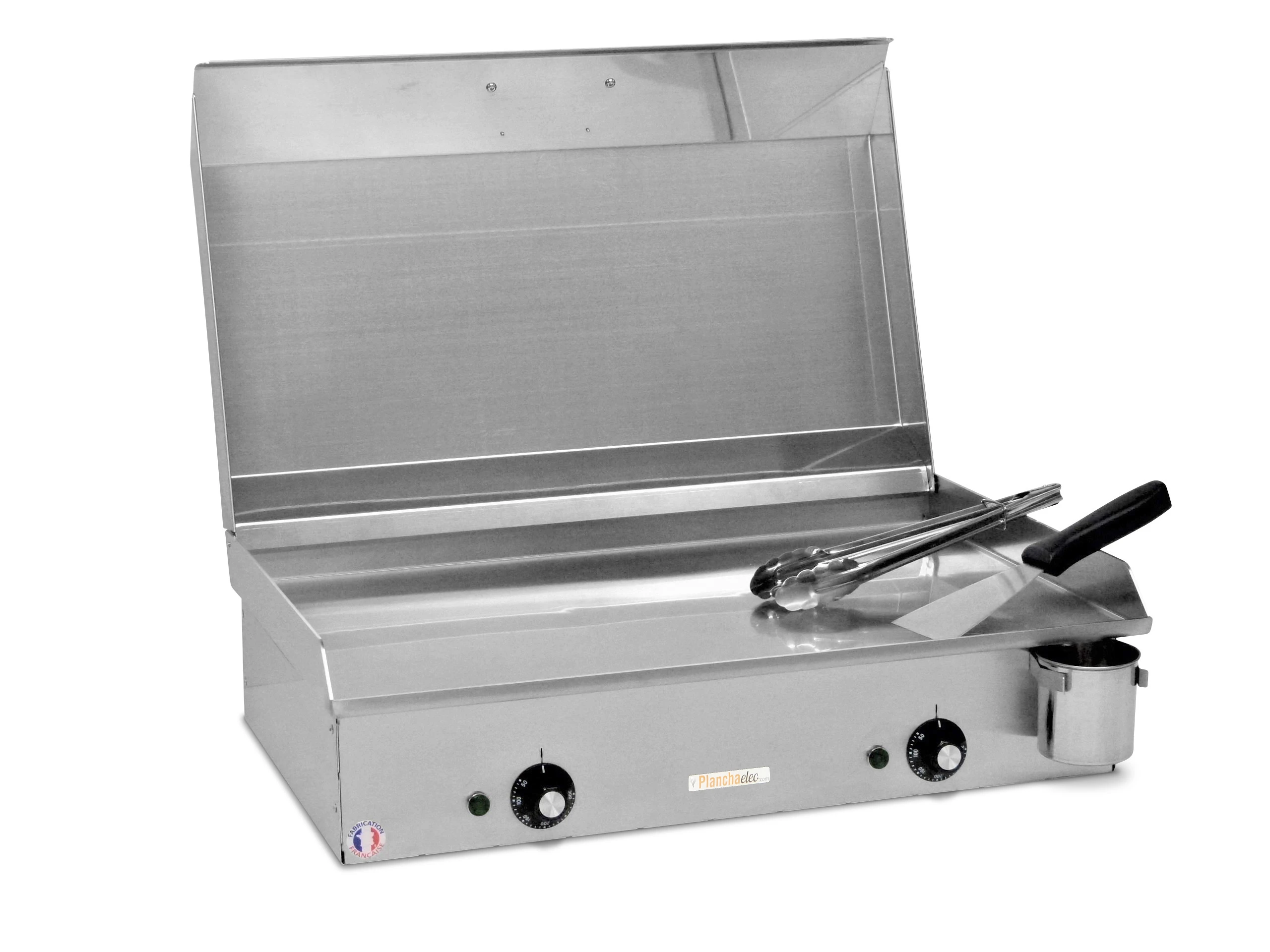
Powerful searing, gentle rise in core temperature and a long rest: you get a caramelised crust and an evenly pink centre.
Step-by-step method
1) Preparation: take the rib out 1 hour in advance, pat it dry, season and lightly oil the meat.
2) Plancha: preheat to 250 °C in the centre and 170–180 °C around the edges.
3) Searing: 2–3 minutes per side without piercing.
4) Gentle cooking: move to the cooler zone, aim for 170 °C and cook for 8–15 minutes per side. Core temperature: 48–50 °C very rare, 52–54 °C rare, 56–58 °C medium.
5) Resting: 10–15 minutes loosely covered; the temperature rises by another 2–4 °C before carving.
Tender duck breast on the plancha
What makes duck breast special
The challenge: render the thick layer of fat without burning the skin or overcooking the centre.
Detailed steps
1) Preparation: score the skin, season and leave at room temperature for 30–45 minutes.
2) Plancha: set between 200 and 220 °C with a zone at 160–170 °C.
3) Rendering skin-side down: 8–10 minutes, draining off the excess fat.
4) Flesh side: 3–6 minutes on the cooler zone, aiming for 55–58 °C in the centre.
5) Resting: 5–8 minutes, skin side up, then slice on the diagonal.
Choosing the right plancha
Plate thickness and material
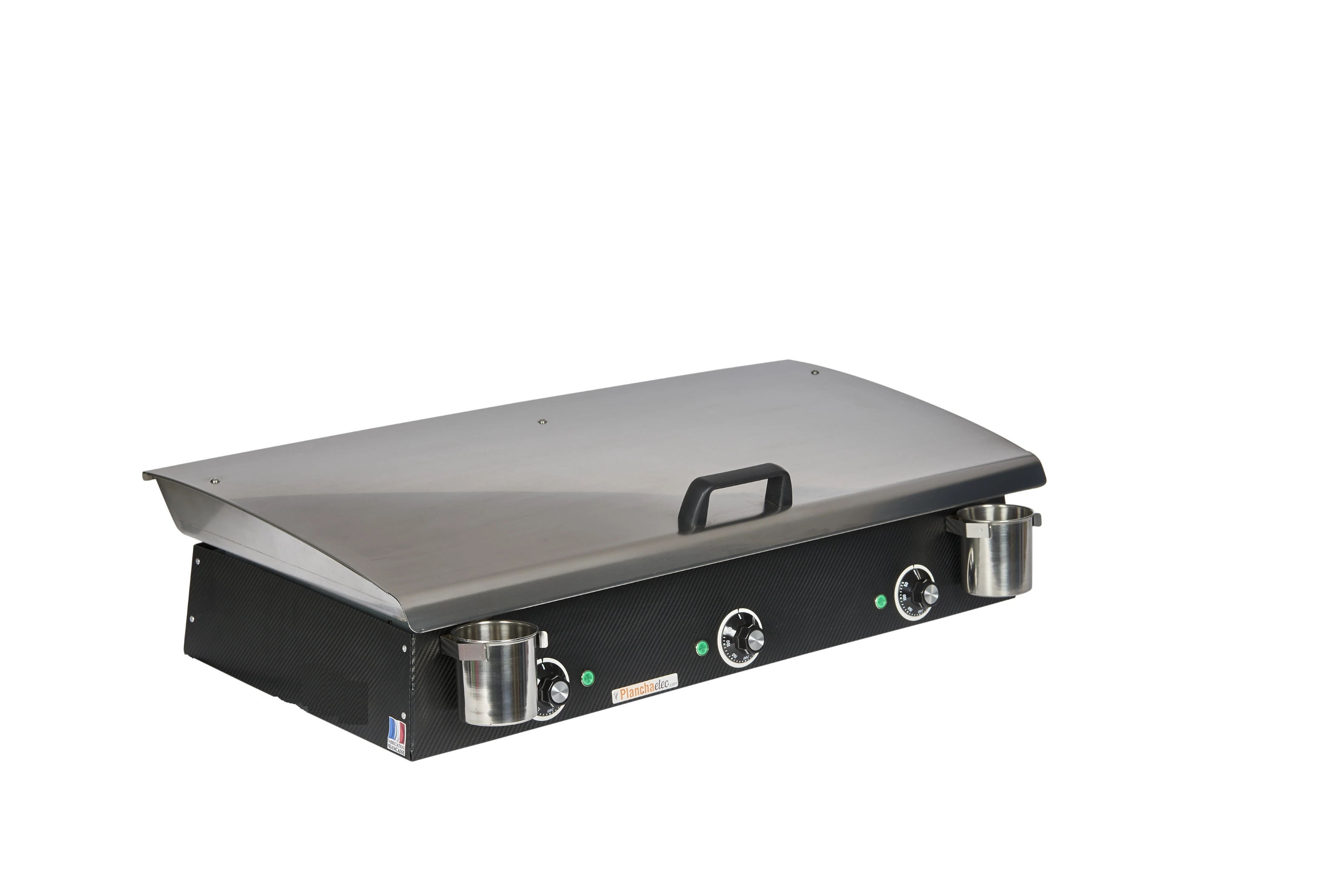
Choose a thick food-grade stainless steel plate (3 to 5 mm depending on the model) for good inertia and even heat distribution. The stainless steel electric planchas from Planchaelec meet these criteria.
Heating zones and power
Several independent zones, sufficient power and a precise thermostat (Lux and Anthéa ranges) make it easier to combine searing and gentle cooking.
Useful accessories
A dome or lid to create a mini oven, a probe thermometer for precision, a quality spatula: Planchaelec accessories.
Advantages and limitations
Strengths
- Heat control
- Fewer charring compounds
- Versatility
Limitations
It isn't true technical low-temperature cooking, it takes a little practice and it also depends on the size of the plate.
FAQ
Can you really do low-temperature cooking on the plancha?
In the strict sense (55 to 85 °C), no. But by searing and then finishing on a cooler zone, you reproduce a gentle, gradual cooking approach that gives very similar results in terms of tenderness.
What temperature should you aim for to get ultra-tender meat?
Sear at around 250 °C, finish at 160–180 °C. Probe thermometer: 48–50 °C very rare, 52–54 °C rare, 56–58 °C medium. Resting is essential.
How do you avoid burning the meat while keeping a good crust?
Careful preheating, quick searing in the centre, moving to the edges with the thermostat turned down, no piercing of the meat, a plate that isn't overloaded and resting off the plate before serving.
Used well, the plancha becomes a precision cooking tool capable of delivering ultra-tender meat thanks to clever management of temperatures and heating zones. For a made-in-France stainless steel electric model designed for this kind of control, explore the “choosing your plancha” guide on Planchaelec.