



 +33 4 78 55 45 69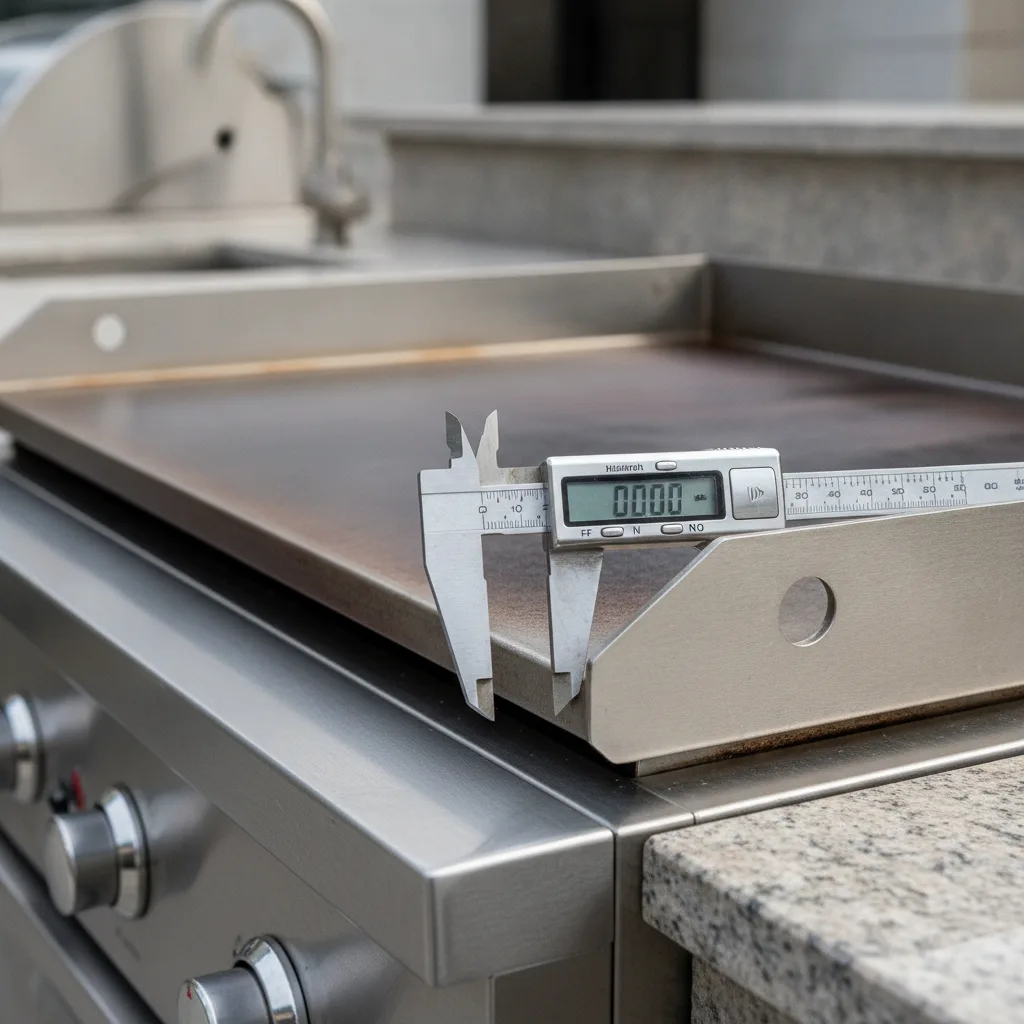
What thickness stainless steel plate should you choose for your plancha?
When looking to buy a quality stainless steel electric plancha, we often compare power, cooking surface or design, and wonder what plate thickness will be most suitable. Yet one technical criterion regularly goes unnoticed, even though it directly determines cooking quality: the thickness of the plate.
The question of stainless steel plate thickness is fundamental, as it determines thermal inertia, heating consistency, and the longevity of your appliance. Understanding why 6 mm has become the reference standard in high-end stainless steel plancha manufacturing means making an informed choice and avoiding disappointment in use.
Stainless steel plate thickness: Why is 4 mm the gold standard for your plancha?
Reading time: ~6 min
- What exactly is plate thickness?
- Why thickness directly affects cooking quality
- Comparison of thicknesses available on the market
- 4 mm: the reference thickness for a high-performance stainless steel plancha
- Other criteria to consider in addition to thickness
- FAQ
- Stainless steel plate thickness: 4 mm, the lasting balance for your plancha
What exactly is plate thickness?
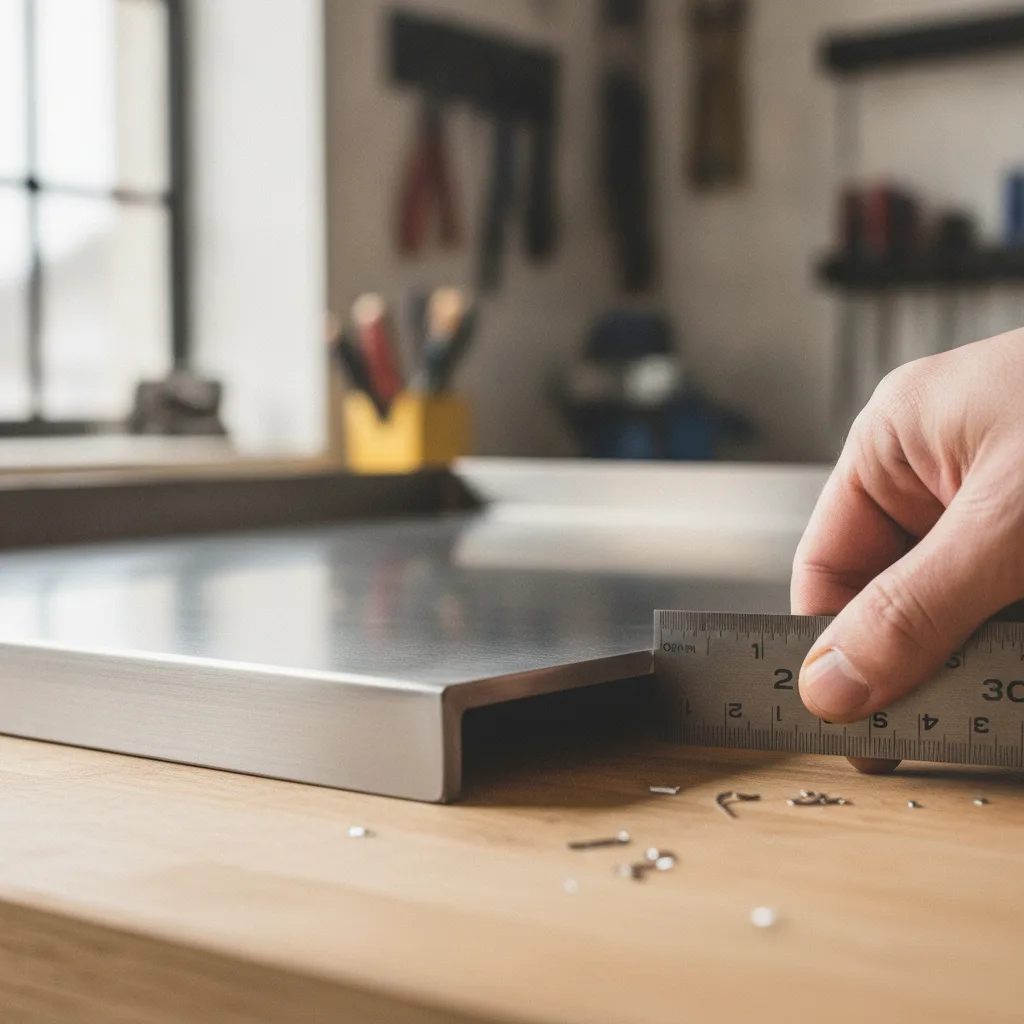
The cooking plate is the heart of your plancha. It is on this surface that food is placed, seared, and browned. Its thickness corresponds to the measurement in millimetres of the stainless steel (or other material depending on the model) that makes up this cooking surface. On a stainless steel electric plancha, this thickness is directly linked to the mass of metal available to absorb, store, and redistribute the heat produced by the heating elements located underneath.
The thicker the plate, the greater the metal mass, and the more pronounced the thermal effects in both directions: the temperature rise is slightly slower, but the stored heat is far more stable and even once the target temperature is reached. Conversely, a thin plate heats up quickly but loses its temperature as soon as cold food is placed on it, resulting in uneven cooking.
Why thickness directly affects cooking quality
Thermal inertia: the real challenge
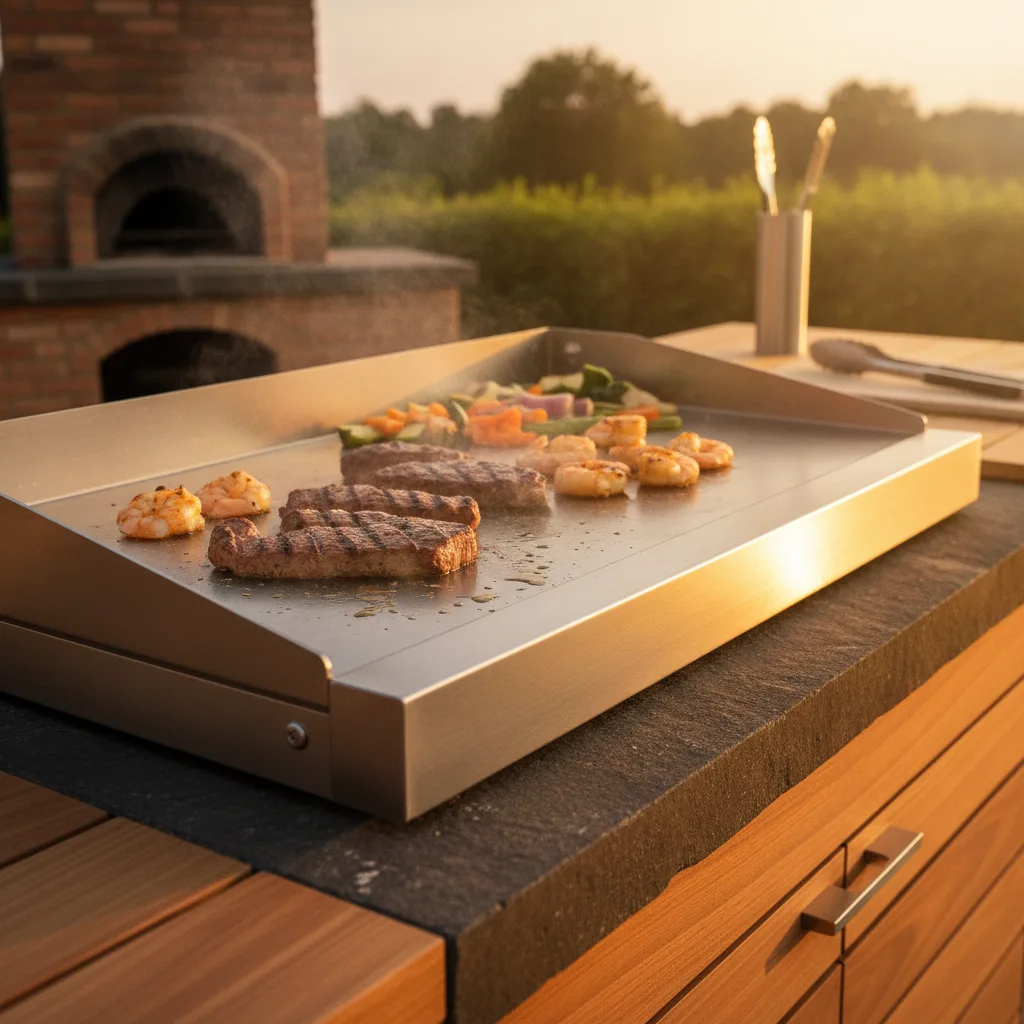
Thermal inertia refers to a material's ability to retain its heat despite external disturbances. On a plancha, every time you place cold food on it (a fish fillet straight from the fridge, frozen prawns, a thick cut of meat), you "steal" energy from the plate. If the plate is thin, its temperature drops sharply, cooking partially stops, and the food starts to steam in its own juices rather than searing properly. A 4 mm stainless steel plate has sufficient thermal reserve to absorb this thermal shock without losing its temperature. The result is visible: a beautiful golden colour, properly seared rather than stewed meat, and crispy rather than limp vegetables.
Even heat distribution
A thicker plate distributes heat more effectively in a lateral direction. This means that zones between the heating elements receive almost as much heat as those directly above them. On a thin plate, hot and cold spots are more pronounced, forcing you to constantly move food around to avoid uneven cooking. This consistency is particularly appreciated during family meals or gatherings with friends, when you are simultaneously cooking different foods in different areas of the plancha.
Resistance to warping
This is a well-known problem among users of budget planchas: the plate warps and buckles over repeated heating and cooling cycles. This phenomenon is directly related to the steel's thickness. A plate that is too thin is subject to thermal stresses it cannot properly absorb, causing micro-deformations that accumulate over time. A 4 mm stainless steel plate has far greater structural rigidity, allowing it to withstand hundreds of cycles without warping. The plancha thus maintains flat, even contact with food throughout its lifespan.
Comparison of thicknesses available on the market
The market offers several thicknesses depending on the range and intended use. Here is what each range represents in practical terms.
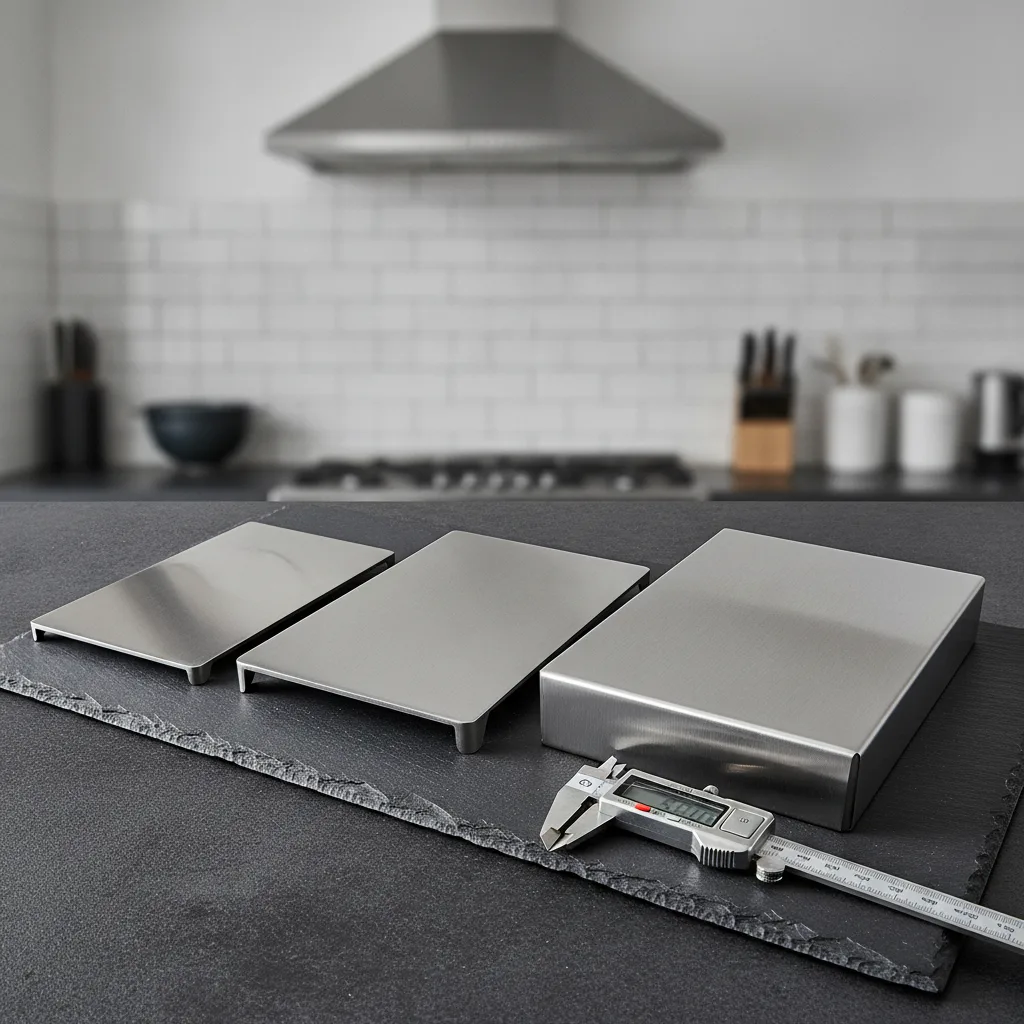
Overview of stainless steel plate thicknesses for planchas
| Thickness | Cooking profile | Resistance to warping | Recommended use |
|---|---|---|---|
| 3 mm | Fast heating, low inertia | Limited | Occasional use, light loads |
| 4 mm | Good compromise, adequate inertia | Adequate | Regular family use |
| 5 mm | High inertia, excellent consistency | Very good | Regular to intensive use, varied cooking |
| 6 to 8 mm | Maximum inertia, slow heating | Excellent | Professional use or brasero |
A 3 mm plate can work, but it is generally presented as a functional minimum rather than an optimal standard. It is suited to very occasional use, but shows its limitations as soon as cooking sessions become longer or quantities increase. The 6 to 8 mm range, meanwhile, is most relevant for professional settings or brasero planchas where robustness takes priority over heating speed.
4 mm: the reference thickness for a high-performance stainless steel plancha
Why 4 mm has become the standard
A thickness of 4 mm represents the ideal balance between several technical constraints. It offers sufficient thermal inertia to maintain a stable temperature during consecutive cooking sessions, even heat distribution across the entire surface, and warp resistance that guarantees the longevity of the appliance. This is the thickness found on quality stainless steel electric planchas — those designed to last and to deliver consistent cooking results year after year.
This is precisely the technical choice that Planchaelec has made for its planchas manufactured in France. The models in the Plancha Lux and Plancha Classic ranges feature a thick stainless steel plate designed to meet the demands of home cooks who want consistent results, meal after meal. The Plancha Lux 600 is a prime example: its thick stainless steel plate ensures temperature stability even when cooking for a large number of guests.
What this means in practice during a meal
Imagine an evening with eight people gathered around the plancha. You cook prawns, vegetables, and cuts of meat one after another without a break. With a 3 mm plate, the temperature drops with each new batch, and cooking becomes inconsistent. With a 4 mm plate, the plancha holds its heat, food sears properly from the very first contact, and you can cook continuously without waiting for the plate to come back up to temperature between each round. This is the cooking comfort that families and lovers of convivial meals are looking for.
Other criteria to consider in addition to thickness
Plate thickness is a key factor, but it is not everything. Here are the additional points to check when making a purchase.
The quality of the stainless steel used: food-grade stainless steel in grade 304, 430 or 316 offers far superior corrosion resistance compared to lower-quality steel, which is essential for outdoor use or near the sea. The power of the heating elements: a thick plate requires sufficient power to reach temperature within a reasonable time. The power ratings available on electric planchas vary by model, and should be matched to the size of the plate.
The grease collection system: a well-designed plate incorporates a slight incline or channel to direct juices towards a drip tray, making cleaning easier and preventing splatter. Plate materials in general: stainless steel is not the only option available. To compare with other choices such as enamelled cast iron, Planchaelec's guide to plancha plate materials offers a comprehensive overview.
Plate maintenance also plays a role in durability. A well-maintained 4 mm stainless steel plate can last for many years without losing its cooking qualities. The stainless steel plancha cleaning guide details best practices for preserving the cooking surface.
FAQ
Is a 3 mm plate sufficient for regular use?
A 3 mm stainless steel plate is functional for very occasional use, but shows its limitations as soon as cooking sessions become regular or extended. Its low thermal inertia leads to frequent temperature drops when cold food is added, which compromises searing quality. It is also more vulnerable to warping over time. For regular family use, a thickness of 4 to 5 mm delivers significantly better results.
What is the cooking difference between a 4 mm and a 5 mm plate?
The difference becomes noticeable when cooking large quantities or in quick succession. A 4 mm plate already performs well for standard family use, but a 5 mm plate maintains its temperature better during peak demand (large amounts of food added at once). It is also slightly more resistant to warping in the long term. For frequent meals with many guests, the 5 mm option represents a fully justified investment.
Does plate thickness affect preheating time?
Yes, a thicker plate takes slightly longer to reach its target temperature, as the mass of metal to be heated is greater. In practice, this difference is minimal on a well-designed electric plancha, whose heating elements are sized accordingly. The gain in thermal inertia and cooking consistency more than compensates for this slight increase in preheating time, which amounts to a few extra minutes at most.
Can a thick stainless steel plancha be used indoors?
Absolutely. A stainless steel electric plancha can be used both outdoors and indoors, provided there is adequate ventilation. Plate thickness has no bearing on this. For more details on the precautions to take for indoor use, Planchaelec's guide to using a plancha indoors without smoke will answer your questions.
Stainless steel plate thickness: 4 mm, the lasting balance for your plancha
Stainless steel plate thickness is one of those technical criteria that makes all the difference between an ordinary plancha and an appliance that lasts and truly cooks well. A 4 mm plate represents the ideal balance between thermal inertia, even heating, and warp resistance, for regular family use or meals with friends. This is the standard that Planchaelec has chosen for its planchas manufactured in France, with a commitment to quality that is reflected in every detail of the manufacturing process. To choose the model best suited to your use and your space, consult the electric plancha buying guide available on the website.