



 +33 4 78 55 45 69
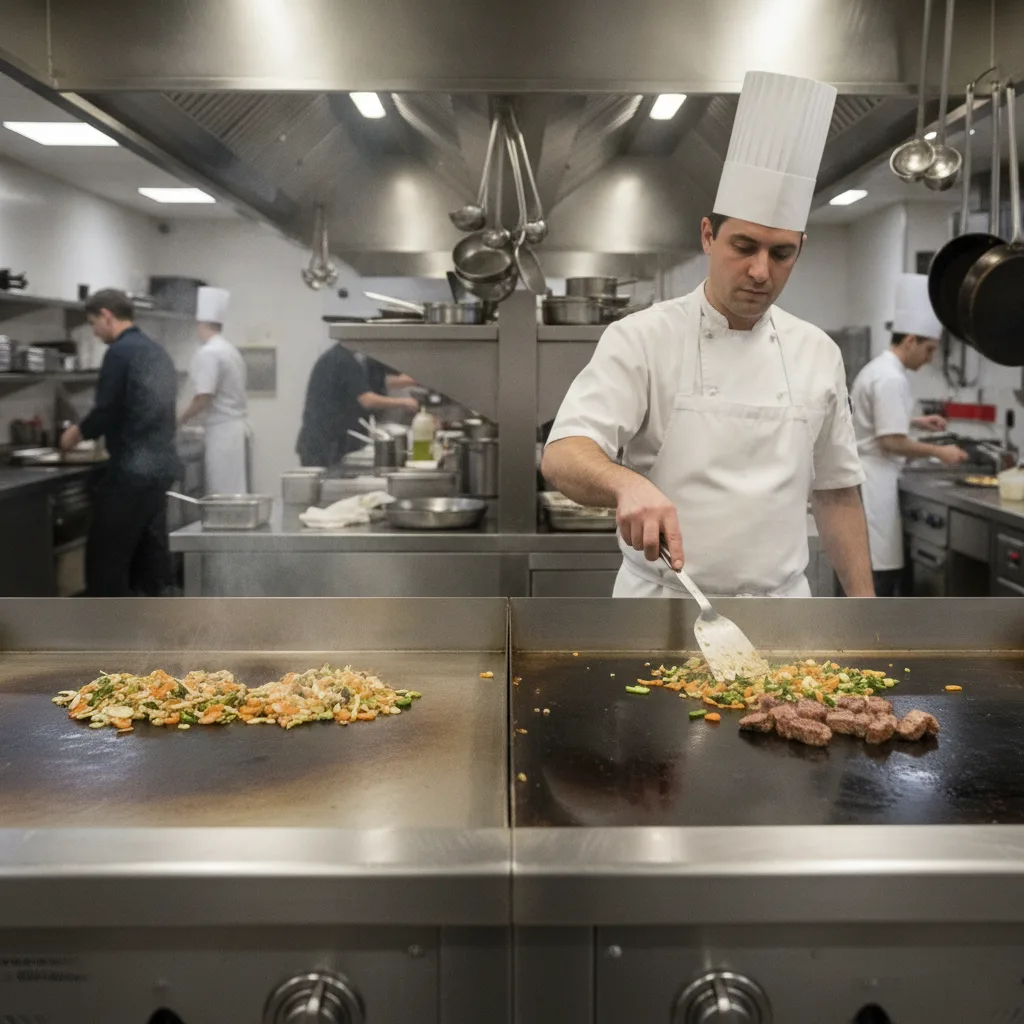
Between performance, ease of use and budget, the stainless steel vs hard chrome plancha comparison raises many questions for home cooks and professionals alike.
Introduction
Choosing between a stainless steel plancha and a hard chrome plancha is a question asked by keen home cooks and catering professionals alike. Both materials have undeniable qualities, but their performance differs depending on use, cooking frequency and each user's requirements. Behind a sometimes similar appearance lie fundamental technical differences, particularly in terms of thermal inertia, scratch resistance and long-term durability. This article offers a rigorous comparative analysis to help you make the choice best suited to your situation.
Stainless steel or hard chrome plancha: which should you choose?
Reading time: ~6 min
- What these two materials really are
- Stainless steel or hard chrome plancha: the technical comparison
- Which material for which user?
- Care and lifespan by material
- Criteria to check before buying
- Why food-grade stainless steel stands out for demanding home use
- Stainless steel vs hard chrome plancha: the choice depends mainly on use
What these two materials really are
Before comparing their performance, it's useful to understand what actually distinguishes a stainless steel plate from a hard chrome plate.
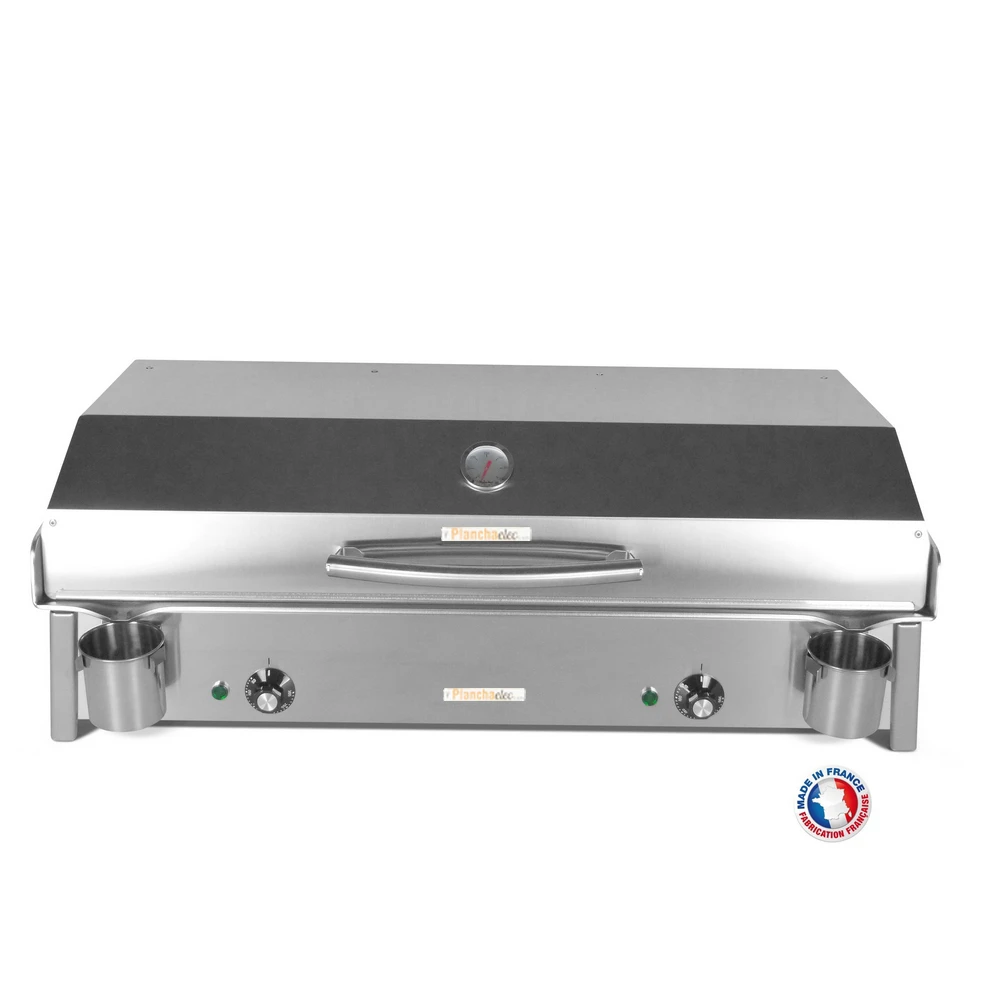
A stainless steel plancha is made from solid steel that naturally resists corrosion. Its composition gives it a modern, hygienic look that is very popular for outdoor cooking. Stainless steel plates are generally between 3 and 6 mm thick, which allows fast heating. On the other hand, this thinness limits thermal inertia, i.e. the plate's ability to retain heat when cold food or large quantities are placed on it.
A hard chrome plancha, for its part, is based on a steel plate (often carbon steel) covered with a hard chrome coating applied in a thin but extremely resistant layer. This coating makes the surface stainless, non-stick and particularly smooth, with a characteristic mirror effect. Hard chrome plates designed for intensive use are commonly 16 to 20 mm thick, giving them a much greater heat reserve than stainless steel.
Stainless steel or hard chrome plancha: the technical comparison
The most decisive difference between these two materials lies in their thermal behaviour. A 4 mm stainless steel plate heats up quickly and reacts fast to thermostat changes, but can lose temperature uniformity when cooking batch after batch or placing large amounts of food on it at the same time. For a family that cooks at the weekend, this is perfectly acceptable.
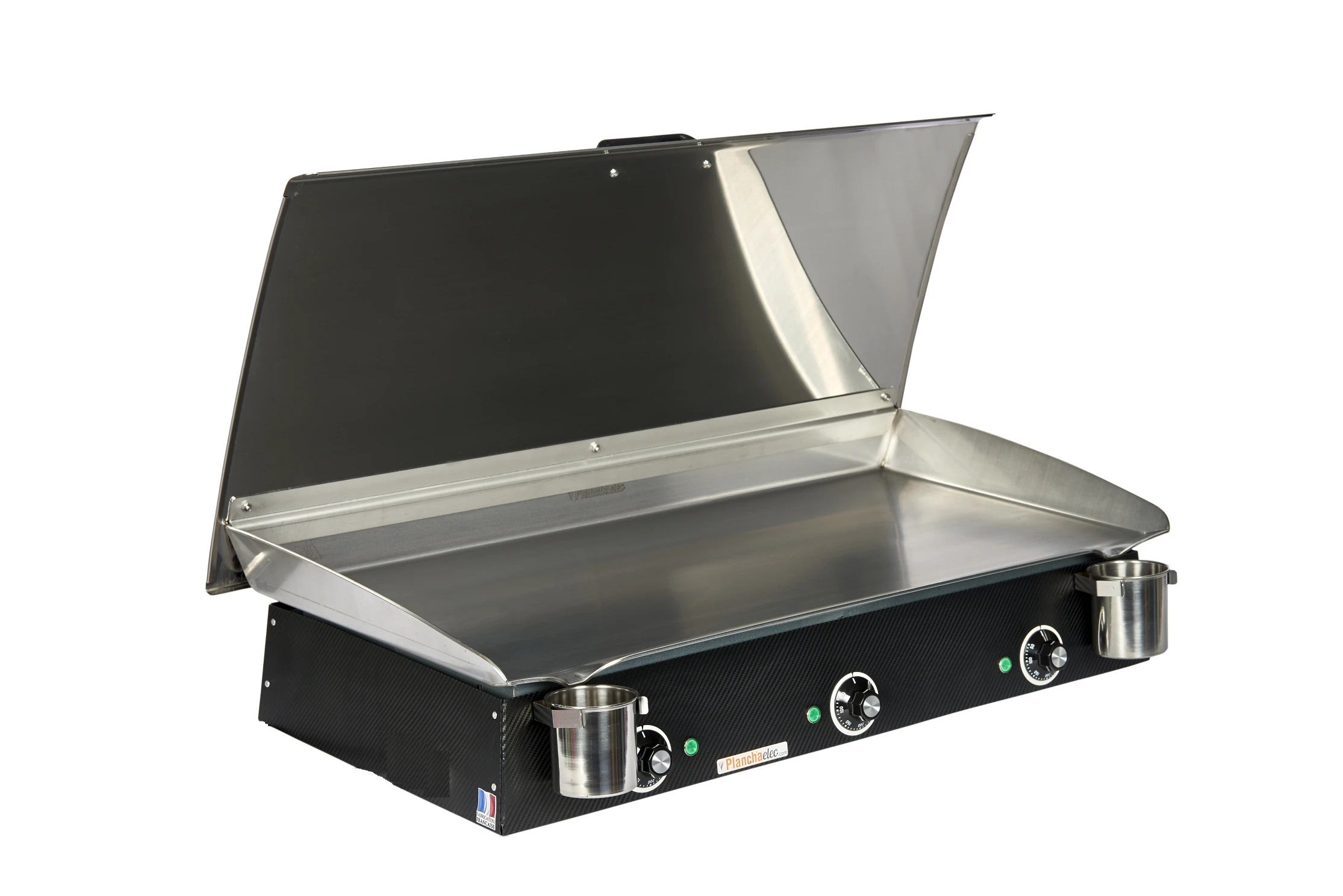
An 18 mm hard chrome plate, by contrast, takes a little longer to reach its working temperature, but once hot it maintains stable, even heat over the whole surface for hours. It is precisely this advantage that makes it the reference material for professional chefs, caterers and restaurateurs who run service after service without a break.
| Criterion | Stainless steel plancha | Hard chrome plancha |
|---|---|---|
| Typical thickness | 3 to 6 mm | 16 to 20 mm |
| Thermal inertia | Moderate | High |
| Heat uniformity | Good | Excellent |
| Corrosion resistance | Good (natural) | Very good (chrome layer) |
| Cleaning | Simple | Simple to moderate |
| Usage profile | Home user, regular use | Professional, intensive use |
In terms of corrosion resistance, both materials perform well. Stainless steel resists rust very well but can dull over time, especially outdoors when exposed to the weather. Thanks to its protective layer, hard chrome does not present this risk. The thicker the chrome layer (expressed in microns), the more durable the plate. For a professional model, a layer of more than 30 microns is generally recommended, and some high-end models reach up to 96 microns.
Which material for which user?
The question isn't which one is objectively “better”, but which one suits how you will really use it.
Home cooks who love convivial cooking
If you're a home cook who loves convivial cooking, organising meals with friends at the weekend or family barbecues, a stainless steel plancha meets your needs perfectly. It is light, attractive, easy to clean and performs well enough for cooking sessions of one to two hours. It is generally more affordable than a hard chrome plancha, and its care requires no special precautions.
Professionals, restaurants and caterers
If you run a restaurant or catering service, or regularly cook for large gatherings with repeated, prolonged cooking sessions, hard chrome is the logical choice. Its high thermal inertia guarantees a stable temperature throughout service, with no drop in performance between batches. The mirror surface also makes it easier to clear residue and stands up well to professional cooking tools.
Semi-professional use or demanding home cooks
There is also an intermediate category: planchas with stainless steel or hard chrome plates 6 to 8 mm thick, offered by some manufacturers, which provide a good compromise between responsiveness and inertia. These models suit semi-professional use or demanding home cooks who want to approach the performance of professional equipment without the cost.
To explore the different ranges available and find the model suited to your use, you can read the guide to choosing your plancha from Planchaelec.
Care and lifespan by material
Cleaning a stainless steel plancha is particularly simple. Deglazing while hot, followed by a wipe with a sponge or a scraper spatula, is enough in most cases. Stainless steel doesn't need seasoning or special protection against moisture, which makes it a practical material for everyday use.
Stainless steel plancha
Cleaning a hard chrome plate follows a similar principle: deglaze while hot by pouring on a little cold water or using ice cubes to loosen residue, then use a spatula or a slightly abrasive sponge. The mirror surface makes this easier by stopping residue from becoming encrusted. However, avoid overly aggressive tools that could damage the chrome layer in the long term.
Hard chrome plate
In both cases, regular, suitable cleaning significantly extends the life of the plate. For more on good practice, the Planchaelec stainless steel plancha cleaning guide details the steps to follow for each type of surface.
Criteria to check before buying
Whatever material you choose, several criteria deserve particular attention when buying.
The main technical criteria of a plancha
Plate thickness: it directly determines thermal inertia and the ability to cook batch after batch without loss of performance.
The quality of the chrome coating (in microns) for hard chrome planchas: a high figure guarantees better durability.
Power and temperature control: a good thermostat lets you adjust the temperature precisely to the food being cooked.
The type of power (electric or gas): this choice affects practicality, especially indoors or on a balcony.
Accessories included or available: cooking lid, spatulas, grease tray, protective cover.
Why food-grade stainless steel is the right choice for demanding home use
Planchaelec has chosen food-grade stainless steel for all its electric planchas, with plates 3 to 5 mm thick depending on the model. This material offers excellent corrosion resistance, great stability at high temperatures and recognised hygienic properties in the food sector. Contrary to some preconceptions, a well-designed stainless steel plancha can perform very close to hard chrome for home use, even intensive use.
Stainless steel also has the advantage of being fully recyclable, with no added coating that could deteriorate over time or interact with food. For anyone looking for a reliable, attractive and durable plancha made in France, it is a consistent and rational choice.
FAQ
What is the main difference between a stainless steel plancha and a hard chrome plancha?
A stainless steel plancha is made of solid stainless steel that naturally resists corrosion, usually 3 to 6 mm thick, which allows fast heating but more limited thermal inertia. A hard chrome plancha is based on a thicker steel plate, often 16 to 20 mm, covered with a thin layer of hard chrome that makes it stainless, very smooth and particularly resistant, with a much greater heat reserve.
Which material is best for intensive professional use?
For a restaurant, catering service or any intensive use with continuous cooking, a hard chrome plancha is generally preferred. Its high thermal inertia keeps the temperature stable and even across the whole surface, even when cooking large volumes, which makes it the reference choice for many professionals.
Can a food-grade stainless steel plancha suit demanding home use?
For a home cook who cooks regularly and wants reliable equipment, a well-designed food-grade stainless steel plancha of adequate thickness offers performance very close to hard chrome at home. It remains easy to clean, hygienic, durable and fully recyclable, which makes it a consistent choice for demanding home use.
Stainless steel vs hard chrome plancha: the choice depends mainly on use
In short, hard chrome is aimed above all at professionals and intensive use, thanks to its high thermal inertia and long-term durability. Food-grade stainless steel fully meets the expectations of demanding home cooks looking for a hygienic, easy-to-clean plancha that performs well for regular cooking. The choice between the two materials therefore depends less on a hierarchy of quality than on matching technical characteristics to actual use.
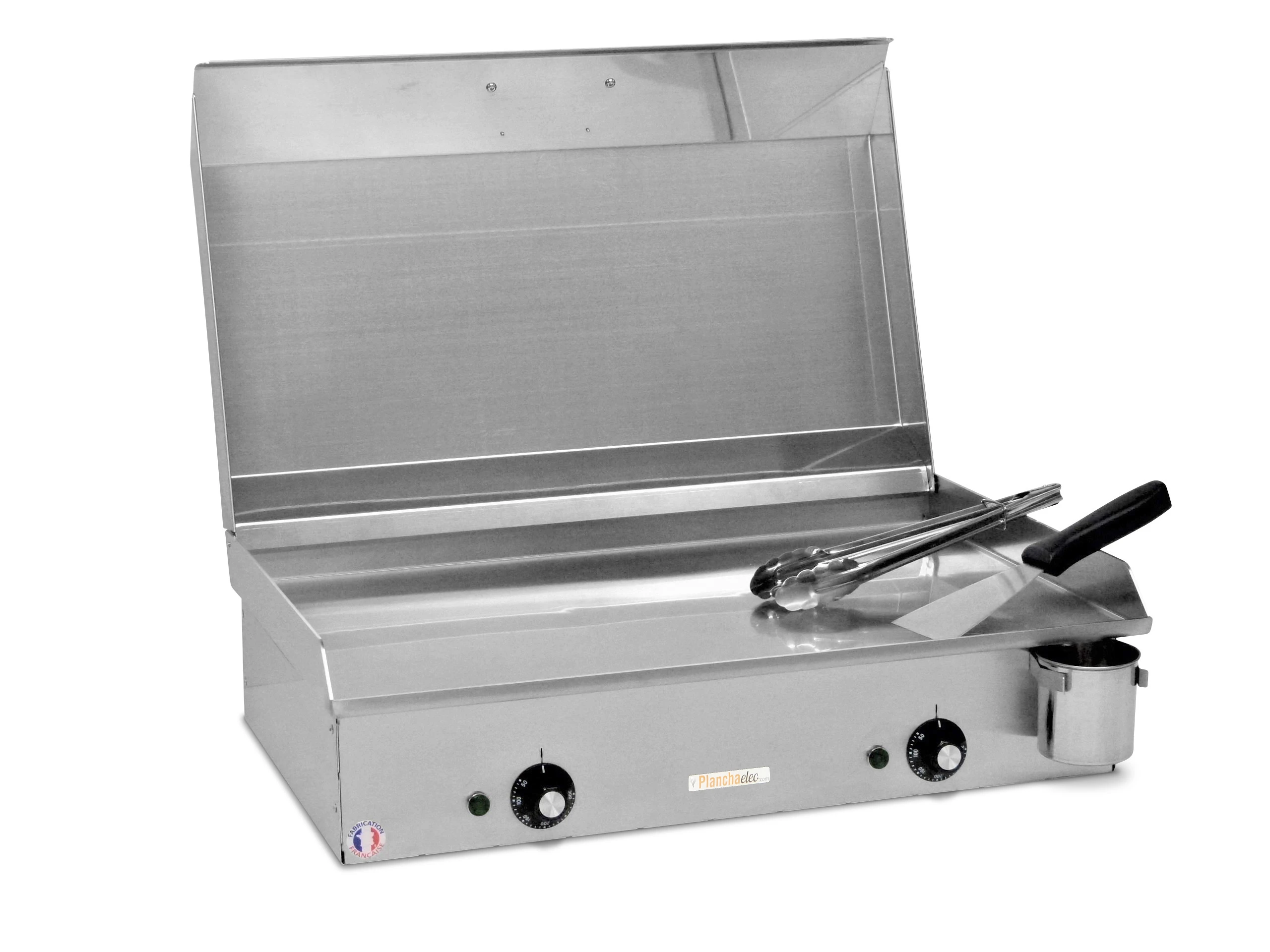
To discover the stainless steel electric planchas available and find the one that suits your needs, go straight to the Planchaelec plancha range.