



 +33 4 78 55 45 69
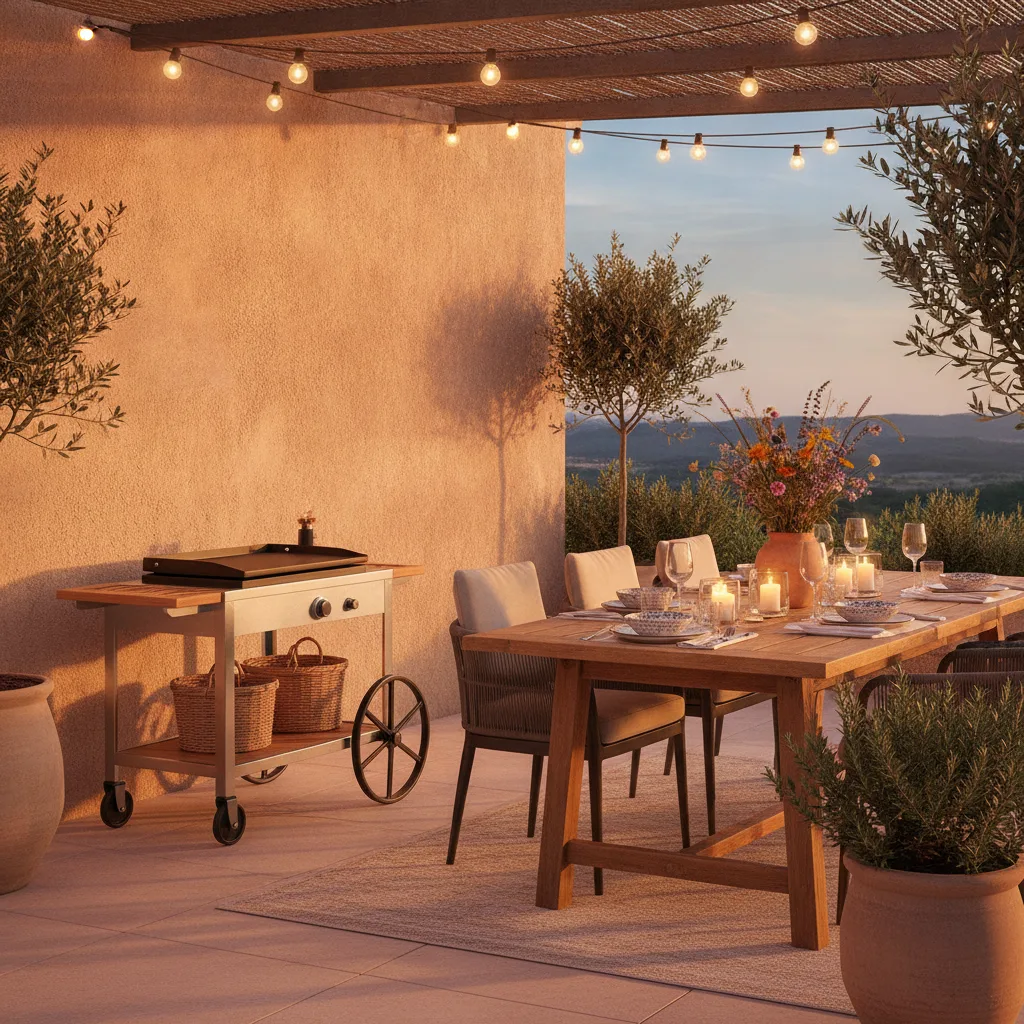
The best place to put a plancha depends on your living space, your cooking habits and a few simple safety and comfort rules.
The best place to put a plancha
Introduction
Choosing the best place to put a plancha is about much more than looks or immediate convenience. A poor location can spoil cooking comfort, create dangerous situations or simply ruin the enjoyment of outdoor meals.
Whether you have a large terrace, a garden, a balcony or even an indoor space, a few fundamental criteria help you find the ideal set-up. Here is a complete guide to installing your plancha in the best conditions.
Where to put your plancha: the guide to the right location
Reading time: ~6 min
- Why the location of your plancha changes everything
- The essential criteria for choosing the right spot for your plancha
- Terrace, garden, balcony or indoors: which space should you choose?
- Ergonomics and organisation of the plancha corner
- Dos and don'ts
- FAQ
- The right location makes all the difference
Why the location of your plancha changes everything
A good location isn't just about finding a free corner on the terrace. It determines your comfort while cooking, the safety of those around you, the lifespan of your appliance and the convivial atmosphere you want to create. A poorly positioned plancha, exposed to the wind or too close to flammable items, quickly becomes a nuisance. Conversely, a well-thought-out plancha corner turns every meal into a moment of sharing, whether you're cooking for four or for a whole crowd.
At Planchaelec, a French specialist in stainless steel electric planchas, this thinking about installation is an integral part of the advice given to users. Even before choosing your model, it's worth thinking about where it will go.
The essential criteria for choosing the right spot for your plancha
Stable, flat, non-flammable ground
The first essential is to install your plancha on a stable, perfectly level surface. Slightly sloping ground can cause grease to run uncontrollably and unbalance the appliance. Choose tiled, stone, concrete or stabilised paving surfaces. Absolutely avoid grass, unprotected wooden boards, PVC tiles or any material sensitive to radiant heat. If your terrace is wooden, a protective metal sheet placed under the trolley can be a suitable solution.
Managing wind and smoke
This is one of the most often overlooked criteria, yet one of the most important. Install your plancha sheltered from the prevailing winds, and position the cooking area so that smoke drifts away from the house and your guests. A plancha exposed to the wind cools down faster, uses more energy and can throw out grease. Observe the usual wind direction in your garden or on your terrace before deciding on the final location.
Protection from the sun and the weather
A semi-sheltered space is ideal. A pergola, arbour, large parasol or shade sails offer a double advantage: protecting the cook from the blazing summer sun and protecting the appliance from the weather (Planchaelec planchas are rated IPX4, so they resist splashes, but never use an electric plancha in the rain). Avoid spots in full midday sun, which are uncomfortable for cooking and potentially dangerous in very hot weather.
Safety distance from flammable items
Keep at least one metre of clear space between your plancha and anything combustible: shrubs, hedges, wooden trellises, resin or rattan garden furniture. Also avoid placing the appliance directly under a tree or an awning made of heat-sensitive material. For an electric plancha, also make sure the power cable isn't exposed to the appliance's heat and doesn't become a trip hazard.
Proximity to electrical connections
For an electric plancha like those offered by Planchaelec, being close to an outdoor socket is essential. The socket must be protected against splashing water (IP44 protection rating minimum outdoors, on a circuit protected by a 30 mA residual current device) and the power cable must reach the appliance without being stretched or laid across a walkway. Remember to check the power available on the circuit concerned, especially for large models such as the Lux 830 Electric Plancha, which requires a suitable connection.
Terrace, garden, balcony or indoors: which space should you choose?
The terrace, the benchmark location
In most set-ups, the terrace remains the best place to install a plancha. It offers a stable, often already level base, direct access to the house for trips to and from the kitchen, and natural integration with the outdoor dining area. It's also the space best suited to a trolley on wheels, such as the dedicated trolley, which lets you easily move everything around as needed.
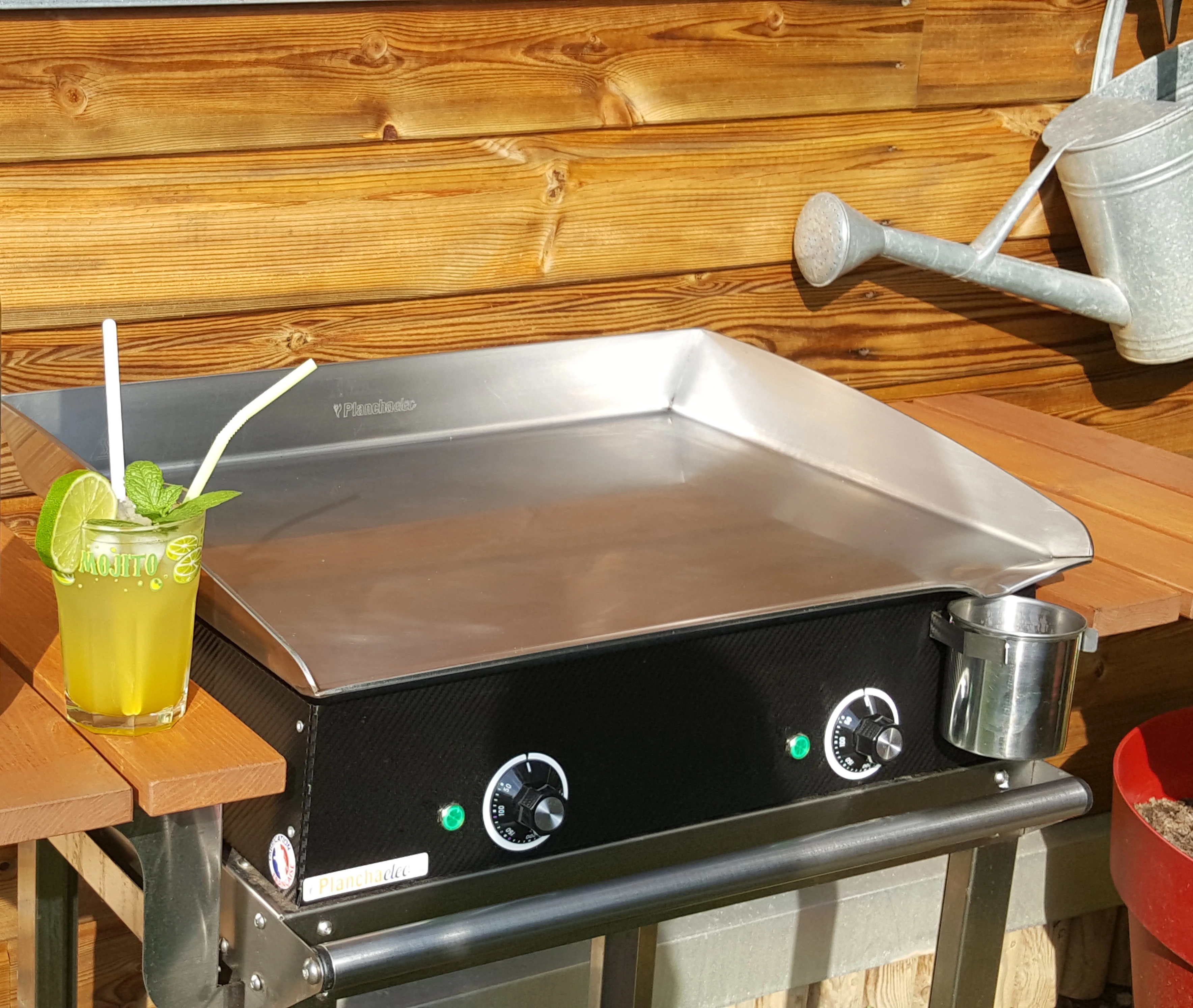
On a paved or tiled terrace, position the plancha in a corner set slightly back from the table, so that the cook has their back to the prevailing wind and the smoke drifts away from the guests. Leave enough space to move freely around the appliance.
The garden, for a more elaborate plancha corner
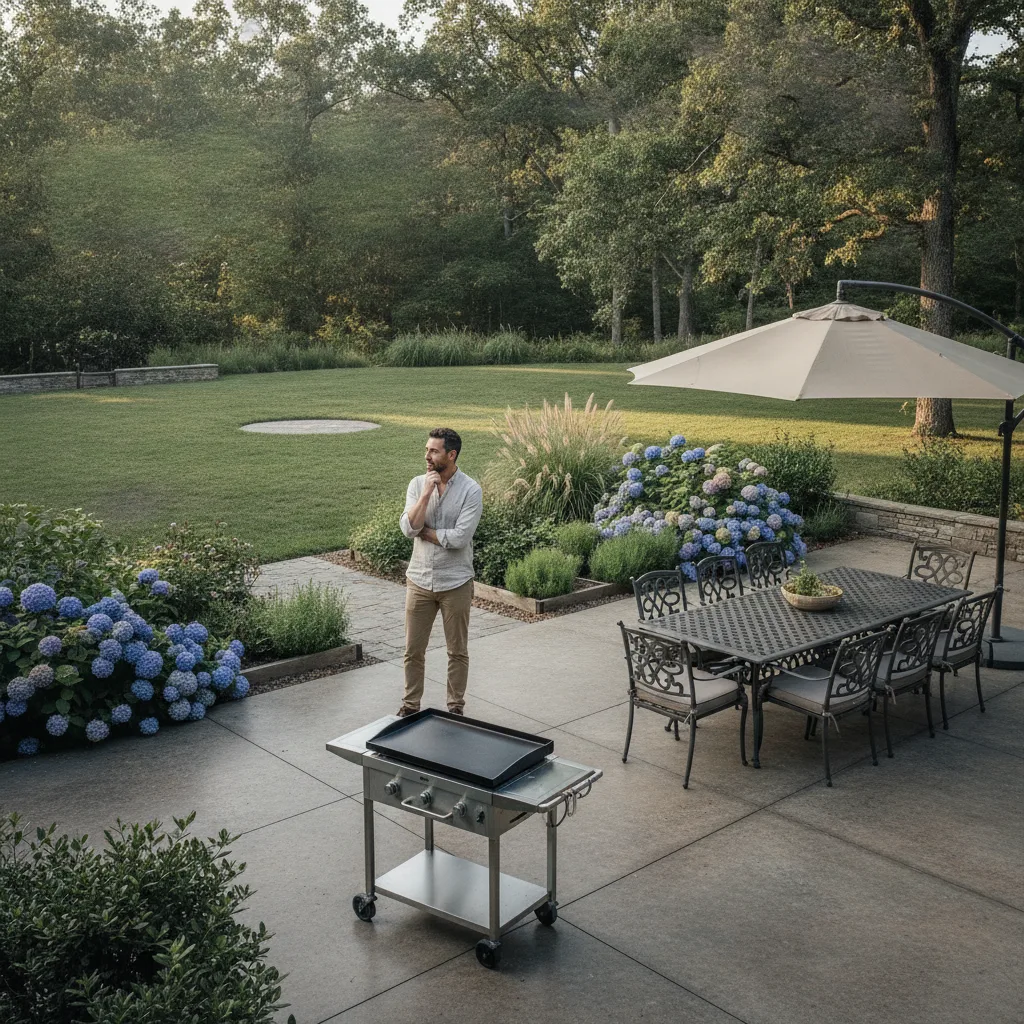
In a garden, you have more freedom to create a real living space around the plancha. Ideally, choose a spot set slightly back from the lawn, on a concrete slab or stabilised area, in the partial shade of a pergola or a large tree that is far enough away. This kind of layout can include a worktop for preparation, storage for utensils and a dining area right nearby to encourage conviviality.
A counter facing the cooking surface lets guests chat with the cook without being exposed to spatter, which is the very essence of plancha cooking: cooking in company, without being isolated.
The balcony, a possible option with an electric plancha
In a flat, the balcony is often the only outdoor space available. Electric planchas are generally permitted there, unlike charcoal barbecues, which are usually banned in apartment buildings. Nevertheless, check your building's rules and make sure the balcony has an outdoor socket or that you can run a cable there safely.
On a balcony, install the plancha near the railing to help smoke escape outside, without placing it directly against the balustrade. Leave enough space to move around and choose a compact model such as the Néo 420 Plancha, which is particularly suited to small spaces.
Indoors, with a few precautions
It's perfectly possible to use an electric plancha indoors, as long as you follow a few simple rules. Open the windows before you start cooking, preheat the plate properly (about ten minutes) to avoid smoke caused by heating too quickly, and limit the cooking time of very fatty foods. The juice collection tray on Planchaelec models plays an essential role in preventing fat from burning, which is the main source of smoke.
Ergonomics and organisation of the plancha corner
The ideal worktop height
Working height is an often underestimated but decisive factor for cooking comfort. The generally accepted reference is between 85 and 95 cm, i.e. about 10 to 15 cm below your elbow bent at 90 degrees. This height lets you handle the spatulas and serving tongs without straining your back or shoulders.
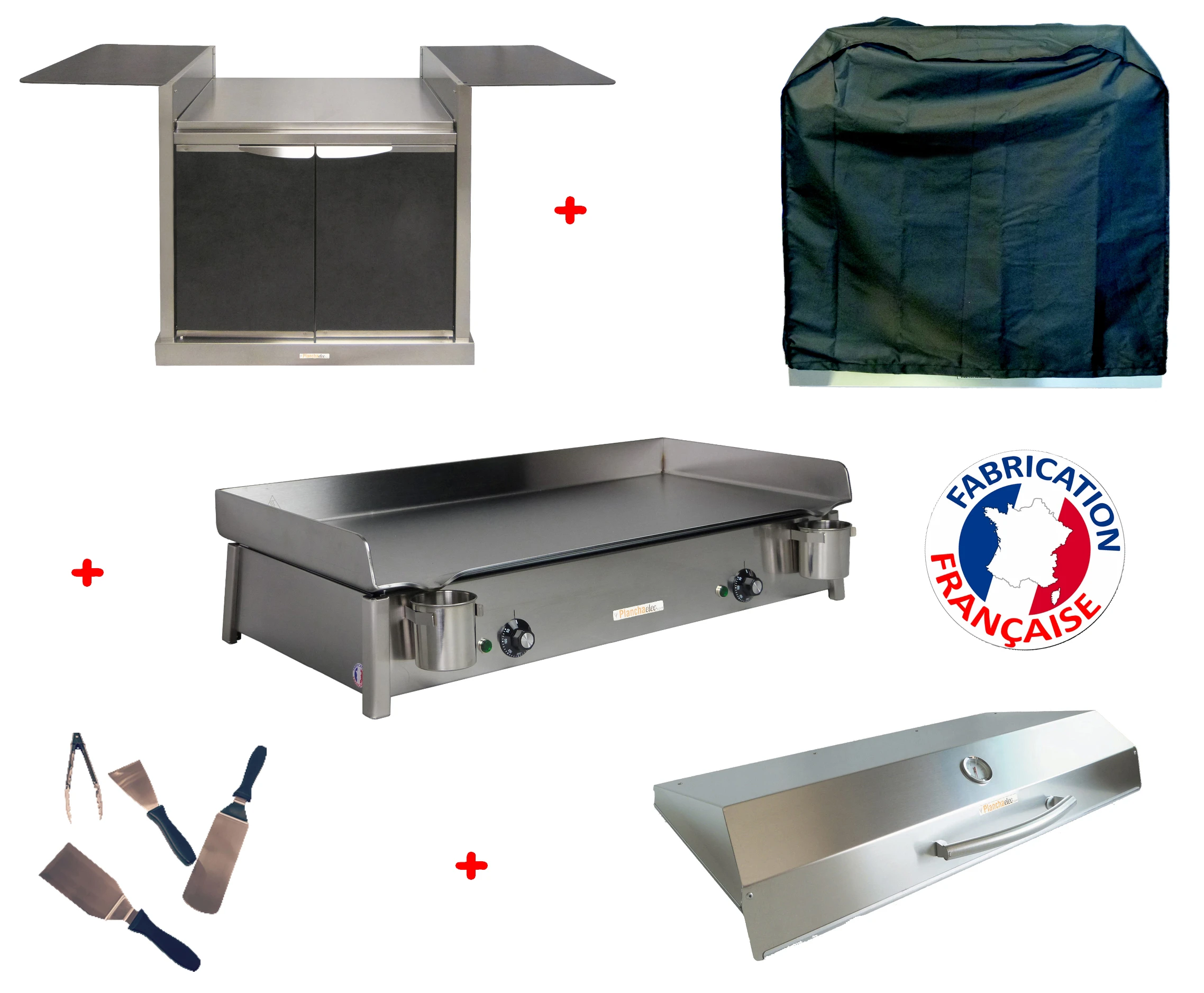
If you opt for a dedicated trolley, check that the total height (trolley + plancha) suits your build. A trolley that's too low forces you to bend over constantly, which soon becomes tiring during long cooking sessions.
Logical organisation of the zones
A well-designed plancha corner is organised around three distinct zones: preparation (a worktop next to the plancha), cooking (the plancha itself) and serving (plates and utensils within easy reach). If possible, add a water point nearby to make cleaning and rinsing food easier. Planchaelec utensils, such as the scraper spatula and serving tongs, are designed to fit naturally into this workspace.
Dos and don'ts
| Do | Don't |
|---|---|
| Choose stable, flat, non-flammable ground (concrete, stone, tiles). | Install the plancha directly on grass, unprotected wood or unstable ground. |
| Position the plancha sheltered from prevailing winds, with smoke directed away from the house. | Place the appliance under a tree or less than one metre from a hedge or shrubs. |
| Install a light shelter over the cooking corner (pergola, parasol, arbour). | Use a plancha indoors without sufficient ventilation. |
| Keep at least one metre away from anything combustible. | Stretch the power cable across a walkway or leave it exposed to heat. |
| Check that the outdoor socket is suitable (IP44 rating or higher). | Place the plancha in full midday sun without protection for the cook. |
| Allow enough space to move around the appliance. | Overlook the direction of the smoke in relation to guests and the house windows. |
| Adapt the worktop height to your build (generally 85 to 95 cm). |
FAQ
Can you install an electric plancha on a balcony?
Yes, an electric plancha is generally permitted on a balcony, unlike charcoal or gas barbecues, which are often banned in apartment buildings. However, check your building's regulations. Position the appliance near the railing to help smoke escape, and make sure you have a suitable electrical socket or safe access to power. Compact models such as the Néo 420 Plancha are particularly well suited to small spaces.
What safety distance should you keep between the plancha and a wall or hedge?
It's recommended to keep at least one metre of clear space between your plancha and anything that could catch fire: hedges, shrubs, garden furniture made of sensitive materials, wooden structures. For stone or concrete walls, the distance can be slightly shorter, but make sure the radiant heat doesn't damage nearby surfaces. Also keep windows in mind to stop smoke getting into the house.
Do you need a dedicated trolley or can you put the plancha on an ordinary table?
A dedicated trolley is much better than an ordinary table for several reasons. It provides the right working height (a standard garden table is often too low), it generally has a lower shelf for storing utensils and accessories, and it lets you easily move everything around as needed. Planchaelec offers several trolley models designed specifically for its planchas, with careful finishes and optimal compatibility with the appliances' dimensions.
Can an electric plancha be used indoors?
Yes, this is one of the main advantages of an electric plancha over a gas plancha. It can be used in the kitchen as long as you ensure sufficient ventilation: open windows and an extractor hood if available. Preheating the plate properly (about ten minutes) limits smoke at the start of cooking. The grease tray built into Planchaelec models also reduces burning, the main source of smoke when cooking fatty foods.
The right plancha location makes all the difference
Finding the best place to install a plancha is above all about taking the time to observe your space and anticipate the real conditions of use. Stable ground, protection from the wind, a suitable working height and good organisation around the cooking area make all the difference between an enjoyable experience and an awkward set-up. Whether you're fitting out a terrace, a garden or a balcony, Planchaelec electric planchas, designed and made in France, adapt to all these settings thanks to their full range of trolleys, accessories and lids designed for both outdoor and indoor use.