



 +33 4 78 55 45 69
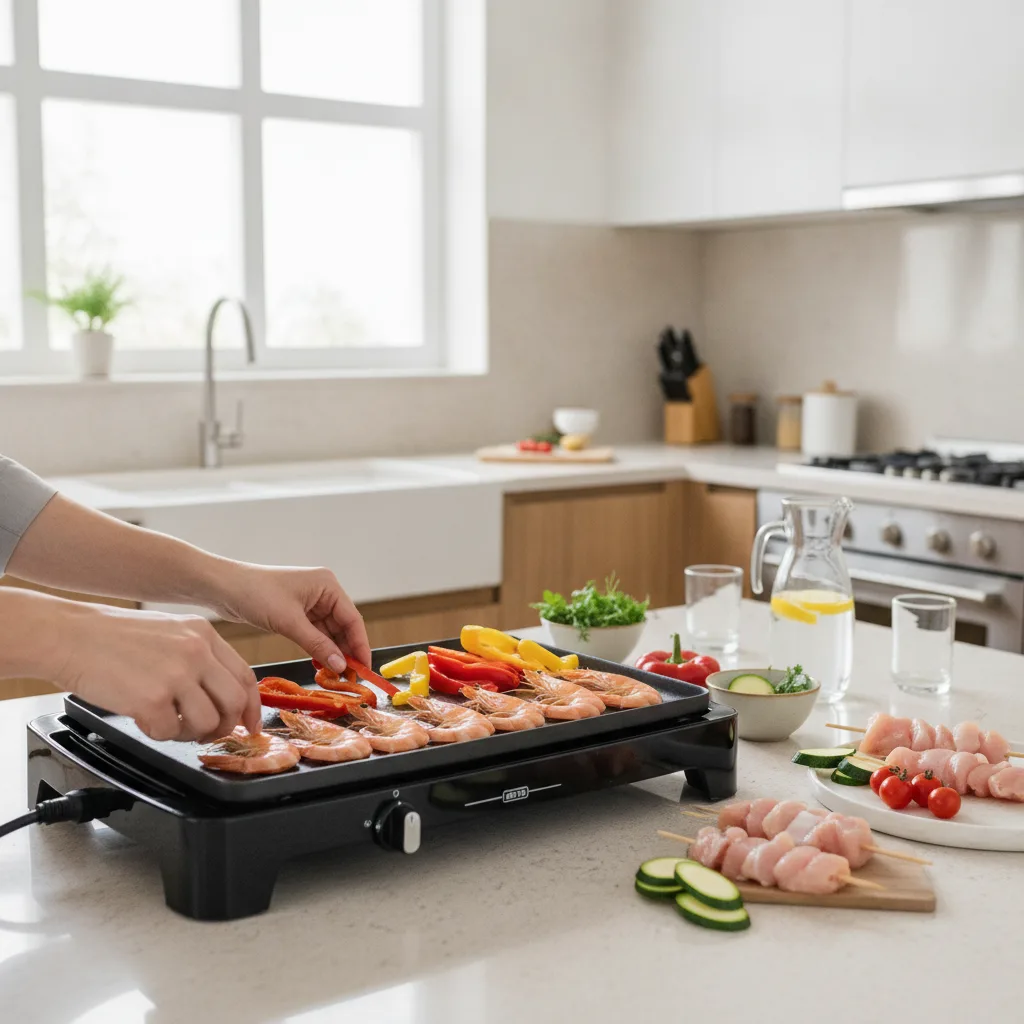
Plancha cooking is attracting more and more households looking to combine pleasure, simplicity and a balanced diet. But are its health benefits real? Here is what you need to know.
Is plancha cooking really healthier?
Reading time: ~8 min – Contents
- What makes plancha cooking truly healthy
- Plancha and barbecue: what difference for your health?
- The choice of plate material, a health criterion in its own right
- How to cook healthily on the plancha every day
- Foods to favour (and those to limit)
- Looking after the plancha, a pillar of healthy cooking
- FAQ
- Healthy plancha cooking, a balanced choice
Healthy plancha cooking is attracting growing interest, and with good reason: this way of cooking has many advantages from a dietary point of view. Less added fat, fast and controlled cooking, preserved flavours... there is no shortage of arguments. But is it reality or just a passing trend? We take stock to separate fact from fiction and give you the keys to healthy cooking on your plancha. This advice is general and does not replace the opinion of a doctor or dietitian.
What makes plancha cooking truly healthy
The nutritional principles of plancha cooking
The plancha is based on a simple principle: searing food on a very hot plate with little or no added fat. This has a direct impact on the nutritional quality of the dishes prepared.
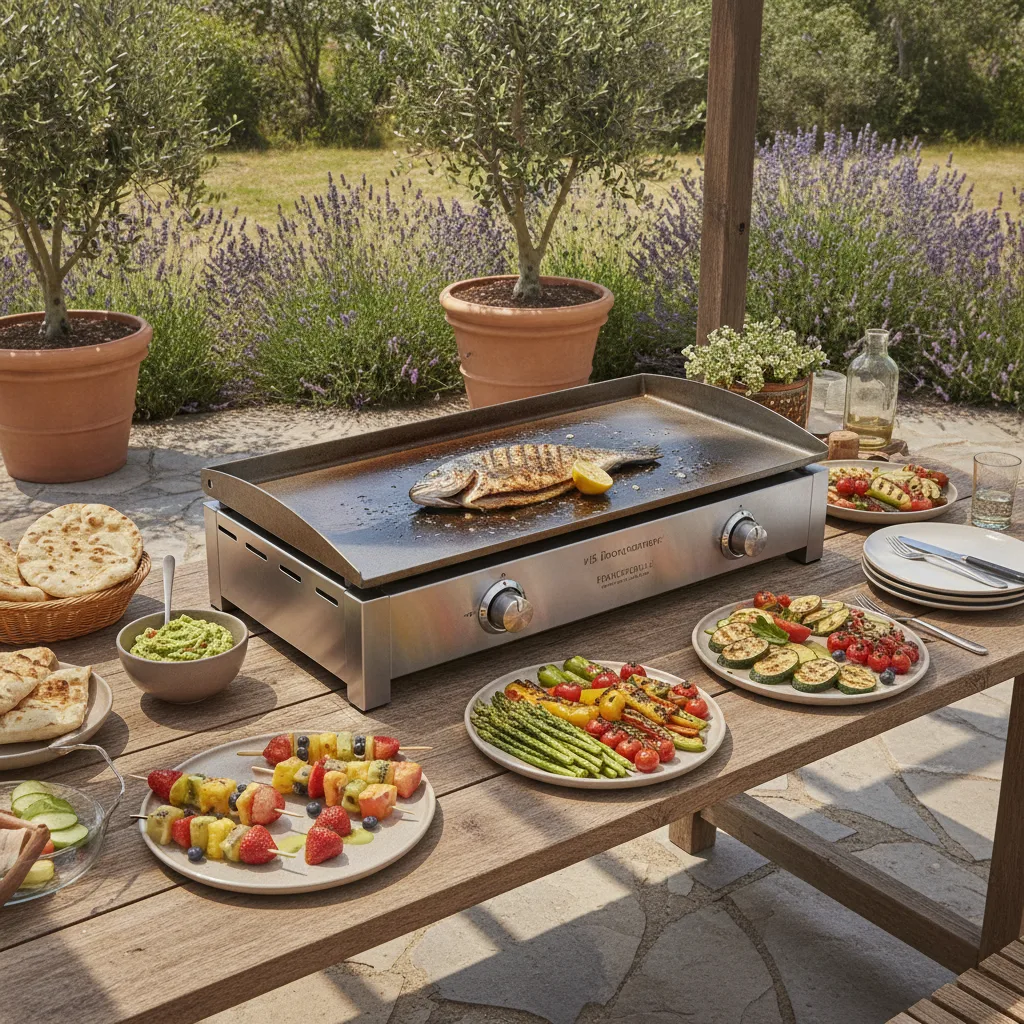
The plancha is one of the most interesting ways of cooking from a dietary point of view. Food cooks quickly in direct contact with the plate, which preserves its natural flavours without the need for rich sauces or large amounts of oil. This is an important difference compared with deep-frying or some pan-frying.
Fast cooking also plays a part in preserving certain micronutrients. Long cooking in water draws some of the water-soluble vitamins into the cooking water; a short sear on the plancha limits these losses. Vegetables grilled quickly at around 220 °C therefore generally keep their vitamin C and some of their B vitamins better than vegetables boiled for a long time.
Another often underestimated advantage: fatty meats lose some of their fat during cooking, as it runs off into the collection tray or channel, depending on the model. The result on the plate is therefore slightly less fatty than the original piece, without having to change the recipe.
Plancha and barbecue: what difference for your health?
Plancha vs barbecue: the impact of smoke and temperature
The comparison between plancha and barbecue is inevitable, and it generally favours the plancha from a health point of view. The main reason lies in temperature control and the absence of contact between fat and flames.
On a traditional barbecue, fat drips onto the embers and produces smoke loaded with polycyclic aromatic hydrocarbons (PAHs), compounds classified as potentially carcinogenic, which then settle on the food. On the plancha, this phenomenon is greatly reduced: the plate separates the food from any direct flame.
Temperature control is the other decisive factor. The hotter and longer meat is cooked, the more undesirable compounds such as heterocyclic amines form, especially when food blackens. It is therefore advisable to avoid extreme temperatures and charring. The electric plancha has a real advantage here: its thermostat keeps the temperature stable throughout cooking.
The practical guidelines to remember are as follows: fish fillets and vegetables at around 220 °C, meat and large whole fish at around 250 °C. These levels give good colour and even cooking, without ever reaching the point of charring.
The choice of plate material, a health criterion in its own right
Not all materials are equal when it comes to healthy cooking. This criterion, often overlooked when buying a plancha, deserves your full attention.
For the cooking surface, choose a quality stainless steel plate: it is a stable material under normal conditions of use, with no coating that can wear or flake over time.
Food-grade stainless steel also offers great longevity and is easy to maintain, which contributes to cooking hygiene. A well-cleaned plate does not retain residues from one cook to the next, which limits the risk of cross-contamination between foods.
This is precisely the criterion Planchaelec electric planchas were designed around: they feature a food-grade stainless steel plate. Whether you choose the Néo Plancha or the Lux Plancha, you benefit from an adjustable thermostat that lets you stay within the temperature ranges recommended in this article.
How to cook healthily on the plancha every day
Good practice for everyday use of the plancha
The plancha is a tool, and like any tool, its value depends on how you use it. Here are some good practices for getting the most out of this way of cooking from a nutritional point of view.
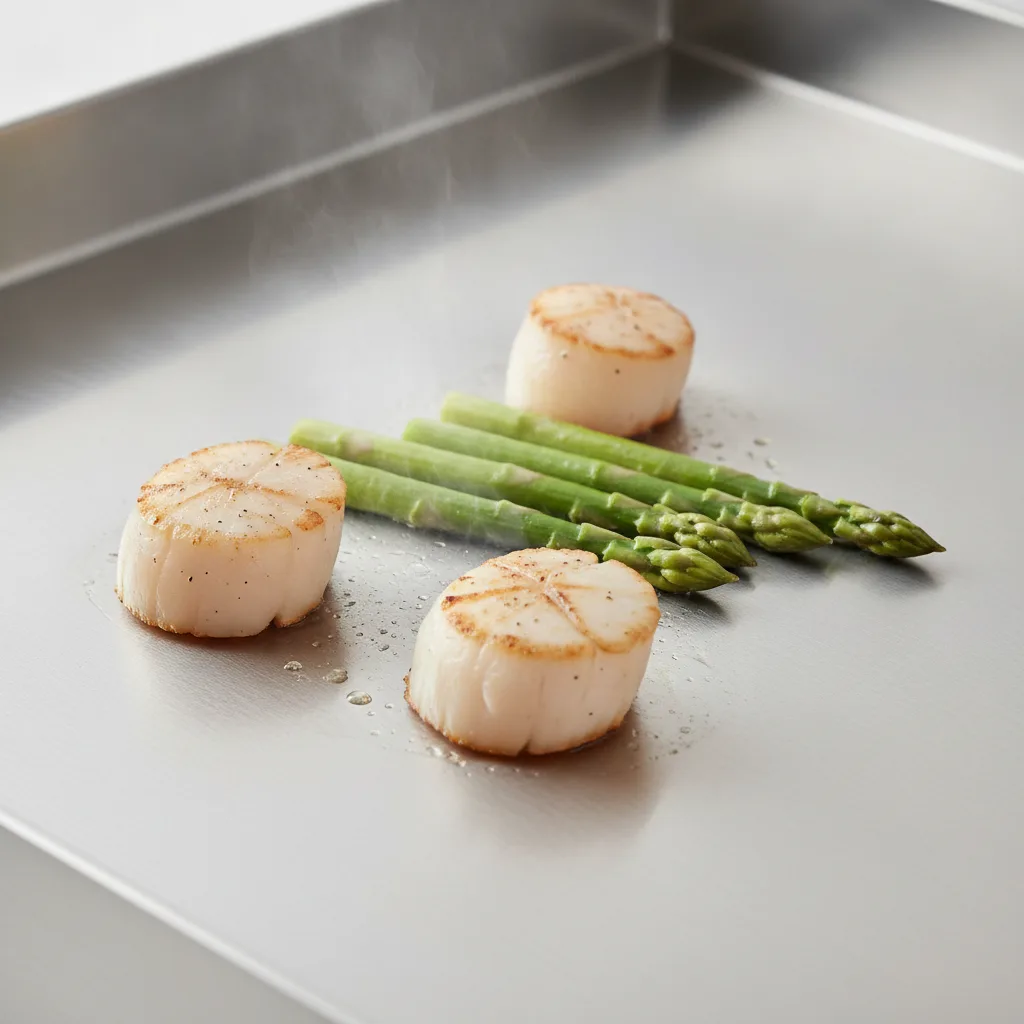
Choosing your food is the first thing to act on. Fish (tuna, salmon, sardines, sea bream), seafood, poultry breast and vegetables are natural allies of balanced plancha cooking. Fatty meats such as chipolatas, pork chops, rib-eye steaks or lamb chops can certainly be cooked on the plancha, but are best eaten in moderation, as their saturated fat content remains high even after cooking.
Light marinades are an excellent way to add flavour without making dishes heavy. A drizzle of olive oil, lemon juice and fresh herbs (thyme, rosemary, basil, coriander, parsley) are enough to flavour meat and fish. Garlic, turmeric and mild spices also add interest without adding fat.
For oil, the rule is simple: a minimum, applied with a brush or kitchen paper to the cold plate before heating. The aim is not to grease the surface generously, but simply to stop food sticking in the first few seconds of cooking.
Finally, short cooking times are an advantage to preserve. Sardines need only 2 to 3 minutes per side, a rare piece of beef 3 to 4 minutes on each side (poultry and minced meat, on the other hand, must always be cooked through). Avoiding unnecessarily long cooking helps preserve flavours and limits the formation of undesirable compounds.
Foods to favour (and those to limit)
To guide your everyday choices, here is a summary of the foods best suited to healthy plancha cooking, and those that are best eaten in greater moderation.
| To favour | To eat in moderation |
|---|---|
| Lean and oily fish (tuna, sea bream, salmon, sardines, mackerel) | Fatty sausages and cured meats (chipolatas, merguez, chorizo) |
| Seafood (shrimps, king prawns, scallops, mussels) | Pork chops, rib-eye steaks, lamb chops |
| Lean poultry (chicken breast, turkey escalope) | Marinades with a lot of oil or added sugar |
| All kinds of vegetables (courgettes, peppers, aubergines, asparagus, mushrooms) | |
| Grilled fruit for dessert (pineapple, peaches, figs) |
Looking after the plancha, a pillar of healthy cooking
A clean plancha is a healthy plancha. Cooking residues that build up on the plate can char during later uses and produce undesirable compounds. Regular maintenance is therefore not just about appearance: it is an integral part of healthy cooking.
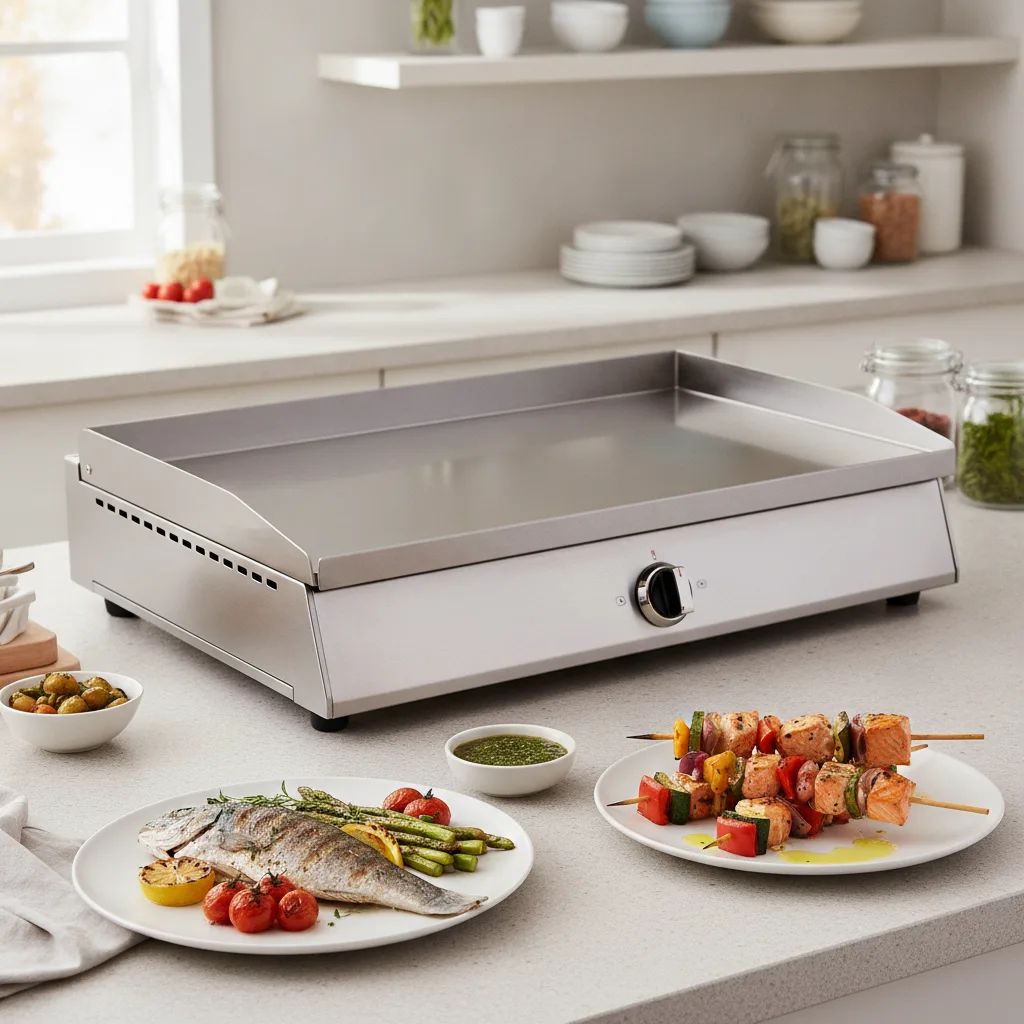
The recommended technique is simple: when the plate is still lukewarm and the appliance unplugged, pour a little hot water or white vinegar on the surface to soften the residues, then scrape them off with a scraper spatula before wiping. Avoid pouring cold water on a very hot plate. Done after each use, this is enough in most cases to keep the plate in good condition. For deeper cleaning, abrasive pads suitable for stainless steel restore a spotless surface.
Planchaelec offers a complete range of cleaning accessories suited to its planchas, including scraper spatulas, abrasive pads and a dedicated stainless steel degreasing cleaner. A detailed guide is also available on the website to help you look after your stainless steel plancha step by step.
FAQ
Is the plancha really better for your health than the barbecue?
In most cases, yes. The plancha avoids contact between fat and flames, which greatly reduces the formation of polycyclic aromatic hydrocarbons (PAHs). In addition, its thermostat keeps the temperature under control and helps avoid charring. The traditional barbecue offers less control, which makes it trickier in this respect, especially for fatty meats.
Do you need to put oil on a plancha for healthy cooking?
Oil should be kept to a minimum. A light oiling of the plate before heating, applied with a brush or kitchen paper, is enough to stop food sticking. There is no need to oil the surface generously or to add oil during cooking. It is precisely this low use of fat that makes the plancha a healthy way of cooking.
Can you cook vegetables on the plancha without losing their vitamins?
Yes, it is even one of the advantages of this way of cooking. A quick sear at around 220 °C generally preserves certain sensitive vitamins (notably vitamin C) better than long cooking in water. Vegetables also keep their texture and flavour, which makes you want to eat more of them without sauces or rich seasonings.
Which plancha should you choose for healthy everyday cooking?
Choose a plancha with a food-grade stainless steel plate and an adjustable thermostat. Stainless steel is a stable material with no coating that can wear, and a reliable thermostat lets you cook at around 200 °C to 250 °C while avoiding charring. Planchaelec electric planchas meet both criteria.
Healthy plancha cooking, a balanced choice
Healthy plancha cooking is not a myth, provided you follow a few simple rules on temperature, food choice and appliance care. The plate material matters too, and food-grade stainless steel is a safe and durable choice. This advice remains general: if you follow a special diet or have a health question, ask a doctor or dietitian. To take your choice further, read our complete guide to choosing your plancha and find the model that suits your needs and lifestyle.