



 +33 4 78 55 45 69
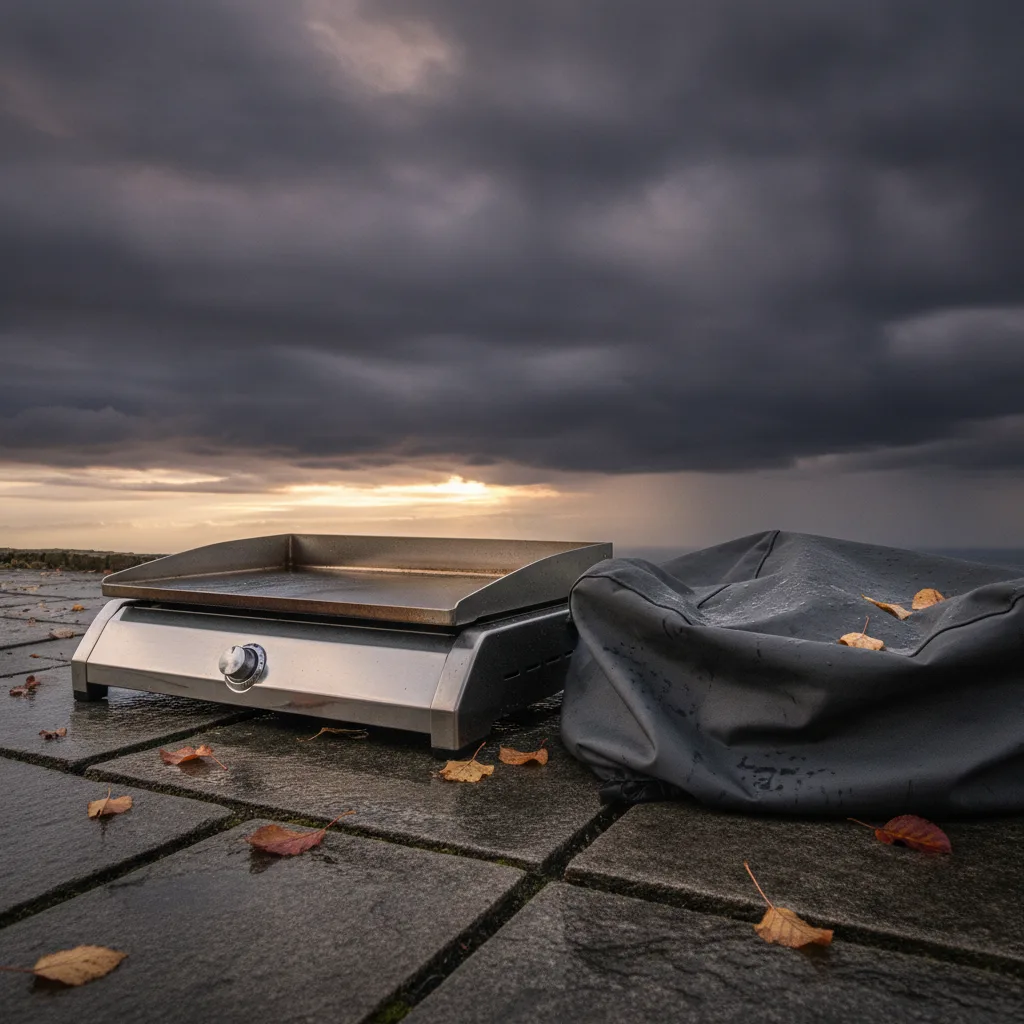
A stainless steel electric plancha is a real investment, and exposing it to the weather without precautions means accepting that its life will be cut short by several seasons. Between autumn rain, winter damp and summer UV, outdoor stresses build up and gradually weaken the plate, the electrical components and the frame. Yet a few simple habits and the right accessories are enough to protect your plancha effectively, whether it's on a terrace, a balcony or in a garden. This guide explains how to look after your appliance day to day, how to shelter it from the weather and how to winterise it fully before the cold months.
Protecting your plancha outdoors: rain, cold and winter
Reading time: ~6 min
- Why protecting your plancha determines how long it lasts
- Protecting the cooking plate every day
- Covers and lids: essential accessories for facing the weather
- Winterising your plancha: a step-by-step guide
- Comparison of the protection solutions available
- What to do if there is light rust
- Protecting your plancha for the long term: the right habits
Why protecting your plancha determines how long it lasts
The impact of the weather on a stainless steel electric plancha
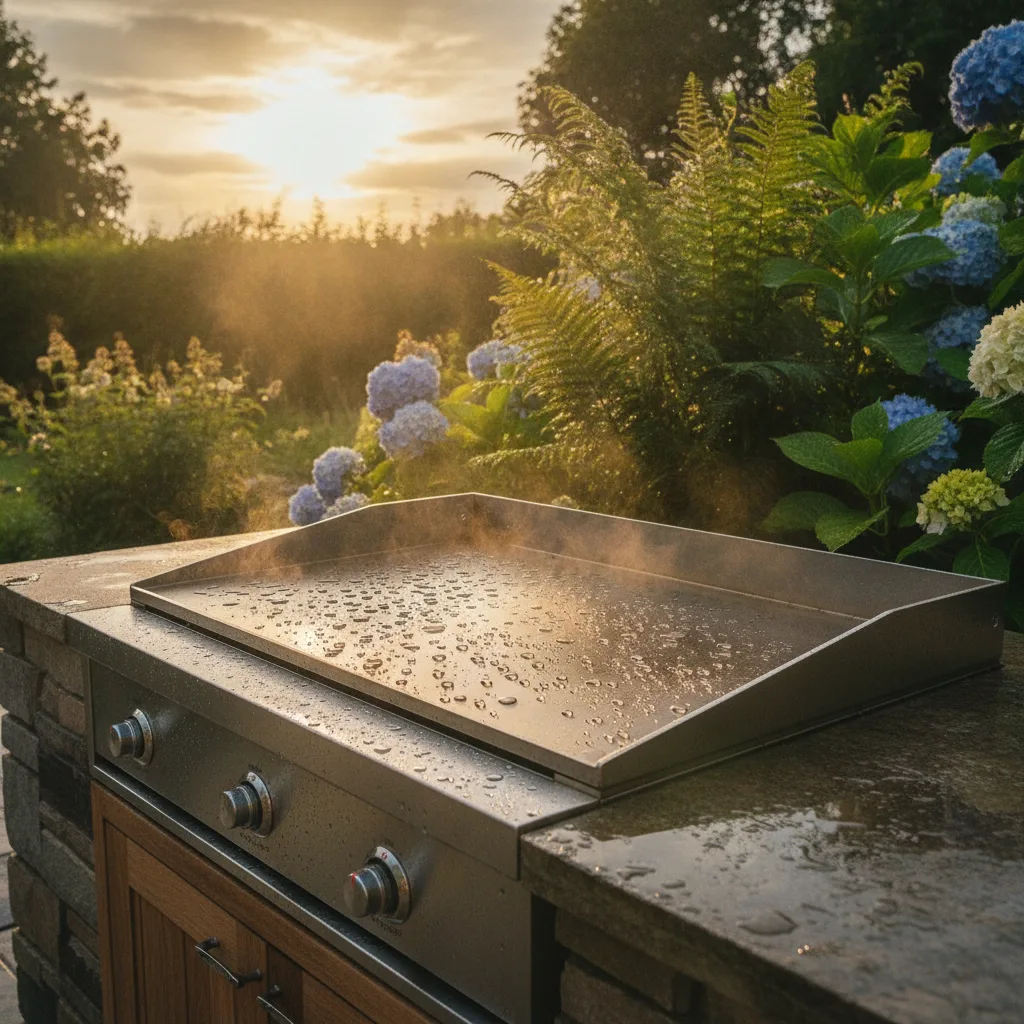
A plancha left outside without protection builds up invisible damage. Moisture gets under the plate, encourages oxidation and, on steel or cast-iron models, speeds up rusting. Even on a stainless steel electric plancha, the internal components (heating elements, wiring, thermostat) remain sensitive to standing water and temperature changes.
Why protect your plancha after every use
Specialist French manufacturers always stress it: covering your plancha after every use isn't optional, it's the first rule of care. A suitable cover, a cooking lid and storage in a dry place significantly extend an appliance's life. Conversely, a poorly protected plancha often shows corrosion, persistent bad smells or failing components by its second or third season.
Protecting the cooking plate every day
Cleaning after every use
The first protective step is cleaning. A dirty plate holds on to moisture and oxidised grease, which degrades the surface much faster than exposure to the elements.
The most effective method is to clean the plancha while it's still lukewarm. Pour a little water on the plate, let the steam loosen the food residue, then scrape it towards the drip tray with a scraper spatula. For deeper degreasing, a mixture of water and white vinegar applied to the hot plate gives excellent results and removes stubborn odours.
Once the plancha has cooled, wipe it carefully with a microfibre cloth. Drying is often overlooked, but it's crucial: a plate left damp, even under a cover, encourages condensation and oxidation.
A film of oil, an essential protective step
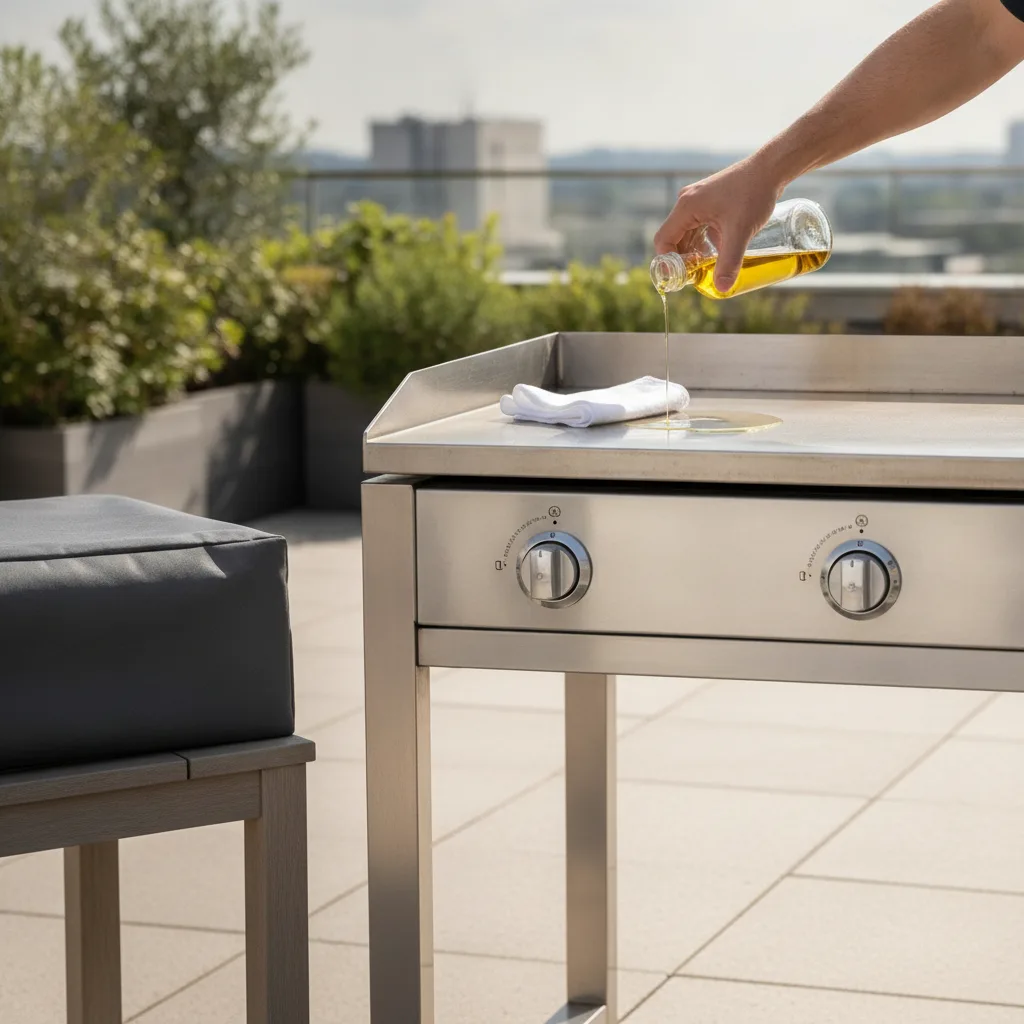
After cleaning and drying, apply a thin film of vegetable oil over the whole plate using kitchen paper. This step, sometimes called seasoning, creates a protective barrier against ambient moisture and makes the next cooking sessions easier. On a stainless steel plancha, this film of oil gradually builds up with use and forms a natural non-stick layer.
Also remember to empty and clean the grease tray regularly. A full tray overflows, contaminates the plate and creates unpleasant smells that get into the appliance's structure.
Choosing the right utensils so you don't damage the surface
Protecting your plancha also means paying attention to the tools you use while cooking. Harsh metal utensils scratch the surface and weaken the plate in the long term. Choose quality stainless steel spatulas designed specifically for the plancha, which scrape effectively without damaging the surface. Planchaelec utensils are designed to fit their planchas precisely and ensure risk-free use for the plate.
Covers and lids: essential accessories for facing the weather
Why a cover is still needed even under shelter
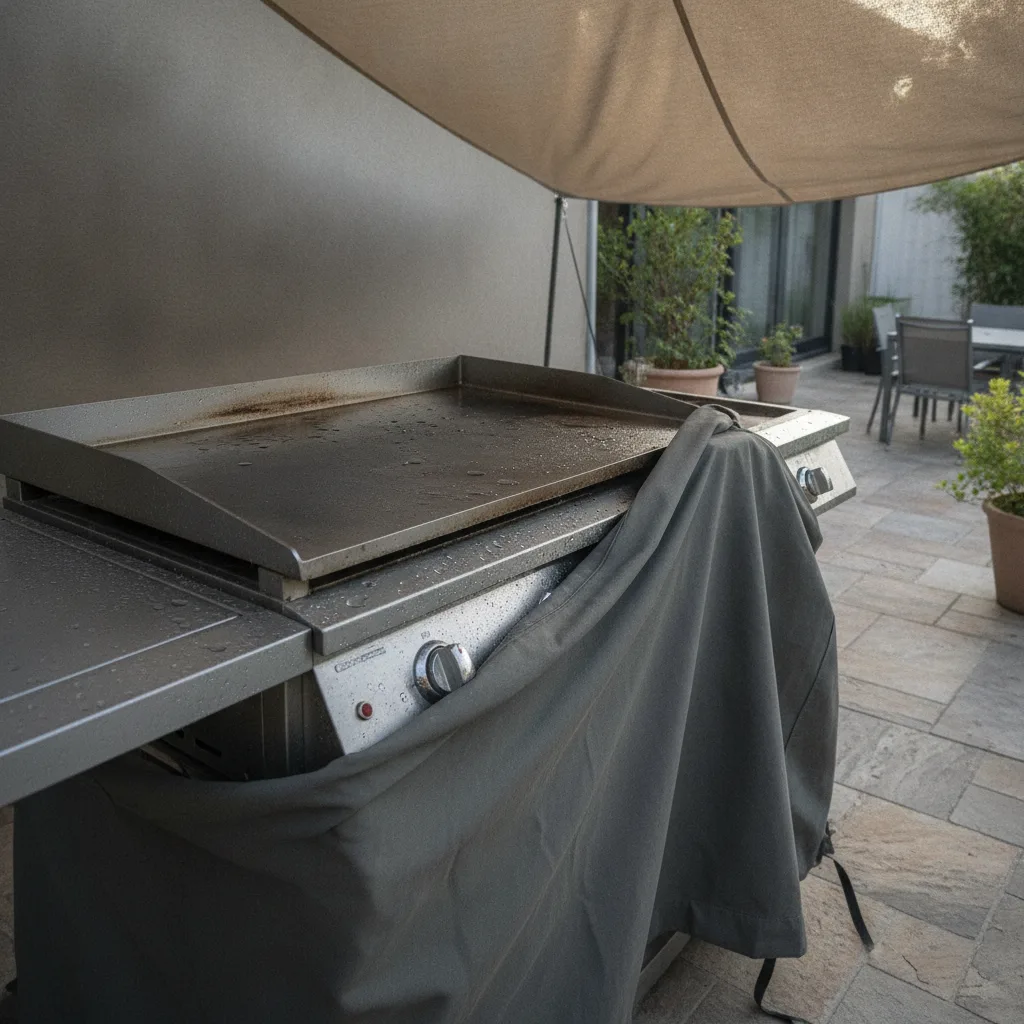
Many owners think that a plancha placed under an awning or canopy is sufficiently protected. In reality, ambient humidity, overnight condensation and dust still build up on the appliance. A cover is recommended even under shelter, because it shields the plancha from these diffuse stresses.
For a plancha installed in the open air, the cover becomes essential. It must combine two apparently contradictory qualities: being waterproof to keep out rain, and breathable to prevent condensation inside, which would cause mould and oxidation. A cover that is too airtight traps residual moisture from the plate and creates an environment where rust can form.
The cover must also be exactly the right size for your plancha. A cover that is too big forms pockets that hold rainwater and can blow away in strong winds, leaving the appliance exposed. At Planchaelec, protective covers are made to measure for each model, using materials resistant to UV and the weather.
The cooking lid, additional protection
In addition to the cover, a cooking lid directly protects the plate from spatter, dust and insects when the plancha isn't in use between sessions. It also has the advantage of speeding up heating and retaining heat during cooking. Planchaelec lids fit the various plancha formats in the range and are a versatile accessory, useful both during and after cooking.
To protect your plancha for the long term, discover Planchaelec accessory packs, which bring together a cover, utensils and care products in a complete offer.
Winterising your plancha: a step-by-step guide
Why winterise fully
Winterising is the most complete protection procedure, to be carried out at the end of the season before a long period of inactivity. It lets you store the appliance in optimum condition and find it in perfect working order in the spring.
The key steps for winterising your plancha
Here are the steps for successful winterising:
- Deep cleaning. Clean the plate thoroughly while hot (water or water with vinegar), then when cold with a special plancha cleaner. Focus on areas with grease deposits and, if necessary, use an abrasive pad suitable for stainless steel. Planchaelec abrasive pads and degreaser are formulated for stainless steel and don't scratch the surface.
- Complete drying. Let the plancha air-dry or wipe it carefully. No trace of moisture should remain before storage.
- Applying a protective film of oil. Coat the whole plate with a thin layer of vegetable oil to protect it during storage.
- Checking the components. For an electric plancha, check the condition of the power cable, heating elements and thermostat. Report any fault before storing the appliance to avoid nasty surprises when you start it up again.
- Storing in a dry, covered place. Cover the plancha with its fitted cover, then store it in a sheltered space: garage, dry cellar or storeroom. If you leave it outdoors, make sure it's on its trolley and out of the wind.
For planchas mounted on a trolley, Planchaelec trolleys make it effortless to move the appliance to a covered area, which encourages good storage habits day to day.
Comparison of the protection solutions available
| Solution | Rain protection | Moisture protection | UV protection | Ease of use |
|---|---|---|---|---|
| Made-to-measure waterproof and breathable cover | Excellent | Good | Excellent | Very easy |
| Universal waterproof non-breathable tarpaulin | Good | Average (condensation) | Good | Easy |
| Cooking lid alone | Low | Low | None | Very easy |
| Cover + lid combined | Excellent | Excellent | Excellent | Easy |
| Indoor storage without a cover | Good | Good | None | Depends on space |
This table shows why combining a made-to-measure cover and a cooking lid offers the best overall level of protection, especially for planchas left outdoors all year round.
What to do if there is light rust
Despite all precautions, a steel or cast-iron plancha may show traces of superficial rust after a long period without use or after poorly protected storage. In this case, the situation can usually be rescued.
Start with a thorough clean using a cleaning stone or an abrasive pad to remove the traces of oxidation. Rinse, dry carefully, then re-season: heat the plate to maximum temperature and apply a thin layer of oil to rebuild the protective layer. This process may take several cycles before the plate is back in good condition. On the other hand, deep rust or advanced corrosion generally means the plate needs replacing.
For Planchaelec stainless steel electric planchas, the very nature of the material greatly limits this risk. Stainless steel has a natural resistance to corrosion that is far superior to rolled steel or enamelled cast iron, making it particularly well suited to the French climate, where humidity and temperature changes are frequent.
FAQ
Can you leave a stainless steel electric plancha outside all year round?
A stainless steel electric plancha can stay outdoors if it is properly protected. It is essential to let it cool, clean it, dry it thoroughly and then apply a film of oil to the plate before covering it. Using a fitted cover, ideally combined with a cooking lid and, if possible, a location sheltered from wind and direct rain, greatly limits the risk of water getting in, corrosion and damage to the electrical components.
Should you choose a cover or a lid to protect your plancha?
The cover and the lid play complementary roles. The lid directly protects the plate from spatter, dust and insects, and makes cooking more comfortable. The cover, especially when it's made to measure, waterproof and breathable, protects the whole appliance from rain, ambient moisture and UV. As the comparison of protection solutions shows, combining a cover and a lid offers the best level of protection for a plancha stored outdoors.
How do you prevent rust from appearing on a plancha?
To limit the risk of rust, adopt a few habits: clean the plate while hot after each cooking session, remove residue with a suitable spatula, rinse if necessary, then dry carefully. Applying a film of vegetable oil to the clean, dry plate creates a barrier against moisture. Storing the plancha under a suitable cover, in a dry or properly sheltered place, and winterising it fully at the end of the season reduce the risk even further. In the case of light rust, gentle abrasive cleaning followed by re-seasoning usually rescues the plate.
Protecting your plancha for the long term: the right habits
Protecting your plancha properly requires neither much time nor a disproportionate investment: systematic cleaning after each use, a protective film of oil, a cover that fits the appliance and careful winterising at the end of the season are enough to keep your plancha in perfect condition for many years. These simple habits preserve cooking quality, prevent costly breakdowns and ensure your plancha is ready to use from the first fine days. To go further in caring for your appliance, find all our detailed advice on cleaning a stainless steel plancha as well as our full selection of accessories and care products specially designed for Planchaelec stainless steel electric planchas.