



 +33 4 78 55 45 69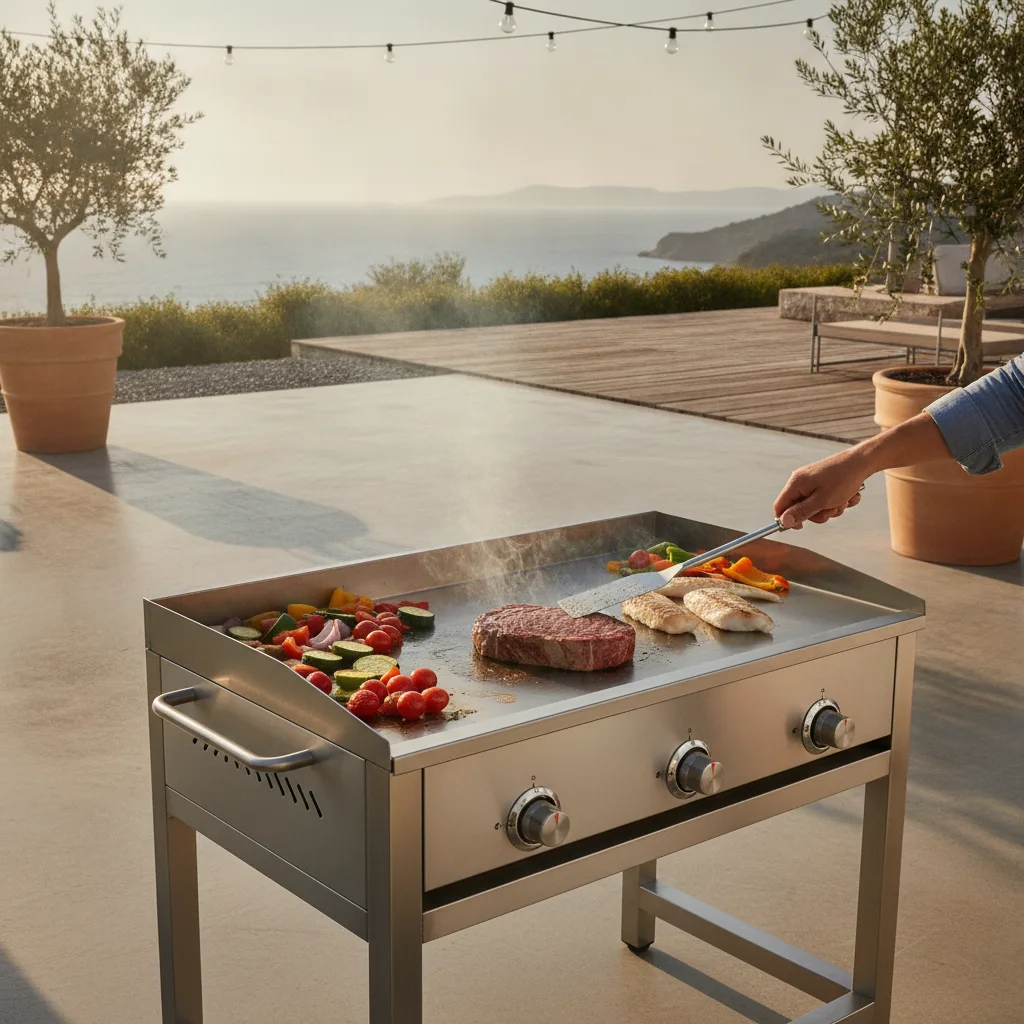
Mastering plancha cooking temperature is the key to obtaining juicy meats, delicate fish and perfectly browned vegetables. Unlike an oven or frying pan, the plancha works by direct contact: it is the surface of the plate that transfers the heat, and it is therefore what determines the quality of every cook. Too cold, and food releases water and fails to sear. Too hot, and the outside burns before the inside is cooked. This guide gives you all the numerical benchmarks and practical tips to set your plancha with precision, whatever the ingredient.
Plancha cooking temperature: benchmarks and practical tips
What is the ideal temperature for each ingredient on the plancha?
Reading time: ~6 min
- The three main heat zones on a plancha
- Cooking temperature table by ingredient
- Ideal temperature for each type of ingredient
- How to tell if your plancha is at the right temperature
- Do's and Don'ts
- FAQ
- Mastering the ideal plancha temperature
The three main heat zones on a plancha
Understanding the heat zones of a plancha
Before going into detail by ingredient type, it is useful to understand how heat levels are distributed across a plancha. Three zones are generally identified:
The first corresponds to gentle heat, between 120 and 180 °C. It is suitable for keeping food warm, finishing a delicate cook, or reheating without damaging textures. The second zone, medium heat, sits between 180 and 250 °C. This is the most versatile range, suited to the majority of everyday ingredients. The third zone, above 250 °C, corresponds to high heat used for quickly searing red meats and creating a beautiful golden crust.
This zone logic is particularly useful on planchas fitted with several independent heating elements or burners. You can sear on one side and finish the cook gently on the other, without ever removing food from the surface. This is one of the great advantages of Planchaelec electric planchas, whose thermal regulation makes it easy to move from one zone to another.
Cooking temperature table by ingredient
Here is a summary of the recommended temperature ranges by ingredient type, along with indicative cooking times.
| Ingredient type | Searing temperature | Finishing temperature | Indicative time |
|---|---|---|---|
| Red meat (beef, lamb) | 250 to 300 °C | 180 to 200 °C | 3 to 5 min per side |
| White meat (chicken, pork) | 220 to 240 °C | 180 °C | 20 min (skewers) |
| Fish (thin fillets) | 150 to 200 °C | Same or lower | 1 to 2 min per side |
| Fish (thick cuts, large fillets) | 260 °C | 220 °C | 10 to 15 min skin side |
| Vegetables | 180 to 220 °C | Same | 7 to 20 min depending on vegetable |
| Fruit (pineapple, pear) | 180 to 220 °C | Same | 7 min turning regularly |
| Fruit (apple, apricot) | 180 to 220 °C | Same | 15 min turning regularly |
These values are guidelines, not absolute rules. The thickness of pieces, their water content, and their degree of ripeness (for fruit and vegetables) always influence the final result.
Ideal temperature for each type of ingredient
Red meats
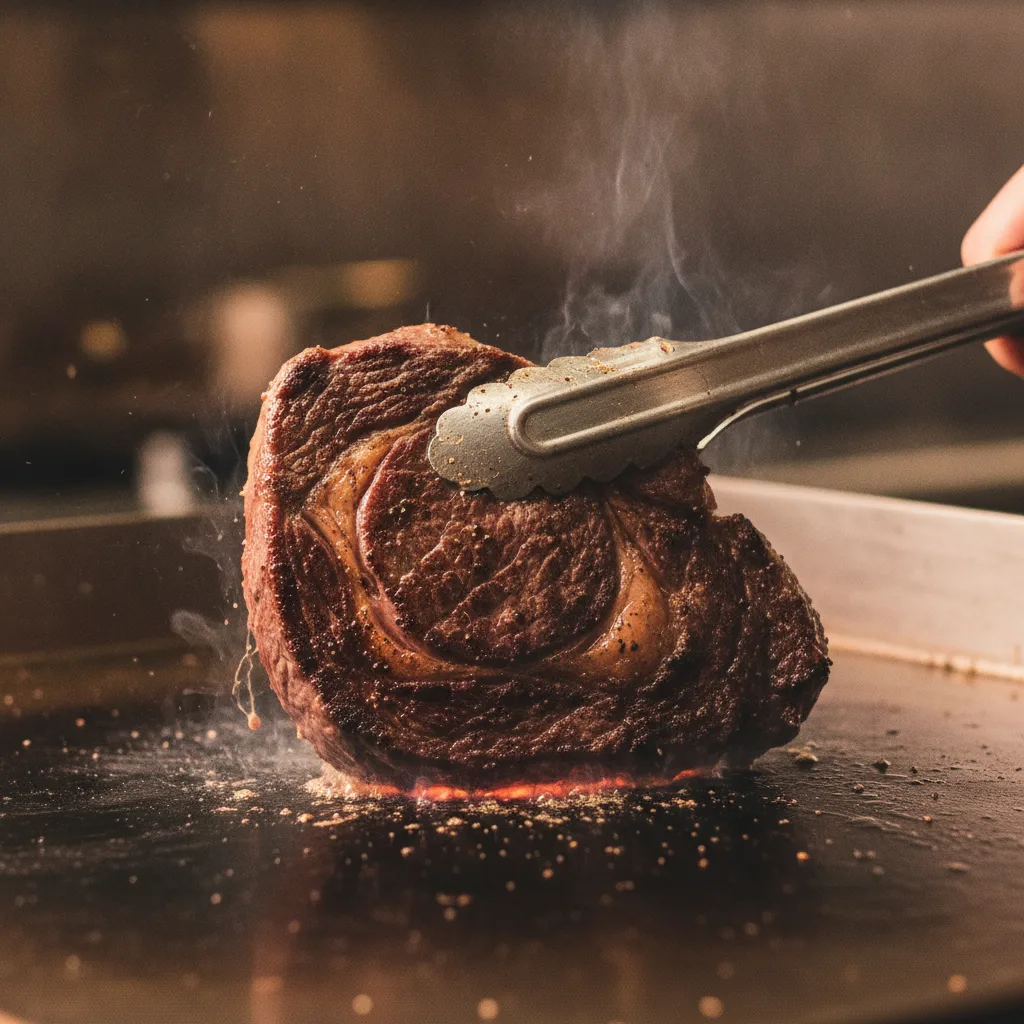
For red meats such as beef or lamb, the heat must be high from the outset. A surface temperature of around 250 to 300 °C allows the fibres to sear quickly, creates a flavourful crust, and keeps the juices locked inside. Take care not to exceed this threshold excessively, however: beyond that point, the muscle fibres contract too strongly and the meat becomes tough. After searing, it is advisable to lower the temperature to around 180 to 200 °C to finish cooking to the desired doneness (rare, medium).
White meats
Chicken, turkey, and pork require a slightly gentler approach. Searing takes place between 220 and 240 °C, then cooking continues at a reduced temperature to ensure the centre is properly cooked without burning the outside. For poultry skewers, allow around 20 minutes at 250 °C, turning regularly. The golden rule remains never to serve undercooked white meat.
Fish and seafood
Fish is the most delicate ingredient to cook on a plancha, and approaches vary between cooks. For a large fillet or thick cut, searing at 260 °C skin side down followed by a finish at 220 °C gives excellent results. For thin fillets, a more moderate temperature of around 150 to 200 °C is sufficient, with only 1 to 2 minutes per side. Overly aggressive heat dries out the flesh and causes it to lose all its delicacy. Shellfish and seafood (prawns, scallops) do well with heat between 200 and 250 °C, with very short cooking times.
Vegetables
Vegetables do not require extreme temperatures. Heat between 180 and 220 °C allows them to caramelise on the surface while preserving their texture and nutrients. Times vary considerably depending on the density of the vegetable: tomatoes cook in 5 minutes per side, courgettes in 8 minutes, peppers in 10 minutes, potatoes in 15 minutes, and aubergines in around 20 minutes. A drizzle of olive oil on the vegetables before placing them on the plate prevents sticking and encourages a beautiful colour.
Fruit and desserts
Fruit on the plancha is cooked at the same temperature range as vegetables, between 180 and 220 °C. Juicy fruits such as pineapple or pear need around 7 minutes, turning regularly. Firmer fruits such as apple or apricot require more time, around 15 minutes. The heat caramelises the natural sugars and develops aromas that oven cooking cannot replicate.
How to tell if your plancha is at the right temperature
Methods for checking the plancha temperature
Two simple methods allow you to check the heat of your plate without a thermometer.
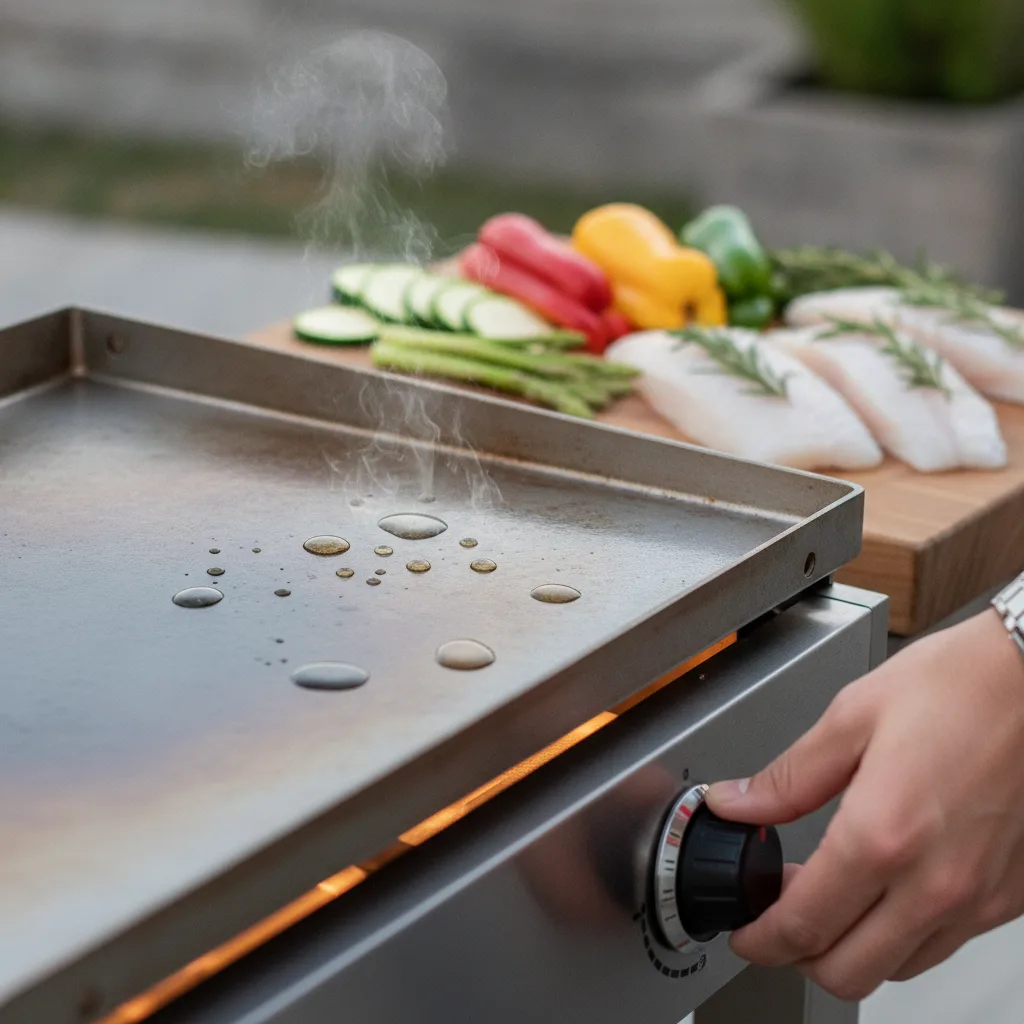
The first is the water droplet test. Sprinkle a few drops of water onto the hot plate: if they evaporate immediately with a hiss, the plate is too cold or just at the threshold. If they form small beads that roll across the surface before evaporating, the plancha is at the right temperature to begin cooking, generally around 180 to 200 °C and above.
The second method involves using a flat surface thermometer placed directly on the plate. This is the most precise solution, used by professional cooks. Some also opt for an infrared thermometer pointed at the plate, which gives an instant, contact-free reading.
In all cases, allow at least 5 to 10 minutes of preheating before placing your first ingredients. An insufficiently preheated plancha is one of the most common causes of a failed cook.
Do's and Don'ts
| Do | Don't |
|---|---|
| Preheat the plancha for 5 to 10 minutes before first use | Place food on a cold or insufficiently heated plate |
| Use the water droplet test to check the temperature | Maintain too high a temperature for fish and white meats |
| Adjust the heat according to the type and thickness of the ingredient | Skip the preheating time to save a few minutes |
| Sear on high heat then lower to finish cooking thick cuts | Press down on food during cooking, which forces out the juices |
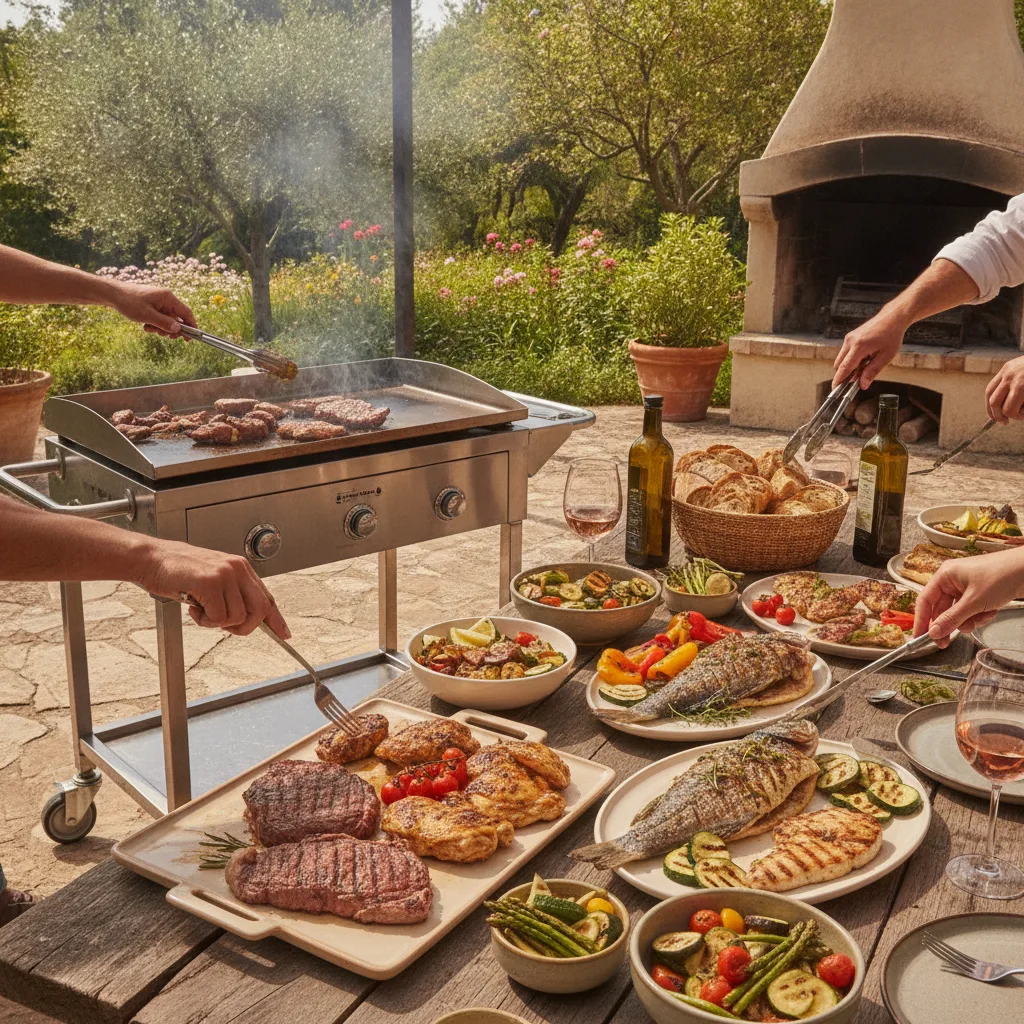
| Make use of the different zones of the plancha to cook several ingredients simultaneously | Leave residues to burn on the plate without cleaning it while still hot after use |
| Lightly oil the ingredients rather than the plate when cooking vegetables |
FAQ
What temperature should be used to sear a steak on the plancha?
To sear a steak properly, the plate must be between 250 and 300 °C. This high heat creates a crust in just a few minutes while keeping the centre pink. If your plancha has a thermostat, set it to the maximum position for searing, then reduce the heat to finish cooking to your preference.
Can the temperature of an electric plancha be set precisely?
Yes, and this is in fact one of the main advantages of the electric plancha over a gas plancha. Electric models generally feature an adjustable thermostat that allows a stable temperature to be reached and maintained with precision. This is particularly useful for delicate cooks such as fish or fruit, which require controlled heat. You can consult our guide to choosing your plancha to compare the different models available.
Should the plate be oiled before cooking on a plancha?
This is not always necessary. A stainless steel plancha that has been properly preheated naturally offers good non-stick properties. For vegetables, a light drizzle of oil on the ingredients themselves is generally sufficient. For meats, the natural fat of the cut takes over as soon as the surface is properly hot. If you find that food is sticking, this is often a sign that the plate is not yet hot enough rather than a lack of fat.
Mastering the ideal plancha temperature
Mastering the heat of your plancha ultimately means understanding that each ingredient has its own requirements and that contact cooking rewards those who take the time to set their appliance correctly. By keeping these benchmarks in mind, you will achieve consistent results, whether for an everyday meal or a large gathering with friends. To go further and get the most out of your equipment, discover our tips on cleaning your stainless steel plancha and explore our range of electric planchas designed for optimal thermal regulation.