



 +33 4 78 55 45 69
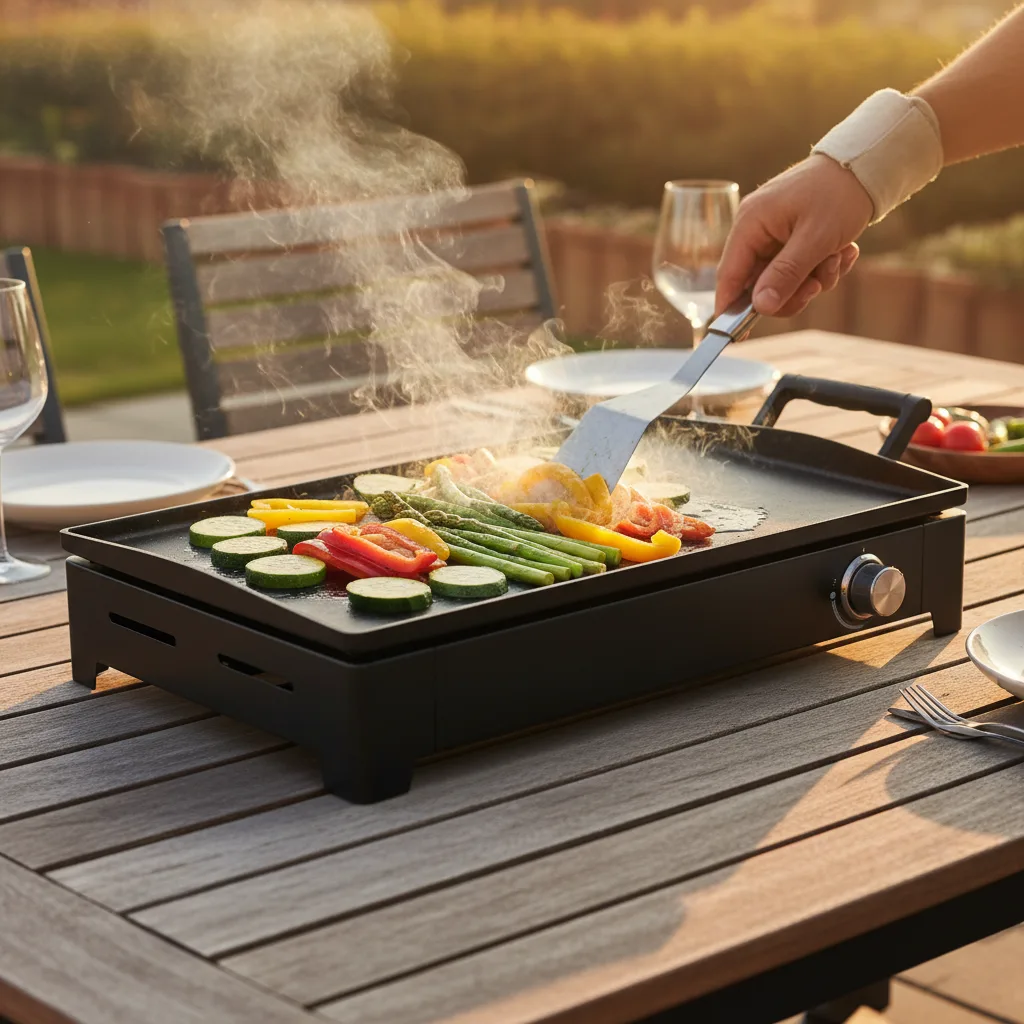
Cooking vegetables on the plancha is one of the best ways to get concentrated flavours and a texture that is golden on the outside and tender inside, all with very little fat. Yet many fans of convivial cooking end up with vegetables that stick, go soft or lack character. This practical guide reveals the 10 essential techniques for getting your plancha vegetables right every time, whether for an improvised summer stir-fry or a carefully prepared meal with friends.
Plancha vegetables: 10 techniques for getting them right
Reading time: ~8 min
Contents
- Why the plancha is ideal for cooking vegetables
- The vegetables best suited to plancha cooking
- 10 techniques for perfect plancha vegetables
- Dos and don'ts
- FAQ
- Perfect plancha vegetables: method and precision
Why the plancha is ideal for cooking vegetables
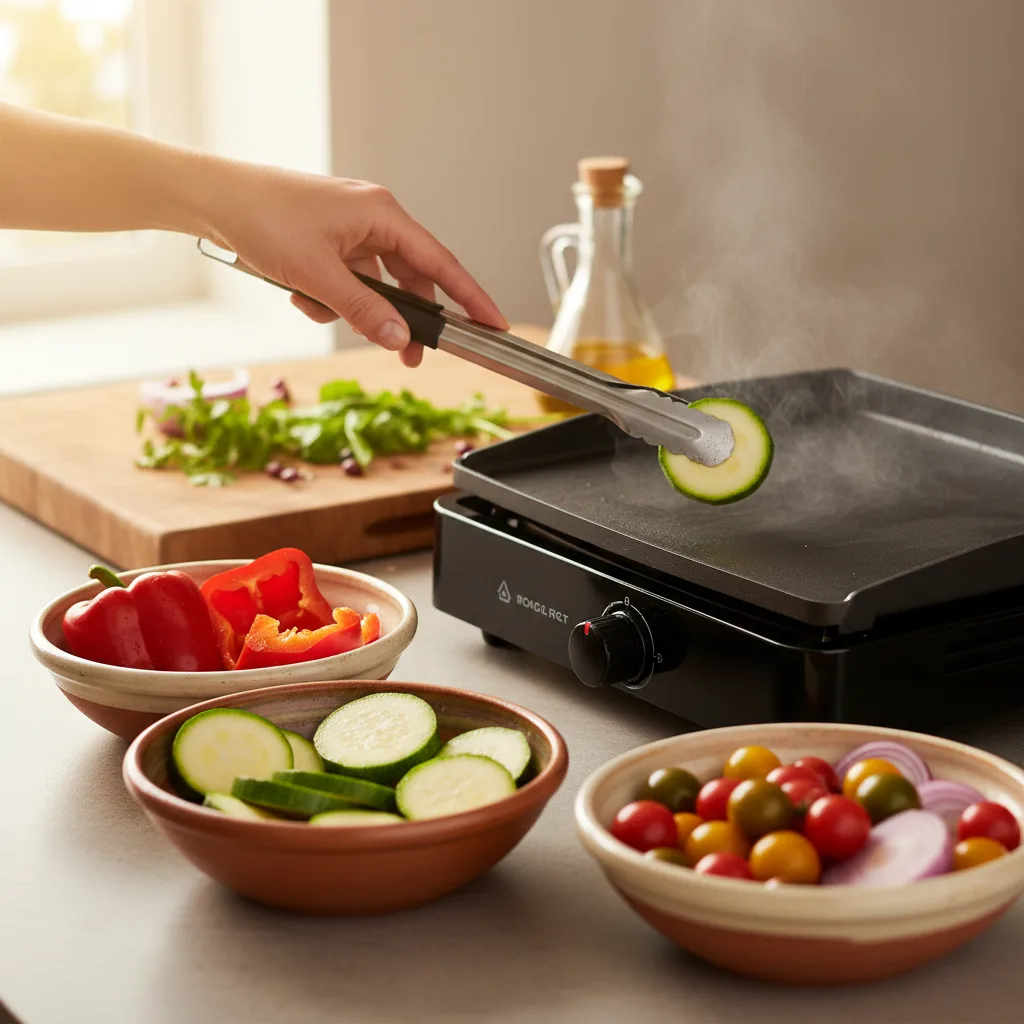
Plancha cooking respects vegetables in a way few other methods can match. The very hot plate quickly sears the surface, creating light caramelisation while preserving the moisture inside. The result: grilled vegetables that stay crisp, colourful and nutritious.
Unlike the oven or the frying pan, the stainless steel electric plancha offers well-distributed heat over a large cooking surface. This lets you cook vegetables of different textures at the same time, keeping the edges of the plate, which are often slightly less hot, for vegetables that need gentler cooking. For families and convivial gatherings, this is a considerable advantage: everyone is served at the same time and conviviality stays at the heart of the meal.
The Planchaelec stainless steel electric plancha is particularly suited to this kind of cooking thanks to its fast heat-up and the precision of its thermostat.
The vegetables best suited to plancha cooking
How to choose the right vegetables for the plancha
Not all vegetables behave the same way on a hot plate. Here are the main families to favour.
Summer vegetables are the great classics: courgettes, aubergines, peppers, tomatoes and cherry tomatoes. Their water content and tender flesh make them perfect for direct cooking on the plancha. Mushrooms, asparagus and onions are also must-haves.
Root vegetables such as carrots and potatoes need particular attention. They are denser and require either a longer cooking time or pre-cooking (see technique no. 3). Green beans also benefit from being blanched for a few minutes before going on the plate.
The golden rule: choose vegetables that are ripe but firm. An overripe vegetable will turn to mush in the heat and is likely to stick to the plate.
10 techniques for perfect plancha vegetables
Technique 1: prepare and cut evenly
Cutting is the first decisive step. Pieces of uneven thickness will cook unevenly: some will burn while others are still raw in the middle. Wash your vegetables, peel them if necessary, then cut them into slices, rounds or strips of uniform thickness. For courgettes and aubergines, slices about 1 cm thick are ideal. For peppers, even strips 2 to 3 cm wide work perfectly.
Technique 2: preheat the plancha sufficiently
An insufficiently hot plancha is the main cause of vegetables that stick or release too much water. Let your appliance preheat for about 10 minutes before putting anything on it. For vegetables, the ideal temperature range is between 180 °C and 220 °C, a gentler cook than for meat or fish. A properly hot plancha immediately sears the surface of the vegetable and stops it sticking.
Technique 3: blanch dense vegetables first
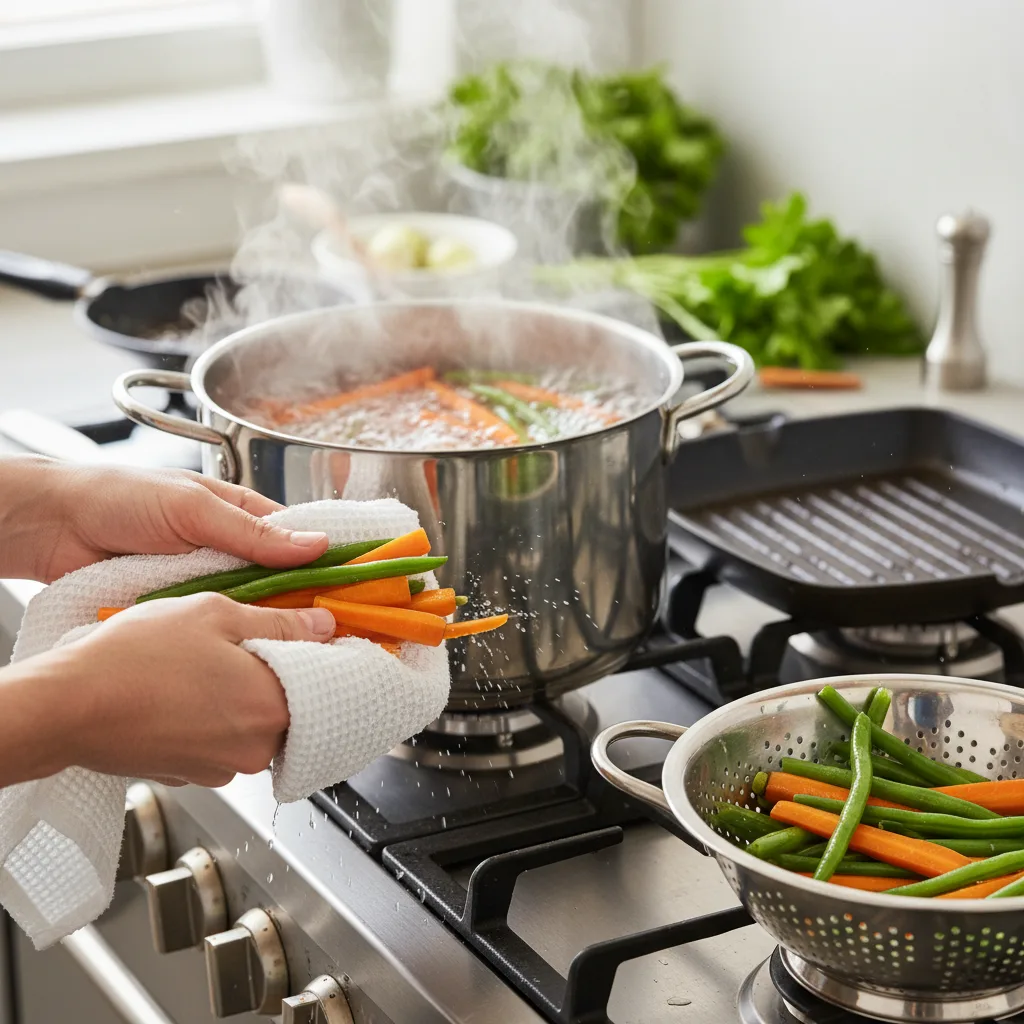
For firm vegetables such as carrots, potatoes or green beans, a few minutes in boiling water before the plancha changes everything. Blanching starts the cooking right through, so you can then brown them quickly on the plate without leaving them raw in the middle. Drain them well and pat them dry before putting them on the plancha to avoid spattering.
Technique 4: master oiling the plate
There are two situations. If your vegetables have not been marinated, lightly oil the plate with a drizzle of high-heat oil (sunflower or groundnut oil) before adding the vegetables. If your vegetables have been marinated in olive oil, the plate does not need oiling: the oil in the marinade is more than enough, provided the plate is properly hot. Too much oil on a cold plancha, on the other hand, encourages sticking.
Technique 5: make a marinade that makes the difference
The marinade is probably the best-kept secret for truly tasty grilled vegetables. Mix olive oil, lemon juice, sliced garlic and the herbs of your choice (basil, oregano, parsley, coriander). Dip your vegetables in this mixture or brush it over each side, then leave to rest for at least an hour in the fridge before cooking.
For aubergines, a plain yoghurt marinade (with lemon juice, a drizzle of oil and spices such as curry or garam masala) gives a particularly tender and fragrant result. Twenty minutes of resting is enough in this case.
Technique 6: respect the cooking time for each vegetable
Each vegetable has its own rhythm. Here is a reference table to guide you, to be adapted to the thickness of the pieces and the temperature of your appliance.
| Vegetable | Approximate cooking time |
|---|---|
| Carrots (blanched) | ~5 minutes |
| Tomatoes | ~5 minutes per side |
| Courgettes | ~8 minutes |
| Peppers | ~10 minutes |
| Potatoes (blanched) | ~15 minutes |
| Aubergines | ~10 to 12 minutes |
These times correspond to cooking at around 200 °C. As a general rule, allow 7 to 8 minutes on average for most summer vegetables, turning them regularly.
Technique 7: lay the vegetables flat without overlapping
This is a common mistake: piling vegetables on the plate to save time. As a result, the pieces on top steam rather than grill and lose all their crispness. Lay each piece flat, leaving a little space between them. If you are cooking for a large group, work in several batches or choose a large-surface plancha that lets you handle everything in one go.
Technique 8: turn regularly and watch for visual signs
Use a spatula or tongs to turn your vegetables every 2 to 3 minutes. This ensures even colouring on both sides and stops pieces burning on the plate side. Vegetables are ready when they are nicely golden, lightly marked and the tip of a knife slides into the centre without resistance. For tomatoes, the telltale sign is the skin starting to wrinkle and lift slightly.
Technique 9: an express tip for peppers
Peppers take longer than other summer vegetables and their skin can stay tough even after cooking. An effective tip: microwave them for 5 to 7 minutes in a covered container, then let them cool in a bowl covered with cling film. The skin then comes off very easily. All you have to do is put the peeled strips on the hot plancha to brown them quickly.
Technique 10: season at the end of cooking
Salt tends to draw moisture out of vegetables during cooking, which softens them and encourages sticking. So season your vegetables at the very end of cooking, just before serving. A drizzle of good olive oil, a few chopped fresh herbs and a squeeze of lemon juice are often enough to enhance the result. To go further, offer a dipping sauce: Greek yoghurt mixed with garlic, lemon and fresh herbs, or a homemade basil and pine nut pesto.
Dos and don'ts
Do: Preheat the plancha for at least 10 minutes before cooking. Cut vegetables into pieces of even thickness. Blanch dense vegetables before putting them on the plate. Marinate vegetables for at least 1 hour for more flavour. Turn the vegetables regularly during cooking. Season only at the end of cooking.
Don't: Put vegetables on a cold or insufficiently hot plate. Overlap the pieces on the plate. Salt the vegetables before or during cooking. Use too much oil if the vegetables have already been marinated. Skip blanching for carrots and potatoes.
FAQ
Why do my vegetables stick to the plancha?
There are two main reasons for this problem. First, the plate is not hot enough when you put the vegetables on. An insufficiently preheated plancha does not sear the surface of the food immediately, so it sticks to the plate. Second, there is not enough fat. If your vegetables are not marinated, lightly oil the plate before cooking. On a Planchaelec stainless steel plancha, the smooth stainless steel surface also makes quick cleaning easy after each use.
Do you have to marinate vegetables before cooking them on the plancha?
No, it is not compulsory, but it is strongly recommended for truly tasty vegetables. Without a marinade, simple seasoning with olive oil, salt and herbs is enough for a satisfying result. The marinade mainly adds aromatic depth and helps to tenderise the vegetables slightly before cooking. If you are short of time, a quick 15 to 20 minute marinade is better than nothing.
How do you stop vegetables being too soft after cooking?
Several factors affect the final texture. Choose firm vegetables that are just ripe, not overripe. Avoid overlapping them on the plate, as they would steam rather than grill. Also be careful not to cook them longer than the recommended time: summer vegetables cook quickly, and a few extra minutes are enough to soften them. Finally, season at the end of cooking so you do not draw out their water while they cook.
Can you cook vegetables on the plancha indoors?
Yes, and this is one of the great advantages of the electric plancha over the gas plancha. A stainless steel electric plancha produces very little smoke as long as you do not overheat the plate or use too much oil. It can be used in the kitchen as well as on a terrace or balcony. Read our tips for using your electric plancha indoors to enjoy your appliance safely all year round.
Perfect plancha vegetables: method and precision
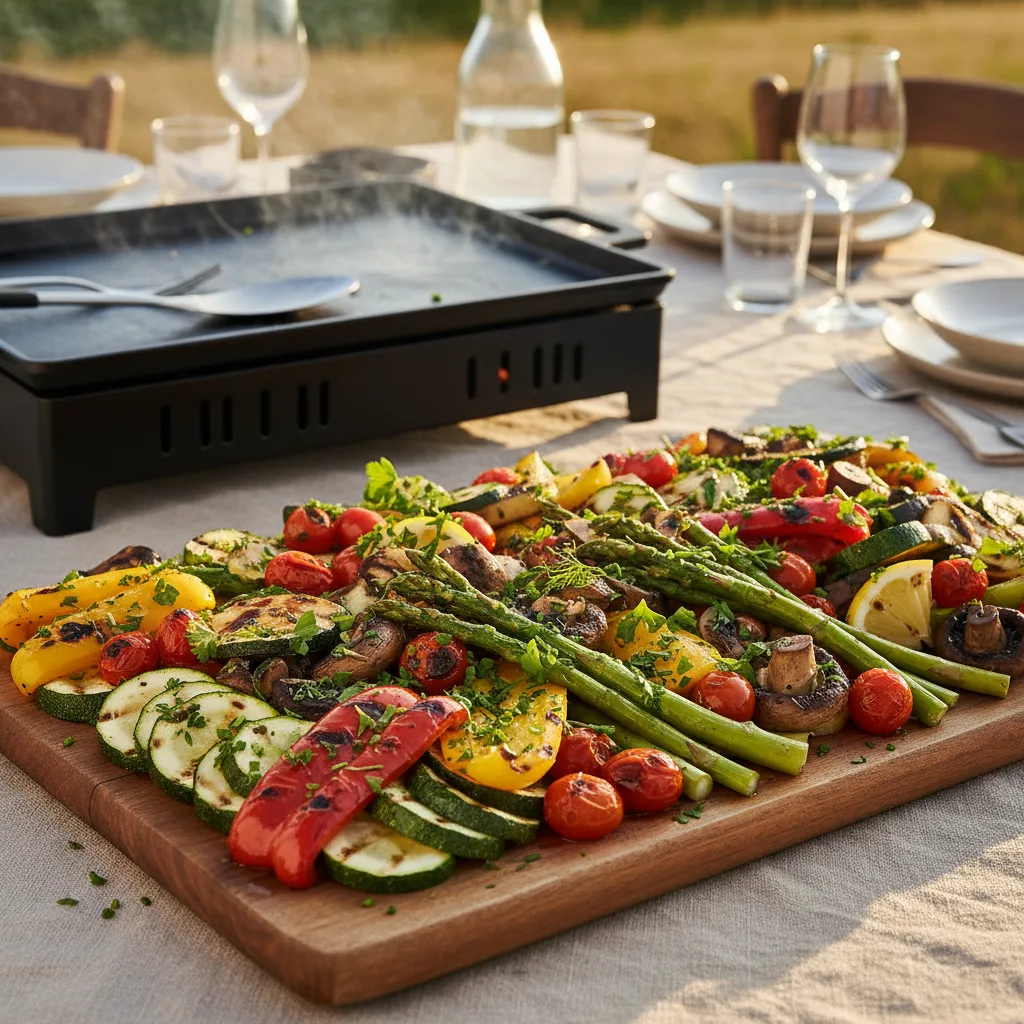
Mastering vegetables on the plancha takes a little method, but the results are worth the effort: golden, fragrant vegetables, crisp on the outside and tender inside, that work as a side dish or a vegetarian main course. By applying these 10 techniques, you will get the best out of your appliance every time. To go further and choose the stainless steel electric plancha best suited to your use, read our guide to choosing a plancha.