



 +33 4 78 55 45 69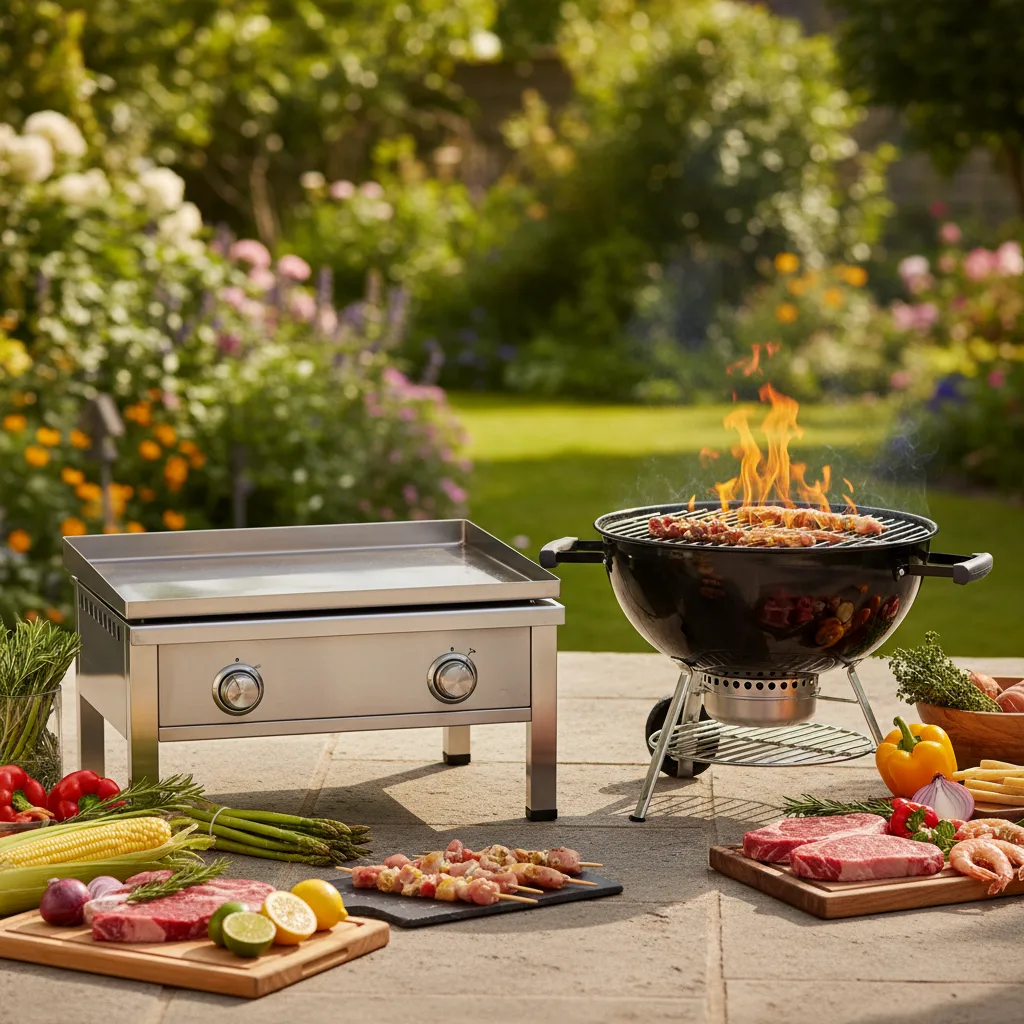
Every summer, the same question comes up on terraces and in gardens: plancha or barbecue? These two outdoor cooking appliances embody two very distinct philosophies, and the choice between them deserves careful thought. Whether you prefer the smoky taste of charcoal grilling or favour precise, healthy cooking on a stainless steel plate, understanding the difference between a plancha and a barbecue will help you invest in the appliance that truly suits your lifestyle. Here is a complete comparison, criterion by criterion, to settle the matter once and for all.
Plancha or Barbecue: the great showdown! Which one is right for your garden?
Reading time: ~5 min. Contents:
- Plancha and barbecue: two cooking philosophies
- Speed, ignition and temperature control
- Health, smoke and food safety
- Versatility and variety of foods
- Maintenance and daily cleaning
- Taste, conviviality and use according to your lifestyle
- How to choose according to your situation
- Plancha or barbecue: the choice according to your priorities
- FAQ
Plancha vs barbecue: two cooking philosophies
Plancha and barbecue: two distinct cooking methods
The fundamental difference between a plancha and a barbecue lies in the cooking method. The plancha works by direct contact between the food and a heated plate, whether powered by gas or electricity. Food is never exposed to a flame. The barbecue, on the other hand, cooks food above embers or flames, transmitting intense and often uneven heat through a grill.
Different results on the plate
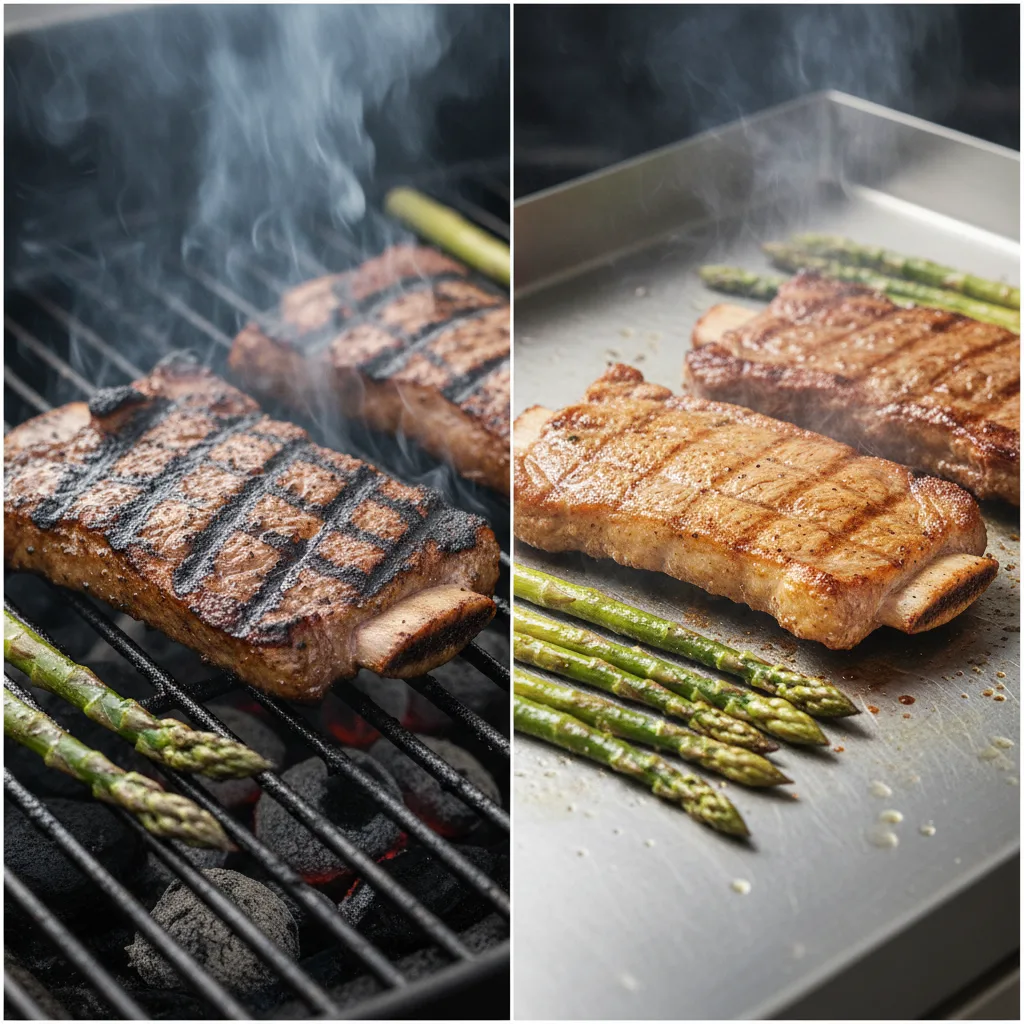
This difference in principle leads to very different results on the plate. The plancha produces tender, juicy food whose natural flavour is preserved. The barbecue, on the other hand, offers that characteristic grilled marking and smoky taste that many enthusiasts seek. Neither is objectively superior: it all depends on what you expect from your appliance.
Speed, ignition and temperature control
Starting up and preheating
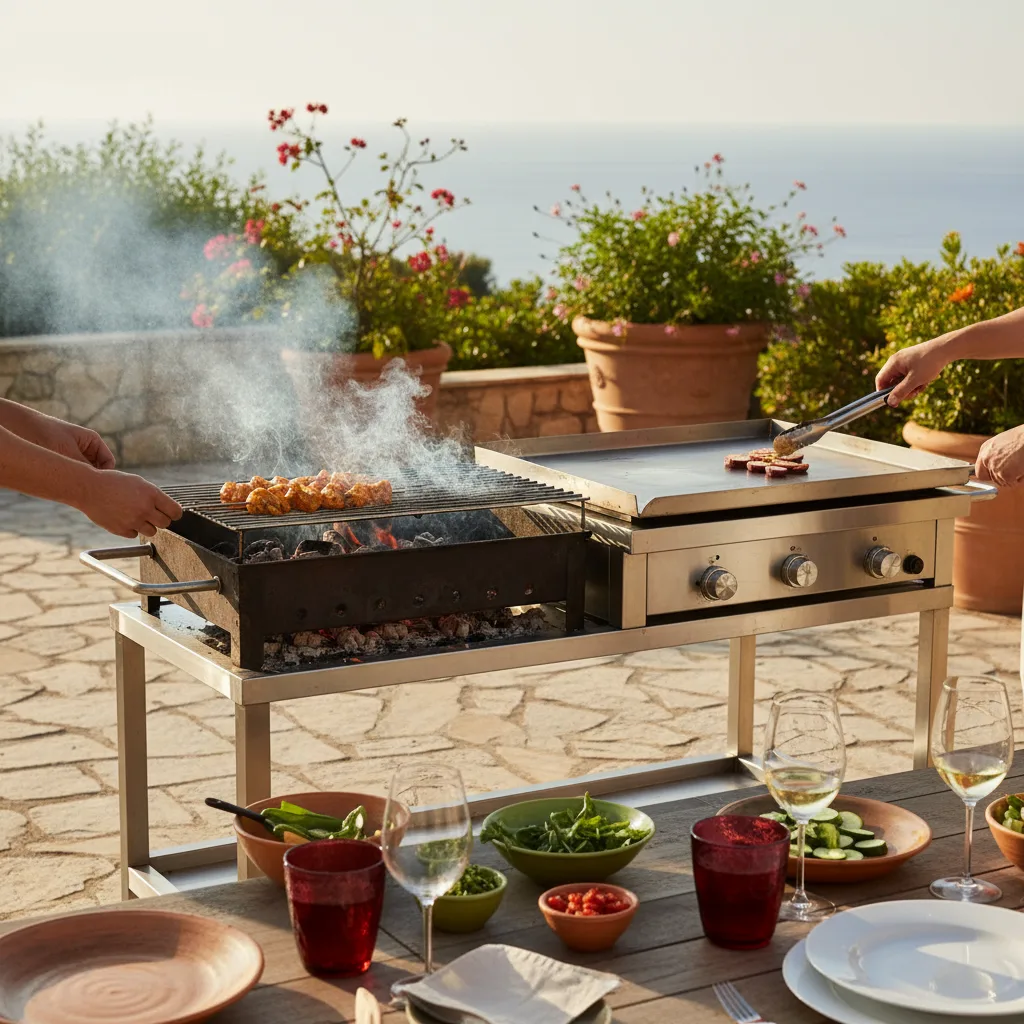
On this front, the electric or gas plancha has a considerable advantage. It reaches its cooking temperature in around three minutes, like a standard hob. A charcoal barbecue, however, requires a good thirty minutes to obtain usable embers. Even a gas barbecue requires preheating and more careful monitoring.
Heat control in outdoor cooking
Temperature control is also much more refined on a plancha. It is possible to modulate the heat precisely across the entire surface, moving from gentle cooking to intense searing in a matter of seconds. On a barbecue, heat zones vary depending on the embers, the height of the grill and the lid, which requires some experience to achieve consistent results.
For families or couples who want to cook outdoors without constraints, the plancha therefore offers a spontaneity that the barbecue cannot match.
Health, smoke and food safety
Risks associated with barbecue smoke
This is one of the most decisive arguments in favour of the plancha. When fats fall onto barbecue embers, they generate black smoke containing polycyclic aromatic hydrocarbons (PAHs) and dioxins, potentially harmful compounds. This phenomenon is directly linked to the charring of food or cooking too close to flames.
Healthy cooking on the plancha
The plancha avoids this problem by design: fats drain into a collection tray, without ever coming into contact with an open heat source. Cooking is done without adding fat, making it a naturally light and healthy method of preparation. It is perfectly possible to cook vegetables, fish or lean meats with minimal fat and maximum flavour.
Precautions for a safer barbecue
It should be noted that the barbecue is not necessarily dangerous if a few rules are followed: waiting until the embers are well formed without open flames, choosing lean meats, avoiding charring and turning food regularly. But these precautions require vigilance, whereas the plancha offers healthy cooking by default.
Discover the Planchaelec stainless steel electric plancha range for healthy everyday cooking, indoors and outdoors.
Versatility and variety of foods
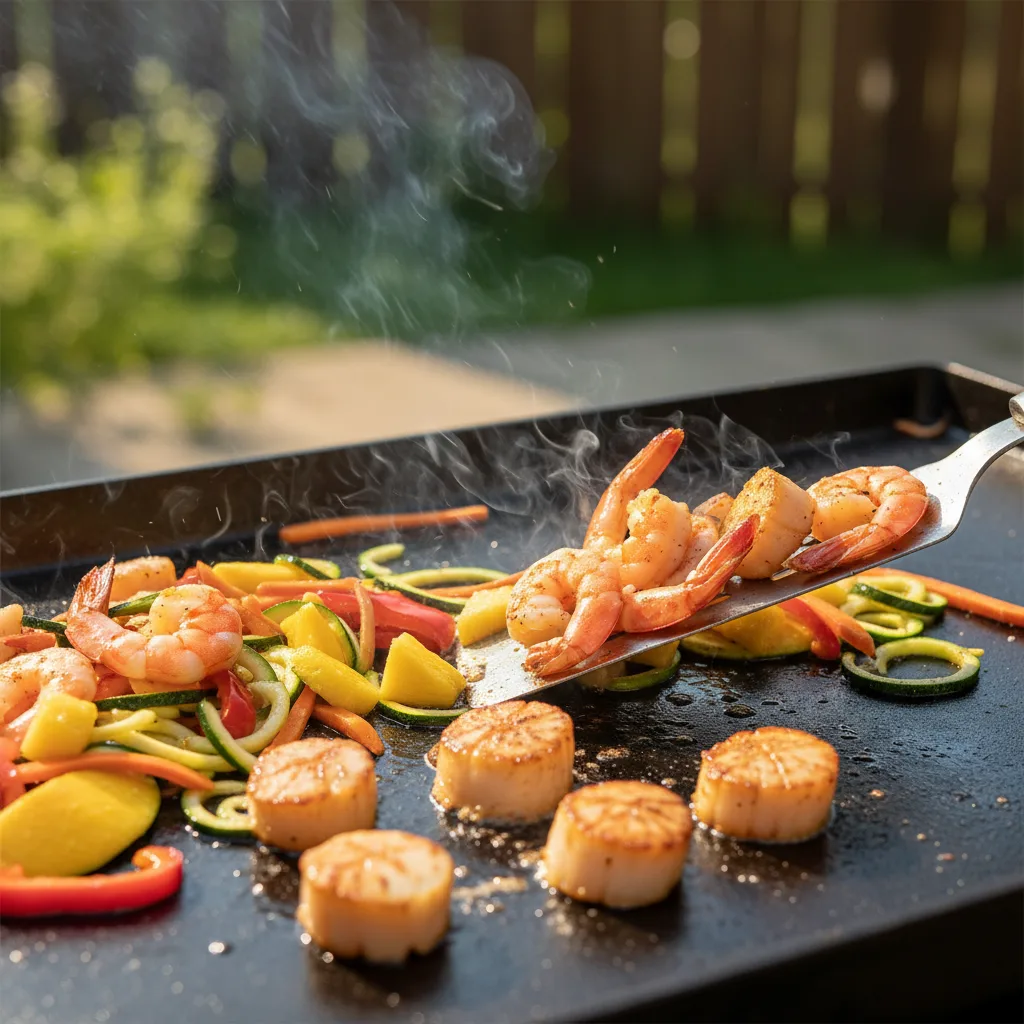
What you can easily cook on a plancha
The plancha stands out clearly on this point. Its smooth surface and even heat allow a much wider range of foods to be cooked than a traditional barbecue. Here is what you can prepare without difficulty on a plancha:
- Prawns, gambas, scallops and small shellfish that would fall through a grill
- Finely sliced vegetables, eggs, pan-fried fruit, pancakes, sweet and savoury preparations
- Small cuts of meat, escalopes, fish fillets, thin sausages
Strengths and limits of the traditional barbecue
The barbecue remains unbeatable for large cuts of meat, thick skewers, rib steaks or whole chickens. But as soon as you move away from these classics, it shows its limits without specific accessories (baskets, plates, etc.).
The plancha adapts equally well to weekday meals and large weekend gatherings, thanks to the width of its cooking surface and its quick start-up time.
Maintenance and daily cleaning
Stainless steel plancha vs barbecue: cleaning comparison
| Criterion | Stainless steel plancha | Charcoal barbecue |
|---|---|---|
| Cleaning time | 5 to 10 minutes | 20 to 30 minutes |
| Parts to clean | Plate + grease tray | Grill + firebox + ashes |
| Difficulty | Low (deglaze with water) | Medium to high |
| Frequency | After each use | After each use |
Ease of daily maintenance
The stainless steel plancha is cleaned by pouring a little cold water onto the still-hot plate to deglaze it, then going over it with a suitable abrasive pad. The grease collection tray empties easily. For more on this topic, the complete guide to cleaning a stainless steel plancha from Planchaelec details each step.
A charcoal barbecue takes much more time: you need to scrape the grill, empty the ashes, clean the firebox and wait for the appliance to cool down sufficiently. A gas barbecue is easier to maintain, but still more demanding than a plancha.
Taste, conviviality and use according to your lifestyle
The barbecue's appeal for smoky flavours
The barbecue retains an emotional and taste advantage that the plancha cannot reproduce: the smoky flavour. This characteristic taste, obtained from the combustion of charcoal or wood, is sought after by many barbecue enthusiasts. It is part of a convivial ritual around the fire that has its own value.
The plancha for enhancing the natural taste of food
The plancha, for its part, preserves the natural taste of produce. It showcases the freshness of a fish fillet, the crunch of a seasonal vegetable or the tenderness of a marinated meat. It is perfectly suited to lovers of refined cuisine, families concerned with healthy eating and those who want to cook outdoors without the constraints of fire.
The electric plancha has an additional advantage: it can be used indoors, on a balcony or in a covered space, where a charcoal barbecue is often forbidden or impractical in an urban environment.
How to choose according to your situation
Defining your needs and environment
Your choice depends above all on your lifestyle, your space and your culinary habits. Here are some simple guidelines to help you.
If you live in a flat, a townhouse or have a balcony, the stainless steel electric plancha is clearly the most suitable option: no smoke, no ignition constraints, usable at any time. If you have a large garden and regularly organise summer barbecues with large cuts of meat, the barbecue still makes perfect sense, especially if the smoky taste is an essential criterion for you.
Combining plancha and barbecue according to your preferences
For those who want the best of both worlds, some barbecue models include a plancha plate as an accessory. But if versatility, health and everyday practicality are your priorities, a quality stainless steel electric plancha such as the Plancha Classic or Plancha Lux models from Planchaelec will meet the vast majority of your needs, all year round.
To deepen your thinking before buying, also consult the guide to choosing your electric plancha as well as the page dedicated to the differences between electric and gas planchas.
Plancha or barbecue: the choice according to your priorities
Stainless steel electric plancha: an ideal compromise
Plancha or barbecue, both appliances have their place. But if you are looking for a versatile, healthy, quick-to-use and easy-to-maintain cooking tool that adapts equally well to a weekday dinner and a large weekend gathering, the stainless steel electric plancha stands out as the most coherent choice for the majority of households. Explore the entire Planchaelec range to find the model that suits your outdoor cooking.
FAQ
What is the main difference between a plancha and a barbecue?
The difference between a plancha and a barbecue comes down mainly to the cooking method: the plancha sears food on a heated plate without direct flame, whereas the barbecue cooks above embers or flames, giving a characteristic grilled marking and smoky taste.
Is the plancha really healthier than the barbecue?
The plancha naturally limits smoke and charring, as fats drain into a collection tray and do not fall onto an open heat source. Conversely, a poorly used barbecue can produce smoke laden with undesirable compounds, even if certain precautions can reduce this risk.
Which appliance is best for a balcony or flat?
On a balcony, in a townhouse or in a flat, the stainless steel electric plancha is generally more suitable: it heats up quickly, produces virtually no smoke and can be used outdoors as well as indoors, where a charcoal barbecue is often forbidden or impractical.
Which appliance is best for cooking large cuts of meat?
For large cuts of meat, rib steaks, thick skewers or whole chickens, the barbecue remains the most suitable, while the plancha excels with smaller cuts, vegetables, fish and a variety of everyday preparations.