



 +33 4 78 55 45 69
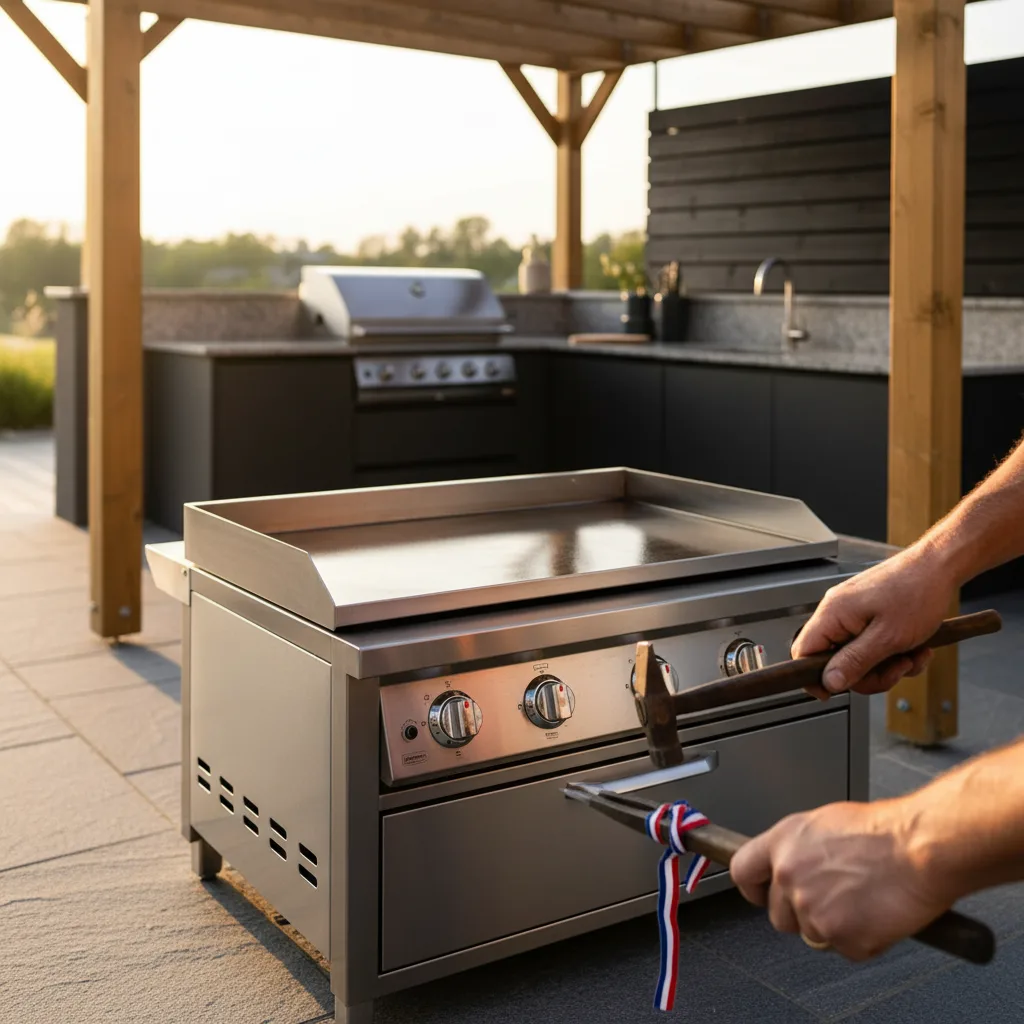
Buying a plancha made in France is a choice that goes beyond simply acquiring a cooking appliance. It means betting on carefully selected materials, proven industrial or craft know-how and accessible after-sales service. While the market is flooded with low-cost imported models, French manufacturers stand out through concrete commitments to durability, traceability and quality. This article helps you understand what French manufacturing really means for planchas, which brands practise it and how to make the right choice.
The term "Made in France" does not refer to a single, uniform reality. It may simply indicate that a product was assembled in France, even if its components come from elsewhere. Going further, some brands obtain the Origine France Garantie (OFG) label, which certifies that most of the product's value was created in France and that its essential characteristics were acquired there.
Why choose a "Made in France" plancha? The quality guarantees.
Reading time: ~8 min
- What a plancha made in France really means
- The leading plancha brands made in France
- Materials and technologies at the heart of French know-how
- What budget to plan for a French-made plancha
- The concrete advantages of a French plancha
- How to choose your plancha made in France
- FAQ
- A plancha made in France: a lasting and consistent investment
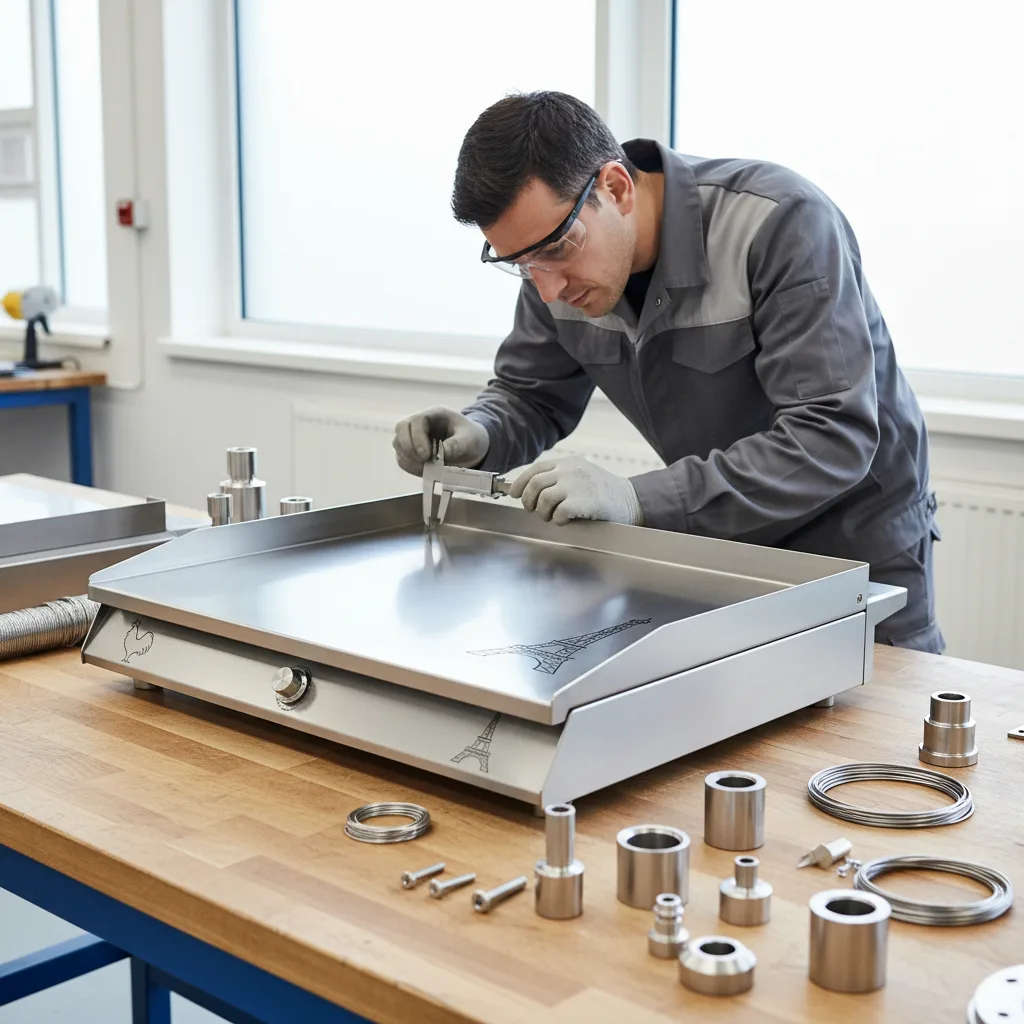
What a plancha made in France really means
ENO, one of the best-known French plancha manufacturers, holds both the Origine France Garantie label and the Entreprise du Patrimoine Vivant (EPV, "Living Heritage Company") label, which rewards excellence in industrial and craft know-how. These certifications are not empty marketing claims: they involve regular audits and transparency about manufacturing processes. For consumers, this is a concrete guarantee. When a brand displays these labels, you know that the cooking plate, welds, finishes and surface treatments were produced in French workshops, subject to the strictest European standards.
The leading plancha brands made in France
Overview of French plancha manufacturers
The French market for quality planchas is driven by a limited number of serious players, each with its own positioning and specialities. ENO stands out as a high-end reference, with gas and electric planchas whose plates are guaranteed for life. The brand offers enamelled cast iron or stainless steel surfaces, and its focus on healthy cooking makes it a popular choice among demanding enthusiasts.
Le Marquier is a historic company that did much to popularise the plancha in France. It champions enamelled cast iron as its material of choice, emphasising its ability to store heat and release it evenly. This thermal inertia is a major asset for consistent cooking, especially on large surfaces.
Krampouz, a Breton brand known for its professional crêpe makers, is also among the French manufacturers of planchas and cooking plates. Its expertise in controlling cooking temperatures gives it particular legitimacy in this segment.
Plancha Tonio and Verycook are two other French players focused on quality gas planchas, with stainless steel or steel plates suited to intensive use.
Lagrange, a specialist in cooking appliances, offers electric planchas made in France, ideal for use in a flat or on a balcony where gas is not allowed. Finally, more craft-based workshops such asAtelier Toussaint, based in Quimper in Brittany, offer brazier-planchas designed and made entirely in Brittany, with accessories such as the bilig for crêpes. These creations illustrate the richness and diversity of the French industrial fabric in this sector.
Materials and technologies at the heart of French know-how
The main plate materials
The choice of plate material is one of the most decisive criteria for the quality of a plancha. French manufacturers work mainly with three materials. Enamelled cast iron offers excellent thermal inertia: it heats up gradually and holds its temperature for a long time, which promotes even cooking. The enamel protects the cast iron from oxidation and makes cleaning easier. Le Marquier has made it its signature.
Stainless steel is valued for its ease of cleaning, professional look and resistance to corrosion. It heats up faster than cast iron but with less inertia. It is the material favoured by Planchaelec for its electric planchas, whose plates are made entirely of food-grade stainless steel.
Rolled or enamelled steel sits in between and is often found in more affordable ranges. It performs well provided the quality of the enamel or surface treatment is up to standard.
Cooking technologies: electric or gas
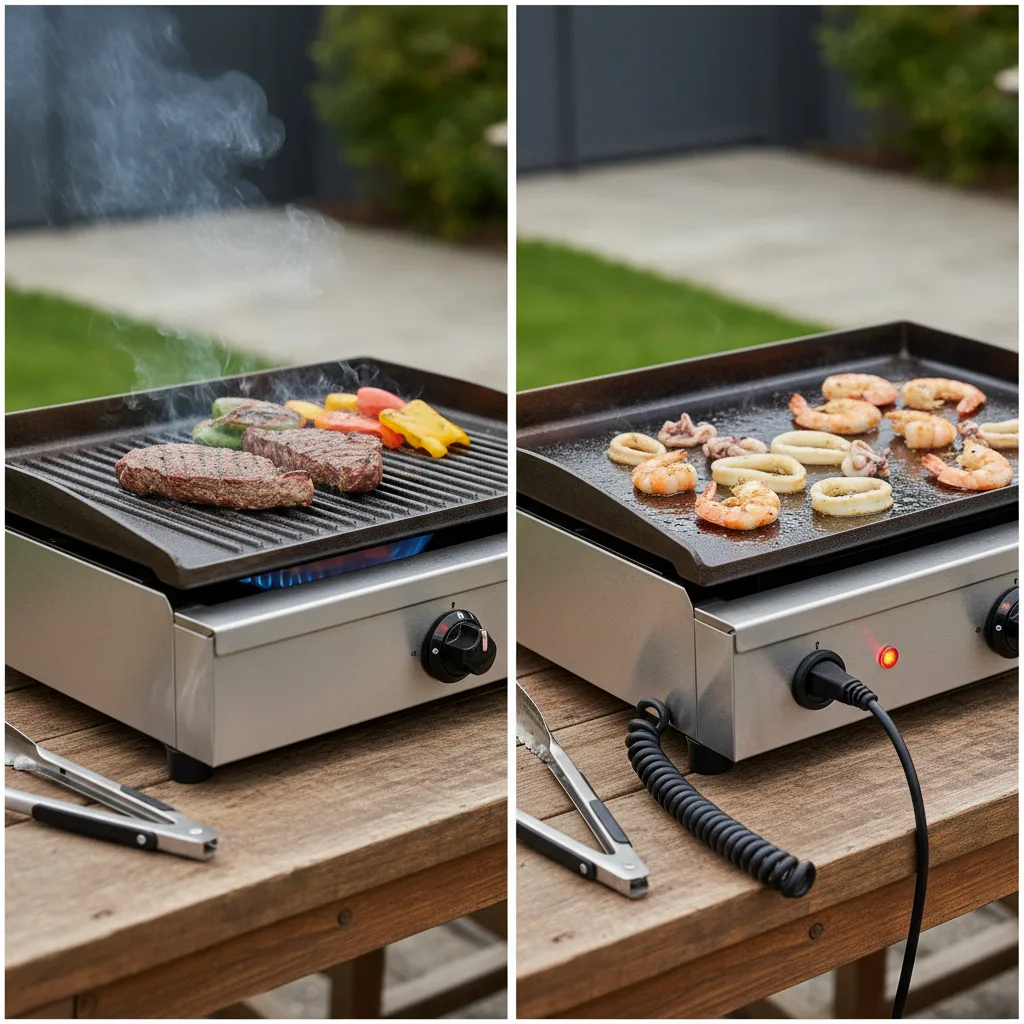
In terms of technology, the electric plancha differs from the gas plancha in several ways. It heats up more gradually but its temperature control is more precise. It needs no gas bottle or connection, which makes it particularly suitable for indoor use or on a balcony. To find out more, you can read the electric vs gas plancha comparison written by Planchaelec.
What budget to plan for a French-made plancha
According to the data available on the market for barbecues and planchas made in France, prices range from about 47 euros to 2,499 euros, with an average price of around 548 euros. This wide range reflects the diversity of product lines and uses.
| Segment | Indicative price range | Example profiles |
|---|---|---|
| Entry level | 100 to 250 euros | Compact electric planchas, occasional use |
| Mid-range | 300 to 700 euros | 2-burner gas planchas, stainless steel or enamelled cast iron |
| High end | 700 to 2,500 euros | Large stainless steel surfaces, brazier-planchas, complete set-ups with trolley |
It is important not to think only in terms of purchase price. A plancha made in France, built with durable materials and backed by local after-sales service, is often a better investment over five to ten years than a low-cost imported model that will soon need replacing.
The concrete advantages of a French plancha
Lasting benefits on several levels
Choosing a French-made plancha gives you several tangible guarantees. Durable materials come first. Plates guaranteed for life (as with ENO), welds made in controlled workshops and careful finishes all extend the life of the appliance and reduce the need for replacement.
After-sales service is an often underestimated argument. With a French manufacturer, spare parts are available locally, repair times are shorter and you deal directly with the manufacturer, with no intermediary. This is particularly important for an appliance used intensively in summer.
Theenvironmental impact is also lower. Manufacturing in France reduces transport distances, limits emissions from intercontinental shipping and favours shorter supply chains. Workshops such as Toussaint in Quimper show this local production approach taken to its fullest.
Finally, buying French means supporting local industrial jobs and helping to preserve know-how that, without this demand, could disappear in favour of offshore production.
How to choose your plancha made in France
The essential criteria for choosing well
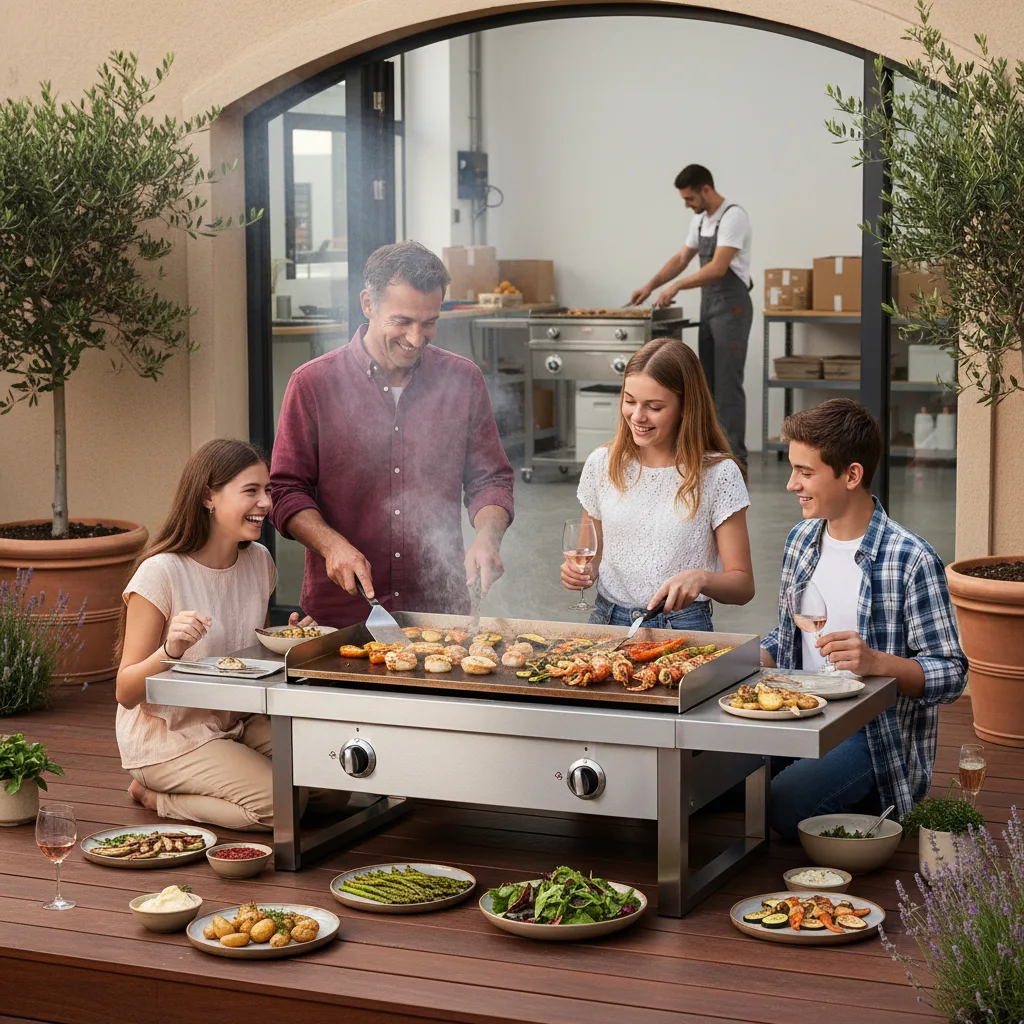
Here are the essential criteria to review before any purchase. Start by defining your main use: cooking indoors or on a balcony (electric plancha), terrace or garden (gas or electric), regular large gatherings (large cooking surface). The answer to this question will immediately point you towards a technology and a size range.
Next, check the plate material according to your priorities: enamelled cast iron for even cooking and high inertia, stainless steel for easy cleaning and a professional look. Planchaelec offers a complete guide to plancha materials to help you decide.
Check the labels and traceability. A clear statement of manufacture in France, ideally with an Origine France Garantie or EPV label, is a sign of the manufacturer's serious commitment. Beware of vague wording such as "designed in France", which does not guarantee where the product is made.
Think about the accessories and ecosystem around the plancha: a cooking lid to speed up cooking and retain heat, a trolley for mobility, a protective cover to extend its life. Planchaelec offers a full range ofplancha accessories designed to fit each model.
Finally, compare the warranty and after-sales terms: length of the warranty on the plate and on the structure, return policy, availability of spare parts. This information can be found in each brand's terms and conditions of sale and FAQs.
FAQ
What is the difference between "Made in France" and "Origine France Garantie"?
"Made in France" is a generic statement that can apply to a product simply assembled in France, even if its components are imported. "Origine France Garantie" is an official, certified label that requires most of the product's value to have been created in France and its essential characteristics to have been acquired there. It is therefore a much higher level of guarantee, subject to regular audits by independent bodies.
Can an electric plancha made in France be used in a flat?
Yes, this is even one of the great advantages of the electric plancha over gas models. It produces no flame and little smoke when used correctly, that is, with non-marinated food and a well-adjusted temperature. It can therefore be used in the kitchen, in the dining room or on a covered balcony. Planchaelec has written a dedicated guide onusing a plancha indoors without smoke to help you.
How should you care for a stainless steel plate to ensure a long life?
Caring for a stainless steel plate comes down to a few simple but regular steps. After each use, deglaze the still-hot plate with a little water to loosen residue, then scrape with a suitable spatula. For deep cleaning, use a degreasing product designed for stainless steel planchas and non-metallic scouring pads. Avoid metal scouring sponges, which scratch the surface. Planchaelec offers a detailed guide to cleaning a stainless steel plancha as well as suitable cleaning products for every type of dirt.
A plancha made in France: a lasting and consistent investment
Investing in a French-made plancha means choosing consistency between the quality you want in the kitchen and the values you support when you buy. Durable materials, certified labels, local after-sales service and a local industrial base form a solid set of arguments that fully justify the price difference with imported models. Planchaelec follows this approach by offering stainless steel electric planchas made in France, backed by a full range of accessories and customer support designed to last.