



 +33 4 78 55 45 69
Guide to cooking steak on a plancha | PLANCHAELEC
Nothing beats a steak perfectly seared on the outside and tender inside. With a good stainless steel electric plancha, you can achieve this quality of cooking at home, consistently and with full control. Cooking steak on a plancha relies on a few simple principles of temperature and precise technique.
We will show you how to make the most of the plancha's power to trigger theMaillard reaction, get a beautiful caramelised crust and keep the meat juicy. You will also see why a stainless steel electric plancha, especially one made in France, offers a real advantage for cooking beef.
The ultimate guide to cooking the perfect steak on a plancha
Reading time: ~13 min
- Contents
- Understanding how to cook steak on a plancha
- Choosing the right steak for plancha cooking
- Preparing the meat and the electric plancha
- Basic method for cooking a 2 to 3 cm steak on a plancha
- Times and temperatures for perfectly controlled plancha steak
- Advanced techniques for a perfect sear on the plancha
- Special cases: thick steak, rib of beef, burger patties
- Common mistakes and frequently asked questions
- Quick FAQ
Understanding how to cook steak on a plancha
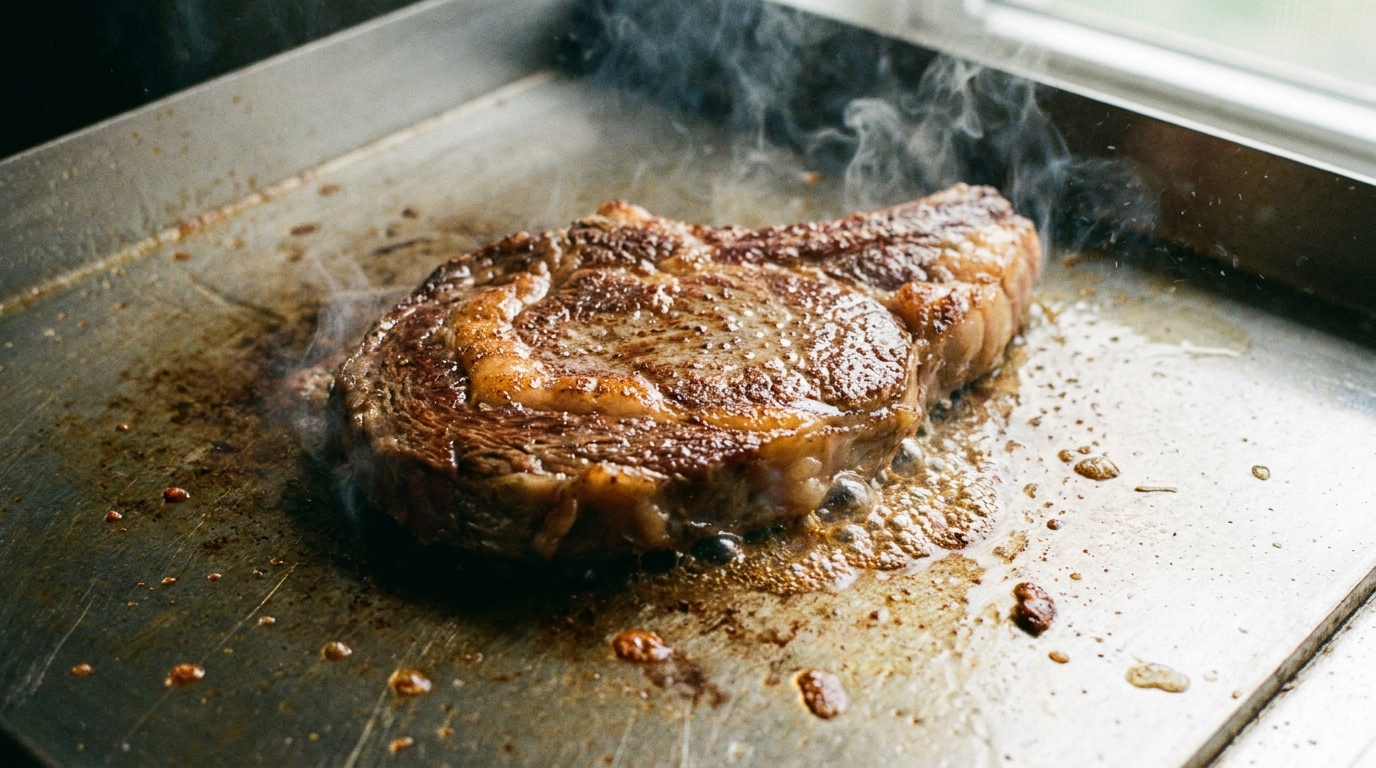
How a stainless steel electric plancha works
A plancha is a large metal plate heated by electric elements; heat is transferred by direct contact, which is ideal for searing a steak.
On a high-performance stainless steel plancha, the surface heats evenly, but there are two distinct zones: the centre, which is hotter, for quick searing; and the edges, slightly cooler, for gently finishing the cooking.
For beef, specialist organisations recommend around 250 °C. In practice: 200-220 °C for thin cuts or beginners; 240-260 °C for a powerful sear on thick steaks before lowering the heat.
The advantage over a barbecue: a much more stable temperature and maximum contact between the meat and the smooth stainless steel plate, which enhances the Maillard reaction. With a quality French stainless steel plancha, you benefit from fast heat-up, even heat and easy cleaning.
Choosing the right steak for plancha cooking
Which cuts to choose for cooking steak on a plancha
Choose quick-cooking cuts: sirloin, rib-eye, topside steak, rump steak, flank (bavette), hanger steak, spider steak or pear steak. These tender cuts handle quick searing well without drying out.
Thickness: 1.5-2 cm is perfect for a first attempt (rare is easier to achieve); 2-3 cm gives a lovely contrast between crust and pink centre; beyond that, plan a strong sear followed by gentler finishing.
Preparing the meat and the electric plancha
Preparing the meat and the plate before cooking steak on a plancha
Take the meat out: leave the steak at room temperature for 30 min to avoid the thermal shock that toughens the fibres. For more information, read our article on preparing the meat.
Dry the surface: pat dry with kitchen paper to help browning.
Season: salt just before or after cooking, as you prefer; add pepper preferably at the end of cooking or during resting.
Preheat the plancha: 10-15 min. A drop of water should sizzle and dance. Lightly oil the plate with a neutral oil that withstands high temperatures (grapeseed, for example). For more details, see the guide on using the plancha.
Basic method for cooking a 2 to 3 cm steak on a plancha
Set the plancha between 220 and 240 °C. Place the steak in the centre; a clear sizzle confirms the Maillard reaction. Leave it still so the crust can form.
Approximate times for a steak about 2 cm thick: rare: 2 min per side; medium: 3 min; well done: 4 min. Turn only once with tongs (do not pierce the meat).
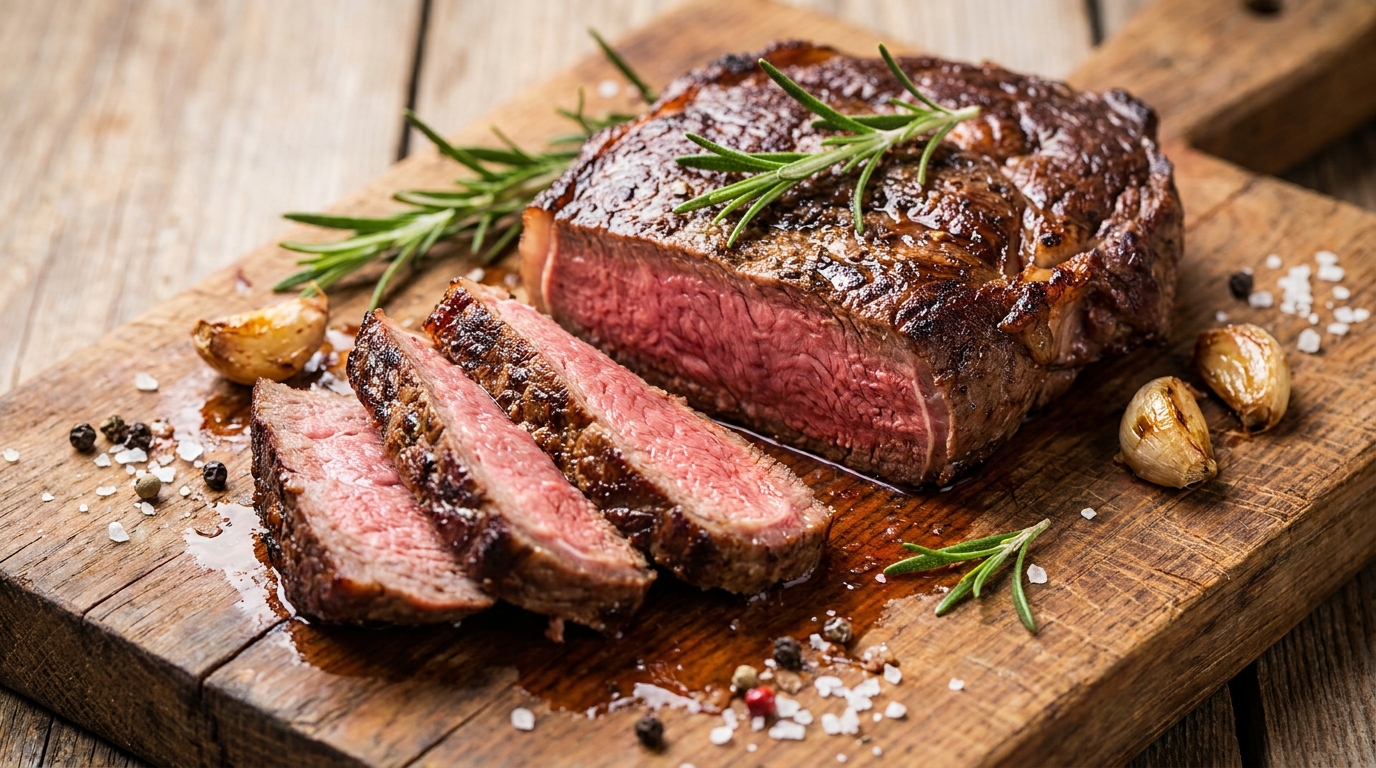
As soon as the crust has formed, slide the steak towards the edge (gentler zone) to finish cooking. Finally, let it rest for 2-5 min; carry-over cooking evens out the internal temperature and redistributes the juices.
Times and temperatures for perfectly controlled plancha steak
| Thickness | Doneness | Time / side | Internal temperature |
|---|---|---|---|
| 1.5-2 cm | Rare | 1 min 30-2 min | 52-55 °C |
| 1.5-2 cm | Medium | 2-3 min | 60-63 °C |
| 1.5-2 cm | Well done | 3-4 min | > 70 °C |
| 2-3 cm | Rare | 2-3 min | 52-55 °C |
| 2-3 cm | Medium | 3-4 min | 60-63 °C |
| 2-3 cm | Well done | 4-5 min | > 70 °C |
For ultimate precision, use a probe and stop cooking about 5 °C before the target temperature; the meat keeps rising in temperature while it rests.
Advanced techniques for a perfect sear on the plancha
Very hot sear, then gentle finish: 240-260 °C for 1-2 min per side, then 200 °C to finish, ideal for thick cuts.
Frequent turning: turning every minute gives a more even centre.
Cooking dome: covering at the end of cooking creates enveloping heat and lets you melt butter or herbs.
Special cases: thick steak, rib of beef, burger patties
Thick rib-eye and steaks > 3 cm
Sear each side in the centre of the hot plate, then lower the temperature or move the meat to a gentler zone. Turning every 2-3 min helps control the centre; a probe is recommended.
Rib of beef on the plancha
Take the meat out well in advance, oil it lightly, sear hard for a few minutes per side, then continue gently, turning regularly. Rest: at least 10 min before slicing. Experienced cooks can go up to 300 °C for the initial sear, a technique reserved for seasoned users.
Burger patties on the plancha
Use fresh, good-quality minced beef. Plancha very hot; about 2 min per side for a standard thickness, aiming for a more thoroughly cooked centre for food safety.
Common mistakes and frequently asked questions
- Plancha not hot enough: the meat releases water and does not brown.
- Meat too cold: contracted fibres, tougher texture.
- Fork piercing the steak: the juices escape.
- Too much oil: the fat burns and smokes.
- No resting: the meat loses its juices when cut.
Is an electric plancha powerful enough?
Yes, if it is a quality appliance with a thick stainless steel plate.
Should the meat be covered?
Not necessary for searing; a dome at the end of cooking can even out the heat.
Oil the meat or the plate?
Professionals prefer to oil the plate very lightly to limit smoke and splashes.
Quick FAQ on cooking steak on a plancha
How do I know if the plancha is at the right temperature?
After 10-15 min of preheating, a drop of water should sizzle and glide.
Difference between an electric and a gas plancha?
An electric plancha offers a more stable temperature and avoids dealing with gas bottles. Details: full comparison.
Should the plancha be cleaned between two cooking sessions?
Yes: a clean surface = a better Maillard reaction.
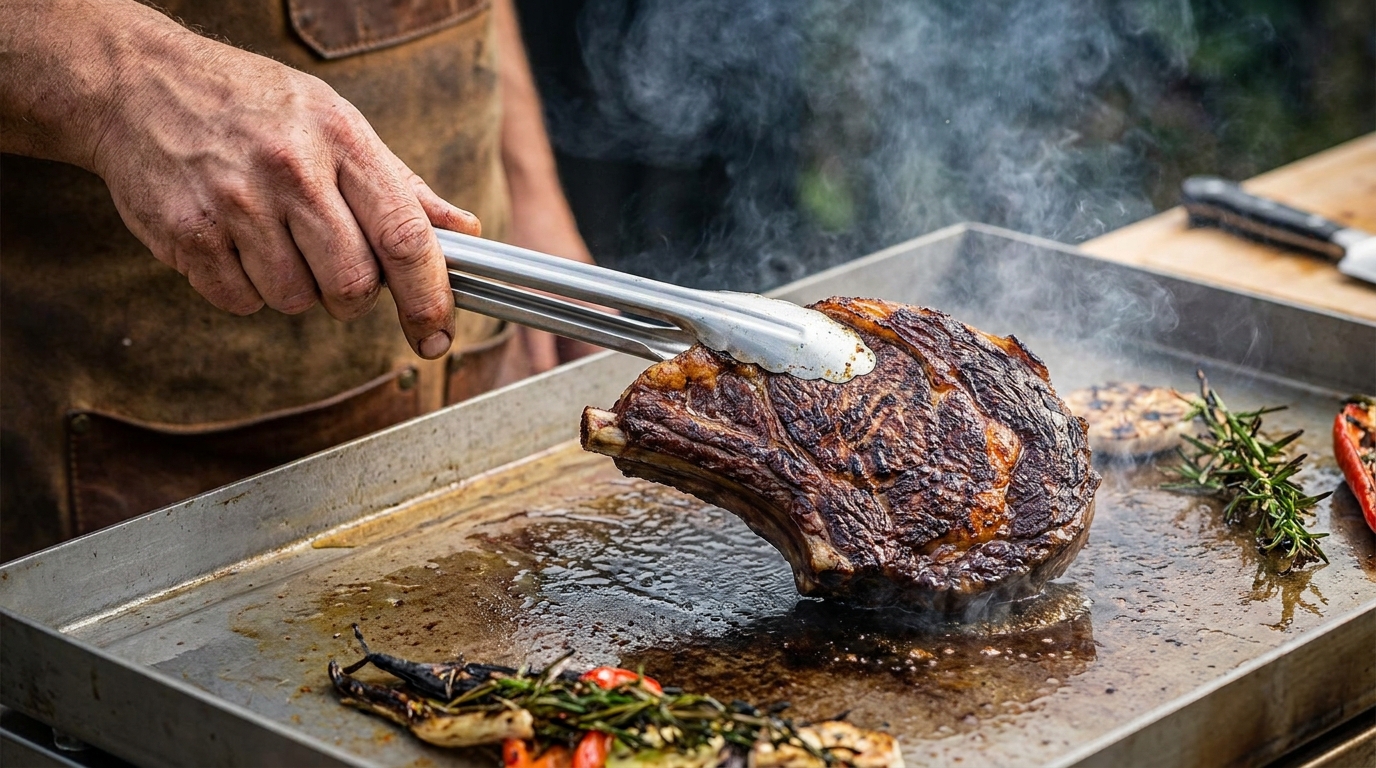
Conclusion: cooking the perfect steak on a plancha
By mastering your electric plancha's temperature, choosing the right cuts and respecting cooking and resting times, you will get restaurant-quality results at home.