



 +33 4 78 55 45 69
 When investing in a plancha, the choice of plate material is decisive. Between stainless steel and enamelled cast iron, the difference is not just about price, but also about hygiene, durability and everyday comfort. If you cook often, alternate between meat and fish and are looking for a long-lasting solution, it is essential to look beyond the initial budget.
In this guide, we concretely compare the two materials and explain why, for a modern and durable electric plancha, stainless steel stands out as the best option.
Stainless steel or enamelled cast iron plancha: the guide to making the right material choice
Reading time: ~13 min
- How to choose between stainless steel or enamelled cast iron plancha
- Enamelled cast iron and stainless steel: comparison of cooking performance
- Maintenance and hygiene: two very different philosophies
- Durability, robustness and weight of the appliance
- Quick comparison: enamelled cast iron vs stainless steel
- Why we recommend stainless steel for your electric plancha
- When to still choose an enamelled cast iron plancha
- Using and maintaining a stainless steel plancha properly
- Frequently asked questions before choosing stainless steel or enamelled cast iron
- In summary
How to choose between stainless steel or enamelled cast iron plancha
Before deciding, clarify your needs:
- Frequency of use
- Types of food (meats, fish, vegetables, sweet or acidic marinades)
- Level of hygiene and cleaning requirements
- Desired comfort (heat-up time, weight, manoeuvrability)
- Immediate budget and long-term vision
Enamelled cast iron offers very even and stable cooking. Stainless steel, more reactive, lighter and more hygienic, is particularly suited to intensive use and a high-end French-made electric plancha such as those offered by Planchaelec.
Enamelled cast iron and stainless steel: comparison of cooking performance
Heat distribution and stability
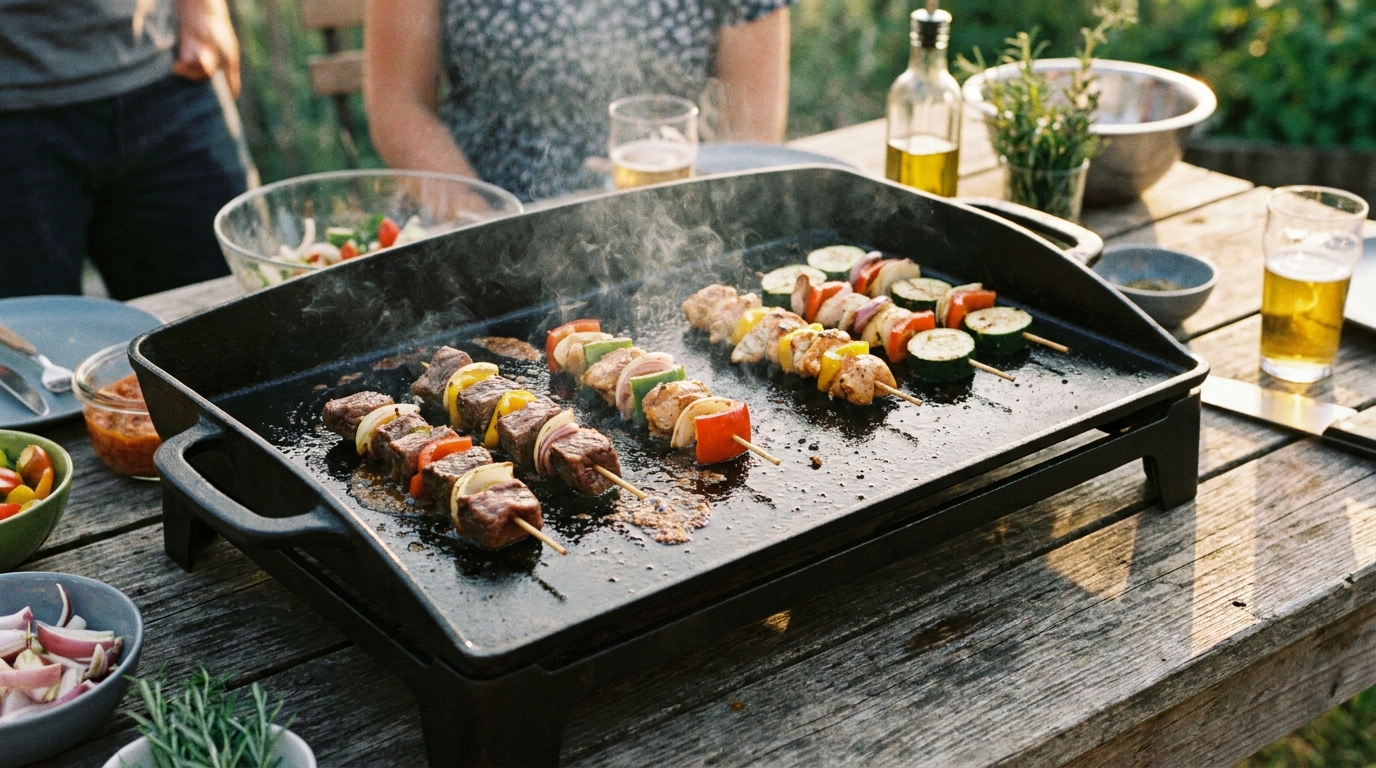
Enamelled cast iron has excellent thermal inertia: once hot, the temperature remains strong and even across the entire surface, ideal for large gatherings. In return, the heat-up time is slower (10 to 15 minutes).
Brushed stainless steel is very reactive: the plate reaches cooking temperature in a few minutes. It naturally creates hotter and cooler zones, a valuable asset for searing meat while warming vegetables on the side.
Cooking control and ease of use
With enamelled cast iron, the uniform heat makes it easier to manage cooking. With stainless steel, you gain versatility and precision thanks to the different temperature zones, particularly useful for avoiding overcooking on a quality electric plancha.
Maintenance and hygiene: two very different philosophies
Hygiene of the cooking surface
Stainless steel has the advantage thanks to its non-porous surface that does not absorb fats, juices or bacteria. Odours do not impregnate the plate, even when alternating between meat and fish.
Enamelled cast iron remains hygienic as long as the enamel is intact. Low-quality enamel can develop micro-cracks and chips, creating areas where residues and fats accumulate.
Ease of daily cleaning
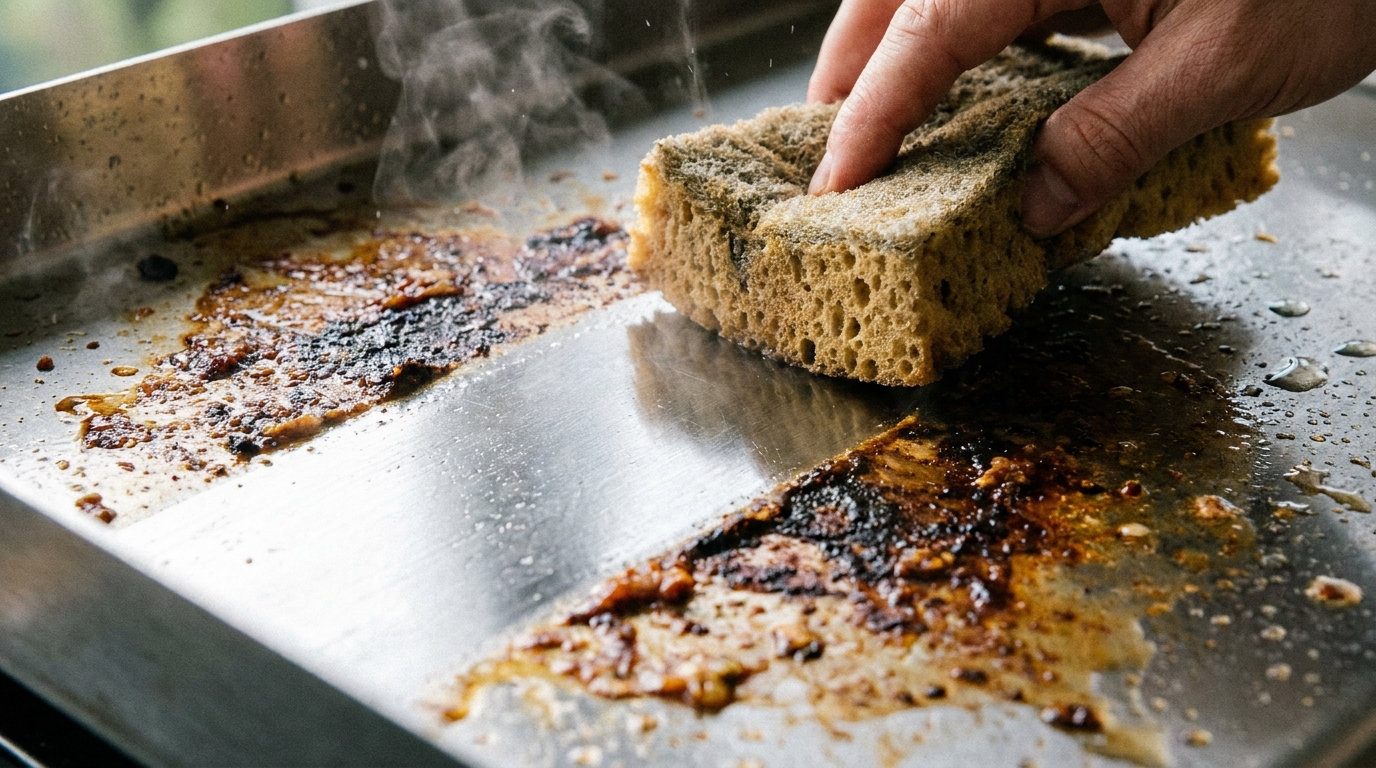
Enamelled cast iron: a simple deglaze with water followed by scraping is sufficient, but you must avoid knocks that could damage the enamel.
Brushed stainless steel: deglaze with water or ice cubes, scrape in the direction of the brushing then wipe. For detailed best practices, consult the stainless steel plancha cleaning guide.
Durability, robustness and weight of the appliance
Mechanical resistance and longevity
Enamelled cast iron is very resistant to high heat and does not warp, provided the enamel is of good quality. Stainless steel fears neither corrosion nor bad weather (304L stainless steel recommended for coastal areas). Any scratches do not affect food safety.
Weight and manoeuvrability
Stainless steel is noticeably lighter than an enamelled cast iron model, making it easier to move or store. Cast iron, heavier, provides stability but complicates handling on a balcony or small terrace.
Quick comparison: enamelled cast iron vs stainless steel
| Criterion | Enamelled cast iron | Brushed stainless steel |
|---|---|---|
| Heat-up time | Slow | Fast |
| Heat distribution | Very even | Differentiated zones |
| Hygiene | Good if enamel intact | Excellent |
| Maintenance | Simple but fragile | Very quick |
| Weight | Heavy | Light |
| Cost | More affordable | Higher |
Why we recommend stainless steel for your electric plancha
A material built for professional quality
Stainless steel offers thermal reactivity, differentiated cooking zones, impeccable hygiene and a modern aesthetic that integrates easily into a contemporary outdoor kitchen.
A choice consistent with quality French manufacturing
Planchaelec stainless steel electric planchas are designed and manufactured in France. They offer reliability, safety, responsive after-sales service and a two-year guarantee. Discover the complete range: stainless steel electric planchas.
When to still choose an enamelled cast iron plancha
Enamelled cast iron remains relevant if you prioritise above all very even cooking, a more limited investment and do not move your appliance often. Nevertheless, pay attention to the quality of the enamel to ensure its durability.
Using and maintaining a stainless steel plancha properly
Preheating: wait until the plate is well hot before placing food to limit sticking. Fat: apply a light film of oil for delicate foods such as fish or thin vegetables.
Cleaning: deglaze with water or ice cubes then scrape in the direction of the brushing while the plate is still hot. Suitable tools: favour a stainless steel spatula with rounded edges to avoid marking the surface. Storage: after wiping, a light coat of neutral oil protects the plate during long outdoor storage. For accessories, consult the plancha accessories selection.
FAQ: frequently asked questions before choosing stainless steel or enamelled cast iron
Does a stainless steel plancha stick more than enamelled cast iron?
Stainless steel can stick slightly if the plate is not hot enough or without fat. With proper preheating and a thin layer of oil, it becomes very pleasant to use. The difference with enamelled cast iron is greatly reduced with good mastery of stainless steel.
Does stainless steel yellow or blacken over time?
A slight change in colour is normal after several uses at high temperature. This is simply an aesthetic patina that does not affect hygiene or cooking quality.
Which solution is the healthiest for cooking?
Both materials are suitable for food use. However, the non-porous surface of stainless steel makes it easier to achieve perfect cleaning, even with intensive use. If the enamel deteriorates, cast iron becomes more difficult to keep clean.
Stainless steel and electric plancha: is it sufficient for proper searing?
Yes. A well-designed stainless steel electric plancha offers fast heat-up and sufficient power to sear meats, fish and vegetables while guaranteeing very precise heat control, without gas or flame.
In summary
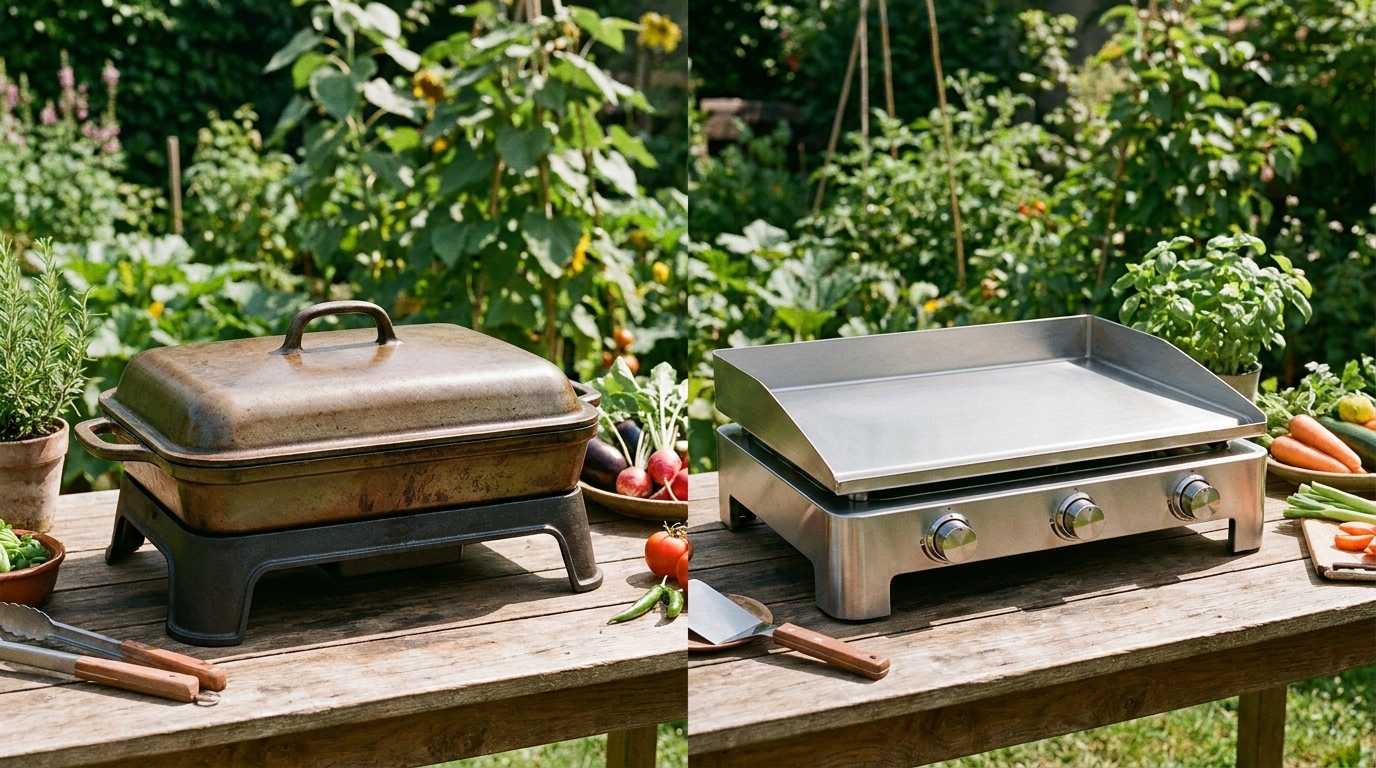
Choosing between a stainless steel or enamelled cast iron plancha comes down to selecting a cooking philosophy. Enamelled cast iron appeals through its simplicity and even heat for a controlled budget. Stainless steel is aimed at those seeking professional quality, impeccable hygiene, fast heat-up and a light, durable solution. For a long-term investment in a robust and reliable French-made stainless steel electric plancha, consult our detailed advice: choosing your plancha and its material.