



 +33 4 78 55 45 69
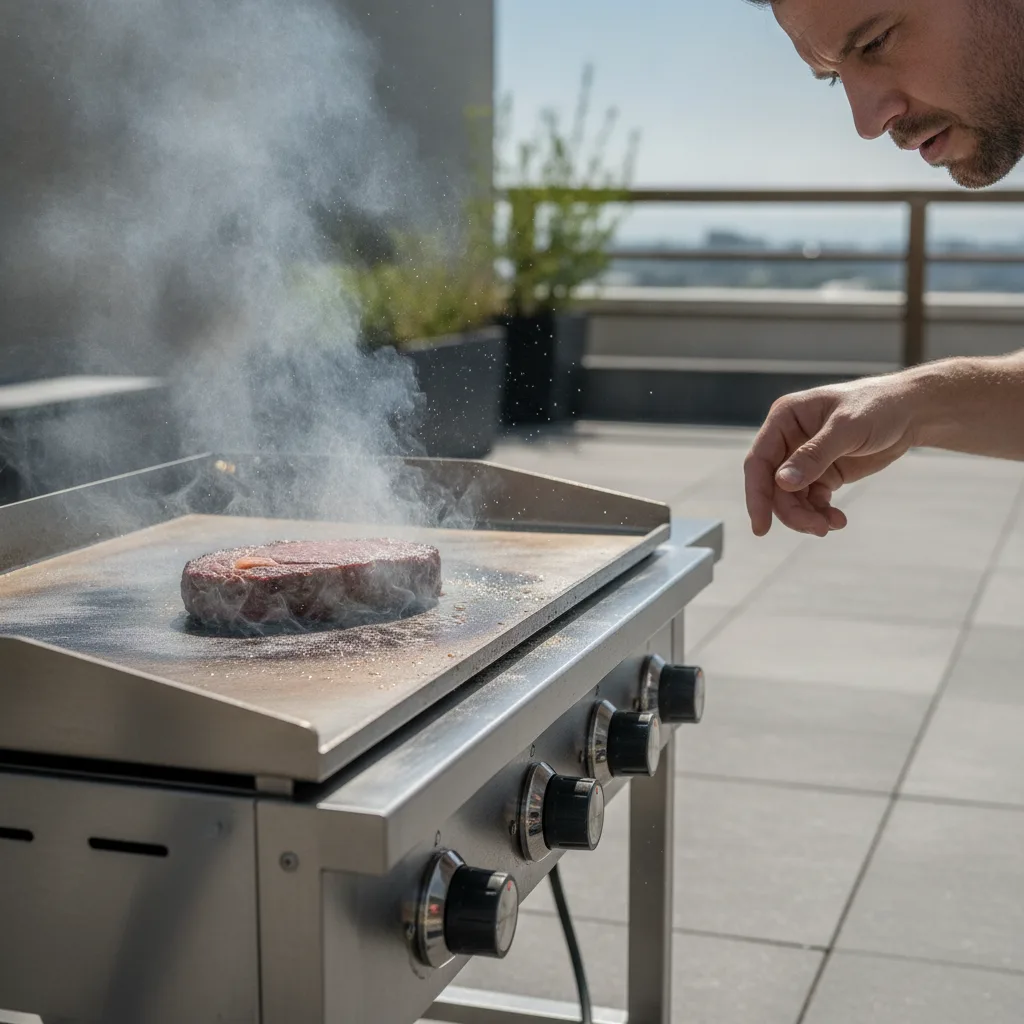
A crackle when a rib-eye hits the plate, a sharp click as it heats up, a hiss near the regulator: not all plancha noises are the same. Some are the normal signature of successful cooking, others point to a build-up of dirt, a poor electrical contact or a leak. When a plancha sizzles, whether the noise is faint or more pronounced, you need to know how to listen to it.
This sound diagnosis guide helps you identify where the noise is coming from, tell whether a sizzling plancha is harmless or a warning sign, and decide when to switch off the appliance. We cover gas and electric models, the checks you can do yourself and when to call a professional.
Plancha sizzling or making strange noises: diagnosis and solutions
Reading time: ~8 min
- Why is my plancha sizzling? The most common causes
- Plancha sizzling: normal noise or fault, how to tell
- Gas plancha noise: burner, venturi and gas tightness
- Electric plancha noise: socket, thermostat and overheating
- What to do step by step when the plancha makes a noise
- When to contact a technician or after-sales service
- Going further with your plancha's sound diagnosis
- Frequently asked questions about plancha noises
Why is my plancha sizzling? The most common causes
Sizzling caused by food and water
In the vast majority of cases, the sizzling simply comes from the water contained in food. On contact with a cooking plate at high temperature, this moisture instantly turns into steam, which produces that characteristic sound. The phenomenon is amplified with marinated food, watery vegetables or pieces straight out of the freezer. It is exactly the sound plancha lovers look for, because it shows immediate searing and a well-started Maillard reaction.
Plate clicking and metal expansion
The second classic cause is adding water to a scorching plate, while deglazing or cleaning too quickly. The crackling is then violent and accompanied by bursts of steam. Finally, a plancha sometimes crackles with no food at all, simply because the metal is moving. Thermal expansion of the plate and frame causes metallic clicks both when heating up and when cooling down. A plancha that clicks as it heats up is therefore not necessarily faulty, especially with a thick stainless steel plate that stores a lot of energy.
Plancha sizzling: normal noise or fault, how to tell
The rule of thumb is simple. A noise that comes from the cooking surface, in time with food or liquid being placed on it, is normal. A noise that comes from a technical component, socket, cable, thermostat, burner or gas connection, should be considered suspicious until proven otherwise.
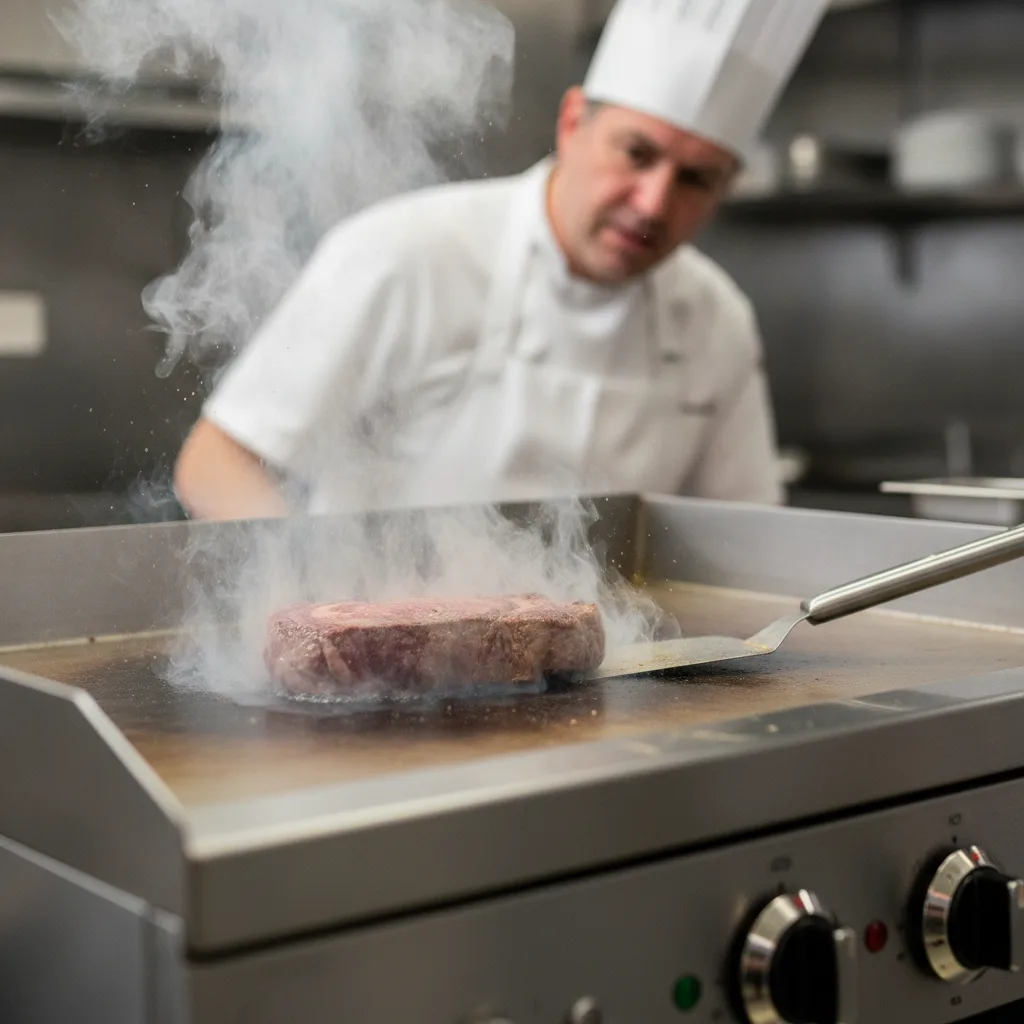
The second criterion is what comes with it: a smell of gas, a smell of hot plastic, unusual smoke, sparks or a yellow, unstable flame turn a simple noise into a safety alert.
The following table sums up the most common situations and what to do.
| Noise observed | Possible cause | Recommended action |
|---|---|---|
| Sizzling when food touches the plate | Evaporation of water and fat | Normal; dry food to limit splashes |
| Crackling after adding water | Thermal shock on a very hot plate | Pour little water, gradually, from a distance |
| Metallic clicking when heating up or cooling down | Thermal expansion of the metal | Usually normal if there are no other symptoms |
| Sizzling at the socket or on the cable | Poor electrical contact or overheating | Unplug immediately and have it checked |
| Yellow flame, noisy burner | Dirty burner, blocked venturi, disturbed air supply | Switch off, let cool, clean according to the manual |
| Hissing with a smell of gas | Leak or faulty connection | Close the bottle, ventilate, do not touch any switch |
| Noise after changing the bottle | Loose connection or faulty regulator | Check the connections and do a leak test |
Gas plancha noise: burner, venturi and gas tightness
Noises linked to the burner and combustion
On a gas appliance, a noisy burner almost always indicates a combustion problem. Manufacturers' manuals, including those from Invicta and Krampouz, recommend cleaning the burner and unblocking the venturi if it runs irregularly, because a grease residue or an insect lodged in the tube is enough to upset the air-gas mixture.
The ventilation openings must remain completely clear, otherwise combustion becomes incomplete and the flame turns yellow and crackles. Wind also plays an important role, and several manuals advise against lighting in strong wind or a strong draught.
The second point to check is the gas circuit. The hose must not be cracked, twisted, pinched or resting against a hot part, and it must comply with European standard EN 498 for butane and propane hoses. A regular check of the hoses and regulator rules out this risk.
If the plancha hisses, especially near the regulator or gas connection, a leak test is essential. Do it with the appliance off, applying soapy water to the connections: bubbles indicate a gas leak. In that case, close the bottle valve, ventilate the area, do not operate any electrical device and never look for the leak with a flame. If bubbles persist after tightening, the appliance must stay out of service until a qualified technician has inspected it.
Important
A gas plancha must only be used outdoors, in a well-ventilated area, and the bottle valve must be closed after each use.
Electric plancha noise: socket, thermostat and overheating
Typical noises of an electric plancha
On an electric plancha, the diagnosis is different because there is no flame or gas circuit. A slight expansion click is perfectly ordinary, especially on a thick stainless steel plate like those of our Néo and Lux models, which heat up evenly and then contract as they cool down.
However, if the plancha sizzles at the electrical socket, it is a completely different signal. This noise, often accompanied by a smell of hot plastic, a blackened socket or a tripping circuit breaker, indicates a poor electrical contact or an overheating circuit.
What to do is immediate: switch off the power, unplug and do not use the appliance again until it has been checked. In many cases, the cause lies upstream of the plancha. An undersized outdoor extension lead, or one left coiled on its reel, heats up considerably, as consumer maintenance guides point out.
An extension lead must be designed for outdoor use and fully unwound, and the socket must be protected from splashes. For a permanent outdoor installation, a waterproof socket fitted correctly and inspected by a qualified electrician remains the safest solution. A faulty thermostat can also cause repeated, closely spaced clicks along with erratic temperature control, which calls for a visit to after-sales service rather than improvised dismantling.
What to do step by step when the plancha makes a noise
Before doing anything, locate the exact source of the sound, then make the appliance safe. Here is the procedure, in order.
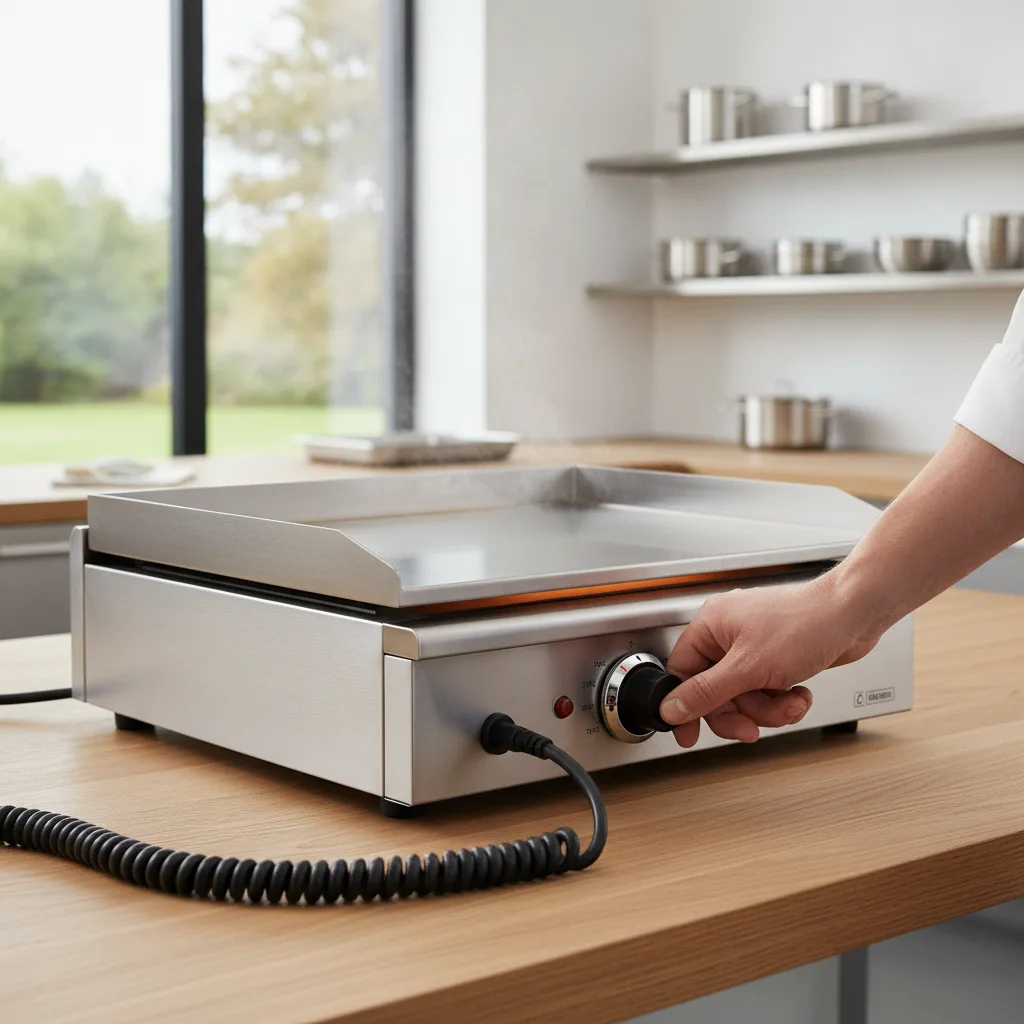
- Identify where the noise comes from: food, plate, grease tray, burner, socket or bottle.
- Switch off the plancha if the noise comes from a technical part, or if it comes with a smell, smoke or an abnormal flame.
- Let it cool completely before cleaning the plate, burner or grease tray.
- For gas, remove any accessible residue, check that the ventilation openings are clear and inspect the hose and connections.
- For electric, inspect the socket, cable and extension lead, without ever working on the housing of a plugged-in appliance.
A full grease tray deserves particular attention: accumulated grease can crackle, smoke and impair both combustion and cooking hygiene. Regular cleaning of the stainless steel plate also limits most stray crackling, and our detailed instructions are available on our page on cleaning a stainless steel plancha as well as in our tutorial on a burnt plate.
When to contact a technician or after-sales service
Some symptoms cannot be fixed with a cloth and a scouring pad. Call a professional or the manufacturer's after-sales service if the noise persists after cleaning, if the flame stays yellow or unstable, if a part of the gas circuit seems faulty, if the soapy water test still shows bubbles, or if an electrical sizzling reappears on another socket. A circuit breaker that trips repeatedly is also a reason to stop immediately.
At Planchaelec, our stainless steel appliances made in France are designed to be repairable, and spare parts such as knobs, cords and power bases remain available via our after-sales page.
Key point
A noise linked to food is a good sign of successful searing; a noise linked to a technical component means stopping the appliance and checking it.
Going further with your plancha's sound diagnosis
Listening to your plancha is part of using it. The sizzling of food and expansion clicks are part of the normal operation of a high-performance cooking plate, while a hiss at a connection, a yellow flame or sizzling at the socket are safety issues.
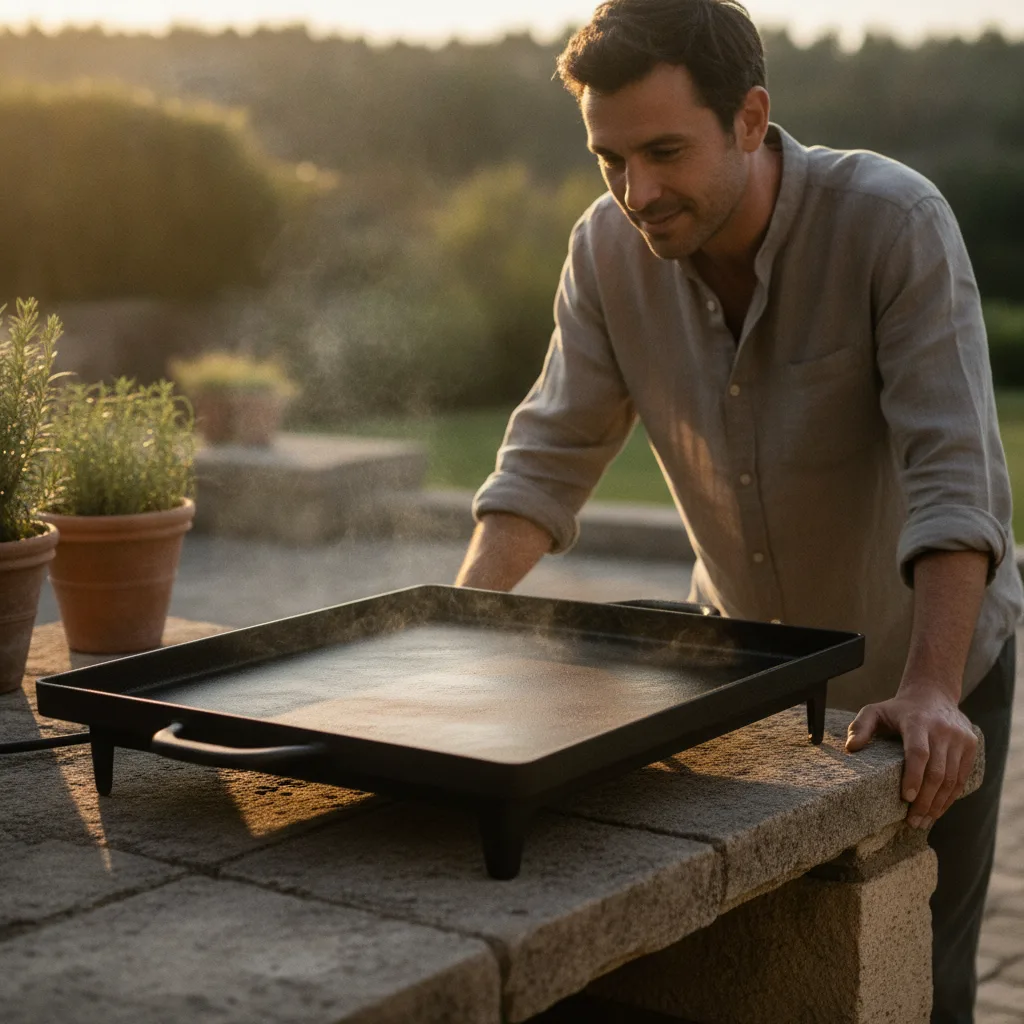
By applying a simple method, locate, switch off, let cool, clean and then check, you can solve most cases in a few minutes and know exactly when to hand over to a professional. To choose a durable, easy-to-maintain appliance, read our plancha buying guide.
To conclude on plancha noises
By combining listening to the noises with observing smells and the appearance of the flames or socket, you can tell a simple cooking crackle from a technical alert, make your gas or electric plancha safe and extend its life without changing your cooking habits.
FAQ: frequently asked questions about plancha noises
My plancha crackles as it cools down. Should I be worried?
No, in most cases it is the metal contracting after cooking. This metallic click is brief, irregular and stops once the appliance has returned to room temperature. It only becomes suspicious if it comes with visible warping of the plate or an unusual smell.
Does a new plancha make more noise the first few times it is used?
It is common to hear more clicking during the first few heat-ups, while the materials and assemblies settle. Proper seasoning, with a thin layer of oil at high temperature, also reduces crackling caused by manufacturing residues.
Does a lid or cooking dome change the noise level?
Yes, a lid concentrates steam and can accentuate the sound of evaporation at the start of cooking, while limiting grease splashes. It is a useful accessory for mixed cooking, searing first and then finishing gently.
Does the plancha's power affect the sizzling?
Indirectly. A plancha that holds its temperature well gives a clean sear and a distinct sizzle as soon as the food is placed on it. A plate that drops in temperature, on the other hand, steams the food, which is quieter and wetter.
Should I stop cooking if the plancha makes a clicking noise during use?
Not necessarily. If the click is isolated, with no unusual smell or smoke, carry on cooking and keep an eye on the appliance. If the noise repeats at short intervals and comes with abnormal heat control, switch off the power and have the thermostat checked.