



 +33 4 78 55 45 69
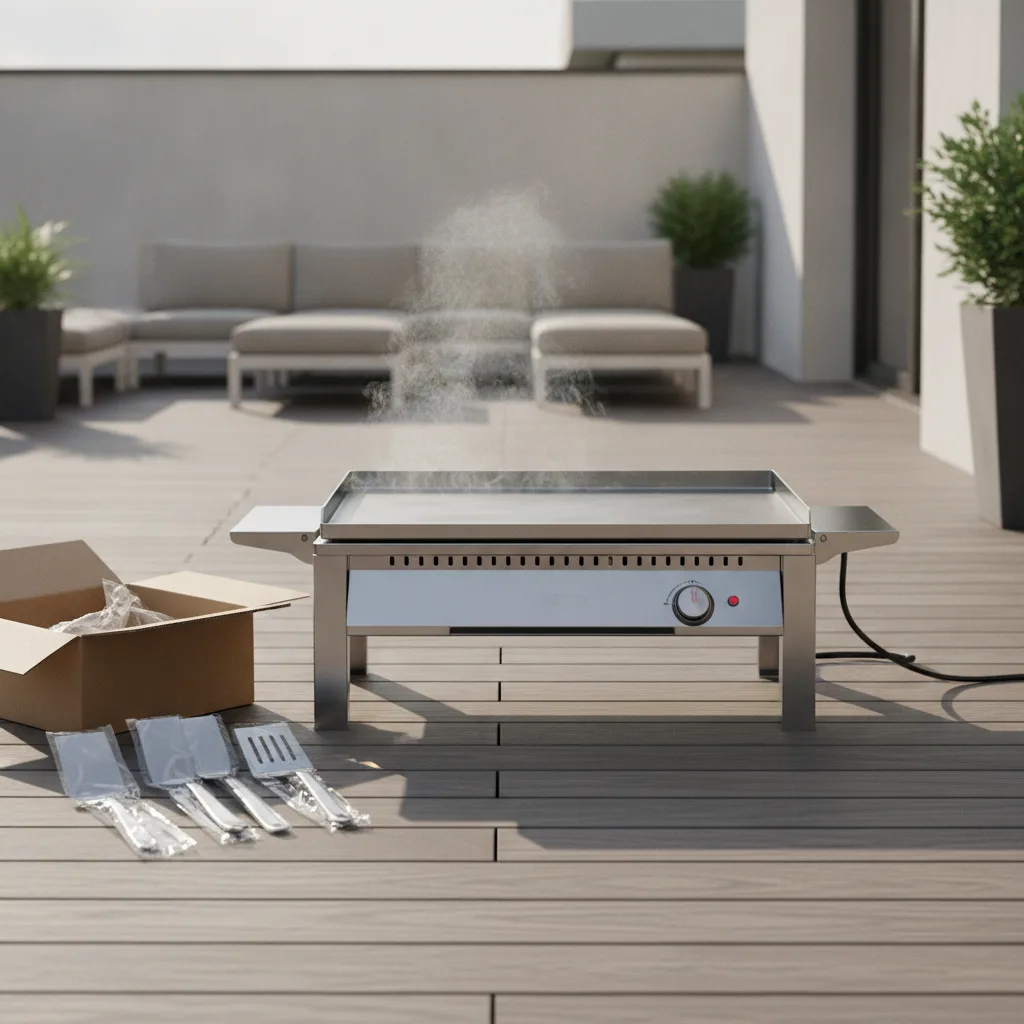
A smell from a stainless steel plancha on first use is a concern we often hear as soon as it comes out of the box. Rest assured, a slight, short-lived smell during the very first heat-up is generally normal. It comes from manufacturing residues, the polishing of the stainless steel plate and components heating up for the first time.
On the other hand, a strong smell, a smell of burnt plastic or a lot of smoke is not trivial. Here is how to tell the two situations apart and prepare your plancha properly before cooking on it for the first time.
Smell from a new stainless steel plancha on first use: is it normal?
Reading time: ~9 min
- Why a new plancha that smells on its first heat-up is often normal
- The protective film on a stainless steel plancha to remove before any heating
- How to clean a new stainless steel plancha before use
- How long to heat a new plancha empty
- Seasoning a stainless steel plancha: necessary or not?
- Persistent smell from a stainless steel plancha: what to do
- White vinegar and lingering smells
- Cleaning the plancha after the first cooking session
- When to contact after-sales service
- Going further for a worry-free first use
- Frequently asked questions about stainless steel plancha smells
Why a new plancha that smells on its first heat-up is often normal
Where does the smell of a new stainless steel plancha come from?
A new stainless steel plate never arrives completely untouched. Between machining, polishing, handling in the workshop, packaging and transport, the surface may keep fine traces of technical oil, metal dust or protective products.
As it heats up, these factory residues evaporate and produce a characteristic smell, sometimes accompanied by very light initial smoke. Manufacturers themselves document this: an ENO Marine manual, for example, states thata slight smell may be given off during a 15-minute empty heat-up, which confirms that the phenomenon is temporary.
New parts of the heating unit also contribute to this smell. On an electric plancha, the heating element, sheaths and technical paints go through their first thermal cycle. The smell is dry and faint, and it disappears within a few minutes. On a gas plancha, the first combustion can also give off a smell of hot metal. In both cases, the common point is simple: the smell must fade and then disappear, never get stronger.
The protective film on a stainless steel plancha to remove before any heating
This is the number one cause of a burnt plastic smell on a new plancha. Many stainless steel plates are delivered with a protective PVC film designed to prevent scratches during transport. This film is sometimes almost invisible, especially on brushed stainless steel.
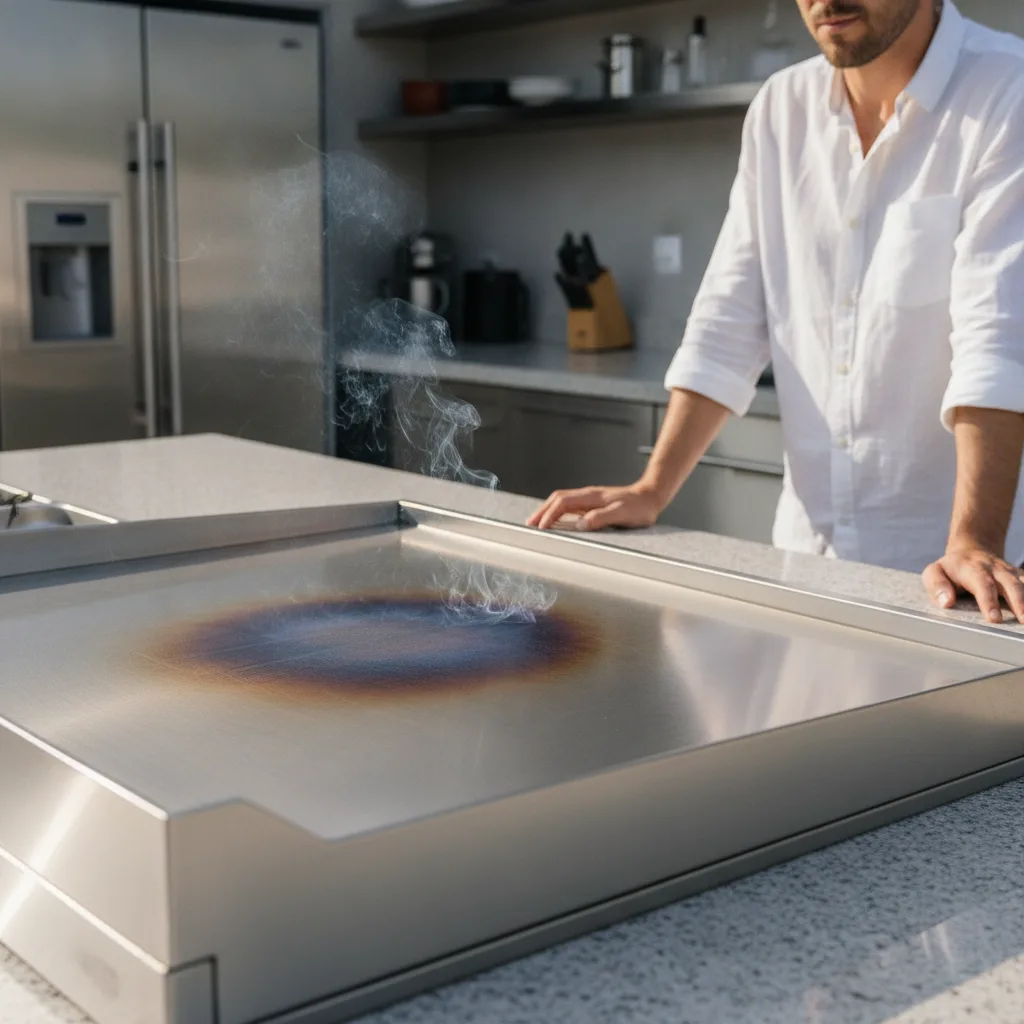
The manual for an electric plancha on the market explicitly states that the protective PVC film must be removed from the stainless steel, both on the plate and on the drip channel, before first use. When heated, this plastic melts, sticks and gives off a very unpleasant smell.
How to spot a forgotten protective film
Before plugging in or switching on anything, inspect the whole appliance. Run your hand over the plate, look for a corner of film sticking out, check the edges of the drip channel, the underside of the handles, adhesive labels, foam wedges and the protections around the controls. A single forgotten piece of adhesive is enough to ruin the first cooking session.
Good to know
If a piece of film has already melted onto the plate, let it cool completely, then remove the residue with a suitable spatula and a stainless-steel-compatible degreaser, never using a harsh abrasive product.
How to clean a new stainless steel plancha before use
The key steps of the first clean
The initial clean is the step that removes the vast majority of smells. It should be done after removing the protections and before the first heat-up. Clean the stainless steel plate with lukewarm water and a soft sponge. If the manufacturer's manual allows it, add a small amount of washing-up liquid, then rinse thoroughly so that no trace of detergent remains.
This out-of-the-box wash is recommended by consumer care guides, which stress the importance of removing impurities from manufacturing and packaging before the first cooking session.
Drying the plate is just as important as washing it. A wet plate causes splashes as it heats up and leaves limescale marks on the stainless steel surface. Wipe with a clean, lint-free cloth, paying particular attention to the edges and drip channel. We detail the right techniques and suitable products in our dedicated guide to cleaning a stainless steel plancha.
How long to heat a new plancha empty
Duration and procedure for the empty heat-up
The empty heat-up is the thermal cleaning cycle that completes the job. It consists of heating the plate without any food, in a well-ventilated place, ideally outdoors or under an efficient extractor hood.
Recommended times vary between manufacturers. An ENO Marine manual recommends an empty heat-up at maximum for 15 minutes, while other manuals mention about ten minutes to clear the initial smells and smoke. In practice, a 10 to 15-minute cycle in line with your manual is enough in the vast majority of cases.
Here is the complete procedure for first use, step by step.
| Step | Action | Indicative duration | Expected result |
|---|---|---|---|
| 1 | Read the manufacturer's manual | 5 minutes | Authorised products and heat-up time known |
| 2 | Remove the protective PVC film, adhesives and packaging | A few minutes | No plastic on the plate or drip channel |
| 3 | Wash with lukewarm water and a soft sponge, rinse thoroughly | A few minutes | Manufacturing residues removed |
| 4 | Dry the stainless steel plate completely | A few minutes | No splashes or traces of moisture |
| 5 | Heat empty in a ventilated area | 10 to 15 minutes depending on the manual | Initial smoke and smell cleared |
| 6 | Let cool, then wipe with a clean cloth | Variable | Plate ready for the first cooking session |
During this phase, do not put any food on the plate and do not bring your face close to the surface. If you are using an electric plancha indoors, check that the model is designed for this use and open the windows. Our specific advice is gathered in our article on using a plancha indoors without smoke.
Seasoning a stainless steel plancha: necessary or not?
The question comes up every time, because the habit of seasoning comes from the world of cast iron. On an unenamelled cast iron plate, this layer of polymerised oil is essential to protect the metal. On a stainless steel plate, it is a different matter.
Several care guides clearly state that stainless steel does not need the same seasoning as cast iron, as the initial clean is enough to prepare the surface. Others recommend a very thin layer of cooking oil with a high smoke point to limit sticking during the first cooking sessions.
Our position is pragmatic. If your appliance's manual allows it, you can wipe the lukewarm plate with a cloth lightly soaked in oil, then remove the excess. A film that is too thick produces smoke, becomes sticky and encourages carbonised residue to build up. In any case, 304 and 430 stainless steel, common grades for cooking plates, do not need heavy treatment to work properly. To compare materials, read our article on stainless steel or enamelled cast iron planchas.
Persistent smell from a stainless steel plancha: what to do
A smell that does not go away after the initial clean and the empty heat-up should lead you to stop using the appliance. The right reflex is to identify the type of smell before resuming cooking. Here are the signs that justify stopping the appliance immediately.
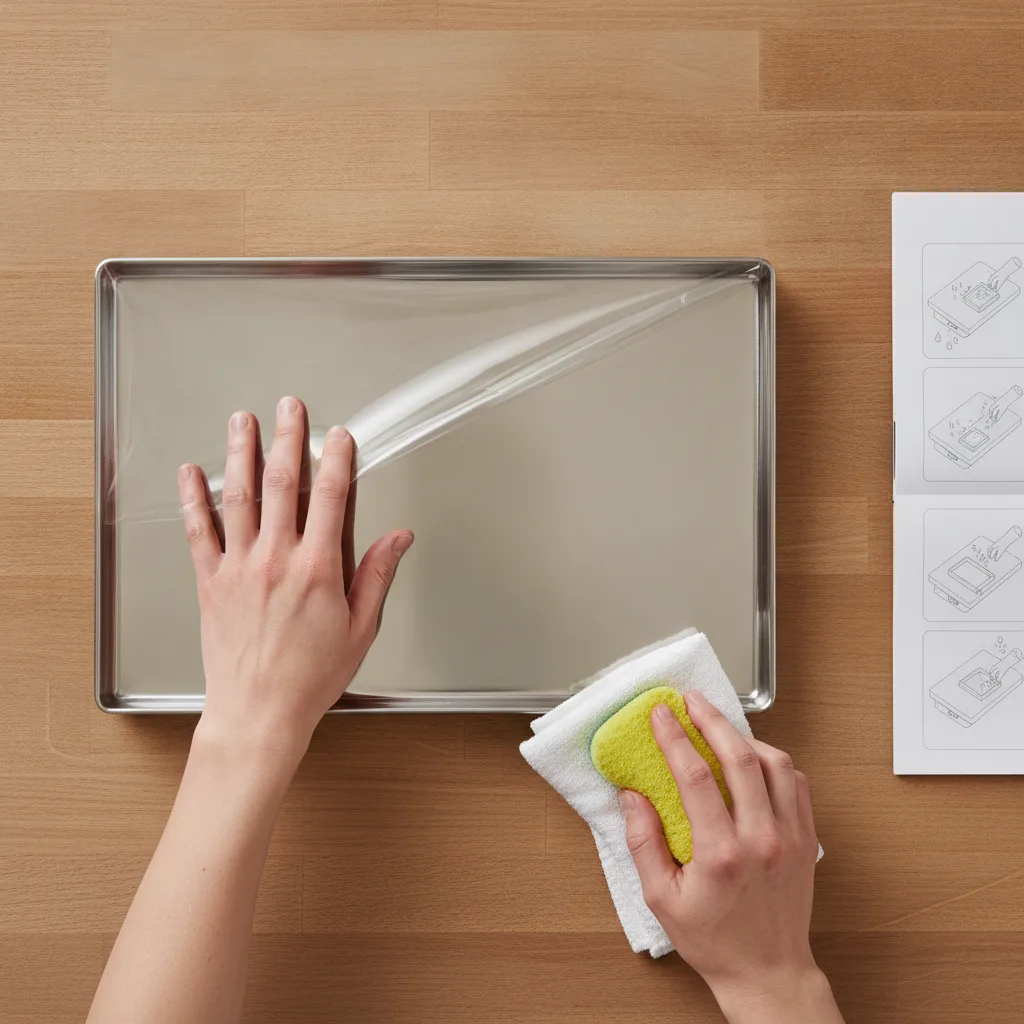
- A smell of burnt plastic, often linked to a protective film, adhesive or packaging forgotten under the appliance or in the trolley.
- An electrical smell, like an overheated component, a warm cord or an abnormally hot socket, which means unplugging immediately.
- A smell of gas on a gas plancha, which means shutting off the gas supply, not touching any switch, keeping any flame away and ventilating the area.
- Heavy smoke even though the plate is clean and empty, with no fat on it.
In these situations, do not resume cooking until the cause has been identified. Household electrical appliances sold in the EU must carry the CE marking and comply with consumer product safety rules, which means any abnormal behaviour should be reported to the seller or manufacturer rather than tolerated.
White vinegar and lingering smells
White vinegar is often mentioned for neutralising smells on a stainless steel plate. It can indeed help limit the transfer of flavours between two cooking sessions, for example after fish, provided the manufacturer's manual does not prohibit it.
However, it has no effect on a manufacturing smell, which is dealt with by washing and the empty heat-up. Use it sparingly, on a lukewarm plate, followed by rinsing with clean water and careful drying.
Key point
A new-appliance smell is dealt with by an initial clean and an empty heat-up, never with a scented product or deodoriser, which would leave residue on a surface intended for food contact.
Cleaning the plancha after the first cooking session
The first real meal is also when the right cleaning habit takes hold. Cleaning is done while the plate is still lukewarm, with the appliance switched off and, for an electric model, unplugged. Scrape the cooking juices towards the drip channel with a scraper spatula, add a little water or ice cubes if the manual allows it, then clean with a soft sponge or a scouring pad suitable for stainless steel.
This principle of scraping followed by adding water to a hot plate, then rinsing and drying, is recommended by several manufacturers. Our cleaning accessories are gathered on our cleaning page.
When to contact after-sales service
Contact after-sales service if the smell persists after two empty heat-up cycles, or if you notice an electrical smell, a warm cord, a tripped circuit breaker, warping of the stainless steel plate or abnormal smoke without any fat.
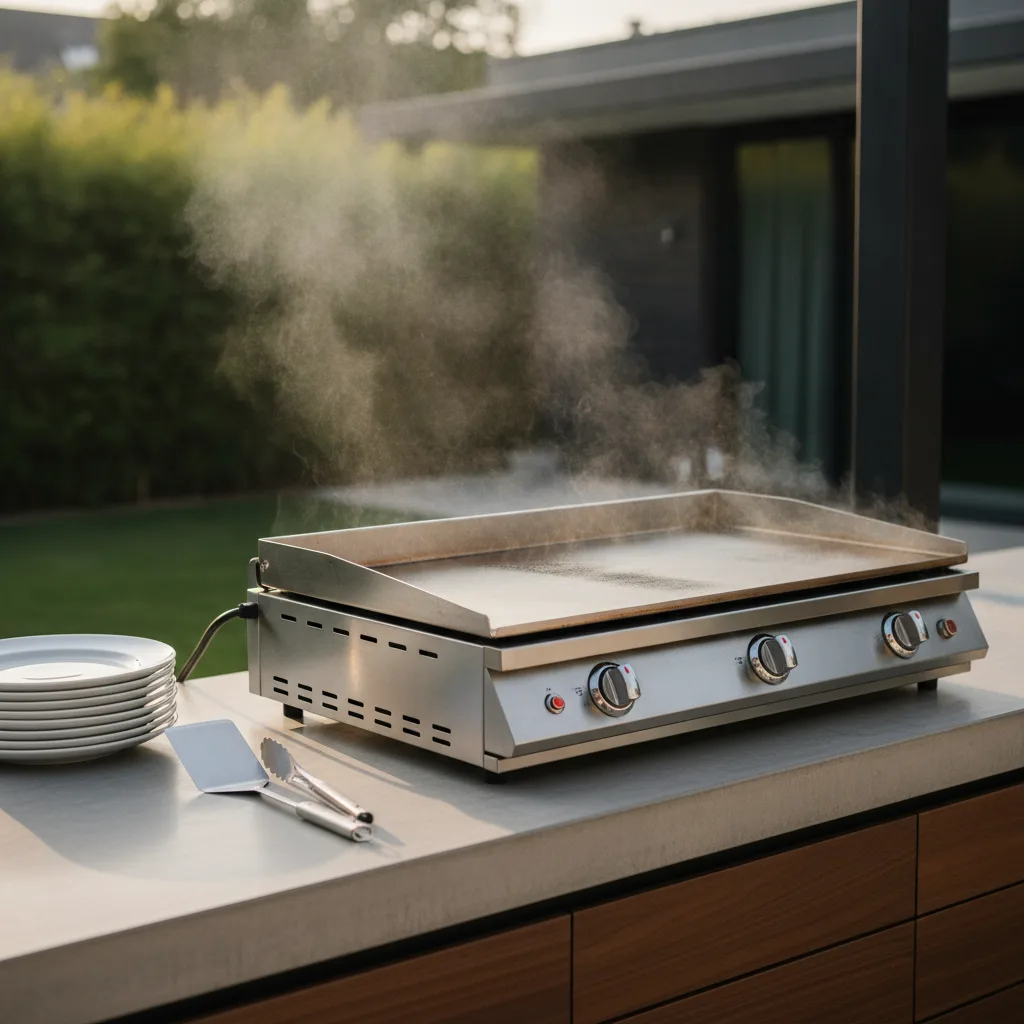
At Planchaelec, our stainless steel electric planchas are made in France and our spare parts remain available, which means any technical doubt can be dealt with quickly. You can write to us via our contact us page.
Going further for a worry-free first use
A slight smell on first heat-up is part of the normal life cycle of a new stainless steel plate. It reflects the evaporation of manufacturing residues and the components heating up for the first time. The routine is always the same: read the manual, completely remove the protective PVC film and adhesives, wash the plate with a soft sponge, rinse, dry, then heat it empty for 10 to 15 minutes in a ventilated space.
If the smell disappears, you can cook with peace of mind. If it persists, or if it smells of plastic, electricity or gas, stop the appliance and have it checked. To choose a model suited to your needs, read our buying guide.
Frequently asked questions about stainless steel plancha smells
Can you cook straight out of the box without any preparation?
We advise against it. Even if the plate looks clean, it may still carry packaging dust and traces of technical oil. A quick wash and an empty heat-up take less than thirty minutes and stop these residues from ending up on your first plate.
The smell comes back after a few uses. Is that serious?
A smell that reappears later is no longer a manufacturing smell. It most often comes from carbonised grease built up in the drip channel or under the plate. A thorough degreasing of these areas usually solves the problem.
Can the empty heat-up damage the stainless steel plate?
No, as long as you stick to the time stated by the manufacturer and do not run repeated cycles at full power. Prolonged empty heating for no reason puts unnecessary strain on the heating element and can leave heat marks on the surface.
Should you do the same preparation for a plancha received as a gift or bought second-hand?
Yes, and even more carefully. An appliance stored for a long time may have collected dust and moisture. Check the condition of the cord, plug and plate before heating it up.
Does a lid or cooking dome change anything for the first heat-up?
Leave the plate uncovered during the empty heat-up so that smoke and smells can escape freely. The lid is for real cooking, once the preparation is complete.