



 +33 4 78 55 45 69
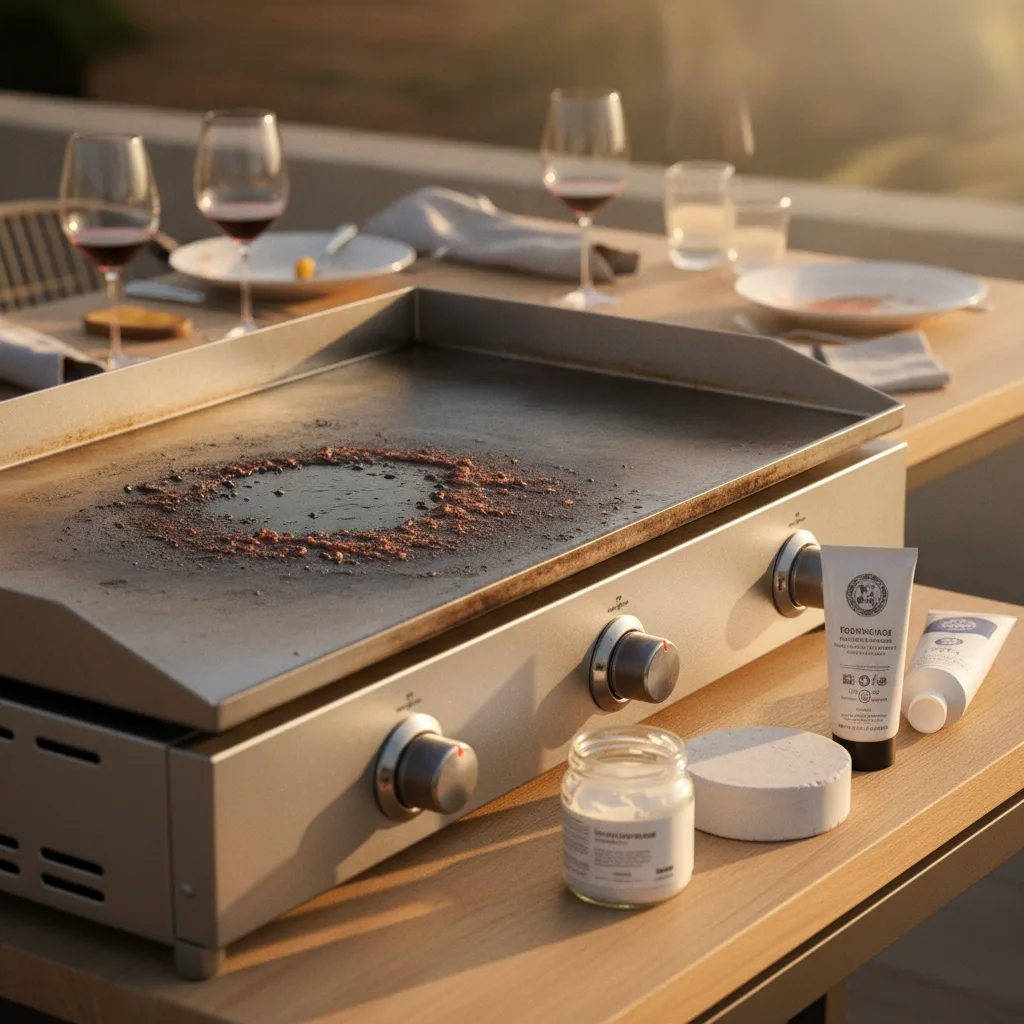
A cooking plate covered in grease deposits after a meal with friends, and the same question always comes up: should you bring out the chemical heavy artillery, or is a simple natural household product enough? The white cleaning stone is one of the most frequently mentioned solutions for cleaning a plancha, alongside the clay stone and cream cleanser.
These three products look alike, but they do not have the same composition, the same abrasive power or the same level of risk on a stainless steel surface. We reviewed them with a simple goal: to find out which ones really clean a very dirty plate without marking it. Here is our comparison, the application method and the precautions to follow on a stainless steel electric plancha.
Cleaning a stainless steel plancha with a white cleaning stone: 2027 guide
Reading time: ~9 min
- White stone, clay stone and cream cleanser: what are the differences?
- Comparison of natural products for food-grade stainless steel
- How to use a white cleaning stone on a stainless steel plancha
- Does a white cleaning stone scratch a plancha plate?
- Stainless steel, aluminium, cast iron or enamelled plate: check material compatibility
- Avoiding white marks and classic mistakes
- Our position at Planchaelec
- FAQ
White stone, clay stone and cream cleanser: what are the differences?
White stone and clay stone usually refer to the same family of products, sold in a pot as a compact paste. Their formula combines a finely ground mineral filler, generally based on calcium carbonate or clay, with a cleaning agent obtained by saponifying fats. It is this double action, light polishing plus degreasing, that explains their effectiveness on encrusted residue.
Slightly abrasive products
Starwax sells a white cleaning stone presented for multi-surface use that explicitly includes planchas, while Dr. Beckmann offers a clay stone positioned as an all-purpose cleaner, with usage restrictions specified on the packaging.
Cream cleanser, for its part, is liquid or pasty and often contains coarser abrasive particles, sometimes combined with synthetic surfactants. It cleans faster, but more easily leaves a dull haze or fine circular scratches on a polished stainless steel surface. The household recipe sheets from Grand Nancy (France) point out that cleaning stones fall into the category of mild cleaning products, provided they are rinsed properly. In France, ADEME (the environment agency) encourages these alternatives as part of a circular economy and packaging reduction approach, and ANSES (the health safety agency) more broadly advises limiting the number of substances used in the home and never mixing two household products.
Comparison of natural products for food-grade stainless steel
This comparison is based on manufacturers' product information and common user feedback, for a food-grade stainless steel plate after a typical greasy cooking session (marinated meat and vegetables). It is built around three criteria: effectiveness on baked-on grease, risk of scratching the stainless steel surface and ease of everyday use.
| Product | Effectiveness on baked-on grease | Risk of scratching stainless steel | Ease of use | Verdict |
|---|---|---|---|---|
| White stone | High on grease deposits and cooking marks | Low with a non-abrasive sponge and moderate pressure | Good; needs a damp sponge and thorough rinsing | Recommended after a spot test |
| Clay stone | High, behaves very much like the white stone | Low to moderate depending on the grain of the filler | Good; check the restrictions in the instructions | Recommended except on delicate surfaces |
| Cream cleanser | Very high on burnt residue | Moderate to high, dull haze possible | Very simple, direct application | Keep for extreme cases |
| Bicarbonate and hot water | Medium, mainly on fresh dirt | Low | Very simple | Good for cleaning after cooking |
| Plancha degreasing cleaner | High, formulated for cooking-grade stainless steel | Low | Very simple, documented compatibility | Reference solution |
The verdict is clear: to remove grease from a plancha naturally, the white stone and clay stone offer the best balance between effectiveness and safety for the plate. Cream cleanser helps out on a very dirty plate, but its greater abrasive power makes it less suitable for regular use on a carefully finished stainless steel surface.
How to use a white cleaning stone on a stainless steel plancha
Method matters as much as the product. Pressing too hard or rinsing carelessly is enough to spoil the result. Here is the procedure we use on our stainless steel plates.
Cleaning steps
- Let the plancha cool down to lukewarm, then unplug the appliance before doing anything.
- Loosen food residue with a plancha spatula, then soak up any remaining grease with kitchen paper.
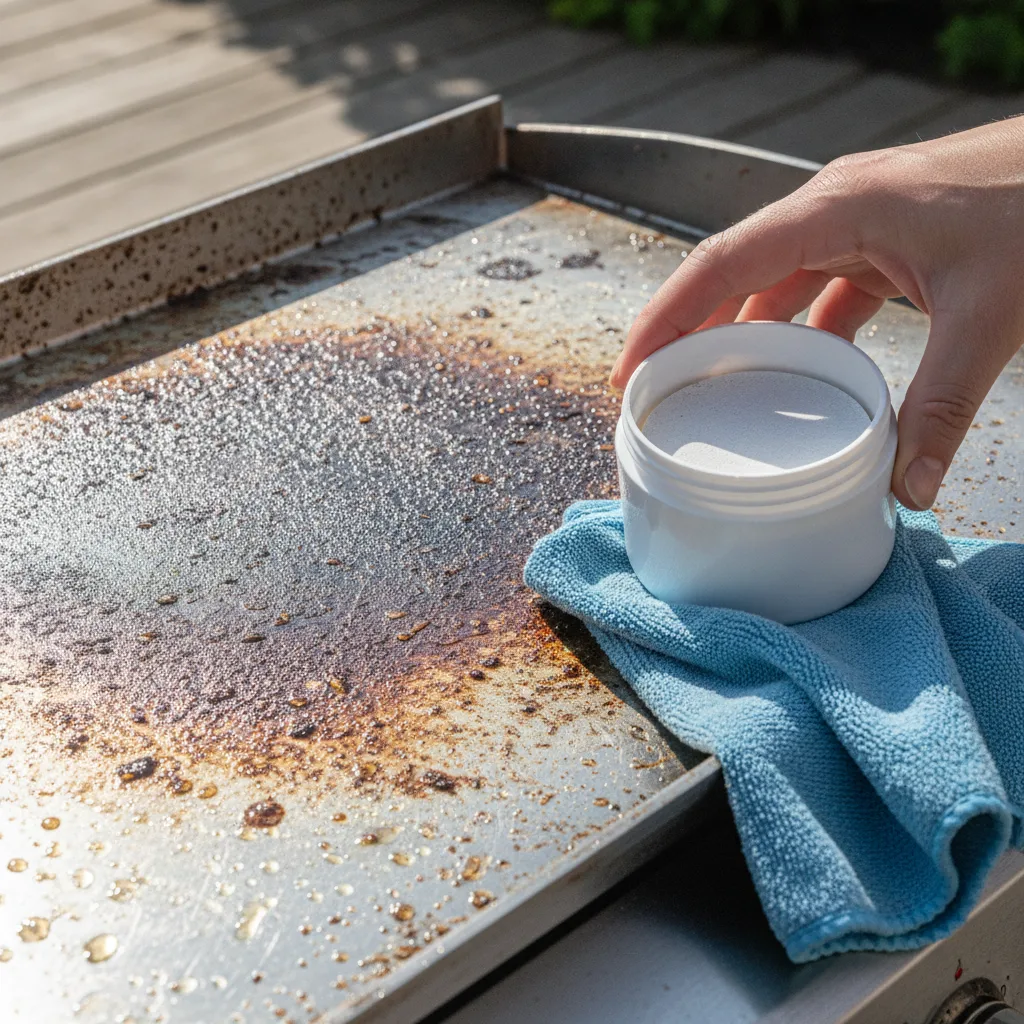
- Moisten a non-abrasive sponge without soaking it, rub it on the white stone to pick up the product, then squeeze the sponge several times to make it foam.
- Clean the cooking plate in small areas, focusing on cooking marks and encrusted deposits, without forcing.
- Rinse thoroughly with clean water, then dry completely with a clean, lint-free microfibre cloth.
One detail often makes the difference: work on a lukewarm plate rather than a scorching one. Degreasing is easier than when cold, and you avoid the thermal shock of cold water on very hot steel. Always check what your appliance's manual says before applying a product to a plate that is still hot.
Good to know
After use, rinse the sponge and let the stone air-dry before closing the pot. A stone stored damp crumbles and gradually loses its effectiveness.
Does a white cleaning stone scratch a plancha plate?
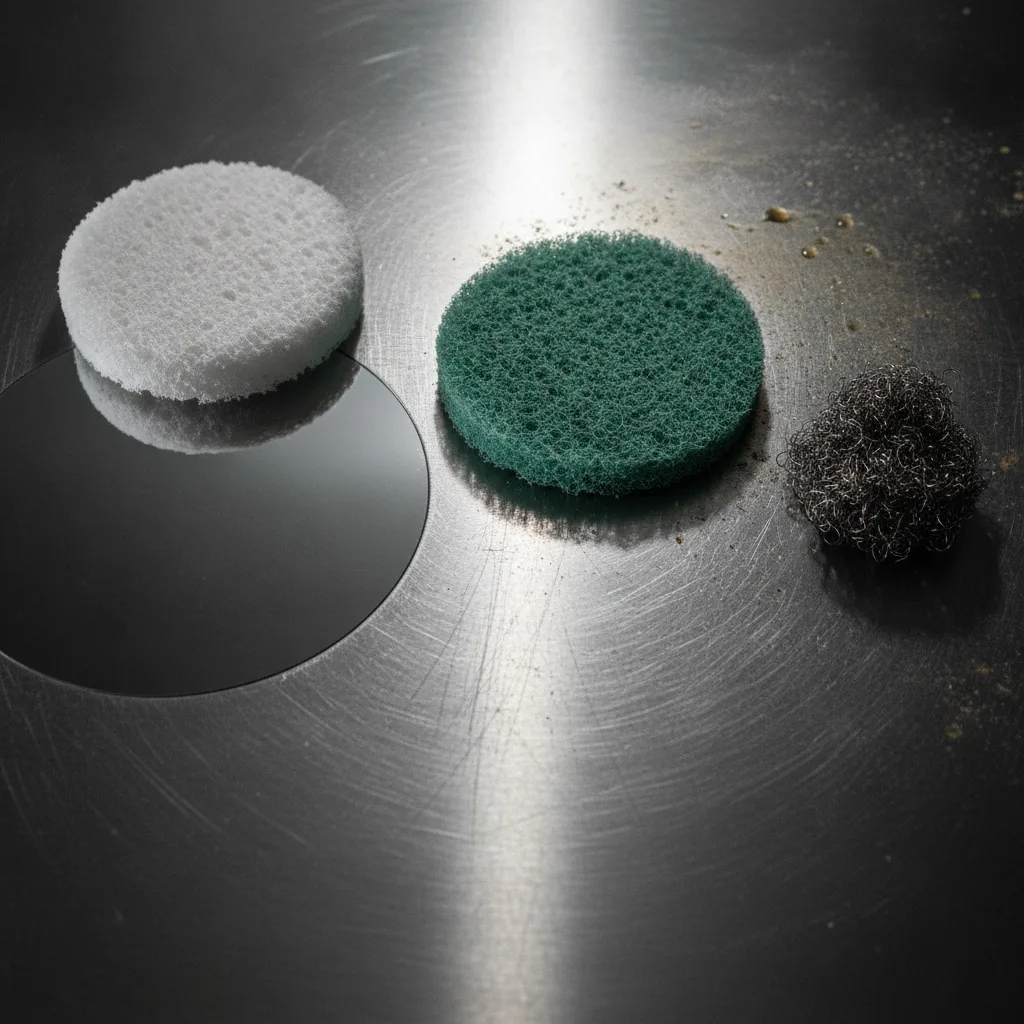
The honest answer is: it can, under certain conditions. The manufacturers themselves state that these stones are slightly abrasive and recommend a prior test on a small, inconspicuous area. In practice, scratches rarely come from the stone itself, but from the accessory used with it. A green scouring sponge, a metal pad or a cloth carrying hard particles will mark a stainless steel surface far more surely than a finely ground mineral filler.
Three rules limit the risk. Work with a soft, clean sponge, rub in the direction of the plate's polish rather than in circles, and let the foam act for a few moments instead of pressing harder. If burnt residue resists, it is better to repeat the operation than to force it. On a very dirty plate, our scouring pads designed for stainless steel, used with their dedicated handle, remain the most controlled solution, as they are calibrated for our plates.
Stainless steel, aluminium, cast iron or enamelled plate: check material compatibility
Not all planchas react in the same way. On a solid stainless steel plate, the white stone behaves well, because the surface is dense, non-porous and has no added coating. Any micro-scratches remain superficial and visually disappear with the steel's natural patina. That is why we make our plates from solid stainless steel, with no non-stick coating to protect.
On aluminium, caution is required. Some clay stones explicitly advise against this metal, which is softer and sensitive to alkaline attack, while other formulas claim compatibility with aluminium joinery. The only reliable answer is in the product's instructions and the plancha's manual. On an enamelled plate, raw cast iron or a non-stick coating, do not use it: enamel dulls, seasoned cast iron loses its protective fat layer and a non-stick coating cannot withstand any abrasive, however mild.
Avoiding white marks and classic mistakes
A white residue after drying is the most common complaint about clay stone. The explanation is simple: the product dried on the plate before being rinsed. The solution is to clean in small areas and rinse immediately with clean water, then wipe with a microfibre cloth until completely dry. If a haze persists, a pass with a sponge and mild soap followed by another rinse removes it easily.
Common mistakes to avoid
A few mistakes come up regularly and are worth pointing out:
- Applying the product without knowing what the plate is made of.
- Using a metal sponge.
- Letting the foam dry on the surface.
- Neglecting to rinse.
- Mixing the stone with bleach or another cleaner.
This last point is not a matter of convenience: mixing household products can produce irritating fumes, a risk health authorities regularly point out.
Key point
Cleaning after each cooking session, with a spatula and a little water on a lukewarm plate, makes abrasives almost unnecessary. The white stone then becomes an occasional treatment rather than a routine.
Our position at Planchaelec
We design and manufacture our electric planchas in France, with stainless steel plates built to last and easy to clean. The white stone is one of the natural plancha cleaning products we consider acceptable on our plates, provided you do a spot test first, use a non-abrasive sponge, rinse thoroughly and dry completely.
For very dirty plates, or for cleaning without having to worry about compatibility, our degreasing cleaner and our cleaning accessory packs remain the safest option, as they have been validated on our own cooking surfaces. Our stainless steel plancha cleaning guide details the complete routine, cooking session after cooking session.
In summary: white cleaning stone and stainless steel plancha
Used occasionally, with a non-abrasive sponge and good rinsing, and respecting material compatibility, the white stone remains an effective way to clean a stainless steel plancha without damaging it, alongside simple cleaning after each cooking session.
FAQ
Is a white cleaning stone suitable for cleaning before winter storage?
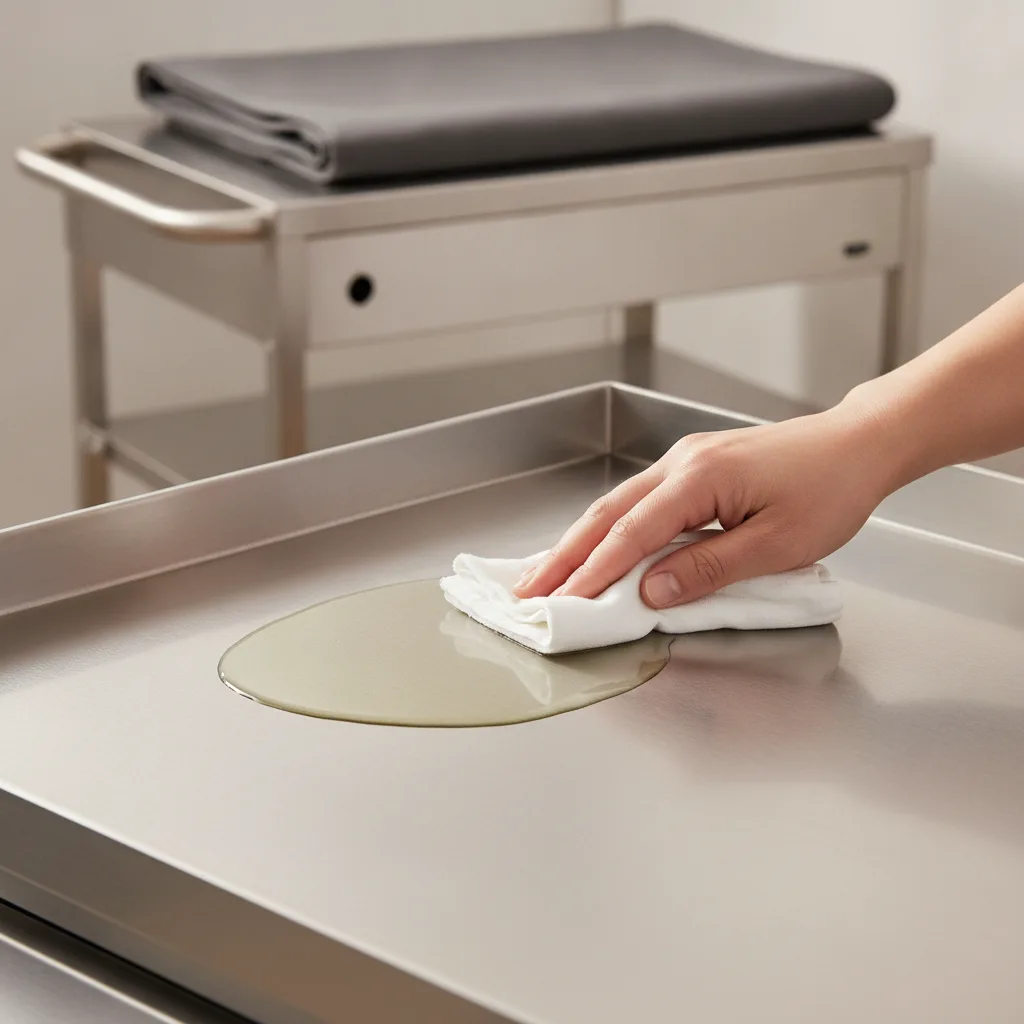
Yes, it is even a good time to use it. After degreasing, dry the plate completely, apply a film of neutral cooking oil to protect the stainless steel from moisture, then store the appliance under a suitable cover.
Can a white cleaning stone be used on the body and trolley of the plancha?
On brushed stainless steel parts and sturdy painted parts, light use is possible after a test. Avoid screen-printed markings, knobs and information labels, which quickly wear off under an abrasive.
How long can a pot of white cleaning stone be kept?
The stone keeps for a long time if it is stored in a dry place and closed after drying. A cracked or crumbly stone can still be used; simply moisten it slightly before picking up the product.
Should you wear gloves when cleaning with a clay stone?
It is not mandatory, as the formula remains gentle on the skin, but gloves limit drying of the hands during prolonged cleaning and protect against the plate's edges.
Does a white cleaning stone remove lingering smells from the plancha?
It acts on the greasy deposits that cause smells, so indirectly, yes. If a smell remains, heat the clean plate empty for a few minutes before the next cooking session.