



 +33 4 78 55 45 69
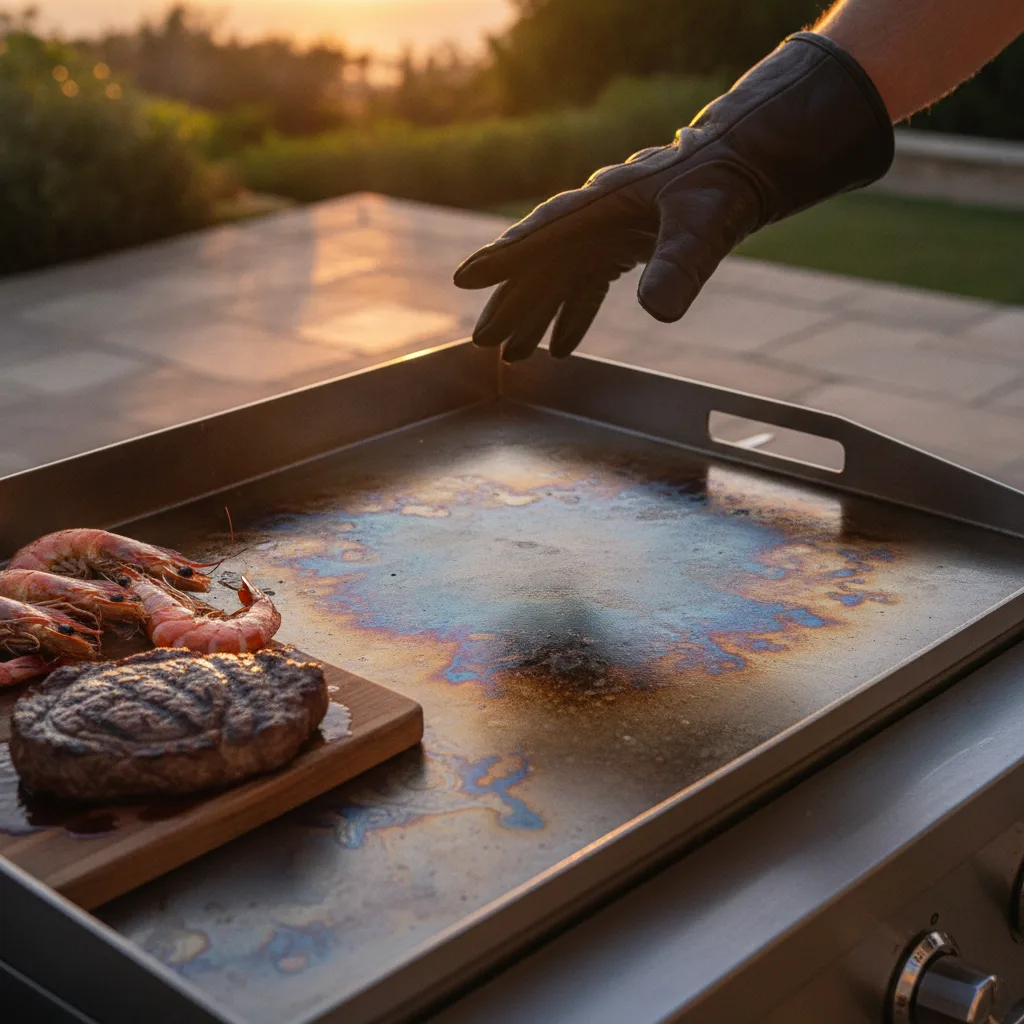
Blue, gold or purple tints appear on your stainless steel plancha after cooking prawns or rib of beef, and you wonder whether the appliance is damaged. It is a question that comes up often. Let us say straight away that we have never seen this phenomenon on our 430 stainless steel plates: this guide is for anyone who notices it on their stainless steel plancha.
In the vast majority of cases, a stainless steel plancha with bluish discolouration remains perfectly safe and usable. This phenomenon has a precise name, thermal oxidation, and it is explained by the physics of stainless steel. Here is why these tints appear, how to tell a heat mark from a food mark, and which method to use to restore the original appearance.
Bluish discolouration on a stainless steel plancha: causes and solutions
Reading time: ~6 min
- Why a stainless steel plancha turns blue or rainbow-coloured after cooking
- Heat discolouration or food mark: how to tell the difference
- Are blue stains on a stainless steel plancha dangerous?
- How to clean blue stains from a stainless steel plancha
- Products to avoid at all costs on your stainless steel plate
- How to stop a stainless steel plancha from discolouring
- Frequently asked questions
Why a stainless steel plancha turns blue or rainbow-coloured after cooking
A thermal oxidation phenomenon
The food-grade stainless steel used for cooking plates, generally grade 304 (EN 1.4301) or 430 (EN 1.4016), the grade we use at Planchaelec for its stability under heat, owes its corrosion resistance to an extremely thin passive layer, rich in chromium oxide, which forms spontaneously on contact with air. This layer is invisible to the naked eye as long as it stays at its natural thickness.
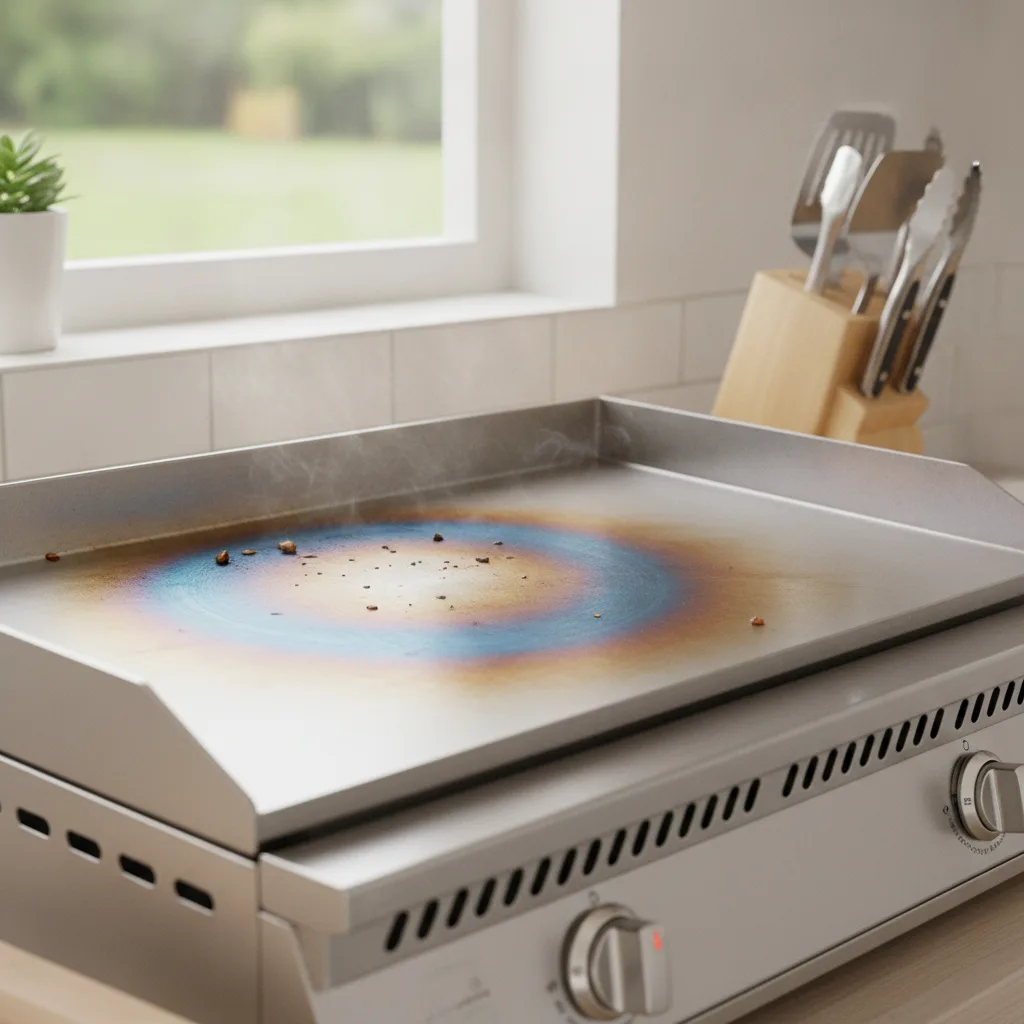
When the plate heats up, this oxide film thickens slightly. Light passing through it is then reflected off two different surfaces, and the waves combine to produce what are called heat-related interference colours, exactly like a drop of oil on a puddle of water.
These heat tints follow a progression well known to welding and metalwork professionals, from straw yellow to gold, then brown, purple, blue and finally grey, a reliable visual indicator of the temperature reached by the steel. In other words, a stainless steel plancha that turns blue after cooking is simply telling you that the area in question reached a high temperature, typically in the centre of the plate, just above the heating element.
A stainless steel plancha with a gold or purple tint corresponds to slightly more moderate heating than the blue tint. It is neither rust, nor a manufacturing defect, nor a coating peeling off.
Heat discolouration or food mark: how to tell the difference
Telling the marks apart visually
Not all bluish marks come from overheating. Stainless steel cookware manufacturer Cristel points out thatstarch contained in potatoes, pasta or rice also leaves bluish marks on stainless steel. A starch residue can be recognised by its localised, often irregular appearance, sometimes in the shape of a ring or streak, whereas thermal oxidation forms a fairly even halo centred on the hottest area of the stainless steel cooking plate.
The third case is iron contamination. A brush previously used on ordinary steel, steel wool or a non-stainless utensil leaves metal particles that then oxidise on the surface. You then see orange dots, and people wrongly speak of a stainless steel plancha with rust stains, when it is the external deposit that is rusting, not the plate itself.
The table below sums up the diagnosis.
| Appearance | Probable cause | Recommended action |
|---|---|---|
| Localised bluish mark after cooking starchy food | Starch residue | Diluted white vinegar, rinse then dry |
| Blue or gold halo around the central area | Thermal oxidation | Gentle cleaning, no risk for cooking |
| Orange dots or coloured pits | Iron contamination | Remove the source, use a food-grade stainless steel cleaner |
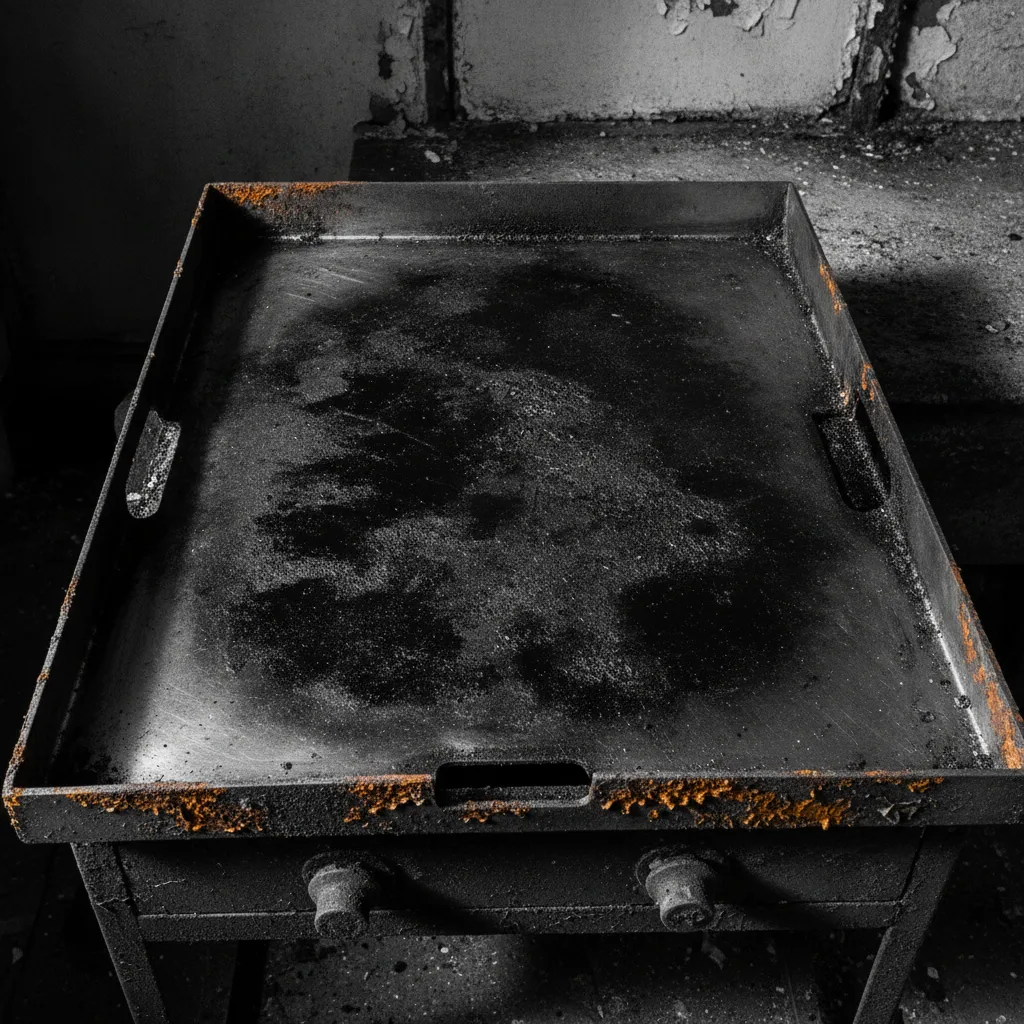
| Rough, black or flaking surface | Deeper oxidation | Have it checked before use |
| Warped plate | Overheating or thermal shock | Contact after-sales service |
Are blue stains on a stainless steel plancha dangerous?
No. A heat tint is just a variation in the thickness of the oxide layer already present on the steel. It does not migrate into food, does not change the taste and does not affect the food-contact suitability of stainless steel. You can carry on cooking normally on a discoloured stainless steel plate. The only real consequence is cosmetic, sometimes with a very slight reduction in corrosion resistance on the darkest areas, with no impact for household use.
You only need to be careful if the discolouration comes with other symptoms, namely a visibly warped plate, a surface that has become rough to the touch, black flakes, blisters or widespread surface corrosion. These signs point to abnormal heating, often caused by an appliance left empty at full power for a very long time. In that case, it is better to have the plancha checked before using it again.
Key point
A stainless steel plancha that turns blue is simply telling its thermal history. As long as the plate remains smooth, flat and free from flaking, you can carry on cooking without any risk.
How to clean blue stains from a stainless steel plancha
The right temperature for cleaning
The first rule comes down to one word: temperature. Cleaning is done with the plate switched off and still lukewarm, never scorching and never completely cold. The manufacturer Le Marquier recommends pouring water onto the lukewarm plate, loosening the residue and then wiping carefully. Never pour cold water onto a very hot plate: the thermal shock can warp the steel irreversibly.
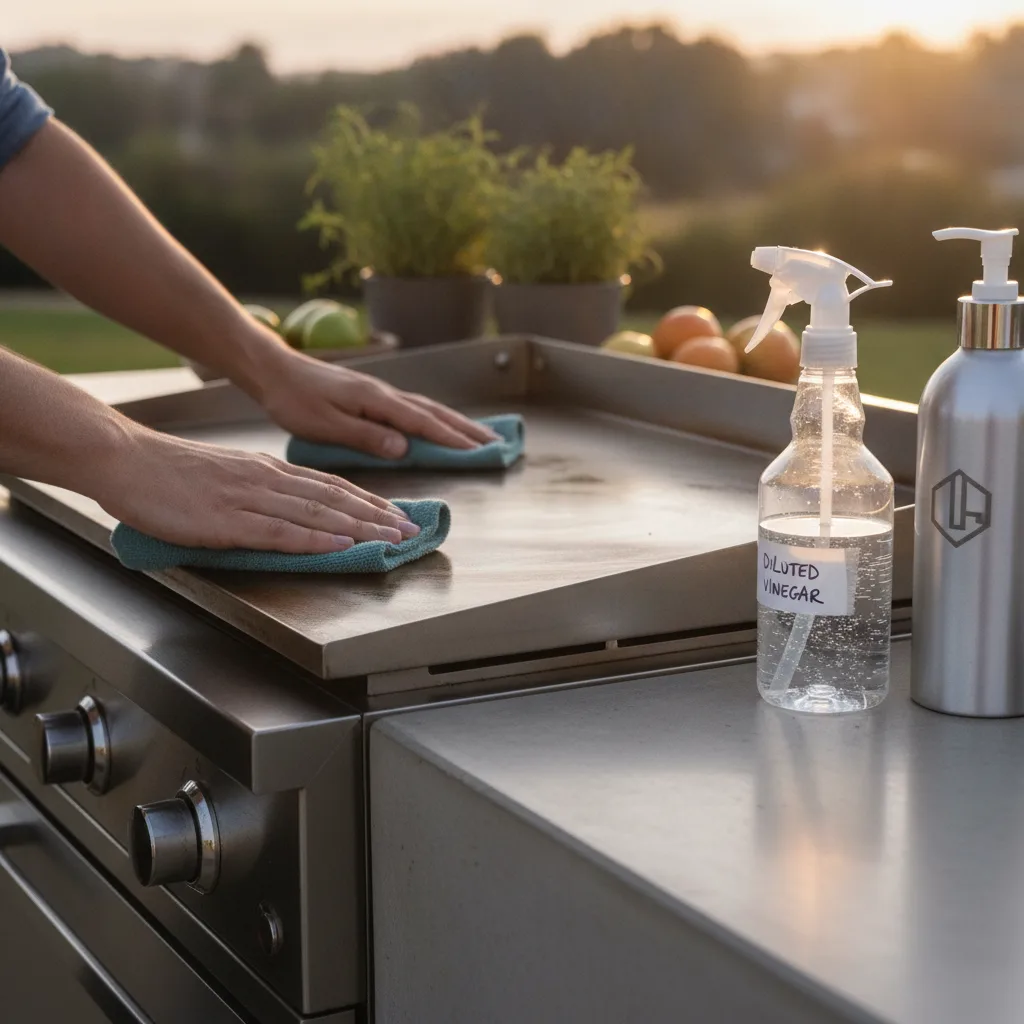
Start by pushing grease and residue towards the drip channel with a stainless steel spatula or plancha scraper. Then pour on a little hot water, let it loosen, and rub with soft stainless steel wool or a gentle pad, always following the direction of the plate's brushing, never in random circles.
For a starch mark or a limescale film, apply white vinegar diluted in lukewarm water with a soft cloth, leave for a few minutes, rub without pressing, rinse thoroughly and dry immediately. A food-grade stainless steel cleaner such as our plancha degreasing cleaner gives very good results on stubborn marks. You will find all these products in the cleaning section as well as our detailed cleaning guide.
If the bluish halo persists despite careful cleaning, it is a heat tint anchored in the oxide layer. In industry, it is removed by pickling and then passivating the stainless steel, sometimes by electropolishing. These chemical treatments should not be improvised on a plate used for cooking, as they require perfectly controlled rinsing. For a recent plancha or one under warranty, contact its manufacturer before any treatment of this kind; for a Planchaelec plancha, contact our team.
Products to avoid at all costs on your stainless steel plate
Some everyday products destroy the passive layer and cause far more visible damage than the original discolouration. Here is what we strongly advise against on a stainless steel cooking plate.
- Bleach and all chlorinated products, which attack the passive layer and encourage corrosion
- Steel wool and green abrasive sponges, which scratch the surface and leave iron particles
- Strippers not designed for food-grade stainless steel and improvised chemical mixtures
- Cold water poured onto a scorching plate, a classic cause of warping
- Cleaning a plate that is still switched on, which is dangerous and ineffective
How to stop a stainless steel plancha from discolouring
Prevention is essentially about managing the heat. Gradual preheating for five to ten minutes is more than enough on a quality stainless steel plate; there is no need to turn the thermostat up to maximum before putting the food on. Above all, avoid leaving the plancha switched on at full power with nothing on it: that is what produces the strongest blue tints, because no energy is being absorbed by food any more. Spread food over the whole surface rather than concentrating cooking in the centre, and use the cooking lid to retain heat at reduced power.
Our stainless steel electric planchas made in France, from the Néo 420 to the Lux 830, including the Anthéa range, have an adjustable thermostat that makes this kind of cooking much easier. Add systematic cleaning while the plate is lukewarm, complete drying and a protective cover between uses, and you will greatly reduce the maintenance linked to stubborn stains. To choose the model and power suited to your needs, read our guide to choosing the right model.
FAQ
Can a new plancha turn blue from its very first use?
It can happen on some stainless steel planchas: the first seasoning, with a sustained rise in temperature, sometimes reveals a gold or bluish tint in the central area. It is not a defect in the steel. We have never seen this phenomenon on our 430 stainless steel plates.
Should the plate be oiled to hide the discolouration?
A thin film of cooking oil applied after cleaning evens out the appearance and makes the next cooking session easier. It does not remove the heat tint, but makes it less visible.
Is a dishwasher suitable for a removable stainless steel plate?
We advise against it. Very alkaline detergents and the salts used in some cycles dull stainless steel and can leave a haze that is hard to remove.
Can discolouration come back after a thorough clean?
Yes, if your heating habits stay the same. The tint will reappear in the same places, because it reflects the heat map of your plate.
Do blue stains also appear on enamelled cast iron planchas?
No, this phenomenon is specific to bare stainless steel. Enamelled surfaces have other issues, notably chips and micro-cracks in the enamel.
Going further with a well-maintained stainless steel plancha
Bluish discolouration on a stainless steel plancha is an optical phenomenon linked to the thickness of the oxide layer, not a material defect. It poses no health risk and does not prevent you from cooking. Cleaning while the plate is lukewarm, diluted white vinegar for starch marks and a suitable stainless steel product for stubborn marks are enough in almost every situation. Only turn to after-sales service if the plate is warped, rough or flaking, signs of genuinely abnormal heating.