



 +33 4 78 55 45 69
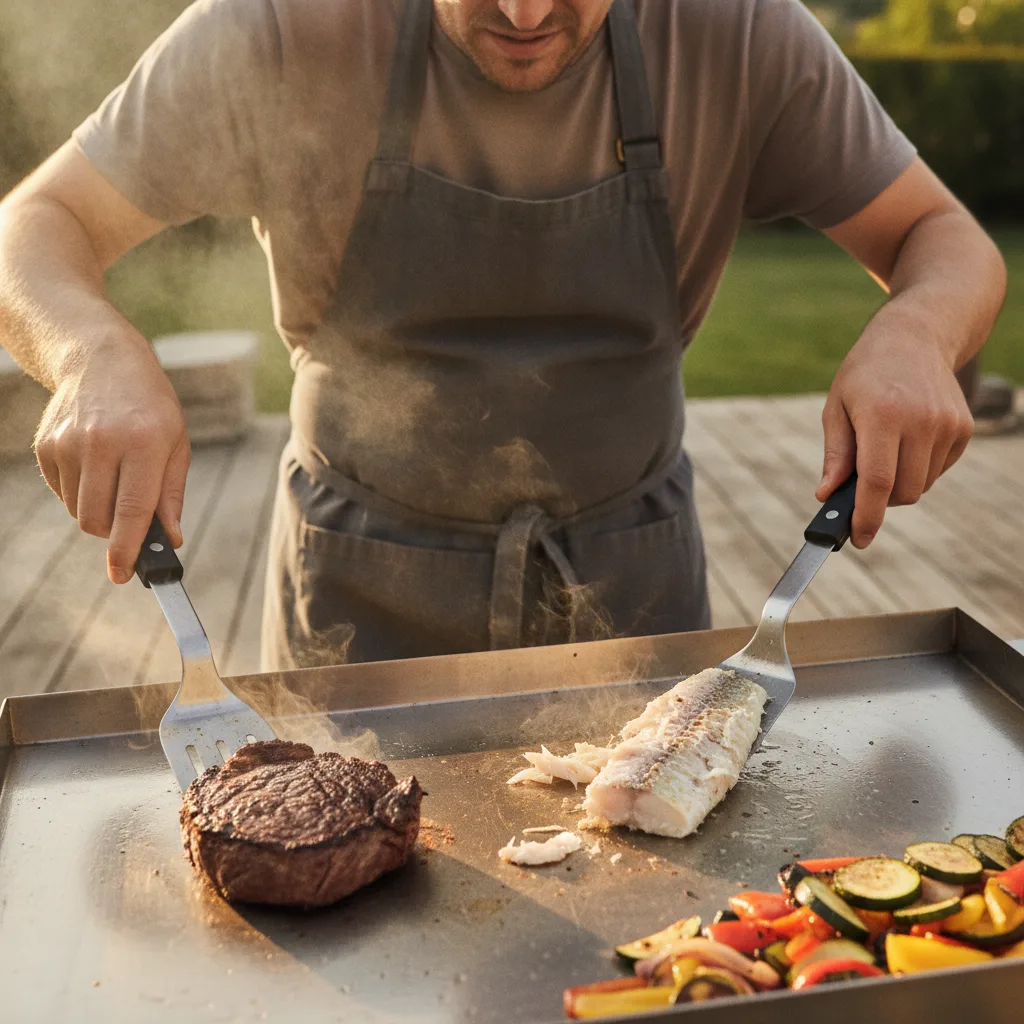
You seasoned your new plate and followed the manufacturer's instructions, yet the meat tears, the fish leaves its skin on the plate and the vegetables refuse to slide. A stainless steel plancha that sticks is one of the most common frustrations for new users.
Good news: in the vast majority of cases, the plate is not to blame. The problem comes from three poorly tuned cooking habits that are easy to correct. Here is the complete diagnosis, step by step.
Stainless Steel Plancha Sticking: 3 Mistakes to Fix
Reading time: ~8 min
- Why a sticking stainless steel plancha is almost never defective
- Mistake 1: preheating too short and poorly controlled temperature
- Mistake 2: food that is too wet and an overloaded plate
- Mistake 3: poor management of the oil film and grease residue
- Quick diagnosis table
- How to clean a sticking stainless steel plancha
- Adapting the cooking to each food
- When should you suspect a real defect?
- Going further with a well-used stainless steel plancha
- Frequently asked questions
Why a sticking stainless steel plancha is almost never defective
Food-grade stainless steel is not a non-stick surface, and it is not meant to be. Unlike enamelled cast iron or a technical coating, a stainless steel plate works through direct contact and conduction.
Sticking at the start of cooking is actually a normal phenomenon, linked to the Maillard reaction. The proteins in meat or fish bond temporarily to the metal, then release on their own as soon as the seared crust has formed.
Seasoning creates a polymerised oil film that makes sliding easier, but it never replaces good management of temperature and moisture. In short, if your stainless steel plancha sticks after seasoning, the seasoning has not failed: it is usually a cooking parameter that lacks precision.
Mistake 1: preheating too short and poorly controlled temperature
Understanding the importance of preheating the plate
This is the number one cause of food sticking on a stainless steel plancha. A plate sitting on an electric heating element needs time to reach an even temperature across its whole surface. Professionals recommend preheating for about 10 to 15 minutes before the first cook.
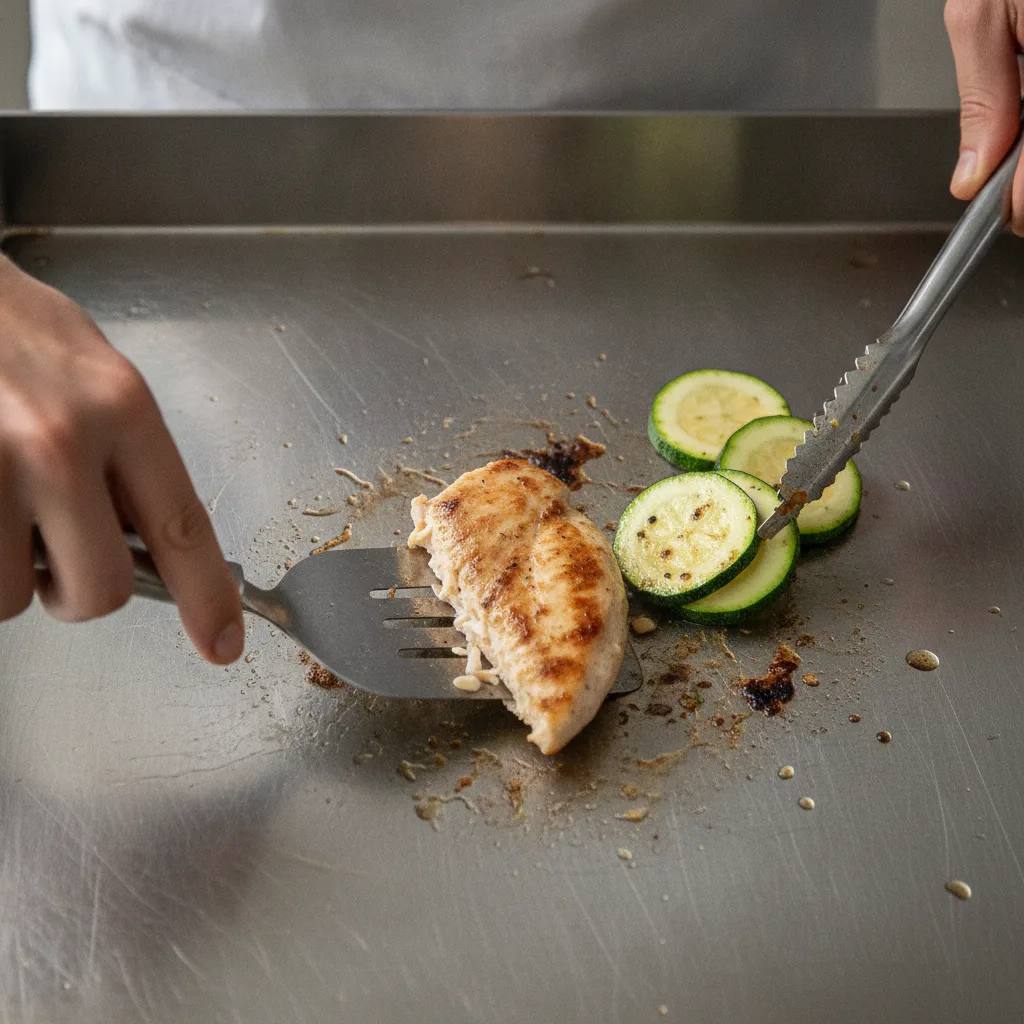
Any less and the centre may be hot while the edges stay lukewarm, and every cold zone becomes a sticking point. Placing a steak on a plate that is not hot enough guarantees the fibres will stick before they have even started to sear.
The opposite excess causes another problem. A plancha constantly pushed to maximum burns the fats and juices before the food is cooked through. The burnt fats then form a sticky deposit that builds up with every use.
Good practice is to preheat on high, then adjust the thermostat according to the food, keeping a gentler zone to finish delicate cooking. On our stainless steel electric planchas, the adjustable thermostat makes it possible to separate the searing phase from the finishing phase, which greatly limits charred residue.
Good to know
The water drop test remains the simplest way to check preheating. If the drop sizzles immediately and evaporates within a few seconds, the plate is ready. If it sits and spreads out, wait a little longer.
Mistake 2: food that is too wet and an overloaded plate
Limiting moisture and the amount of food on the plate
Water is the direct enemy of searing. A fish fillet straight out of its packaging, rinsed courgettes, meat still wet with marinade: all this excess moisture causes a local drop in temperature on the plate. Instead of searing, the food steams, releases its juices and sticks.
The habit to adopt is systematic: pat your food dry with kitchen paper before placing it on the plate, especially fish, marinated meat and washed vegetables.
The same thing happens when you load the whole plate at once. A large quantity of cold food makes the surface temperature drop sharply and causes an unfavourable thermal shock. It is better to cook in batches, leaving space between the pieces.
This is also why the size of the plate matters: a surface too small for the number of guests forces you to overload it. Our Néo, Lux and Anthéa ranges come in several widths for this very reason.
A last, often overlooked point is turning too early. Food that seems stuck after thirty seconds is not stuck, it is searing. If you force it with the plancha spatula, you tear the fibres and leave a sticky deposit on the plate. Wait for it to brown and the food will release by itself.
Mistake 3: poor management of the oil film and grease residue
Dosing the oil and managing cooking residue
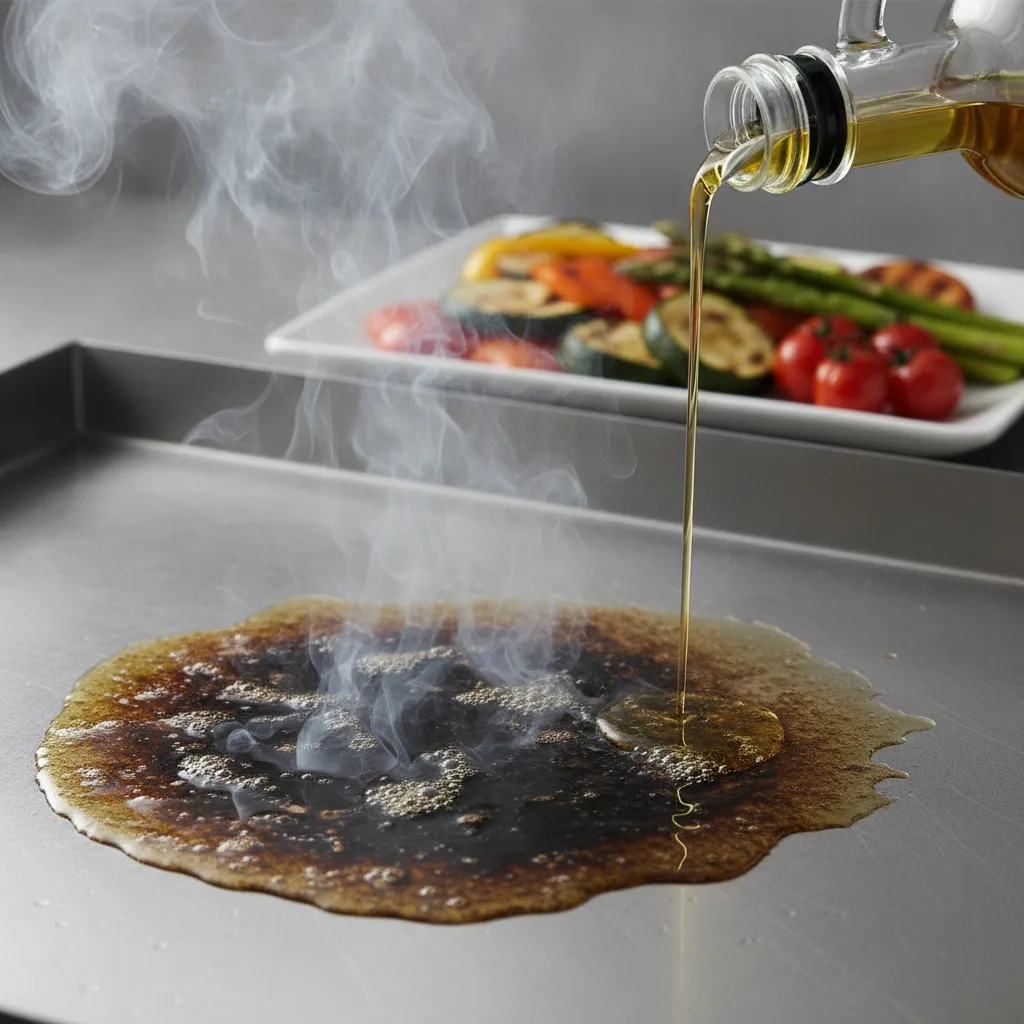
Many users drown their plate in oil thinking it will prevent sticking. The result is the opposite. Beyond its smoke point, oil breaks down, browns and forms a tacky varnish that everything sticks to. A thin film is enough, ideally applied to the food rather than the plate.
Choose oils that withstand high temperatures, such as sunflower, rapeseed or grapeseed oil, and avoid delicate aromatic oils for the searing phase.
The second aspect of this mistake concerns cleaning. Juices, fats and marinades left on the plate carbonise over time and create an uneven layer that prevents even cooking.
A plate that looks clean when cold may well retain an invisible but very sticky deposit. Non-stick care for a stainless steel plancha therefore happens after every use, not once a season.
Quick diagnosis table
| Observed symptom | Most likely cause | Immediate fix |
|---|---|---|
| The meat tears when turned | Plate not hot enough or turned too early | Preheat longer and wait for the crust to form |
| The fish leaves its skin stuck | Wet fillet and no oil film | Pat dry with kitchen paper and lightly oil the fish |
| Brown, tacky deposit on the plate | Degraded oil or burnt sugary marinade | Lower the thermostat and drain marinades |
| Everything sticks from the first food | Charred residue from the previous use | Hot cleaning by deglazing before cooking |
| Sticking only at the edges | Uneven temperature, preheating too short | Extend preheating to 10 or 15 minutes |
How to clean a sticking stainless steel plancha
The steps for effective hot cleaning
Hot cleaning remains the most effective method, because the residue has not yet hardened. After switching off and unplugging the appliance, let the plate come down to a safe working temperature, then proceed in order so as not to spread the grease.
- Scrape off visible residue with a scraper spatula or a plancha scraper, never with a pointed utensil that would mark the food-grade stainless steel plate.
- Deglaze with a little water or ice cubes if your appliance's instructions allow it: the thermal shock lifts burnt grease in seconds, a trick well known to chefs.
- Scrub stubborn areas with a stainless steel pad or a suitable scouring pad, following the brushing direction of the plate.
- Rinse with clean water, use a stainless-steel-safe degreasing cleaner if necessary, then dry completely to avoid marks.
- Apply a light film of oil if the manufacturer recommends it.
We offer cleaning accessory packs combining a spatula, pads and degreaser, precisely because the right tool avoids damaging the surface with unsuitable products.
A tip that applies to every serious manufacturer, from Planchaelec to Forge Adour: always check in the manufacturer's instructions whether deglazing with cold water is allowed on your model, as some plates and some electric heating element assemblies cannot withstand it.
Adapting the cooking to each food
Red meat needs a properly hot plate and a dry surface. Place it, don't touch it, turn it only once.
Fish is the trickiest case: it calls for a spotless plate, a drizzle of oil on the flesh and a wide spatula to lift it in one movement.
Vegetables should be drained and cut into even pieces, otherwise the thinnest burn while the thickest release water.
As for marinated dishes, drain them carefully, because a sweet honey or soy marinade caramelises very quickly and leaves a sticky deposit. If you want its flavour, brush it on at the end of cooking, away from the hottest zone.
Key takeaway
A stainless steel plancha that sticks is almost always too cold, too loaded, too wet or poorly cleaned. Correct these four points before doubting your equipment.
When should you suspect a real defect?
There is a minority of cases where the problem lies with the equipment. If sticking persists even though the plate is clean and well preheated, the food is dry, oil is used sparingly and turning happens at the right time, you need to check the flatness of the plate and that the heating elements are working properly.
A warped plate creates uneven contact zones, and a faulty heating element creates permanently cold zones. In that case, contact the manufacturer's after-sales service before using an aggressive abrasive product or sanding the surface, two actions that generally void the warranty and permanently damage the stainless steel.
Going further with a well-used stainless steel plancha
A well-used stainless steel plancha offers clean searing, easy deglazing and quick maintenance, with no fragile coating to look after. The three mistakes to fix are always the same: shortened preheating, food that is too wet on an overloaded plate, and approximate management of oil and residue.
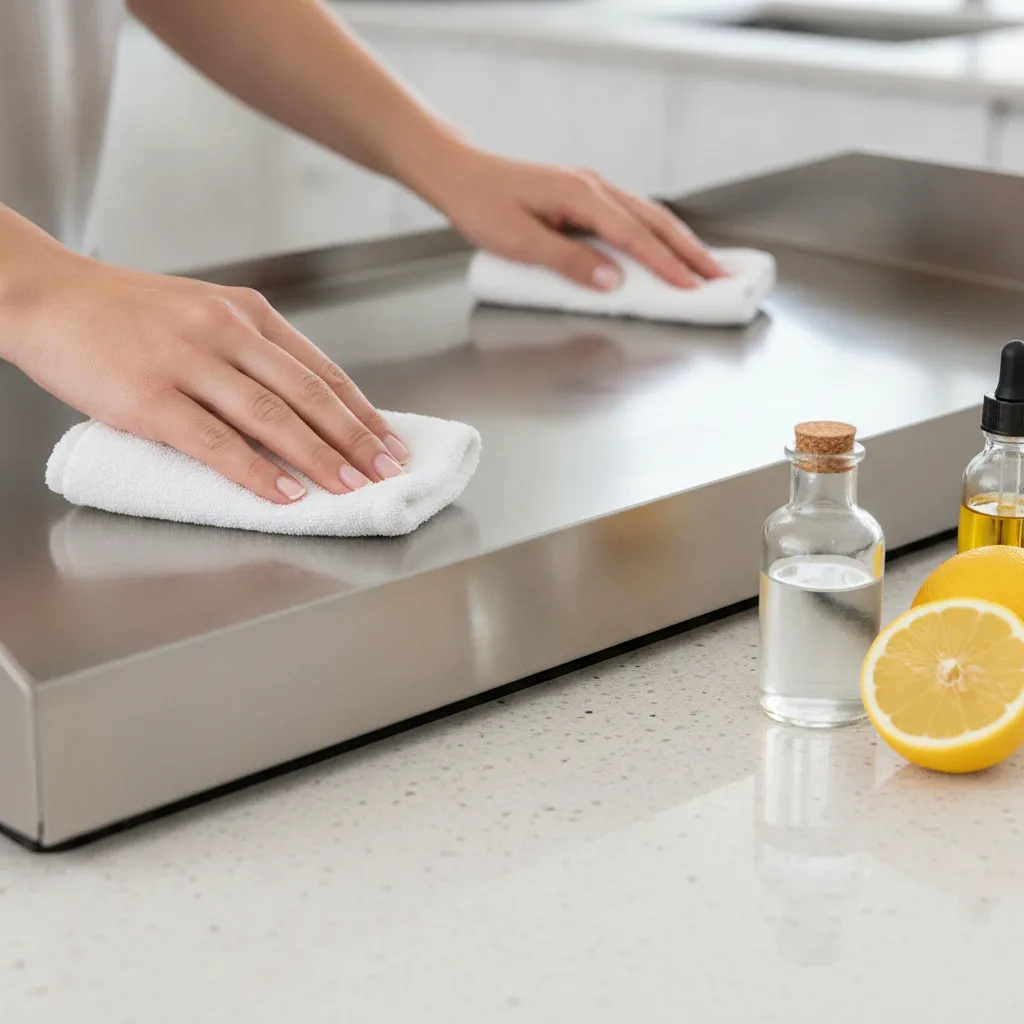
Adopt these habits for two or three cooking sessions and the sticking will disappear by itself. If you are still unsure about the size or power suited to your use, our buying guides and our team are here to steer you towards the stainless steel electric plancha made in France that matches the way you entertain.
In summary: a stainless steel plancha that sticks
By adjusting the preheating, limiting moisture and the load on the plate, dosing the oil better and cleaning while hot after each use, a stainless steel plancha that sticks quickly becomes a reliable and pleasant plate to use again, without calling the equipment into question.
FAQ
Should you season a stainless steel plancha every season?
A full seasoning is done when the appliance is first used, then repeated occasionally after a deep clean that has left the stainless steel completely bare. In everyday use, a light film of oil applied after drying is enough to maintain the surface.
Can you use white vinegar or lemon on a stainless steel plate?
Yes, occasionally and on a cold or lukewarm plate, to dissolve limescale and marks. Then rinse thoroughly and dry, because acidity left in prolonged contact with food-grade stainless steel can dull the finish.
Does an 18/10 stainless steel plancha stick less than another stainless steel?
The grade of stainless steel mainly affects corrosion resistance and durability, not sticking. It is the thickness of the plate and the evenness of the heating that really make the difference day to day.
Why does my plancha stick more outdoors in cold weather?
Wind and ambient temperature continually cool the plate and lengthen the preheating time. A cooking lid or a sheltered installation stabilises the surface temperature.
Can plancha accessories go in the dishwasher?
Stainless steel spatulas and tongs go in the dishwasher without any problem. However, scouring pads and items with wooden handles should be washed by hand to preserve their lifespan.