



 +33 4 78 55 45 69
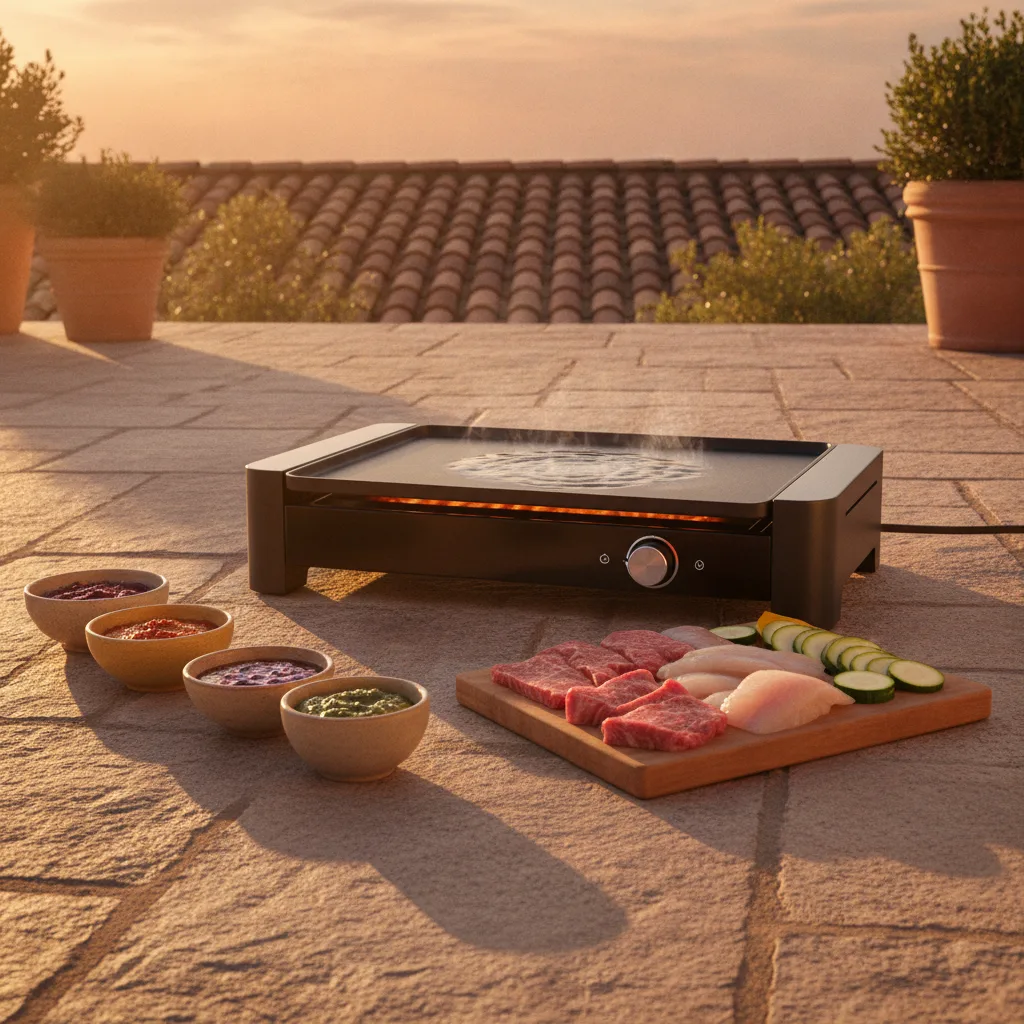
The plancha is perfect for improvised meals, provided you have a marinade on hand that flavours quickly and well. With the right combination of fat, acid and aromatics, a 15-minute express marinade is enough to bring out the best in strips of beef, fish fillets or thinly sliced courgettes.
This 2027 guide brings together 7 simple recipes, the resting times to observe for each food and the cooking rules that prevent burnt marinades. At Planchaelec, we make stainless steel electric planchas in France, and we see every day how much a properly preheated surface changes the final result.
15-Minute Express Marinade for the Plancha: 7 Recipes 2027
Reading time: ~8 min
- How to make a successful 15-minute express marinade for the plancha?
- What a 15-minute marinade really achieves
- 7 quick homemade marinade recipes for grilling
- How long to marinate depending on the food?
- How to cook marinated food on the plancha?
- Food safety: rules not to overlook
- Going further with express marinades on the plancha
- Key points about the 15-minute express marinade
- Frequently asked questions about express marinades on the plancha
How to make a successful 15-minute express marinade for the plancha?
The three-component rule of marinades remains the basis, even in a quick version. You need a fat, usually olive oil or a neutral oil, an acid such as lemon juice, balsamic vinegar or yoghurt, and aromatics that carry the flavour profile, namely fresh herbs, garlic, spices and condiments.
The fat distributes the aromas and limits surface drying during high-temperature searing. The acidity brings a fresh note and speeds up the aromatic coating. Herbs and spices do the rest of the flavour work.
What a 15-minute marinade really achieves
In fifteen minutes, you have to be realistic about what actually happens. A surface marinade flavours the outer layer of the food, not its core. That is more than enough for a thin piece, but clearly insufficient for a roast or a thick pork chop.
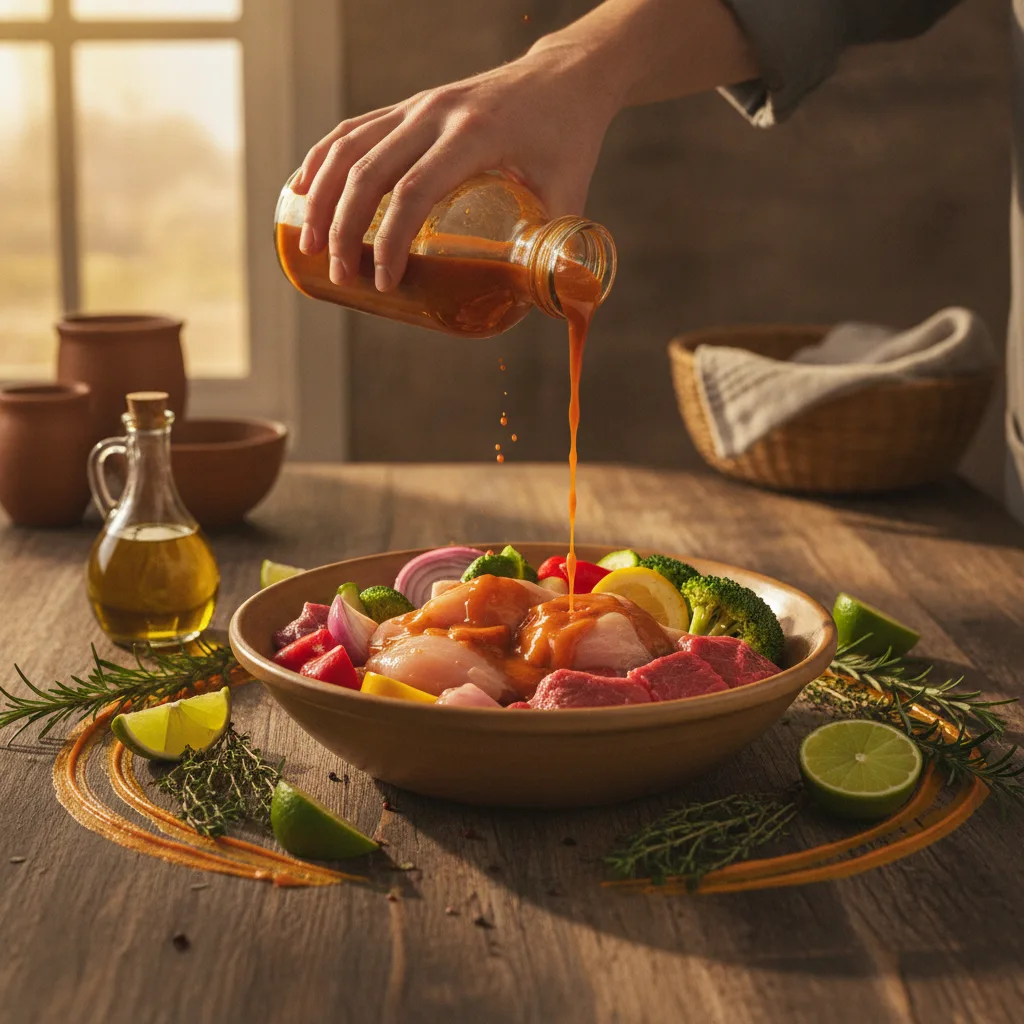
This is why a quick plancha marinade works best with thin or sliced pieces: strips, diced poultry, fish fillets or vegetables cut into slices a few millimetres thick. The larger the contact surface relative to the volume, the more noticeable the result of the express marinade on the palate.
The second reflex is to work in an airtight container or a food bag, then quickly massage the food so that the coating is even. A fifteen-minute rest in the fridge is then more than enough, and this time can be used to preheat the plancha.
Good to know
An express marinade with no resting time also exists. It involves coating the food just before cooking, then brushing a second time at the end of searing with a portion of clean marinade set aside before any contact with raw food.
7 quick homemade marinade recipes for grilling
The quantities given are suitable for about 500 grams of food. They are suggestions to adjust to your taste, not rules.
1. Lemon and herb marinade, the all-rounder
Mix 4 tablespoons of olive oil, the juice and zest of one lemon, a grated garlic clove, thyme, rosemary and parsley, then season with salt and pepper. This lemon and herb marinade suits sliced chicken, courgettes, white fish and pressed tofu. The zest adds a lot of aroma without extra acidity, which avoids changing the texture of delicate flesh.
2. Garlic and paprika marinade for chicken
Allow 3 tablespoons of olive oil, a teaspoon of smoked or sweet paprika, a garlic clove, a teaspoon of lemon juice, pepper and a pinch of salt. This garlic and paprika marinade works ideally on thin escalopes turned halfway through resting. The chicken must then be cooked through, with no pink flesh, as the French food safety agency ANSES points out for cooking poultry on the barbecue and plancha.
3. Soy, honey and ginger marinade
Combine 3 tablespoons of soy sauce, a tablespoon of sesame or neutral oil, a teaspoon of honey, freshly grated ginger and a little garlic or spring onion. This soy, honey and ginger marinade goes with prawns, salmon, pork and peppers. Be careful: honey and soy colour very quickly. Cooking at a moderate temperature and constant monitoring avoid the bitterness of caramelisation taken too far.
4. Yoghurt and curry marinade
Mix 3 tablespoons of plain yoghurt, a teaspoon of curry powder, the juice of half a lemon, garlic, coriander or mint and pepper. The yoghurt and curry marinade forms a real protective film around the pieces, which keeps chicken, prawns or pre-cooked cauliflower florets tender.
5. Balsamic marinade for vegetables
Allow 3 tablespoons of olive oil, a tablespoon of balsamic vinegar, a teaspoon of mustard, herbes de Provence and pepper. This balsamic marinade showcases aubergines, mushrooms, red onions and firm tomatoes. Salt only when serving, as salt makes water-rich vegetables release their water.
6. Citrus and coriander marinade for fish
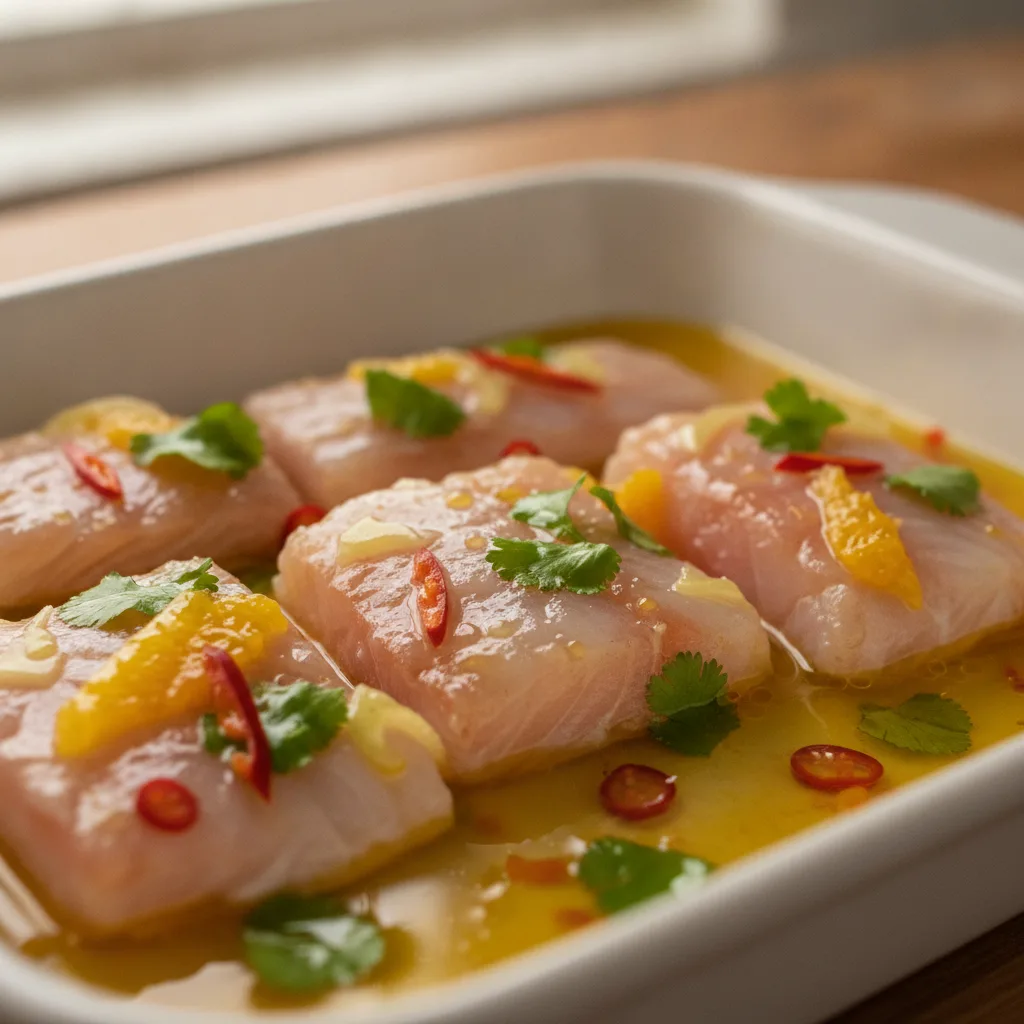
Use 3 tablespoons of olive oil, the juice of half an orange, a squeeze of lime, chopped coriander and a little mild chilli. This fish marinade is deliberately low in acid, as a long soak in pure lemon changes the texture of fillets. Ten to fifteen minutes is enough, followed by careful draining.
7. Parsley, garlic and vinegar marinade for beef
Mix 4 tablespoons of olive oil, a tablespoon of wine vinegar, plenty of chopped flat-leaf parsley, two garlic cloves, oregano and chilli flakes. This meat marinade is applied to thinly sliced beef, seared very quickly on a scorching surface. The rest of the preparation, if it has never touched raw food, serves as a sauce at serving time.
How long to marinate depending on the food?
Marinating time depends above all on thickness and texture. Here are practical guidelines for a fifteen-minute plan.
| Food | Recommended express time | Key tip |
|---|---|---|
| Peeled prawns | 10 to 15 minutes | Limit acidity and do not extend |
| Fish fillet | 15 to 30 minutes | Drain before placing on the plate |
| Courgettes and peppers | 15 to 30 minutes | Slice thinly and evenly |
| Mushrooms | 15 minutes | Avoid them becoming soggy |
| Sliced chicken | 15 to 30 minutes | Must be cooked through |
| Beef strips | 15 to 30 minutes | Quick searing at high temperature |
| Tofu | 15 to 30 minutes | Press before marinating |
| Large pieces of meat | More than 30 minutes | 15 minutes only flavours the surface |
These times match observations shared by the specialist nutrition press, which points out that fish and seafood need shorter times than thick meats.
How to cook marinated food on the plancha?
Preheating the plancha determines everything else. A lukewarm plate lets the juices escape, the food boils in its own juice and the marinade turns into a smoking puddle. A properly hot plate creates the crust in seconds and sets the aromatic coating.
On our stainless steel electric planchas, the thermostat lets you aim for a strong searing zone and then lower the heat to finish cooking through, which is particularly useful with sweet marinades. You will find the whole range of planchas on our website.
Before placing the pieces on the plate, remove the excess with serving tongs or a little kitchen paper. The aim is to keep a thin aromatic film, nothing more. A grease collector then limits overflow onto the worktop. Once the food is on the plate, let the crust form before turning. A fifteen-minute marinade does not reduce cooking time; it only changes the surface flavour.
Three ingredients call for restraint on a very hot plate:
- Honey and sugars colour in a few seconds.
- Finely chopped fresh herbs blacken and turn bitter, so it is better to add some of them after cooking.
- Too much lemon juice dilutes the marinade and causes splashes.
ANSES also recommends avoiding direct flames and excessive cooking, a point on which the electric plancha has a structural advantage, since fat does not drip onto an open heat source.
Key takeaway
A burnt marinade almost always comes from too much sugar or insufficient draining, rarely from the power of the appliance.
Food safety: rules not to overlook
The recommendations of ANSES, EUFIC, the Belgian food agency AFSCA and Health Canada converge. Here are the essential points to apply systematically when preparing an express marinade.
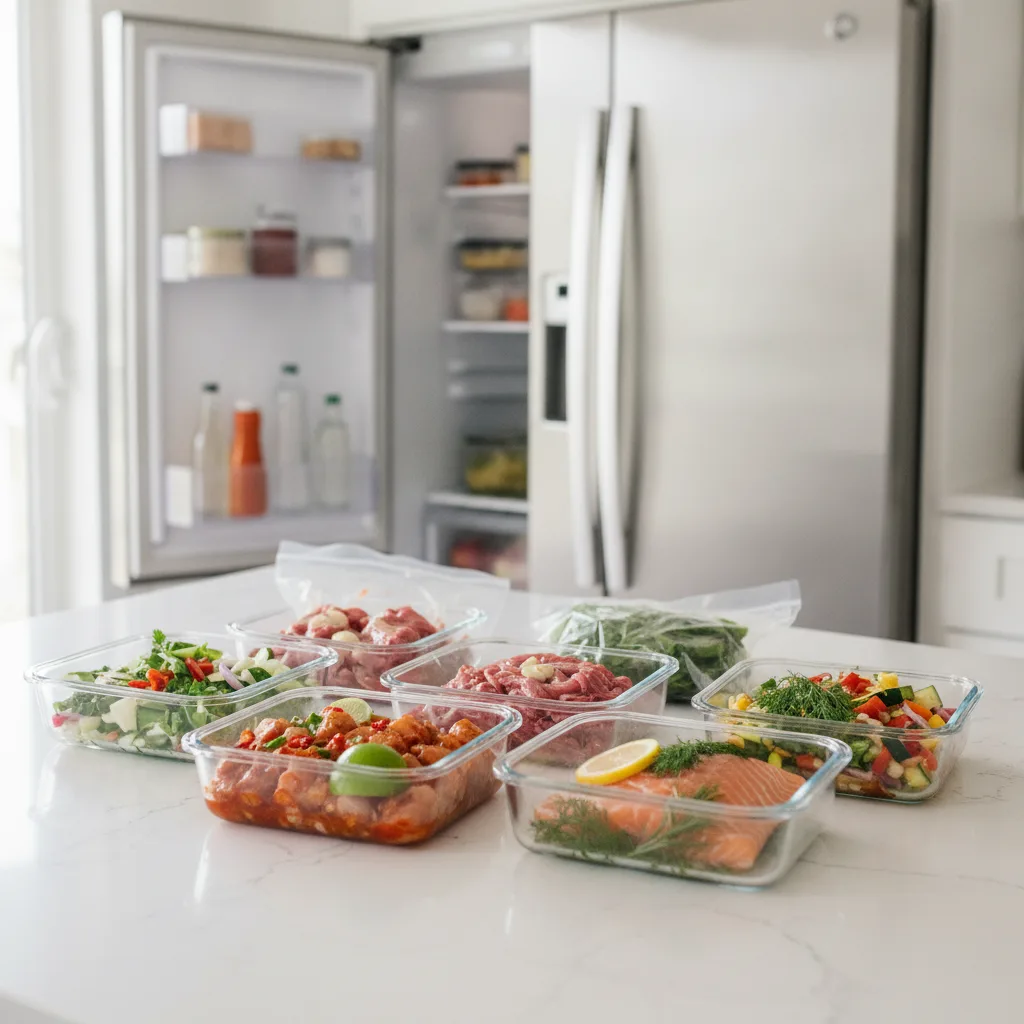
- Marinate in the fridge, in an airtight container preferably made of glass, never at room temperature on the worktop.
- Set aside a clean portion of marinade before any contact with raw meat or fish if you want to use it as a sauce.
- Never serve a marinade that has touched raw food as it is, unless you bring it to the boil separately.
- Use separate dishes and utensils for raw and cooked food to avoid cross-contamination.
- Cook poultry, minced meat, meatballs and sausages through.
These actions take a few seconds and avoid most of the risks associated with outdoor meals. For cleaning the plate after cooking marinated food, our stainless steel plancha cleaning guide explains the method.
Going further with express marinades on the plancha
An express marinade does not replace a long marinade; it meets a different need, that of adding flavour quickly without sacrificing taste. By following the three-component rule, cutting food thinly and preheating carefully, fifteen minutes is enough to turn a last-minute meal into real convivial cooking.
Our stainless steel planchas made in France, from the compact Néo 420 to the Lux 600 and Lux 830 for large gatherings, offer the temperature consistency that makes these recipes reproducible every time.
Key points about the 15-minute express marinade
By combining a fat, a well-dosed acid and aromatics, a 15-minute express marinade is enough to effectively flavour all thin pieces, from beef strips and fish fillets to vegetables.
By respecting suitable resting times, food safety rules and good preheating of the plate, you get even, delicious results, without burnt marinade or dried-out food.
Frequently asked questions about express marinades on the plancha
Can you freeze food that is already marinated to save time?
Yes, freezing raw food in its marinade is common. The coating continues during thawing in the fridge, which gives a stronger result than a fifteen-minute marinade. Simply avoid very acidic preparations for fish.
Should you salt the marinade or the food just before cooking?
For meat, salt included in the marinade is fine. For water-rich vegetables and delicate fish, we prefer to salt when placing them on the plate, or even after cooking.
Does the marinade replace greasing the plancha?
On a properly preheated stainless steel plate, the oil in the marinade is usually enough. A light film of oil remains useful for very lean foods such as chicken breast or white fish.
Can you marinate in a metal dish?
It is better to use glass, ceramic or a suitable food container. Acidic preparations can react with some metals and alter the taste.
What should you do with leftover clean marinade?
Kept in the fridge in a closed container, leftovers that have never touched raw food can be reused within a few days, as a sauce or as a base for a vinaigrette.