



 +33 4 78 55 45 69
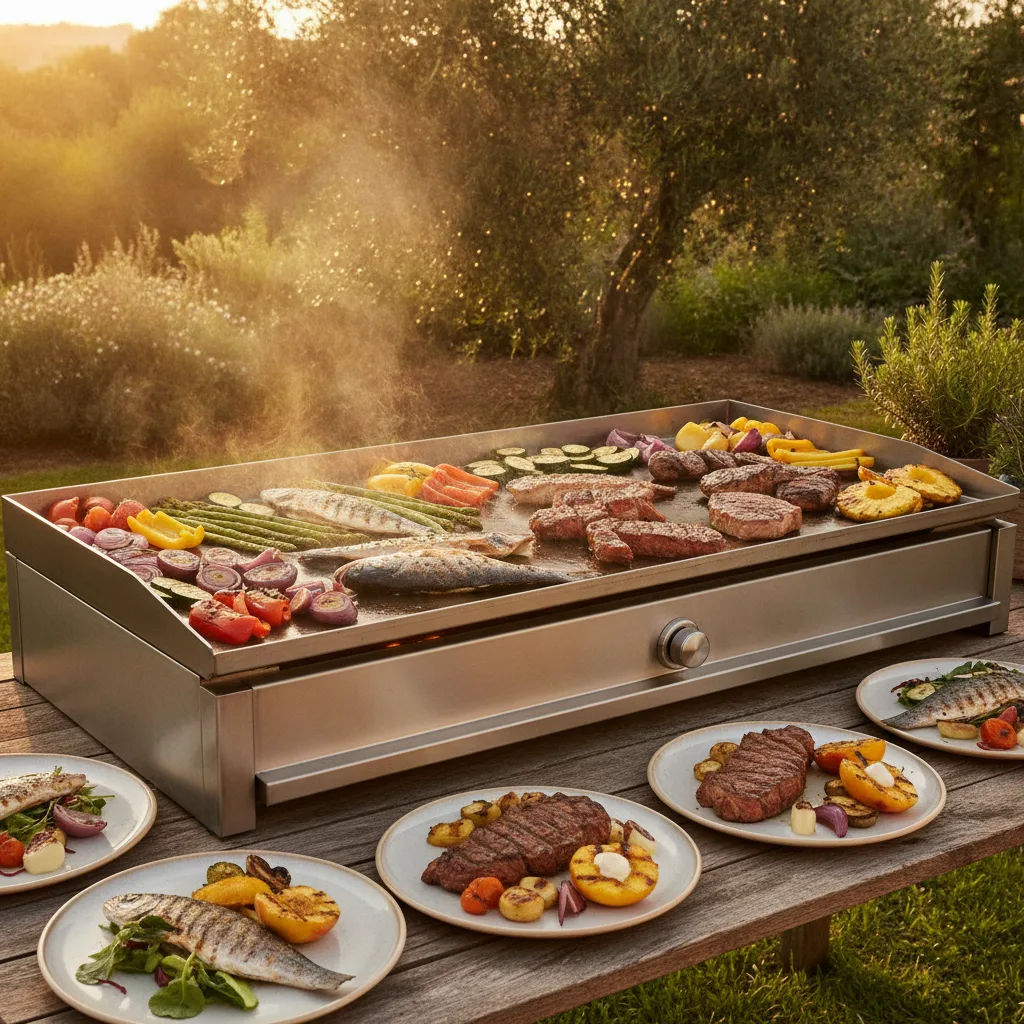
Preparing a complete plancha menu on a single plate, from the first bite to dessert, is one of the most underestimated uses of the plancha. With a well-preheated stainless steel plate, you can move from grilled vegetables to fish, marinated meat and caramelised fruit without ever switching on the oven.
This guide rests on a simple principle: a complete plancha menu depends above all on the order of cooking and temperature management. Here you will find three seasonal menus, summer, autumn and winter, with temperature guidelines, quantities per guest and the cleaning method between courses, so you can entertain without running between the kitchen and the terrace.
Complete Plancha Menu: Starter, Main and Dessert in 2027
Reading time: ~10 min
- How to put together a complete plancha menu with starter, main and dessert?
- Summer menu: grilled vegetables, fish and fruit skewers
- Autumn menu: mushrooms, marinated meat and crumble
- Winter menu: the electric plancha moves indoors
- Temperatures and cooking times: key guidelines
- Cooking order and cleaning between courses
- Quantities to plan, from 4 to 10 guests
- A successful complete plancha menu in 2027
- Frequently asked questions about the complete plancha menu
How to put together a complete plancha menu with starter, main and dessert?
A good plancha menu follows a logical progression. The starter stays plant-based and light, the main course brings protein and indulgence, and the dessert plays on the caramelisation of fruit. This structure is not just aesthetic: it matches the rise and then fall in the plate's temperature. You start at around 220 °C for vegetables, rise to 240–250 °C to sear meat, then come back down to 180–200 °C for fruit, which would burn at higher temperatures because of its sugars.
Contact cooking is at the heart of the process. The food touches the hot plate directly, the surface colours very quickly through the Maillard reaction, and the juices stay inside. This is what sets the plancha apart from the barbecue, where heat comes from below and fat drips onto the heat source. On an electric plancha, you keep control of the thermostat from the start to the end of the meal, which changes everything when you need to go from a beef steak to a slice of pineapple.
Three rules come up again and again among professionals:
- Preheat the plate for 10 to 15 minutes before the first cook.
- Never overload the surface, or searing will turn into steaming.
- Dry food before placing it on the plate to encourage browning.
The rest is just a matter of organisation.
Summer menu: grilled vegetables, fish and fruit skewers
In summer, the plancha works outdoors and the menu follows seasonal produce.
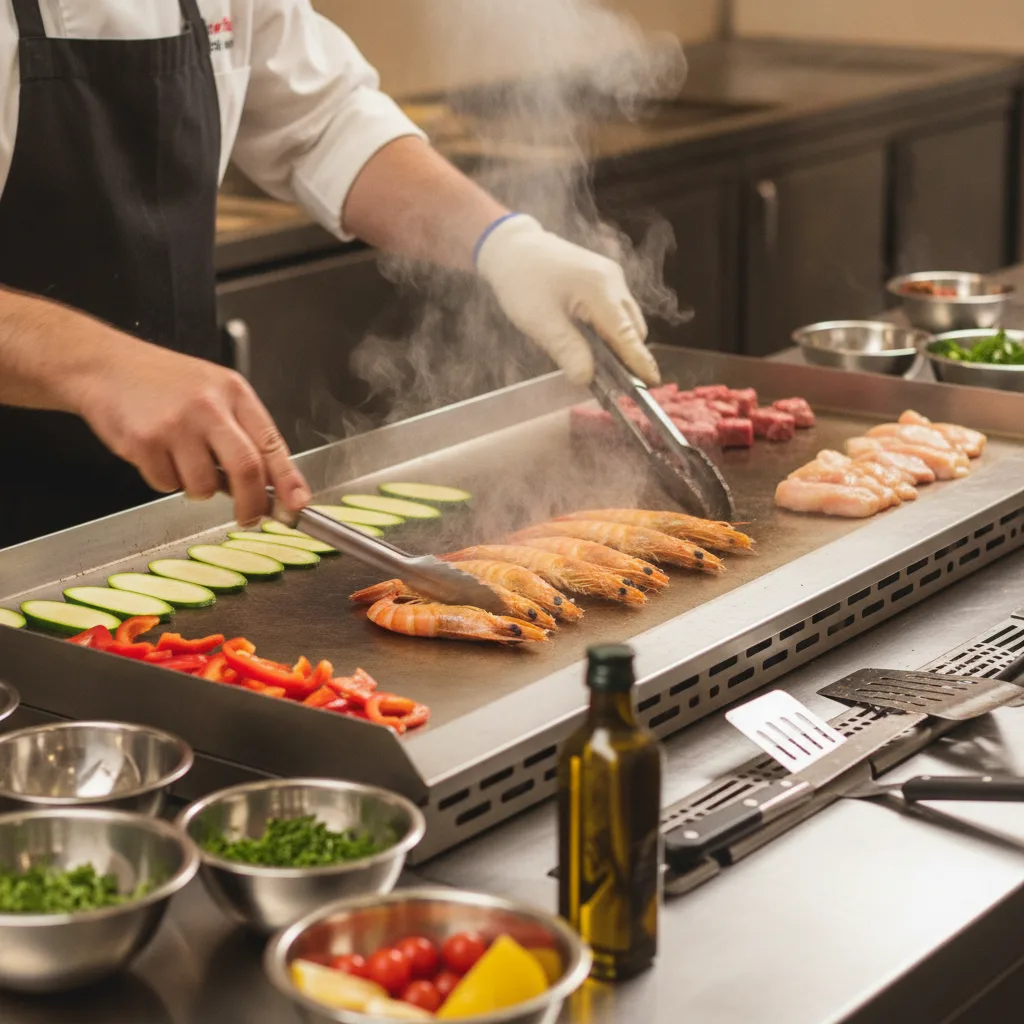
Starter: grilled vegetables, mozzarella and lemon vinaigrette
Courgettes and aubergines are cut into even slices, served with cherry tomatoes, with a drizzle of olive oil poured over the vegetables rather than onto the plate. Allow three to four minutes per side at about 220 °C. The cheese, rocket and parmesan shavings are added only when plating, never on the plate. This starter, very common in specialist recipes, has the advantage of being served warm, so it is forgiving on timing.
Main course: fish fillet and vegetables
Sea bream, salmon or tuna lend themselves well to contact cooking. User guides recommend searing fish at around 260 °C and then continuing at around 220 °C, allowing a few minutes per side depending on thickness. Always place fish skin side down first and do not move it during the first minute; it will release by itself once the crust has formed. King prawns marinated in olive oil, garlic and lemon cook in two to three minutes and make an excellent transition between starter and main course.
Dessert: caramelised fruit skewers
Pineapple, peach, banana and mango are cut into cubes of the same size. A little salted butter is placed on the plate, lowered to 180 °C, for about three minutes per side until caramelisation begins, then a sprinkling of brown sugar finishes the cooking. For whole grilled fruit, Marmiton recommends cooking at 180 °C with turning after seven to eight minutes, a useful guideline for thick slices.
Good to know
Brown sugar is always added at the end of cooking, never at the beginning. Added too early, it burns before the fruit has heated through and sticks stubbornly to the plate.
Autumn menu: mushrooms, marinated meat and crumble
In autumn, the menu gains depth.
Starter: pan-fried mushrooms on grilled toast
Button mushrooms and porcini are pan-fried on the plate with a little neutral fat, garlic, parsley and a touch of mild chilli, then served on slices of bread toasted directly on the stainless steel. Toasting bread on the plancha is a simple trick: it absorbs the juices left by the vegetables and avoids unnecessary deglazing.
Main course: marinated meat and root vegetables
Duck breast, lamb or a fine piece of poultry is seared at between 220 and 260 °C according to specialist guides, while 240 to 250 °C is generally recommended for meat overall. The all-purpose marinade stays the same all year round: olive oil, lemon juice, garlic, paprika and aromatic herbs such as thyme or rosemary. Salt at the last moment to prevent the meat from releasing its water onto the plate. Carrots, parsnips and sweet potatoes are cut into thin slices, otherwise they will stay raw in the centre.
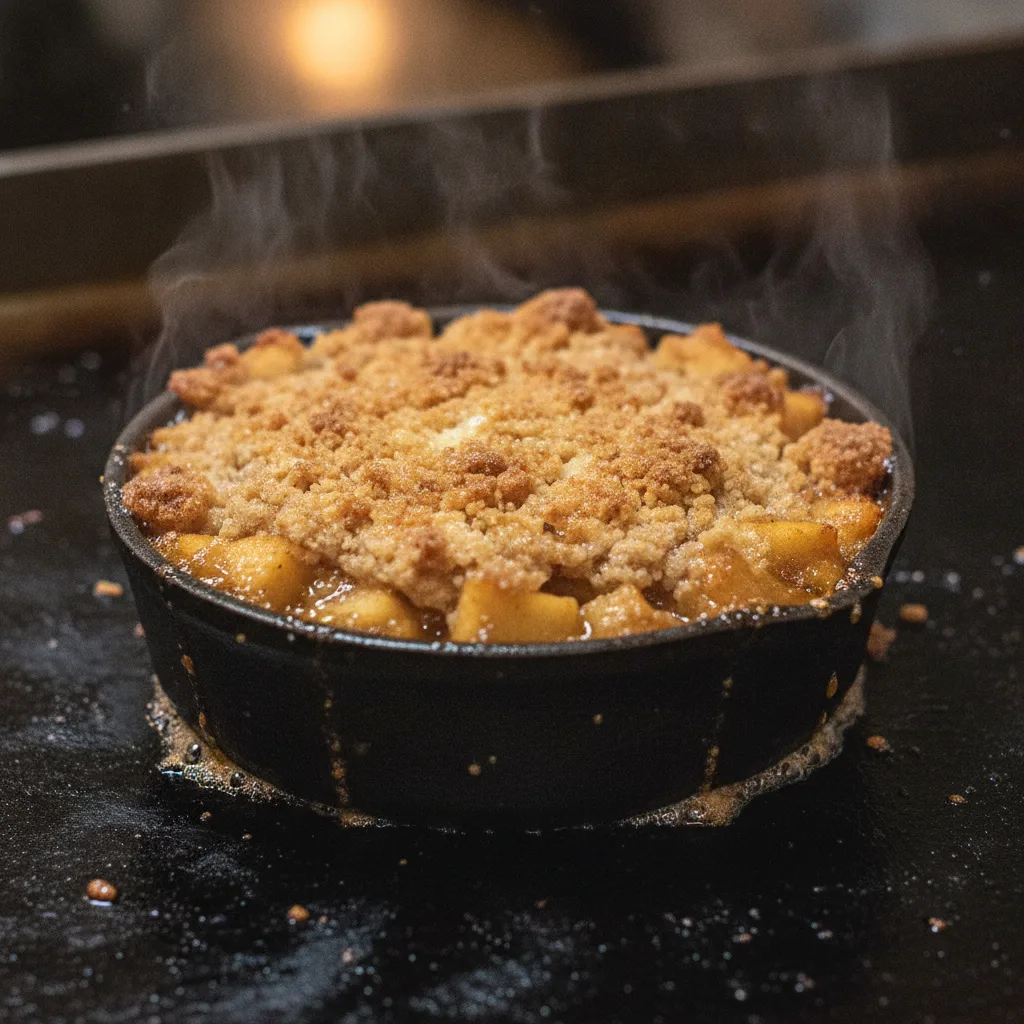
Dessert: crumble cooked under a lid
In a heat-resistant dish placed on the preheated plate, allow about fifteen to twenty minutes of cooking according to specialist recipes, ideally under a cooking lid that concentrates the heat. Apples or pears are diced, then mixed with butter, flour and brown sugar. The result is close to oven baking, with a slightly more golden crust where it touches the plate.
Winter menu: the electric plancha moves indoors
In winter, the electric plancha really comes into its own. With no combustion and no gas bottle, it sits on a worktop or a trolley in the kitchen, provided you have proper ventilation and a clean grease collector. This is precisely the versatility we sought in our stainless steel models made in France, from the Néo 420 for two to four people to the Lux 830 for large gatherings.
Starter: scallops and celeriac purée
The winter menu begins with scallops, one and a half minutes per side on a very hot plate, served with a celeriac purée prepared in advance.
Main course: rib of beef, leeks and Brussels sprouts
The main course can be a thick rib of beef, seared hard and then finished at a moderate temperature under a cloche, served with leeks and Brussels sprouts cut in half and grilled flat side down on the stainless steel.
Dessert: grilled pear with salted butter
Dessert features pear, cut in half and cored, cooked flat side down at 180 °C with salted butter and brown sugar, then served with a scoop of vanilla ice cream. Marie Claire Cuisine also points out that grilled fruit with salted butter and a sprinkling of brown sugar is among the easiest plancha desserts to get right.
Vegetarian option
A fully vegetarian menu follows exactly the same logic. Halloumi, marinated tofu, corn, peppers, aubergines and chickpeas follow on easily, with a yoghurt sauce or a tahini-lemon sauce prepared in advance. The only point to watch is the order: vegetables always go before fatty plant proteins such as halloumi, which leave a film on the plate.
Temperatures and cooking times: key guidelines
The values below are guidelines, to be adjusted according to the power of your appliance, the thickness of the food and the manufacturer's recommendations. On a stainless steel plate, the temperature rises quickly and heat is released very evenly, which makes it possible to work in zones.
| Food | Indicative temperature | Cooking guideline |
|---|---|---|
| Sliced vegetables | About 220 °C | 3 to 4 minutes per side, even cutting |
| Fish fillet | 220 to 260 °C | Sear hard then reduce, a few minutes per side |
| Seafood, king prawns | About 240 °C | 2 to 3 minutes in total, dry before cooking |
| Red meat and poultry | 240 to 250 °C | High-temperature searing, salt at the end |
| Fruit and desserts | 180 to 200 °C | About 3 minutes per side, brown sugar at the end |
| Crumble under a lid | About 180 °C | 15 to 20 minutes on a preheated plate |
Cooking order and cleaning between courses
The order of cooking avoids mixing flavours and limits cleaning. In practice, the plant-based starter opens the meal, followed by fish and seafood, then meat, and finally dessert after a pass of the spatula. The principle is simple: you go from the most neutral to the most pronounced, and finish with sweet food on a clean plate.
Here is the recommended sequence for smooth service on a single plate:
- Prepare the marinades several hours ahead, wash and cut the vegetables, prepare sauces and vinaigrettes.
- Take meat and fish out of the fridge just in time, following HACCP-type hygiene rules for the cold chain.
- Preheat the plate for 10 to 15 minutes before the first cook.
- Cook the starter, serve, then raise the temperature for the main course.
- Scrape up the juices with a scraper spatula, deglaze with a little water, wipe, then lower to 180 °C for dessert.
Intermediate cleaning takes less than two minutes on a stainless steel plate. Deglazing with water on a hot plate loosens residue, the scraper gathers everything towards the grease collector, and a wipe with kitchen paper is enough before dessert. Full cleaning is done after cooling with a scouring pad and a suitable degreasing cleaner. Our cleaning accessory packs bring these tools together, and our dedicated guide to cleaning a stainless steel plancha explains the method step by step.
Quantities to plan, from 4 to 10 guests
For a plancha menu for 10 people, the commonly used guidelines are as follows. Divide proportionally for 4 or 6 guests, bearing in mind that meat quantities drop as soon as the menu includes a substantial starter and a dessert.
| Ingredient | Indicative quantity | Note |
|---|---|---|
| Red meat | 1.5 to 2 kg | Adjust according to the rest of the menu |
| Poultry | 1 to 1.2 kg | Alternative or complement to red meat |
| Fish or seafood | 800 g to 1 kg | Depending on its share of the main course |
| Vegetables for grilling | About 1.5 kg | Including starter and side dishes |
| Cold side dishes | 1.5 to 2 kg | Salads, sauces and raw vegetables |
| Bread | 80 g per person | For toast and as an accompaniment |
| Dessert | 10 to 12 portions | Grilled fruit or crumble |
The cooking surface counts as much as the quantities. A plate that is too small forces you to cook in many batches, which makes the temperature drop and turns searing into boiling. For ten people, a large plate is far more comfortable, and a trolley with side shelves avoids putting dishes on the ground. Our guide to choosing a plancha details how plate size matches the number of guests, and the whole range of planchas can be viewed online.
Key takeaway
80% of a complete plancha menu is prepared before the guests arrive. With cutting, marinades and sauces done in advance, only the cooking remains, and that is also the convivial moment.
A successful complete plancha menu in 2027
Putting together a complete meal on the plancha requires neither extra equipment nor special technique, just a temperature logic and a respected cooking order. Plant-based starter at around 220 °C, protein seared between 240 and 250 °C, caramelised dessert at about 180 °C: the common thread comes down to three levels. With a stainless steel plate of the right size, a cooking lid and a scraper spatula, you serve three courses without leaving your guests, on the terrace in summer as in the kitchen in winter.
FAQ: frequently asked questions about the complete plancha menu
Should you oil the plancha or the food directly?
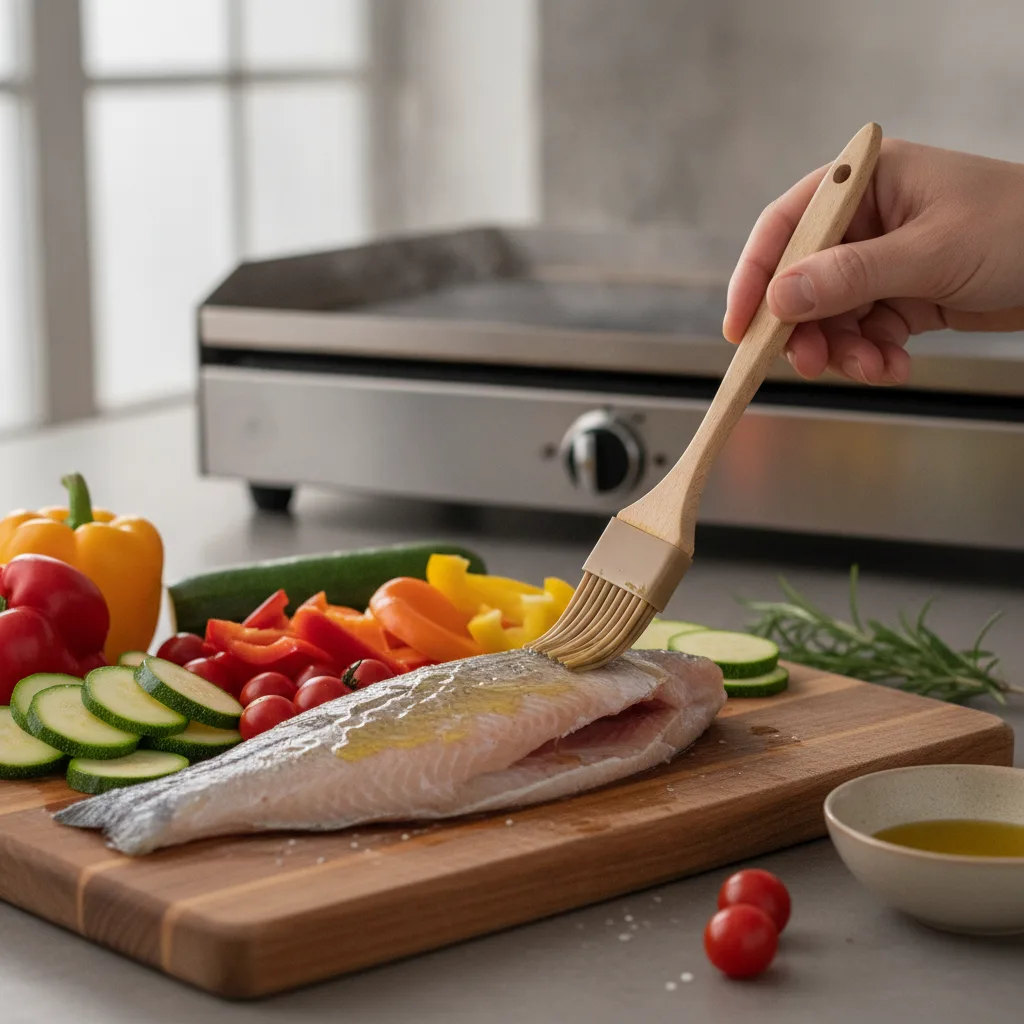
It is better to oil the food. Oil poured onto a very hot plate smokes quickly and breaks down, whereas lightly brushing vegetables or fish with a neutral fat or olive oil is enough to prevent sticking and improves browning.
How do you stop food sticking to the plate?
Three reflexes solve almost every case. Preheat sufficiently, dry the surface of the food before placing it on the plate, and do not try to turn it too early. Properly seared food releases naturally once its crust has formed.
Can you really cook a dessert on a plancha?
Yes, provided you lower the temperature. Grilled fruit, caramelised skewers, thick pancakes, French toast or crumble in a heat-resistant dish work very well between 180 and 200 °C, with a lid for preparations that need more time.
What is the difference between a stainless steel plate and an enamelled cast iron plate for a complete menu?
Stainless steel heats up quickly, reacts rapidly to setting changes and is easy to clean between courses, which is invaluable when you move from starter to main course to dessert. Enamelled cast iron retains heat better but takes longer to cool down.
Can you prepare this type of menu indoors?
An electric plancha can be used indoors if the room is properly ventilated and you control the temperatures, in particular by avoiding needlessly exceeding 250 °C with fats. A cooking lid greatly limits splashes.
Where can you find more plancha recipe ideas?
General cooking websites such as Marmiton or Marie Claire Cuisine offer many adaptable recipes, and our blog brings together temperature guides, cooking methods and comparisons.